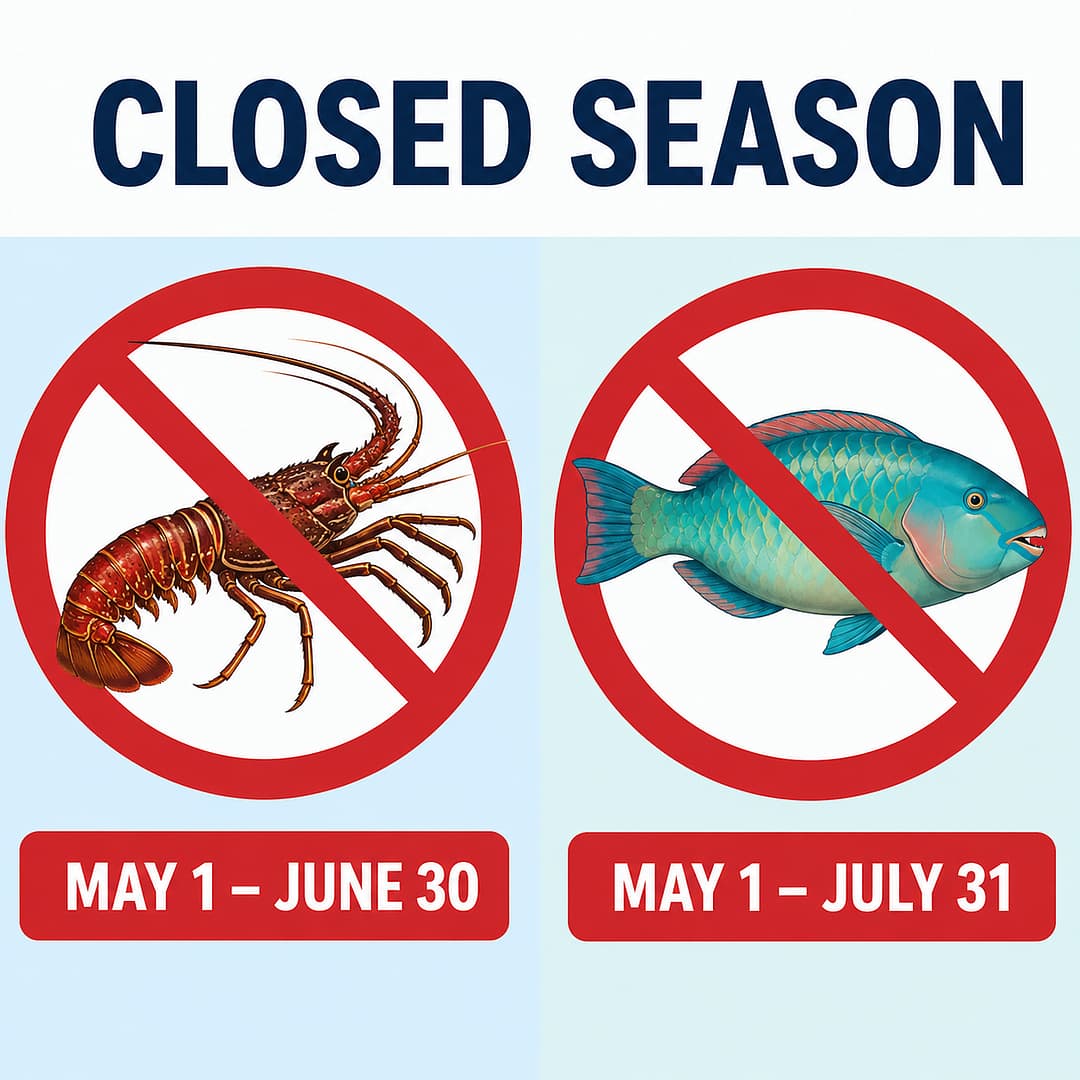
Antigua & Barbuda’s coastal ecosystems and fishing industry are set to receive a major conservation boost, as the Antigua & Barbuda Defence Force (ABDF) in partnership with the national Fisheries Division has officially announced the 2026 annual closed fishing season for two ecologically and economically critical marine species: spiny lobster and chub (commonly known as parrotfish). Scheduled to go into full effect starting May 1, 2026, this regulatory measure is a longstanding requirement under the country’s national fisheries laws, designed to shield vulnerable populations of these species during their critical breeding cycles and secure the long-term sustainability of local marine resources.
The closed season follows different timelines tailored to the biological needs of each species. For spiny lobster, the harvest and trade ban will run for two full months, from May 1 through June 30, 2026. For chub and parrotfish, the protection period is extended by an additional month, concluding on July 31, 2026. Across the entire duration of the closed season, a full set of restrictions applies to every person and entity operating within Antigua & Barbuda’s jurisdiction, including independent fishermen, commercial restaurants, seafood vendors, and seafood export businesses. All activities related to the targeted species are prohibited: this includes catching, selling, purchasing, and even possessing the regulated species during the ban.
To ensure full compliance with the new regulations, joint enforcement teams from the ABDF and the Fisheries Division will carry out routine and targeted compliance checks across key locations nationwide, including commercial fishing ports, retail seafood markets, food service establishments, and coastal fishing access points. Authorities have confirmed that violations of the closed season rules will result in strict penalties, in line with national fisheries legislation. Penalties for non-compliance include fines reaching up to $50,000 XCD, the mandatory confiscation of any illegal catch, and potential criminal prosecution for repeat or severe offenders.
Beyond meeting regulatory requirements, the closed season initiative delivers clear long-term benefits for both the environment and local communities that rely on fishing for their livelihoods. Protecting spiny lobster during their breeding period directly supports the maintenance of healthy, harvestable populations for future fishing seasons, which is critical given that lobster is a key export commodity and a core part of the local fishing economy. For parrotfish, the protection addresses the species’ outsize role in maintaining coral reef health: parrotfish graze on algae that would otherwise overgrow and kill coral reefs, making them essential to preserving the ecological balance of Antigua & Barbuda’s coastal reef systems, which in turn support tourism, protect shorelines, and sustain fish populations across the region.
Overall, the annual closed season is a core part of Antigua & Barbuda’s broader strategy to conserve marine biodiversity and ensure that fishing remains a viable livelihood for current and future generations of coastal communities. In the public advisory accompanying the announcement, the ABDF has urged all stakeholders — from local residents and small-scale fishermen to large commercial vendors and hospitality businesses — to comply fully with the regulations. Authorities emphasize that coordinated public cooperation is essential to safeguarding the country’s valuable marine natural resources for generations to come.