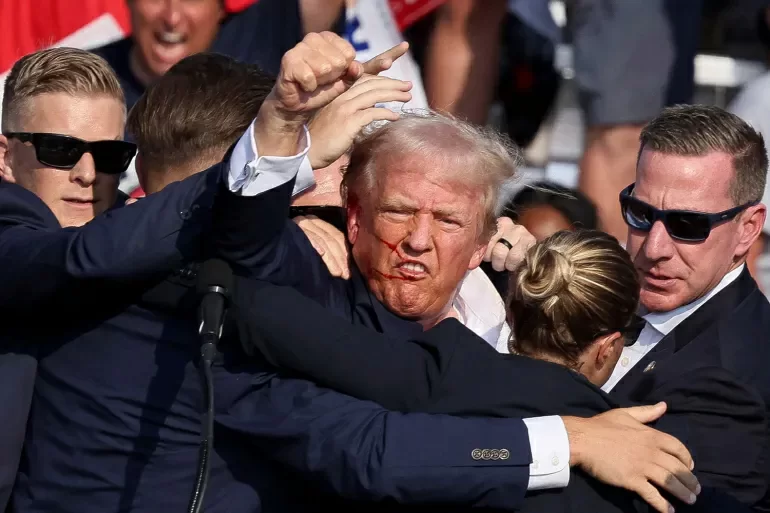
On a Saturday evening, an active security incident sparked an emergency evacuation of U.S. President Donald Trump and senior White House officials during the annual White House Correspondents’ Dinner held at the Washington Hilton Hotel. The disruption unfolded after an armed suspect forced entry into the hotel’s lobby and opened fire, law enforcement officials confirmed.
The suspect was identified as 31-year-old Cole Tomas Allen, a resident of Torrance, California. Law enforcement officers took Allen into custody at the scene immediately following the incident, with no reported casualties among Trump, attending officials, or other guests as of initial updates. Acting Attorney General Todd Blanche announced that formal charges against Allen will be filed in the near term, but investigators have not yet confirmed whether the suspect specifically targeted President Trump in the attack.
This latest incident adds to a growing string of security threats and assassination attempts targeting Trump that have unfolded since 2024, marking persistent risks to the former-turned-current president’s safety even with the extensive protection details provided by U.S. security agencies. A review of the timeline of prior incidents reveals just how frequent these threats have become:
In July 2024, a shooting occurred during a Trump campaign rally held in Butler County, Pennsylvania. Five rounds were fired while Trump addressed the crowd, and his Secret Service detail rapidly moved him to a secure location unharmed. The shooter, 20-year-old Thomas Matthew Crooks, was shot and killed by Secret Service agents on site.
Just two months later, in September 2024, a second assassination attempt unfolded at Trump’s private golf course in West Palm Beach, Florida. Witnesses reported hearing gunfire near the property, and 58-year-old suspect Ryan Wesley Routh was taken into custody. Routh was later convicted of plotting to assassinate Trump and sentenced to life in prison.
Another security breach occurred in September 2025, when an off-duty New York Police Department officer named Melvin Eng accessed a golf tournament attended by Trump while armed and wearing tactical gear, despite having no official authorization to be in the security detail. Eng was immediately suspended from his position and launched into an internal and federal investigation.
Most recently, before the Washington Hilton incident, a 21-year-old suspect named Austin Tucker Martin crashed a vehicle through the security perimeter of Trump’s Mar-a-Lago resort in Florida in February 2026. Investigators confirmed Martin was armed with a hunting rifle and a gas canister, and he was shot and killed by Secret Service agents before he could advance further into the property. Trump was not at the resort at the time, having been in Washington for official business.
The string of repeated threats and close calls has underscored the ongoing, escalating security risks surrounding Trump, even with the multilayered protection protocols implemented by the U.S. Secret Service and federal law enforcement partners. Both agencies have confirmed they are maintaining constant, close surveillance of the situation and updating security protocols in response to emerging threats.
Analysts and security officials note that the pattern of these incidents, culminating in the breach at the high-profile White House Correspondents’ Dinner, highlights the deeply polarized, tense political climate in the United States, as well as the unique challenges of securing a high-profile, polarizing former president who remains an active political figure.