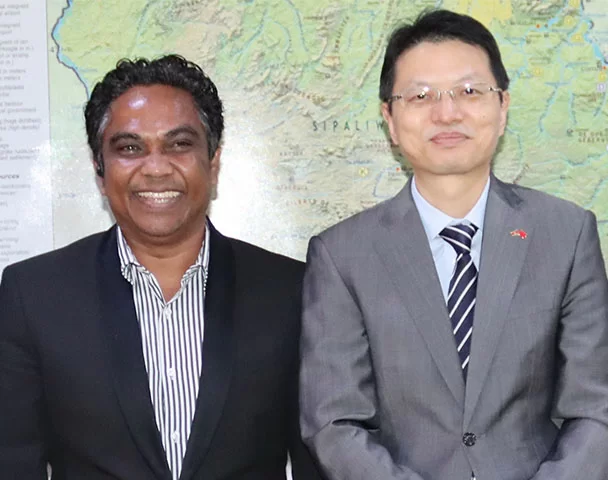
Diplomatic and agricultural cooperation between Suriname and China is set to expand into new phases, with both sides confirming plans to deepen ties in the agriculture sector during a recent high-level meeting between Suriname’s top agricultural official and China’s ambassador to the country.
The meeting, held between Mike Noersalim, Minister of Agriculture, Livestock and Fisheries (LVV) of Suriname, and Chinese Ambassador Lin Ji, centered on prioritizing three core areas of enhanced partnership: agricultural product processing, technical training, and cross-border knowledge sharing. The two officials opened their discussion by reviewing the outcomes of the first phase of the Tijgerkreek (Tiger Creek) project, an initiative focused on introducing and scaling the cultivation of a range of new crop varieties in Suriname. Both parties confirmed that the initial phase of the project has been completed successfully, and preparations are now underway for the launch of the second phase, which is scheduled to kick off by the end of May this year.
Beyond the Tiger Creek project, the conversation placed significant emphasis on increasing the added value of Suriname’s agricultural outputs. Minister Noersalim highlighted that local producers currently face significant volatility from price fluctuations when supply outpaces domestic demand, making local processing infrastructure a critical priority. To address this challenge, additional targeted support will be provided to smallholder farmers and local agricultural entrepreneurs, with the goal of building out domestic processing capacity. As part of this effort, the two sides discussed plans to establish a dedicated food processing unit, which is on track to be completed and operational by the end of 2025. Once the facility is established, a series of specialized training programs will be rolled out to boost Suriname’s overall production and processing capabilities across the agricultural sector.
The meeting also touched on long-standing systemic challenges facing Suriname’s agricultural industry, most notably the declining interest in agricultural careers among young people that has created a gap in the sector’s workforce. Both Suriname and China agreed that there is significant potential to reverse this trend through targeted education and skills training programs that can attract more new entrants to the industry.
In closing remarks following the meeting, Minister Noersalim emphasized that the bilateral agricultural cooperation between the two countries delivers tangible benefits to Suriname’s long-term development. He noted that the partnership creates clear pathways for sustainable growth of the national agricultural sector while strengthening the country’s overall production capacity to meet domestic demand and expand export opportunities.