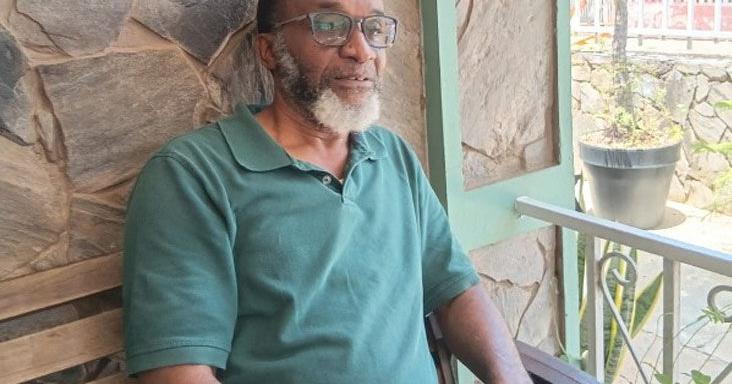
As the United National Congress (UNC) administration prepares to mark its first full year in power, a Sunday Express on-the-ground investigation into Port of Spain’s long-marginalized Laventille and Gonzales districts reveals a landscape of widespread economic stagnation, deep-seated systemic stigma, and growing community hopelessness. Long considered strongholds of the previous People’s National Movement (PNM) government, the districts are currently represented by Members of Parliament Keith Scotland and Stuart Young. During the outlet’s visit two Fridays ago around midday, empty streets and shuttered community spaces painted a stark picture of the area’s current reality.
When approached at her open-air food stall in East Dry River, Laventille, 33-year-old vendor Kennipher Hector answered the question of where all the locals had gone with a simple explanation: just two days prior, a police-involved shooting had left one man wounded in the leg, and residents had responded by imposing an unofficial curfew on themselves, staying off the streets entirely. “Yesterday, I opened for business expecting the usual stream of regulars, and the whole area was dead silent—you could have heard a pin drop a mile away,” Hector recalled. She added that while shootings are a depressingly common occurrence in the area, this episode’s chilling effect on public life was unprecedented. She suspects the ongoing state of emergency (SoE) amplified fears, with many young men worried police will sweep up innocent residents alongside anyone suspected of criminal activity. That quiet emptiness led Hector to close up early that Friday to tend to cleaning, an unusual break from her normal routine.
Hector pointed to two interconnected crises at the root of Laventille’s struggles: chronic mass unemployment and persistent violent crime. She explained that without formal work opportunities to support their households, many residents are pushed toward illegal activity to make ends meet. A large part of the employment barrier, she argues, is the pervasive stigma that comes with living in Laventille. “Once you’re from this area, you’re already labeled untrustworthy, so you never get first pick at any job—you have to create something for yourself,” she said. That stigma pushed her to launch her own food venture, but even self-employment comes with crippling challenges: the area suffers from persistent unreliable water access, forcing her to rely on costly, irregular water truck deliveries when her stored water runs low or becomes discolored. Moving her business into central Port of Spain is not a viable option, she says, given exorbitant commercial rent and steep competition for new small business owners. The steady outflow of residents leaving the area for better opportunities has only made it harder for the few remaining local businesses to stay afloat, she added, and the same cycle of stigma and exclusion is already repeating for the next generation growing up in Laventille.
The sense of abandonment is equally palpable across the hillier Gonzales district, where few residents are seen outside their homes outside of commutes to work, with young people mostly clustering around the local Upper Quarry community centre. Eighty-three-year-old Claudette Lewis, a long-term Gonzales resident who survives on a state pension, said the feeling of hopelessness in the community has grown dramatically sharper since the UNC won last year’s general election. She noted that while her own daily routine has not changed much, young people in the area have been completely cut off from opportunities to live with dignity. “The whole area is dead. Nothing is happening here at all, and it feels like the entire city of Port of Spain is an afterthought for this government,” Lewis said. She issued a direct appeal: “We have a community centre sitting empty right here. The government should come in, reach out to our young people, and get them working on something that matters.”
Lewis explained that the Community-Based Environmental Protection and Enhancement Programme (CEPEP), once the largest source of local employment for Gonzales youth, has been shut down since the new government took office. Without CEPEP, young people are left with two bad options: travel into central Port of Spain to compete for scarce jobs that rarely hire Laventille locals, or stay home idle. Many end up relying on their grandparents’ pension checks to get by, or pick up occasional informal work cleaning yards or doing small chores for elderly residents like Lewis. “This is no way for young people to build a life,” she lamented.
Wayne Lewis, Claudette’s 63-year-old son-in-law and a Tobagonian resident, joined the conversation to share his critical perspective on the political shift. He argued that the problems facing the community have actually worsened since the UNC took power, noting that the current administration has failed to deliver on the many campaign promises made by party leader Kamla Persad-Bissessar during her time in opposition and the 2025 election race. “A lot of people bought into what they said, gave them their votes, and now nothing has changed—it’s just gotten worse,” he said. He added that while he is able to fend for himself and cover his basic needs, he is deeply worried for the region’s young people who lack employable skills or formal work experience. He called the full shutdown of CEPEP unnecessary, arguing that the government could have simply replaced unpopular contractors rather than cutting the program entirely that employed hundreds of local workers. The irony, he noted, is that many of the local CEPEP workers who campaigned for the UNC ahead of the election were the first to lose their jobs when the government took office. Wayne also pointed to a sharp decline in water access: before the election, Gonzales had consistent running water seven days a week, with advance notice given for any scheduled outages. Today, the area only has water three days a week: Friday, Saturday, and Sunday.
During the visit to the empty Upper Quarry community centre, reporters encountered a small group of five young men gathered at a nearby home. Jerry Phillip, the 36-year-old group’s de facto spokesperson, explained that all the residents of their small neighborhood grew up together and consider one another family, with no gang activity in the area. Even so, he said, just having a Laventille address blocks most young men from getting formal work anywhere else. “We don’t have any gangs here, so employers have no reason to write us off, but they do anyway just because of where we live,” Phillip said.
Phillip acknowledged that formal work was also scarce under the previous PNM administration, but noted that just before last year’s election, local residents were hired to build a much-needed drainage line connecting the community centre to the area’s main staircase. “As soon as the election ended and the government changed, the project was halted immediately after we finished the drain,” he said. “We haven’t gotten any work or any support from the government since. The only time they come around now is to lock men up under the state of emergency.”
Beyond unemployment, Phillip also highlighted long-running unaddressed infrastructure failures: a major road connecting Gonzales to Morvant, St Barbs, and central Laventille has suffered a significant landslip, and the community’s main drain is completely clogged with garbage. He warned that once the annual rainy season arrives, the road will become completely impassable, a problem that local leaders have promised to fix for more than a decade without any action. “All we ever get is empty promises and lip service, nothing ever changes,” he said.