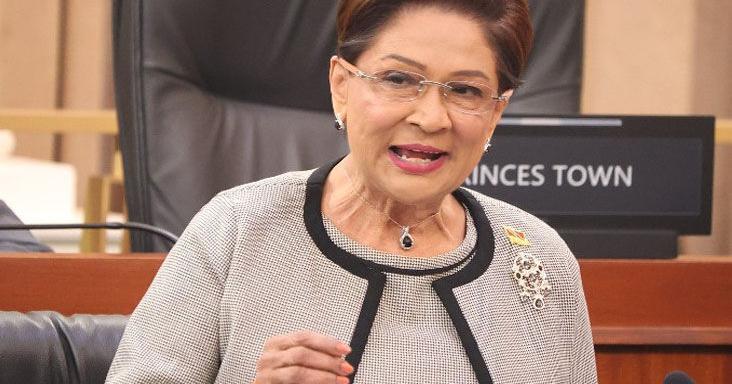
Thousands of pensioners and future retirees across Trinidad and Tobago received welcome news this week, after Prime Minister Kamla Persad-Bissessar officially confirmed the government will follow through on a long-awaited campaign and budget pledge: eliminating income tax on qualifying retirement pension payments. The policy, first flagged by Finance Minister Davendranath Tancoo during his October 2025 national budget address, had seen no public progress on implementation until Wednesday’s statement delivered to Parliament.
Persad-Bissessar confirmed during her parliamentary address that the tax exemption will be formally codified in the upcoming Finance Bill, with retroactivity applied all the way back to January 1, 2026. Under the finalized framework, income disbursed from government-approved pension funds and deferred annuity plans will be fully tax-free for beneficiaries, but only when accessed after reaching retirement age or when the plan reaches its maturity date. Early withdrawals from these accounts will remain fully taxable, a guardrail the government says is necessary to prevent system abuse and preserve the policy’s core purpose.
In her remarks, the Prime Minister emphasized that the policy delivers on the administration’s core promise to prioritize public welfare. “This Government remains firmly committed to improving the lives of the people of Trinidad and Tobago and ensuring that the promises we make are promises we keep,” she stated.
She framed the tax elimination as a long-overdue correction to unfair policy that penalized lifelong hard work and financial discipline. “For too long, many citizens who did the right thing, those who worked hard, saved consistently and contributed to pension plans or deferred annuities, have found that when the time comes to benefit from those savings, a portion is taken away through taxation,” Persad-Bissessar said. “A pension is not a windfall. It is not a bonus. It is the result of years, sometimes decades, of sacrifice, discipline and commitment. It represents foregone consumption today in order to secure tomorrow. This Government believes that such responsibility should be rewarded, not penalized.”
To maintain the policy’s fairness and long-term sustainability, Persad-Bissessar noted that the tax on early withdrawals remains in place to block misuse of the exemption as a loophole for short-term tax avoidance. “The purpose of this measure is to ensure long-term financial security for our citizens. It is therefore not designed to be a short-term investment vehicle or instrument for tax avoidance,” she explained. Keeping early withdrawals taxable, she added, preserves the integrity of the national tax system and keeps the policy aligned with its core goal of supporting dignified retirement.
Persad-Bissessar also revealed that policy drafters worked closely with the Board of Inland Revenue to refine the framework, drawing on the agency’s technical expertise to ensure the rules are clear, administratively feasible, and consistent with the country’s broader tax structure. “We have taken the time to get this right. Because good policy is not just about intention; it is about execution,” she said.
According to government data from 2024 tax returns, the exemption will deliver direct financial relief to more than 39,000 Trinidad and Tobago residents who claimed annuity contribution deductions that year. While that figure is down from 50,715 claimants in 2023, Persad-Bissessar noted it still represents a substantial share of the nation’s working population. She added that the vast majority of beneficiaries are modest savers: just 71 people reported annual contributions exceeding $100,000 in 2024, down from 102 contributors in that bracket the year prior.
The policy is expected to deliver particular benefits to private-sector workers enrolled in approved workplace pension plans, individuals who have built personal deferred annuities for retirement, middle-income earners who rely on these plans as a core source of post-retirement income, and current workers building savings for future retirement. “It means leaving more money in the hands of our citizens. It means empowering retirees to meet their needs, support their families, and participate in the economy,” Persad-Bissessosr said. “It means encouraging a culture of savings and long-term planning. The execution of this promise is an investment in financial stability, personal responsibility and in the future of our nation.”
Despite the clear policy framework, key questions remain unanswered: the government has not yet released an official estimate of how much annual revenue the state will forego as a result of the exemption. Local news outlet The Trinidad Express reached out to Finance Minister Tancoo to request clarification on projected revenue losses and implementation timelines, but had not received a response as of Wednesday evening.