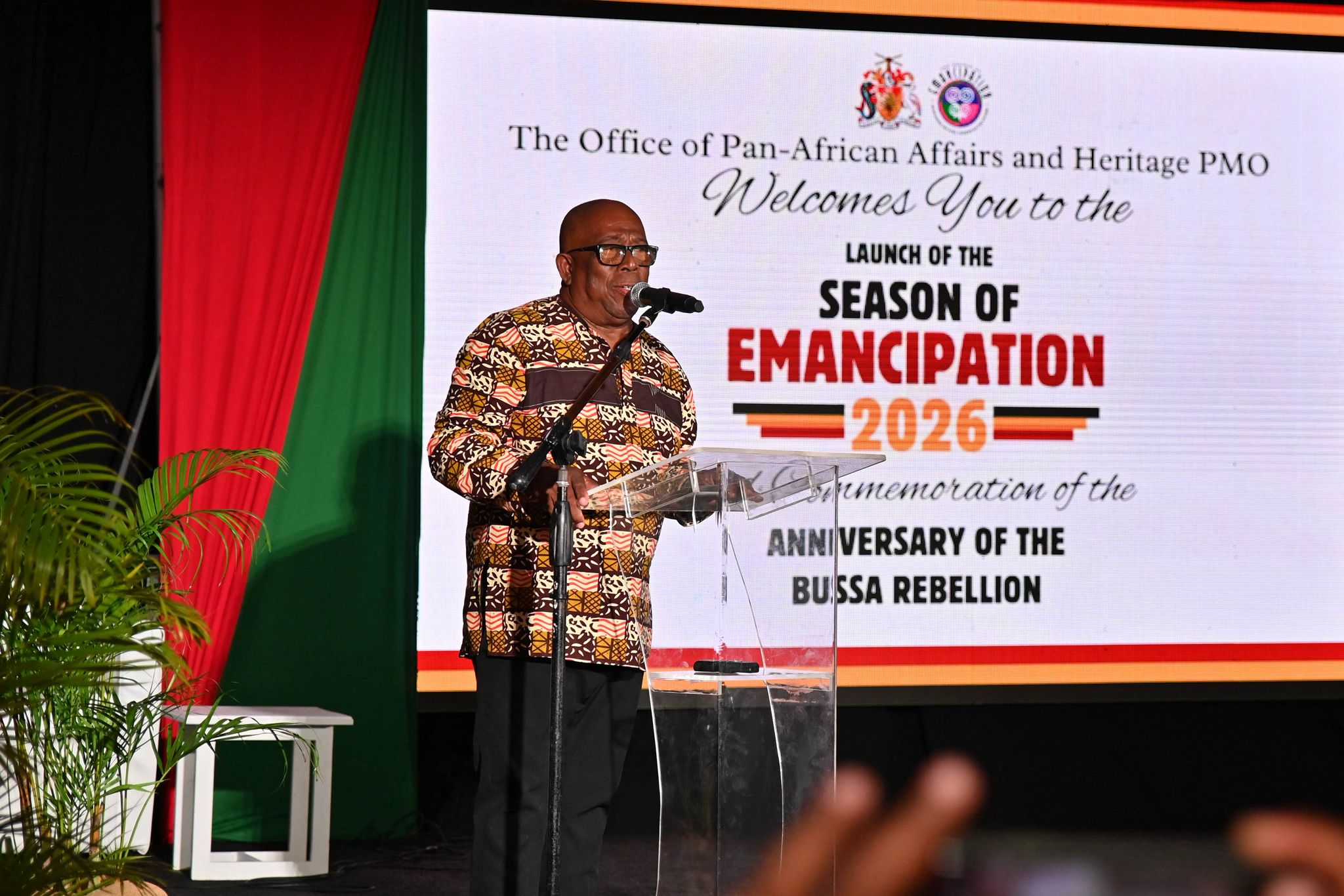
Barbados has kicked off its 2026 Season of Emancipation with renewed momentum, centered on newly released economic research that quantifies the cumulative damage of transatlantic chattel slavery on the island at up to 4 trillion Barbadian dollars, or 2 trillion U.S. dollars. For organizers and government officials, this landmark figure brings long-overdue visibility to the intergenerational harm that continues to shape Barbados’s social and economic trajectory today.
The launch event was held at Golden Grove Plantation in St. Philip, a site of profound historical significance: it was one of the core battlegrounds of the 1816 Bussa Rebellion, a pivotal uprising led by an enslaved African-born man named Bussa that marked a turning point in the fight for abolition in the Caribbean. Unlike most Caribbean nations that mark Emancipation with a single day of celebration on August 1, Barbados’s Season of Emancipation stretches across four months, starting on the anniversary of the 1816 rebellion on April 14 and running through late August. Program advisor Rodney Grant, from the island’s Office of Pan-African Affairs and Heritage, noted that this extended calendar makes Barbados unique across the region, framing the season as a sustained “long journey” of public education and cultural reclamation that centers African diaspora identities long suppressed by colonial rule.
The centerpiece of this year’s opening ceremony was the official presentation of research commissioned to quantify the economic legacy of slavery, led by American economist Dr. Coleman Bazelon. Dr. Bazelon emphasized that the 3 to 4 trillion Barbadian dollar figure is not a formal financial invoice demanding immediate payment from former colonial powers, but rather a evidence-based starting point for honest national and global dialogue about reparations and reconciliation. “This research is an accounting of the harm that was done,” Dr. Bazelon explained. “A recognition of that harm is the necessary first step toward meaningful reconciliation.” His analysis estimates that more than 792,000 people were enslaved in Barbados over the course of the slave trade, resulting in roughly 25 million years of stolen labor and stolen life that created intergenerational wealth for colonial powers while leaving Barbados with persistent structural inequities. “Enslaving a few hundred people on one plantation is a crime, but enslaving hundreds of thousands over centuries is a crime against humanity,” Dr. Bazelon noted, adding that the large final figure simply reflects the staggering scale of harm inflicted.
This local research aligns with broader regional efforts to quantify reparations claims. A 2023 report commissioned by the American Society of International Law and the University of the West Indies estimated that total reparations for stolen labor and lost life across all Caribbean and American slaveholding territories would amount to 110 trillion U.S. dollars as of 2020, equal to roughly 2.8 million U.S. dollars per enslaved person. Dr. Bazelon’s study, carried out in partnership with the U.S.-based economic consultancy Brattle Group, is designed to build a formal legal and economic framework to support Barbados’s reparations advocacy.
Trevor Prescod, Barbados’s Minister for Pan-African Affairs and Heritage, used the launch to call for radical transparency about the island’s colonial past and its ongoing impacts. “You can’t erase history,” Prescod said, outlining his mandate to deliver Afrocentric redress for the systemic inequities created during slavery. He acknowledged that conversations around reparations often spark heated debate across the island, but urged residents and global stakeholders alike to engage with the uncomfortable truths of the past. “We must have these hard conversations that we sometimes are very uncomfortable about,” he said. “The Pan-Africanist movement has always been in the forefront of the struggle for the various steps of the mind.”
Prescod also highlighted upcoming cultural and historic preservation projects tied to the 2026 season, including the exploration and formal recognition of a cave at Bayley’s Plantation—another key 1816 rebellion site where Bussa served as an enslaved ranger—believed to have sheltered enslaved rebels during the uprising. The full 2026 Season of Emancipation calendar includes a full slate of events spanning four months: April 28 marks National Heroes Day; May 25 is Africa Day, with focused African heritage education programs in primary and secondary schools; the entire month of June is designated Heritage Month, with the unveiling of a bust of Cuffee (a symbolic anti-colonial figure) on June 12, after the artefact spent a year submerged off the coast of Speightstown. July and August will integrate events with the popular annual Crop Over Festival, with July 26 designated a Day of National Significance, August 1 marking official Emancipation Day, August 17 hosting a homage to civil rights leader Marcus Garvey focused on Black economic empowerment, August 23 marked as the National Day for the Remembrance of the Slave Trade, and August 27 reserved to celebrate the legacy of Barbadian activist Jackie Opel. Organizers have invited all Barbadians to participate in the season through both in-person community events and digital outreach platforms.