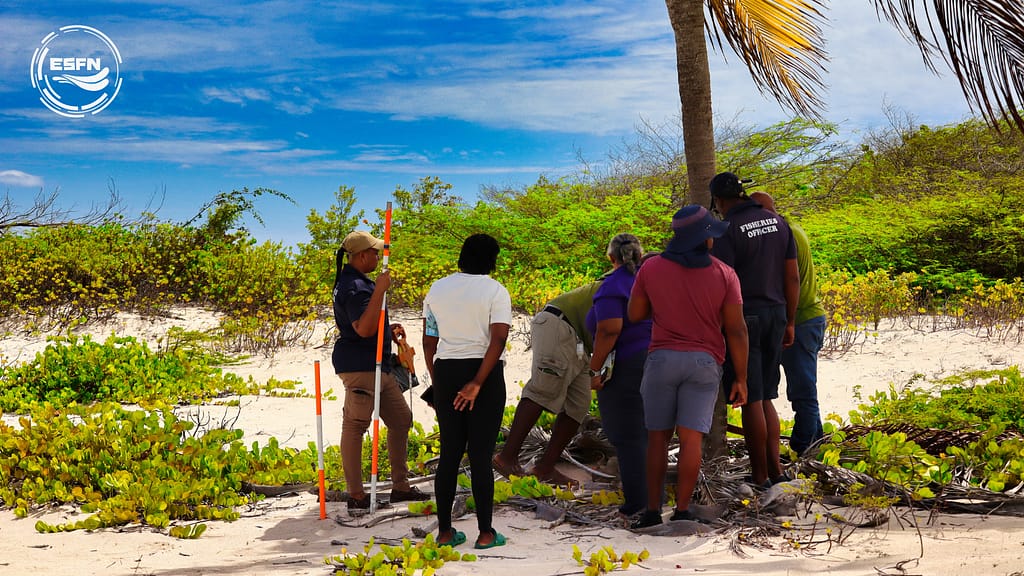
From April 13 to 17, 2026, the EcoShores Sustainable Futures Network (ESFN) will take part in a five-day IUCN Wetland Monitoring Training Workshop hosted at the Community Centre in Codrington, Barbuda, a key step to strengthen local and national capacity for evidence-based wetland protection across the Caribbean region.
Designed to bridge theoretical knowledge and practical application, the workshop will equip participating conservation practitioners with hands-on training in core monitoring techniques, including water quality assessment, mangrove and coastal vegetation mapping, avian population surveys, and standardized digital data management. In the workshop’s final two days, attendees will translate their new skills into action through a pilot monitoring exercise at Codrington Lagoon, a designated RAMSAR wetland site of global conservation importance. This on-site field component gives participants a unique opportunity to test newly learned methodologies, analyze initial field results, and refine monitoring frameworks to suit the unique ecological conditions of Caribbean coastal wetlands for long-term use.
Wetland ecosystems are dynamic landscapes that shift gradually in response to climate change, coastal development, and other human and natural pressures; without consistent, systematic monitoring, these subtle but significant ecological changes can go undetected, undermining targeted conservation action. For ESFN, this training directly advances the organization’s core mission of community-centered conservation, equipping its team with the skills to strengthen ongoing outreach programs and on-the-ground protection initiatives across Small Island Developing States (SIDS). Beyond building technical capacity for ESFN staff, the training empowers participants to share their new expertise and monitoring findings directly with local communities that depend on healthy wetland ecosystems for their livelihoods and cultural heritage.
This workshop builds on a series of prior conservation collaborations between ESFN and the regional Wise Use of Caribbean Wetlands Project. ESFN representatives previously participated in two national workshops under the initiative that delivered a comprehensive vulnerability assessment of the Codrington Lagoon RAMSAR site. The training also follows closely on the heels of ESFN’s World Wetlands Day Ecological Tour of the Barbuda RAMSAR site, held on February 21, 2026, which was also supported by the Wise Use of Caribbean Wetlands Project, creating a continuous pipeline of engagement and capacity building for local conservation.
“Wetland and coastal monitoring generates the foundational knowledge needed to guide smart conservation decisions and build long-term ecosystem resilience to climate impacts,” explained Britney McDonald, ESFN Portfolio Manager, in a statement ahead of the workshop. “By participating in this training, we are reinforcing our commitment to growing local conservation capacity, and ensuring that communities, including all Barbudans, have the practical tools they need to protect and manage these critical habitats themselves.”
Healthy wetlands deliver a wide range of irreplaceable global and local benefits: they support unparalleled biodiversity, act as natural coastal defenses that buffer communities against storm surges and sea level rise driven by climate change, and sustain fishing, tourism, and other core livelihoods for coastal populations. To extend the impact of the workshop, ESFN is calling on local community members, youth groups, and organizational partners to stay engaged in wetland conservation efforts, and to reframe these vital ecosystems as living, open-air classrooms that connect scientific research, local cultural heritage, and everyday community life.
As an extension of this educational mission, participants in ESFN’s existing Community Swim Programme will soon begin collecting regular marine and coastline data to support the organization’s long-term field monitoring efforts. This citizen science initiative does more than expand the scope of ESFN’s research: it also builds public confidence in understanding the coastal environments that shape daily life in Barbuda, and creates dedicated, accessible spaces for women and young people to take on active leadership roles in local conservation. Centering diverse community voices in monitoring and conservation planning ensures that protection efforts are inclusive, and that local populations feel empowered to steward their ecosystems for future generations.
Across all its programming, ESFN aligns its wetland conservation work with broader national and regional development priorities, linking ecological protection to goals for accessible environmental education, youth economic and social empowerment, and improved community well-being across SIDS.
A registered non-profit organization, ESFN focuses on advancing sustainability, environmental conservation, and community empowerment across Small Island Developing States and the Southern United States. The organization addresses interconnected global challenges, from climate justice and biodiversity loss to youth development, green technology innovation, and environmental education. Through signature initiatives including the ESFN Volunteer Explorer Program, World Wetlands Day outreach, the Build Your Future youth development program, the Community Swim Programme, and the Endeavour conservation publication, ESFN cultivates innovative, community-led solutions and inspires collective action to protect marine and coastal ecosystems. The organization also prioritizes supporting creative media and cultural expression from vulnerable communities, with a particular focus on elevating youth leadership and voices in conservation.