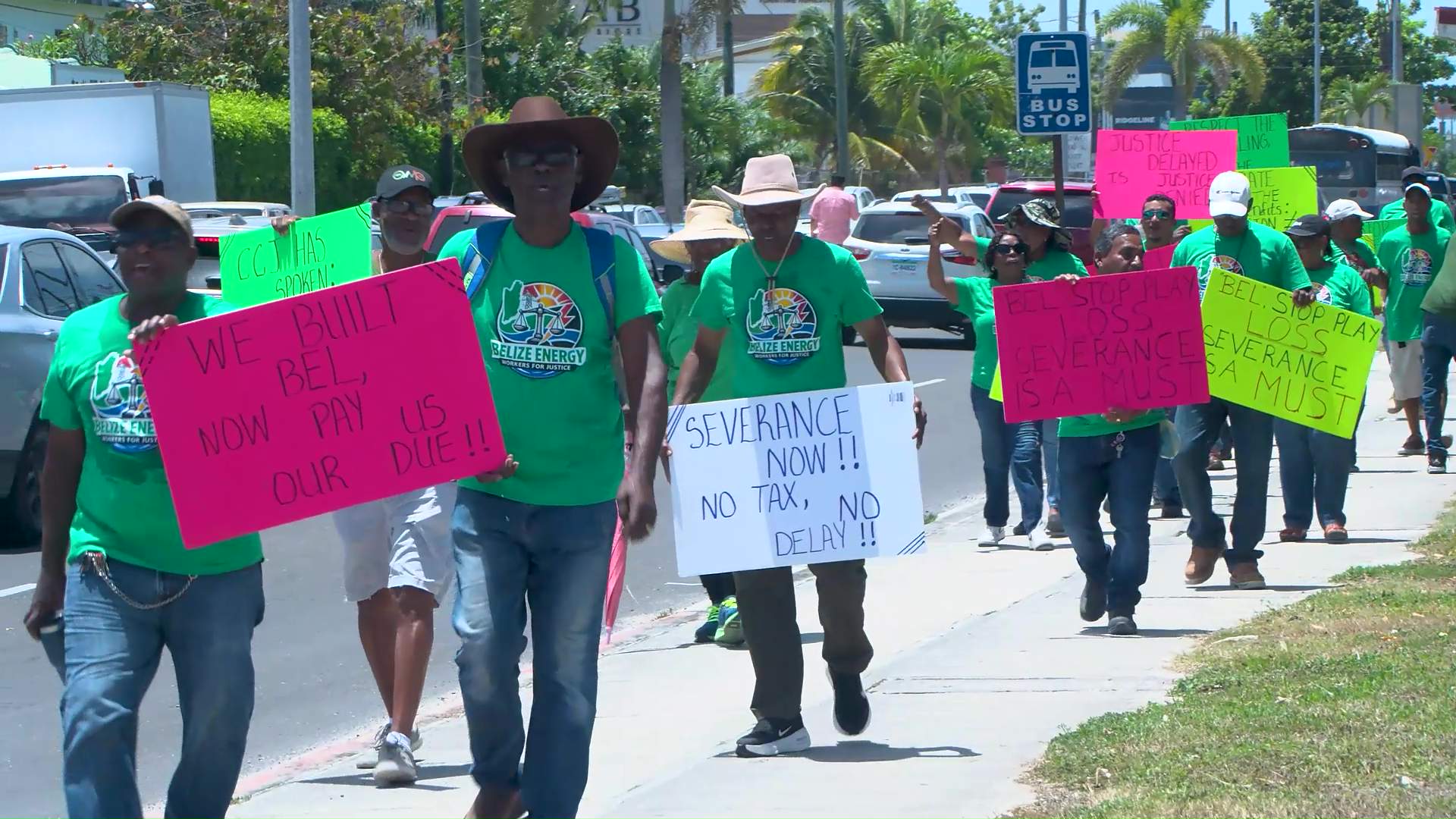
On April 14, 2026, a determined group of aging, medically vulnerable former employees of Belize Electricity Limited (BEL) gathered outside the utility’s headquarters in Belize City under the blistering midday sun, staging a urgent protest to demand long-overdue severance benefits they say they earned through decades of service. Organized under the banner of Belize Energy Workers for Justice (BEWJ), the demonstration is far more than a demand for back wages — for these workers, it is a fight for basic survival and human dignity, with many facing declining health that leaves them with little time to wait for redress.
The protesters point to a landmark 2025 ruling by the Caribbean Court of Justice (CCJ) that backs their legal claim: that their monthly pension payments do not fulfill BEL’s legal obligation to pay separate severance. BEWJ organizer Shawn Nicholas, a 31-year veteran of the company who has survived three strokes, explained that the court has already confirmed pensions do not count toward the required severance packages that remain unpaid. Fellow organizer Dorla Staine, who dedicated 40 years of her career to building BEL, echoed this frustration, noting that workers themselves contribute to their pension funds, meaning BEL’s argument that pension contributions count toward severance amounts to the company using workers’ own money to cover its obligations. Staine, who lost a kidney to kidney stones and struggled to access even a portion of her reduced pension benefits through the COVID-19 pandemic, said that company leadership has ignored her repeated pleas for help, showing no sympathy for her medical crisis.
The small group of protesters gathered on the steps of BEL’s office represents a far larger community of former workers who cannot join them. Staine shared that dozens of other ex-employees are too sick, disabled — some are blind or deaf — or even hospitalized to attend the demonstration, with two members currently fighting for their lives in medical care and several more recovering at home. These are the very workers who built BEL from the ground up, organizers stress, and they should not be forced to beg for benefits they were promised.
Protesters are calling on Belize’s Minister of Labor Kareem Musa, a trained lawyer who understands the CCJ ruling, to intervene immediately. Nicholas says the law is already on the workers’ side, and Musa has the power to resolve the dispute without forcing sick and elderly people to protest in dangerous heat. The organizers also expressed quiet disappointment that current BEL employees have not joined their cause, noting that they intentionally scheduled the protest during lunch hour to avoid disrupting operations or harming the company many of them still love. They warn that current workers will face the same unfair treatment when they retire, and collective action now could protect their own future benefits.
In a revelatory development that has intensified the dispute, News Five has obtained internal documents confirming that BEL senior executives have already received large, undisclosed severance payouts when they left the company — even as ordinary frontline workers are denied the same benefits. The exposé has confirmed what the former workers have long suspected: a two-tier system at BEL that prioritizes wealthy leadership at the expense of the rank-and-file employees who built the company. Staine recalled that this double standard dates back decades: when workers first demanded severance in 1999, leadership instead offered a restructured pension system, while quietly paying out large severance and bonuses to top executives behind closed doors. Staine added that even the pension benefits ordinary retirees receive have been cut in half, with many waiting years to access even the reduced funds they are owed.
For these aging, ill workers, time is not an unlimited resource. Their core message is clear: justice delayed is justice denied, and they need the severance they earned right now to cover medical costs and basic living expenses as they enter the final stage of their lives.