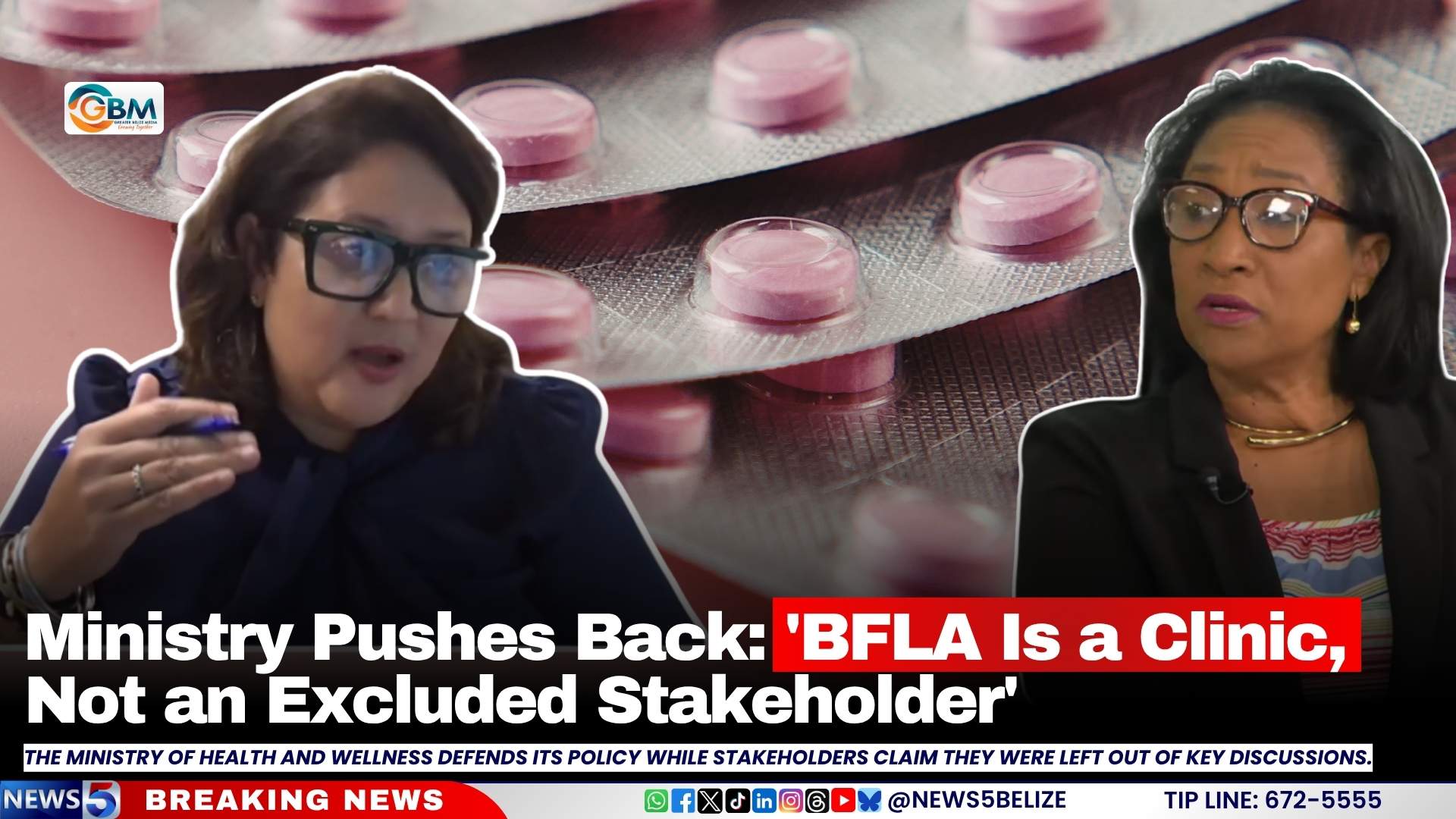
A public debate over the enforcement of Belize’s new national prescription regulations has intensified in recent days, centered on a growing rift between the Ministry of Health and Wellness and key reproductive health stakeholders over transparency and inclusive decision-making. At the heart of the disagreement is the status of the Belize Family Life Association (BFLA), a leading reproductive health organization that has raised sharp questions about whether it was sidelined during policy drafting.
Dr. Melissa Diaz Musa, Director of Public Health and Wellness, pushed back against claims of exclusion in an official statement, clarifying that the Ministry recognizes BFLA as a registered clinical entity integrated into the country’s broader public health ecosystem, not an outsider to regulatory discussions. “BFLA operates as a clinical care provider within our existing national health framework, so it is by no means an excluded stakeholder,” Diaz Musa affirmed.
Despite the Ministry’s reassurance, the lack of clear documentation around pre-policy consultations remains a major point of contention. Speaking on the local current affairs program *Open Your Eyes*, BFLA Executive Director Joan Burke questioned the transparency of the policy development process, pointing out that the list of invited consultation participants has never been made public.
Burke outlined the range of groups that should have a seat at the table for reproductive health regulation: the Belize Medical and Dental Association, the Nurses Association, the Pharmacy Association, national women’s advocacy organizations, BFLA itself, and representatives from the National Health Insurance scheme. “I really don’t know who was at the table during these consultations… Was this an informed decision that draws on the on-the-ground expertise of groups that work directly with patients every day?” Burke asked.
The BFLA executive director warned that cutting frontline reproductive health organizations out of decision-making carries serious risks for patient access. Instead of improving care, Burke argued, the current opaque policy process could create unnecessary barriers that limit Belizeans’ ability to get affordable, timely contraceptive care. She emphasized that BFLA respects the Ministry of Health’s mandate as the national regulatory body and is committed to collaborating on public health goals, but cannot back a policy that erects barriers to care.
“Our shared mission as public health actors is to deliver the highest standard of affordable care and expand access to essential services for all Belizeans,” Burke said. “We have to ask: does this proposed regulation actually advance that mission, or does it work against it?”
For its part, the Ministry of Health and Wellness acknowledged that it fell short in clearly communicating the details of the new enforcement framework to stakeholders early in the process. Ministry representatives reiterated that the core goal of the new prescription regulation is to strengthen the safety and consistent regulation of contraceptive access within the national public health system, aligning with the government’s commitment to improving public health outcomes.