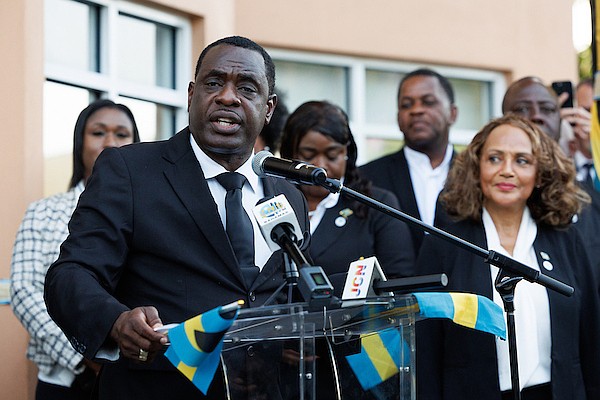
A small Bahamian political party, the Coalition of Independents (COI), has laid out an aggressive 100-day plan to reshape the nation’s immigration system, border security, and citizenship policies — a proposal that would kick off with a dramatic move to end naturalization just seven days after the party takes office, if elected.
Under the blueprint shared by the opposition group, a COI administration would first table amendments to the Bahamas Nationality Act to remove the legal framework for naturalization. Within the first 12 months in office, the party would hold a public referendum to embed this change permanently in the national constitution. Legal analysts have already flagged a critical procedural inconsistency in this timeline: since Bahamian citizenship is ultimately governed by constitutional provisions, full elimination of naturalization would require a constitutional amendment and popular vote before any legislative change can take effect, not after.
Notably, the party has left key details of the policy unaddressed. It has not clarified what pathways to citizenship would be available to replace naturalization, nor has it outlined how the backlog of pending naturalization applications would be resolved if the policy is scrapped. Competing as a third party in a political system long dominated by two major parties, the COI faces steep odds to secure power in upcoming elections.
A central structural reform laid out in the plan merges the portfolios of immigration and national security into a single cabinet ministry, which would be led directly by COI leader Lincoln Bain. The consolidation would bring all relevant enforcement agencies under a unified command structure, with the goal of aligning planning, interdiction, applicant processing, and enforcement actions to a single coordinated national timeline.
The proposal also includes a 30-day national amnesty program for individuals currently residing in The Bahamas without legal status. During this window, all undocumented people would be required to complete biometric registration, employment confirmation, housing verification, and full security background checks. Individuals found to meet basic compliance requirements would be granted temporary legal status, while those who fail checks or do not come forward would be processed for deportation.
To streamline status verification for the public and private sectors, the plan calls for the launch of a centralized digital Legal Immigrant Portal. Employers and landlords would be required to check a migrant’s legal status via the platform before extending a job offer or signing a rental agreement. Entities that fail to comply with the verification requirement would face financial penalties, potential suspension of operating licenses, or court action.
One of the plan’s most controversial planks is an immediate suspension of all new work permit applications from Haitian nationals, effective from day one of a COI administration. All existing work permits held by Haitian workers would also be subject to individual review as part of a broader audit of the entire work permit system. Legal experts have noted that a blanket suspension based solely on nationality could raise significant constitutional questions, as national policy is required to avoid arbitrary or discriminatory treatment under existing law.
Strengthened border enforcement is a core priority of the plan. The COI proposes creating a layered “sea wall” of security around the island of Inagua, deploying marine patrol vessels, surveillance drones, radar systems, and rapid response teams to both the eastern and western coasts to intercept boats suspected of carrying undocumented migrants.
Within the first 30 days of taking office, the COI says it will launch a public commission of inquiry to investigate longstanding allegations of corruption and abuse in the processing of passports, work permits, and residency approvals. The party also plans to declare a targeted state of emergency focused exclusively on illegal immigration and border security starting on day one.
Additional proposed measures include clearing unregulated shanty towns that house large numbers of undocumented migrants, building purpose-built regulated housing for migrant workers with legal status, and mandating that all immigrants hold approved private health insurance to reduce strain on the country’s public healthcare system.
The plan also introduces a volunteer deputization pilot program, which would allow thoroughly vetted civilian volunteers to assist law enforcement with surveillance and reporting in high-risk border areas, operating under the direct supervision of official security personnel. For serving immigration officers, the COI calls for a comprehensive modernization push, including higher pay and improved benefits, upgraded operational equipment, advanced specialized training, cross-agency intelligence sharing systems, and mental health and wellness support.
In the final phase of the 100-day plan, between day 61 and day 100, the party intends to introduce new legislation targeting the hiring of undocumented workers and the provision of unregulated housing to migrants, as well as stricter anti-smuggling laws, rules allowing for the confiscation of smuggling vessels, and formal regulatory frameworks for the digital portal, regulated worker housing, mandatory health insurance, and anti-fraud protections.
Party representatives say the entire plan is designed to return full control of The Bahamas’ borders to the national government, improve compliance with immigration laws, and expand the country’s enforcement capacity. However, the proposal leaves two critical gaps unaddressed: the COI has not outlined a funding plan for the wide-ranging series of reforms, nor has it confirmed that all measures — particularly large infrastructure projects such as a new national immigration headquarters and a dedicated enforcement base in Inagua — can be fully delivered within the ambitious 100-day timeline.
The party says progress will be assessed at the 100-day mark based on three core metrics: increased border and internal enforcement activity, the completion of a fully verified national immigration database, and active repatriation of undocumented people found non-compliant. A full national public report will then be released to outline initial results and lay out the next phase of policy implementation.