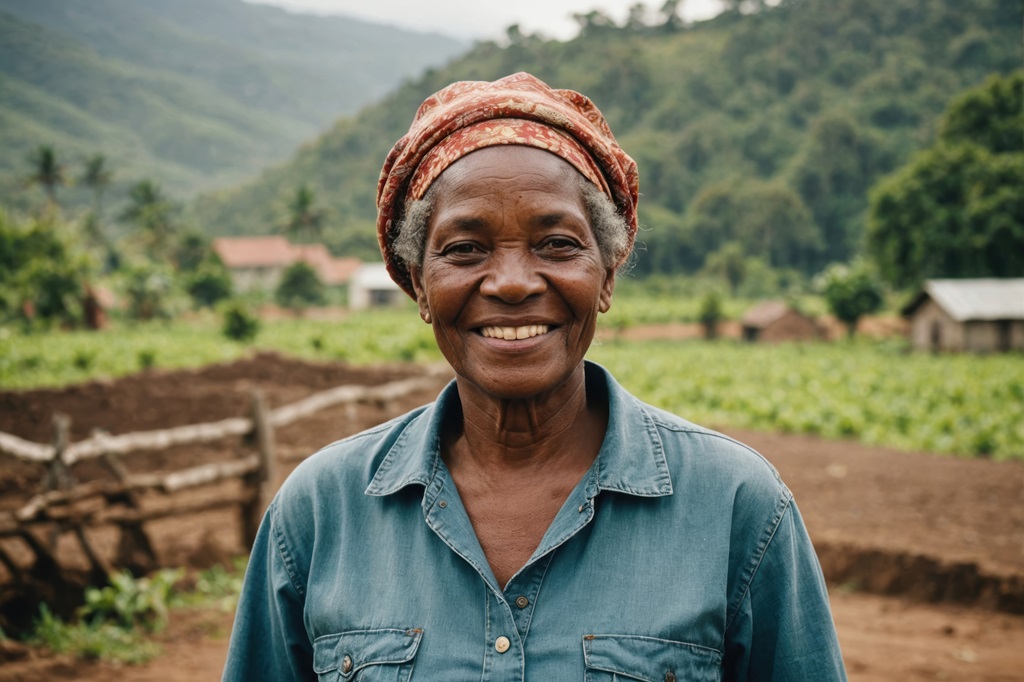
How has the concept of happiness shifted over generations? This question has grown increasingly pressing to examine as modern life reshapes what we prioritize and how we measure well-being. For generations of Jamaicans who grew up in rural areas between the 1960s and 1990s, happiness was rooted in simplicity. While daily life presented significant economic challenges, it was rich in shared experience: children gathered to play outdoors after dark, walked to school in groups, swam in local rivers, and split whatever small resources they had with neighbors. Whole communities looked out for one another, fostering an unspoken, deep sense of belonging that permeated daily life. Even people with very few material possessions rarely felt poor; their wealth lay in social connection, collective community, and grounded perspective on what matters most.
Recently, I spoke with dozens of elderly Jamaicans, several of whom have lived more than a century, and found striking consistency in how they describe lasting happiness. Nearly all framed well-being around three core pillars: showing care for others, letting go of grudges easily, and nurturing a gentle, generous heart. Most remain active in local churches and community groups, contributing in quiet but meaningful ways that bind their neighborhoods together. Their lives make one truth clear: happiness has never been a purely material pursuit.
Today, our collective definitions of happiness have grown broader, but also far more complicated. Many people now tie well-being to visible markers of success: the neighborhood we live in, the car we drive, the prestige of our career. Others frame it around family, personal freedom, or hitting individual career and life goals, with financial stability, access to healthcare, and the ability to travel all shaping how we experience contentment. But one new, powerful force has reshaped modern understandings of happiness: social media.
The 2026 World Happiness Report highlights a worrying global trend: falling well-being among young people, especially in high-income developed countries. One key contributing factor is the amount of time young people spend online, constantly consuming others’ curated content and comparing their own lives to unrealistic highlights. This shift has pushed us to measure happiness by external metrics—likes, shares, picture-perfect moments—rather than how we actually feel internally. In many communities, deep connectedness has been quietly replaced by constant comparison; the shift is subtle, but its impact on collective mental health is impossible to ignore.
Even amid this global shift, Jamaica offers a critical lesson on what lasting happiness actually looks like. In the 2026 World Happiness Report, Jamaica ranks 49th overall in global well-being—but ranks first in the world for the frequency with which its people help strangers. That single statistic says volumes about the national character that sustains well-being across generations. Despite widespread economic and social challenges, Jamaican culture is defined by deep resilience: the ethos of “one love,” enduring community ties, and shared faith shape how people experience daily life. While many Jamaicans do not have abundant material resources, they consistently find joy in connection and purpose.
Perhaps the core of happiness has not changed as much as we think—what has changed is how we pursue it. Too many of us now look outward for validation, when the things that actually sustain contentment have been close to us all along: strong relationships, a clear sense of purpose, good health, and service to the people around us. Every person faces hardship in life; that is an unavoidable part of the human experience. But holding onto resentment, chronic stress, and regret does not serve us—it erodes both our mental peace and our physical health. Letting go of these burdens is never easy, but it is essential to long-term well-being.
In my role as Jamaica’s Minister of Health and Wellness, I see every day how deeply interconnected our mental and physical health truly are. The ways we think, relate to others, and structure our daily lives all shape our overall well-being. Happiness is not some abstract, distant goal we have to earn—it is something we actively build through the small choices we make every single day.
The fundamental pillars of happiness have not changed: treat others with kindness, practice compassion for yourself and those around you, give back to your community whenever you can, prioritize your physical and mental health, and strive for balance in all areas of life. Happiness does not require great wealth, and it can never be measured by outward appearances alone. It requires awareness of what matters, intentional choices to prioritize connection over comparison, and a willingness to focus on the things that bring lasting meaning.
In a world that constantly pulls our attention outward, to other people’s highlight reels and external markers of success, the most important step we can take is to turn inward. Because in the end, happiness is not something we scroll past on a screen—it is something we live, every single day. This article was written by Dr. Chris Tufton, CD, MP, Jamaica’s Minister of Health and Wellness.