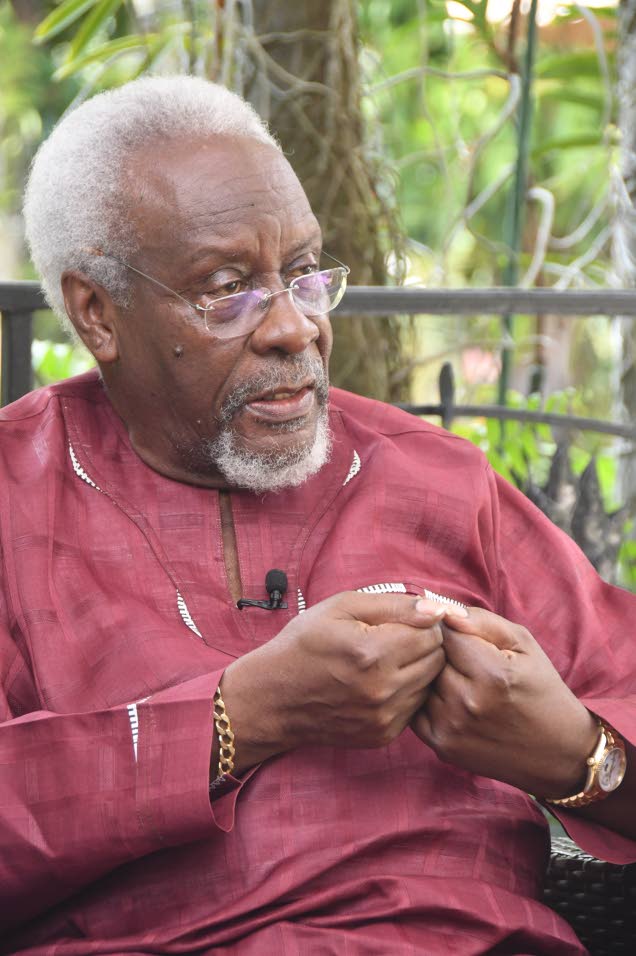
In a landmark address at The University of the West Indies’ Mona campus last Wednesday, former Jamaican Prime Minister and revered Caribbean statesman PJ Patterson delivered the annual Norman Manley Distinguished Lecture, using the platform to sound a clarion call for renewed regional cohesion and expanded strategic partnerships across the Global South. With a decades-long record of advancing Caribbean integration and deepening ties between the Caribbean and continental Africa, Patterson warned regional leaders that the global gap between the enforcement of domestic law and widespread disregard for international law is growing at an alarming rate, making collective action non-negotiable for small island developing states.
Patterson opened his argument by calling for a urgent reevaluation of diplomatic and economic ties between the Caribbean archipelago and Latin America, arguing that the Community of Latin American and Caribbean States (CELAC) must be transformed from a procedural body into a powerful collective force capable of defending regional sovereign space from external interference. He specifically urged immediate, targeted action to deepen economic integration and technical collaboration with Latin American heavyweights Mexico and Brazil as a first step toward strengthening CELAC’s influence.
His current work advancing cooperation between the Caribbean and a unified global Africa has reinforced his conviction that the two regions share irreversibly aligned interests on the most pressing global issues of the 21st century: climate justice, multilateral institutional reform, and urgent global debt restructuring. Patterson framed the deepening of economic, social, and cultural bonds between the Caribbean and Africa as a pivotal strategic priority, rather than a symbolic gesture.
Turning to the Caribbean Community (Caricom), Patterson highlighted the regional bloc’s long-proven capacity for collective action, noting that Caricom must leverage diplomatic skill backed by specialized technical expertise to lead on the global stage, rather than simply conforming to external demands in the name of survival. He argued that a coordinated united front across key Global South blocs—including the African Union, Caricom, the Organisation of African, Caribbean and Pacific States (ACP), and the Group of 77 and China—gives the Global South the collective weight to reshape the outdated, exclusionary global order.
“The Global South can no longer be content to react to agendas set by others,” Patterson emphasized. “We must set our own priorities. Our unity amplifies our moral authority. It is about reshaping an archaic global order to make it inclusive, fair, and sustainable for all our people.”
To illustrate the tangible power of regional collective action, Patterson pointed to two landmark historical negotiations that delivered wins for both the Caribbean and its external partners. The first was the 1975 Lomé Agreement, a trade and aid pact between the European Economic Community and ACP nations, negotiated as a single regional bloc rather than a collection of individual states. That historic negotiation, led by Jamaica through a dedicated regional negotiating mechanism, laid the groundwork for all future external economic talks and established the European Union as the Caribbean’s largest donor partner to this day.
The second example was the 1990s Shiprider Agreement negotiations with the United States, focused on counter-narcotics cooperation in Caribbean waters. When the U.S. presented its initial draft, Caribbean leaders refused to either reject the deal outright or surrender their sovereign interests to accept unmodified terms. Instead, they gathered in Barbados, selected Jamaica to draft a revised model agreement aligned with all regional nations’ sovereignty, and negotiated a final pact that delivered mutual benefits for both the Caribbean and the U.S. A 2004 amending protocol between Jamaica and the U.S. formalized expanded cooperation: the agreement allows coordinated ship boarding, overflight operations, and information sharing to disrupt the flow of illicit drugs from South America through Jamaican territorial waters to the U.S., while explicitly protecting the sovereignty of Caribbean nations and banning the use of force against civilian aircraft in flight.
Patterson also referenced Article 18 of the Treaty of Chaguaramas, which established a dedicated council of Caricom foreign ministers tasked with coordinating the bloc’s foreign policy. While he acknowledged that member states have held divergent positions on issues ranging from diplomatic recognition of China and Taiwan to global debates over Japanese whaling, he emphasized that Caricom’s greatest global power comes from speaking with one unified voice in international forums, setting aside internal divisions to vote as a cohesive bloc.
Reiterating his core thesis, Patterson stated, “We do best when together we exercise the tremendous power and intellectual mastery of the entire community to confront the common obstacles and challenges which we face in the post-colonial world. There can only be one verdict: A culture of regionalism is always superior to insular diplomacy.”
Within the 56-member Commonwealth, Patterson noted that the Caribbean bloc holds enough collective sway to push major powers including Canada, Australia, India, and the United Kingdom to expand inclusive global governance beyond their own narrow interests, extending benefits to smaller member states across Africa, the Caribbean, and the Pacific. He warned that rising “narcissistic hegemonism” poses a growing threat to smaller sovereign states across the Global South, and that the Caribbean has already proven its ability to lead collective action through the Lomé negotiations.
“ We cannot afford recklessness or confrontation. We must provide the leadership as we did for the ACP, in steering a course which enhances our full sovereign interests. We are no longer pawns of European conflicts nor tenants at will in anyone’s backyard,” Patterson concluded.