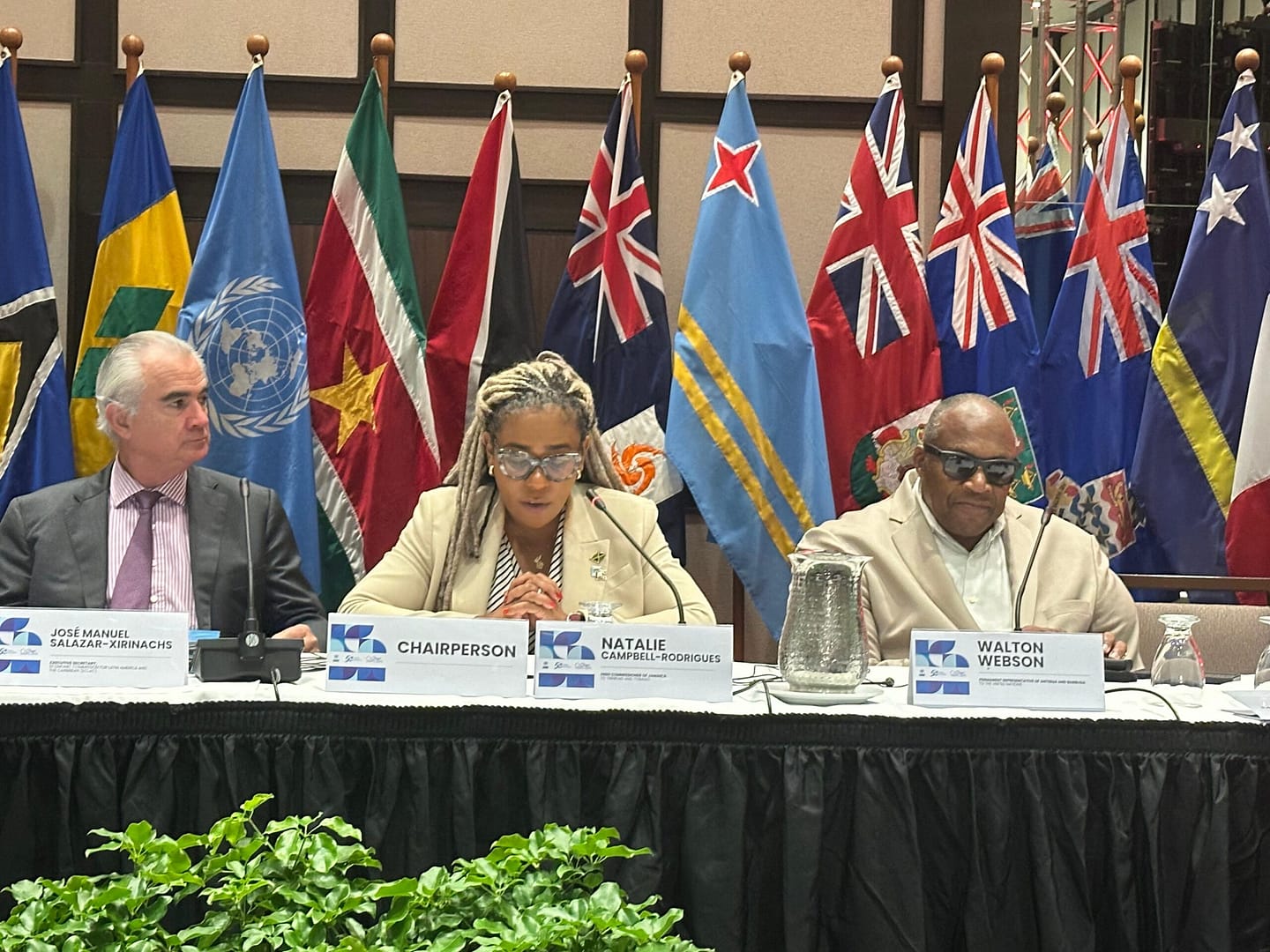
Ambassador Walton Webson, Antigua and Barbuda’s Permanent Representative to the United Nations, positioned the survival of Small Island Developing States (SIDS) as the central focus of high-level deliberations during the 22nd Meeting of the Caribbean Development and Cooperation Committee (CDCC) Monitoring Committee. The December 8-9 conference in Trinidad and Tobago, convened under the theme “Unlocking Caribbean Potential: Enhancing Growth and Development through South-South Cooperation,” featured Ambassador Webson’s pivotal contributions alongside First Secretary Claxton Duberry from the Antigua and Barbuda Mission in New York.
During a distinguished panel addressing “Financing for Development: Increasing Caribbean Access to Climate Finance and Innovative Financing Mechanisms,” Ambassador Webson delivered a compelling address blending urgency with optimism for the Caribbean’s future. He characterized the current juncture as a definitive turning point that would shape the region’s resilience and prosperity throughout the coming decade. Drawing upon the transformative principles outlined in the Antigua and Barbuda Agenda for SIDS (ABAS 2024–2034), the ambassador implored fellow delegates to recognize this framework as both a generational commitment and a solemn promise toward achieving sustainable development for Caribbean communities and all SIDS nations.
The diplomat articulated how Caribbean SIDS remain constrained within a global financial architecture that penalizes vulnerability while employing evaluation metrics that systematically ignore climate risks. With more than 40% of SIDS currently experiencing or approaching debt distress, Ambassador Webson emphasized the critical necessity for revised financing regulations, enhanced financial instruments, and a strategic regional transition from post-disaster recovery to proactive resilience building.
Central to this transformative vision is the newly established SIDS Centre of Excellence, which the ambassador described as an innovative initiative that would leverage cutting-edge tools to pioneer novel approaches to climate-resilient development. Among the groundbreaking measures highlighted were the operationalization of the Debt Sustainability Support Service (DSSS) as a cornerstone mechanism, alongside efforts to simplify and accelerate access to climate finance.
Additional strategic proposals included the expansion of debt-for-climate swaps, the introduction of structured resilience bonds, and the development of domestic currency financing alternatives. Ambassador Webson further advocated for strengthening regional mechanisms through shock-responsive social protection systems, innovative disaster insurance products, resilience reserves, and comprehensive drought and heat-response frameworks.
“The Caribbean does not lack investment opportunity — it lacks risk alignment,” Ambassador Webson asserted, challenging international financial institutions to forge partnerships combining public, concessional, and private capital that properly align financing mechanisms with climate realities.