标签: Trinidad and Tobago

特立尼达和多巴哥

  • US donates equipment to prison service

    US donates equipment to prison service

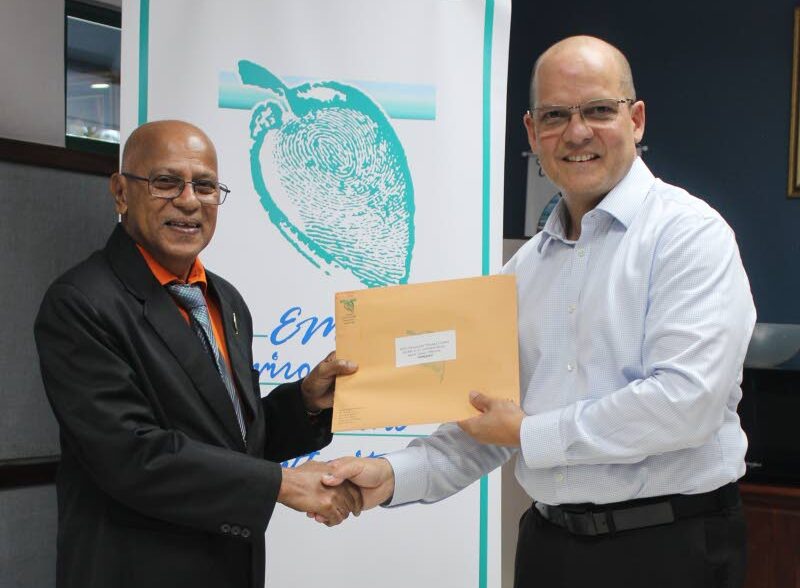
    In a significant enhancement to bilateral law enforcement cooperation, the United States Embassy has delivered substantial equipment and facility upgrades to the Trinidad and Tobago Prison Service’s Canine Unit. The formal handover ceremony occurred on December 17 at the Youth Transformation and Rehabilitation Centre (YTRC), marking another milestone in the ongoing partnership between the two nations.

    The equipment donation encompasses specialized tools including a Stihl mist blower with gas canister, Stihl brush cutter with harness, electric pressure washer, canine training equipment including flirt poles and Starmark fetch balls, Kong Classic toys in multiple sizes, and washable dog pads. These resources are designed to enhance the operational capabilities and animal welfare standards of the canine unit.

    A notable achievement unveiled during the ceremony was the completion of a purpose-built whelping facility, constructed by Prison Service personnel using materials funded through US Embassy support. This new breeding infrastructure enables the unit to develop its own lineage of working dogs, reducing dependency on external procurement and creating potential for specialized training programs.

    Further enhancements included the comprehensive refurbishment of two canine transport vehicles, significantly improving the unit’s mobility and operational readiness for various security scenarios.

    The ceremony was attended by Prison Commissioner Carlos Corraspe alongside Deputy Commissioners Hayden Forde, Curtis Guy, and Elvin Scanterbury. The US delegation featured Kelley Whitson, Chief of International Narcotics and Law Enforcement Affairs, accompanied by Saleem Boochoon and Nathan Johnson. Debbie Jacob, a longstanding advocate for prison rehabilitation initiatives, also participated.

    Commissioner Corraspe highlighted the canine unit as “one of the pockets of excellence” within the prison system and emphasized the strategic importance of the international partnership. He reminded officers of their critical role in national security, urging continued pursuit of operational excellence.

    Ms. Whitson reaffirmed her office’s commitment to sustained collaboration, while Mr. Boochoon praised the unit’s professional standards and expressed optimism about future joint initiatives.

    Concurrently, the Prison Service launched a new rehabilitative program where YTRC residents receive instruction in canine care and treatment. This initiative provides practical vocational skills aligned with the center’s mission to prepare individuals for successful reintegration into society.

  • Deepening trade relationships in Latin America

    Deepening trade relationships in Latin America

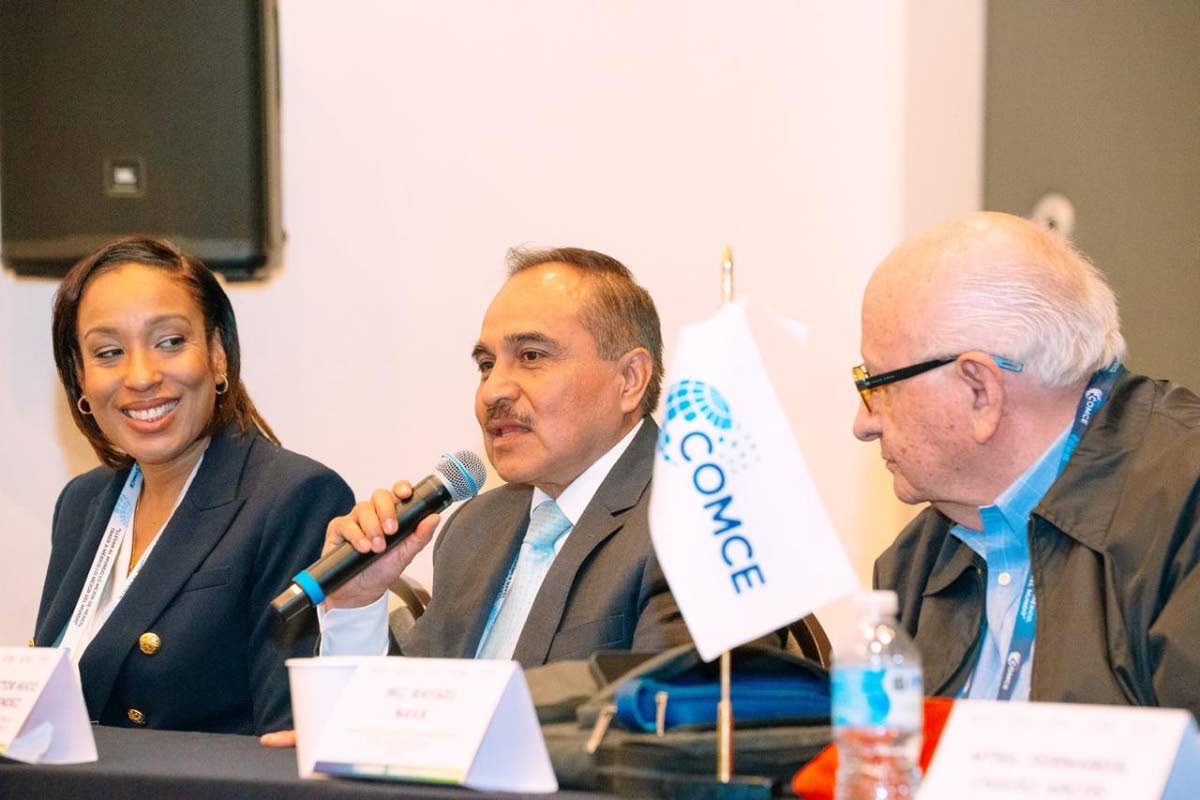
    In a significant development for Caribbean-Latin American economic relations, the Trinidad and Tobago Chamber of Industry and Commerce (TT Chamber) has established a formal trade partnership with Mexico’s Business Council for Foreign Trade, Investment and Technology (COMCE). The landmark memorandum of understanding was signed on October 30 during the 31st Mexican Foreign Trade Congress in Querétaro, facilitated by the Mexican Embassy in Trinidad and Tobago.

    This institutional framework creates a structured collaboration mechanism between the private sectors of both nations, focusing on sustainable growth, innovation, and regional economic integration. The agreement establishes concrete cooperation protocols for joint project development, information exchange, business missions, and mutual support in trade and investment promotion.

    The signing ceremony occurred within the context of a comprehensive TT trade mission to Mexico from October 25-31, led by TT Chamber president Sonji Pierre-Chase. During high-level working sessions, Pierre-Chase presented substantial collaboration opportunities to Mexican business leaders, emphasizing her organization’s role as Trinidad and Tobago’s primary economic representative and the largest business association within the Caribbean Community (Caricom).

    A particularly strategic dimension emerged through the TT Chamber’s participation in the COMCE Mesoamerican Foreign Trade Council, which convened public and private sector representatives across Central America and the Caribbean. Mexican Ambassador Víctor Hugo Morales highlighted Trinidad and Tobago’s crucial position within Caribbean markets and Mexico’s opportunity to diversify exports while integrating more deeply into regional value chains. The diplomat specifically noted TT’s potential role in maritime transport initiatives due to its extensive infrastructure and connectivity throughout the Eastern Caribbean.

    Pierre-Chase stated, ‘Our participation in COMCE provides significant leverage for TT businesses to explore opportunities beyond Caricom markets. Given how global politics directly impact trade, we consider it prudent to seek new market opportunities within the Pan Caribbean region. This engagement positions Trinidad and Tobago to potentially become the first English-speaking country invited to join Mesoamerica.’

    The Congress featured thematic panels on global logistics trends, disruptive trade strategies, corporate responsibility, and artificial intelligence’s impact on business management. The TT delegation actively engaged in the Made in Mexico with Quality B2B program, demonstrating strong interest in developing strategic supply chains and joint manufacturing partnerships.

    The mission included substantive meetings with Querétaro government officials to explore initiatives promoting trade, investment, and cultural-educational exchanges. Business representatives Sarah Gangadeen and Clint Groves of Firestone Bread Co Ltd conducted successful negotiations with San Luis Potosí officials and local producers, establishing food sector procurement agreements and arranging acquisition of additional industrial baking equipment with Mexican embassy support.

    Flavio González, the embassy’s head of trade and cooperation, outlined Mexico’s trade promotion strategies in TT while highlighting opportunities to strengthen regional presence and engage Caribbean partners for internationalizing the ‘Plan Mexico’ initiative.

    The trade mission successfully enhanced bilateral economic cooperation, established new business collaboration channels, and positioned both nations as dynamic, reliable partners in the region. The TT Chamber reaffirmed its commitment to advancing regional economic growth through continued engagement with business chambers, relevant organizations, and governments.

  • Towards a better Christmas

    Towards a better Christmas

    In a poignant seasonal reflection, commentator Steve Alvarez contemplates the universal human experience of navigating life’s inevitable challenges alongside moments of profound joy. Writing during the Christmas period, Alvarez observes how both personal hardships—from financial instability and housing struggles to illness and loss—and collective crises like wars and famines test human resilience.

    The central thesis examines the fundamental role of governance in managing these challenges. Alvarez argues that citizens delegate crucial responsibilities—education, healthcare, public safety, and community maintenance—to elected officials precisely because these services exceed individual capabilities. This delegation, however, carries immense responsibility that should never translate into exploitation or self-aggrandizement.

    With Christmas symbolism as backdrop, the commentary calls for a renewed commitment to servant leadership. Alvarez invokes the Christmas narrative’s emphasis on love and sharing as foundational principles that should guide political representation. The piece advocates for recognizing human diversity as strength rather than division, drawing parallels to the natural world’s varied beauty.

    The reflection culminates in an impassioned appeal for national unity in Trinidad and Tobago. Alvarez emphasizes that overcoming life’s ‘storms’ depends not on their cessation but on collective management through political will and mutual appreciation. The commentary closes with a seasonal hope that elected representatives might prioritize service over self-interest, working toward realizing TT’s potential as a ‘perfect paradise’ where citizens unite to improve life for all.

  • PM pays tribute to ‘dearest sister’ Dr Daphne Phillips-Gaskin

    PM pays tribute to ‘dearest sister’ Dr Daphne Phillips-Gaskin

    Prime Minister Kamla Persad-Bissessar delivered a heartfelt tribute to former UNC senator Dr. Daphne Phillips-Gaskin during her funeral service on December 17 at the Trinidadian Christian Centre in Petit Valley, commemorating the life and contributions of the 82-year-old public servant who passed away on December 3.

    In her eulogy, Persad-Bissessar characterized Phillips-Gaskin as both a distinguished scholar and devoted public servant who operated consistently according to conscience and principle. The Prime Minister reflected on their shared journey in national leadership, noting how Phillips-Gaskin remained steadfastly at her side ‘like a sister’ throughout their political careers.

    Phillips-Gaskin’s remarkable trajectory began in Belmont, where she developed early foundations in compassion through her training as a nurse and midwife. Her academic pursuits at the University of the West Indies, culminating in a doctoral scholarship in sociology, profoundly shaped her commitment to gender equality and community empowerment.

    As a senior lecturer, Phillips-Gaskin maintained that education carried inherent obligations—believing knowledge should fundamentally uplift and strengthen communities. This philosophy guided her transition into government service, where she served as senator and Cabinet Minister during the 1995-2001 UNC administrations.

    Persad-Bissessar highlighted Phillips-Gaskin’s pioneering work in shaping a more humane national agenda, particularly noting her bravery in challenging political norms. ‘Some of the men did not have the belly to do what she did back in the days,’ the Prime Minister remarked, acknowledging the additional barriers faced by women in leadership during that era.

    Phillips-Gaskin’s legacy includes substantial advancements in gender policy, strengthened protections against domestic violence, and championing family law reform. Her leadership enabled thousands of women to gain skills, training, and employment opportunities through programs grounded in her belief in their capacity for self-sufficiency.

    In November 2000, Phillips-Gaskin assumed the responsibility of acting Prime Minister, discharging her duties with what Persad-Bissessar described as ‘calm authority and restraint.’ Her loyalty to the UNC remained principled and enduring, demonstrated notably during a critical moment in 2010 when she stood publicly with the Prime Minister at personal cost.

    The Prime Minister concluded that Phillips-Gaskin’s legacy endures through the laws she shaped, the women she empowered, the families she protected, and the exemplary standards she established for public service.

  • Intangible skills Caribbean professionals need to succeed in 2026

    Intangible skills Caribbean professionals need to succeed in 2026

    A profound transformation is reshaping career advancement pathways across the Caribbean region, where traditional markers of professional success are rapidly losing relevance. According to digital strategist Keron Rose, the established formula of academic credentials, job titles, and seniority no longer guarantees career progression or financial growth in the contemporary Caribbean business landscape.

    Many professionals throughout the islands report increasing frustration despite following conventional paths to success. Despite obtaining qualifications and demonstrating workplace commitment, numerous individuals find themselves constrained by stagnant compensation structures and limited advancement opportunities within often sluggish institutional frameworks. This widespread sentiment has prompted many to consider whether regional departure represents the only viable route to meaningful career development.

    Rose identifies 2026 as a pivotal juncture where intangible capabilities will outweigh formal credentials in determining professional achievement. The emerging success paradigm emphasizes personal leverage within imperfect systems rather than reliance on traditional institutional pathways. This shift demands fundamentally new approaches to professional development and value proposition articulation.

    Five transformative skills have emerged as critical differentiators for Caribbean professionals seeking advancement:

    1. Value Communication Mastery: Moving beyond job descriptions to articulate concrete problem-solving capabilities, risk mitigation, and revenue impact represents the foundation of modern professional positioning. Professionals must learn to express outcomes rather than responsibilities.

    2. Adaptive Learning Agility: With technological acceleration shortening skill relevance cycles, the capacity for rapid knowledge acquisition surpasses static expertise. Professionals must embrace continuous learning through global digital platforms rather than relying solely on formal education systems.

    3. Strategic Personal Branding: Visibility has become professional currency in the digital age. Building a discernible professional identity through platforms like LinkedIn enables Caribbean talent to transcend geographical limitations and connect with global opportunities.

    4. Systemic Efficiency Cultivation: Success increasingly belongs to those who maintain high performance standards despite working within inefficient systems. Professionals must resist normalizing mediocrity and instead champion excellence regardless of institutional constraints.

    5. Strategic Positioning: Conscious career navigation that anticipates market shifts and aligns skill development with emerging opportunities separates advancing professionals from stagnant counterparts.

    Rose emphasizes that these competencies collectively create leverage—the critical factor separating thriving professionals from those experiencing stagnation. The Caribbean region possesses abundant talent but requires new frameworks for channeling that potential effectively within evolving global economic structures.

    The digital strategist concludes that while institutional transformation may progress slowly, individual professionals can immediately begin repositioning themselves for success through deliberate skill development and strategic visibility enhancement.

  • New EMA board gives approval to 2 EOG wells

    New EMA board gives approval to 2 EOG wells

    In a significant development for Trinidad and Tobago’s energy sector, the Environmental Management Authority (EMA) has formally issued a Certificate of Environmental Clearance (CEC) to Houston-based EOG Resources for offshore gas exploration activities. The authorization permits the company to proceed with drilling operations at two designated gas wells, TG1 and TG2, situated within the NCMA 4(a) Unlimited Block off the nation’s North Coast.

    The approval marks the first CEC issued by the EMA under its newly appointed board of directors. Chairman Doolar Ramlal emphasized that the decision was rendered well within the statutory timeframe, highlighting the agency’s dedication to efficient, transparent, and timely regulatory processes. The application, initially submitted on March 5, underwent a comprehensive technical review. This rigorous assessment included advanced hydrocarbon spill modeling, drill cuttings dispersion analysis based on comparable offshore projects, and evaluation of a detailed emergency response plan for potential accidents and natural disasters.

    EOG Resources, which has maintained operations in Trinidad and Tobago since the 1990s, reaffirmed its long-term commitment to the country’s upstream energy sector. This sentiment was echoed during a November meeting between EOG Chairman Ezra Yacob and Energy Minister Dr. Roodal Moonilal. Both parties expressed mutual interest in strengthening collaboration to boost oil and gas production, advance the nation’s hydrocarbon development agenda, and support broader energy objectives. The UNC government acknowledged EOG’s consistent contributions to local production and emphasized its commitment to maintaining strong partnerships with industry stakeholders.

    The EMA’s approval demonstrates a balanced approach to facilitating energy development while upholding stringent environmental safeguards, aligning with the Prime Minister’s vision for sustainable national development.

  • Cops seize $10m in bootleg liquor, cigarettes from Suriname

    Cops seize $10m in bootleg liquor, cigarettes from Suriname

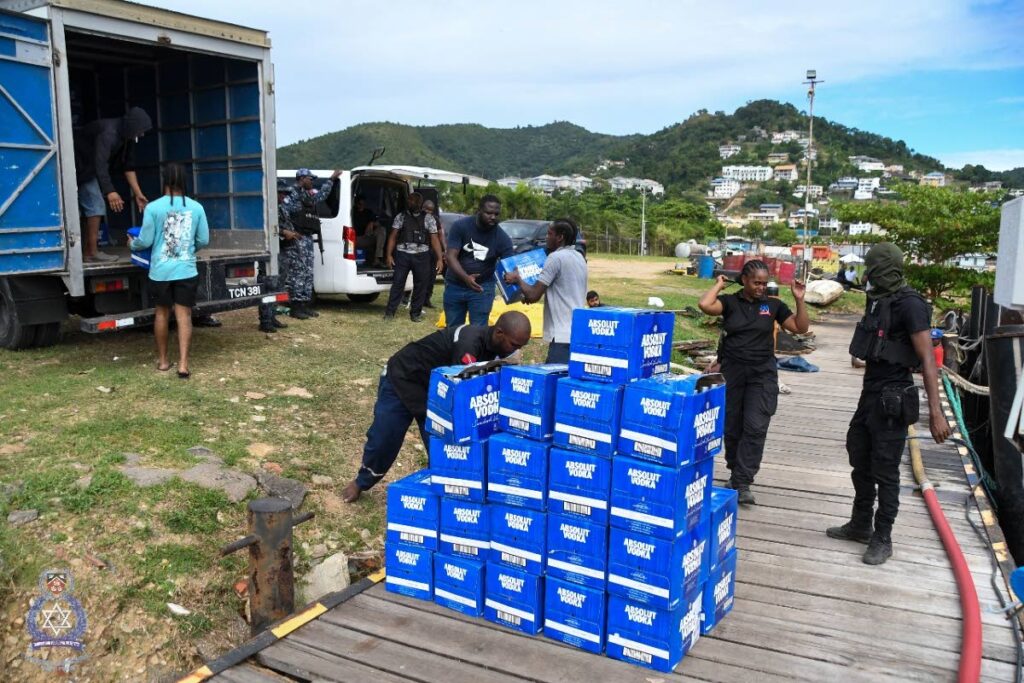
    In a significant crackdown on illicit trade, Trinidad and Tobago police have intercepted a massive shipment of contraband goods valued at over $10 million during a coordinated operation at Carenage port. The December 16th evening operation resulted in the apprehension of 16 individuals attempting to flee the scene while offloading smuggled luxury alcohol and tobacco products from Suriname.

    According to the TT Police Service (TTPS), officers from the Port of Spain Division Investigation and Operations Unit monitored a vessel docking at Shore Pier 3 around 8:15 PM. As law enforcement approached, the suspects abandoned their cargo and attempted to escape but were subsequently detained. The subsequent search revealed approximately 1,000 cases of premium vodka, 200 cases of Johnnie Walker whiskey, 200 cases of Hennessy cognac, and 1,000 cases of ATLANTA cigarettes.

    The operation, supported by multiple specialized units including the Canine Division, also led to the seizure of four transport vehicles connected to the smuggling operation. Industry experts estimate the alcohol component alone at $5.4 million, with the tobacco products valued at approximately $4.8 million.

    In related enforcement actions, tax authorities simultaneously targeted gaming establishments with substantial outstanding tax liabilities. Six businesses were served with gaming tax notices totaling $4.55 million in unpaid taxes, resulting in immediate shutdown orders for their gaming machines until compliance is achieved. A subsequent operation at a Members Club on Ariapita Avenue uncovered an additional $2.2 million in tax arrears, leading to one arrest for illegal gaming operations and the seizure of evidentiary materials and cash totaling $69,511.

    Satesh Moonasar, President of the Bar Owners Association, commended the police actions against contraband alcohol, noting that illegal imports have undermined legitimate businesses for decades. He emphasized that association members maintain strict accounting procedures for all alcohol inventory through customs stock books, making involvement in smuggling operations both risky and contrary to their business interests.

    While supporting tax enforcement efforts, Moonasar called for consistent application across all establishments to avoid perceptions of selective enforcement or victimization within the industry.

  • Win for winemakers: Drinkers turn to homemade brews as alcohol costs soar

    Win for winemakers: Drinkers turn to homemade brews as alcohol costs soar

    Trinidad and Tobago’s recent alcohol duty increases have unexpectedly created a competitive advantage for the nation’s artisanal wine producers, transforming economic challenges into opportunities for growth. The substantial tax hikes implemented in October 2025—which doubled excise duties on spirits from $79.25 to $158.50 per litre of pure alcohol—have dramatically elevated prices of commercial liquors, effectively leveling the pricing field for small-batch local producers.

    This fiscal shift has catalyzed a notable consumer migration toward locally crafted wines, as reported by several family-run enterprises. Jabari Mayers of Wine and Whimsy observed that previously hesitant customers are now embracing local products: “The price increases for shelf drinks are forcing even those not originally inclined to support local in that direction.” His wife Shantelle noted that their specialized production methods using wine yeast rather than conventional yeast previously positioned their products at premium prices, but the tax adjustments have narrowed this gap significantly.

    The movement extends beyond mere price considerations. Jenissa Williams of Williams Wines identifies a cultural transformation: “People have developed a genuine appreciation for local wine across all age demographics. Younger consumers are increasingly participating in wine culture through tastings and sip-and-paint events.” Her business, sustained for over eleven years, utilizes indigenous fruits including sorrel, guava, passion fruit, and lay lay cherries, offering both full-size and sample-size bottles to accommodate consumer preferences.

    Retail expansion is simultaneously accelerating. Sisters Lynissa and Lyndi Jordan of Aurora Bitayson Ltd reported unprecedented interest from chain-store retailers at the 2025 Trade and Investment Convention, necessitating production scale-ups to meet distributor demands. They attribute this growth to both market trends and institutional support through government-sponsored wine-making courses, with one virtual program attracting over 300 participants.

    These enterprises represent more than commercial ventures—they embody cultural preservation. Williams traces her winemaking expertise to childhood observations of her great-grandmother’s techniques, while Aurora Bitayson honors their grandmother through eponymous branding while diversifying into fruit syrups, concentrates, and skincare products.

    The industry’s vitality reflects broader global patterns. PriceWaterhouseCoopers’ 2025 Global Family Business Survey revealed that 25% of family enterprises achieved double-digit sales growth despite economic contractions, underscoring the resilience of purpose-driven, family-rooted businesses that leverage long-term investment strategies and community reputation.

  • Massy Group’s after tax profit rises 14%

    Massy Group’s after tax profit rises 14%

    Massy Group has announced exceptional financial performance for fiscal year 2025, achieving a record-breaking profit after tax of $766.3 million. The Trinidad-based conglomerate demonstrated robust growth with third-party revenue reaching $15.8 billion and net cash value climbing to $1.67 billion, signaling strong financial health across its diversified portfolio.

    The 14% year-over-year profit increase from $674 million in 2024 reflects enhanced operational efficiency and strategic portfolio management. According to the December 18 financial disclosure, the company’s success stemmed from significant advancements across multiple sectors including retail, gas production, automotive machinery, and financial services.

    Integrated retail emerged as the dominant revenue generator, contributing over $9 billion—a 4% increase from previous periods. The motors and machines division achieved $3.73 billion in revenue despite an 18% decline in pre-tax profits to $186 million. Notably, gas products demonstrated remarkable profitability with an 8% profit surge to $385 million, even as revenue decreased by 6% to $2.03 billion.

    Shareholders benefited substantially from the company’s performance, with total dividends per share rising 5% to $17.70. Earnings per share jumped 9% to $36.49, representing a 9.8% earnings yield. The company’s share price appreciated by 5%, delivering investors a total return of 12.18%.

    These financial milestones coincide with significant leadership changes as James McLetchie assumed the role of Group President and CEO on October 1, succeeding David Affonso after his three-decade tenure. The organization also welcomed Ivette Zuniga as Chief Financial Officer and Ryan Latchu as CEO of the motors and machines portfolio.

    Chairman Robert Riley characterized 2025 as “a year of progress and renewal,” emphasizing the company’s investments in technology, innovation, and talent development. Despite these achievements, the Consumer Affairs Division’s December 18 supermarket price evaluation identified Massy as having some of the highest prices nationally, particularly in meat, fruits, and dry goods categories across over 40 assessed supermarkets.

  • Maestre and Friends keeping parang alive in Canada

    Maestre and Friends keeping parang alive in Canada

    For over three decades, Toronto-based financial advisor Antonio Maestre has sustained the vibrant sounds of Trinidadian Christmas through his musical ensemble Maestre and Friends. The 62-year-old founder has transformed his childhood memories of St. Augustine, Trinidad, into a cultural mission that brings authentic parang music to Caribbean communities across Canada.

    Maestre’s connection to parang runs generations deep. His grandfather, Luis de León, was a celebrated parang legend documented in Daphne Pawan Taylor’s book ‘Parang of Trinidad.’ Growing up in a household where music flowed naturally, Maestre began performing professionally at 17 with local bands Los Alumnos and later Los Niños de Dios, mastering the cuatro and guitar while developing as a lead vocalist.

    The journey to Canadian cultural preservation began in 1988 when Maestre migrated at 24. Despite drastic climate adjustments and cultural differences, he immediately joined La Petite Musical, a folk group performing seasonal parang. His collaboration with fellow Trinidadian Lionel Herbert eventually led to forming Maestre and Friends, now in its 14th year of operation.

    The ensemble features eight to ten predominantly Trinidadian musicians performing with traditional instruments including cuatro, maracas, bass guitar, percussion, box bass, and surprisingly incorporated steelpan. Their repertoire balances classic pieces like Daisy Voisin’s ‘Alegría’ with popular soca parang hits such as Scrunter’s ‘Madame Jeffrey’ and Baron’s ‘Spanish Woman’.

    Introducing parang to Canadian audiences required cultural education. ‘We had to explain this is an annual Trinidadian tradition,’ Maestre noted, contrasting parang with conventional caroling. The group adapted the traditional house-to-house parang into concentrated gatherings where ‘you go to one house for the night and everybody invites their friends over – it’s like a big party.’

    Their performances have expanded from intimate gatherings to significant venues including the Trinidad and Tobago High Commissioner’s office in Ottawa and the Consulate in Toronto. They’ve shared stages with iconic soca parang artists including Scrunter, Crazy, and Baron.

    The band now navigates generational evolution within the genre, with Maestre’s son Miguel incorporating stronger soca parang influences and recently releasing Carnival tracks. While the elder Maestre transitions to mentoring roles, he remains dedicated to preserving parang’s religious foundations as a devout Catholic who values the music’s spiritual narratives of Christ’s birth.

    Despite member transitions and evolving musical preferences within the diaspora community, Maestre and Friends continues to adapt while maintaining core traditions. Future plans include regular seasonal performances and potential recording projects, all aimed at keeping the parang flame alive for generations to come.