标签: Trinidad and Tobago

特立尼达和多巴哥

  • Probe into touchy teachers: TSC 2024 report reveals 16 sex abuse allegations

    Probe into touchy teachers: TSC 2024 report reveals 16 sex abuse allegations

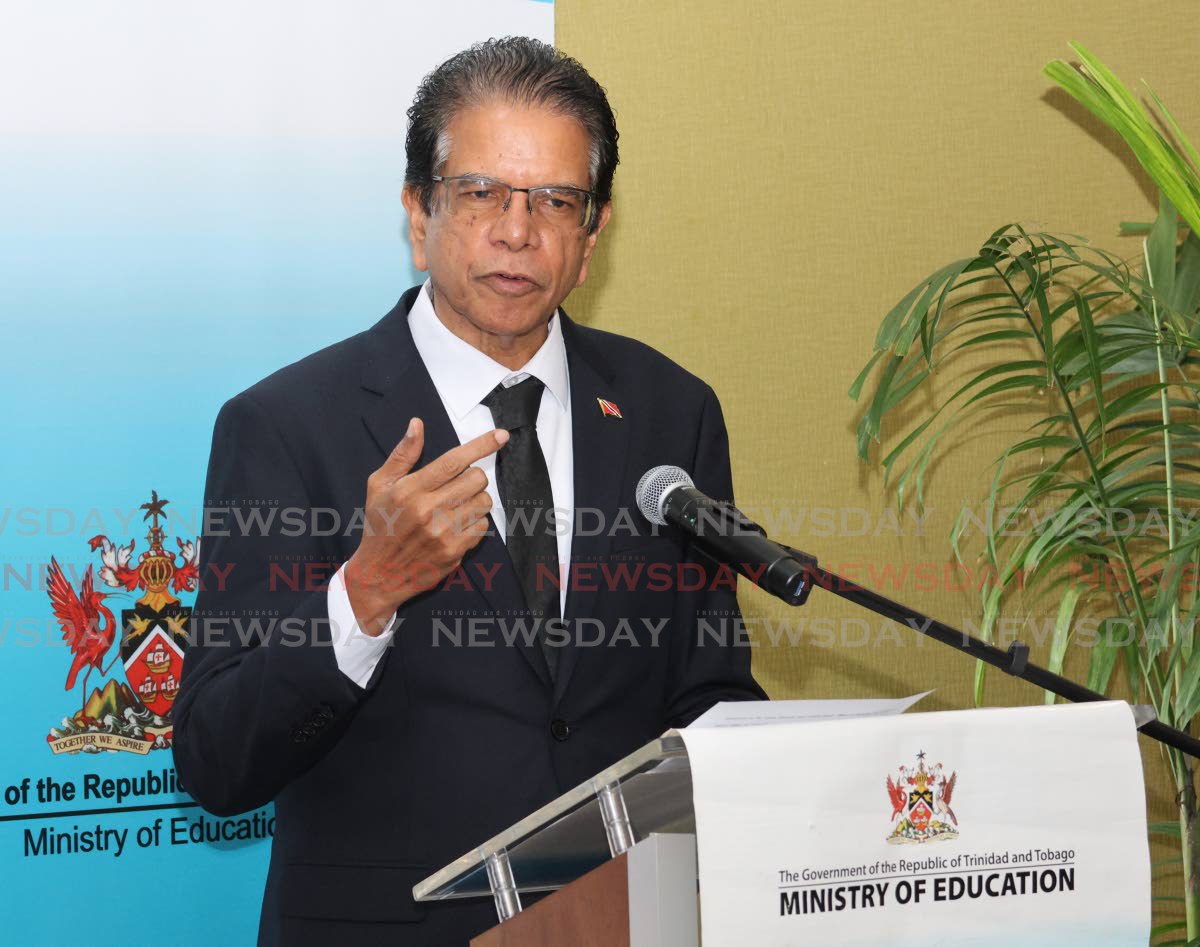
    A disturbing pattern of educator misconduct has been exposed in the Trinidad and Tobago school system, with the Teaching Service Commission’s (TSC) 2024 Annual Report revealing 16 separate incidents of teachers sexually abusing female students. Education Minister Dr. Michael Dowlath presented these findings to the House of Representatives on November 21, highlighting systemic failures in addressing professional misconduct within educational institutions.

    The comprehensive document detailed 160 disciplinary matters referred to the TSC throughout the reporting period. Beyond the sexual abuse allegations, the commission investigated 16 cases of physical abuse, five instances of verbal abuse, and 15 matters concerning punctuality and attendance irregularities. The report further identified 42 cases of job abandonment, 36 disciplinary tribunal proceedings, and 14 court matters involving educators.

    Most alarmingly, thirteen sexual abuse allegations involving five teachers remained active before the TSC tribunal. The cases involved both primary and secondary school environments, with two teachers accused of misconduct with secondary school pupils and three primary school educators allegedly targeting young girls. One primary school Teacher I faced five separate allegations, though the report didn’t specify victim counts or potential repeat offenses. Another Teacher I at a different primary school confronted a single allegation, while a third faced two incidents. In secondary education, a Technical Vocational Teacher I and Temporary Teacher III faced one and four allegations respectively.

    The TSC acknowledged significant institutional challenges in promptly resolving disciplinary matters, citing excessive delays in court proceedings and tribunal hearings. Commission Chairman Elizabeth Crouch emphasized particular concern regarding child abuse cases, stating increased attention is being directed toward physical and sexual misconduct involving minors.

    In response to these systemic issues, the commission has proposed establishing a dedicated tribunal specifically for teaching matters, anticipated to become operational in 2025. This specialized judicial body would require additional funding but could potentially accelerate resolution of educator misconduct cases.

    The report also highlighted widespread punctuality problems, identifying 308 teachers with chronic lateness issues—277 in secondary schools and 31 in primary institutions. Secondary school teachers demonstrated significantly worse attendance records, with 10% accumulating between 1,000-3,999 minutes of tardiness. No primary school teachers reached the 4,000-minute threshold.

    Reactions to the findings have been cautious. TT Unified Teachers Association president Crystal Ashe reserved comment pending personal review of the report, while Education Minister Dowlath remained unavailable for immediate response. Chairman Crouch defended the commission’s procedures, emphasizing that all disciplinary matters follow established Public Service Regulations regardless of parallel criminal proceedings.


  • Procurement expert says profession must be people-centred, value-driven

    Procurement expert says profession must be people-centred, value-driven

    Veteran procurement leader John Dickson has issued a compelling call for the profession’s fundamental transformation, challenging deep-seated industry conventions during his keynote address at the Chartered Institute of Procurement and Supply’s Caribbean Conference and Awards 2025.

    Addressing regional supply chain leaders at Port of Spain’s Hyatt Regency on December 10, Dickson argued that procurement stands at a critical inflection point, requiring a decisive move beyond its traditional cost-cutting obsession. He proposed a radical repositioning of the function as a strategic driver of organizational value, resilience, and long-term competitive advantage.

    Dickson employed a powerful iceberg analogy to illustrate how most organizations perceive procurement: “The one-ninth that businesses see typically concerns cost reduction and cash generation,” he noted, emphasizing that “what drives this function runs much deeper than surface-level financial metrics.”

    Drawing upon four decades of industry experience, Dickson traced procurement’s evolutionary trajectory from 1990s cost control through 2000s process efficiency reforms to the digital transformation era of the 2010s. The current phase, he asserted, represents “true intelligent integration” fueled by artificial intelligence, automation, and machine learning technologies.

    However, Dickson delivered a crucial caveat against technological determinism: “Procurement needs to align intelligence with purpose. Technology alone cannot deliver meaningful change. The critical question becomes how digital tools mold into organizational direction and strategy.”

    This technological integration directly connects to procurement’s strategic relevance. Dickson challenged professionals to examine whether their function remains deeply embedded within business ecosystems or merely influences spending patterns: “When discussing the broader business agenda, that’s where procurement sometimes underperforms,” he observed, referencing conversations with executives who question why procurement rarely features at board-level discussions.

    The address gained particular resonance within the Caribbean context, where regional vulnerabilities including hurricane exposure, fuel price volatility, and global trade disruptions dominated earlier conference panels. Dickson emphasized that these realities demand procurement’s evolution from reactive problem-solving to predictive scenario planning, even when not all risks can be anticipated.

    He illustrated this imperative with a compelling case study from AstraZeneca’s COVID-19 vaccine development, which achieved in eight months what typically requires six years. This breakthrough succeeded because “suppliers didn’t engage in usual trading off or negotiation—we lacked the time. The concept of shared purpose proved critical for ecosystem collaboration.”

    This experience fundamentally shaped Dickson’s perspectives on sustainability, which he reframed not as competitive advantage but as potential disadvantage when ignored: “I perceive sustainability as competitive disadvantage when organizations fail to engage collectively, particularly in industries relying on shared supplier bases.”

    While addressing growing cybersecurity concerns and resilience-building through supplier risk assessment, Dickson firmly rejected notions of human obsolescence: “Human-centric talent isn’t disappearing—it’s transforming. Leaders should remain curious and learn from younger, digitally-fluent colleagues rather than pretending to master every emerging technology.”

    Returning to his central thesis, Dickson concluded that people remain the foundation of procurement performance: “Cultivate the soil. Care for your people. Know your people.” For a profession historically defined by savings targets, he asserted that future success hinges on deeper integration, shared purpose, and translating intelligence into consequential decisions—particularly in disruption-prone regions where theoretical concepts must yield practical resilience.

  • Radioactive Nuclear marks 30 years with soundclash reunion at Sound Forge

    Radioactive Nuclear marks 30 years with soundclash reunion at Sound Forge

    Trinidad and Tobago’s iconic Radioactive Nuclear soundsystem is poised to commemorate three decades of profound influence on regional music culture with a landmark anniversary event at Sound Forge, St James, on December 19. The celebration will unite multiple generations of Caribbean sound pioneers, including both local legends and Jamaican stalwarts, in a historic gathering that highlights the enduring legacy of soundsystem culture.

    Founded in December 1995 by lead selector Hypa Hoppa (Kwesi Hopkinson) alongside core members DJ Dane (now Lord Hype), TC (now Jaiga), and John Boy, Radioactive emerged during a transformative period when Caribbean soundsystem culture was establishing its distinct identity. The collective began as an offshoot of rap group Masters of Creativity before discovering inspiration through veteran Jamaican soundsystems Killamanjaro and Stonelove via cassette mixtapes.

    Throughout its thirty-year journey, Radioactive has played an instrumental role in developing Trinidad and Tobago’s soundsystem ecosystem through innovative platforms including Full Loaded, 45 Shop Lock, and 45 Shootout. These events provided crucial spaces for artistic growth and community building within the dubplate and soundclash culture that was then gaining international momentum.

    The anniversary event will feature an impressive lineup of soundsystem royalty, including local contemporaries Mighty Jugglers, Sel Construction, and Matsimela—all homegrown TT sounds that have both collaborated and competed with Radioactive over the decades. Adding international prestige to the celebration, Jamaican powerhouses Bass Odyssey and Renaissance will join the proceedings, bringing their globally respected expertise in soundclash culture and special dubplate productions dating back to the early 1980s.

    Hypa Hoppa describes the soundsystem phenomenon as a ‘professional hobby’ where artistic passion frequently surpasses financial considerations. ‘Dubplate business is like a professional hobby. You probably spend more than you make on it,’ he notes. ‘It’s a creative art-form using songs, arguments, lyrics, and styles of playing—it’s an art form of deejaying with rivalry.’

    The upcoming celebration represents more than mere nostalgia; it serves as a vital bridge connecting musical generations. Hoppy emphasizes the importance of educating younger audiences about the cultural foundations that shaped contemporary Caribbean music scenes. With multiple heavyweight selectors sharing one stage, the event promises both competitive energy and collaborative excellence, offering attendees a comprehensive journey through three decades of sonic innovation.

  • Government leans in to bank ownership

    Government leans in to bank ownership

    In a significant move consolidating state influence over Trinidad and Tobago’s financial sector, Republic Financial Holdings Ltd has undergone a comprehensive board reconstitution effective December 15. The appointment of Yashmid Karamath as chairman this week finalizes the government’s pledge to assert stronger control over the nation’s most extensive banking network, casting doubt on prospects for banking liberalization.

    The leadership transition follows the retirement of former chairman Vincent Perreira, 70, who steered the institution through a period of remarkable financial growth despite customer service complaints. Under Perreira’s tenure from 2020 onward, post-tax profits demonstrated consistent growth: from $1.3 billion in 2021 to $2.2 billion in 2025, while total assets expanded from $109.2 billion to $127.1 billion. This financial performance occurred against the backdrop of pandemic-related economic challenges, though service quality concerns persisted among account holders.

    Karamath assumes leadership amidst broader board restructuring triggered by the untimely passing of director Mark Loquan and resignations of Waltnel Sosa and Shameer Mohammed. The newly configured board features several government-backed appointments including Timothy Affonso (public international law expert), Nalini Bansee (legal practitioner), Rhion Karim (security and counter-terrorism specialist), Patricia Mohammed (gender scholar with economics training), Sandra Sookram (economist), and Gregory Armorer (civil attorney). This directorate is mandated to serve a three-year term.

    This governance shift aligns with Finance Minister Davendranath Tancoo’s October budget commitment to install a majority director bloc at Republic Bank, echoing similar changes at First Citizens and EximBank. The administration has explicitly stated intentions to collaborate with these financial institutions and the National Insurance Board to fulfill public sector obligations.

    Ownership structure analysis reveals substantial government-linked entities hold dominant stakes: National Investment Fund (29.9%), National Insurance Board (18.8%), Trintrust Ltd (7%), and other state-connected holders. This ownership framework, originating from the 2008 Clico bailout, now appears permanently institutionalized under the current administration.

    While the new board establishes nominal government oversight with purported operational independence, industry observers express concern regarding this trend’s implications for privatization and competitive banking. The critical question remains whether heightened state involvement will ultimately benefit consumers who continue grappling with service deficiencies, elevated fees, unfavorable interest rates, and foreign exchange scarcity.

  • New online skills resource helps job seekers ace interviews

    New online skills resource helps job seekers ace interviews

    In response to mounting challenges facing job seekers in today’s intensely competitive employment landscape, the Association of Chartered Certified Accountants (ACCA) has introduced an innovative digital solution. The newly launched ACCA Virtual Skills platform specifically targets Generation Z professionals and career entrants seeking to distinguish themselves during application and interview processes.

    This comprehensive digital resource center provides ACCA members and affiliates with practical career preparation tools developed through professional expertise. Lindsay Degouve de Nunques, ACCA’s Director of Brand and Marketing, emphasized the organization’s commitment: ‘ACCA is dedicated to equipping our members and future members with the skills and knowledge essential for career success. This practical resource empowers new professionals to approach their futures with greater confidence.’

    The platform addresses identified gaps in practical career guidance through two primary components. First, a series of on-demand interview preparation videos cover critical career topics including CV crafting, creating impactful first impressions, optimizing LinkedIn profiles, appropriate interview attire, navigating compensation discussions, and formulating strategic questions.

    Second, visually engaging virtual flashcards distill key insights from ACCA’s research on artificial intelligence, technology, global economics, and sustainability. These downloadable resources serve as conversation starters during networking events and provide substantive talking points for interviews.

    Developed in direct response to employer expectations regarding candidates’ soft skills, the platform has already garnered positive feedback from recruitment professionals. This initiative represents ACCA’s ongoing investment in future-oriented employment capabilities and complements the existing career support services offered through ACCA Careers, the organization’s specialized accounting and finance recruitment platform.

  • US has becomea lawless bully

    US has becomea lawless bully

    The Trump administration is facing severe criticism for its foreign policy approach toward Venezuela while simultaneously grappling with domestic political challenges. A recent editorial letter questions the moral authority of the United States in international affairs, particularly regarding naval operations that critics have characterized as acts of piracy without substantial evidence of wrongdoing.

    The correspondence highlights a concerning shift in global perception, noting that the United States has transitioned from being regarded as a champion of legal order to being perceived as an unpredictable actor that other nations increasingly hesitate to trust. This erosion of international confidence comes amid growing domestic pressures for the administration.

    President Trump, who campaigned on explicit promises to immediately address inflation upon taking office, now confronts polling data and electoral results indicating significant potential losses in upcoming mid-term elections. Political analysts suggest these losses could include Democratic control of the House of Representatives and possibly the Senate, which would likely initiate investigations into numerous controversial actions by the administration.

    The editorial further suggests that the president may be attempting to redirect public attention from domestic controversies, including the ongoing Jeffrey Epstein scandal and worsening affordability crisis for American households. While some Republican legislators have demonstrated independence regarding the Epstein documents, questions remain about whether congressional Republicans would intervene to prevent potential military engagement with Venezuela—a conflict that critics fear might be pursued for political diversion and the expanded executive powers typically afforded during wartime.

  • APT James dry-docking extended

    APT James dry-docking extended

    Passengers relying on inter-island ferry services between Trinidad and Tobago face extended travel disruptions as maintenance work on the vessel APT James continues beyond its original schedule. The Trinidad and Tobago Inter-Island Transportation Company Ltd (TTIT) confirmed on December 18 that the ferry’s dry-docking period has been prolonged, necessitating operational adjustments across the fleet.

    The APT James was initially scheduled for its mandatory annual dry-docking program beginning November 4, with service expected to resume after approximately one month. However, technical requirements have extended this maintenance period, creating a cascading effect on maritime transportation schedules.

    To mitigate the service gap, TTIT has implemented contingency measures by repositioning available vessels. The Buccoo Reef will temporarily assume the APT James’s regular routes, while the TT Spirit will cover services typically handled by the Buccoo Reef. This vessel reshuffling aims to maintain connectivity between the islands despite the maintenance extension.

    The transportation company has issued amended sailing schedules specifically for December 19, 23, and 24 to accommodate holiday travel demands during the extended maintenance period. Travelers are advised to consult updated timetables and anticipate potential adjustments to their itineraries.

    This maintenance extension occurs during a peak travel period, potentially affecting holiday plans for residents and visitors relying on maritime transportation between Trinidad and Tobago. The inter-island ferry service represents a critical transportation link for commerce, tourism, and family connectivity between the two islands.

  • Christmas blues

    Christmas blues

    Trinidad and Tobago faces an unprecedented surge in economic hardship this holiday season, with charitable organizations reporting overwhelming demand for basic assistance. Multiple relief agencies including Is There Not A Cause (Itnac), Living Water Community, Salvation Army, Sewa International TT, TT Woman’s Forum, and the Coosal’s Group of Companies confirm alarming increases in requests for food, shelter, and financial support across the nation.

    Shelters have reached full capacity while emergency food supplies have been exhausted. Organizations note dramatic rises in unemployment-related crises, with many unable to meet rental payments despite seeking employment. The situation has become so severe that recently mobilized charities, including those providing hurricane relief to Jamaica, now find themselves stretched beyond their operational limits.

    Roman Catholic Archbishop Jason Gordon has issued an urgent appeal for public support, emphasizing that poverty levels have reached unprecedented severity. Speaking at a December 14 mass, Gordon urged those with means to sponsor meals for struggling families, noting that such gestures would provide critical relief during this difficult period.

    The current administration acknowledges inheriting these challenges from previous governments. While October budget measures introduced some support mechanisms including VAT removal on essential food items, period poverty initiatives, and utility assistance programs, these interventions appear insufficient against the scale of current need.

    Government Whip Barry Padarath revealed that ministers have begun personally contributing to provide food and beverages at ministerial Christmas events, setting an example the archbishop hopes the public will follow. The situation suggests that comprehensive reforms to social safety nets may be necessary, alongside enhanced support for civil society organizations with established community distribution networks.

  • High Court stays indictment of man charged with baby’s murder

    High Court stays indictment of man charged with baby’s murder

    In a landmark judicial ruling, High Court Justice Nalini Singh has permanently stayed murder and related charges against Neville Junior Simon, also known as Allan Knott, from Ste Madeleine. The decision comes after the prosecution withdrew a previously accepted plea agreement, which the court deemed an abuse of process.

    The case stemmed from a violent September 2021 incident where Simon was charged with murdering one-year-old Sirah Williams, attempted murder and wounding with intent against the baby’s grandmother Michelle Jillian Williams, and common assault against Nikitak Williams.

    Justice Singh’s detailed ruling found that the State acted unfairly and unlawfully when it reversed its acceptance of a plea to unlawful act manslaughter after announcing that acceptance in open court and proceeding with sentencing preparations. The prosecution’s withdrawal occurred on the morning of the scheduled plea agreement hearing, with the Office of the Director of Public Prosecutions invoking Section 8 of the Criminal Procedure Act.

    The court determined that the plea process had advanced beyond preliminary discussions, creating a binding commitment. Justice Singh emphasized that the defense had relied on this acceptance to its detriment by signing agreed facts, disclosing mitigation material, and preparing for sentencing. The court itself had acted on the assurance by managing the case toward disposition.

    Justice Singh’s ruling stated that allowing the prosecution to proceed after such a withdrawal would undermine the integrity of the criminal justice system and erode public confidence in plea bargaining processes. The court ordered Simon’s immediate discharge and barred the use of any statements, documents, or admissions made during plea discussions in any future proceedings.

    The 2021 police report indicated that baby Sirah was in her grandmother’s arms when a man began arguing with family members, allegedly returning with a cutlass and striking both the infant and grandmother. Simon was represented by the Public Defenders’ Department, while the State was represented by a team of prosecutors.

  • Building even closer China-LAC community

    Building even closer China-LAC community

    The Chinese government has formally released its latest Policy Paper on Latin America and the Caribbean, marking the third comprehensive strategic document outlining Beijing’s vision for enhanced cooperation with the region. Released on December 10, this policy framework builds upon previous achievements while charting an ambitious course for future collaboration between China and LAC nations.

    As fellow members of the Global South, China and LAC countries have cultivated increasingly robust ties despite geographical separation. The relationship has gained significant momentum since the formal establishment of the China-CELAC Forum in 2015, which provided an institutional foundation for structured cooperation. The relationship reached new heights during the Fourth Ministerial Meeting of the China-CELAC Forum held in Beijing this past May, where President Xi Jinping introduced five pivotal programs: Solidarity, Development, Civilization, Peace, and People-to-People Connectivity.

    The policy emphasizes mutual respect and equality as cornerstone principles. Both parties maintain independent foreign policies while demonstrating steadfast support for each other’s core interests and major concerns. This includes firm opposition to power politics and interference in internal affairs, with the vast majority of LAC countries adhering to the one-China principle. China has committed to advancing the Global Governance Initiative through enhanced dialogue among governments, political parties, and legislative bodies.

    Economic cooperation has yielded remarkable results, with bilateral trade reaching an unprecedented $518.4 billion in 2024 and Chinese foreign direct investment stock exceeding $600 billion. The Belt and Road Initiative has gained substantial traction, with over twenty regional nations including Trinidad and Tobago participating. Infrastructure development has flourished, with Chinese enterprises securing contracts worth more than $300 billion, including landmark projects such as Trinidad’s Phoenix Park Industrial Estate and Peru’s Chancay Port.

    The policy identifies numerous areas for expanded collaboration, including infrastructure, trade, finance, agriculture, food security, clean energy, artificial intelligence, and climate change mitigation. China also plans to strengthen ties with regional organizations including CELAC, Caricom, and ACS while enhancing cooperation in law enforcement, anti-corruption, cybersecurity, and transnational crime prevention.

    Cultural and people-to-people exchanges represent another vital dimension of the relationship. Confucius Institutes and classrooms have proliferated throughout the region, while cultural appreciation continues to grow bilaterally. China has provided 17,000 government scholarships and approximately 13,000 training opportunities for LAC nationals, with commitments to expand these programs significantly.

    The comprehensive policy framework demonstrates China’s commitment to building what it characterizes as “a shared future” with LAC nations, emphasizing mutual development, prosperity, and enhanced South-South cooperation. China positions this policy as a new beginning for practical cooperation aligned with development strategies such as Trinidad and Tobago’s Revitalization Blueprint, aiming to establish new benchmarks for international development partnership.