
Trinidad and Tobago’s new Minister of Rural Development and Local Government, Khadijah Ameen, has uncovered a massive accumulated debt crisis across the country’s regional corporations, with total liabilities expected to exceed one billion dollars. The revelation came following a collaborative meeting held Wednesday with municipal mayors, chairs, and senior administrative leaders of all regional corporations, convened as part of pre-budget planning ahead of the government’s upcoming mid-year fiscal review.
标签: Trinidad and Tobago
特立尼达和多巴哥
-

NY serial killer pleads guilty to Trini’s murder
In a stunning courtroom twist that closed a 31-year chapter of unsolved violence, convicted serial killer Rex Heuermann has pleaded guilty to the murder of eight women, including 28-year-old Trinidadian native Sandra Costilla, in a Suffolk County, New York court. The 62-year-old Manhattan architect, a married father of two who hid a brutal double life as a predatory killer for three decades, entered the guilty plea this week, reversing his earlier not guilty plea entered ahead of his scheduled September 2024 trial.
Heuermann, who stood 6-foot-4, began his killing spree as early as 1993, when Costilla – a migrant who had moved to the U.S. from Trinidad and Tobago at age 17 and was living in Queens at the time – became his earliest known victim. On November 20, 1993, two hunters discovered her body on New York’s Long Island in the North Sea area. Court documents detail extensive, brutal injuries: multiple sharp-force wounds to her face, torso, breasts, left thigh, and vaginal region, with her body positioned in a degrading arrangement. Heuermann confirmed in court this week that he strangled Costilla to death, the same method he used to kill all eight of his confirmed victims. He pleaded guilty to three counts of first-degree murder and four counts of second-degree murder, which includes Costilla’s killing.
For three decades, Costilla’s case remained unsolved, until advances in forensic DNA testing connected cold case evidence to Heuermann, who was first arrested in 2023 in connection with the long-running Gilgo Beach serial killings. During the initial 1993 investigation of Costilla’s death, forensic analysts from the Suffolk County Crime Lab recovered three hair strands from her body and clothing: one from her right arm, one from a striped shirt found near her body, and a third from a white shirt. DNA testing at the time confirmed one hair came from a male suspect, and the other two from female contributors. Decades later, the Gilgo Beach Homicide Task Force retested the evidence, and in February 2024, forensic results confirmed the male hair from Costilla’s striped shirt matched Heuermann’s DNA. One of the two female hairs was even traced to a woman who lived with Heuermann shortly before Costilla’s 1993 murder, cementing the connection between the killer and the decades-old crime.
Courtroom observers reported Heuermann spoke in a calm, matter-of-fact tone about his crimes, confirming that he dismembered some victims and bound others by the head and legs. Investigators who seized 422 electronic devices from Heuermann’s home uncovered disturbing evidence that prefigured his crimes: a handwritten planning document that noted “SMALL IS GOOD” – a reference to the fact that all eight of his known victims, including Costilla, were petite women. Another entry in the planning document read: “HIT HARDER TOO MANY HIT TO TAKE DOWN. CONSIDER A HIT TO THE FACE OR NECK NEXT TIME FOR TAKE DOWN.”
Investigators also found a massive, decades-spanning collection of violent, bondage, and torture pornography on his devices, dating back to 1994. The content includes graphic depictions of breast mutilation, sexualized violence against women, bondage, and whipping – imagery that aligns closely with the injuries found on Costilla and two other victims. Unlike many of Heuermann’s later victims, who were sex workers, investigators have found no evidence Costilla worked in the sex trade. Unlike his later crimes, which relied on disposable burner phones to contact victims, the 1993 killing of Costilla predates widespread consumer cell phone use and social media, leaving investigators still unclear on how Heuermann first encountered his earliest victim. Heuermann is scheduled to receive his formal sentence on June 17, 2024.
-
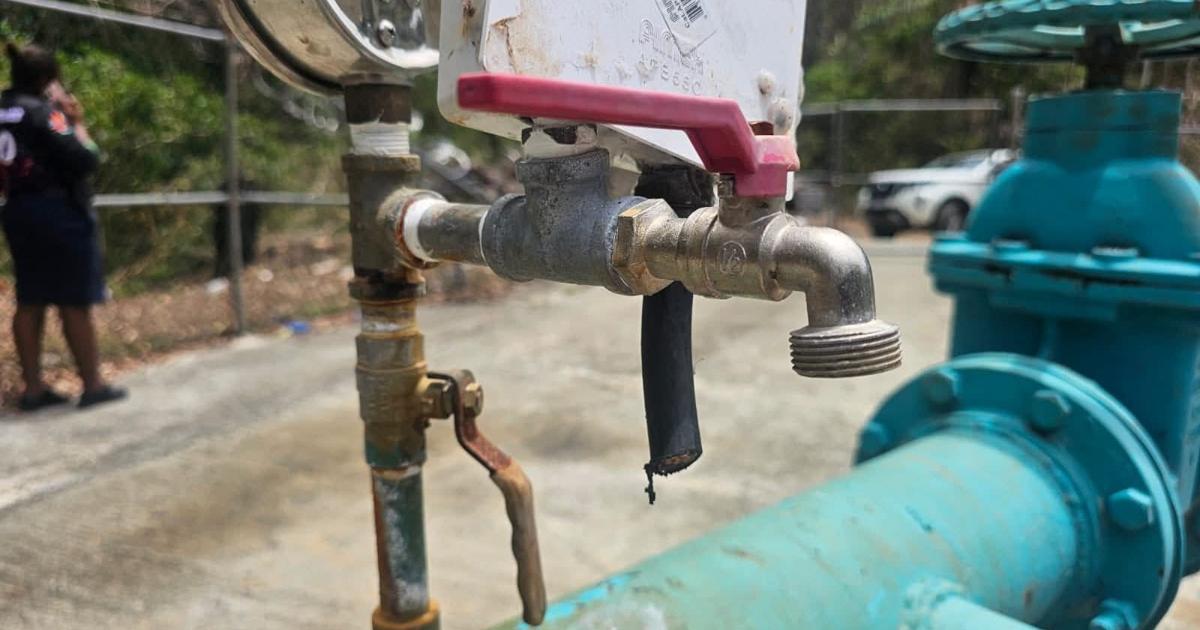
Nine released in WASA vandalism investigation
In an update from Trinidad and Tobago law enforcement Wednesday, nine people taken into custody over the widespread recent vandalism of critical Water and Sewerage Authority (WASA) facilities across Tobago have been freed as the probe continues to advance. Among the group released around midday Tuesday were one current WASA employee and two women, with all nine hailing from distinct communities across the twin islands, including Claxton Bay, Golden Lane, Smithfield, Scarborough, and Delaford, according to Superintendent Rodhil Kirk, the lead officer on the case, who shared details with local outlet the Express.
Kirk stressed that the release of the detainees does not signal a conclusion to the investigation, which he noted is currently progressing through a sensitive phase. “They were released pending further enquiries into the matter. It does not mean that the investigation has stopped. The investigation remains ongoing at a sensitive stage,” Kirk stated. He also issued a public appeal for residents to maintain heightened awareness of activity near WASA sites, urging anyone who observes suspicious behavior to come forward immediately with information to assist the probe.
The coordinated acts of intentional damage targeted four of Tobago’s core water infrastructure hubs between March 27 and 28: Arnos Vale Well #4, Bacolet Well #3, Bloody Bay Well #1, and the Claude Noel Highway Well, which includes a major supply tank farm. The destruction severely disrupted water distribution networks across large swathes of the island, leaving thousands of local residents without reliable access to running water and forcing urgent last-minute adjustments as crews worked to restore services.
The incident drew swift and harsh condemnation from top regional and national officials. Minister of Public Utilities Barry Padarath joined Tobago’s Chief Secretary Farley Augustine in labeling the coordinated attack as an act of “domestic terrorism”, noting the deliberate threat it posed to public welfare. In response to the attack, the national government has already moved to deploy additional security resources to protect utility sites across the country, and is collaborating with the Attorney General’s office to draft stricter legal penalties for individuals convicted of damaging critical public infrastructure.
For its part, WASA has reminded the public that damaging public utility property constitutes a serious criminal offense under two existing laws: the Summary Offences Act (Chap. 11:02) and the Malicious Damage Act (Chap. 11:06). Convictions under these statutes can result in substantial fines and even custodial sentences for perpetrators. In addition to ramping up physical security patrols and monitoring at its highest-risk facilities, the authority has launched a dedicated 24/7 Vandalism Hotline at 465-2949 to allow anonymous tip-offs from the public about planned or suspicious activity.
Investigating authorities are continuing to piece together evidence and identify any additional perpetrators connected to the attack, with officials repeatedly emphasizing that acts of vandalism against critical water infrastructure do not only cause temporary service disruptions. They also pose a direct threat to the health, safety, and daily routines of all local residents, highlighting the need for collective community action to prevent similar attacks in the future.
-

Businessman shot dead San Fernando: Woman in custody
A well-known local businessman in San Fernando has been killed in a shooting at his private residence early Wednesday, in an incident law enforcement officials have linked to a confrontation with an unidentified woman. The victim, identified as Steve Ghany Jr., played an active role in his family’s multi-faceted construction business, and had built a strong public reputation as a leading member of the regional jet ski enthusiast community.
Preliminary law enforcement briefings confirm that the fatal shooting unfolded around 10 a.m., amid a domestic dispute between Ghany Jr. and the woman at his home. Emergency responders pronounced Ghany Jr. dead at the scene shortly after the shooting, once his injuries proved immediately fatal.
In the hours following the incident, authorities took a woman suspected of ties to the killing into custody. She is currently cooperating with investigative teams as they work to unpack the full sequence of events that led to the shooting. Detectives have not yet released a confirmed motive for the attack, and are still working through statements and evidence to piece together exactly what transpired.
Notably, Wednesday’s killing is not the first violent attack to strike the Ghany family in recent months. Back in December 2024, Ghany Jr.’s stepmother Monica Ghany was killed in a targeted shooting that also injured his 20-year-old brother Matthew. That attack unfolded as the pair was driving along a major access road into San Fernando, a route commonly used by commuters leaving the city’s Ferry Terminal after traveling via water taxi. Investigators say the two had just left the San Fernando General Hospital minutes before the shooting, and were en route to their family home on Alexander Road when a second vehicle carrying gunmen approached from the opposite direction along the wharf road.
Gunmen inside that vehicle fired multiple rounds directly into the driver’s side windshield of the Ghany vehicle. Multiple bullets struck Monica Ghany in the upper body, and she was pronounced dead at the scene. Matthew suffered a gunshot wound to his right hand but survived the attack. The shooters fled the area at high speed immediately after the attack, and that case remains unsolved as of today.
Multiple law enforcement units have been assigned to investigate Wednesday’s fatal shooting, including detectives from the Region Three Homicide Bureau of Investigations, the Southern Division Task Force, and the San Fernando Criminal Investigations Division.
-

Miami woman killed in hit targeting Trinidadian businessman
The idyllic Caribbean vacation destination of Sint Maarten has been rocked by a brutal premeditated double shooting that left a 29-year-old American tourist dead alongside a local businessman authorities believe was the intended target of the attack.
Denisha Delancy, a Miami native who had traveled to the island to celebrate her birthday with her sister and a group of friends, became an unintended casualty of the targeted plot on March 2. The young woman had spent her trip relaxing on Sint Maarten’s famous beaches and exploring the island’s vibrant nightlife before the violent tragedy unfolded, just after she and 44-year-old Trinidadian businessman Quincy Damon Sylvester left a popular local nightclub.
As the pair pulled away in their vehicle on Arlet Peters Road, unidentified attackers ambushed them, opening fire on the car. Both Delancy and Sylvester were killed instantly, and first responders pronounced both dead at the scene shortly after arriving.
Investigators from Sint Maarten’s Major Crimes Team have since pieced together key details of the attack, drawing on surveillance footage captured from the nightclub. The video clearly shows multiple unknown individuals monitoring Sylvester’s movements in the hours leading up to the shooting, confirming the assault was carefully pre-planned. Law enforcement officials confirmed Delancy had no known connections to criminal activity, leading them to conclude she was simply in the wrong place at the wrong time, caught in the crossfire of an attack meant solely for Sylvester. Public records identify Sylvester as the owner of a local PVC pipe business.
Two days after the shooting, on March 4, authorities took one suspect into custody: a Trinidadian national identified only by the initials A.H. But the investigation remains far from closed, as the primary perpetrator and other co-conspirators believed to be involved in the plot are still at large. The case also underwent an official reclassification by the Major Crimes Team, which initially misidentified the incident as a traffic collision before upgrading it to a double homicide as evidence emerged.
Investigators are now urging any members of the public who visited the area on the night of the attack, or who have any information related to the suspects or the planning of the shooting, to contact law enforcement immediately to help move the case forward.
-
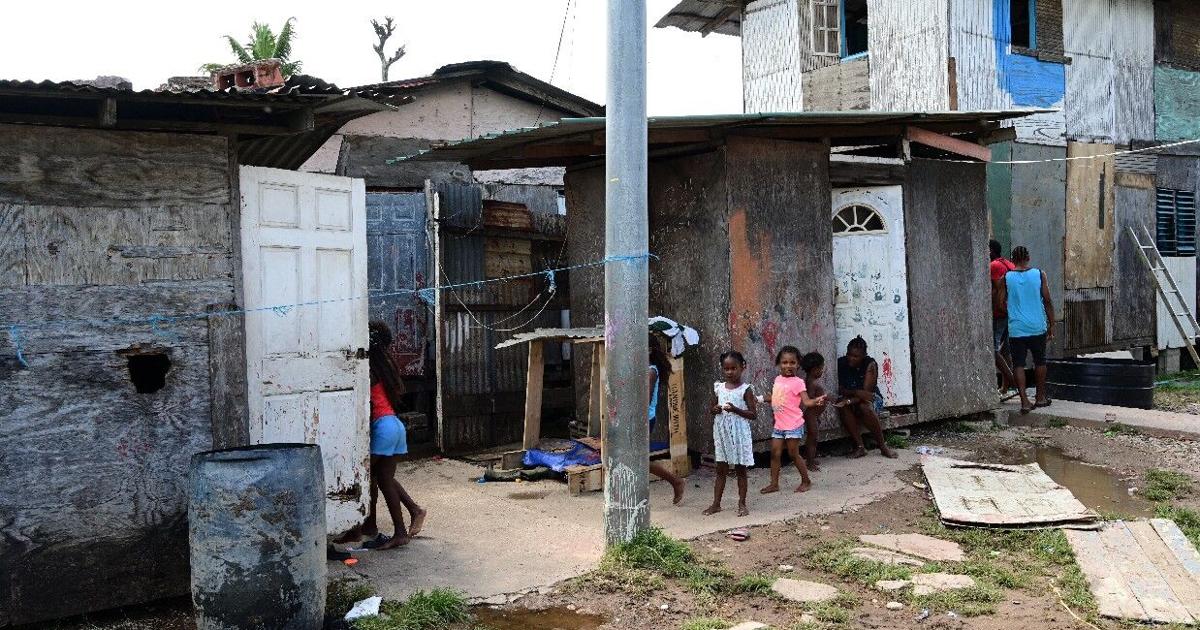
Burst water main floods homes in Beetham Gardens
A catastrophic 36-inch water main rupture that struck on Sunday night has left multiple households in Beetham Gardens displaced, facing extensive property damage, and pleading for urgent assistance from local authorities and aid organizations. When local publication *Express* visited the flood-stricken neighborhood on Monday, residents recounted the sudden disaster that upended their quiet lives, describing the event as an unforeseen catastrophe that has turned their homes into uninhabitable spaces. One anonymous resident, speaking on condition of privacy, called the incident “chaotic and frightening”, recalling that the pipe split apart with surprising force, sending a continuous gush of water cascading into residential properties for more than 24 straight hours. At least 10 households have been directly impacted by the flooding, with nearly all properties in the immediate area suffering damage. “When the pipe burst, it was like a massive fountain pouring out water,” the resident explained. “We couldn’t even leave our homes safely, so we had to evacuate immediately. We tried to get our children out to stay with friends or family because the water was rising so quickly. All the homes here are small wooden structures, so there was nowhere to escape the flood. Water just kept flowing non-stop for over a day.” The resident added that the experience has left many families traumatized, as they watched their personal belongings destroyed by the rising floodwater. “You expect to feel safe and comfortable in your own home, with your kids,” the resident said. “But that all changed in an instant. Water came pouring in, every surface got soaked, everything we own is wet. There’s no way to feel at home here right now.” Multiple families have been forced to abandon their damaged properties entirely, as standing water and structural damage make staying impossible. Now, residents are publicly calling for targeted support to replace water-damaged belongings and repair structural damage to their homes. “We need help replacing furniture, building materials like plywood, anything people can give us,” the resident said. “We have kids here, and we’re desperate for any support right now. Many of our homes already have paint peeling off the walls from water damage, and there are so many other issues we’re dealing with. Any help at all makes a difference.” While the Water and Sewerage Authority (WASA) dispatched teams to address the leak, affected residents say they have received almost no direct outreach or support from agency representatives. “WASA showed up to fix the pipe, but no official representative has come to talk to us, to check on our families or see what damage we’re dealing with,” the resident said. “It would mean a lot just to know that someone cares about what we’re going through right now.” In an official statement released on Monday, WASA confirmed that the rupture occurred on the air valve welding of the transmission main, an issue that disrupted operations at the nearby El Socorro Booster Station. The service outage impacted water access for dozens of communities across the region, including Knaggs Hill, Picton II Reservoir, Black River, Barataria, Laventille, Port of Spain, Morvant, East Dry River, St Barbs, Gonzales, Long Circular, Dundonald Hill, Dibe, Woodbrook, St James, Cocorite, Belmont, Cascade and St Ann’s. WASA officials confirmed that emergency response protocols were immediately activated after the leak was reported. “In the interest of public safety and protecting broader infrastructure integrity, WASA teams immediately initiated emergency response protocols,” the statement read. “Crews are currently accessing and operating valves to dewater the affected 36-inch Booster Line in order to safely carry out full repairs.” According to the agency’s timeline, the El Socorro Booster Station was projected to resume operations at 50 percent capacity on Monday, with full 100 percent production restored by 8 p.m. Monday evening. For the displaced families of Beetham Gardens, however, the restoration of regional water service does little to address the damage to their homes and personal property, leaving them in limbo as they wait for support to rebuild.
-
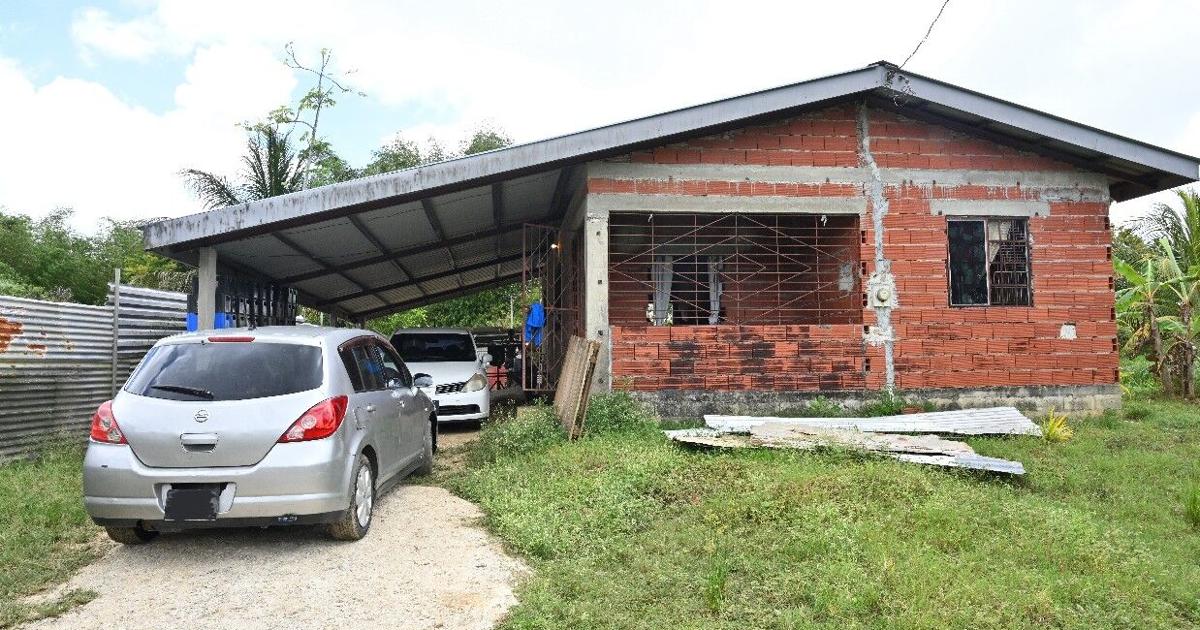
DCP Martin vows police surge: dad killed, pregnant wife injured in ambush
A brazen early-morning shooting in the quiet Trinidadian community of Wallerfield has left one man dead, his pregnant wife wounded, and reignited public debate over the effectiveness of the country’s ongoing state of emergency (SoE) aimed at curbing violent crime.
The incident unfolded at approximately 2 a.m. on Thursday at the home of Anthony Francis, 47, also known by the alias “Smalls”, who was asleep alongside his pregnant partner, her one-year-old son from a prior relationship, and another man identified only as “Lijah”. According to Trinidad and Tobago Police Service (TTPS) investigators, the unidentified gunman positioned himself outside the residence off Moonan Road, inserted a firearm through an open bedroom window, and opened fire on the sleeping occupants.
Francis was struck multiple times in the chest and neck, and was pronounced dead on arrival at Sangre Grande Hospital. His pregnant wife sustained non-life-threatening gunshot wounds, while “Lijah” in an adjacent room was also hit. The one-year-old child was unharmed in the attack. Responding officers recovered two spent shell casings near Francis’ sleeping position. Police later confirmed Francis had recently been released from custody after questioning over a recent case of vandalism targeting multiple vehicles in the Wallerfield area, where he had initially been listed as a suspect before being released without charge.
This shooting comes just one week after an almost identical attack in St James that claimed the lives of 25-year-old Joseph Sutton and his 11-month-old son Jayden, who was just four days short of his first birthday. In that unrelated incident, the attacker also fired through a bedroom window at the sleeping targets, leaving the same deadly pattern of violence that has shaken public confidence.
In an official statement shared via WhatsApp following the Wallerfield killing, TTPS Deputy Commissioner of Police (Operations) Suzette Martin framed the brazen murder as a desperate reaction to the heavy pressure law enforcement has placed on criminal networks since the implementation of the SoE.
“What you are seeing is a direct response from criminals who are under sustained pressure,” Martin explained. “The TTPS has increased operations, disrupted networks, and removed weapons from the streets, and that pressure is forcing desperate reactions.”
Martin rejected any suggestion that the attack signals a failure of the ongoing state of emergency, emphasizing that the SoE has already delivered meaningful results that are not always visible to the general public. “The state of emergency is working. It is disrupting criminal activity, restricting movement, and allowing us to act with greater speed and authority,” she said. “The public may not see every success, but the results are there: arrests, firearm seizures, and the dismantling of criminal operations.”
Far from softening their approach, Martin confirmed that law enforcement will double down on anti-crime efforts in the wake of the killing. “We are not backing down. In fact, these incidents strengthen our resolve. Our operations will continue, and they will intensify,” she said. An immediate surge in uniformed and plainclothes police presence will be rolled out across Wallerfield, with a focus on targeted, intelligence-led interventions to catch the perpetrators. Martin added that investigators are already pursuing strong leads in the case.
She issued a stark warning to criminal elements operating across the country: “Let me also send a clear message. There is no safe space for criminals, whether in public or in private homes. TTPS will find you and we will not allow criminal elements to dictate the narrative or undermine the work being done under the SoE.”
Martin pushed back against criticism that frames isolated high-profile murders as a measure of the TTPS’ success, noting that law enforcement judges progress on the sustained reduction of criminal activity and long-term public safety gains, not individual attacks. “We are focused, we are relentless, and we will continue to take the fight to those who threaten public safety,” she added.
Requests for comment from local Member of Parliament Phillip Watts, who represents the La Horquetta/Talparo constituency that includes Wallerfield, went unanswered as of Thursday evening. As of Thursday night, the national murder toll for the current year stood at 96, marking a 10% reduction from the same period last year, when the toll had reached 106.
-
Urgent blood appeal for cop shot in abdomen
A 29-year-old Trinidad and Tobago Police Service (TTPS) officer remains fighting for his life in intensive care after being gunned down during a armed response operation in southern Trinidad late Friday, prompting an urgent public appeal for O-positive blood donations to support his emergency treatment.
Acting Police Constable Alex Koon Koon, a five-year veteran assigned to the Mon Repos Police Station, was injured during a confrontation with an armed suspect in the La Romaine community on 4 April. Koon Koon was part of a team of Southern Division officers dispatched to La Plaisance Road following a credible public tip that a man was openly carrying a firearm while seated on the outdoor gallery of a local residence.
The team arrived at the scene at approximately 10:50 p.m. As Koon Koon stepped out of the marked police vehicle, multiple gunshots erupted from the direction of the gallery. The officer was struck in the left abdomen, and the suspect immediately fled the property before law enforcement could detain him.
First responders rushed Koon Koon to San Fernando General Hospital, where he underwent emergency surgery to address life-threatening internal damage. Senior law enforcement officials confirmed the officer suffered severe trauma to his spleen and one lung, and he has remained in the hospital’s Intensive Care Unit in critical condition in the days following the shooting.
While the initial attempt to apprehend the suspect at the scene failed, investigative teams have made early progress in the case. As of the latest updates, three people—two men and one woman—have been taken into police custody and are assisting officers with their ongoing inquiry.
Top TTPS leadership has publicly reaffirmed the service’s commitment to bringing all responsible parties to justice, and expressed solidarity with the injured officer and his family. Commissioner of Police Allister Guevarro visited Koon Koon at the hospital, met with his relatives, and extended official prayers and well wishes on behalf of the entire police service for a full and speedy recovery.
Deputy Commissioner of Police (Operations) Suzette Martin, who is overseeing the investigation, framed the attack not just as an assault on law enforcement, but on public safety and the rule of law. “When a police officer is shot in the line of duty, it strikes at the very heart of the Trinidad and Tobago Police Service and the rule of law we are sworn to uphold. This is not just an attack on the TTPS, but on the safety and security of every law-abiding citizen,” Martin said in the official media statement.
Martin emphasized that the violent incident would not weaken the service’s resolve to protect communities. “Let me be clear—this incident will not deter us. The TTPS is actively pursuing a thorough and comprehensive investigation, and we will intensify our operations, follow every lead, and bring those responsible to justice,” she said. “We remain resolute, unwavering, and relentless in our mission to protect and serve, and we will not allow those bent on disrupting our society to succeed.”
Members of the public have stepped in to support Koon Koon’s recovery via a widespread social media campaign calling for voluntary blood donations. Appeals direct potential donors to the blood bank at San Fernando General Hospital, with a specific request for donors with O-positive blood, the type most urgently needed for the officer’s ongoing treatment.
Social media posts shared across local platforms highlight the critical difference every donation can make. “Help PC Koon Koon in his fight for his recovery,” one widely shared appeal reads. “Please give blood to help save his life,” it adds, noting that every contribution directly supports the officer as he fights to pull through.
-
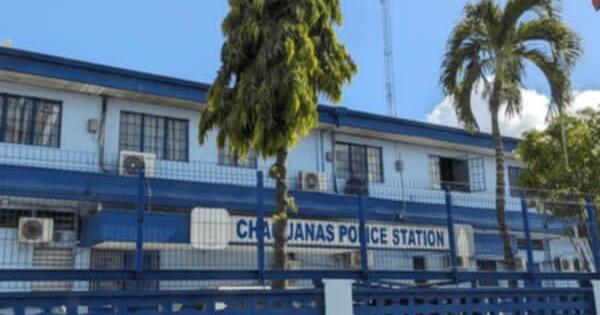
Autopsy on Central woman found under bed
Nearly three months after the remains of 74-year-old Doodhani Vishvati Sooknanan were discovered beneath a bed at her family residence on Torenia Drive in the Edinburgh 500 housing development in Chaguanas, official autopsy results have formally confirmed that no suspicious or criminal activity contributed to her passing. Local law enforcement announced Wednesday that the official cause of death was a myocardial infarction, more commonly known as a heart attack.
-
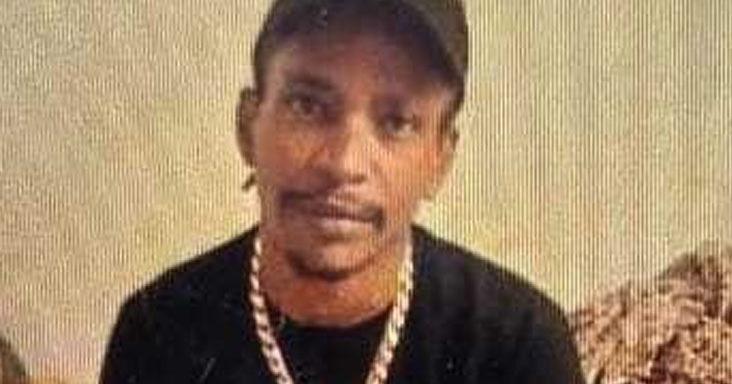
‘Criminals under pressure’
A early-morning shooting at a private residence in Wallerfield has left 34-year-old Anthony Francis dead and two others, including Francis’ pregnant wife, wounded, triggering a firm response from senior Trinidad and Tobago Police Service (TTPS) leadership who frame the killing as a desperate reaction by criminal networks facing intensified law enforcement pressure under the current national state of emergency (SoE).
The violent incident unfolded around 2 a.m. on the day of the report, when Francis, also known by the alias “Smalls,” his pregnant partner, her one-year-old toddler from a previous relationship, and another man named locally as “Lijah” were all resting inside their Moonan Road home. Investigators preliminary findings indicate the attacker fired multiple rounds through an open bedroom window, targeting the sleeping Francis directly. Francis suffered multiple gunshot wounds to the chest and neck, and was pronounced dead on arrival at Sangre Grande Hospital. His pregnant wife was also hit by gunfire, though medical officials confirm her injuries are not life-threatening; the one-year-old child was unharmed in the attack. “Lijah,” who was in an adjacent bedroom during the shooting, was also wounded and transported for medical care. Two spent bullet casings were recovered from the scene near Francis’ bed, according to police accounts.
Police records confirm Francis had recently been taken into custody as a suspect in a vandalism case targeting multiple vehicles in the Wallerfield area, but was released without charge following questioning. Local media outlet Express attempted to secure comment from local Member of Parliament Phillip Watts, representing La Horquetta/Talparo, on the killing, but received no response by the time of publication.
This shooting marks the second high-profile fatal attack targeting sleeping victims in Trinidad and Tobago in the span of a single week. Seven days prior, an almost identical modus operandi was used in a St James shooting that left 25-year-old Joseph Sutton and his 11-month-old son Jayden—just four days shy of his first birthday—dead. In that case, the attacker also fired through a bedroom window, striking the sleeping pair. Both victims were pronounced dead at Port of Spain General Hospital after relatives discovered them following the gunfire.
Responding to questions about the killing, which comes during an active state of emergency declared to curb rising violent crime, TTPS Deputy Commissioner of Police (Operations) Suzette Martin emphasized the shooting is not a sign of failure, but evidence that law enforcement operations are successfully squeezing criminal networks. “What you are seeing is a direct response from criminals who are under sustained pressure,” Martin explained in a WhatsApp statement to media. “The TTPS has increased operations, disrupted networks, and removed weapons from the streets, and that pressure is forcing desperate reactions.”
Martin rejected any suggestion that police would scale back their enforcement efforts in the wake of the attack, saying the incident has only hardened the service’s commitment to rooting out organized violent crime. “We are not backing down. In fact, these incidents strengthen our resolve. Our operations will continue, and they will intensify,” she said.
To increase public safety in the Wallerfield area following the attack, Martin announced an immediate surge of uniformed and plainclothes officers to the region, paired with expanded targeted enforcement and intelligence-driven investigations. She added that investigators already hold promising leads in the case and are working quickly to identify and apprehend the perpetrator.
Delivering a clear warning to criminal elements operating across the country, Martin said: “There is no safe space for criminals, whether in public or in private homes. TTPS will find you and we will not allow criminal elements to dictate the narrative or undermine the work being done under the SoE.”
Defending the ongoing state of emergency as an effective tool for crime reduction, Martin pushed back against implicit criticism that the SoE has failed to stop killings. “The state of emergency is working. It is disrupting criminal activity, restricting movement, and allowing us to act with greater speed and authority,” she said. “The public may not see every success, but the results are there: arrests, firearm seizures, and the dismantling of criminal operations.”
Martin noted that police measure the success of their anti-crime campaigns not by isolated acts of violence by desperate criminal groups, but by the consistent pressure being applied to illegal networks and the long-term reduction in community harm. “It was the police who remained in control, and they were not measuring success based on isolated incidents but measured it by the sustained pressure they were applying and the long-term impact on crime,” she restated. “We are focused, we are relentless, and we will continue to take the fight to those who threaten public safety.”
As of the night after the Wallerfield shooting, the national murder toll for the current calendar year stands at 96, a 10% reduction from the 106 recorded at the same point last year.