标签: Trinidad and Tobago

特立尼达和多巴哥

  • TTPS to take control of  municipal  police weapons

    TTPS to take control of municipal police weapons

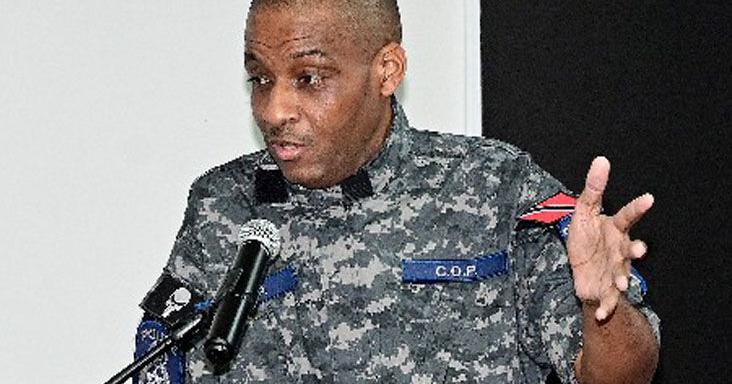
    A sweeping security overhaul is underway in Trinidad and Tobago after a shocking incident of law enforcement-linked gun trafficking left an acting municipal police corporal dead and exposed months of illegal weapons diversion to criminal networks. All firearms held at local government municipal stations across the country are being moved to the custody of the Trinidad and Tobago Police Service (TTPS), following a formal recommendation from Police Commissioner Allister Guevarro that has been immediately approved by senior government officials.

    The urgent policy shift was triggered by the murder of Acting Corporal Anuska Eversley at the San Fernando Municipal Police Station, which occurred last Sunday alongside the theft of a large cache of firearms and ammunition from the facility. What initially appeared to be an isolated violent robbery quickly unraveled into a far-reaching scandal, revealing that guns had been systematically stolen from the municipal station for months and sold on the black market to underworld criminal groups. Investigators have also uncovered evidence that municipal police officers falsified official station records to cover up the missing weapons, and Eversley herself is reported to be a key figure in the illegal racket, with investigators eyeing a fellow municipal officer as the primary suspect in her killing.

    In a formal letter dated April 22, 2026, addressed to Minister of Rural and Local Government Khadijah Ameen, Guevarro outlined that preliminary reviews had uncovered widespread administrative irregularities in the Firearm User’s Licences issued to municipal corporations under the Ministry of Local Government. To address these gaps and bring all weapons holdings into compliance with national firearms legislation, Guevarro proposed the immediate transfer of all licensed municipal firearms to secure storage at designated police stations within their respective jurisdictions, following coordination with local division senior superintendents.

    Under the new temporary arrangement, municipal officers will still be able to access assigned firearms for official duty directly from the police stations where they are stored. This structure preserves full operational capacity for municipal policing while implementing strict, accountable custody controls that were missing under the previous system. The transfer order will remain in effect until a full national audit and verification of all municipal firearms and ammunition is completed, and all relevant Firearm User’s Licences are brought into full regulatory compliance. Guevarro requested Ameen’s intervention to disseminate the order through her permanent secretary to all department heads with oversight of municipal weapons holdings.

    Ameen, who also serves as Member of Parliament for St Augustine, confirmed in an interview with the Express that she accepted the recommendation immediately, issuing a direct directive to all chief executive officers of city, borough and regional corporations to comply with the transfer order without delay. She noted that the TTPS will partner with local government bodies to ensure full compliance across all jurisdictions. The existing allocation process for municipal firearms already requires the assistant commissioner overseeing municipal policing to submit formal requisitions for weapons and ammunition to the Police Commissioner, who then authorizes purchases — a process that will now be reviewed alongside broader regulatory reforms.

    Speaking at a press conference on Monday, Guevarro announced that a full audit of firearms holdings at the San Fernando Municipal Corporation would be the first step, with permanent policy changes to follow once the scope of the irregularities is fully mapped. On Wednesday, Prime Minister Kamla Persad-Bissessar publicly addressed the scandal, confirming that the illegal gun racket had been operating undetected for roughly eight months before Eversley’s murder exposed the network. The investigation into Eversley’s killing and the broader gun trafficking ring remains ongoing, with law enforcement continuing to interview suspects and review municipal records to identify all involved parties.
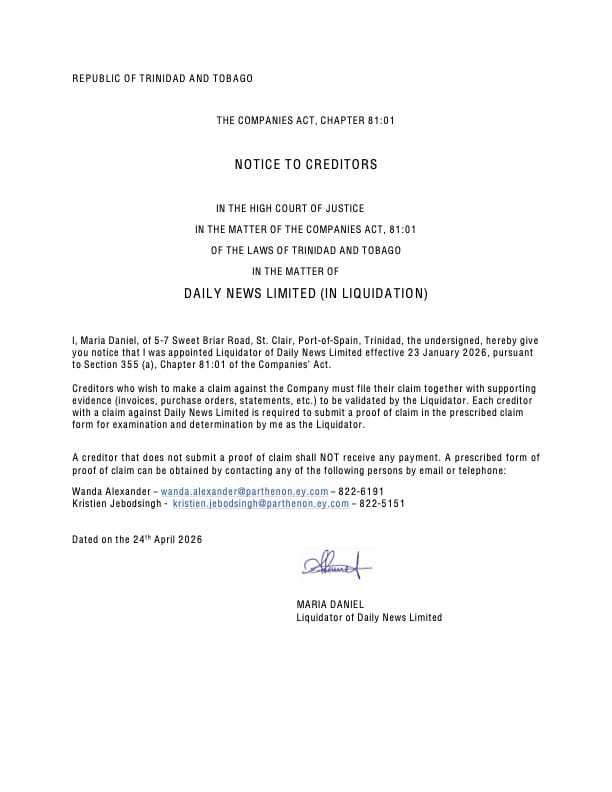
  • Daily News Limited – Newsday – Notice to Creditors 2026.jpg

    Daily News Limited – Newsday – Notice to Creditors 2026.jpg

    The provided entry labeled as news contains only metadata and a link to an external image, with no actual text-based news content included. The metadata shows the entry was posted by a user named “webmaster” two hours before it was accessed, and an image hosted at the address https://news-minio.triplec.cc/news/2026/04/24/f891a685afcf8ed3b979a4a1316f8301.jpg is referenced. No details about a specific event, development, or topic that would typically form the basis of a news report are included in this submission. Without additional core journalistic content, no full news narrative can be constructed from the provided materials.

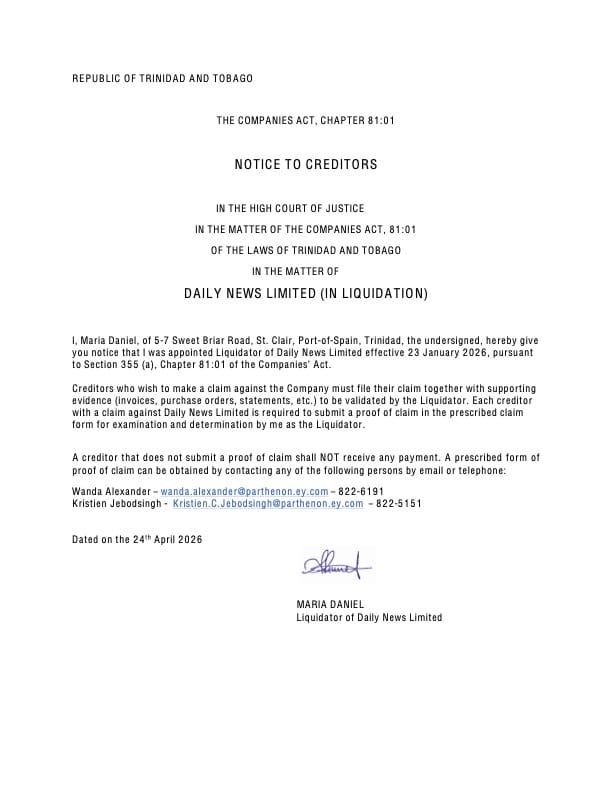
  • Daily News Limited – Newsday – Notice to Creditors 2026

    Daily News Limited – Newsday – Notice to Creditors 2026

    The submitted content for news processing only includes metadata such as the posting attribution to a webmaster, a timestamp indicating the content was shared 12 hours ago, and a link to an associated image. No actual substantive news text, core event details, background context or related reporting information is included in the submission. Without the full text of the original news story, it is not possible to carry out a complete rewriting, in-depth analysis or contextual expansion of the reported event.

  • An economic asset for T&T’

    An economic asset for T&T’

    A new milestone for economic development in South Trinidad was marked yesterday, as Prime Minister Kamla Persad-Bissessar led a ceremonial sod-turning for the long-awaited $220 million Hilton Garden Inn at South Park, San Fernando. Slated for completion in 2028, the hospitality project is framed by the country’s current United National Congress (UNC) administration as more than a accommodation facility — it is positioned as a transformative long-term economic asset for the nation.

    Speaking at the groundbreaking event, Persad-Bissessar announced that construction will get underway imminently, drawing a sharp contrast between the UNC’s track record of delivery and the unfulfilled promises of the previous People’s National Movement (PNM) government. She emphasized that the current administration has centered its policy agenda on tangible outcomes for citizens, moving away from the pattern of grand announcements with no follow-through that defined the prior tenure.

    The Prime Minister outlined the far-reaching economic benefits the new hotel is expected to deliver. During the construction phase alone, the project is projected to generate approximately 400 on-site jobs, with 150 permanent full-time positions set to be created once the facility opens its doors. Beyond direct employment, Persad-Bissessar noted that the hotel will expand professional training opportunities for workers entering the hospitality sector, and open new supply chain doors for local farmers and small business owners across the region.

    “This is exactly the kind of investment that supports my Government’s commitment to creating sustainable jobs for the population,” Persad-Bissessar told attendees.

    She added that the project’s strategic placement in South Trinidad places it at the heart of a growing national infrastructure corridor surrounded by major regional hubs. Nearby landmarks include the Brian Lara Cricket Academy in Tarouba, the National Aquatic Centre, National Cycling Velodrome, Couva Children’s Hospital, Manny Ramjohn Stadium, Point Lisas Industrial Estate, the Pointe-a-Pierre refinery, and the University of the West Indies Debe campus. This central positioning, she explained, allows the hotel to drive cross-sector economic activity spanning tourism, sports, healthcare, manufacturing, higher education, and general business activity. “This, therefore, is not simply a hotel. It is an economic asset,” she said.

    The Hilton Garden Inn project also serves as a flagship example of the administration’s national Revitalisation Blueprint, an economic development plan that has already drawn nearly 1,000 expressions of interest from investors, with particularly strong demand for waterfront and industrial development opportunities across the country. Persad-Bissessar framed this high level of investor interest as clear proof that the UNC government has pulled Trinidad and Tobago out of a decade of economic stagnation, and is successfully building a policy environment that enables large-scale investment to thrive. The project also fulfills a core manifesto commitment from the UNC, which ran on a platform of delivering economic transformation through job creation, increased investment, and inclusive growth.

    A key focus of the Prime Minister’s remarks was the longstanding underinvestment in South Trinidad, a region she says holds enormous untapped economic potential that the current administration is prioritizing unlocking. “She said her Government was changing that” pattern of neglect.

    Persad-Bissessar also used the event to critique what she called widespread mismanagement of the hospitality sector under the previous PNM administration, highlighting multiple examples of wasted public funds and uncompleted projects. She cited a pool renovation at the Port of Spain Hilton that exceeded $8.5 million in public spending, the non-operational Manta Lodge in Tobago that absorbed millions in investment without opening, public criticism of the Magdalena Grand Beach & Golf Resort in 2022, and the permanently unopened hotel component of the National Academy for the Performing Arts that never became operational.

    “That is why this Government approaches projects differently,” she said. “Every dollar must deliver value, and every project must produce real outcomes for the people.”

    To underscore the contrast in governance, Persad-Bissessar pointed to the UNC’s prior track record during its 2010 to 2015 administration, when it completed and opened the Magdalena Grand resort, and secured more than $334 million for the state through a successful arbitration process related to the Hyatt hotel project. She argued that the pattern of unfulfilled promises under the PNM eroded public and investor confidence, listing a half-dozen high-profile hospitality projects announced by the previous government that never moved past the announcement stage: a 2022-launched Four Points by Sheraton hotel in Piarco slated for 2024 completion that never materialized; a $70 million Maracas Bay hotel announced in 2023 that was never finished; a prior 2024 announcement for this very Hilton Garden Inn site that promised 2025 construction that never started; a $500 million Tobago Marriott project announced in 2021 that never came to fruition; and a 2017 San Fernando Hilton project announced that never broke ground.

    Under the current UNC government, Persad-Bissessar said, the process is shifting: projects move from official announcement to active construction to on-schedule completion. “There is a clear difference. Under my UNC Government, we deliver. Our record is proven and unprecedented. Promises made, promises kept,” she said.

  • No Cabinet reshuffle on the cards’

    No Cabinet reshuffle on the cards’

    On the eve of marking one full year in office, Trinidad and Tobago Prime Minister Kamla Persad-Bissessar has confirmed that no immediate Cabinet reshuffle is planned, while offering a candid assessment of her administration’s early progress – most notably a significant drop in national crime rates. The Prime Minister made the announcement Saturday following a sod-turning ceremony for the new Hilton Garden Inn development at South Park in San Fernando, where she fielded questions from reporters on two key topics: the widely speculated restructuring of ministerial portfolios and her government’s performance ahead of its first anniversary.

    When asked about the possibility of reshuffling her Cabinet ahead of the milestone, Persad-Bissessar made her position clear: “There is no reshuffle on the cards at this time.”

    Turning to reflection on her administration’s first 12 months in office, the Prime Minister struck a balanced tone, acknowledging meaningful progress while emphasizing that a large volume of work remains to fulfill campaign pledges to the public. “I think we’ve done a lot. There’s still so much to do…we have many promises to keep… and I’m not shirking from that. I’m looking forward to continue to work for the people of our country,” she said.

    A full comprehensive breakdown of the government’s completed projects and policy achievements over the past year will be delivered by Persad-Bissessar this weekend at a national address hosted by the United National Congress at Couva South Hall. The Prime Minister used her earlier media interaction to highlight one key early win that formed the centerpiece of her party’s election campaign: falling crime statistics.

    Persad-Bissessar noted she is encouraged by consistent downward trends in criminal activity, though she stopped short of declaring victory on the issue, stressing that ongoing work is critical. “Crime was something we campaigned heavily on, and we have some achievements, (but) as I say, much more to do. Murder is down by 42%. Serious crime is down by 30%,” she told reporters. “Crime is down from 600 to whatever it was at the end of last year. And again, this year, so far, from last year to now, that too is down. So, I am very happy about that, but I’m not overjoyed, because I think there’s still much more to do.”

    She also clarified a key distinction in the government’s approach, explaining that the administration has implemented what she calls an “anti-crime plan”, rather than a generic crime plan – a deliberate framing that she said rejects the idea that the status quo works for criminals. “The crime plan is in the hands of the criminals, and the anti-crime plan, as I said, state of emergency (SoE) is one part of it. It is not the be all and end all of it,” she explained.

    Beyond a state of emergency, the government’s multi-pronged anti-crime strategy includes embedding police officers in primary and secondary schools, expanding the total size of the national police service through new recruitment drives, and allocating additional patrol vehicles to frontline law enforcement teams to improve response times. When asked about the long-delayed reform of national firearms legislation, Persad-Bissessar confirmed that policy development is currently ongoing in collaboration with the Law Reform Commission. She added that she has ordered comparative research into regulatory frameworks used in other Commonwealth countries to identify evidence-based models that can be adapted for local use. “Yes, we will reform it,” she confirmed.

  • Municipal cop charged with Eversley’s murder

    Municipal cop charged with Eversley’s murder

    In the wake of a high-profile, shocking killing that has roiled Trinidad and Tobago’s law enforcement community, Director of Public Prosecutions Roger Gaspard, SC, has formally authorized criminal charges against a serving municipal police officer connected to the death of acting corporal Anuska Eversley. Late Tuesday, Gaspard issued charging instructions for 28-year-old Jivon Cooper, a resident of Cedar Hill, Claxton Bay, who faces four separate counts: murder, robbery with violence, firearms trafficking, and illegal possession of ammunition. The charges stem from a violent incident that unfolded last Sunday at the San Fernando Municipal Police Station.

    The investigation, which has moved at a rapid pace, was launched after Eversley’s colleagues arrived for duty early Sunday morning and discovered blood seeping out of her on-site quarters. Just after 4:40 a.m., they found the 36-year-old’s lifeless body resting on a mattress inside the station, and her remains were later moved from the facility to King’s Wharf along Lady Hailes Avenue. Following the discovery of Eversley’s death, homicide investigators launched an immediate probe, with Gaspard formalizing charging instructions after closing consultations with senior leads from Homicide Region III, including Superintendent Persad and acting Assistant Superintendent Mahara.

    Beyond the murder of Eversley, the incident exposed a massive security breach at the municipal police facility: investigators confirmed that a large cache of weapons and ammunition was stolen from the station’s secure strongroom. Initial reports peg the stolen stock at more than 100 firearms and 4,000 rounds of ammunition, though law enforcement has already made significant recoveries: to date, officers have seized 43 illegally held firearms and 929 rounds of ammunition connected to the case. In addition to Cooper, nine other suspects remain in police custody pending further investigation, while two people who were detained earlier in the probe have since been released from custody. ACP Surrendra Sagramsingh, the head of the Trinidad and Tobago Municipal Police Service, has also been placed on administrative leave as the investigation into the security breach continues.

    Police Commissioner Allister Guevarro has publicly confirmed the pending charges against Cooper, issuing a strongly worded statement emphasizing that no member of law enforcement is exempt from the rule of law. Guevarro commended the investigative team for its swift, detail-oriented work, noting that the rapid progress reflects the professional standards the Trinidad and Tobago Police Service (TTPS) upholds across all ranks. “Their decisive action brings us closer to justice for the family and colleagues of Acting Corporal of Police Eversley and for a nation traumatised by this deeply troubling act of betrayal,” Guevarro said in the official TTPS release. “The lure of greed and quick money can never justify the betrayal of public trust.”

    Guevarro framed Eversley’s killing inside a police station as an unprecedented “shocking moment to the nation”, highlighting the breach of public trust that accompanied the crime. The commissioner confirmed that the ongoing investigation is being jointly coordinated by Deputy Commissioner of Police Natasha George, Assistant Commissioner of Police Richard Smith, and Senior Superintendent of Police Sean Dhillpaul of the Homicide Bureau of Investigations Region Three, with on-the-ground supervision handled by Supt Persad and the HBI Region Three team. Investigators expect Cooper to make his first court appearance as early as Friday, or early next week at the latest.

    In his statement, Guevarro also reiterated that all officers, regardless of their posting—whether municipal, transit, estate, special reserve, or regular police—are bound by their oath of office to uphold public safety and integrity. “For those who choose corruption and criminality, we will leave no stone unturned to remove you from among the officers who risk their lives daily to protect our citizens and place you instead among those who enjoy State-provided accommodation with reinforced burglar-proofing and 24-hour security,” he said, adding that the TTPS remains fully committed to preserving the integrity of the national police force.

  • ‘Some stolen police guns sold for $10,000 each’

    ‘Some stolen police guns sold for $10,000 each’

    Nearly a week after a deadly attack on the San Fernando Municipal Police Station left an acting officer dead and over 100 firearms stolen, investigators tracking the missing weapons have received verified intelligence showing that several stolen Glock pistols have already been sold to criminal networks for as much as $10,000 per unit.

    Multiple law enforcement sources familiar with the ongoing probe have confirmed to local media that a Central Trinidad-based businessman, now considered a key person of interest, has fled to avoid arrest. Authorities allege the businessman organized the offloading of multiple stolen firearms and rounds of ammunition to two separate criminal kingpins in the last two days – one based in San Fernando, and another operating out of the Enterprise community.

    The getaway vehicle used to move the stolen weaponry out of the Claxton Bay region was identified as a Kia sedan registered to the fugitive businessman, which remains unaccounted for as of investigators’ latest update.

    Despite the setback of the missing suspect and vehicle, the investigation has recorded small wins: several persons already detained in connection with the heist have begun cooperating with authorities, providing new details that could help law enforcement recover the remaining missing stockpile.

    Investigators add the businessman has long been linked to organized criminal groups, and they are confident he was directly involved in smuggling the stolen weapons out of the police station’s secure armory.

    So far, authorities have recovered 43 of the stolen firearms. Twenty-two of those were found buried in a shallow pit at the Forres Park landfill, while the second cache of 21 guns and additional ammunition was seized during a routine highway stop near the Claxton Bay flyover on Tuesday. The stop led to the arrest of three men and the seizure of their vehicle, a white Kia K2700.

    A breakdown of the recovered weapons shows the first search yielded 10 Glock pistols, 10 M&P pistols, one Browning pistol, one Smith & Wesson pistol, and 612 rounds of 9mm ammunition. The second seizure added 14 more Glock pistols, a Benelli shotgun, one Sig MPX submachine gun, and an additional 288 rounds of 9mm ammunition to the recovered stock.

    Initial estimates immediately after the attack put the number of stolen firearms at 62, taken from the station’s secure strongroom. However, Assistant Commissioner of Police Surrendra Sagramsingh, head of the Trinidad and Tobago Municipal Police Service, later issued a correction updating the total number of missing weapons to more than 100, meaning the majority of the stolen firearms remain unaccounted for.

  • 5 more officers sent on leave

    5 more officers sent on leave

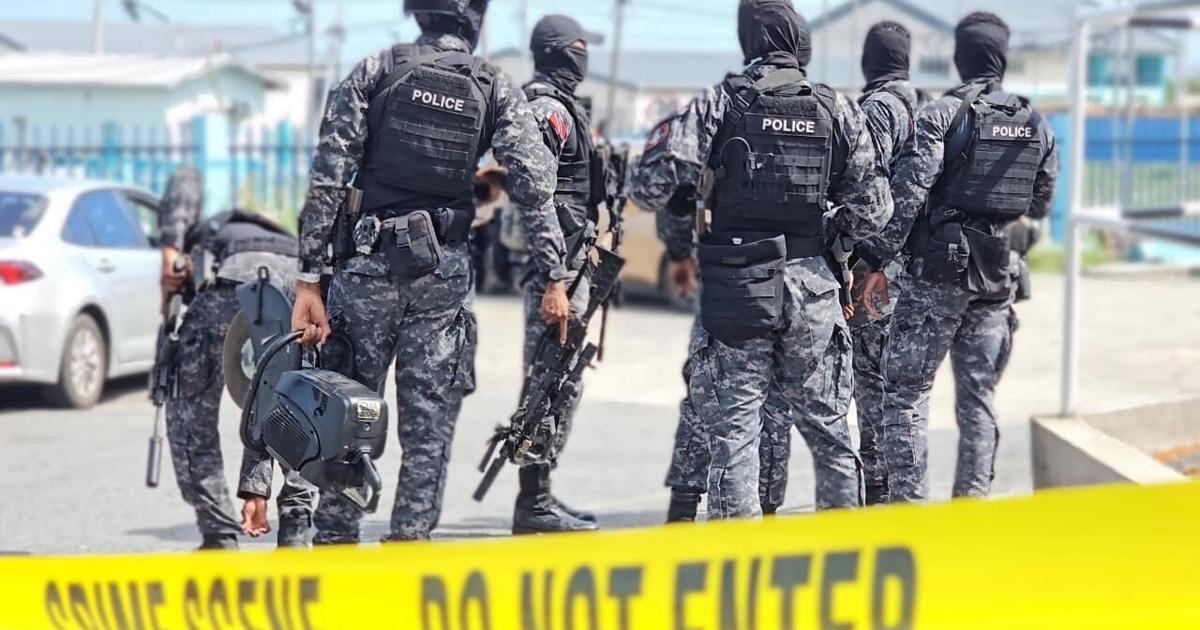
    Authorities have placed five additional San Fernando Municipal Police Station personnel on administrative leave, ramping up probes into the fatal shooting of acting corporal Anuska Eversley and the brazen theft of dozens of firearms and ammunition from the facility early last week. The Sunday incident has sent shockwaves through Trinidad and Tobago’s law enforcement community, triggering a sweeping internal overhaul even as investigators close in on persons of interest and recover leads on stolen weapons.

    Senior law enforcement sources confirmed to local outlet Express that San Fernando Municipal Police Superintendent Dustan Renn, alongside four constables who were on duty alongside Eversley during the fatal shift, were ordered to take immediate paid leave. In a separate connected development, the contract of Senior Superintendent Cecil Santana, the station’s top command, has been terminated and not renewed. Santana, whose contract officially expired on April 5, had previously received verbal promises of an extension before the high-profile attack, but those guarantees were withdrawn in the wake of the incident, sources said.

    The personnel changes extend beyond the station level: on Tuesday, Municipal Assistant Commissioner of Police Surrendra Sagramsingh was also placed on immediate administrative paid leave via an official letter dated April 21, 2026, issued by the acting permanent secretary at the Ministry of Rural Development and Local Government. The correspondence explicitly noted that Sagramsingh’s leave is a precautionary step designed to protect the integrity of the ongoing investigation, and does not amount to a finding of misconduct or legal liability on his part.

    Investigators have clarified that the officers placed on leave are not automatically classified as suspects in Eversley’s murder or the weapons heist. Instead, the step was taken because all affected personnel had either access to areas of the station central to the probe or held operational responsibility for station security at the time of the attack.

    New details on the attack itself have also emerged from law enforcement sources. Eversley was on duty the night before the killing, Saturday, and offered to secure the downstairs charge room while her two on-duty colleagues rested upstairs. Two additional officers assigned to the shift were working out of a remote sub-office on San Fernando’s Penitence Street at the time, leaving Eversley alone as the only active officer in the main station building.

    Per witness and intelligence accounts, a silver vehicle was parked outside the station compound ahead of the attack. After killing Eversley, the primary suspect signaled for two accomplices waiting in the vehicle to enter the station, where the group stole multiple firearms and hundreds of rounds of ammunition before fleeing the scene. Investigators have named a known drug addict as the prime suspect and alleged mastermind behind the operation.

    Authorities confirmed they have developed credible intelligence on the location of at least some of the stolen weapons, and have pledged to apprehend any persons found to be aiding or sheltering the suspects involved in the crime.

    The security breach has sparked widespread public and political concern over gaps in internal police station security, and the severe risk that stolen law enforcement firearms could fall into the hands of criminal gangs and be used for additional violent crime. The incident has also intensified public pressure on Trinidad and Tobago’s national police service to deliver a full accounting of how the brazen attack on one of its own facilities was able to occur.

  • Police armoury breach ‘exposes security gaps’

    Police armoury breach ‘exposes security gaps’

    A brazen weekend break-in at the San Fernando Municipal Police armoury in Trinidad and Tobago has left one officer dead and triggered urgent warnings about systemic security gaps and potential infiltration by global criminal networks. On Sunday, attackers gained access to the facility and stole an unspecified number of firearms alongside thousands of rounds of ammunition, with investigators now pointing to missing, inadequate inventory records as a key vulnerability that allowed the theft to unfold. The incident also claimed the life of on-duty municipal police officer Anuska Eversley, who was murdered inside the station compound during the attack.

    In the aftermath of the heist, two leading criminologists have offered divergent analyses of the event’s root causes and broader implications, raising critical questions about the integrity of the country’s national security apparatus. Speaking in a recent telephone interview, leading criminologist Daurius Figueira argued that the coordinated nature of the attack leaves little doubt that transnational criminal organizations are responsible. He noted that the perpetrators moved with precise, targeted knowledge of the facility, demonstrating they “knew exactly what they were doing” when they struck. Figueira outlined two potential end uses for the stolen munitions: arming local insurgent factions, or diverting the cache to the thriving global illicit arms market. But building on comments from the national Police Commissioner, he pushed forward a more alarming thesis: the heist was a deliberate operation to undermine and destabilize Trinidad and Tobago’s security institutions, and by extension, the sovereign state itself.

    Figueira emphasized that the successful breach lays bare severe, exploitable weaknesses in the facility’s security protocols, which criminal actors likely scouted for months before launching their attack. Contrary to popular framing that most armoury thefts are driven by immediate profit or local gang expansion, he explained that transnational criminal networks often pursue broader strategic goals that go beyond short-term gains. A core part of his assessment is the claim that insiders embedded within the national security apparatus are collaborating with these global networks, providing critical intelligence that makes such targeted attacks possible. He also pushed back against widespread public calls for a national curfew as a response, arguing that the blunt measure would not prevent future targeted attacks like this heist, and would only further highlight existing weaknesses in the country’s security architecture.

    Offering a contrasting perspective, fellow criminologist Dr. Randy Seepersad has called for targeted systemic reform rather than broad conclusions about institutional infiltration. Seepersad urged an immediate full review of weapons storage and inventory accountability protocols across all national law enforcement agencies, stressing that the core failure of the incident was not the presence of munitions in the station, but the lack of effective systems to track and control those stockpiles. He pushed back against assumptions that widespread corruption or institutional misconduct is baked into the system, arguing that the priority should be strengthening operational protocols rather than jumping to conclusions about insider complicity. “I don’t think it’s so much a matter of the ratio of weapons to personnel in the station,” he noted, explaining that even well-staffed facilities fail without consistent monitoring and clear accountability rules. Seepersad emphasized that while secure physical storage is a non-negotiable baseline, its effectiveness depends entirely on consistent audit processes and accountability for personnel responsible for managing armoury stockpiles.

    Seepersad also cautioned against premature speculation surrounding recent incidents of police-marked ammunition being found at crime scenes across the country, warning against rushed conclusions that could derail formal investigations. He noted there are multiple explanations for how such ammunition can end up in criminal hands, ranging from unaddressed gaps in old munitions disposal processes to deliberate planting of evidence by criminals to mislead law enforcement. Drawing quick, unsubstantiated conclusions, he argued, risks both skewing ongoing investigations and distorting public understanding of the real challenges facing national security. Unlike Figueira, Seepersad characterized the San Fernando heist as an isolated incident, rather than evidence of broad infiltration of the country’s security institutions by transnational criminal networks.

  • Senator swap

    Senator swap

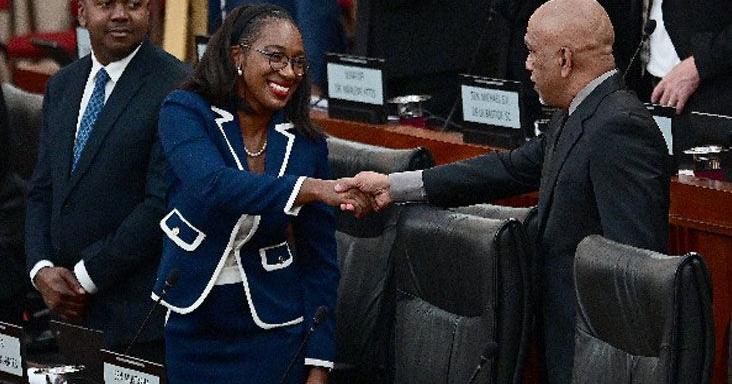
    A political shakeup has hit the Trinidad and Tobago Senate, where opposition Senator Janelle John-Bates has been removed from the influential Public Administration and Appropriations Committee (PAAC), with fellow opposition legislator Vishnu Dhanpaul tapped to fill her vacant seat. The personnel change comes amid a heated parliamentary controversy tied to an ongoing PAAC probe into the government’s pharmaceutical acquisition, importation and approval processes.

    On Tuesday, Leader of Government Business Darrell Allahar formally presented the PAAC’s explosive special report on the matter during a Senate sitting held at Port of Spain’s Red House, following the document’s initial tabling in the lower house of Parliament last Friday. Both legislative chambers are now scheduled to debate the report, which brings sharp scrutiny to John-Bates’ role in assisting former Health Minister Terrence Deyalsingh prepare his witness statement for the committee inquiry.

    Chaired by House Speaker Jagdeo Singh, the PAAC launched the investigation to examine systemic gaps and procedural conduct in how the state procures and approves imported pharmaceutical products. The inquiry was derailed in recent weeks after metadata from Deyalsingh’s April 8 witness memorandum revealed tracked edits directly linked to John-Bates, a sitting voting member of the committee responsible for overseeing the probe. Further digital records indicate she began contributing to the drafting of the document before a key closed-door committee hearing held on March 25.

    Speaking to reporters outside Parliament following the report’s tabling, John-Bates acknowledged her conduct and struck a conciliatory tone about her removal. She stated that stepping aside would remove potential distractions and allow the committee’s critical policy work to move forward unimpeded. “I respect that decision. I think it will allow the important work of the PAAC to continue without it being overshadowed by any issue,” she told journalists. When asked about her future as an opposition senator, John-Bates emphasized she would defer to her party leadership’s judgment, adding that any disputed facts should be resolved through proper parliamentary procedure.

    John-Bates was not the only opposition legislator linked to the drafting effort: opposition Senator Faris Al-Rawi also contributed edits to Deyalsingh’s statement. When approached by the media for comment Tuesday, Al-Rawi, a practicing attorney, declined to discuss the matter, citing legal professional privilege.

    The controversy first came to a head during an April 13 PAAC meeting, where members raised formal concerns that John-Bates’ dual role as a committee investigator and a collaborator with the witness created an untenable conflict of interest that undermined procedural impartiality. In its special report, the PAAC concluded that John-Bates had compromised her duty of impartiality and potentially participated in a conspiracy to commit contempt of Parliament. The document notes that upon being presented with electronic evidence of her involvement, John-Bates admitted to the conduct. The committee warned that her continued membership would make other fellow members uncomfortable and risk eroding the body’s ability to function effectively, and formally recommended her recusal or replacement.

    All voting members of the PAAC signed the special report, with one notable exception: opposition MP Camille Robinson-Regis, who submitted a dissenting Minority Report rejecting the committee’s findings and procedural handling of the case. Robinson-Regis pushed back against the PAAC’s claim that John-Bates’ continued presence would disrupt parliamentary work, dismissing the assertion as unsubstantiated speculation that violates constitutional principles of legislative participation. “The Minority rejects, in the strongest terms, the conclusion that the continued involvement of the Member ‘could make other Members uncomfortable to the point of negatively affecting the work of the Parliament’. This assertion is speculative, unsupported by evidence, and constitutionally unsound,” the Minority Report states. Robinson-Regis also warned that the committee’s reasoning sets a dangerous precedent, noting that “Parliamentary participation cannot be curtailed on the basis of subjective discomfort.” She also raised formal objections to the unauthorized leak of confidential closed-door committee proceedings related to the case.

    The PAAC has confirmed it will launch a separate parallel investigation into the leak of in-camera meeting materials, and has noted that the broader inquiry into pharmaceutical procurement remains ongoing, with no final conclusions reached yet as the committee continues to collect witness evidence.