标签: Trinidad and Tobago

特立尼达和多巴哥

  • SHOT DEAD AT HOME

    SHOT DEAD AT HOME

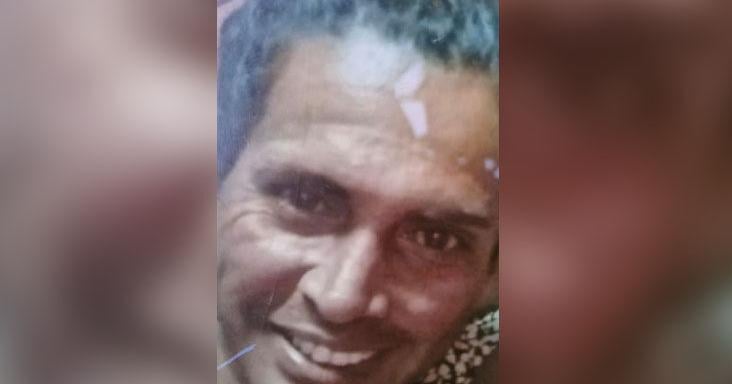
    A fatal police shooting in a residential neighborhood near San Fernando, Trinidad and Tobago has ignited public anger and calls for accountability after 45-year-old laborer Shivnath Jogie was killed by officers responding to a domestic altercation report early Sunday morning. The incident, which unfolded at Jogie’s home on Old Trainline Road in Corinth, has left family members, neighbors, and former law enforcement leaders questioning the necessity of the deadly force used, while police defend their officers’ actions as compliant with official protocols.

    According to official statements from the Trinidad and Tobago Police Service (TTPS), officers were dispatched to the area just after 1 a.m. at the request of emergency health services, who needed support responding to a reported wounding. First responders found 33-year-old Quesi Alfred, a local resident, suffering from a head wound inside a nearby home, and after providing initial care to Alfred, they received information that led them to Jogie’s residence a short distance away. The TTPS account claims that when officers arrived at Jogie’s home, he approached them menacingly while armed with a cutlass in one hand and a hammer in the other. Fearing for their immediate safety, officers followed use-of-force protocol and fired a single round that struck Jogie, who was quickly transported to San Fernando General Hospital and pronounced dead shortly after arrival.

    But Jogie’s family and local witnesses are telling a vastly different story, painting the incident as an unnecessary execution that violated Jogie’s right to defend his own property under Trinidadian law. Britney Francis, Jogie’s niece, told local reporters that the altercation that preceded the police response was not initiated by her uncle. She explained that Alfred had entered Jogie’s yard armed with a cutlass to confront him, and Jogie only acted in self-defense to disarm Alfred and chop him during the struggle. After the fight, Alfred returned to his own home and contacted authorities, not Jogie.

    Francis has raised sharp questions about why officers resorted to lethal force so quickly, pointing to Trinidad and Tobago’s 2025 Home Invasion (Self-Defence and Defence of Property) Act, which grants homeowners the legal right to stand their ground against intruders and use reasonable force—including deadly force when necessary—to protect themselves and their property. “This was an execution. It was a straight shot to his face,” Francis said. “If the police did their job properly, he might not have been dead today. They shot him in his face, a single gunshot wound.”

    Neighbors who gathered at the scene on Monday echoed the family’s demands for a full, transparent investigation, describing the shooting as heartless, unjust, and out of proportion to the threat Jogie allegedly posed. One witness, who said he saw the confrontation unfold, called the incident a failure of policing, saying “it was traumatising to see someone getting killed in their own home for defending themselves.” Another long-time neighbor who knew Jogie for decades described him as a non-violent man who only became talkative when drinking, holding no grudges and presenting no danger to the community. “This is the first time that we have experienced something like this in his district. We want a proper investigation,” the resident said.

    Francis also added her voice to growing calls for mandatory body cameras for all on-duty police officers, noting that camera footage would eliminate conflicting accounts of the incident and provide clear proof of exactly what transpired. “If there was footage to show exactly what had happened, it would save us from having questions and wasting time with ‘he said’ and ‘she said’, and to have proof of what took place,” she explained.

    That call was echoed by former Trinidad and Tobago Police Commissioner Gary Griffith, who issued a scathing rebuke of current TTPS leadership on Facebook, blaming “backward and vindictive leadership” for the fatal outcome. During his tenure as commissioner, Griffith secured funding to equip all patrol officers with non-lethal force options including batons, pepper spray, and tasers, as well as body cameras to document all interactions with the public, creating a tiered use-of-force framework that allowed officers to respond proportionally to different threat levels. But Griffith claims current leadership has stored all of this non-lethal and recording equipment in a warehouse, rejecting the technology and minimum force policy out of malice and ignorance. “In this situation, if they were mandated to be equipped with what I provided, it would not have resulted in a death,” Griffith wrote. “But those in authority, out of malice and ignorance in embracing technology and minimum use of force, have decided to put the thousands of pepper spray, tasers, and body cameras in a warehouse. Well done.”

    In its official statement, the TTPS reaffirmed that its officers acted within the bounds of existing use-of-force policy, and noted that all police-involved shootings are automatically subject to rigorous, thorough review per established legal and internal protocols. The service asked the public to remain calm while the active investigation moves forward, saying the case remains at a sensitive stage. As public pressure mounts for transparency, the investigation into Jogie’s death continues, with community leaders and the family waiting for answers about what really happened inside the Corinth home that early Sunday morning.


  • High voter turnout for PNM Council race: Shamfa, Kelvon confident

    High voter turnout for PNM Council race: Shamfa, Kelvon confident

    Members of the People’s National Movement (PNM) in Tobago headed to polling stations across the island on Wednesday to select the next political leader of the party’s Tobago Council, in an internal election that drew renewed engagement from party supporters even amid minor logistical hiccups. Polling operations kicked off at 8 a.m. local time and wrapped up at 6 p.m., with no official vote counts released as of the publication of this report. Two high-profile candidates are vying for the top leadership post, and both have expressed optimism about their chances of winning, while pledging to unify the fractured party once the election concludes.

    Former Member of Parliament for Tobago West, Shamfa Cudjoe-Lewis, cast her ballot at the Hampden/Lowlands Multi-Purpose Facility, where she spoke to reporters about her outlook on the race. Cudjoe-Lewis framed the internal election not as a contest between individual personalities, but as a critical step toward rebuilding the PNM Tobago Council after a period of division. She noted that a high voter turnout would be a win for the entire party regardless of which candidate claims victory, because it demonstrates broad continued investment in the organization’s future among PNM supporters across all ideological and factional groups.

    Ahead of the leadership vote, Cudjoe-Lewis pointed out that the election process had driven an unexpected surge in new party membership: at least 500 people have signed up as new PNM members specifically to participate in this leadership contest, and the majority of these new registrants joined through her campaign outreach. It is this ground-level momentum, she said, that leaves her confident she will secure the leadership post, and equally confident the party can heal and reunite once results are finalized.

    The other leading candidate for the role, former Tobago House of Assembly (THA) minority leader Kelvon Morris, cast his vote at Bishop’s High School, where he echoed Cudjoe-Lewis’s confidence in his own victory while acknowledging some growing pains in the day’s voting process. Morris explained that only two polling stations were open for the election, leading to long lines and extended wait times for voters. While he praised the election supervisory committee for making the best of the limited resources available to them, he confirmed he had reached out to election supervisors to request the addition of extra polling booths to speed up processing for the remaining voters.

    Morris also noted minor administrative issues, including some errors on the voter roll that left long-time PNM voters who had participated in past internal elections unable to find their names on registration lists. Even with these disruptions, Morris emphasized he was encouraged by the level of voter enthusiasm. Following a 15-0 defeat for the PNM in recent Tobago House of Assembly elections, many had predicted low turnout and fading support for the party, but Morris said large numbers of loyal members still turned out to exercise their democratic right to select the party’s next executive leadership team.

    Morris argued that his four years of consistent, committed public service in Tobago had earned him the trust of both PNM members and the broader Tobagonian public. He centered his campaign on uniting the divided party, noting that even rival political figures have acknowledged his track record of bringing together factionalized groups that have been separated for years. Like his opponent, Morris pledged that regardless of the election’s outcome, he would work to unify the PNM: he said all participating members, including his rival candidate, would be included in the party’s work moving forward to build a single, united PNM Tobago Council.

  • Car goes airborne as 2 friends die in crash

    Car goes airborne as 2 friends die in crash

    A devastating early-morning road accident on Tobago’s Claude Noel Highway has claimed the lives of two local construction workers, leaving their tight-knit community in mourning and prompting renewed calls for cautious driving across the island.

    The fatal incident unfolded just after 10 a.m. on Thursday, when the vehicle carrying the two men—identified as Shakka Rivers and Keyon “Sprang” Nimblett, both lifelong residents of Signal Hill, Tobago—careened out of control. According to Corporal Carva Vincent, public information officer for the Tobago Traffic Branch, Nimblett was behind the wheel traveling east when he attempted to swerve to avoid an oncoming approaching vehicle. The evasive maneuver sent the car spinning off the roadway, where it first struck a road traffic sign before colliding with a large tree along the highway’s southern shoulder. Witnesses and first responders reported the vehicle went fully airborne after losing control, and both men were pronounced dead at the crash site.

    By the time recovery teams arrived to extract the victims’ bodies, grieving family members had already reached the scene. The two workers were close friends outside of their jobs, and their loved ones were inconsolable, with loud screams of grief echoing across the crash site as the bodies were removed.

    For Rivers’ family, the accident comes on the heels of an already devastating period. Kyria Caton, Rivers’ brother, told local reporters he was at home when he received the urgent phone call about the crash. “To be honest, I start to cry and ask God how much more because just November we buried (our mother) and now my brother. It is overwhelming,” Caton said.

    Nigel Taitt, the local area representative for Signal Hill Patience Hill and a close cousin of Rivers, was visibly shaken when he arrived at the scene. “Shakka is my cousin, my very close cousin and Sprang my very close friend so right now I am emotional and hurt because I was not expecting this news,” Taitt told reporters. “I must say condolences to the rest of the family, friends of the men but I am emotional and shaken up.”

    In the wake of the crash, Corporal Vincent issued an urgent appeal to motorists across Tobago, emphasizing that excessive speed was a primary contributing factor in the double fatality. “There is no need for speed, speed is of paramount in most of these road traffic accidents which resulted in two persons dying because of speed. Take your time, you will reach where you have to go. If you have to reach a destination a certain time leave way before and take your time. Look we have persons now, families are mourning now for the death of these two individuals,” he said.

    This latest crash brings Tobago’s total road fatalities for the current calendar year to four, underscoring ongoing concerns about road safety across the Trinidad and Tobago islands.

  • Regional leaders  condemn attack

    Regional leaders condemn attack

    On Saturday night, a chaotic act of violence unfolded just outside the ballroom of the Washington Hilton, where former U.S. President Donald Trump was attending the annual White House Correspondents’ Association Dinner — marking his first appearance at the high-profile media event since his initial presidential election.

    According to reporting from the Associated Press, 31-year-old Cole Tomas Allen, a resident of Torrance, California, gained entry to the hotel as a paying guest before storming the lobby adjacent to the event’s underground ballroom armed with multiple firearms and a knife. Allen pushed past security barricades, charging directly toward the ballroom where thousands of attendees, including senior U.S. government officials, were seated. Chaos erupted immediately as guests scrambled under tables to take cover, and Secret Service agents engaged the attacker mid-charge. One Secret Service officer, wearing a bullet-resistant vest, sustained a gunshot wound during the confrontation, though officials confirmed he was in stable condition and recovering as of the update. Allen was tackled into custody without sustaining injuries, and was transported to a local hospital for a mental health evaluation before his scheduled court appearance the day after the incident.

    Trump, who was unharmed and immediately evacuated from the stage by security, spoke to reporters at the White House just two hours after the incident, still dressed in his formal event tuxedo. He noted, “When you’re impactful, they go after you. When you’re not impactful, they leave you alone,” adding that law enforcement was treating the attack as the action of a lone offender. As of initial investigations, authorities have not confirmed Allen’s intended target or uncovered a clear motive for the attack. The breach of security at the event, which draws top U.S. political and media figures annually, has already sparked urgent public questioning about the adequacy of safety protocols for high-risk gatherings.

    In the wake of the failed attack, multiple regional leaders across the Caribbean and Latin America have released statements condemning the violence and expressing solidarity with the United States. Trinidad and Tobago Prime Minister Kamla Persad-Bissessar was among the first to speak out, announcing via her official X (formerly Twitter) account that she had prayed for Trump’s safety following the incident. “The swift action of the United States Secret Service in apprehending the shooter is commendable, and I extend my best wishes to the injured officer,” she wrote. Persad-Bissessar also condemned all acts of violence targeting democratic leaders and institutions, noting that this marked the latest in a string of threats against Trump. “My thoughts are with those affected and traumatised by this incident. I pray for his continued safety and for the people of the United States,” she added.

    Venezuela’s acting president Delcy Rodriguez also issued a formal rejection of the attack. “We reject the attempt of aggression against President Donald Trump and his wife Melania, to whom we extend our wishes of goodwill, as well as to the attendees of the Correspondents’ Dinner,” Rodriguez said in her X post. She emphasized that “Violence will never be an option for those of us who defend the banners of peace.”

    Guyanese President Dr. Irfaan Ali echoed the condemnation, expressing relief that Trump, First Lady Melania Trump, and all other attendees escaped unharmed. “We are deeply concerned about the shooting incident at the White House Correspondents’ Dinner. We are relieved that President Trump, First Lady Melania Trump and all attendees are safe following the swift response of security personnel,” Ali wrote. He added, “We condemn all acts of violence and stand in solidarity with the people of the United States at this time.”

    Allen faces two immediate criminal charges connected to the incident, including one count of assaulting a law enforcement officer with a deadly weapon. The investigation remains ongoing as authorities work to uncover a full account of the attacker’s planning and motive.

  • Rewards, risks in US alignment

    Rewards, risks in US alignment

    For the small twin-island Caribbean nation of Trinidad and Tobago, a quiet but significant shift in foreign policy has unfolded over the past 12 months: a deliberate alignment of national strategy with the United States, rooted in overlapping security priorities and tangible energy sector opportunities. This calculated reorientation, which leaves room for occasional independent stances on global issues, brings immediate advantages but also carries unaddressed long-term risks tied to the volatility of American politics, regional political analysts have warned in recent interviews.

    Speaking with local outlet the Express, leading Trinidadian political scientist Dr. Bishnu Ragoonath laid out the clear trajectory of the current administration, which took office one year ago. While the government has preserved independent positions on select high-profile issues – most notably its recent United Nations vote supporting global reparations for historical slavery – the overarching direction of its foreign policy is unmistakably tied to Washington, he argued.

    Ragoonath outlined two core drivers behind the shift: security cooperation and energy access. For decades, Trinidad and Tobago has faced a persistent challenge as a key transshipment hub for illicit trafficking, including drug smuggling and human trafficking, between Latin America, North America, and Europe. Local and regional institutions lack the resources and maritime capacity to effectively seal the nation’s porous borders, he noted, with no CARICOM (Caribbean Community) member state able to provide the necessary logistical or operational support. Turning to the U.S., which already maintains significant maritime patrol presence in regional waters, addresses this critical gap.

    The second, and arguably more compelling, driver is access to untapped natural gas reserves in Venezuelan territorial waters. Trinidad and Tobago’s domestic energy sector depends heavily on natural gas for domestic consumption and export, making new supply sources a core national priority. Ragoonath explained that the current administration has explicitly recognized that Washington’s influence over Venezuelan energy policy is critical to unlocking these reserves. Rather than pursuing direct bilateral negotiations with Caracas – which the country has so far avoided – Trinidad and Tobago is allowing U.S. energy firms to lead negotiations, with the expectation that Venezuelan gas will eventually be piped to Trinidadian processing platforms located near the bilateral maritime border. “To that extent the country is hoping that through the U.S. push into Venezuela that we will benefit indirectly,” Ragoonath told the Express.

    In the near to medium term, this strategy has already delivered measurable benefits. Beyond improved border security and the promise of new energy supplies, Ragoonath noted that closer ties have spared Trinidad and Tobago from the stricter U.S. visa restrictions imposed on some other Caribbean nations in recent months. Prime Minister Kamla Persad-Bissessar has framed the policy as rooted in pragmatic national interest: while some critics have labeled moves “anti-CARICOM”, the Prime Minister has long argued that her core mandate is to prioritize Trinidad and Tobago’s economic and security needs above regional consensus.

    Yet the strategy carries a major, unavoidable risk: the deep polarization and unpredictability of U.S. domestic politics, particularly ahead of November’s midterm congressional elections. Ragoonath pointed out that Persad-Bissessar’s administration has effectively aligned with the current Republican-led congressional majority, centered on Donald Trump’s policy agenda. If Democrats capture control of both houses of Congress in the upcoming vote, the direction of U.S. policy toward Venezuela and the Caribbean could shift dramatically, leaving Trinidad and Tobago exposed. “It is a risk Kamla Persad-Bissessar has taken in throwing her eggs into one basket but so far it has worked in her favour. How long it will continue to work, only time will tell,” Ragoonath said.

    Despite the rift over foreign policy alignment, analysts agree that tensions will not fracture the 15-member CARICOM regional bloc. Long-running disagreements over unanimity and institutional governance have plagued Caribbean integration efforts for decades, Ragoonath noted. Unlike the European Union, which has a dedicated parliamentary body to debate and reconcile differing national positions, CARICOM operates under the 1973 Treaty of Chaguaramas, which requires full unanimity for major policy decisions – a standard that has not been met for years. Even at the most recent CARICOM summit, Jamaican Prime Minister Andrew Holness openly affirmed that all member states retain full sovereignty over their individual foreign policy choices. Ragoonath added that he supports Persad-Bissessar’s calls for comprehensive reform of CARICOM’s governance structures, which have failed to adapt to changing regional priorities.

    International relations expert Dr. Anthony Gonzales echoed this assessment, telling the Express that recent public disagreements over CARICOM are targeted at the bloc’s current leadership, not the regional integration project itself. Once the current leadership dispute is resolved, Trinidad and Tobago’s working relationship with the bloc will return to normal, he argued. Core areas of cooperation, including trade rules, tariff coordination, and free movement of goods, remain fully intact, he noted. The current divergence over U.S. alignment is also far from unprecedented: during the 2019 Juan Guaido political crisis, CARICOM was openly split over whether to recognize Guaido as Venezuela’s interim president, with some members cutting diplomatic ties with Caracas entirely. “If Trinidad wants to support the U.S. on certain things, a lot of countries do. They may prefer a neutral position, but they are not necessarily against the U.S., so it is not uncommon,” Gonzales said.

    Gonzales confirmed that Trinidad and Tobago’s foreign policy shift toward closer U.S. alignment is clear, though he personally opposes elements of the strategy. “I find it hard to accept the support for the moves against our migrants, deportations and the anti-minority anti-black rhetoric, placing people in detention centres and so on. You do not know where you are with President Trump…but that is the reality of the world,” he said. Even so, he noted that closer ties with Washington are unlikely to cause lasting harm to Trinidad and Tobago: the U.S. has been a traditional security and economic partner for Caribbean nations for decades, and the current alignment is just a deepening of that long-standing relationship.

  • Shot dead at home: Family alleges “execution” by police

    Shot dead at home: Family alleges “execution” by police

    In the quiet neighborhood of Old Train Line in Corinth, a early-morning police response to a reported altercation has left a community in mourning and sparked urgent questions about the appropriate use of deadly force by law enforcement. Early Sunday morning, 45-year-old laborer Shivnath Jogie was fatally shot by officers inside his own residence, and pronounced dead shortly after arriving at San Fernando General Hospital.

    According to initial official accounts from police, the team was dispatched to Jogie’s property around 1:30 a.m. to probe a report that Jogie had attacked a neighbor with a cutlass, inflicting chop wounds, during a dispute on his own land. During what police describe as a confrontation with the suspect, officers opened fire, striking Jogie. He was immediately transported to the regional hospital for emergency care, but medical staff were unable to save him.

    However, Jogie’s family and neighbors have rejected the official narrative, pushing back hard on the circumstances that led to his death, and alleging that the encounter escalated unnecessarily and unjustly ended an innocent man’s life. Britney Francis, a relative of Jogie, has openly questioned why law enforcement resorted to lethal force when they arrived only to investigate a reported incident. Francis clarified that the incident prompting the visit was a dispute between Jogie and another resident on the street earlier that evening.

    Francis has also raised a critical legal question rooted in Trinidad and Tobago’s 2025 Home Invasion (Self-Defence and Defence of Property) Act, popularly referred to as the nation’s “Stand Your Ground” legislation. The law explicitly grants people on their own property the legal right to defend themselves without a duty to retreat, and permits the use of reasonable force — including lethal force — when a person reasonably believes it is necessary to protect their life or property from criminal harm. Francis questioned whether Jogie was within his legal rights to act in self-defense if he perceived a threat to his property.

    In blunt terms, Francis described the shooting as an extrajudicial killing: “This was an execution. It was a straight shot to his face. If the police did their job properly, he might not have been dead today. They shot him in his face, a single gunshot wound.”

    By Sunday morning, dozens of neighbors had gathered near Jogie’s home to express solidarity with his family and back their calls for a full, independent probe of the officers’ actions. One witness to the confrontation called the shooting a heartless, cruel injustice and a fundamental failure of policing. “It was traumatising to see someone getting killed in their own home for defending themselves,” the neighbor said.

    Another long-time resident who has known Jogie since childhood described the fatal shooting as “unjust,” pushing back against any implication that Jogie was a habitually violent person. “I grew up with him and when he drink alcohol, he would talk plenty. He was not a violent guy at all, he didn’t keep no grudges. He was a good fella,” the resident said. “This is the first time that we have experienced something like this in his district. We want a proper investigation.”

    In addition to calling for a full investigation, Francis also urged policy change, saying that mandatory body camera use for all police officers should be required to add transparency and accountability to law enforcement interactions. The community remains united in its demand that every detail of the shooting be brought to light to deliver justice for Jogie.

  • Analysts: UNC would beat PNM again

    Analysts: UNC would beat PNM again

    After one year at the helm of Trinidad and Tobago’s government under Prime Minister Kamla Persad-Bissessar, the United National Congress (UNC) administration has earned high marks from two leading political analysts, who point to the Prime Minister’s bold, decisive leadership as the driving force behind its early policy wins. In an exclusive interview with the Sunday Express, Professor Hamid Ghany and Dr Maukesh Basdeo both agreed that if a general election were called today, the incumbent UNC would defeat the opposition People’s National Movement (PNM) by a clear margin.

    Professor Ghany, who awarded the UNC’s first-year performance an A grade, specifically highlighted Persad-Bissessar’s willingness to spend political capital on tough, transformative policy changes aligned with the party’s election manifesto, rather than opting for business-as-usual governance that prioritizes holding power over progress. “They had every opportunity to coast through their first year, enjoy the perks of office and delay hard choices. Instead, they moved immediately to deliver the fundamental societal changes they campaigned on,” Ghany explained.

    When addressing the country’s most pressing challenge of violent crime, Ghany praised the Prime Minister’s uncompromising approach. He noted that Persad-Bissessar activated the previously signed SOFA security agreement with the United States to strengthen cross-border cooperation against narco-trafficking and illegal gun smuggling, a move he framed as a reflection of her fearless stance on national security. He also defended her decision to deploy a state of emergency (SoE) to target systemic violent crime, arguing that the policy was a continuation of efforts started by the previous administration, which never got the chance to extend the measure after dissolving parliament early. Without these hardline measures—including partnerships with the U.S. and new stand-your-ground legislation—ordinary citizens would remain vulnerable to criminal activity, Ghany added.

    Ghany also called out what he labeled clear bias in traditional media coverage of the country’s crime trends. He noted that when crime and murder statistics dropped across all categories under the UNC administration, media outlets shifted their measurement framework from quantitative data to a qualitative narrative focused on public fear of crime, moving the goalposts to undermine the government’s progress.

    On broader governance, Ghany argued that Persad-Bissessar’s leadership style has reshaped Trinidad and Tobago’s political landscape for the better. He pointed out that she has purged the party of the internal cabals, cliques and dynasties that undermined her first term, delivering the kind of decisive, purpose-driven leadership many voters have long wanted. “Detractors have long tried to stereotype her as an unfit leader, dismissing her as a ‘little country girl from Siparia’ who does not belong at the highest tables of government in Trinidad and Tobago or even Caricom. But she has turned their criticism into strength, and proven she will not tolerate underperformance from her administration,” Ghany said.

    He added that the PNM’s current state of disarray, clearly demonstrated by its recent wipeout in the Tobago House of Assembly elections, cements the UNC’s likely election victory if a vote were held today. Looking to the future, Ghany expressed confidence that the UNC will successfully turn around the country’s economy, noting that the administration defied widespread doom-and-gloom predictions that its cross-border Venezuelan natural gas project would spark conflict and fail. “Critics said aligning with the U.S. administration would lead to war and the destruction of offshore infrastructure. Persad-Bissessar was right, and they were wrong. The economy will recover despite all the negative talk,” he said.

    Dr. Basdeo offered a slightly more reserved but still positive assessment, grading the UNC’s first year a B+. He echoed Ghany’s prediction that the government would win an immediate general election, and outlined four core challenges the administration must address in the coming term, led by economic recovery and growth. Basdeo noted positive early signs for the energy sector, including ExxonMobil’s deepwater exploration and expanded exploration activities by BP and Shell, but said the government still needs to reverse broader economic decline and boost overall oil and gas output. He also highlighted the need to increase U.S. dollar availability through the domestic banking sector, pointing to the recent return of dividend payments for Trinidad and Tobago NGL Ltd shareholders after a three-year pause—including the option to receive payments in USD—as a promising first step.

    Basdeo confirmed that crime remains a top ongoing challenge, noting that while the administration introduced the ZOSO bill to address the post-2025 crime surge after taking office on May 1, 2025, the legislation failed to win Senate approval. He said future progress will depend on the government advancing new effective legislative measures to tackle crime head-on. He also added that reversing long-term decline in public utilities, the public health sector and social services remains a critical unmet goal.

    On leadership, Basdeo recalled Persad-Bissessar’s opening remarks when she took office, which underscored her firm resolve: “Never, ever mistake my physical appearance or my kindness for weakness. I think you all know there is nothing more dangerous than a mother who believes her children are in danger. Everyone will be wise to remember that for the next five years.” Like Ghany, Basdeo expressed long-term optimism about the country’s economic trajectory under the UNC, framing growing private investment as a key indicator of future success.

  • Auditor General flags $36.56b in unverified tax revenue

    Auditor General flags $36.56b in unverified tax revenue

    Trinidad and Tobago’s national public finances for the 2025 fiscal year face significant scrutiny after the country’s Auditor General Jaiwantie Ramdass issued a qualified opinion on the 2025 Public Accounts, highlighting unresolvable gaps in billions of dollars in tax revenue and millions in improperly documented government spending that undermine the reliability of official financial statements. The audit report, officially titled *The Report of the Auditor General of the Republic of Trinidad and Tobago on the Public Accounts of the Republic of Trinidad and Tobago for the financial year ended September 30, 2025*, was formally tabled in the national Senate this Friday, bringing these long-running financial irregularities into public view.

    At the core of the auditor’s concerns is a $36.56 billion pool of total tax revenue that auditors were unable to verify due to persistent unreconciled discrepancies across three critical government accounting systems: official Treasury revenue statements, Inland Revenue Division receipts and disbursements logs, and the division’s GenTax digital reporting system. Ramdass explained that material mismatches between the three datasets for value-added tax and individual income tax were left unresolved by the end of the fiscal year, leaving auditors unable to confirm whether any corrections to the reported tax totals would be required.

    Beyond unconfirmed tax revenues, the audit also uncovered $1.59 billion in total government spending – equal to roughly 2.43% of the 2025 fiscal year’s total reported expenditure of $65.45 billion – that lacked the necessary supporting documentation to verify that payments were legitimate, correctly categorized, and properly recorded. Ramdass confirmed that the entire audit was conducted in full alignment with the International Standards of Supreme Audit Institutions (ISSAI), and that the Auditor General’s office maintained full independence from the central government in line with global ethical auditing requirements. Ramdass noted that the evidence gathered was sufficient and appropriate to justify the qualified opinion the office has issued.

    The audit also laid bare long-standing negative trends in the country’s public finances that have persisted for more than two decades. The Exchequer Account, the core bank account for the national Consolidated Fund, remained overdrawn by $51.94 billion at the close of the 2025 fiscal year, marking an 11.55% increase from the $46.56 billion overdraft recorded the previous year. Ramdass confirmed that this account has been continuously overdrawn since 2003. As of September 30, 2025, total national public debt stood at $117.46 billion, a 6.65% increase of $7.32 billion year-over-year. This brings total public debt to 191% of the country’s annual total revenue, with $81.15 billion of that debt held domestically and $33.6 billion sourced from external lenders. Total annual public debt charges, including principal repayments and interest payments, hit $12.55 billion in 2025, a 4.16% year-over-year increase that accounts for nearly one-fifth (19.17%) of total annual government spending.

    Auditors also recorded that total outstanding arrears of government revenue reached $59.8 billion by the end of the fiscal year, with 89% of those arrears ($53.17 billion) falling under the responsibility of the Board of Inland Revenue for collection, and an additional 10% ($6.03 billion) the responsibility of the Ministry of Energy and Energy Industries. Notably, the office did not receive required arrears reports from multiple government revenue collectors, adding another layer of opacity to public revenue tracking.

    In addition to the broad systemic irregularities, the audit uncovered specific cases of misappropriated public funds and procedural violations. In one high-profile finding, $78 million in earmarked affordable housing infrastructure funds were misused by the state-owned Housing Development Corporation (HDC) for unrelated routine maintenance costs. The funds, allocated through the Infrastructure Development Fund’s Affordable Housing Programme, were released by the Ministry of Housing and Urban Development to the HDC specifically for new housing and infrastructure construction projects. Instead, the HDC redirected the full sum to pay contractors for routine operational services including grass cutting, municipal garbage collection, and drain cleaning – a use of funds that directly contradicts the approved purpose outlined by Parliament and violates national financial regulations.

    Procedural violations were also widespread across government ministries, departments, and agencies, the audit found. In multiple agencies, people collecting government cheque payments were not formally authorized to receive those funds, in direct violation of national Financial Instruction 118(2), which requires paying officers to confirm that claimants are the legally authorized recipients of public funds. Auditors found that no files containing authorized representative names and specimen signatures were kept for audit review, and in multiple cases, agency employees signed for cheques without receiving formal authorization from the intended payee.

  • Better days are ahead, just hold on!

    Better days are ahead, just hold on!

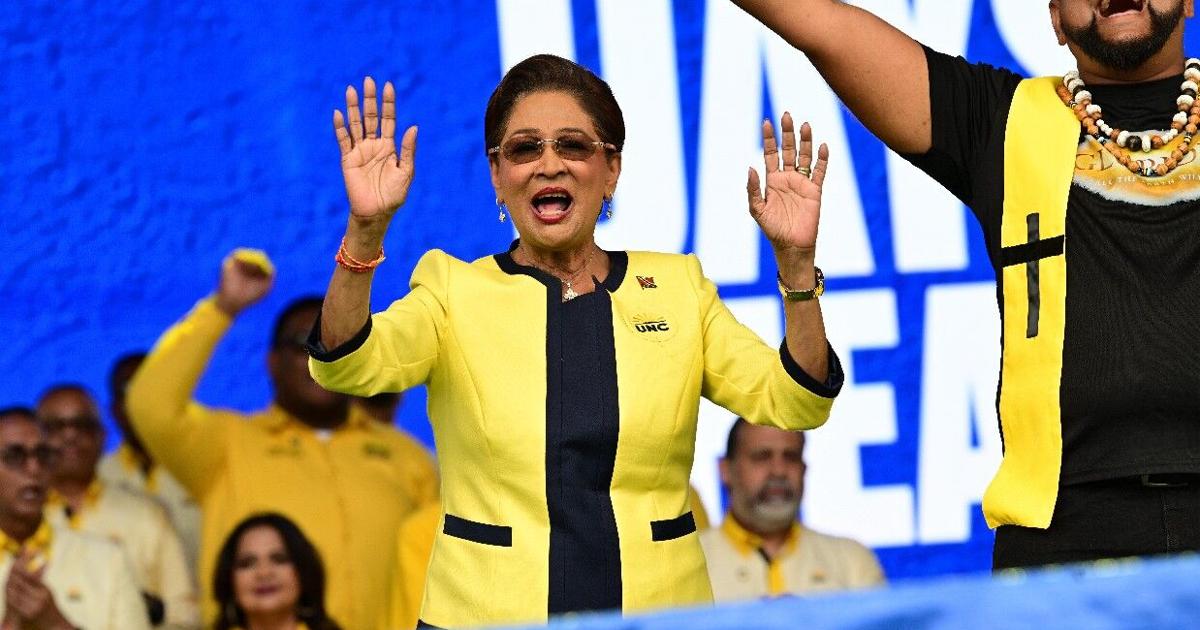
    Standing before thousands of soaking-wet but unwavering supporters at her United National Congress (UNC) party’s annual congress held in Couva on Sunday, Trinidad and Tobago Prime Minister Kamla Persad-Bissessar marked the first anniversary of her administration’s return to power, delivering a keynote address that balanced accountability, promise, and calls for patience from the nation’s citizens.

    Draped in the UNC’s iconic golden yellow attire, Persad-Bissessar greeted thousands of attendees — which she estimated between 17,000 and 20,000 based on local police estimates — as she processed through the packed crowd toward the main stage. Even when heavy rain broke out mid-speech, her supporters refused to leave their positions, a show of loyalty that underscored the strong base of support for the new administration.

    Opening her address, the Prime Minister drew a sharp contrast between her administration and the previous 10-year rule of the People’s National Movement (PNM), claiming that UNC supporters had been systematically excluded, abused, and marginalized during the opposition’s tenure from 2015 to 2025. She asserted that her leadership would break from this pattern of retaliatory exclusion, while also promising to address past harms done to UNC loyalists. “I am not going to advantage anyone, but I will square up the account because the bad treatment of good people cannot go unanswered,” she told the crowd. “I have nothing to lose. Why? Because we lost everything before.”

    Reiterating the UNC’s core 2024 campaign promise that “When the UNC wins, everybody wins,” Persad-Bissessar acknowledged that many citizens have not yet felt tangible improvements from the new government’s actions, even as the country has started to reverse the national decline inherited from the previous administration. She stressed that while meaningful progress has already been made, significant work remains to deliver widespread prosperity.

    One of the central policy priorities of the UNC’s first year has been addressing the nation’s persistent unemployment crisis, a top concern for voters before and after last year’s general election. Persad-Bissessar sharply criticized the PNM’s long-running temporary make-work programs, the Community-Based Environmental Protection and Enhancement Programme (CEPEP) and the Unemployment Relief Programme (URP), arguing that these initiatives trapped low-income citizens in cycles of entrenched poverty instead of delivering sustainable economic opportunity, while also becoming riddled with corruption and mismanagement of public funds.

    Her administration has made the controversial decision to restructure the existing CEPEP and URP frameworks, a short-term painful adjustment that she said has already cleared the way for long-term sustainable job growth. Despite inheriting a nearly empty national treasury from the previous government, Persad-Bissessar reported that her administration has already created more than 15,000 full-time, meaningful jobs across multiple government ministries. If current growth trajectories hold, she projected that the administration could deliver more than 70,000 new jobs over its five-year term ending in 2030.

    Multiple upcoming infrastructure and economic development projects are set to add thousands more positions in the near term, the Prime Minister announced. New housing developments run by the Housing Development Corporation (HDC) are expected to generate more than 3,000 jobs, while the first phase of the government’s national revitalization plan will add approximately 4,000 additional roles. She also unveiled two major industrial and economic expansion projects: a 500-acre expansion of the Plipdeco industrial estate at Point Lisas, and a newly Cabinet-approved 256-acre Special Economic Zone in Picton, adjacent to the University of the West Indies South Campus, that will be purpose-built to host data center operations. Both projects already have companies negotiating memoranda of understanding for space, and are projected to create thousands of long-term private sector jobs. A third partnership with international firms to revitalize the Point Fortin heritage storage tank farms and local marine infrastructure will add further employment opportunities, she added.

    Housing and land distribution have also emerged as core drivers of job creation and public good under the UNC administration, Persad-Bissessar said. The country faces a backlog of more than 228,000 housing applicants, and the government has advanced a $3.4 billion public-private partnership (PPP) housing project that does not draw on taxpayer funds. Ten parcels of public land have already been transferred to the HDC to build 1,543 new housing units, with another 3,700 new homes planned through PPP models this year and next, creating an additional 3,000 construction and related jobs.

    The administration also reintroduced its popular Land for the Landless programme in January, which has already received more than 20,000 applications from citizens seeking land access. All applications are being reviewed under a transparent new framework, and every applicant will receive formal feedback, the Prime Minister confirmed. To date, the Ministry of Land and Legal Affairs has already delivered 553 Caroni land leases, issued 200 Certificates of Comfort, granted 137 State land grants, and resolved long-running land disputes impacting 100 families.

    Closing her address to supporters, Persad-Bissessar acknowledged that many individual citizens have not yet accessed the new jobs or services the government has created, and urged the public to maintain patience through the ongoing transition. “Hold strain, Dorothy, hold on Dorothy…better days are coming, better days are ahead, just hold on!” she implored, repeating her core message that after a period of painful adjustment, widespread economic joy and prosperity will follow under the UNC government.

  • ‘Nothing has changed’

    ‘Nothing has changed’

    One year after the United National Congress (UNC) took power in Trinidad and Tobago, a recent on-the-ground survey of the party’s long-held stronghold of Chin Chin, Cunupia, reveals widespread dissatisfaction among local residents with the new administration’s performance, with many echoing criticism that the government has delivered little meaningful change from its predecessor.

    Tricia Ramsumair, a 52-year-old local shopkeeper, was among the first to share her frustrations with the *Sunday Express* during the outlet’s recent community visit. In her assessment, the UNC’s first year in office has simply extended the stagnation that defined the previous People’s National Movement (PNM) administration. She described both governments as stuck in gridlock, with zero tangible progress for working-class communities.

    From where Ramsumair stands, basic municipal services in the area have completely broken down: clogged drains remain uncleared, overgrown bushes choke local roadways, and widespread unemployment has left many neighbors struggling to afford basic food. “I don’t know if this government is delivering for other groups, but it’s not delivering for people like me,” she said.

    The shutdown of the Community-Based Environmental Protection and Enhancement Programme (CEPEP) has hit Ramsumair directly, wiping out her only steady source of customer income. “CEPEP supported low-income workers, who are the backbone of my small shop. Now that their incomes are gone, small business owners like me are just one step away from poverty too,” she explained.

    Ramsumair also called out local Member of Parliament Dr. Rishad Seecheran for failing to follow through on pre-election promises of accessibility. Ahead of the April 28 general election, Seecheran visited her household, left a contact card, and promised to respond whenever constituents needed help. But after the votes were counted, Ramsumair says she has never been able to reach him. “We called repeatedly, and we were just told he’s not around, not in the office, to call back or make an appointment. We’ve never actually spoken to him directly – the number he gave us goes unanswered,” she said. She added that while the entire ruling party was visible and accessible to voters before the election, the public is now completely shut out of their post-election work.

    She also criticized the location and accessibility of Seecheran’s Madras Road office, noting that it creates unnecessary barriers for elderly residents, people with disabilities, those without personal transportation, and residents who lack experience navigating government support systems. The groups that need help the most, she argued, are often the ones that end up with no assistance at all.

    Last week, Ramsumair received a call from UNC representatives inviting her to the party’s official one-year anniversary celebrations – a fact that reinforced her frustration. “They clearly know how to reach us when they need photo ops for events. They should put that same energy into visiting our communities instead of making us come to them,” she said, urging Seecheran to deploy a team of outreach workers to engage with constituents directly. She added that the community has a critical unmet need for a dedicated local community centre.

    Ramsumair’s assessment is widely shared by her neighbors. Suzette Hospedales, a 40-year-old resident who has lived in the area for a short time, gave the new government a failing grade, calling its overall performance “poor.” For Hospedales, the top priority is addressing the country’s escalating crime crisis. She noted that while the UNC campaigned heavily on criticizing the PNM’s failure to get crime under control, the situation has only gotten worse since the new administration took office. “I have no confidence in their ability to turn this around,” she said, adding that reports of criminal activity across Cunupia are becoming more frequent every day.

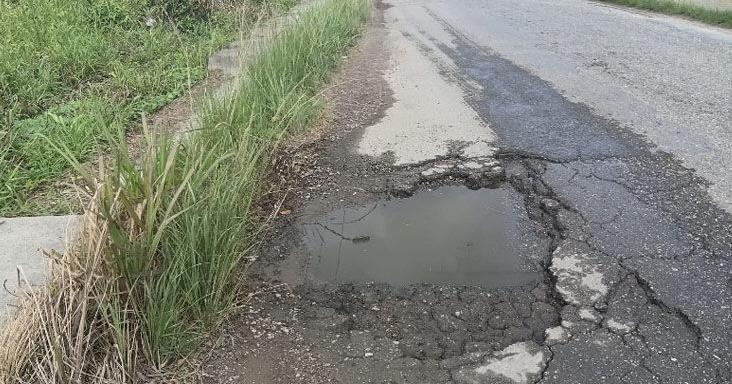
    Hospedales called on the Trinidad and Tobago Police Service (TTPS) and the Ministry of Homeland Security to improve transparency around their anti-crime efforts. “People need to know what steps are being taken to keep us safe. Regular communication would go a long way to easing the fear that people live with every day,” she said. She also joined calls to fix crumbling local infrastructure, pointing to countless dangerous potholes on area roads, and echoed Ramsumair’s call for youth-focused public amenities, such as a community centre or public playground to give local children a safe space to gather.

    Like Ramsumair, Hospedales has never had contact with her local MP: she says she has never met Seecheran, though she acknowledged that he may have campaigned in the area during work hours when she was not home.

    A retired 2023 member of the Trinidad and Tobago Defence Force (TTDF), who spoke to the *Sunday Express* on condition of anonymity, offered a more measured but still critical take, describing the government’s progress as “very slow.” He acknowledged that the administration has only been in office for 12 months, saying voters should give the government roughly two years to deliver on its promises before issuing a final judgment. Still, he admitted, he has not seen any tangible changes in the community a year in.

    Interestingly, the retired veteran, who spent 19 years in the TTDF and abstains from voting due to personal religious beliefs, said he would still choose the UNC over the PNM if he ever cast a ballot. His loyalty stems from a 2013 back payment he received during the UNC’s last term in office – the largest he ever received during his career.

    Like other residents, he pointed to the overgrown, unmaintained Chin Chin Main Road as a visible sign of decline after the CEPEP shutdown. He explained that overgrown grass now completely covers exposed, unprotected manholes, forcing pedestrians to walk in active roadways and putting lives at risk. Echoing widespread community frustration, the veteran argued that the government made the wrong call when it shut down CEPEP entirely. “CEPEP definitely had a corruption problem tied to its contractors, but it was a good program that worked for working people. Prime Minister Kamla Persad-Bissessar should have cracked down on the corrupt contractors, not cut the program that supports everyday workers,” he said.

    On the issue of crime, which impacts the entire country as well as Cunupia, the veteran said that while the problem can be solved, the government needs to stop taking half-measures to address it. He also pushed back on common stereotypes about local youth unemployment, rejecting claims that young people are lazy or uninterested in working. “If you actually spend time in this community, you’ll see most young people are out here hustling every day just to get by. They don’t have permanent, stable work – but they desperately want it,” he said.