标签: Trinidad and Tobago

特立尼达和多巴哥

  • Philip Thomson’s unique cricket columns reissued

    Philip Thomson’s unique cricket columns reissued

    A cherished collection of cricket memoirs by the late columnist Philip Thomson has been reintroduced to the public through a collaborative publishing effort between Queen’s Park Cricket Club (QPCC), Thomson’s family, and author-producer Nasser Khan. The newly released hardcover edition of “Ramblings From The Distant Past” features 17 feature columns that capture Thomson’s experiences at QPCC and Queen’s Royal College during what many consider cricket’s golden era.

    The second edition represents a significant enhancement over the original 1996 publication, now presented in full color with an extensive collection of historical photographs from Thomson’s personal archives and specially commissioned watercolor paintings by renowned artist Jackie Hinkson. The book also incorporates line drawings from the late John Newel Lewis’s Ajoupa collection, obtained through special permission from his family.

    Thomson’s writing showcases extraordinary recall coupled with an engaging narrative style that transforms personal cricketing anecdotes into universally appealing humor. As noted in the original media release, his columns were “highly anticipated and readers laughed heartily at the many amusing and brilliantly recounted anecdotes.”

    Veteran sport reporter Everard Gordon, in his 1996 review titled “Thomson’s Ramblings will have you laughing,” attested to the book’s broad appeal, noting that even readers unfamiliar with cricket terminology could appreciate the stories. Gordon described how his frequent outbursts of laughter while reading made his family question his sanity.

    The reissue project was spearheaded by Thomson’s son Robert and niece Jennifer de Verteuil in partnership with QPCC officials. They emphasized that beyond the entertainment value, Thomson’s writings possess significant historical importance that deserves preservation and renewed public attention.

    The book is currently available at Queen’s Park Oval and various retail outlets including Paper Based Book Shop, National Trust Heritage, and Nigel R Khan, with ordering available by calling 461-0666.

  • Marabella Mile returns with relays, expanded age groups, equal prize money

    Marabella Mile returns with relays, expanded age groups, equal prize money

    The historic Marabella Mile returns for its 2026 edition with significant enhancements, transforming into the Marabella Mile and Relay Festival with expanded categories and increased financial rewards for athletes. Scheduled for January 18 from 2 PM, the event marks a crucial early-season competition on Trinidad and Tobago’s athletic calendar.

    San Fernando Mayor Robert Parris and Sports Committee Chairman Daniel Dookie joined National Association of Athletics Administrations (NAAA TT) president Ephraim Serrette in endorsing the event’s expansion during its official launch at San Fernando City Hall on January 6. The festival now incorporates relay competitions alongside the traditional one-mile race while extending age-group categories and implementing equal prize money for male and female competitors across all divisions.

    The prize structure demonstrates substantial investment in athlete development. Top-tier mile race winners will receive $1,200, with descending awards of $900, $700, $500, $400, and $300 for subsequent placements. Youth categories (U15, U17, U20) offer $300, $200, and $100 prizes, while masters divisions have been expanded to include 40-49, 50-59, and 60-plus age groups with $400, $300, and $200 rewards respectively.

    Mayor Parris emphasized the event’s alignment with the city’s developmental policies, stating: ‘We continue on the trajectory of our developmental policy as a city where we contribute towards sports, tourism, culture, arts, and education.’ He specifically acknowledged TECU Credit Union’s sponsorship role in reviving the staple event after its successful 2025 return.

    NAAA TT president Serrette recognized the event’s importance in launching the competitive season, noting: ‘We commend TECU for this initiative. There are many road events on the calendar, and we are pleased to see the TECU Marabella Mile included.’

    Elite athletes including national distance-runner Nicholas Romany and rising sensation Aniqah Bailey endorsed the event’s competitive value as an early-season benchmark. Romany observed that ‘sports are evolving and bringing people together,’ while double World Championships medalist Machel Cedenio praised the inclusion of relay events.

    The masters community welcomed the expanded categories, with National Masters Association president Sheldon Mason promising strong participation: ‘Masters is in full support of the Marabella Mile and we will come out in our numbers.’

    Boxer Tianna Guy, who attended the launch, confirmed her participation, noting that ‘running is part of boxing preparation. Initiatives like this support athlete development and promote health and well-being.’

    TECU Credit Union president Sandra Matthews-Noel reaffirmed the organization’s commitment to youth development and gender equality, highlighting equal prize money as a fundamental principle. The sponsorship coincides with TECU’s 80th anniversary of operations, adding significance to their community investment.

  • What we learn from the sea

    What we learn from the sea

    Marine scientists worldwide have unveiled groundbreaking discoveries spanning filtration technology, species identification, and paleontological reconstruction, revealing the ocean’s profound secrets from prehistoric eras to modern environmental challenges.

    German researchers at the University of Bonn have developed a revolutionary filtration system inspired by fish gill anatomy. The innovation addresses the critical issue of microplastic pollution from washing machines, where a single household annually releases approximately 500 grams of synthetic fibers into waterways. For nations like Trinidad and Tobago with direct drainage systems, this accumulates into substantial oceanic pollution. By mimicking the cross-flow filtration mechanism of ram-feeding fish species—including anchovies and mackerel—scientists created a cone-shaped filter that captures 99% of microplastics without clogging. The design replicates how fish gills allow water passage while directing food particles toward the throat, offering an efficient nature-based solution to a pressing environmental problem.

    The year 2025 witnessed an extraordinary expansion of taxonomic knowledge as institutions globally identified 70 new species through advanced genetic analysis and fossil examination. Discoveries ranged from Jurassic reptiles with python-like teeth to fossilized squirrels in China and feathered dinosaurs. Museum collections revealed previously overlooked species including Philippine fruit flies with specialized courting jaws, Vietnamese Teddy Bear Bees, and Chilean Digger Bees. Aquatic findings included a Congolese carp species, Vietnamese sucker-mouthed minnows, and an ancient crinoid genus near Quebec. Caribbean marine exploration uncovered new sea anemones while Peruvian Andes expeditions documented unique opossum specimens, demonstrating ongoing biodiversity revelation across ecosystems.

    Qatari researchers collaborating with The National Museum of Natural History uncovered a significant bone bed of ancient sea cows near Bay of Salwa, dating to the Early Miocene period approximately 20 million years ago. The newly classified species, named Salwasiren qatarensis in honor of its discovery location, represents a dugong ancestor weighing merely 250 pounds—eight times smaller than modern counterparts. Analysis indicates these creatures maintained seagrass health through grazing activities, creating ecological pathways that supported diverse marine life. The fossil site, once part of the Eastern Tethys Seas, provides crucial insights into historical marine habitats and evolutionary adaptations, including the loss of hind limbs and development of straighter snouts in contemporary species.

    McGill University paleontologists reconstructed Cretaceous marine ecosystems revealing super predators that dwarf contemporary oceanic hunters. During the Mesozoic Marine Revolution (145-100 million years ago), giant reptiles exceeding ten meters in length dominated food chains with up to six trophic levels—surpassing today’s average of five. Fossil evidence from Colombia’s Paja formation suggests warming oceans and rising sea levels created ideal conditions for predator diversification, where modern apex predators would have occupied lower trophic positions. The study of 157 ancient species demonstrates exceptionally complex food webs, challenging our understanding of prehistoric marine ecology and evolutionary biology.

  • NPICTT, TSTT partner for digital payments

    NPICTT, TSTT partner for digital payments

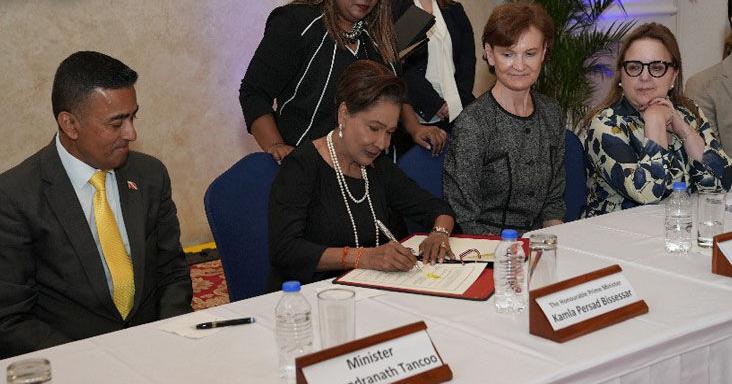
    In a landmark development for digital infrastructure, Trinidad and Tobago has activated its national payments platform with Telecommunications Services of Trinidad and Tobago (TSTT) serving as the inaugural operational partner. The National Payment and Innovation Company of TT (NPICTT) confirmed on January 7 that this partnership signifies the transition from theoretical planning to practical implementation of digital services for citizens.

    The collaboration achieves two significant milestones simultaneously: TSTT has become the first organization to process live transactions through the NPICTT national payments platform while simultaneously adopting Nobis as its official electronic Know Your Customer (eKYC) solution. This dual implementation represents a concrete step toward modernizing service delivery across the nation.

    Dr. Nigel Fulchan, Chairman of NPICTT, emphasized the significance of this development: “TSTT’s onboarding as the first live payment-processing client demonstrates that our platform is fully operational and production-ready, capable of supporting high-volume, public-facing services. This illustrates how shared national infrastructure can strategically modernize service delivery across the state.”

    Acting TSTT CEO Keino Cox highlighted the partnership’s alignment with the company’s digital transformation strategy: “This allows us to accelerate our transition to digital services in a structured and secure manner. By implementing the national payments platform and adopting NOBIS through the Innovation Centre, we enhance customer experience while maintaining robust governance and compliance protocols.”

    Minister of Planning, Economic Affairs and Development Dr. Kennedy Swaratsingh welcomed the announcement, noting that NPICTT’s establishment in August 2025 supports the government’s mission to reach every citizen in every community for government transactions. “TSTT positioning itself as the first state-owned entity to adopt this platform represents a milestone in creating a unified gateway for all public-sector financial interactions,” Swaratsingh stated.

    The partnership establishes a replicable model for government digital transformation that reduces duplication, improves efficiency, and accelerates the rollout of digital public services. NPICTT will function as the national payments infrastructure provider, while its Innovation Centre serves as the entry point for certified digital solutions across the public sector. Importantly, the arrangement maintains existing statutory and regulatory responsibilities, with TSTT continuing to deliver services directly to customers while NPICTT provides the underlying technological framework.

  • After Maduro extracted, Delcy upgraded in Caracas…Uncertain times for TT energy

    After Maduro extracted, Delcy upgraded in Caracas…Uncertain times for TT energy

    The dramatic extraction of former Venezuelan President Nicolas Maduro by US special forces on January 3 has sent shockwaves through Trinidad and Tobago’s energy sector, creating unprecedented uncertainty about the future of critical cross-border gas projects. The early morning operation that resulted in Maduro and his wife Cilia Flores facing criminal charges in New York has fundamentally altered the geopolitical landscape for TT’s energy security.

    According to former energy minister Kevin Ramnarine, the political transformation in Venezuela has cast doubt on the fate of the Dragon and Coucina-Manakin gas projects, both vital components of TT’s energy infrastructure. “The uncertainty surrounding these projects is greater than it has ever been,” Ramnarine stated, highlighting that Venezuela possesses approximately 200 trillion cubic feet of natural gas, much located near TT’s maritime boundaries.

    The situation intensified when US President Trump announced on January 6 that interim Venezuelan authorities led by Delcy Rodríguez—Maduro’s former deputy—would release up to 50 million barrels of sanctioned oil worth approximately $2 billion. Trump declared the proceeds would be controlled by his administration “to benefit the people of Venezuela and the United States.”

    The geopolitical turmoil compounds existing challenges for TT’s energy sector. Venezuela owns over 70% of energy assets in the Loran-Manatee fields and complete control of Dragon gas resources. The previous Venezuelan government’s termination of all energy arrangements with TT in December had already increased pressure on the local market, which suffers from protracted natural gas shortages causing de-industrialization and job losses.

    Energy Chamber CEO Dr. Thackwray “Dax” Driver identified six critical issues for industry sustainability, noting that Venezuelan gas imports represent just one component. Other priorities include streamlining approval processes, fiscal reform, carbon reduction investments, decreasing gas use in electricity generation, and developing small marginal gas fields.

    Meanwhile, positive domestic developments emerged as Touchstone Exploration reported promising drilling results from the Carapal Ridge-3 well, marking the first drilling in the area in 17 years. The discovery of over 1,000 feet of net sand containing oil and natural gas-bearing Herrera sand has been welcomed by Energy Minister Dr. Roodal Moonilal and Minister Ernesto Kesar as supporting government efforts to bring additional natural gas to market.

    As stakeholders monitor Venezuela’s evolving political situation, the energy sector remains hopeful that new opportunities might emerge for cross-border collaboration, potentially positioning Trinidad as an energy services hub for future Venezuelan offshore developments.

  • When morality trumps international law

    When morality trumps international law

    The controversial extraction of Venezuelan President Nicolás Maduro from Caracas by US forces has ignited intense global discourse, balancing accusations of sovereignty violation against humanitarian justification. While international observers report widespread jubilation among Venezuelan diaspora communities, critics of the Trump administration challenge the characterization of Maduro as a narco-terterrorist and question the evidence supporting claims of electoral theft.

    The central philosophical conflict emerges from competing principles: national sovereignty versus moral obligation to intervene in humanitarian crises. Proponents of the intervention point to the unprecedented exodus of over eight million Venezuelans (21% of the population) during Maduro’s tenure as evidence of systemic failure and authoritarian oppression. They argue that when domestic institutions fail to protect citizens, external intervention becomes morally justified despite international legal conventions.

    International law recognizes Venezuela’s continued sovereignty through its defined territory, population, governing institutions, and control over domestic affairs—regardless of electoral integrity. However, the practical application of sovereignty depends on diplomatic recognition, creating the current situation where Maduro maintains some international support while facing rejection from major powers including the United States.

    The Trump administration frames its actions as responding to humanitarian catastrophe while simultaneously advancing strategic interests. The commitment to rebuild Venezuela’s oil infrastructure promises mutual economic benefit, though skeptics suspect resource acquisition motivated the intervention more than human rights concerns.

    With Vice President Delcy Rodriguez assuming acting presidency while maintaining allegiance to Maduro, the political situation remains volatile. The administration has threatened further military action if loyalists resist transition efforts. As the United States temporarily manages Venezuelan affairs, global observers await November’s US election outcomes, hoping temporary measures don’t create irreversible consequences requiring reversal by subsequent administrations.

  • NPICTT partners with TSTT as digital payments now a reality

    NPICTT partners with TSTT as digital payments now a reality

    Trinidad and Tobago has entered a new phase of digital transformation with the National Payment and Innovation Company (NPICTT) and telecommunications provider TSTT announcing a groundbreaking strategic partnership on Wednesday. This collaboration represents the first operational implementation of the country’s national payments infrastructure, moving from theoretical development to live consumer-facing services.

    The partnership achieves two significant milestones simultaneously: TSTT becomes the inaugural organization to process live payments through NPICTT’s national payments platform while also adopting Nobis as its official electronic Know Your Customer (eKYC) solution. This dual implementation signals a tangible shift in how public services will be delivered digitally across the nation.

    Dr. Nigel Fulchan, Chairman of NPICTT, emphasized the importance of this development: “TSTT’s onboarding as the first live payment-processing client demonstrates that our platform is fully operational and production-ready. This partnership illustrates how shared national infrastructure can strategically modernize service delivery across the state.”

    Through this integration, TSTT will serve as the premier payment-processing client on the NPICTT platform, establishing itself as the official online payment channel for customer bill payments across all its brands and services. Customers will now access digital payment infrastructure that is locally owned, nationally governed, and designed for scalability across government entities.

    TSTT’s Acting CEO Keino Cox highlighted the strategic importance: “This partnership allows TSTT to accelerate our digital transition in a structured and secure manner. By adopting the national payments platform and NOBIS through the Innovation Centre, we enhance customer experience while maintaining robust governance and compliance.”

    Minister of Planning, Economic Affairs and Development Kennedy Swaratsingh characterized the partnership as reflective of steady growth in national infrastructure development. “TSTT positioning itself as the first state-owned entity to adopt the NPICTT platform represents a milestone in creating a unified gateway for all public-sector financial interactions,” he stated.

    The partnership establishes a replicable model for government digital transformation that reduces duplication, improves efficiency, and accelerates the rollout of digital public services. NPICTT now operates as the national payments infrastructure provider, while its Innovation Centre functions as the entry point for certified digital solutions across the public sector.

    Importantly, the collaboration does not alter existing statutory or regulatory responsibilities, with TSTT maintaining full accountability for customer service delivery while NPICTT provides the shared platforms and enablement framework. This foundational partnership paves the way for additional utilities, state-owned enterprises, and ministries to adopt digital payments and secure onboarding using national infrastructure.

  • From ‘Texaco must go’ to silence on Venezuela

    From ‘Texaco must go’ to silence on Venezuela

    A pointed editorial critique has emerged questioning the Oilfields Workers’ Trade Union (OWTU)’s current stance regarding Venezuela’s oil sovereignty amid US foreign policy pressures. The analysis draws stark comparisons between the union’s historically principled position on Trinidad and Tobago’s energy independence and its present-day silence.

    The piece recalls the OWTU’s legacy under George Weekes, whose iconic “Texaco must go” mobilization represented a defiant stand against foreign corporate domination of national resources. This historical context is directly contrasted with the union’s current position as the Trump administration pursues aggressive measures—including sanctions and threats of force—aimed at overturning Venezuela’s control of its nationalized oil industry.

    Criticism centers on the perceived contradiction between the OWTU’s past principles and its present political alignment with Trinidad’s government, which publicly supports the US hardline approach toward Venezuela. The editorial argues this alignment has compromised the union’s independence and muted its voice on matters of economic sovereignty that once defined its mission.

    The analysis frames Trump’s strategy as “economic strangulation masked as diplomacy,” characterizing it as a modern iteration of the same corporate domination the OWTU historically resisted. The fundamental principle articulated is that sovereignty cannot be selective—if foreign control of Trinidad’s oil was wrong, then foreign coercion of Venezuela’s resources cannot be right.

    The editorial concludes with a powerful invocation of George Weekes’ legacy, suggesting that remaining silent on Venezuela’s sovereignty crisis while celebrating historical resistance empties that legacy of meaning. The piece serves as both criticism and call to action, emphasizing that history judges not only those who act but those who choose silence when principle demands resistance.

  • Coach Nurse: WI U-19s ready for anything at Youth World Cup

    Coach Nurse: WI U-19s ready for anything at Youth World Cup

    With unwavering confidence and thorough preparation, the West Indies men’s under-19 cricket team has commenced their campaign for ICC World Cup glory in Africa. Head coach Rohan Nurse declared his squad fully equipped to handle diverse challenges—from formidable opponents to arid pitch conditions—as they pursue cricket’s most prestigious youth championship running from January 15 to February 6.

    The 15-member contingent, featuring captain Joshua Dorne and 2024 World Cup standout Jewel Andrew, departed from Barbados’ Grantley Adams International Airport on January 6. Their journey follows an impressive preparatory phase that included Youth ODI series victories against Sri Lanka (4-3) and England (5-2) in late 2025, providing crucial momentum ahead of the global tournament co-hosted by Namibia and Zimbabwe.

    West Indies will engage in preparatory matches against Ireland (January 10) and Japan (January 13) before launching their Group D campaign against Tanzania on January 15. Subsequent group stage matches against Afghanistan (January 18) and South Africa (January 22) at Windhoek’s High Performance Oval will determine their progression to the Super Six phase. The tournament structure advances top three teams from each group, with semi-finals scheduled for February 3-4 and the championship finale at Harare Sports Club on February 6.

    Coach Nurse emphasized the squad’s tactical versatility: “We’ve assembled a balanced attack featuring quality fast bowlers and attacking wrist-spinners. Our players have demonstrated adaptability in both setting targets and chasing totals during recent series, which positions us favorably for World Cup challenges.”

    The team draws inspiration from West Indies’ historic 2016 under-19 World Cup triumph in Bangladesh, where current international stars like Shimron Hetmyer and Alzarri Joseph secured victory against India. Nurse has incorporated this legacy into motivational sessions while emphasizing the opportunity for this generation to create their own history.

    “We’re daring to dream,” Nurse stated. “Our minimum objective is advancing beyond the previous tournament’s performance. These young men understand the significance of representing the Caribbean and are ready to embrace this platform for professional development and regional pride.”

  • Test cricket: A fantastic game

    Test cricket: A fantastic game

    Amidst the rising popularity of shorter cricket formats, Test cricket continues to demonstrate its unparalleled strategic depth and enduring appeal. Unlike limited-overs variations, the traditional five-day format presents a complex battle of wits between bowler and batsman, where field placement ingenuity and pitch characteristics create a dynamic sporting theater that purists consider cricket’s ultimate expression.

    The essence of Test cricket lies in its unrestricted tactical freedom. Captains enjoy complete autonomy in field positioning (with the singular exception of limiting two fielders behind square leg), enabling sophisticated traps designed to induce batting errors. This strategic dimension transforms each delivery into a psychological duel where bowlers deploy deceptive variations while batsmen must constantly assess defensive and offensive options.

    Recent Australia-England Test matches highlighted how pitch preparation dramatically influences outcomes. The Melbourne Test witnessed an astonishing 36 wickets falling within 142 overs, leaving groundsmen and players astonished. Curator Matt Page acknowledged that leaving 10mm of grass proved excessive, demonstrating how human judgment in pitch preparation becomes an integral game element.

    Pitch conditions interact profoundly with weather patterns—sunny humidity versus cloud cover affects moisture retention and grass characteristics, requiring careful water management to maintain playing quality across five days. These variables demand batsmen develop technical adaptability while offering bowlers constantly evolving advantages based on surface conditions.

    The format’s popularity remains robust, evidenced by Melbourne’s record-breaking attendance exceeding 97,000 spectators across two days during recent Tests. This sustained enthusiasm contrasts with T20’s constraints, where bowlers face four-over limitations and field placements are standardized, reducing strategic complexity.

    Test cricket’s enduring appeal resides in its nuanced drama, technical variety, and uncompromising examination of skill—qualities that continue to captivate players and spectators despite evolving sporting preferences.