标签: Trinidad and Tobago

特立尼达和多巴哥

  • CAL ‘nineyears late’troubling

    CAL ‘nineyears late’troubling

    In a recent development that has raised significant concerns about governance and accountability, the audited financial statements of Caribbean Airlines Ltd (CAL) for the year 2016 were tabled in the House of Representatives—nine years after their due date. This delay, highlighted in a letter to the editor by Motilal Ramsingh, underscores a broader issue of systemic negligence within public sector institutions.

    The financial documents were referred to the Public Accounts (Enterprises) Committee, chaired by Senator Vishnu Dhanpaul, with MP Colm Imbert serving as vice-chair. Notably, both individuals have previously held the position of Minister of Finance and are well-versed in financial stewardship. Dhanpaul, who also served as a permanent secretary and a member of CAL’s board, is no stranger to the intricacies of corporate governance.

    The nearly decade-long delay in presenting these accounts is not an isolated incident but rather indicative of a pervasive culture of weak accountability and a blatant disregard for statutory reporting obligations. Such lapses erode public confidence, impede effective parliamentary oversight, and undermine the credibility of financial governance across the public sector.

    The situation is further exacerbated by the recent change in CAL’s board and the departure of key executives, which has laid bare the farcical nature of accountability within the organization. This episode serves as a stark reminder of the urgent need for systemic reforms to restore public trust in institutions.

    As Ramsingh aptly notes, this incident should not be met with wry amusement among those once responsible for oversight but should instead prompt serious reflection and corrective action. The restoration of public trust in governance mechanisms is imperative to ensure transparency and accountability in the future.

  • Teach about Divali Monday

    Teach about Divali Monday

    The Presbyterian Board has sparked a debate by limiting religious observances in its schools to Christian celebrations. While the board’s policy aims to protect its religious identity by restricting non-Christian observances to educational purposes, critics argue that this approach should not encroach on regular school hours. The board’s stance, which emphasizes preventing the erosion of its religious beliefs and practices, has been met with mixed reactions. Iqubal Hydal, a concerned citizen, suggests that Presbyterian schools should remain open on non-Christian religious holidays, such as Divali, to educate students about diverse faiths. This, Hydal argues, would place the board on higher moral ground by fostering inclusivity and understanding. The discussion highlights the delicate balance between preserving institutional religious identity and promoting interfaith education in a multicultural society.

  • Venezuela VP: US bombs meant for Venezuelans falling on TT citizens

    Venezuela VP: US bombs meant for Venezuelans falling on TT citizens

    Venezuela’s Vice President Delcy Rodríguez has accused the United States of causing collateral damage in its aggressive campaign against drug trafficking, claiming that US bombs intended for Venezuelans have tragically impacted innocent citizens of Trinidad and Tobago. In a Telegram post on October 16, Rodríguez described the killing of six individuals—reportedly including two Trinidadians—on a suspected drug vessel from Venezuela on October 14 as a “self-fulfilling prophecy.” She criticized Trinidad and Tobago’s Prime Minister Kamla Persad-Bissessar for endorsing US military actions, quoting her earlier statement: “The US Army should kill them all.” Rodríguez highlighted newspaper headlines from Trinidad and Tobago, emphasizing that the US military’s actions have resulted in the extrajudicial deaths of “humble citizens” of the country. The US has conducted missile strikes on four suspected drug boats departing Venezuela, resulting in over 20 fatalities. Two unidentified bodies washed ashore in Trinidad and Tobago following the first strike. Venezuelan President Nicolás Maduro has accused the US of using the drug war as a pretext for regime change. Rodríguez warned that the US military deployment in the southern Caribbean, which includes seven warships, a nuclear submarine, and nearly 5,000 personnel, threatens regional peace. She called for unity among Caribbean and Latin American nations to safeguard peace.

  • Another CL Financial probe

    Another CL Financial probe

    In a renewed twist to the long-standing saga of CL Financial (CLF), a High Court judge has halted the sale of a key asset of the defunct conglomerate, prompting Commissioner of Police Allister Guevarro to direct the Anti-Corruption Investigation Bureau (ACIB) to probe the transaction. This development, reported on October 13, marks another chapter in the tumultuous history of CLF, which collapsed in 2009, leading to a $28 billion state bailout. The ACIB’s investigation comes over a decade after it first launched a criminal probe into former CLF executives for their role in the company’s downfall. This time, the bureau is examining allegations of irregularities in the sale of group assets, including the Trincity Mall, which was sold for $505 million in 2024. Shareholders and creditors have raised “grave concerns” about these transactions, which occurred even after the Central Bank relinquished control of Clico, CLF’s former insurance arm, in 2022. The public’s demand for transparency grows as questions linger about the ACIB’s recent transfer from the police to the Office of the Attorney General. Past investigations, such as the Colman Enquiry initiated by former Prime Minister Kamla Persad-Bissessar, have yielded little accountability, with key figures like CLF’s Lawrence Duprey passing away before justice could be served. As Ms. Persad-Bissessar returns to power, there is hope that the findings of the Colman Enquiry will finally be published, though concerns remain that this latest probe may follow the same inconclusive path as its predecessors.

  • Rethinking retail tax

    Rethinking retail tax

    In a significant move aimed at streamlining taxation and boosting economic efficiency, Trinidad and Tobago’s Finance Minister Davendranath Tancoo announced plans to replace the existing Value Added Tax (VAT) system with a sales tax during the 2025/2026 budget presentation on October 13. The VAT system, in place since 1989, has been criticized for its administrative complexity, backlog of refunds, and negative impact on business confidence. Tancoo emphasized that the proposed sales tax system would be simpler, more efficient, and aligned with models used in countries like the US and Canada. The current VAT rate stands at 12.5%, but the new system aims to eliminate loopholes and improve compliance through better resource allocation and digitization. Additionally, the government announced the removal of VAT on ‘basic’ food items, effective October 17, to address national food affordability. This includes products like pumpkin, watermelon, and coconut water. Industry leaders, including the TT Manufacturers’ Association and the Supermarket Association, have expressed cautious optimism, highlighting potential benefits such as reduced administrative burdens and improved cash flow for businesses. However, concerns remain about the transition process, particularly for small enterprises and farmers, who may face challenges in adapting to the new system. The government has pledged to ensure the transition is revenue-neutral and socially balanced, with protections for low-income households.

  • Opposition to Garvey’s visit

    Opposition to Garvey’s visit

    In 1927, the Universal Negro Improvement Association (UNIA) in Trinidad and Tobago eagerly prepared for Marcus Garvey’s anticipated visit. However, the Trinidad Guardian’s editorial on December 11, 1927, vehemently opposed his arrival, accusing Garvey of making extravagant promises during his visits to British Honduras and Jamaica. The editorial urged the government to bar Garvey, labeling him an ‘undesirable immigrant’ and warning of his potential to deceive the public for personal gain. This stance sparked outrage among the working class, with a letter to the Labour Leader condemning the editorial as a ‘gross insult to the Negro race.’ Garvey, undeterred, expressed his intention to visit Trinidad in 1928, dismissing the opposition as beneath his dignity. Despite his plans, the Legislative Council passed the Expulsion of Undesirables (Amendment) Ordinance, widely seen as an attempt to block his visit. Garvey ultimately canceled his trip. Nearly a decade later, in 1937, Garvey sought permission to visit Trinidad again, assuring Governor Murchison Fletcher of his non-political intentions. After consultations, Fletcher allowed Garvey to land, recognizing that existing evidence did not justify a ban. This decision marked a significant shift in the colonial government’s stance toward the prominent Afro-Caribbean leader.

  • NIS amendments: A win for all

    NIS amendments: A win for all

    In a landmark announcement during the 2025/2026 national budget presentation, Finance Minister Davendranath Tancoo unveiled sweeping reforms to the National Insurance System (NIS). These changes, aimed at ensuring the long-term sustainability of the system, include a phased increase in contribution rates and a gradual rise in the qualifying age for full pension benefits from 60 to 65 years, effective January 2028. These measures, though initially surprising to some, were deemed both inevitable and necessary following the 11th Actuarial Review, which warned that the National Insurance Board’s (NIB) reserves could be depleted within eight years without decisive action. The reforms reflect global demographic trends, including aging populations, declining birth rates, and a shrinking workforce, which are placing immense pressure on social security systems worldwide. Minister Tancoo reassured citizens that those retiring before January 1, 2028, will remain unaffected, and existing pensioners will continue to receive their full entitlements, including the minimum pension at age 60. These reforms have been welcomed by financial professionals as a demonstration of fiscal responsibility and a commitment to long-term sustainability. Similar measures have been adopted globally, with countries like Denmark, France, the United Kingdom, and Barbados adjusting their retirement ages to align with demographic shifts. While these changes may be challenging, they are essential to preserving the integrity of the NIS, which supports over 200,000 citizens in securing income and dignity during retirement. By acting now, the government aims to safeguard the financial well-being of the nation and ensure future generations benefit from a stable and reliable safety net.

  • World Food Day: Let us be better together

    World Food Day: Let us be better together

    As the world commemorates the 80th anniversary of the Food and Agriculture Organization (FAO) on World Food Day, Dr. Qu Dongyu, FAO Director-General, reflects on the organization’s monumental achievements and the pressing challenges that lie ahead. Established in 1945, FAO’s mission has been to eradicate hunger and ensure global food security. Over the decades, the organization has made significant strides, from eradicating the rinderpest virus to establishing the Codex Alimentarius food safety standards and nearly tripling global rice yields. Despite these successes, chronic undernourishment persists, affecting 8.2% of the global population today, a stark contrast to the two-thirds who faced inadequate food supply in 1946. The world now produces enough calories to feed its population, yet disparities in access and distribution remain. Recent crises, such as the 2019 desert locust outbreak and the COVID-19 pandemic, have underscored the interconnectedness of global agrifood systems and the need for international cooperation. FAO’s initiatives, including the Hand-in-Hand Initiative and the One Country One Priority Product program, aim to address these challenges by promoting sustainable agriculture, enhancing market access, and leveraging digital technologies. Dr. Qu emphasizes the urgency of collective action to combat transboundary threats like climate change, pests, and diseases, which threaten to reverse decades of progress. The FAO’s vision of ‘four betters’—better production, nutrition, environment, and life—guides its efforts to ensure no one is left behind. As Dr. Qu concludes, hunger is not inevitable, and with shared purpose and collaboration, the world can achieve a food-secure future for all.

  • The formidable aviatrix Margaret Rose Mary Young

    The formidable aviatrix Margaret Rose Mary Young

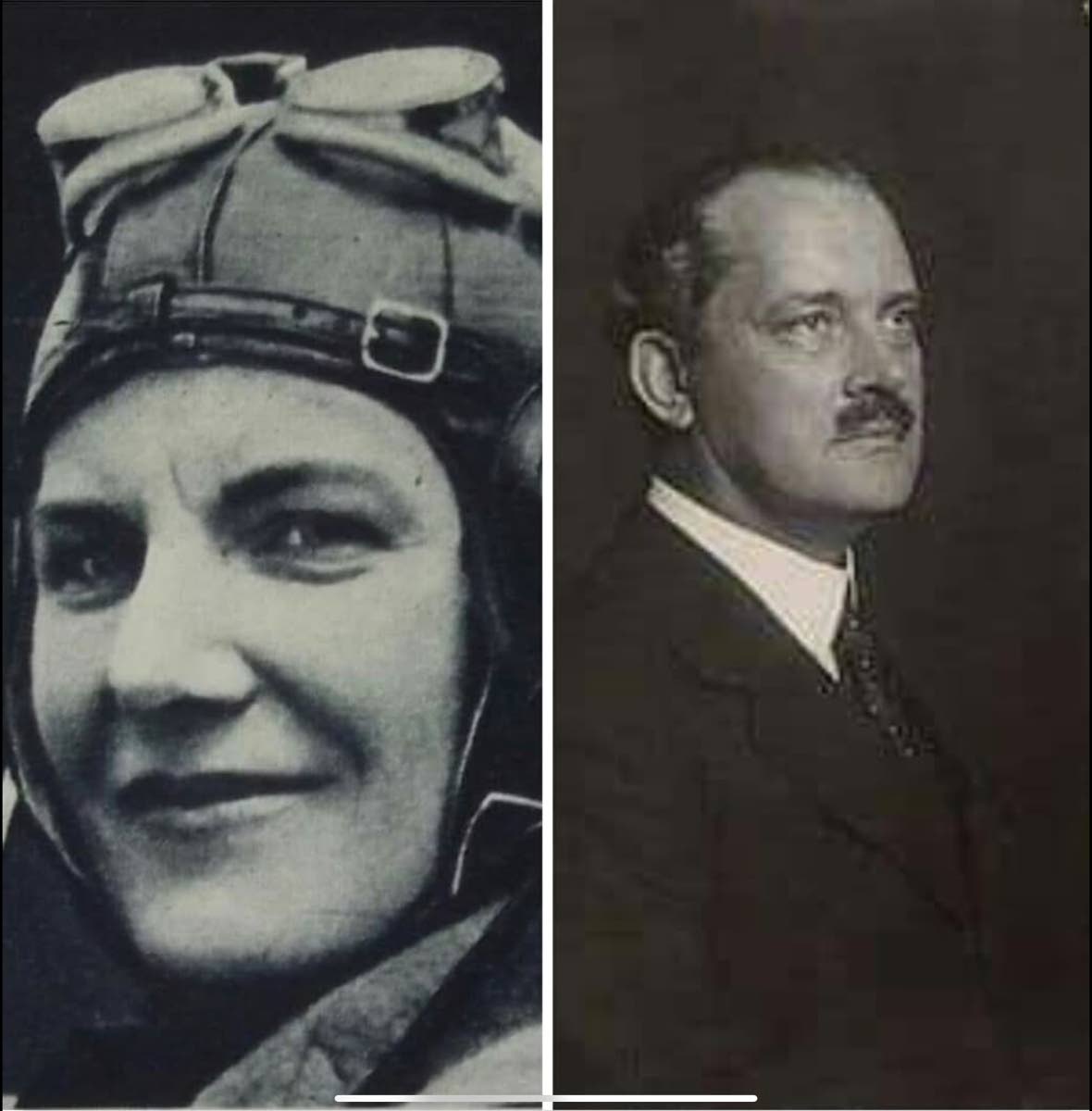
    Margaret Rose Mary Young, wife of Sir Hubert Winthrop Young, the Governor of Trinidad and Tobago (1938-1942), was a pioneering aviatrix whose daring exploits and strategic vision left an indelible mark on aviation in the English-speaking Caribbean. Her story is one of resilience, innovation, and a brush with danger that captivated a nation. In 1935, while accompanying her husband during his tenure as Governor of Northern Rhodesia (now Zambia), Lady Young embarked on a perilous flight from Livingstone to Lusaka. Despite battling malaria and navigating through treacherous weather, she took to the skies in her de Havilland DH 60G Gypsy Moth aircraft. However, turbulence disrupted her compass, leading her off course. Running low on fuel, she made a forced landing in a remote area of Southern Rhodesia (now Zimbabwe), where she and her companion, Dr. TRF Kerby, miraculously survived with minor injuries. The incident sparked one of the most extensive search operations in Northern Rhodesia’s history, involving hundreds of personnel and aircraft. Lady Young’s survival and subsequent actions underscored her determination and resourcefulness. During World War II, recognizing the disruption of shipping lanes, she spearheaded the establishment of airlinks between Trinidad and Tobago and the United States. Her collaboration with aviator Lowell Yerex led to the founding of British West Indian Airways (BWIA) in 1940, the first airline in the British West Indies. BWIA played a crucial role in shaping the region’s aviation industry, cementing Lady Young’s legacy as a trailblazer in Caribbean aviation.

  • Schoolboys shot in Maloney, Brasso Caparo, residents concerned — Children under fire

    Schoolboys shot in Maloney, Brasso Caparo, residents concerned — Children under fire

    Residents of Building 16 in Maloney Gardens were left in shock after a violent shooting incident on October 15. At approximately 4 a.m., two masked gunmen forcefully entered an apartment, targeting a man and his nine-year-old son. The father, initially mistaking the intruders for police, attempted to flee to his son’s room but was pursued and shot. The boy sustained a gunshot wound to his heel, while the father was hit in his toe. Both victims were rushed to the hospital and are reported to be in stable condition. Police recovered eight spent 9mm shell casings at the scene, highlighting the severity of the attack. The incident has left the community on edge, with many parents expressing fear for their children’s safety. A resident, speaking anonymously, described the situation as heartbreaking, emphasizing that gun violence has become a grim norm in the area. Another mother, who heard the gunshots, recounted how she instructed her children to lie on the floor while she prayed for their safety. The community, once considered relatively safe, is now grappling with escalating violence, prompting some residents to consider relocating. A teenage boy lamented the loss of order in the neighborhood, stressing that children should never be victims of such violence. Meanwhile, a long-time resident, known as “Mama,” reflected on the changing dynamics of the community, urging parents to prioritize their children’s safety. The incident underscores the urgent need for measures to address gun violence and restore peace in Maloney Gardens.