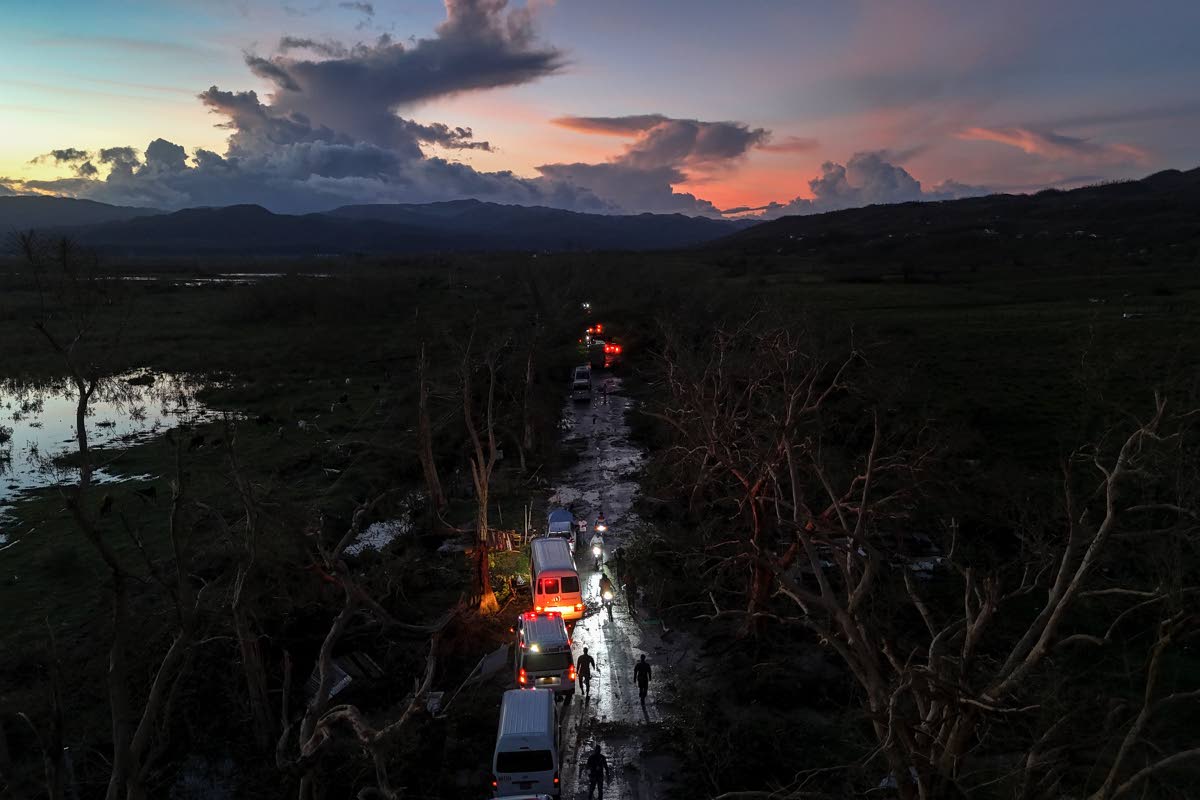
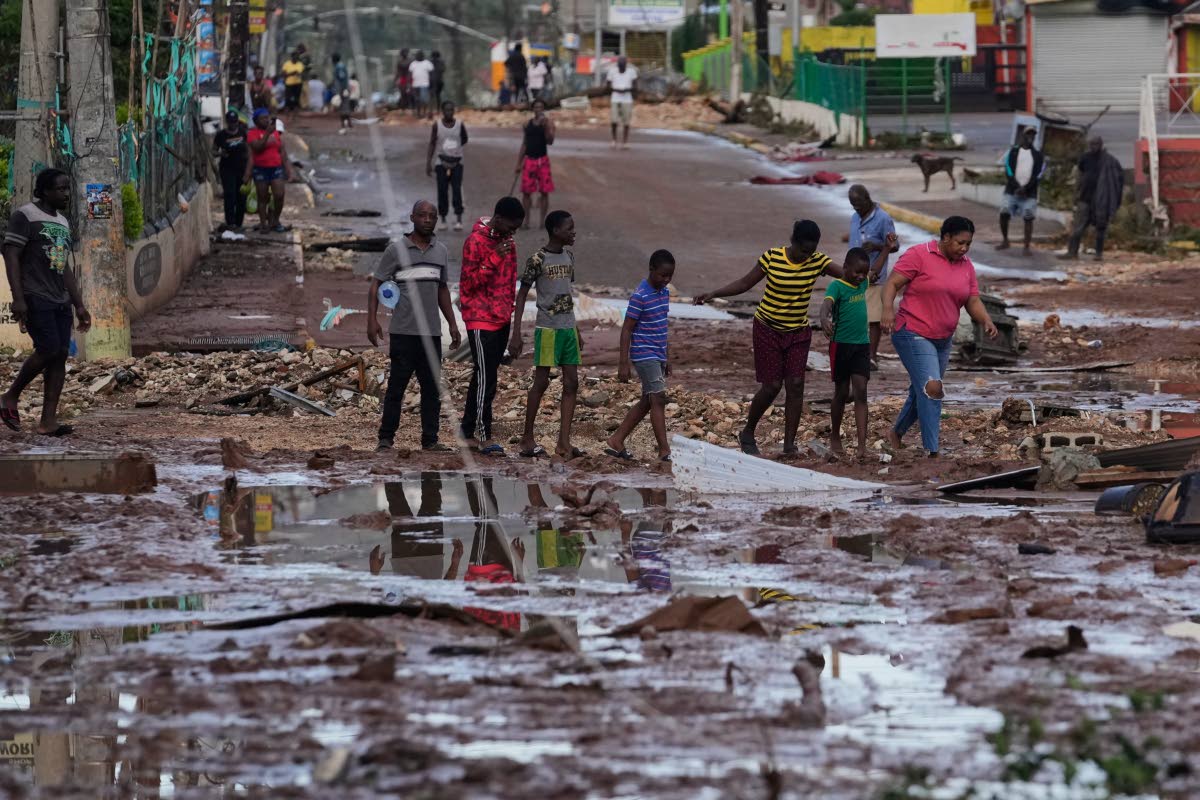
A convoy delivering aid to Black River, Jamaica, navigates through Holland Bamboo on October 29, where fallen trees and debris partially obstruct the road. This follows the devastating impact of Hurricane Melissa, which struck Jamaica as a Category 5 storm on October 28. While Trinidad and Tobago (TT) students in Jamaica are physically unharmed, many are grappling with significant mental trauma from the harrowing experience. Melinda Alfred, the Tobago representative of the TT Student Association at the University of the West Indies (UWI) Mona Campus, revealed that this was the first hurricane encounter for most students, leaving them deeply shaken. She recounted how high winds tore windows off dormitory blocks at Elsa Leo-Rhynie Hall, exposing rooms to the elements. Students had to secure windows manually during the storm, leading to water damage in several rooms. The adverse weather conditions persisted from October 25, lasting five days. Currently, several dormitories lack WiFi and electricity, with generators providing intermittent power. This has forced students to discard perishable food, including meat, exacerbating their frustration and mental exhaustion. Jaden Paris, the association’s vice president, expressed gratitude for the support from the TT High Commission in Jamaica, which provided food, toiletries, and water. Additionally, the association president used donations from Jamaican and TT sponsors to purchase non-perishable food items before the hurricane, ensuring students’ immediate needs were met. Alfred highlighted ongoing efforts by the central government, Tobago House of Assembly, Tobago Emergency Management Agency, and TT citizens to send donations of non-perishable food and money through the High Commission. These donations were expected to reach students by November 1. Despite their own challenges, the association is collecting non-perishable food to assist severely affected parishes, where TT citizens also reside. Alfred noted that while approximately 350 TT students are in Jamaica, the number is increasing daily, with the association now catering to 400 individuals. She emphasized the need for timely food distribution and is working to locate all Tobagonians, including two athletes in St Elizabeth parish, where the hurricane made landfall. While these athletes are physically well, communication remains limited, and other students’ dorms in the area were completely destroyed.
标签: Trinidad and Tobago
特立尼达和多巴哥
-

Bring Your Own Book and Bottle: Bocas celebrates calypso stories
The Bocas Lit Fest recently hosted its BYOBB (Bring Your Own Book and Bottle) social event at The Writers Centre in Port of Spain, marking the culmination of Calypso History Month. The event featured writer and media producer Judith Laird and soca artiste-songwriter Nadia Batson as special guests. Calypso History Month, celebrated annually in October since its official recognition by the Trinbago Unified Calypsonians Organisation (TUCO) in 2002, honors the rich cultural heritage of calypso music. The evening’s highlight was a screening of Laird’s 1981 documentary, ‘Women in Kaiso,’ which chronicles the experiences of pioneering female calypsonians. Batson, known for her storytelling through music, shared insights into her creative process, emphasizing the importance of understanding the artiste’s personality when composing. The BYOBB series, hosted bimonthly, fosters intellectual exchange and cultural dialogue, offering a platform for attendees to engage with literary and artistic figures. Upcoming events at The Writers Centre include a celebration of Peepal Tree Press’s 40th anniversary, featuring discussions on Caribbean literature. For more details, visit bocaslitfest.com.
-
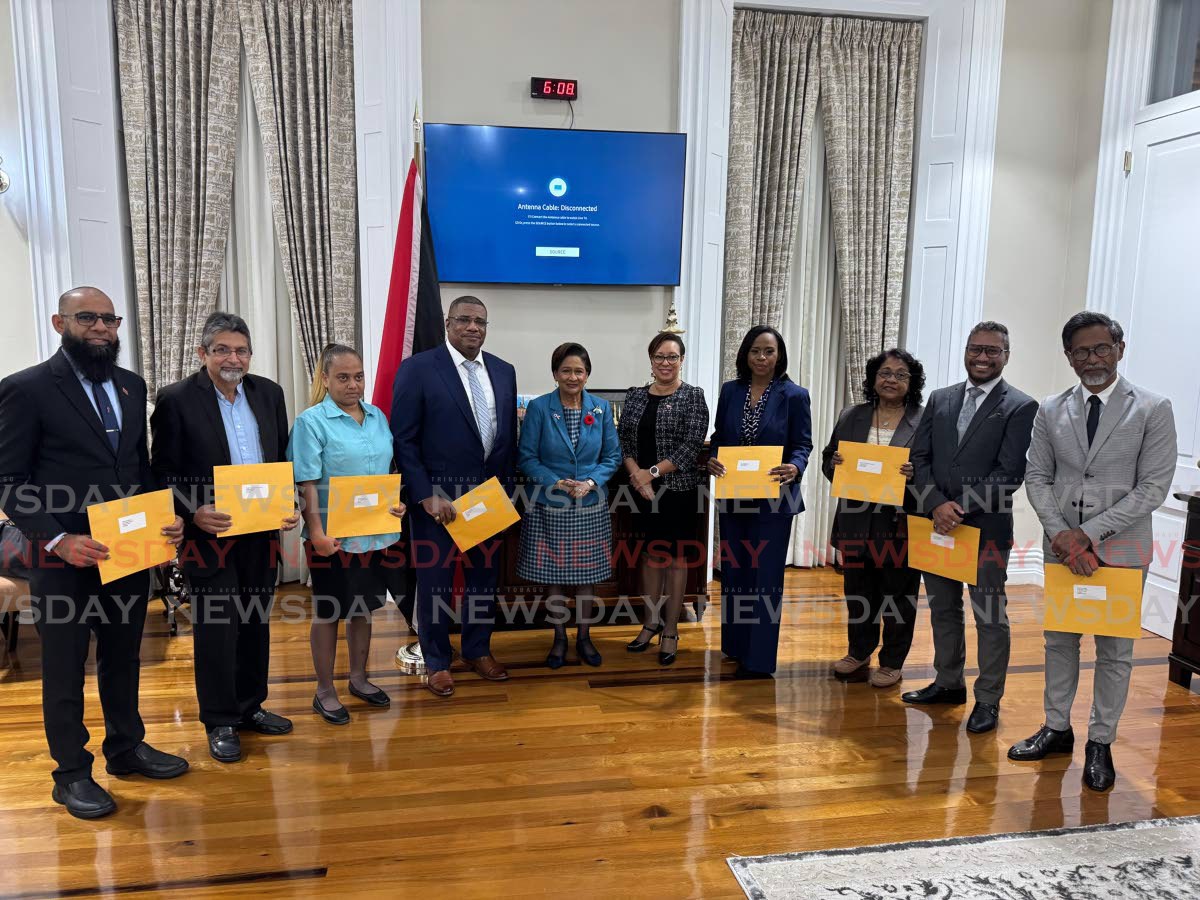
PM appoints new board to TTT
In a significant move to reshape the future of Trinidad and Tobago Television (TTT), Prime Minister Kamla Persad-Bissessar officially appointed a new board of directors on October 31. The ceremony, held at the historic Red House in Port of Spain, marked a pivotal moment for the state-owned broadcaster. Veteran broadcaster Michael T Kerr was named as the new chairman, with Cecile Ablack stepping into the role of deputy chairman. The board also includes Aaron Mahabir, Jamal Shamshuddin Mohammed, Anna R Moonsammy, Marilyn Martin, Steve Oudit, Nikesha Samuel, and Azeem Mandul. Kerr expressed the board’s gratitude and commitment to serving the nation’s best interests, emphasizing their dedication to the people of Trinidad and Tobago. This restructuring follows a recent realignment of cabinet responsibilities, placing TTT under the direct oversight of the Office of the Prime Minister. During the meeting, Prime Minister Persad-Bissessar shared her vision for TTT’s future, urging the new leadership to strive for excellence and innovation in their national service.
-
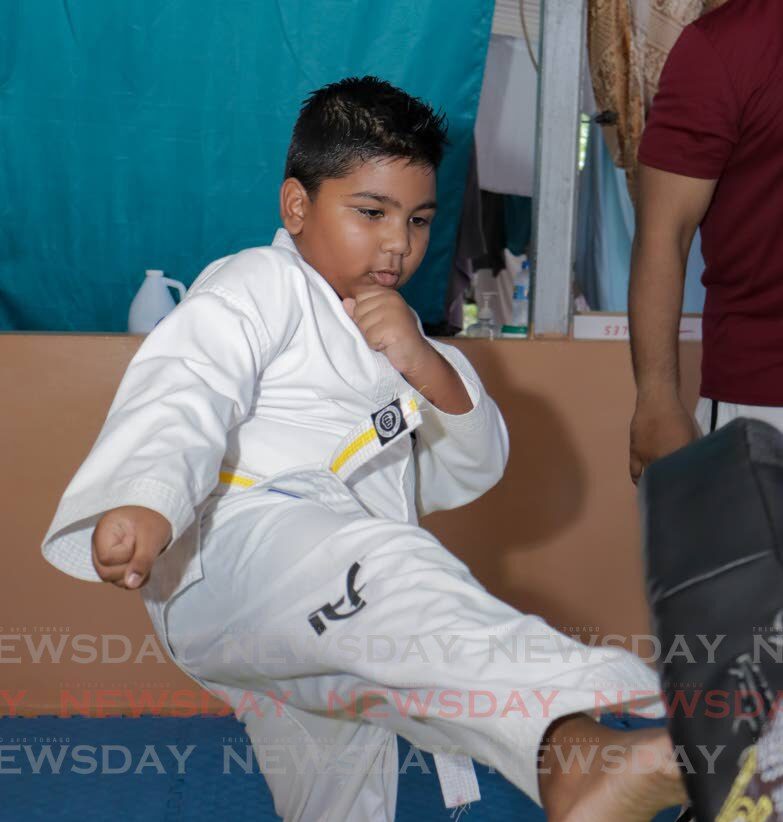
Nathan the little warrior in the water, on the mat
At just seven years old, Nathan Ramasar is already making waves in both taekwondo and swimming. A Standard One student at Exchange Presbyterian Primary School in Couva, Nathan has been training in taekwondo since the age of three at Impulse Martial Arts School in Chase Village, under the guidance of Sabum Rakesh Bissoon. Currently holding a yellow stripe belt, he is preparing to grade for his yellow belt this month. Nathan’s passion for taekwondo is evident in his achievements, including a bronze medal at WAKO TT 2023, silver and bronze at ITF Taekwondo 2024, and gold and bronze at ITF Taekwondo 2025. His love for the sport is matched by his enthusiasm for swimming, where he trains at Wave Swim School in Endeavour under coach Cardesha Lyons. Nathan’s parents, Naresh Ramasar and Shalini Maharaj, emphasize the importance of balance, discipline, and enjoying the journey rather than just focusing on winning. His grandmother, Sharon Maharaj, a retired teacher, also plays a crucial role in his academic and personal growth. Nathan’s story is a testament to the power of family support, hard work, and the joy of pursuing one’s passions.
-
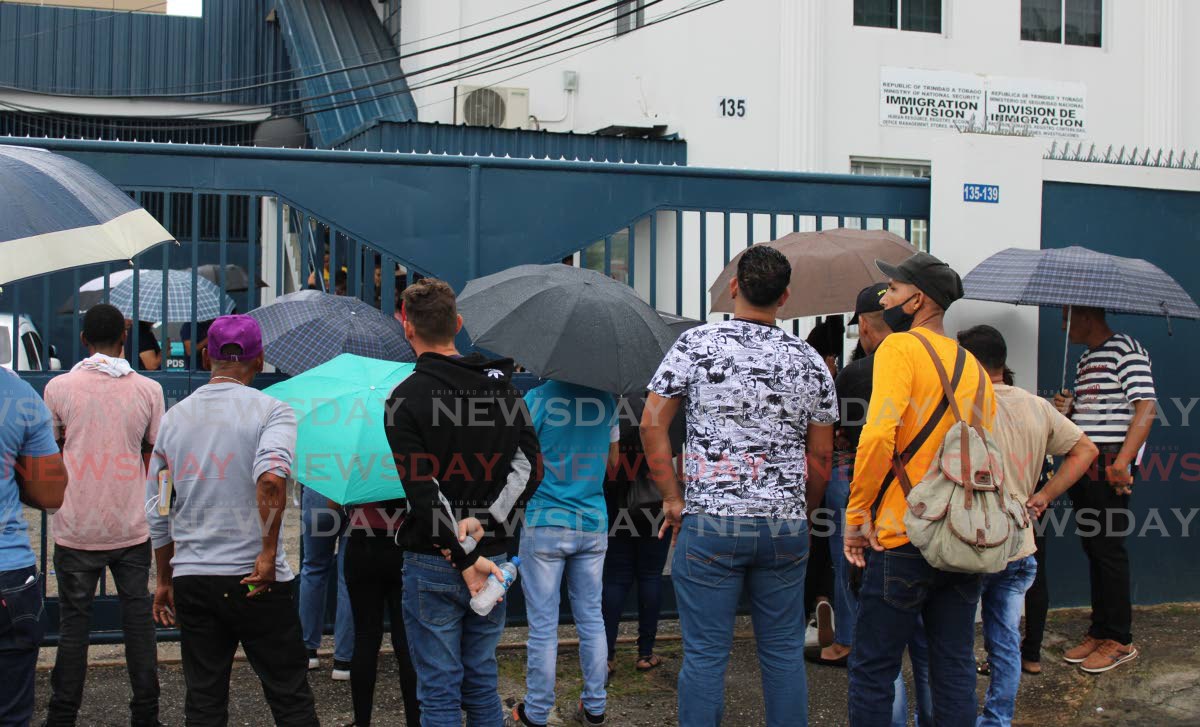
Fear of deportation triggers Venezuelan exodus from Trinidad and Tobago
Tensions surrounding Venezuelan migrants in Trinidad and Tobago (TT) have escalated dramatically following a recent government crackdown on irregular migration. On October 27, the Ministry of Homeland Security issued a stern directive mandating the detention and deportation of all undocumented migrants, stating that no further Orders of Supervision would be issued. This announcement has sent shockwaves through the Venezuelan community, prompting widespread fear, displacement, and a mass exodus from the country.
Many Venezuelans, both documented and undocumented, have begun selling their belongings, abandoning their rented homes, and quitting their jobs in factories, farms, and workshops. The Hispanic Cultural Centre La Casita in Arima has urged the government and society to remain calm, warning against what it describes as a ‘migrant hunt.’ Andreina Briceño Ventura-Brown, the center’s director, highlighted the spread of misinformation and the vulnerability of even those holding UNHCR cards, who may still face harassment under local laws.
Social media platforms like Facebook and WhatsApp are flooded with posts from Venezuelans selling appliances, motorbikes, and furniture as they prepare to leave. Mariana Lopez, a 34-year-old Venezuelan in Arima, shared her decision to sell her possessions and move to Brazil, stating, ‘I don’t want to be caught and sent back. I’ll go to Brazil even if I have to start from zero.’ Similarly, Jesus Andrade, a mechanic in San Fernando, quit his job, fearing detention.
The government’s measures have drawn criticism for lacking compassion. Rosa Medina, a mother of two, lamented, ‘They talk about human rights, but they show no humanity to us. Many of us have been here for years working and paying taxes.’ Eduardo Ramirez was more blunt, accusing the government of double standards: ‘This government wants Venezuela’s gas but treats Venezuelans here like garbage.’
Even Venezuelans with legal status face challenges. One family with valid work permits revealed that their children are unable to attend school due to bureaucratic delays in processing student visas. ‘The kids lose classes while the Ministry of Homeland Security doesn’t respond,’ they said.
The exodus extends beyond TT, with many Venezuelans planning to relocate to countries like Guyana, Brazil, Argentina, and Colombia, where governments are welcoming Venezuelan workers and investors. Travel agencies in Venezuela and TT have reported a surge in ticket requests, with entire families purchasing one-way tickets. Luis Arias, a travel agent in Venezuela, noted that requests from Venezuelans in TT to travel to Brazil, Argentina, and Guyana have tripled in recent weeks.
Before the UNHCR ceased operations in TT in August 2025, the country hosted over 40,000 Venezuelans under various forms of humanitarian protection. Today, social media is rife with posts like ‘Selling fridge and bed – leaving for Brazil’ and ‘Urgent sale of motorcycle, need to leave before November.’ For many Venezuelans, TT was once a land of opportunity. Now, they are fleeing in fear, leaving behind their livelihoods and dreams.
-
Family of Las Cuevas fisherman supected killed in US strike report him ‘missing’
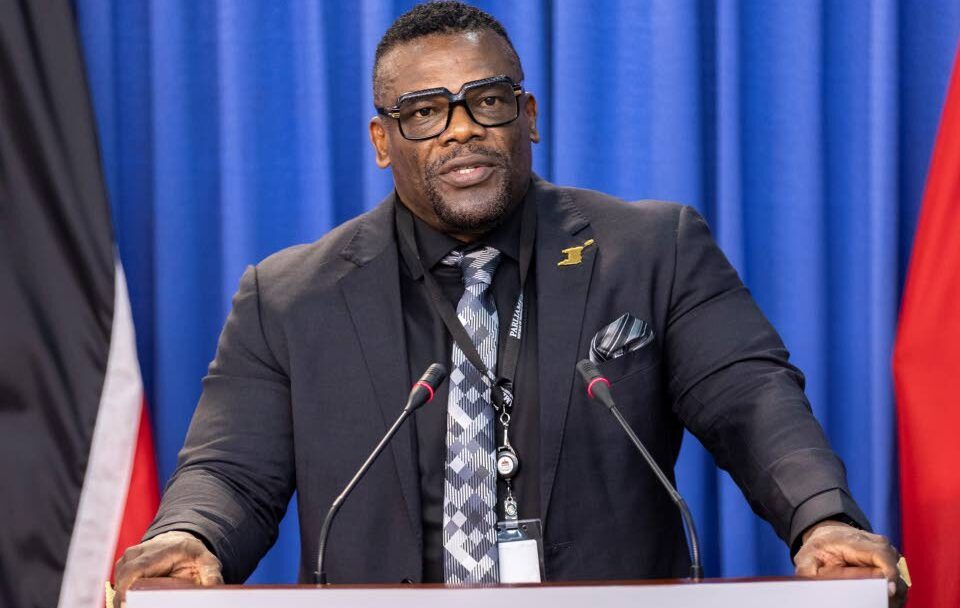
The family of Chad Joseph, a 26-year-old fisherman from Las Cuevas, Trinidad, has reported him missing to the police, suspecting he may have been one of two Trinidadians killed in a US military strike in the Caribbean in October. Joseph, a resident of Salvary Lane, St. Michael’s Village, has been missing since April 25. His relative filed the missing person report on November 1 at the Maracas Bay police station, stating that she last spoke to him on the morning of his disappearance when he mentioned going fishing. Joseph and Rishi Samaroo are believed to have been casualties of the October 14 strike, part of a US-led operation targeting narcotics trafficking. Foreign and Caricom Affairs Minister Sean Sobers, during a post-Cabinet media briefing on October 30, emphasized that there is no evidence linking the men’s deaths to the military strike. He clarified that the operation occurred in international waters, beyond Trinidad and Tobago’s national jurisdiction and Exclusive Economic Zone (EEZ). Sobers also pledged to assist Samaroo’s relatives, who faced challenges filing a missing person report at the Barataria Police Station, by contacting the Minister of Homeland Security and the Commissioner of Police. Investigations into the incident are ongoing.
-
Archbishop Gordon: Pray for peace in the region
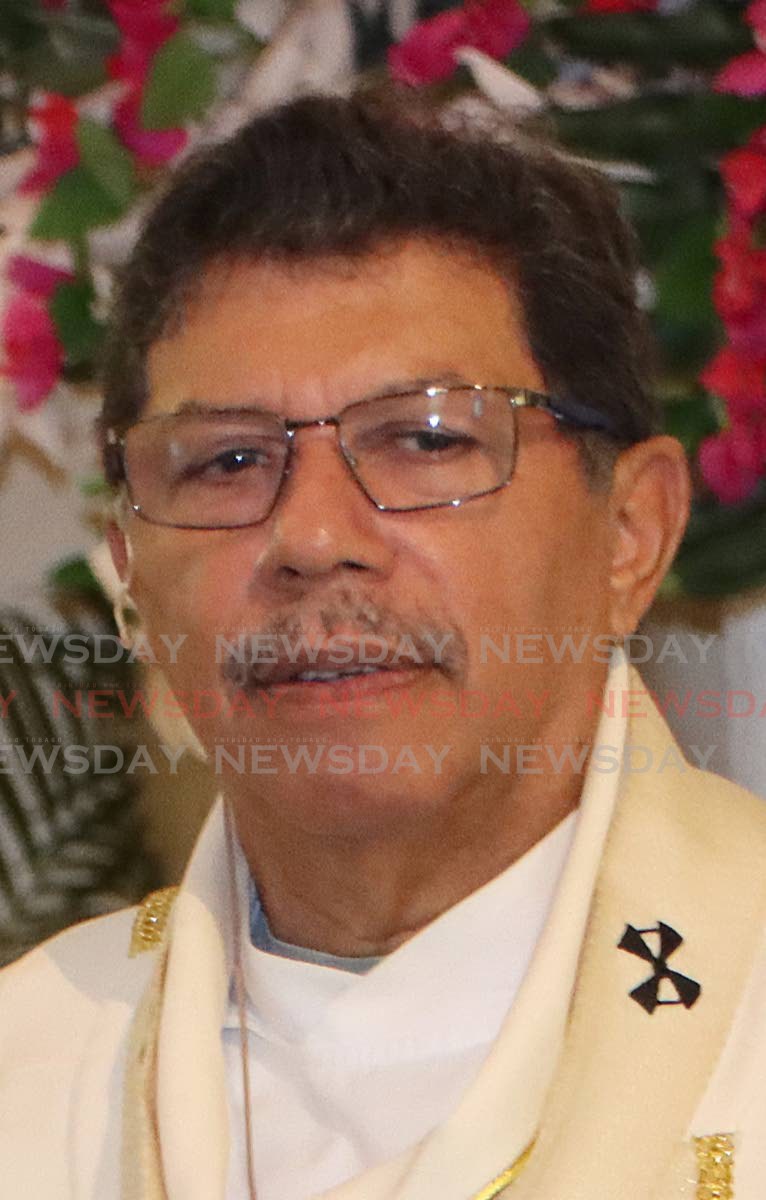
Amid escalating tensions between the United States and Venezuela, Archbishop Jason Charles Gordon has issued a heartfelt appeal for peace in the region. In a letter dated November 1, the Archbishop urged Catholics and the broader population to pray for tranquility during these uncertain times. The call comes as the US increases its military presence in the southern Caribbean, with reports of Trinidad and Tobago Defence Force personnel being recalled to base. Gordon emphasized the need for faith and vigilance, warning against misinformation that could sow division and hatred. He also highlighted the importance of reconciliation over aggression, urging communities to cultivate peace. The Archbishop extended his prayers to those affected by Hurricane Melissa in Trinidad and Tobago, Venezuela, Guyana, and Jamaica, and reaffirmed the church’s commitment to supporting migrant families. Meanwhile, US President Donald Trump has denied reports of an imminent military strike on Venezuela, while Trinidad and Tobago’s Prime Minister Kamla Persad-Bissessar has called for calm, despite her support for the US military deployment. Venezuela’s National Assembly has declared Persad-Bissessar persona non-grata, sparking public protests against her stance.
-
The budget, rumours and crime
The government of Trinidad and Tobago is navigating a complex web of challenges, including opposition criticism of the 2025/2026 budget, a delicate balance between revenue and expenditure, ongoing public safety concerns, and strained relations within the Caribbean Community (Caricom). Adding to the pressure is the precarious geopolitical situation between the United States and Venezuela, which has placed the nation in a tense middle ground. Prime Minister Kamla Persad-Bissessar and Foreign Affairs Minister Sean Sobers have urged citizens to remain calm amidst rumors of war, emphasizing that the country is not heading into conflict. The administration must strengthen its political strategies, public policies, and communication efforts to address these issues effectively, particularly in an environment rife with misinformation. The budget, crafted by lawyer-economist Davendranath Tancoo, aims to promote economic fairness through accountable fiscal policies. However, the opposition has questioned the government’s handling of the economy, pointing to a decline in real GDP growth from 3.7% in 2014 to 2.5% in 2024 and a significant increase in national debt. Employment has also dropped by 70,000 jobs over the same period. Despite these criticisms, the budget includes measures to create full-time, better-paid jobs, funded by $475 million from the Employment Fund and an additional $310 million for job creation. The government has also reduced the price of super gasoline by $1 per liter, a move welcomed by the public. Meanwhile, the closure of the CEPEP and URP programs, criticized for harboring criminal activity and inefficiency, has sparked debate. Tobago has retained these programs, drawing scrutiny from the opposition. The budget’s connection to crime is also evident, as economic slowdowns and widening inequality often exacerbate social tensions. Recent salary increases for politicians, contrasted with modest raises for labor unions, have fueled public resentment. On the geopolitical front, Prime Minister Persad-Bissessar’s remarks labeling Caricom as an “unreliable partner” have stirred controversy, though she claims her comments were misinterpreted. Her support for the U.S. crackdown on drug trafficking and the docking of a U.S. warship in Port of Spain have further strained relations with Venezuela, which has labeled her persona non grata. Despite these tensions, recent developments suggest a shift toward diplomacy, with Venezuela calling for unity against potential U.S. aggression.
-
Trnidad and Tobago Cricket Board to focus on grassroots, modernisation
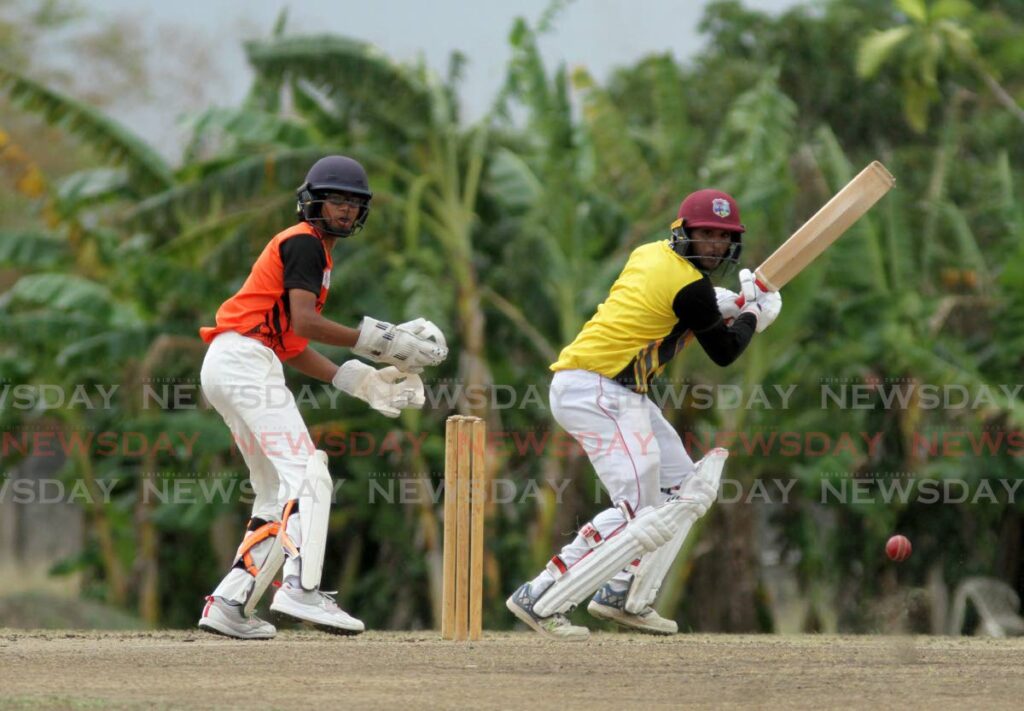
The Trinidad and Tobago Cricket Board (TTCB) is poised to usher in a transformative era under the leadership of its newly appointed third vice-president, Avinash Suruj. Speaking during a recent TV6 program alongside TTCB general secretary Henry Chase, Suruj outlined his vision for the next four years, emphasizing grassroots development, technological innovation, and a rebranding of the board to align with modern sporting demands. Suruj, who secured his position by defeating veteran administrator Parasram Singh in a decisive 29-12 vote on October 25, stressed the importance of nurturing future cricket stars like Pollard, Narine, and Bravo by strengthening zonal structures and ensuring fair, transparent selection processes. He highlighted the critical role of zonal competitions in identifying talent for national teams, warning against political bias in selections. Suruj also underscored the need for modernization, particularly in digitizing scoring systems and administrative operations, to enhance efficiency and public confidence in the TTCB. His leadership aims to elevate the TTCB brand to new heights while fostering trust and participation at the community level.
-
CAF approves US$647,000 to support Jamaica’s recovery efforts
The Development Bank of Latin America and the Caribbean (CAF) has allocated USD $670,000 in emergency grant funding to assist Jamaica in its recovery efforts following the catastrophic impact of Hurricane Melissa. The Category 5 storm, which struck on October 29, caused significant loss of life and widespread destruction to infrastructure, services, and communities across the island nation. This financial aid aims to bolster the humanitarian and recovery initiatives already underway, complementing support from other regional and international partners. In a letter to Jamaican Prime Minister Andrew Holness, CAF’s executive president, Sergio Díaz-Granados, expressed solidarity with the government and people of Jamaica, emphasizing the institution’s commitment to addressing the immediate and long-term needs arising from the disaster. Díaz-Granados highlighted the immense humanitarian challenges faced by Jamaica and reaffirmed CAF’s readiness to channel resources effectively. Additionally, CAF facilitated bilateral assistance from El Salvador, including the airlift of 37 tonnes of humanitarian supplies and the deployment of over 300 emergency personnel to aid in response and recovery operations. Finance Minister Davendranath Tancoo, chairman of CAF’s Board of Directors, praised the institution’s swift action and reiterated the Board’s full support for Jamaica’s recovery. CAF also commended the Jamaican government’s leadership in coordinating national response efforts and pledged to remain a steadfast partner throughout the nation’s reconstruction journey.