
In a significant legal development, two men from Princes Town, Eric Phillip and Paul Phillip, have successfully appealed their 14-day jail sentences for disorderly behavior and using obscene language. The Court of Appeal, presided over by Justices Charmaine Pemberton and Carla Browne-Antoine, ruled on October 28 that the sentences imposed by Magistrate Lisa Singh-Phillip were excessive. The incident, which occurred on November 27, 2024, on Tarouba Link Road in San Fernando, involved a verbal altercation with police officers at the scene of a family member’s vehicle accident. Both men pleaded guilty to the charges, while their relative, who also faced charges, pleaded not guilty, with his case still pending. During the initial hearing, the men’s attorneys emphasized their clients’ good character and remorse, pleading for leniency. However, the magistrate sentenced each man to 14 days’ simple imprisonment for each offense, to be served concurrently. The men’s legal team, comprising Aaron Mahabir, Yves Jacques Nicholson, and Mathias Sylvester, argued on appeal that the custodial sentences were unduly harsh and disproportionate. The Court of Appeal agreed, stating that while the conduct was improper, it did not warrant imprisonment. The court invoked Section 149(2)(a) of the Summary Courts Act, which allows for the substitution of a more appropriate sentence. Consequently, the prison sentences were quashed, and fines of $200 were imposed for each charge, with a default term of seven days’ simple imprisonment. The attorneys also highlighted the outdated nature of laws on obscene language, describing them as relics of colonial history that suppress local cultural norms and expressions. They argued that such laws are inconsistent with modern principles of free expression and personal autonomy. The State was represented by Sabrina Dougdeen-Jaglal.
标签: Trinidad and Tobago
特立尼达和多巴哥
-

Misrepresentation of Privy Council
In a recent letter to the editor, E Galy’s critique of the Judicial Committee of the Privy Council’s role in the Jason Jones case demonstrates a profound misunderstanding of constitutional law and the judiciary’s function in a democratic society. Galy’s assertion that the Privy Council overstepped its bounds by altering the Constitution is not only incorrect but also dangerously misleading. This rebuttal seeks to clarify the constitutional principles at play and reaffirm the judiciary’s vital role in safeguarding the rule of law.
First and foremost, the Privy Council, as the highest appellate court for Trinidad and Tobago (TT), is tasked with interpreting and enforcing the Constitution. Section 2 of the Constitution explicitly designates it as the ‘supreme law of the land,’ rendering any inconsistent legislation void. The judiciary, not Parliament, is the ultimate arbiter of constitutional validity. This separation of powers is foundational to preventing elected dictatorship and ensuring democratic governance.
Second, the Jason Jones decision did not ‘change’ the Constitution but rather interpreted it in light of its guarantees of equality, privacy, and personal protection (sections 4 and 5). The court ruled that colonial-era laws criminalizing consensual adult acts in private violated these fundamental rights. This was not judicial activism but the fulfillment of the court’s constitutional duty to strike down laws that contravene the supreme law, as mandated by section 14(1).
Third, Galy’s claim that the court cannot render a law inoperable if it aligns with the Constitution is a fundamental misrepresentation of judicial review. Established in cases like Marbury v Madison (1803) and reaffirmed in Commonwealth jurisprudence, judicial review empowers courts to invalidate statutes inconsistent with the Constitution. This principle ensures that constitutional supremacy is upheld.
Fourth, Galy’s dismissal of ‘changed times’ as irrelevant to constitutional interpretation is misguided. The Constitution is a living document, as affirmed by the Privy Council in cases like Reyes v The Queen (2002) and Matthew v The State (2004). It must be interpreted in a manner that reflects evolving societal standards of dignity and equality.
Galy’s argument, rooted in theocratic posturing rather than constitutional reasoning, conflates religious morality with legal interpretation. This stance is incompatible with the secular rule of law enshrined in TT’s 1976 Constitution. Sovereignty lies with the people and the Constitution, not with religious dogma.
Finally, the assertion that judicial review ‘mutates’ civil and criminal law is legally untenable. When a law is declared unconstitutional, it is void ab initio, ensuring the coherence of the legal system. The judiciary’s role is to preserve constitutional order, not to subvert it.
In conclusion, the Privy Council’s decision in the Jason Jones case was a reaffirmation of constitutional supremacy and judicial duty. Public discourse must rise above misconceptions that equate judicial independence with political interference. The true tragedy lies in the persistence of such uninformed critiques in our public dialogue.
MOHAN RAMCHARAN
Birmingham, UK -

Windies claim T20 series win vs Bangladesh
The West Indies cricket team clinched an unassailable 2-0 lead in their three-match T20 series against Bangladesh with a 14-run victory in the second game, held on October 29 in Chattogram. Fast bowler Romario Shepherd was awarded Player of the Match for his stellar performance, taking 3/29, as the visitors defended their total of 149/9. The Windies’ innings was anchored by half-centuries from skipper Shai Hope (55) and Alick Athanaze (52), who built a solid 105-run partnership for the second wicket. Despite a valiant effort from Bangladesh’s opener Tanzid Hasan (61), the hosts fell short, managing only 135/8 in their chase. The West Indies’ bowling attack, led by Akeal Hosein (3/22), Shepherd, and Jason Holder (2/20), proved decisive in restricting Bangladesh. The final T20 of the series is scheduled for October 31.
-
Some budget concerns
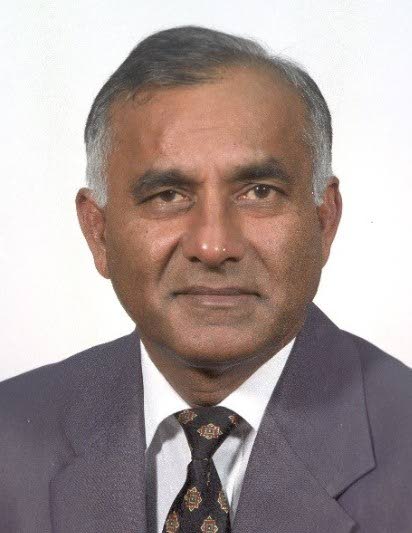
The 2025-2026 budget of Trinidad and Tobago has sparked skepticism among analysts, including economist Trevor Sudama, who questions its ability to deliver sustainable economic improvements. While the budget aims to enhance citizens’ quality of life through diversification and innovation, Sudama highlights several concerns that undermine its credibility. The budget relies on overly optimistic revenue projections, which are unlikely to materialize, potentially widening the fiscal deficit. Increased borrowing may be necessary to cover the shortfall, raising concerns about long-term economic stability. Additionally, the budget lacks clarity on funding for newly announced job creation initiatives, further fueling doubts about its feasibility. A critical issue is the country’s lagging innovation capacity. Despite allocating funds to initiatives like the Research and Development Impact Fund and a national innovation program, the budget fails to outline concrete measures to foster innovation. Trinidad and Tobago ranks poorly in global innovation indices, with only a small percentage of firms engaged in innovative activities. The agricultural sector, identified as a key pillar for diversification, also faces significant challenges. Despite repeated incentives, agricultural output remains minimal, and food imports continue to rise. Sudama raises critical questions about the sector’s lack of scientific input, low youth participation, and underutilized resources. Without addressing these systemic issues, the budget’s proposed measures are unlikely to yield meaningful results. The budget’s ambitious goals, while commendable, appear disconnected from the economic realities and structural weaknesses that hinder sustainable growth.
-
Young: UNC making Trinidad and Tobago energy uncompetitive
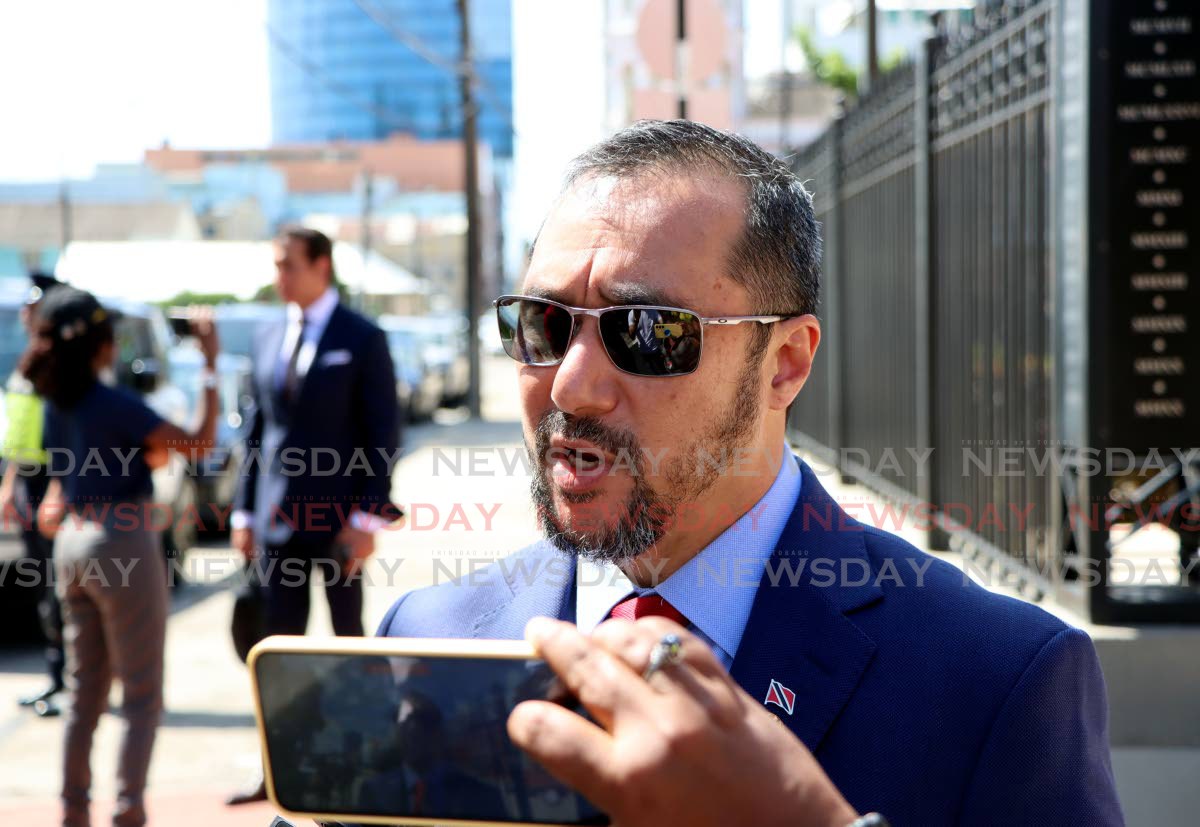
Former Energy Minister Stuart Young has issued a stark warning about the potential economic fallout from the Trinidad and Tobago (TT) government’s current energy sector strategies. Speaking to the media outside the Red House in Port of Spain, Young criticized the government’s approach, which he claims involves “trying to extort” companies through unilateral rate increases. He argued that such measures could render TT uncompetitive in the global energy market, jeopardizing both revenue and jobs.
Young emphasized that TT is not the only country with natural gas reserves or the ability to attract global investment. He warned that other nations with larger reserves and more favorable terms could easily lure companies away from TT. The recent budget’s electricity rate hikes, coupled with increased estate-related costs, have already begun to deter investors, he said.
The former minister highlighted the broader economic implications, noting that reduced competitiveness could lead to significant revenue losses for the government, which relies heavily on taxation from energy exports. This, in turn, could strain public services, delay salaries, and cause shortages in hospitals. Additionally, job losses could ripple through the economy, affecting not only plant workers but also ancillary businesses, such as food suppliers.
Young pointed to the recent shutdown of Nutrien’s operations in Point Lisas as a case in point. The global petrochemical leader announced a phased shutdown on October 23, citing port access restrictions and unreliable natural gas supply. The closure has already impacted over 300 temporary workers and raised concerns about CO2 supply for the food and beverage industry.
In response, the National Gas Company of TT (NGC) collaborated with Proman to ensure an alternative CO2 supply. Proman successfully delivered the equivalent volume of CO2 at the same price as Nutrien, with necessary infrastructure completed by October 27. Proman’s Managing Director, Anand Ragbir, praised the swift efforts of his team, while Massy Gas Products Trinidad CEO Marlon Millet expressed gratitude for the collaborative solution.
Young’s warnings underscore the urgent need for TT to adopt more competitive policies to safeguard its energy sector and broader economy.
-
No easy task turning around country
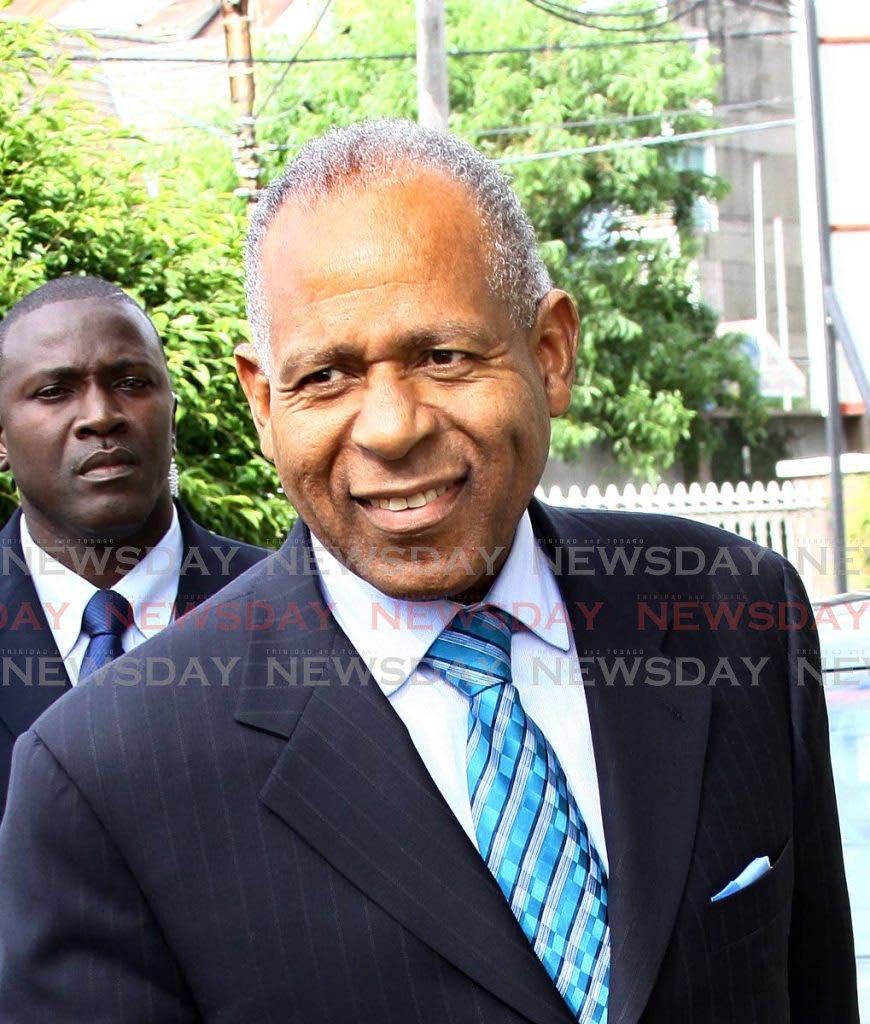
In a recent letter to the editor, C Peters reflects on the complexities of governing Trinidad and Tobago (TT), drawing inspiration from former Prime Minister Patrick Manning. The letter emphasizes the challenges of leadership and the often-overlooked potential of the nation. Peters notes that while imperfections are inevitable, the pursuit of progress requires hard work and resilience. The writer highlights the democratic exercise of voting for change on April 28, a decision driven by the belief in a new direction. However, Peters observes a paradox: some citizens expect consistency while desiring different outcomes. The letter underscores that meaningful transformation is a gradual process, fraught with trial and error. Quoting Greek philosopher Heraclitus, Peters reminds readers that change is inherent and inevitable, urging patience and perseverance in the nation’s journey toward progress.
-

Reggae Girlz in Trinidad worried about families
As Hurricane Melissa battered Jamaica on October 28, the country’s senior women’s football team, the Reggae Girlz, faced an emotional struggle while preparing for an international friendly match against Trinidad and Tobago. Team manager Crystal Walters expressed deep concern for their families back home, describing the situation as ‘devastating.’ Despite the turmoil, Walters emphasized the team’s commitment to professionalism and their duty to represent their nation. The match, scheduled for 8 pm at Ato Boldon Stadium in Couva, went ahead as planned, with the players maintaining regular contact with their loved ones. Walters acknowledged the difficulty of focusing on the game but highlighted the team’s determination to secure a victory. The aftermath of the hurricane, which followed last year’s destruction caused by Hurricane Beryl, is expected to pose significant challenges for Jamaica. The Trinidad and Tobago Football Association (TTFA) extended its solidarity and support to Jamaica, offering assistance to the Reggae Girlz, whose return flight was canceled due to the storm. TTFA President Kieron Edwards called for regional unity, emphasizing the shared spirit of compassion among Caribbean nations during such crises.
-

Man gunned down in Tobago
Tobago has witnessed its sixth homicide of the year 2025, marking a grim milestone for the island. The victim, identified as Ronald Butcher, was tragically shot multiple times near the Calder Hall playing field on the evening of October 28. Emergency services rushed Butcher to the Scarborough General Hospital for urgent medical attention. Despite efforts to save his life, he succumbed to his injuries and was pronounced dead. Local law enforcement has launched a thorough investigation into the incident, though no suspects or motives have been disclosed at this time. This incident underscores the ongoing challenges Tobago faces in addressing violent crime, raising concerns among residents and authorities alike.
-

Quarry operators threaten shutdown after arrests
The recent arrest of 19 workers at an illegal quarrying site in Manuel Congo, Guanapo, has sent shockwaves through Trinidad and Tobago’s aggregate industry. Nigel Tenia, President of the TT Aggregate Producers Alliance, expressed deep concern over the incident, warning that it could disrupt the production of essential materials for construction and road repairs. The quarry owner, Danny Guerra, was charged for operating without a license, a situation Tenia claims is widespread due to an inefficient licensing process under the Mineral Act, 2000. Tenia has urgently requested a meeting with Energy Minister Dr. Roodal Moonilal to address the issue, proposing a two- to three-year moratorium to decriminalize unlicensed operations. He emphasized the critical role of the aggregate industry in supporting construction and absorbing former Cepep and URP workers. Despite applications for processing licenses by 24 companies in March 2023, none have been issued, leaving the entire sector in legal limbo. Tenia and Ramdeo ‘Dan’ Persad, President of the Quarry Association, have called for immediate government action to reform the licensing process and ensure the industry can operate legally. The arrests have strained operators’ relationships with financiers and suppliers, while media portrayals have unfairly labeled quarry operators as criminals. Both leaders stressed the need for collaborative solutions to resolve the crisis and sustain the industry’s vital contributions to the nation’s economy.
-
Neighbours help Tobago family after gas tank explodes
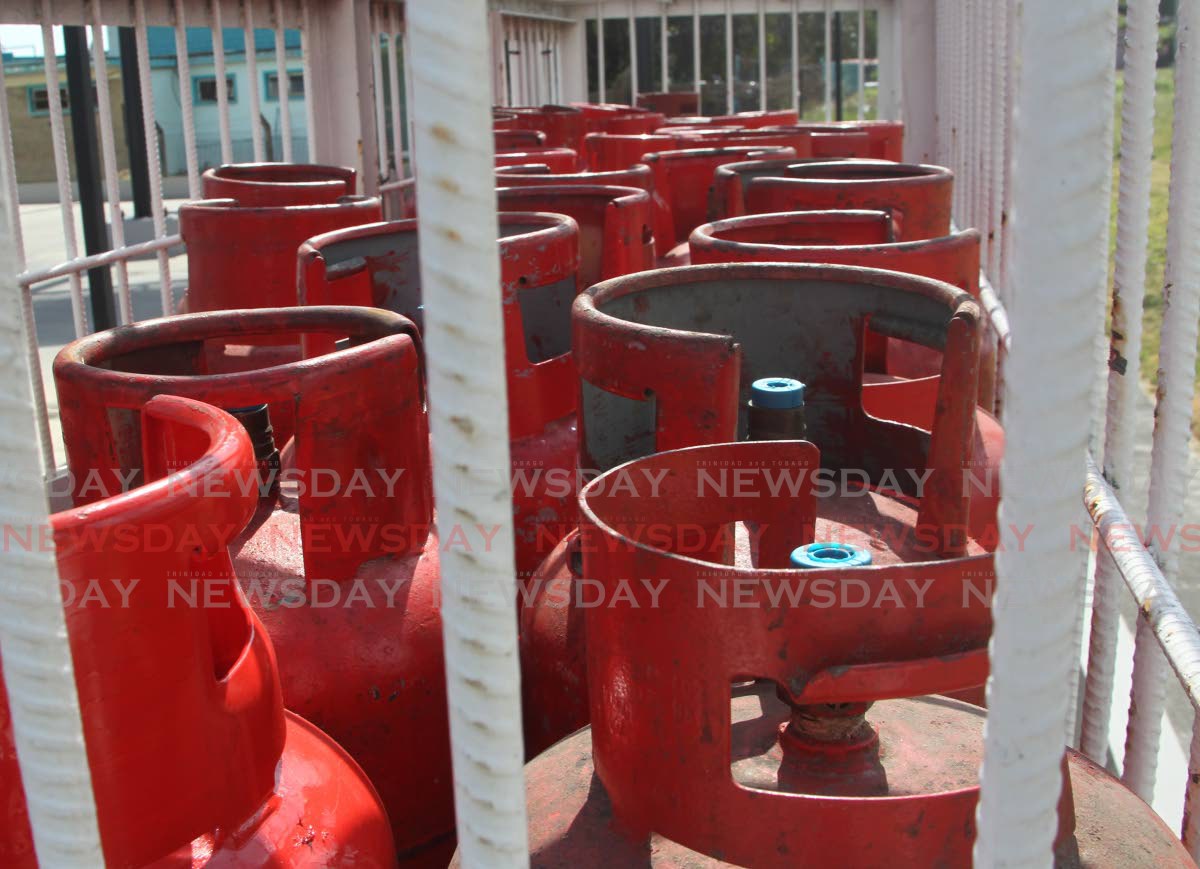
A potentially catastrophic incident unfolded in Bon Accord, Tobago, on October 26, when a defective LPG gas tank caused an explosion at the home of Tamecia Cox. The explosion occurred during the bustling carnival celebrations in Scarborough, but thanks to the quick actions of Cox’s family and the solidarity of her neighbors, disaster was averted. Cox, visibly relieved, recounted the harrowing experience in an interview on October 28. She and her family were in their kitchen on Gaskin Bay Road when the explosion ignited a sudden blaze. Fortunately, the house was equipped with two fire extinguishers, which her children knew how to use, slowing the fire’s spread. Cox emphasized the importance of community support, stating, ‘It pays to live good with people. Everybody in the community came out to help.’ Her daughter sustained minor burns, but the family emerged otherwise unharmed. Devon Thomas, a neighbor, was particularly praised for risking his life to remove the gas tank from the house. Cox also expressed gratitude to the Crown Point Fire Station and Police Station for their swift response. Tobago East MP David Thomas, a retired Assistant Chief Fire Officer, urged homeowners and businesses to exercise caution with gas cylinders, recalling a similar fatal incident four years ago. He explained that while gas tanks rarely explode, leaks can create highly volatile environments, especially when combined with flammable materials. Thomas stressed the importance of regular maintenance and vigilance to prevent such tragedies.