标签: Trinidad and Tobago

特立尼达和多巴哥

  • When the mind is sharp, and the body is frail

    When the mind is sharp, and the body is frail

    In the sterile environment of a hospital ward, a 93-year-old woman’s fate hangs in bureaucratic limbo. “She’s going to rehab tomorrow,” states a clerk, whose casual sympathy reveals the numbing frequency of such cases. When questioned about subsequent arrangements, the response is unsettlingly vague: “We don’t know. I guess we’ll see how rehab goes.

    This patient represents the cruel paradox of modern aging: a mind retaining remarkable sharpness trapped within a failing body. Despite scoring perfectly on cognitive assessments and demonstrating precise recall of medications and medical history—including an osteoporosis injection due exactly six months after her last administration—her physical autonomy has vanished.

    Her medical narrative includes a pacemaker implantation, cardiac stents following a 2017 heart attack, and an extensive network of physicians whose names she remembers with clarity. These medical relationships have increasingly replaced her social circle as friends gradually passed away. Where her daily planner once overflowed with social engagements, church activities, and book club meetings, it now primarily documents medical appointments.

    The contrast between mental acuity and physical deterioration creates what physicians recognize as the geriatric dilemma—the inevitable choice between preserving cognitive function or physical capability in advanced age. Her hands, deformed by osteoarthritis, struggle to grip a pen. Her knees produce audible grating sounds with movement. Standing requires assistance from two people against the invisible downward force of vertebral collapse from osteoporosis.

    Walking with a walker resembles a Herculean effort against imaginary leg weights, actually caused by fluid accumulation from circulatory issues. Neuropathic pain generates electric shock sensations down her legs, treated with medications that induce dizziness. Macular degeneration has stolen her ability to read, severing connection with her lifelong passion.

    Despite these accumulating adversities, her will remains unbroken. When confronted with end-of-life decisions regarding resuscitation, she responds with unequivocal clarity: “I want to live. Do whatever you would do for anybody else.” Even when warned that CPR would likely leave her machine-dependent and fundamentally altered, she maintains her stance, momentarily refusing to engage with the distressing hypothetical.

    This encounter leaves the attending physician with a profoundly unsettling thought: in such circumstances, cognitive clarity may become its own form of torture when the body can no longer obey the mind’s commands.


  • Port of Spain taxi-driver hits vehicles after suffering seizure

    Port of Spain taxi-driver hits vehicles after suffering seizure

    A midday medical emergency culminated in a multi-vehicle collision in Port of Spain on December 1st, prompting a significant police response and raising questions about emergency service timelines. The incident unfolded around 9:30 AM on Ariapita Avenue when a 63-year-old taxi driver experienced a sudden seizure while operating his vehicle.

    Losing control due to the medical episode, the driver’s car veered onto Scott Bushe Street, where it subsequently collided with five stationary, parked vehicles. The impact resulted in injuries to two individuals inside the taxi. The 63-year-old driver was found unresponsive at the scene, while a 51-year-old female passenger in the front seat sustained a back injury.

    Bystanders and passers-by played a crucial role in the immediate aftermath, swiftly assisting both occupants from the damaged vehicle and moving them to a safer location in a nearby carpark. Law enforcement officials arrived promptly to secure the area and cordon off the street for investigation.

    The emergency response was notably aided by a certified first-aid provider, a good Samaritan who worked in the vicinity and offered critical initial medical assistance before professional help arrived. A point of concern emerged as the official ambulance service took over an hour to reach the location following the incident’s occurrence.

    Local authorities have confirmed that an active investigation into the precise circumstances of the accident is ongoing, examining all factors surrounding the collision.

  • Roget takes Rowley to court over defamation claims

    Roget takes Rowley to court over defamation claims

    In a significant legal and political development, Oilfields Workers’ Trade Union (OWTU) president Ancel Roget has initiated defamation proceedings against former Prime Minister Dr. Keith Rowley. The lawsuit, filed at the High Court on November 22, stems from comments allegedly made by Rowley regarding a 2022 highway blockade incident involving scrap-iron dealers.

    The controversy dates back to August 2022 when truckloads of dirt were dumped on the Solomon Hochoy Highway near Claxton Bay, creating massive traffic gridlock. This protest occurred shortly after the government implemented a six-month ban on scrap iron exports, which dealers argued would devastate their livelihoods. Roget asserts that while his union defended the protesters’ concerns, Rowley made defamatory statements about his character in connection with the incident.

    Speaking at a gathering of former Petrotrin employees commemorating the seventh anniversary of the state-owned company’s closure, Roget declared: ‘Rowley frequently pursues legal action against those who criticize him. Now he must answer this statement of claim in court.’ The comment received enthusiastic applause from union members.

    The Petrotrin closure remains a deeply contentious issue, with Roget characterizing it as ‘one of the most devastating economic decisions inflicted on the people’ by Rowley’s previous administration. He accused the former government of systematically ‘attacking and demonizing’ the OWTU for seven years while using misinformation to justify the refinery’s shutdown. Although the Rowley administration cited economic challenges and declining profitability as reasons for closure, Roget maintains the action specifically targeted the union while harming the entire nation.

    Roget used the platform to rally his ‘blue-shirt army’ of supporters, urging them to prevent the return of the People’s National Movement (PNM) to power. He specifically highlighted the union’s success in making traditionally secure PNM seats marginal, referencing San Fernando East, Point Fortin, and La Brea constituencies. The event was attended by current government officials including Point Fortin MP Ernesto Kesar, now Minister in the Ministry of Energy, and La Brea MP Clyde Elder, Minister in the Ministry of Public Utilities—both former union leaders themselves.

    Roget announced plans to hold a press conference to provide further details on the defamation case, signaling continued escalation of tensions between the labor movement and former administration.

  • Ex-Petrotrin workers to get land from government

    Ex-Petrotrin workers to get land from government

    The Trinidadian government has announced plans to honor longstanding land allocation agreements for former Petrotrin workers, mirroring previous commitments made to ex-employees of the defunct Caroni (1975) Ltd. The declaration came from Minister Ernesto Kesar of the Ministry of Energy and Energy Affairs during a November 30 gathering at Pointe-a-Pierre roundabout, where scores of former refinery workers and Oilfields Workers’ Trade Union (OWTU) members commemorated the seventh anniversary of the facility’s closure.

    Minister Kesar revealed that while 2,814 former workers had applied for land parcels through the Land Settlement Agency under the previous administration, only 238 had received commitment letters without actual land transfers. The current government initiative aims to address this disparity by preparing a comprehensive report for Cabinet consideration that includes all permanent, temporary, and casual workers from Petrotrin’s 76,000-acre holdings.

    In parallel developments, the government plans to reopen two vandalized medical facilities in Santa Flora and Guaracara within six months to serve former workers and their families. Kesar, who personally inspected the clinics, reported that while the Pointe-a-Pierre facility remains structurally sound with preserved medical records, the Santa Flora clinic requires significant rehabilitation due to severe vandalism.

    OWTU President General Ancel Roget delivered impassioned remarks criticizing the previous administration, alleging that over 1,000 retirees died due to inability to access medical plans. Roget detailed occupational health crises among workers, including exposure to chemicals and extreme working conditions that led to renal failure and heart conditions.

    The Rowley-led administration had previously cited economic challenges and declining profitability as reasons for the refinery’s 2018 closure. Following restructuring, Petrotrin became Trinidad Petroleum Holdings Ltd (TPHL) with four subsidiaries, though Roget emphasized that none currently recognize OWTU representation due to successorship issues—a matter now being addressed through parliamentary procedures by Labour Minister Leroy Baptiste.

    The event also featured La Brea MP Clyde Elder, a former trade union leader, signaling broad governmental involvement in resolving these longstanding labor and social welfare issues.

  • Tobago planters’ problems 1805-1806

    Tobago planters’ problems 1805-1806

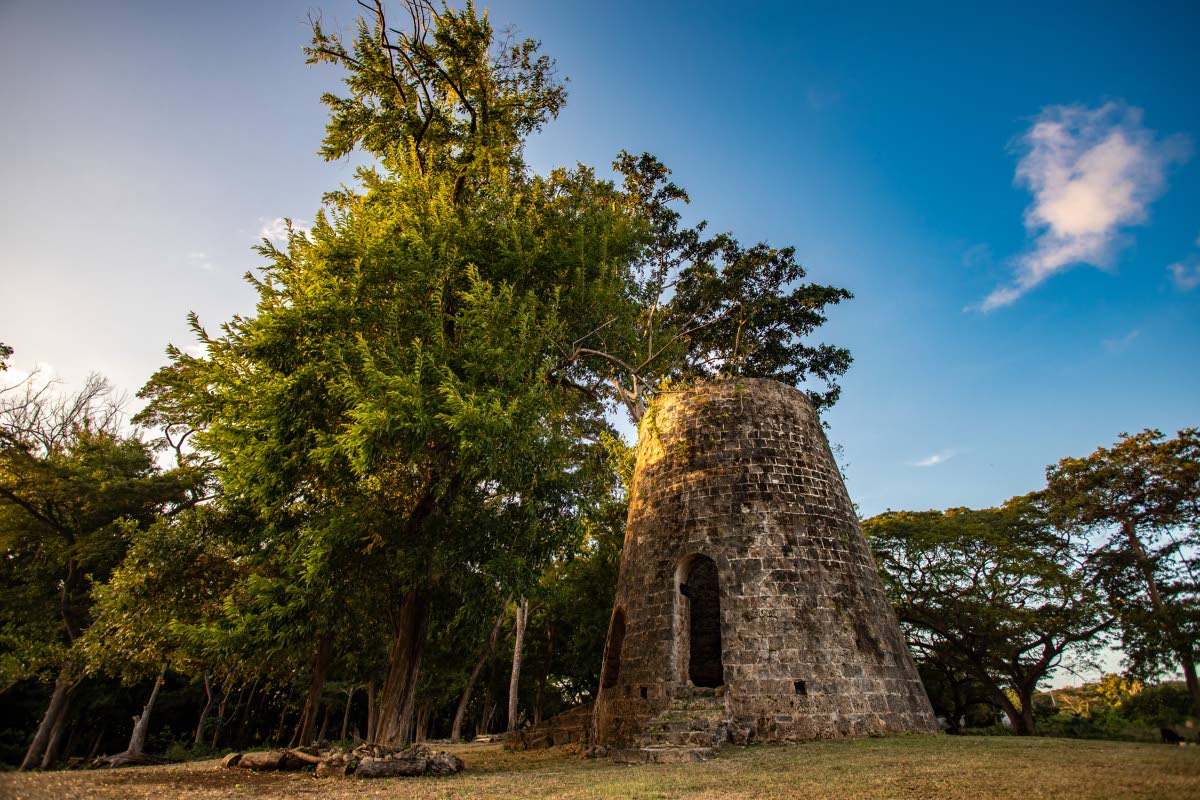
    The twilight of Tobago’s sugar industry reveals a complex narrative of economic ambition clashing with moral evolution. Following Britain’s reacquisition of Tobago in 1793, planters experienced a transient boom fueled by premium sugar prices resulting from Haiti’s production collapse. This prosperity earned Tobago planters legendary wealth status, yet their fortunes proved fragile against converging historical forces.

    International market volatility struck first as sugar prices plummeted at the century’s turn, creating catastrophic deficits for plantations operating on optimistic projections. Compounding these challenges, Tobago temporarily reverted to French control in 1802, creating political and economic disruption that further weakened the industry’s foundation.

    The most existential threat emerged from Britain’s growing abolitionist movement. Tobago’s inferior sugar quality already relegated it to bottom-tier pricing, but planters considered unpaid African labor essential for profitability. High mortality rates among enslaved workers necessitated constant replenishment, driving costs upward while sugar prices declined. Parliament’s movement toward restricting captive African trade directly threatened the planters’ economic model.

    Desperate petitions to British authorities emphasized Tobago’s unique hardships—repeated colonial transfers and limited workforce development opportunities due to Franco-British conflicts. Yet imperial economic interests had evolved beyond sugar, and investors began abandoning Tobago plantations.

    In response, planters implemented draconian measures to control enslaved populations. The 1805 Slave Law prohibited drumming, horn-blowing, and inter-plantation gatherings—essential communication methods for enslaved communities. Holiday freedoms were severely restricted, and militia enforcement was strengthened across strategic bays.

    The ultimate blow came with the Limitation Act, restricting imported captive Africans and foreshadowing Britain’s complete abolition of the trade. Planters’ attempts to create divisions among free people of color and trusted enslaved individuals for militia service reflected their desperation to maintain control.

    This historical episode demonstrates how global market forces, political shifts, and moral progress collectively dismantled Tobago’s slave-based economy, marking a pivotal transition toward abolition despite fierce resistance from plantation interests.

  • Ramsey-Moore vows to defend steelpan amid financial strain

    Ramsey-Moore vows to defend steelpan amid financial strain

    Amidst one of the most severe financial crises in decades, Pan Trinbago president Beverly Ramsey-Moore has pledged unwavering commitment to safeguarding Trinidad and Tobago’s steelpan heritage. The declaration came during the 2026 Panorama Single Pan finals at Queen’s Park Savannah on November 29, where the cultural event proceeded despite devastating sponsorship withdrawals and diminished government support.

    The crisis deepened recently when state-owned Heritage Petroleum terminated its sponsorship of Skiffle and Siparia Deltones steelbands, following similar withdrawals by NGC months earlier. This funding collapse has left multiple community bands struggling to prepare for upcoming medium and large band categories, threatening both their competitive viability and organizational survival.

    Ramsey-Moore addressed a modest but devoted audience with defiant rhetoric, emphasizing the steelpan’s profound social significance. “Pan keeps our youths in line and out of trouble. When you invest in pan, you invest in our future,” she asserted, highlighting how young people now constitute the majority of players, finding discipline and purpose through the instrument.

    The Single Pan finals proceeded with remarkable resilience, featuring 25 finalists from 48 auditioning bands—the highest participation in recent years. Defending champions San Juan East Side Symphony secured their ninth title, maintaining the unchanged first prize of $275,000 despite the financial turmoil.

    Ramsey-Moore invoked the instrument’s revolutionary origins, born from discarded oil drums by visionary pioneers who created the twentieth century’s only invented acoustic instrument. “The steelpan is a living monument of resilience, creativity, and community,” she declared, framing the current struggle as continuation of a legacy “built with fire, forged with courage, and sustained through generations.”

    With cultural allocations shrinking, the president issued a direct appeal to corporate Trinidad and Tobago: “Support a steelband in your community. Invest in our heritage.” She emphasized that sponsorship represents not luxury but necessity for community-based bands.

    National Carnival Commission chairman Peter Kanhai reinforced institutional support, acknowledging the single pan category’s significance despite its modest size. Linking to the 2026 Carnival theme ‘Yuh Go Love Dis’, he affirmed the steelpan’s role as a foundational element making Trinidad and Tobago’s festival globally captivating.

    As Panorama preparations continue, the community confronts the paradox of artistic excellence amid financial precarity, testing whether corporate Trinidad will answer the call to preserve this unique cultural legacy.

  • Amanda Ackbarali, mental health healer

    Amanda Ackbarali, mental health healer

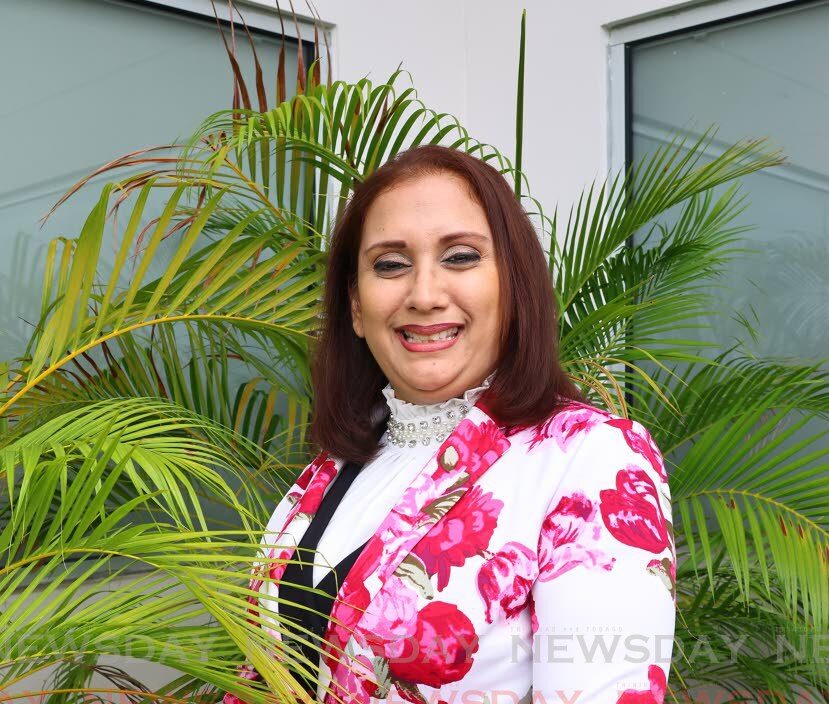
    Amanda Ackbarali, a 44-year-old mental health practitioner from San Juan, has dedicated the past 15 years to supporting survivors of gender-based violence and trauma. Her work coincides with the global 16 Days of Activism Against Gender-Based Violence (November 25-December 10), an annual campaign addressing violence against women and girls worldwide.

    Ackbarali’s approach to mental health care stems from childhood experiences rather than academic training alone. Growing up witnessing her mother’s exceptional compassion toward neighbors and friends on their family porch taught her that “if you can be kind, then be kind.” Her own struggles with severe atopic eczema from age three provided early lessons in vulnerability and empathy for those on society’s margins.

    Armed with a psychology degree and master’s in mediation studies from UWI, Ackbarali became board-certified as a civil and family mediator in 2013. Her frontline experience with institutions like the Rape Crisis Society, Coalition Against Domestic Violence, Children’s Authority, and Prison Service shaped her understanding of systemic challenges in trauma care.

    During her tenure at the Children’s Authority (2015-2018), Ackbarali played pivotal roles in establishing the Child and Family Services Unit and developing protocols for child trafficking victims. She describes child protection work as profoundly humbling: “You are often the person standing between danger and safety, between chaos and stability.

    The most emotionally challenging aspect of her work hasn’t been the clients themselves, but navigating “overburdened and under-resourced systems moving more slowly than the urgency demands.” This systemic pressure, she notes, causes practitioner burnout, making caregiver support essential rather than optional.

    In 2018, Ackbarali founded The Opening Lotus, a virtual mental health practice emphasizing culturally grounded care. The practice incorporates small rituals like ringing bells during breakthroughs to “make the invisible visible” and help clients recognize their growth. The lotus metaphor reflects her philosophy: “Healing, like the lotus, is a slow unfolding. It doesn’t ignore the difficulty, it grows through it.

    Reflecting on Caribbean women’s struggles during the activism period, Ackbarali identifies the pressure to achieve balance as a major emotional burden, exacerbated by cultural expectations placing disproportionate caregiving responsibilities on women.

    She challenges misconceptions about trauma presentation, explaining that responses vary from hypoarousal (withdrawal) to hyperarousal (high functionality), both being adaptive nervous system responses. “You can’t read trauma from the outside,” she emphasizes. “You understand it by listening to the person’s story.”

    Despite Trinidad and Tobago’s developing mental health system with gaps in education, service delivery, and referral pathways, Ackbarali remains optimistic. She advocates for better emotional literacy for children, training for community gatekeepers (teachers, police, coaches), and more intentional support for underserved groups including men, rural communities, and people with disabilities.

    Her career has demonstrated that “people are capable of rising through things that should have broken them,” and with proper support and compassion, they invariably “find a way to bloom again.”

  • Central snap Prisons’ win streak in TTPFL

    Central snap Prisons’ win streak in TTPFL

    In a dramatic reversal of fortunes, MIC Central FC delivered a stunning 1-0 victory against previously unbeaten Prisons FC during the TT Premier Football League doubleheader at Arima Velodrome on November 29. The match marked the conclusion of Prisons FC’s impressive five-game winning streak that had established them as surprise leaders in the league standings.

    The decisive moment arrived in the 69th minute when Ross Russell Jr. secured the lone goal of the evening, capitalizing on Central FC’s strategic offensive pressure. Despite Prisons FC’s determined efforts to equalize in the remaining minutes, Central’s defense—affectionately known as the “Couva Sharks”—maintained exceptional resilience against continuous attacks.

    In the evening’s opening contest, AC Port of Spain emerged victorious in a high-scoring thriller against 1976 FC Phoenix, concluding 3-2. The capital squad demonstrated offensive prowess through goals from former national team member Leston Paul, Jean-Heim McFee, and seasoned striker Brent Sam. Despite valiant efforts from Tobago’s representatives, including scoring contributions from Israel Trim and Teejay Cadiz, 1976 Phoenix returned without points.

    The outcomes significantly reshaped the league standings, with AC Port of Spain ascending to third position with 11 points while 1976 Phoenix remained at the bottom of the 12-team table following their fifth consecutive defeat.

  • Don’t Call Me Baby Doll premieres at UWI

    Don’t Call Me Baby Doll premieres at UWI

    The University of the West Indies (UWI) is set to debut a powerful theatrical production titled “Don’t Call Me Baby Doll” on December 9th, written by Dr. Travis Weekes, the institution’s theatre coordinator. This six-year creative endeavor explores the complex realities of women migrants in Trinidad and Tobago through the lens of two compelling characters.

    The production features acclaimed actresses Chanel Quesnel as Maria, a Cuban refugee, and Natasha Lee Kurbanali as Isabella, a Venezuelan migrant. Their performances illuminate an extraordinary friendship that transcends religious and cultural differences, showcasing how solidarity emerges amidst adversity. The narrative delves into their shared pursuit of dignity and empowerment while confronting societal challenges.

    The play’s provocative title directly challenges the Baby Doll tradition, referencing cultural practices surrounding paternity seeking and economic survival. Dr. Weekes drew inspiration from his personal experiences as an immigrant arriving in Trinidad from St. Lucia to join UWI’s faculty in 2018. His background in theatre is deeply rooted—growing up within the artistic community established by Derek and Roderick Walcott, then formalizing his education at Jamaica School of Drama before earning a doctorate from UWI Cave Hill.

    Weekes’ anthropological interest in Santeria and its connections to Trinidad’s Orisha traditions informed the play’s cultural framework. His interactions with Cuban and Venezuelan migrants in his neighborhood revealed the multifaceted struggles faced by immigrant women, compelling him to create work that blends Hispanic and Caribbean cultural elements while resisting stereotypical representations.

    Beyond this production, Weekes maintains an active role in Caribbean theatre education, conducting seminars on classic works and recently directing Dawad Phillip’s play about Lord Blakie. His diverse portfolio includes 2021’s “The Fight for Belle Vue” examining brotherly land disputes and “Take Me to Mon Repos,” which explored St. Lucia’s 1794 liberation struggle and was performed in Venezuela by students from Trinidad and Saint Lucia.

    The premiere will feature two exclusive performances on December 9 and 10 at 7 PM in the Learning Resource Centre at UWI’s St. Augustine campus.

  • Catherine’s creative writing wins Commonwealth essay competiton silver award

    Catherine’s creative writing wins Commonwealth essay competiton silver award

    In a remarkable display of literary talent, 12-year-old Catherine Teemul from Trinidad and Tobago has achieved international recognition by securing second place in the prestigious Queen’s Commonwealth Essay Competition 2025. The St Joseph Convent student’s exceptional creative writing skills earned her a silver award among 53,434 entries from across the Commonwealth nations.

    Catherine’s journey to this achievement began unexpectedly when she discovered the competition through social media while attending Curepe Presbyterian Primary School. Driven by curiosity and her longstanding passion for storytelling, the then 11-year-old decided to enter on a whim. ‘I have loved reading since I was in standard three,’ Catherine recalled, highlighting her early connection to literature that paved the way for this accomplishment.

    Her award-winning essay, titled ‘Through the Pages,’ presents a captivating mythical narrative written in first person perspective. The story follows a young girl who discovers a mysterious leather-bound book with gold specks, leading her through a glowing doorway into another dimension. The protagonist finds herself trapped in her favorite book, pursued by a knife-wielding villain through a forest, before executing a thrilling escape back through the colorful portal.

    Catherine described being ‘overwhelmed with joy’ upon learning of her achievement. ‘It came as a surprise. I was overjoyed when I found out,’ she shared, expressing gratitude for her previous studies that contributed to this success.

    The competition, organized by the Royal Commonwealth Society in the United Kingdom, annually challenges young writers to engage with pressing global issues and Commonwealth values, fostering empathy and open-minded worldviews among youth participants.

    This literary achievement follows Catherine’s previous success in Trinidad’s Secondary Entrance Assessment (SEA) exams, where she also received recognition for creative writing at her graduation. Now attending her first-choice school, St Joseph Convent, Catherine follows in the footsteps of her eldest sister Chelsea-Marie while pursuing her artistic passions.

    The young writer credits her former teacher, Valine Sewlal-Hamid, for playing an instrumental role in nurturing her writing talent. Her parents, Arvind and Nadia Teemul, along with siblings Chelsea-Marie and Celine, expressed profound gratitude for the teacher’s encouragement and believe this prestigious award has given Catherine ‘the proverbial push’ to further believe in herself as she embarks on her secondary education journey.

    Despite her literary talents, Catherine reveals that Art is currently her favorite subject, with aspirations to become a fashion designer, combining her creative imagination with her eye for design that her mother describes as exceptional.