标签: Trinidad and Tobago

特立尼达和多巴哥

  • ‘Complicit in corruption’

    ‘Complicit in corruption’

    Trinidad and Tobago’s Rural Development and Local Government Minister Khadijah Ameen has announced a sweeping anti-corruption push targeting public servants who collude with private developers and contractors to bypass regulatory rules, confirming that law enforcement agencies including the police and the national Fraud Squad will be brought into cases where solid evidence of misconduct is found. Ameen made the announcement while speaking to reporters at Mosquito Creek in South Oropouche on Wednesday, where she was responding to growing public concerns about unregulated construction and the illegal blockage of critical regional waterways – issues that have directly exacerbated flooding risks across low-lying communities in the country.

    In her remarks, Ameen framed the current crisis of unregulated development as the product of decades of unaddressed lawlessness, saying bad actors have long been allowed to flout rules without consequence because of systemic complicity within government agencies. She explained that many developers and contractors knowingly block public drainage canals and waterways to make way for unapproved construction projects, and even engage in illegal dumping of construction waste in these watercourses – all because they know they will not face penalties. “It is years of lawlessness that has caused major developments to go up without regulation, where people are not even considerate, even if they are not following the law,” Ameen told reporters. “They are not even considerate because they know there is a drain there and they go and they block it. Even when it comes to dumping.”

    The minister emphasized that the problem extends far beyond private non-compliance, revealing that the public officials tasked with enforcing planning and environmental rules are often the ones breaking them. She specifically named building inspectors, litter prevention wardens, municipal corporation staff, and public health employees as groups where corrupt collusion with developers has been rampant for years. “Over the years there are numerous public servants who, while no case has been pursued against them, people know them to be involved in corruption because they take bribes and they allow buildings that do not meet the requirements to get approvals,” Ameen stated. “A lot of public health things go on, they are in cahoots with contractors, they are in cahoots with developers, and that is part of our problem in local government, it is a fact. So, that is one of the things that we have to clamp down on.”

    Ameen confirmed that multiple internal investigations into these corrupt practices are already underway, being conducted in close coordination with the ministry’s permanent secretary in line with existing public service disciplinary regulations. “The police of course, and the Fraud Squad would be called in where it’s necessary, and we will work with the authorities where we have evidence of wrongdoing,” she added.

    Beyond the corruption crackdown, Ameen also addressed recent severe flooding that hit Claxton Bay and Gasparillo following heavy mid-week rainfall, noting that the affected areas fall under the oversight of the Couva/Tabaquite/Talparo Regional Corporation (CTTRC). She shared a key positive observation: historically flood-prone areas that had pre-emptive watercourse clearing work completed avoided major flooding this time around, proving that proactive maintenance works. The CTTRC deployed all available resources to respond to the recent flooding, and Ameen confirmed the authority had sufficient capacity to bring the situation under control.

    On the subject of national flood preparedness, Ameen said the ministry has made significant improvements this year, including pre-positioning emergency disaster supplies from the central national warehouse across all 14 regional corporations to cut response times during flood events. She added that resolving decades of systemic mismanagement and corruption will be a gradual process, and has called on all municipal corporation chairs to work closely with local communities to prioritize long-term public well-being over improper private gain. “What is right and best for the communities is being sought, but it did not reach to this stage overnight,” Ameen said, noting that many blocked drains were reported to authorities years ago without any follow-up action, allowing the flood risk to grow steadily over time.
  • 7 cops held over  missing guns, ammo

    7 cops held over missing guns, ammo

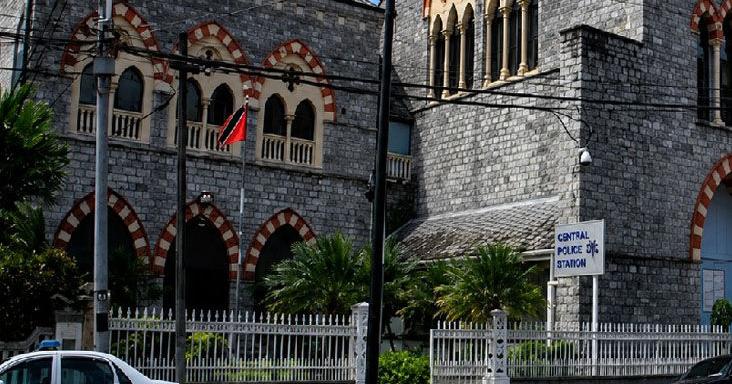
    A major internal law enforcement investigation unfolding in Trinidad and Tobago’s capital has resulted in the detention of seven police officers, all linked to the mysterious disappearance of three Glock pistols, three firearm magazines and 45 rounds of 9mm ammunition from Port of Spain’s Central Police Station. Senior law enforcement officials confirmed Wednesday that two officers were taken into custody late Wednesday as the probe into the missing weapons intensified, with the remaining five arrested between Wednesday evening and Thursday afternoon.

    Authorities have planned to search the residential properties of all seven detained officers, though as of late Thursday, senior leaders had not confirmed whether those searches had been completed. Police spokespersons have also declined to release any details on the ranks or ages of the seven officers in custody, noting only that all suspects are currently undergoing questioning as a standard part of the investigative process.

    The missing firearms and ammunition were originally deposited at the Central Police Station for secure storage by Port of Spain Municipal Police officers at 2:47 p.m. on August 10. Just under 13 hours later, at 3:40 a.m. on August 11, a routine inventory check revealed the cache of weapons was gone, and an official investigation was launched immediately.

    Beyond the ongoing criminal probe, the incident has sparked growing friction between Port of Spain Municipal Police and Central Police Station personnel over the current protocols for storing deposited firearms. Municipal police sources told local media outlet the Express that officers attempting to retrieve weapons from the Central Police Station on Thursday faced delays of up to two hours, even for routine processes such as getting pocket diaries signed to confirm weapon collection. These delays are cutting into active patrol time, sources said, leaving municipal officers spending more time navigating administrative holdups than serving communities on city streets, and turning the storage arrangement into a persistent source of frustration for frontline personnel.

    This latest weapons disappearance comes less than four months after a far deadlier incident at another Trinidad and Tobago police station: the murder of acting corporal Anuska Eversley and the theft of a large cache of firearms from the San Fernando Municipal Police Station. Eversley, a 42-year-old mother of three, was found dead at the King’s Wharf station on Lady Hailes Avenue. A post-mortem examination confirmed she died after being beaten and strangled.

    Three people – municipal police officer Jivan “Bigs” Cooper, construction worker Kwame Arnold, and scrap iron dealer Nicholas “Nico” Ramdass – have been charged with Eversley’s murder, as well as firearms trafficking connected to the weapons and ammunition stolen from the station’s armoury. Four municipal officers who were suspended during the early phase of that investigation have since returned to active duty, though one superintendent remains suspended pending the outcome of ongoing probe work.

    Back in May, Police Commissioner Allister Guevarro announced that an Interpol Red Notice had been issued for a fourth suspect in Eversley’s murder, who investigators believe fled the country as the case unfolded. At that time, Guevarro also noted that a full firearms audit of the weapons stolen from the San Fernando station was still ongoing, describing the effort as a massive, large-scale project carried out by a dedicated team of officers. He confirmed that the audit was roughly 50 to 55% complete as of mid-May, after earlier police reports suggested approximately 123 firearms had been taken from the station armoury. As of May 21, Guevarro added, Trinidad and Tobago Police Service (TTPS) personnel had recovered 38 pistols, four shotguns, one MPX sub-machine gun, one revolver and more than 900 rounds of ammunition, most found in and around the Claxton Bay area. Many stolen weapons remain unaccounted for, however, leaving the investigation open.

  • Chicken shortage drives up depot prices

    Chicken shortage drives up depot prices

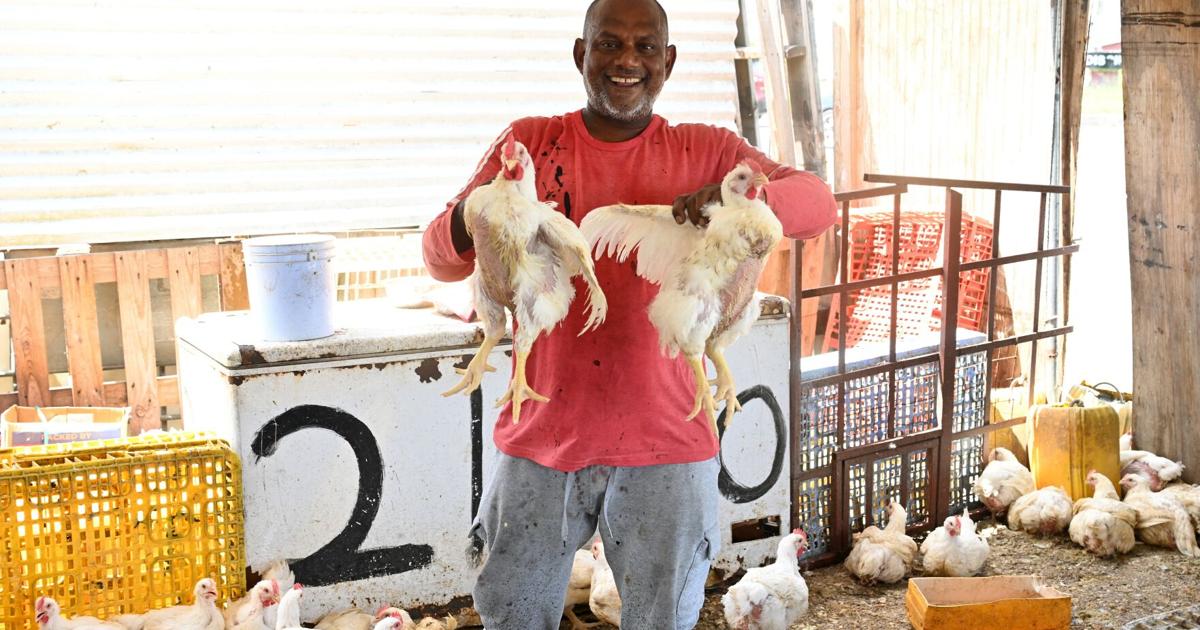
    Trinidad and Tobago is grappling with an extended, nationwide chicken shortage that has put massive economic pressure on local poultry depot operators, who have been forced to pass rising costs and limited stock onto consumers. Multiple depot owners interviewed by the Express have pushed back against the government’s official explanation that extreme weather is the root cause of the crisis, highlighting how ongoing supply chain disruptions have upended their day-to-day operations.

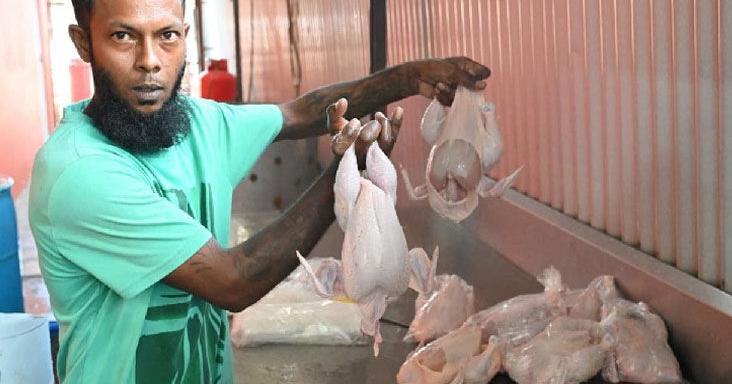
    One operator from Reeyad’s Poultry Depot in San Juan, who requested partial anonymity, explained that while daily delivery volumes have held relatively steady, the chickens being supplied are far smaller than the industry standard, forcing the business to adjust its pricing and product offerings. “We get a good amount every day, (but) the chickens are smaller, we had to raise prices, and because of that, we had to cut back on the amount of chicken parts we sell. So, we basically are limited to selling only whole chickens,” he shared in a telephone interview. To offset the higher wholesale costs he faces, the depot has implemented gradual price increases of $1 to $2 per pound, and he stressed that the ongoing crisis is far outside the seasonal norms the sector typically experiences, calling the situation “not normal.”

    Nagib Ali, owner of Nagib’s Poultry Depot based in Freeport, has gone even further in rejecting the Ministry of Agriculture’s weather-based explanation. Ali, a veteran industry operator, noted that while temporary supply dips do occur twice annually, the current shortage has stretched far longer than any disruption he has seen in his years in business. “It’s probably twice a year we experience this, but not for this lengthy period. It never happened like this before. I don’t believe it’s the sun that’s causing this,” Ali said. The shortage has forced Ali to cut back his operating schedule, with the business only opening a few days each week as he waits for consistent supply to resume.

    Ali also pushed back on the heat narrative by pointing to modern infrastructure used by local poultry farms, which is designed to offset extreme temperatures. “Some people say it’s (foreign exchange); some people say it’s because of the heat. I don’t really believe that heat reason because of the modernised pens with big extractor fans. Some of these pens even have (air-conditioning units),” he explained. Like the San Juan operator, Ali confirmed that his allocated delivery quota remains consistent, but the birds are smaller and wholesale costs have skyrocketed. Over three weeks, prices have jumped from between $6 to $8 per pound to $10 per pound, crossing a 100% increase from the start of the crisis.

    Not all industry operators share the same grim outlook, however. An unnamed depot owner based in Chaguanas noted that minor seasonal shifts are standard at this time of year, and predicted that supply and pricing will return to normal levels within approximately three weeks. For the immediate future, she confirmed that consumers should still expect smaller than average chicken sizes across the market.

    In response to the ongoing consumer and industry disruption, Trinidad and Tobago’s Ministry of Agriculture and Fisheries has outlined a series of long-term policy and infrastructure measures designed to stabilize the national poultry sector, even as officials acknowledge that expanding egg production alone will not resolve current shortages. The centerpiece of the government’s plan is a new large-scale poultry breeding and hatchery facility, to be developed through a public-private partnership (PPP) that is currently accepting expressions of interest from private investors and operators.

    If completed, the facility will produce fertile hatching eggs, breeder stock, and day-old chicks for both the broiler chicken and egg layer sectors right within Trinidad and Tobago, eliminating the country’s reliance on imported core inputs. Officials explain that building domestic production capacity will not only cut foreign exchange spending and create local jobs, but will also strengthen the nation’s food security and biosecurity by reducing vulnerability to global supply chain disruptions.

    The government has also already taken short-term steps to diversify its international supply chain for poultry inputs, adding the Netherlands as an approved sourcing destination for hatching eggs and live chicks alongside the existing main supplier, the United States. In response to global concerns over Highly Pathogenic Avian Influenza (HPAI), the ministry clarified that its import policies follow science-based, risk-aligned standards set by the World Organisation for Animal Health (WOAH), rather than implementing blanket bans on all imports from countries that report HPAI cases. Under this framework, imports are permitted from designated disease-free zones that meet strict veterinary and biosecurity requirements, allowing the country to balance animal health protection with consistent input supply for local farmers.

    Ministry officials emphasized that a stable, secure domestic poultry supply depends on the resilience of the entire value chain, from access to high-quality chicks and feed to reliable infrastructure, veterinary services, labor, and transportation. The new national breeding facility is designed to act as a foundational anchor for this entire system, bringing modern infrastructure, enhanced biosecurity and traceability, and new opportunities for developing local technical expertise to the sector. Moving forward, the ministry will continue to support sustainable, planned growth of the local egg and poultry industries, using national production and consumption data to guide policy and strengthen local production, cut supply chain vulnerabilities, and ensure consumers have consistent access to affordable poultry products.

  • Weather drives chicken shortage

    Weather drives chicken shortage

    Consumers across Trinidad and Tobago are currently grappling with widespread chicken shortages and sharp price increases, driven by a combination of unusual extreme weather patterns that have disrupted the nation’s poultry supply chain. The Ministry of Agriculture and Fisheries released an official statement addressing the crisis this week, clarifying that the shortfall is a temporary, weather-driven disruption rather than a sign of long-term structural issues with domestic production capacity.

    Local climatic conditions have put unprecedented strain on poultry farmers across the twin islands. Persistent record-high temperatures have forced producers to implement costly additional heat mitigation strategies, and in many cases, reduce the total number of birds raised on farms to protect animal welfare. According to the ministry’s statement, cutting stock numbers is a deliberate precaution: running farms at full capacity during extreme heat would lead to higher bird mortality rates and stunted growth, resulting in far greater long-term losses for producers and deeper shortages for consumers.

    Officials note that while chicken remains available across the country in aggregate, many consumers are facing difficulty finding their usual quantities at local retail outlets. The Ministry is currently monitoring every link of the poultry supply chain, from hatchery output to domestic production, import volumes and changing weather conditions, while maintaining ongoing dialogue with producers and industry stakeholders to address emerging challenges quickly.

    Looking ahead, official projections point to a gradual recovery of supply over the coming weeks. Based on data from local hatcheries, the number of newly hatched chicks available to farmers is set to rise within the next two weeks. Once these new birds complete the standard production cycle, full supply levels are expected to be restored approximately three weeks after that increase in chick availability, bringing the market back to normal as weather conditions improve.

    “Poultry is a core component of national food security and a staple for household consumption across the country,” the Ministry said in its release. “We remain committed to supporting the local poultry sector while ensuring consumers have access to a stable, reliable supply of this essential product.”

    Industry stakeholders and suppliers have confirmed the severity of the current shortages, reporting significant cuts to distribution quotas and steep price increases that have been passed on to consumers. One unnamed San Juan-based depot owner said that little has changed to ease the crisis since the *Express* first reported on emerging poultry supply issues in late June. “We are getting 50% less chicken than we usually get, and prices have gone up 15%,” he explained, adding that birds currently available are also smaller than the standard size consumers expect.

    Since the start of 2024, average retail chicken prices have jumped from roughly $6 per pound to more than $9 per pound, a more than 50% increase that has put significant strain on household grocery budgets. A depot owner in Chaguanas also confirmed ongoing supply pressures, warning that if the disruption continues, many locations could run out of chicken entirely. She added that small independent chicken producers are facing particular strain, with even larger industry players like Arawak now facing disruptions that have created shortages of hatching eggs. She noted that fewer small farms are hatching their own chicks currently, forcing many to purchase day-old chicks from external suppliers instead.

    Sudesh Ramkissoon, President of the Broiler Growers Association, confirmed that heat-driven stock reductions are a common precaution during hot periods, but this year’s extreme temperatures have created deeper disruptions than usual. “Chickens do not have sweat glands, so farmers have to reduce the density of birds in pens to keep them cool,” he explained. “This means the total weight of market-ready chicken available will be lower than usual for consumers, but this is not a permanent situation.” Ramkissoon added that some farmers are also facing water access issues, which have compounded existing supply constraints.

    The shortage is not limited to retail outlets: local food businesses are also adapting to the new supply conditions. Pappy’s, a popular fried chicken restaurant based in Woodbrook known for its signature “Brian’s Fricken Chicken”, announced publicly this week that it would compensate customers for smaller-than-standard chicken portions during the shortage. In a post on social media, the restaurant explained: “Due to the current chicken supply shortage, our usual chicken sizes may be limited over the coming weeks. Don’t worry—if your pieces are smaller than our usual Pappy’s standard, we’ll add extra to make up for it. Thank you for your patience and understanding while we work through the shortage.”

    This current shortage follows initial warnings issued by Ramkissoon back in June, when he first alerted consumers that reduced supply would lead to higher prices. At that time, prices had already risen to between $8 and $9.50 per pound, and checks conducted by the *Express* this week confirm that elevated prices remain in place across all retail and wholesale outlets.

  • Central cops eye five post locations

    Central cops eye five post locations

    Law enforcement leadership in Trinidad and Tobago’s Central Division has unveiled a proposal to establish permanent joint army-police security posts across five high-priority locations, part of a broader national crime reduction initiative announced earlier by Prime Minister Kamla Persad-Bissessar.

    Senior Superintendent Rudolph Bhagwandeen, speaking at a press conference held at the Police Administration Building in Port of Spain on Wednesday, clarified that the identification of the five sites does not guarantee all posts will move forward, as formal approval and implementation planning are still ongoing. The shortlisted locations, mapped from south to north across the division, are: the Couva Interchange near the NP gas station, Carlsen Field east of the main highway, Brentwood adjacent to a local gas station and east of the highway, Felicity in Chaguanas on the highway’s western flank, and the St Helena district in Caroni.

    Three of the five proposed sites — Couva Interchange, Carlsen Field, and Felicity — were already included in the Prime Minister’s earlier announcement of a national plan to roll out 30 joint army-police posts nationwide, with six additional locations still to be finalized.

    Bhagwandean explained that the five Central Division locations were chosen following a rigorous data-driven assessment. Selection criteria included an in-depth review of historical crime statistics, actionable intelligence collected through ongoing police operations, feedback from community engagement initiatives, and data shared by cross-agency partners. The division also incorporated guidance from the Police Service’s Crime and Problem Analysis Branch (CAPA) to validate its site choices.

    A key factor in site selection was proximity to major transit corridors, particularly the region’s main highway. Bhagwandeen noted that positioning mobile security units at these strategic intersections would cut response times and improve officers’ ability to intercept criminal suspects moving through the area.

    The proposal comes as the Central Division grapples with long-standing operational challenges: it covers a sprawling policing territory that includes nine distinct districts, requiring officers to respond to everything from minor infractions to serious violent crimes, and already faces strain on existing personnel and vehicle resources.

    To address these constraints, the Police Service is implementing a flexible shared-resource model, where personnel, vehicles, and specialist units can be reallocated across station districts based on real-time crime trends, intelligence reports, and emerging threats. “We’ll put resources where the problem is, not simply where the resource is normally stationed,” Bhagwandeen explained of the new approach.

    Despite the progress in site selection, critical details about the posts remain unresolved. Discussions about staffing and resource allocation are still ongoing with the Police Service’s executive leadership, and no final decisions have been made about how the 24-hour posts will be manned. Additional resources will be required both to operate the posts and to enable officers to respond to incidents dispatched from the new locations, but no finalized staffing data is available yet.

    Bhagwandeen also confirmed that no timeline has been set for the deployment of the first post, and he could not share specific details about on-site facilities such as holding cells. Early plans indicate the posts will likely be constructed from prefabricated buildings, though their exact layout and size have not been confirmed. Once operational, the facilities will be open to the public, allowing community members to file reports and interact directly with officers on-site.

  • Marcelle: Not one red cent of funding

    Marcelle: Not one red cent of funding

    A sitting opposition Member of Parliament from Trinidad and Tobago has put the ruling administration under intense scrutiny, raising serious questions about an apparent slow dismantling of a community-focused development agency that has delivered critical infrastructure and social support to marginalized neighborhoods for nearly two decades.

    Kareem Marcelle, the legislator representing Laventille West, outlined his concerns during a formal press briefing held Tuesday at the Opposition Leader’s downtown Port of Spain offices, three months after the United National Congress (UNC) took control of national government following general elections.

    At the center of Marcelle’s allegations is the East Port of Spain Development Company (EPOS), a state-owned limited liability firm established by cabinet order in 2005. Tasked with driving economic, social, and physical regeneration across a sprawling zone of East Port of Spain—originally covering communities including Laventille, Morvant, and Belmont, later expanded to add Beetham Estates, Sea Lots, and Katanga—the agency has long overseen small-scale infrastructure projects and grassroots social programs for working-class and low-income residents.

    Since the UNC’s inauguration in May 2025, however, EPOS has operated without an appointed board of directors, creating a leadership vacuum that Marcelle argues has crippled the agency’s ability to function. Compounding this vacuum, more than a dozen EPOS staff received formal termination notices just last Friday, cutting across every level of the organization: from administrative assistants, cleaners, and technical staff to senior project managers, social development officers, and project evaluation specialists.

    Marcelle, who shared a copy of one termination letter obtained via email with reporters, also detailed a steep, ongoing drop in government funding for the agency that he says signals a deliberate effort to wind down operations. In 2024, the national budget allocated TT$15 million for EPOS’ social, economic, and community regeneration programs. That allocation was cut to TT$8 million in 2025, with only TT$4 million actually disbursed to the agency. For the 2026 fiscal year, the government has set aside just TT$2 million for development programming—none of which has been released to EPOS to date.

    Even more striking, Marcelle claims the current administration has eliminated a dedicated annual budget line for EPOS infrastructure projects. Under the previous People’s National Movement (PNM) government, that line item provided between TT$60 million and TT$100 million each year for critical works. With that funding now cut entirely, Marcelle said no new infrastructure projects can move forward.

    “What that company has done over the years is a lot of the stairs to go up your home in Laventille, or to pave your unpaved tracks in Laventille, or to build a sporting complex to fix a community field, to repair our failing drains, to execute critical retaining walls to prevent landslides,” Marcelle said, outlining the agency’s decades-long track record of grassroots impact. Beyond physical infrastructure, he added, EPOS has run targeted social support programs, distributing aid to vulnerable families during the back-to-school season and Christmas holidays, and providing core funding for local community, cultural, and sporting events that bind neighborhoods together.

    Notably, Marcelle pointed out that TT$14.4 million remains allocated for EPOS’ 2026 recurrent expenditure, which covers staff salaries and board operational costs. “You had all the money to keep the staff. You had all the money to pay for your board of directors. You had all the money to have an effective running of East Port of Spain Development Company. But you gave them no money to actually do work,” he said.

    The cascading cuts, leadership vacuum, and mass layoffs have led Marcelle to one clear conclusion: the UNC administration is intentionally laying the groundwork to shut down EPOS entirely, a move that would devastate the communities that rely on its services. “If you leave a company leaderless, how do you expect them to effectively execute their duties? How do you expect day-to-day operations to proceed and be funded?” he asked, addressing the government directly. “Is the reason that the Government has not appointed a board of directors to the East Port of Spain Development Company because they intend to shut down this company?”

    Marcelle stressed that any closure or continued underfunding of EPOS would have immediate, tangible impacts on residents across the East Port of Spain region. Basic infrastructure upgrades and maintenance that residents depend on would halt, and critical social support for vulnerable families would disappear.

    The opposition MP has called on the ruling administration to reverse course immediately: he demanded that the government move swiftly to appoint a full board of directors for EPOS, and restore full, adequate funding for both infrastructure projects and community social and economic programs.

    “This UNC administration is systematically attacking East Port of Spain,” Marcelle claimed. “I call on this UNC administration to appoint its board of directors to the East Port of Spain Development Company to ensure that in the next fiscal year, that they properly allocate monies for our physical infrastructure development, our social and economic development, our regeneration of communities in East Port of Spain to give us our fair share of this national pie.”

    As of Tuesday, attempts by reporters to reach Housing Minister David Lee—whose portfolio oversees EPOS—for comment on the allegations have been unsuccessful.

  • Cops kill ‘H-Man’

    Cops kill ‘H-Man’

    In a tense late-night operation that closes one high-profile homicide case but adds to growing police violence statistics in the country, an 18-year-old suspect wanted for the killing of a Trinidad and Tobago police officer was killed in a shootout with law enforcement at his girlfriend’s residential property in Matura Tuesday night.

    Hassan “H-Man” Johnson was shot dead at a small two-bedroom concrete home located at the 7 3/4-mile marker along Main Road, Mora Trace, Matura. His death pushes the total number of people killed by police operations across Trinidad and Tobago to 21 so far this year, according to official law enforcement data.

    Authorities launched the targeted manhunt after receiving credible intelligence shortly before 11 p.m. confirming Johnson had been hiding out at the property, after going off the grid following the July 28 murder of Police Constable Rommel Douglas. Johnson had avoided his own registered residence on Second Street in Printeryville, Arima, to evade capture for weeks.

    A multi-unit tactical team assembled to execute the apprehension, drawing specialist officers from the Home Invasion Team, Special Investigations Unit, the Western and South-Western Division Gang Units, and the Deputy Commissioner of Police Operations Team, supported by troops from the Trinidad and Tobago Defence Force. Law enforcement surrounded the property fully before moving in through an entryway on the building’s eastern side.

    As armed officers entered the residence, police officials confirmed Johnson opened fire on the responding team. Officers immediately returned fire, striking Johnson multiple times. Two other civilians — a 19-year-old man and Johnson’s girlfriend — were inside the home during the exchange of gunfire but escaped the incident without physical injury.

    Johnson was quickly rushed to the nearby Sangre Grande Hospital, where medical staff pronounced him dead at approximately 11:55 p.m. The two unharmed civilians were taken into police custody for questioning following the shootout.

    Johnson was the primary suspect in the July 28 killing of Douglas, an officer assigned to the Four Roads Police Station. The fatal attack on the off-duty officer unfolded at around 11:05 p.m. that night, as Douglas sat in his parked vehicle at the intersection of Hydraulic Trace and Caroni South Bank Road in Kelly Village. A white Nissan Tiida pulled alongside Douglas’s car, carrying the alleged robbery crew that targeted the officer.

    Police reports indicate the occupants of the Tiida attempted to rob Douglas, triggering a chaotic exchange of gunfire that left Douglas fatally wounded. One of the suspected accomplices, 19-year-old Adetola Ammon of Arima, was also killed during the encounter; law enforcement investigators believe Ammon was mistakenly shot by one of his co-conspirators during the attack.

    Douglas was laid to rest on August 6, after a public funeral service held at the Morvant Central Community Centre on Cipriani Street in Morvant. During the memorial service, loved ones and colleagues remembered Douglas as a devoted family man who prioritized his relatives and held deep commitment to those close to him.

  • CCJ fallout over dress code

    CCJ fallout over dress code

    A simmering internal conflict over institutional governance and judicial attire has erupted into an open, high-stakes rift at the Caribbean Court of Justice (CCJ), pitting the court’s president against his judicial peers and raising urgent questions about the institution’s commitment to transparency, collegiality and cultural inclusion. The controversy first came to a head on July 3, 2026, when CCJ President Justice Winston Anderson sent a formal email to sitting Justice Chile Eboe-Osuji, demanding written assurance that Eboe-Osuji would wear a traditional European-style business suit and tie for two upcoming high-profile judicial hearings: *Fisher v Guyana Elections Commission* scheduled for July 16, and *Ramirez and Zabane v Attorney General of Belize* set for July 28. In his message, Anderson noted that a formal court-wide judicial dress code was still pending adoption, and that compliance with traditional business attire was the longstanding custom of the court and the wider Caribbean region. He set an ultimatum: Eboe-Osuji had to respond by 12:01 p.m. on July 6, or Anderson would reconfigure the hearing panels based on previous communications about Eboe-Osuji’s stance on dress. The demand drew a sharp, public rebuke from Eboe-Osuji, who identified as Nigerian and pushed back against what he framed as an overreach of executive authority and a rejection of his cultural identity. In a response sent the following day, July 4, Eboe-Osuji called Anderson’s directive “highly inappropriate behaviour towards a peer,” arguing that the CCJ’s founding agreement grants the court president no unilateral power to dictate the dress of sitting judges. He went further, accusing Anderson of pushing a Eurocentric standard of judicial professionalism that requires him to reject his innate cultural identity, a move he said would not hold up to scrutiny before global human rights bodies including the Inter-American Commission on Human Rights and the UN Committee on Human Rights. On July 5, Eboe-Osuji shared the full exchange with all sitting CCJ justices, opening the debate to the entire bench and detailing his desire to wear traditional Nigerian attire while on the bench. What began as a disagreement over clothing quickly ballooned into a broader debate over institutional authority, cultural decolonization, and judicial independence, with multiple judges weighing in to share their perspectives and voice solidarity with Eboe-Osuji. Guyanese-born Justice Arif Bulkan was the first to respond on July 6, noting that his home country had relaxed colonial-era dress rules for legal professionals as early as the 1970s, permitting Nehru-collar shirts in place of European suits and ties as a more culturally and climate-appropriate alternative decades ahead of neighboring Trinidad and Tobago. That same day, Belize-born Justice Denys Barrow added his voice, affirming that non-European judicial attire carries full dignity, and warned against unilateral rule-making by a single court leader without broader consultation. He also called on colleagues to maintain perspective as tensions rose over the panel reconfiguration controversy. By July 7, the conflict escalated further: Anderson followed through on his initial ultimatum, informing Eboe-Osuji that he would be removed from both hearing panels due to the lack of requested written assurance on attire. Eboe-Osuji immediately pushed back, calling the removal unlawful, a violation of the CCJ’s founding agreement and a breach of international human rights law, and urged Anderson to reverse the decision. After holding informal discussions with other judicial colleagues, Anderson backed down hours later, agreeing to reinstate the original hearing panels until the underlying dress code and governance dispute could be resolved. The detente did not end the broader institutional crisis, however. On July 8, Trinidad and Tobago-born Justice Peter Jamadar framed the conflict as a far more serious threat to the court’s core mission, warning colleagues that the dispute exposed broader threats to the rule of law, judicial independence, institutional integrity and impartiality that extended well beyond the question of attire. He also raised deep concerns about the mental health and well-being of non-judicial CCJ staff, noting the bitter irony that the court was potentially poised to deliver an advisory opinion to the Caribbean Community (Caricom) on good governance and procedural fairness, even as its own internal governance lay in chaos. Bulkan echoed Jamadar’s concerns, stating that he shared full solidarity with Eboe-Osuji and warning that the incident exposed a foundational governance crisis at the court. He questioned what less powerful non-judicial staff must experience if a sitting equal judge could be targeted and singled out in this way, noting that the court risks losing its moral authority to advise Caribbean governments on issues of natural justice, human rights and human dignity if it cannot uphold those values internally. Eboe-Osuji concluded the public exchange by reiterating his claim that Anderson was acting as “lord and master” of the institution rather than a public servant, framing the attack on him as an attempt to force all other court members into line with Anderson’s directives for the remainder of his six-year term, calling the power play a “tragic mistake.” Local media outlet *Trinidad Express* first obtained the full cache of internal email exchanges and reached out to Justice Anderson for comment on the full set of allegations via his personal email on August 5, but received no response. The CCJ’s official communications team issued a general statement two days later, reaffirming the institution’s commitment to judicial independence, integrity and public confidence in the administration of justice, but declined to address any of the specific allegations raised in the internal dispute, noting that claims could be “misunderstood or mischaracterised without the proper context.”

  • HELP THE PANYARDS

    HELP THE PANYARDS

    Trinidad and Tobago’s iconic steelpan tradition took center stage over the weekend as the country marked World Steelpan Day with the annual Ancestral Pan Walk, a celebratory procession that drew hundreds of cross-generational steelpan enthusiasts despite intermittent rainfall. At the heart of the festivities, however, was a pressing public call from Pan Trinbago President Beverley Ramsey-Moore for urgent government action to upgrade the country’s aging network of panyards — the community hubs where steelpan bands practice, perform, and gather.

    In an exclusive phone interview with local outlet the Express following the walk, Ramsey-Moore reiterated a call she first made over a year prior, urging the national government to temporarily pause new community centre construction in order to redirect funding to panyard upgrades. She emphasized that panyards have become far more central to youth engagement than underused community centres, noting that young musicians spend countless hours at these hubs honing their craft. “The only modern, well-maintained panyards belong to a handful of commercially sponsored bands,” Ramsey-Moore explained. “Most unsponsored groups struggle with basic, urgent repairs — everything from outdated plumbing to dilapidated bathroom facilities that need complete overhauls.”

    This year’s World Steelpan Day centered explicitly on cultivating youth participation in the steelpan tradition, with the Ancestral Pan Walk kicking off at the Massy Trinidad All Stars Steel Orchestra panyard in Port-of-Spain’s Duke Street before concluding at the bp Renegades Steel Orchestra pan theatre on Charlotte Street. Youth steel orchestras were featured as the lead attractions at both stops, framing the day as a handoff of the national cultural legacy to the next generation. Ramsey-Moore praised the enthusiastic turnout for the walk, but stressed that the steelpan community still lacks consistent, robust support from both government and corporate stakeholders.

    Opening up about ongoing challenges securing funding, Ramsey-Moore expressed disappointment with the recent pullback from Trinidad and Tobago’s corporate sector. “For four years, Pan Trinbago has overhauled its governance, delivering full clean audits, complete transparency, and clear accountability to bring back corporate partners,” she noted. “While corporations returned to partnership over the last two years, their continued engagement always hinges on the signal the national government sends about the sector’s priority.” She also pushed back firmly against narrow framing of the steelpan as an exclusively Black cultural tradition, emphasizing that the national instrument was created to be unifying. “Every creed and race finds an equal place in the steelpan,” she said. “It is not ‘a Black people thing’ — it is a powerful tool for positive national social transformation for all Trinbagonians.”

    One long-sought win for the community appears to be on the horizon, however: Ramsey-Moore voiced disappointment that the steelpan has not yet been added to the nation’s currency, but pointed to a recent statement from the Central Bank of Trinidad and Tobago confirming that the instrument will feature on the new $100 bill, set to be unveiled this August. She said she is hopeful the central bank will follow through on this commitment.

    Minister of Culture Michelle Benjamin echoed Ramsey-Moore’s call for panyard upgrades during her address at the bp Renegades Pan Theatre, affirming the government’s recognition of the critical role panyards play in nurturing cultural talent. “It is undeniable: all of this incredible national talent comes straight from our panyards,” Benjamin said in response to Ramsey-Moore’s appeal. “She is entirely right that we need to support the renovation and refurbishment of these spaces, because that is where our young people are every single day.”

    Even steady rainfall did little to dampen the festive spirit of the hundreds of attendees who turned out for the procession. As the Trinidad and Tobago Regiment Steel Orchestra played a rousing medley of classic and contemporary steelpan tracks, enthusiasts of all ages marched from the starting point at All Stars to the Renegades panyard, celebrating the legacy and future of the country’s most beloved cultural institution.

  • We welcome job opportunities

    We welcome job opportunities

    A landmark industrial milestone has arrived for Trinidad and Tobago, as the shuttered Point Lisas steel mill officially reopens its doors under new ownership, unlocking billions in planned investment, new job opportunities, and a potential strategic foothold in the global vanadium market. Two leading local business groups have thrown their full support behind the project, framing it as a catalyst for long-term economic growth and diversification across the country.

    The facility, which first ceased operations in 2016 and eliminated 644 direct positions, now operates as Ibis Steel Company of T&T Ltd, a local subsidiary of U.S.-headquartered Pinnacle Steel and Vanadium Corporation. A formal ribbon-cutting ceremony held on Monday marked the official start of the project’s transition toward full production, a milestone that the Energy Chamber of Trinidad and Tobago has celebrated as a transformative opportunity for the nation’s industrial sector.

    Per the Energy Chamber’s official statement, the project is slated to draw an initial $250 million in capital investment over the first two years of development. Total planned spending, covering future expansion and facility modernization, will climb to $750 million by project completion. After completing required refurbishment work, securing regulatory approvals, and obtaining all necessary permits, the plant is on track to launch its first commercial production by the end of 2027. Over time, officials expect the facility to restore all 644 direct jobs lost when the mill closed in 2016, alongside hundreds of additional indirect roles across the Point Lisas Industrial Estate and the plant’s national supply chain.

    One of the most strategic long-term opportunities highlighted by the Energy Chamber is the plant’s potential to establish Trinidad and Tobago as a major global producer of vanadium, a high-demand critical metal with key applications in aerospace manufacturing, national defense systems, energy storage battery technology, and structural steel strengthening. Pinnacle Steel and Vanadium has publicly stated its goal to meet up to 50% of total U.S. vanadium demand from the Point Lisas facility, a target that would deliver outsized strategic and economic benefits to Trinidad and Tobago. The chamber emphasized that this goal creates a urgent opening for local engineering, environmental, and industrial service providers to secure early positions in the project’s growing supply chain.

    “As an organization representing nearly 400 member companies across the entire national energy value chain, the majority of which are small and medium-sized local service providers and contractors, we welcome this investment and the direct and indirect employment it is expected to generate at Point Lisas,” the chamber said. “The reopening of a facility of this scale creates a range of opportunities, both for workers seeking direct employment and for local contractors and service companies across engineering, construction, maintenance, logistics and other supporting trades.”

    The chamber also added that the project highlights the enduring value of Point Lisas as a pre-developed industrial estate with existing core infrastructure, reinforcing the principle that local content and local employment should remain central priorities as new investment flows into the country’s industrial sector. In terms of operations, the plant ranks among the largest steel mills in the Americas. It will initially restart steel production using an electric arc furnace, with plans to integrate natural gas-based direct reduced iron technology in later expansion phases.

    Kiran Singh, president of the Greater San Fernando Area Chamber of Commerce, echoed the Energy Chamber’s optimism, noting that the mill’s reopening addresses longstanding unmet economic challenges facing Trinidad and Tobago, including high unemployment, limited foreign exchange inflows, and slow progress on economic diversification. For years, the high-value industrial site sat idle, a missed opportunity that the current project will reverse, Singh said.

    Singh outlined that the initial $250 million capital injection will support 250 early roles at the facility, with a follow-up $100 million investment set to expand total on-site employment to 1,000 workers. “This is a significant boost to the local economy. The benefits can extend well beyond the plant itself. The reopening will create indirect employment while generating opportunities for SMEs, contractors, transport providers, maintenance companies, suppliers and other supporting businesses throughout the Central and southern regions,” Singh explained.

    Singh also commended the national government’s focus on developing export-focused industries that generate foreign exchange, create sustainable long-term employment, and expand Trinidad and Tobago’s non-energy manufacturing base, calling the policy direction “on the right track.” Like the Energy Chamber, the Greater San Fernando Area Chamber of Commerce is urging both the government and facility operators to keep local content as a top priority, ensuring that local businesses and workers get meaningful opportunities to participate in the supply chain to spread economic benefits across local communities.

    While Singh praised all stakeholders who brought the project across the finish line, he noted that the project’s long-term success will be measured by its ability to remain globally competitive and financially sustainable, while consistently delivering jobs, export revenue, foreign exchange, and new opportunities for the wider local business community. Even so, Singh emphasized that the mill’s reopening sends a powerful positive signal: that Trinidad and Tobago is once again ready to leverage its underused industrial assets, attract large-scale international investment, and rebuild confidence in its domestic manufacturing sector.