
A senior retired Caribbean judicial figure has reignited debate over regional governance of the Caribbean Court of Justice (CCJ), urging an independent judicial inquiry to investigate the court’s internal administrative processes amid damaging public allegations against its sitting president. Former Senate president and retired Appeal Court judge Timothy Hamel-Smith has publicly argued that a formal probe is non-negotiable to preserve public trust in the CCJ, the region’s premier appellate and constitutional court.
标签: Trinidad and Tobago
特立尼达和多巴哥
-

WHERE IS THE TOP COP?
Trinidad and Tobago’s main opposition political party, the People’s National Movement (PNM), has put the ruling People’s National Congress (UNC)-led administration under pressure over three high-stakes issues during a post-General Council press briefing held at the party’s Port of Spain headquarters, Balisier House. PNM Chairman Marvin Gonzales led the questioning, flanked by deputy chairman Sanjiv Boodhu and Diego Martin West Member of Parliament Hans des Vignes, opening with demands for clarity on the unexplained absence of top law enforcement official Police Commissioner Allister Guevarro.
Gonzales directly addressed Homeland Security Minister Roger Alexander, calling for public answers to four core questions: Where is Commissioner Guevarro currently located? Is he still within Trinidad and Tobago’s national jurisdiction? If he has left the country, when did his departure take place? And has an acting commissioner been formally appointed to carry out the role’s responsibilities during his absence?
Citing unconfirmed intelligence received by the PNM, Gonzales claimed Guevarro had already left the country, and alleged that the Police Service Commission (PSC), the body constitutionally tasked with overseeing police leadership appointments, had failed to fulfill its legal obligation to name an interim replacement. He also called on Prime Minister Kamla Persad-Bissessar, who serves as chair of the National Security Council, to issue a public explanation for the lack of transparency around the absence.
A senior, anonymous police source later confirmed that Guevarro had been granted emergency personal leave, but could not verify whether the commissioner had traveled abroad. This is not the first time Guevarra has been out of the country: in October 2025, during an official trip to an international law enforcement conference in Denver, Colorado, Deputy Commissioner Junior Benjamin was formally appointed acting commissioner for the full week of Guevarro’s absence, from October 16 to 22.
Shifting focus to the government’s proposed artificial intelligence data center project in Golconda, Gonzales launched a scathing attack, labeling the plan “absolutely ridiculous” and questioning whether the administration has followed proper legal and procedural protocols. He said the government has failed to answer critical public questions about the project, including what environmental impact assessments have been completed, whether the region can support the facility’s significant water demand, and what approvals have been secured from relevant regulatory bodies.
Gonzales highlighted growing global pushback against large-scale data centers, noting that jurisdictions across the United States, Europe, China, and the United Kingdom have introduced new restrictions or even bans on the facilities over documented harms to local communities and livelihoods. He questioned whether Trinidad and Tobago was being positioned as a “dumping ground” for high-impact commercial projects that other nations have rejected, and criticized the government for failing to conduct meaningful consultations with local residents before announcing the plan.
He went further to accuse Energy Minister Roodal Moonilal, who has publicly championed the project, of acting irresponsibly and violating his oath of office, which requires all ministers to uphold the country’s constitution and laws. Gonzales warned that the PNM would take an uncompromising stance on the issue, and pledged to defend Golconda residents if Moonilal continues to fail to represent the interests of his constituency.
The final issue raised at the press conference centered on a sealed unexplained wealth case linked to PNM headquarters at Balisier House. Gonzales accused ruling party Senator Anil Roberts of breaking court-imposed gag rules by discussing details of the sealed court documents during a recent appearance on state-owned television and radio. He confirmed that the PNM would not deviate from legal protocol by discussing the party’s legal strategy or trying the case in public, despite Roberts’ public comments.
When asked whether the PNM feared that the case would lead to the public disclosure of the party’s donors and financiers, Gonzales acknowledged that many political contributors expect and deserve confidentiality for their personal information and business interests. He noted that direct donations from members of the public at Balisier House have been a longstanding practice for the PNM, as they are for all major political parties in the country.
Gonzales alleged that the UNC administration’s push to unmask PNM donors is rooted in political retaliation, arguing that the government’s goal is to intimidate current and potential supporters and cut off the PNM’s access to campaign funding. He framed the move as more than just an attack on the opposition: “This is not only an attack on the PNM, it is an attack against the democracy of Trinidad and Tobago, and an attempt by the UNC Government to establish a one-party state in this country,” he said.
He argued that efforts to deter private donations to the opposition directly undermines democratic competition by limiting the PNM’s ability to carry out its political work, and urged all citizens of Trinidad and Tobago to recognize the threat to core democratic principles, regardless of their political alignment.
-

Residents unite against gun violence
In the wake of five recent gun-related deaths that shook the small community of Sennon Village in Trinidad and Tobago, nearly 300 residents and cross-regional supporters gathered on Friday evening for a unified public demonstration against rising violent crime. Dressed all in white, a symbol of collective hope for peace, and carrying glowing candles, participants joined the Walk for Peace and candlelight vigil—an event organized collaboratively by local community leaders, concerned residents and law enforcement, all working toward the shared goal of reviving the quiet, safe way of life the village once knew.
The intergenerational procession stretched through Sennon Village’s main streets, accompanied by rhythmic live music from a mobile sound truck and traditional African drumming. A large contingent of police officers, ranging from junior patrol officers to senior command staff, accompanied the march, managing traffic flow and maintaining public safety throughout the event.
Christopher Henry, chairman of the Sennon Village Movement and one of the event’s lead organizers, explained that the recent outbreak of violence has left the entire community reeling from grief and fear. Henry, a former resident of the area, emphasized that the wave of bloodshed was driven by the actions of a tiny faction of people, and does not reflect the values of the broader community. He traced the root of the rising violence to deep-rooted social issues: an erosion of shared community moral values, a breakdown of longstanding village camaraderie, and a critical lack of safe, constructive social outlets for local youth. These gaps, he argued, have left young people vulnerable to recruitment by gangs and other negative outside influences, pushing many into harmful, anti-social activity.
Following the recent string of killings and smaller crimes in both Sennon Village and neighboring Quinam Road Village, the Sennon Village Movement partnered with the Quinam Road Village Council to plan the demonstration. The event came to life with additional support from the Siparia Deltones Steel Orchestra, the Trinidad and Tobago Police Service, the Siparia Regional Corporation, and multiple other local community groups.
Speaking to the crowd gathered at the walk’s starting point at the Siparia Deltones panyard on Railway Road, Henry noted that the massive turnout itself sent a powerful message: the violent agenda of a few does not speak for the community as a whole. “We will be walking in peace and sending a message not only to our community, but to the wider nation of Trinidad and Tobago,” he told attendees. “Violence and crime do not affect Siparia only; it affects all areas of our country. We are standing in the gap today as strong men and women in our community to send a message to those who want to disrupt us and change the narrative of what community love and strength is about. We will not tolerate that.”
The march brought together a diverse cross-section of local society: young musicians from the Siparia Deltones Steel Orchestra, multi-generational families, middle-aged residents and elderly community members from Siparia and surrounding towns. Notable attendees included former Olympian quarter-miler Ian Morris, a lifelong Siparia resident, members of the Siparia Rhythm Section, and the entire Hunters Search and Rescue Team led by Vallence Rambharat.
For lifelong Siparia resident Joel Bikhoo, the event carried extra personal meaning: it fell exactly on his 24th wedding anniversary. Joined by his wife and their two daughters, Bikhoo explained that his family intentionally chose to mark their special occasion by participating in an initiative that would benefit the community they call home. “We chose to spend this special day doing this for my Siparia community and its young people,” he said. “I was born and raised here, and I want to see peace return to my village.”
Assistant Superintendent Joel Forbes, a senior officer assigned to the local police division, praised the community-led anti-crime initiative and applauded residents for taking a public, unified stand against violence. Forbes called for a collective commitment to restoring law and order, urging local residents to partner closely with police to stop further bloodshed and rebuild the village’s long-held reputation as a quiet, peaceful place.
“I love the turnout we have here today, rank and file and a cross-section of society in this community,” Forbes said. “We are sending a message that we are right-thinking in this community and not permitting anyone to hold this community to ransom, to do what they feel and change what we consider to be good. We are here to stamp our authority. Sennon Village and environs should be ‘no-crime’ zones, beautiful and loving communities which I love. I sense the love in this community, and I do not want anything negative to take hold in this place.”
Pennelope Beckles, political leader of the People’s National Movement and Leader of the Opposition, also attended the event to offer her support to the community and to families that had lost loved ones to recent violence. Beckles noted that the national state of emergency aimed at curbing crime is set to end next month, and said she and her party remain deeply concerned about the country’s ongoing crime crisis. She added that the PNM is committed to supporting government-led anti-crime initiatives that align with public safety goals, and emphasized that events like the peace walk play a critical role in raising public awareness, fostering cross-community collaboration, and rebuilding unity and positive social cohesion across the country.
-

CCJ head breaks silence
Six days after the Sunday Gazette first exposed internal rifts between sitting judges and the top leadership of the Caribbean Court of Justice (CCJ), President Justice Winston Anderson has broken his public silence to address a cascade of internal accusations, including claims of panel rigging, unauthorized attempts to shape case outcomes, and authoritarian leadership. In a detailed official statement, Anderson flatly rejected all the most serious allegations, while acknowledging that his approach to enforcing a new judicial dress code policy may have been overly forceful.
The controversy stems from internal email exchanges between Anderson and the court’s six other sitting judges exchanged between June and July this year. Multiple judges pushed back against a dress code mandate Anderson implemented unilaterally, ultimately leveling broader accusations that he governed the regional appellate body in an authoritarian, dictatorial fashion. The complaints expanded beyond dress code rules to include claims that Anderson manipulated judicial panel assignments to predetermine case outcomes and improperly pressured other justices to rule in line with his preferred positions.
Before addressing the specific claims against him, Anderson opened his statement by condemning the unauthorized leak of confidential internal court correspondence to the press. He called the disclosure a severe breach of core judicial principles, noting that the leaking of private deliberations erodes the trust that underpins judicial independence, undermines collegiality between sitting judges, and weakens public confidence in the third branch of government, causing lasting harm to the public the court is sworn to serve.
Turning first to accusations that he failed to consult colleagues on institutional decisions and has ruled in an autocratic manner, Anderson pushed back firmly. He emphasized that meaningful consultation is a core pillar of his approach to institutional and judicial leadership, and rejected labels of dictatorial or authoritarian leadership outright. Anderson noted he never turns down requests from fellow judges to discuss matters affecting the court, has consistently encouraged open engagement with all members of the bench, regularly visits the offices of colleague judges and court staff, and remains available at any time to address emerging concerns.
The controversy was first ignited by disputes over the court’s judicial dress code, a matter Anderson sought to clarify thoroughly. He confirmed that his decision to remove Justice Chile Eboe-Osuji from the D’Almada case panel was tied exclusively to the dress code disagreement, and not to any divergence in legal opinions between the two judges. Anderson stressed that he explicitly documented this rationale at the time of the change, reaffirming that every justice on the court retains full freedom to express their independent legal views during conferences, deliberations, and case discussions. Anderson acknowledged that critics have argued he handled the dress code issue with undue harshness, noting he accepts that assessment. He explained that he viewed the policy as an institutional matter tied to the court’s public image, consistent operational tone, and professional standards, not as a personal rebuke of any individual justice.
On the most serious accusation of panel fixing to secure predetermined case outcomes, Anderson issued a scathing rejection. He called the leap from a disagreement over judicial attire to claims of panel rigging irresponsible, intellectually dishonest, improper for a judicial context, and outright malicious. Anderson flatly rejected any claims that the court’s panels have ever been structured or altered to deliver preordained results, noting the allegations are completely unsupported by evidence, contradict the court’s longstanding operating procedures, and violate the core principles that have guided the court since its founding. To fully resolve public concerns over the issue going forward, Anderson announced a new policy: every CCJ justice will be required to sit on every panel, barring situations where a justice recuses themselves for a legitimate, disqualifying reason.
Addressing claims that he has attempted to improperly influence the outcome of pending cases before the court, Anderson called the claims entirely baseless and untrue. He noted that no qualified justice sitting on the CCJ bench would ever allow themselves to be unduly swayed by another justice, including the court’s president. As evidence, he pointed to the recent ruling in *Mohamed v Minister of Home Affairs*, where all seven sitting justices reached a unanimous decision on the appeal’s disposition. Anderson argued this unanimous outcome undermines any claims that judicial opinions were suppressed or that justices were ordered to reach a specific conclusion.
Anderson also addressed separate controversy stemming from his October 14, 2025 visit to Guyana, where he met separately with Guyanese President Irfaan Ali and the country’s opposition leader. Opposition figures in Guyana have claimed Anderson intervened to push for the appointment of preferred candidates to the country’s top judicial posts of Chancellor and Chief Justice, which have been filled on a prolonged acting basis. Anderson clarified that his engagement was focused exclusively on the constitutional principle that Guyana’s judiciary should be led by substantively appointed office holders who benefit from the full constitutional protections enshrined by the country’s constitution. He stated he holds no personal preference or stake in who is appointed to the roles, and that his only goal during the visit was to encourage the two political leaders to reach an agreement on permanent appointments. Looking back on the visit, Anderson acknowledged that an alternative approach would have been preferable, noting he could have limited his engagement to public commentary on the constitutional importance of permanent judicial appointments, as his predecessors did. He emphasized that all his actions were motivated solely by a commitment to protecting judicial independence and the constitutional integrity of the Guyanese judiciary, with no political preference, personal interest, or desire to overstep into Guyana’s domestic affairs beyond his responsibility as head of the country’s final appellate court to protect constitutional judicial protections.
-
Caribbean operation nets US$54.5m in seizures
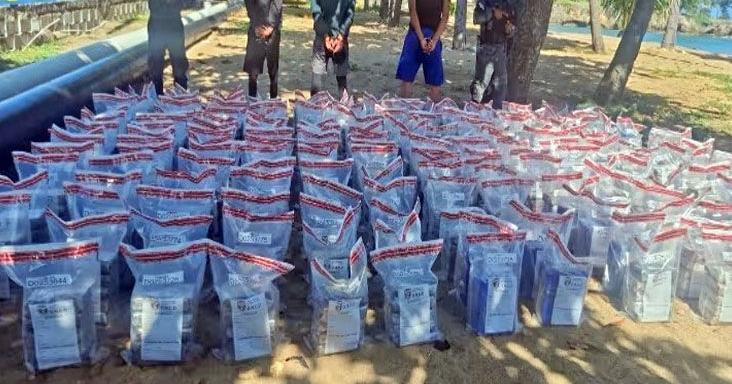
A four-week coordinated maritime security operation led by CARICOM Implementation Agency for Crime and Security (IMPACS) has delivered a major blow to transnational smuggling networks operating across the Caribbean, resulting in the seizure of an estimated $54.5 million in illegal contraband and criminal assets. Codenamed Operation Eclipse, the sweeping enforcement initiative unfolded throughout the month of May, bringing together an unprecedented coalition of 14 CARICOM member states, seven associate members, and key international partners including the governments of Canada, Colombia, France, the United Kingdom, the United States, and global law enforcement body Interpol.
The entire operation was coordinated through a central integrated fusion cell based at IMPACS’ Joint Regional Communications Centre in Port of Spain, with critical financial and operational backing from the U.S. Bureau of International Narcotics and Law Enforcement Affairs (INL). During the active interdiction phase of the mission, law enforcement teams opened 82 active investigations based on developed intelligence, tracked 59 high-priority vessels of interest, vetted 17 time-sensitive intelligence leads, and successfully carried out 24 targeted seizure operations.
By total value, the largest share of contraband seized consisted of illegal narcotics. Authorities recovered 5,222.59 kilograms of cocaine, which carries an estimated street value of more than $44 million, alongside 1,848 kilograms of marijuana valued at over $6.84 million. All narcotics were seized from a range of smuggling vessels, including high-speed go-fast boats, private yachts, and inter-island cargo ships that criminal networks have long used to move illicit goods across porous regional maritime borders.
Beyond illegal drugs, enforcement teams confiscated more than 6,100 cases of untaxed, contraband alcohol, 191 cartons of unregulated cigarettes, and 22 cylinders of banned ozone-depleting refrigerant gas. These additional seizures have a combined estimated value of more than $1.58 million. Authorities also took two unregistered firearms, 65 rounds of ammunition, 13 smuggling vessels and three land vehicles that were linked to transnational criminal groups. As part of the operation, teams also intercepted 59 irregular migrants who were being moved through multi-stop transit routes that span Caribbean air and sea corridors.
When broken down by case type, contraband smuggling made up 32.9% of all active maritime cases investigated during Operation Eclipse, followed by cocaine trafficking at 23.2%. Most enforcement activity was concentrated in high-risk smuggling zones: the Eastern Caribbean, territorial waters off Guyana, and key transatlantic trafficking routes connecting South America to Caribbean and North American markets.
Intelligence gathered over the course of the operation uncovered a newly emerging smuggling tactic used by transnational networks: clandestine fixed-wing aircraft dropping narcotics packages near national maritime borders, which are later retrieved by small boat crews operating at sea. Partner-provided surveillance technology allowed teams to track and disrupt this activity before the contraband could be moved to end markets. Biometric and document checks of 99 individuals intercepted on suspicious vessels also confirmed the existence of a deeply interconnected global smuggling network, with detained individuals tracing their origins to Canada, China, Cuba and Syria, per official releases.
Beyond immediate seizures, Operation Eclipse also served as a critical test and refinement of existing regional maritime security governance frameworks, including the Treaty of San José and bilateral Shiprider agreements that allow cross-border law enforcement boarding and intervention on the high seas. For IMPACS, the successful operation confirmed the agency’s core role as the Caribbean’s central hub for maritime domain awareness, laying a foundational framework for future joint regional security operations.
In the post-operation phase, participating nations are now analyzing the full body of intelligence gathered to update long-term border management policies and design sustained targeting campaigns to dismantle the remaining transnational smuggling infrastructure embedded in the region. Lt Col Michael Jones, executive director of CARICOM IMPACS, emphasized that deep regional collaboration is the most effective tool to counter powerful transnational criminal organizations.
“Operation Eclipse proves that when our countries and partners pool their intelligence and operational capabilities, we can effectively dismantle the financial engines driving transnational crime,” Jones stated in the official release. A senior U.S. State Department official echoed that sentiment, noting the operation underscores the critical importance of real-time information sharing and coordinated cross-border enforcement. “INL recognises that our shared security challenges mean that Caribbean security is American security,” the official said, adding that collaborative regional operations like Eclipse demonstrate just how effective coordinated intelligence sharing can be to support interdiction and enforcement actions targeting transnational criminal groups.
-

KAMLA HAILS DELCY
A landmark round of hydrocarbon exploration licensing in Venezuela has opened a new chapter of cross-border energy cooperation between the South American nation and neighboring Trinidad and Tobago, with major economic and energy security benefits projected for both countries and the broader Caribbean region.
Trinidad and Tobago Prime Minister Kamla Persad-Bissessar has formally congratulated Venezuela’s acting President Delcy Rodríguez on the recent signing of agreements for the Loran Phase 2 development and the Plataforma Deltana area, an milestone that revives activity in a giant cross-border gas deposit left dormant for nearly a quarter century. The Loran gas field, located adjacent to Trinidad and Tobago’s Manatee field, has seen no development activity for 23 years; Phase 1 of the project was previously awarded to energy major Shell, while the new Phase 2 licenses went to a consortium including bp, ADNOC’s global investment arm XRG, and UCC Holding.
In public remarks shared alongside Rodríguez’s original social media announcement of the deals, Persad-Bissessar emphasized that the agreements mark a transformative step forward for cross-border energy collaboration and regional economic growth, with Trinidad and Tobago positioned to capture substantial benefits from Venezuela’s energy progress. Under the terms of the planned development, an estimated seven trillion cubic feet (TCF) of natural gas from Venezuela’s Loran development will be transported to Trinidad and Tobago for processing at the country’s existing liquefied natural gas (LNG) and petrochemical facilities.
In an official press release issued after the signing, Trinidad and Tobago’s Ministry of Foreign and Caricom Affairs outlined that the landmark licensing will directly strengthen the country’s long-term energy security, while opening up high-value new opportunities for its established energy sector. Combined with gas reserves from the Dragon field, Manatee field, Loran Phase 1 and the recently agreed Manakin-Cocuina exploration project, the new licenses unlock the potential for more than 12 TCF of natural gas to be commercialized via Trinidad and Tobago’s existing energy infrastructure.
Beyond international energy majors, the agreements also open new room for collaboration with Trinidad and Tobago’s own state-run National Gas Company (NGC), which recently finalized a joint exploration and development deal with bpTT for the Manakin-Cocuina field. Persad-Bissessar extended congratulations not only to Venezuelan officials, but also to bpTT, which has secured joint ownership and operatorship of the new strategic assets. She also formally welcomed XRG, the international energy investment unit of Abu Dhabi’s ADNOC, to the region as the firm expands its Western Hemisphere gas portfolio, noting XRG will hold a joint stake in the licenses alongside UCC Oil and Gas.
The full cross-border Loran-Manatee complex holds an estimated 10 TCF of proven natural gas reserves, with Shell currently leading development of the Manatee portion on Trinidad and Tobago’s side. First gas production from Manatee is targeted for the second quarter of 2027. Trinidad and Tobago’s government has also held early exploratory talks with XRG to support the firm’s entry into both the local market and the broader Latin American region, laying the groundwork for future investment.
Officials noted that Trinidad and Tobago’s unique existing infrastructure—including established pipeline networks, the Atlantic LNG export facility, and a mature downstream petrochemical sector—makes it a natural hub for commercializing the new cross-border reserves. Beyond direct economic benefits for the two nations, the development is expected to strengthen energy security across the Caribbean and the wider global market, while creating a welcoming investment environment for international energy players. The government says it looks forward to coordinated work with Venezuela, the consortium partners and all stakeholders to ensure the timely, efficient, and mutually beneficial exploration and development of the resources, framing the deal as a critical step to revitalize Trinidad and Tobago’s energy sector and secure long-term shared prosperity for both nations.
-
HDC ‘going after millions’
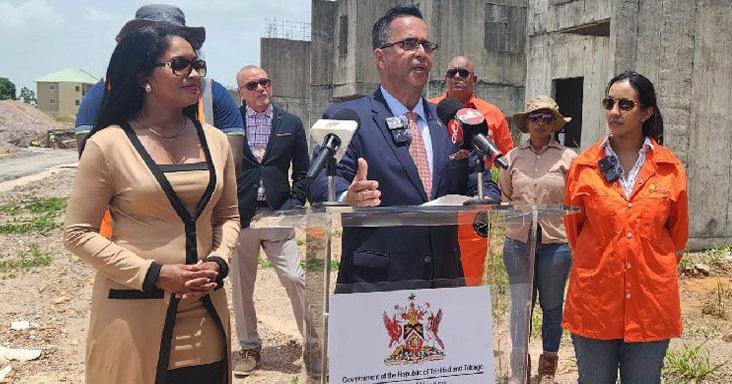
During a recent on-site inspection of the troubled Ridgeview Heights housing development in Bon Air North, Trinidad and Tobago’s Minister of Housing Phillip Alexander has revealed staggering financial mismanagement that has left taxpayers on the hook for hundreds of millions of dollars in losses, prompting the state-owned Housing Development Corporation (HDC) to pursue legal avenues to recover misspent funds.
According to Alexander, the previous administration, led by former Housing Minister Camille Robinson-Regis, oversaw catastrophic cost overruns and substandard construction that have left the project in ruins. The core issue centers on massive mismatches between construction costs and the actual market value of the completed residential units. Alexander explained that even the highest-quality finished units at the development can only fetch a maximum market price of $600,000 apiece — yet the prior administration locked the HDC into a contract that set initial construction costs at $1.2 million per unit. This marked a 100% markup over the units’ actual salable value, and subsequent cost overruns pushed the average price per completed townhouse to nearly $1.5 million, almost three times the properties’ market worth.
Across the entire 204-unit development — which comprises 52 townhouses and 152 apartments — the scale of losses is staggering. For every unit sold at the $600,000 market rate, taxpayers are forced to cover an additional $800,000 to $900,000 in overrun costs, Alexander said. When combined with losses from 50 partially completed units, the total public funds lost on the project top $165 million, he confirmed. The former administration reached a termination agreement with the project contractor that saw the HDC pay for 75% of the unfinished units, despite the fact that the properties were only 50% complete, leaving all of that pre-payment as a total write-off for public coffers.
Beyond the financial disaster, Alexander also exposed shocking construction defects that leave many units unsafe for occupancy. Many of the completed structures were built directly on the land surface without proper foundational anchoring, meaning they are structurally unstable and at risk of catastrophic failure, even in moderate weather. “They could blow away. We have no idea how many of them are like that,” Alexander told reporters. Most of the development also lacks basic critical infrastructure, including plumbing, electrical systems, sewer lines, and drainage networks, rendering the vast majority of the site unusable. As a result of these extreme defects, all the existing partially and fully completed structures at the development will have to be demolished, adding another unplanned cost that will once again be paid by taxpayers.
Alexander placed full blame for the stalled, failed project on the previous administration, noting that the current government has spent the past year working to salvage what it can from the mess it inherited. This scandal joins a growing list of prior problematic public housing projects that have faced official scrutiny, with Alexander comparing the Ridgeview Heights disaster to two earlier high-profile problematic developments: Trestrail and Las Alturas. He noted that the huge losses uncovered at this project are a key reason the current government has delayed handing over inherited housing units to qualifying applicants, as all prior projects are now being re-inspected to confirm they meet safety and construction standards before occupancy is approved.
As of this report, the HDC board has formally launched a review of the mismanagement and has retained legal counsel to explore all possible avenues to recover the lost public funds. Local media outlet The Express attempted to reach former minister Robinson-Regis for comment on the allegations, but did not receive a response by press time.
-
Felisha ready to fight come Monday
A major labor dispute has erupted at Trinidad and Tobago’s Water and Sewerage Authority (WASA), after dozens of employees gathered in protest outside the authority’s St Joseph headquarters on Friday, reacting to a months-long negotiation impasse that ended abruptly when senior management walked out of scheduled talks.
The demonstration, organized by the Public Services Association (PSA), the union representing WASA workers, follows a breakdown in discussions covering two expired collective bargaining periods: 2014–2016 and 2017–2019. PSA President Felisha Thomas told reporters that the standoff escalated when WASA’s Human Resources Director and her entire negotiating team abandoned talks around midnight Thursday, and failed to show up for any follow-up discussions on Friday.
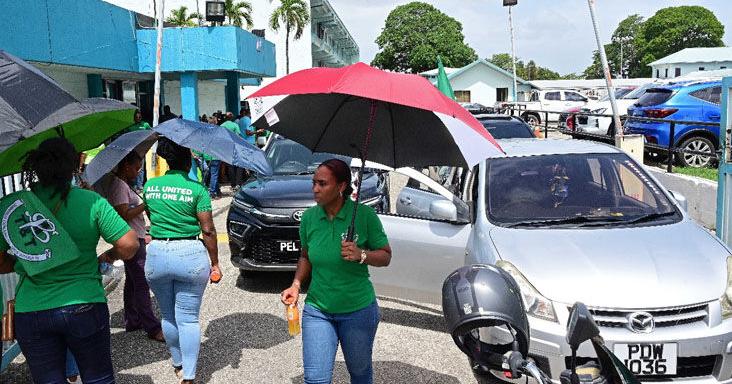
When local newspaper the Express visited the protest site just after 1 p.m. Friday, Thomas was delivering an impassioned address to the crowd of workers, who had maintained a presence at the headquarters for more than 24 hours at that point. She warned that the union would ramp up its protest action if management refused to return to the table and address worker demands in good faith.
“As it stands now, we have waited a long time for a meaningful response from leadership, and there has been nothing,” Thomas told the assembled workers. “It’s Friday, so we are leaving the compound this afternoon to rest over the weekend. But make no mistake: first thing Monday morning, we will be back right here, and we will stand by our word.” She called on workers to come prepared on Monday, asking attendees to wear comfortable sneakers and their official green PSA union jerseys to show solidarity.
Thomas pushed back on what she framed as management’s tactic of outwaiting protesting workers, asking the crowd: “They are trying to wait for you to get tired of this fight. Will you get tired? Are you willing to fight to the end?” The workers responded in unanimous agreement, shouting their support for continued action.
In an interview with the Express after the address, Thomas noted that the HR team’s walkout was unprecedented in her tenure as union president. “This is the first time I have ever seen management walk away from the negotiating table and refuse to return, and even worse, there has been no comment or proposed path forward from senior WASA leadership or government officials,” she said.
Discussions for the new collective agreements first kicked off at 11:30 a.m. Thursday, Thomas explained. She added that the union had only just learned that contract proposals the union put forward all the way back in January 2024 had never been shared with WASA’s board of directors or forwarded to the Ministry of Public Utilities to get the formal approvals needed to reach a final deal. The union has repeatedly demanded that the HR Director immediately escalate the proposals to the board and ministry to move talks forward, Thomas said.
As of Friday, Minister of Public Utilities Barry Padarath had acknowledged the dispute, confirming to the Express via WhatsApp that he had formally requested a full briefing from WASA leadership on both the status of negotiations and the full set of concerns raised by the PSA and its members.
Thomas emphasized that the union and its membership are prepared for a prolonged standoff to secure a fair deal for workers, noting that more union members are expected to join the protest on Monday to amplify their demands. “When we return on Monday, we will be stronger than we are today, with more workers — all workers — standing together, to make it clear that WASA employees must be treated as a priority,” she said.
-
7 cops held over missing guns, ammo
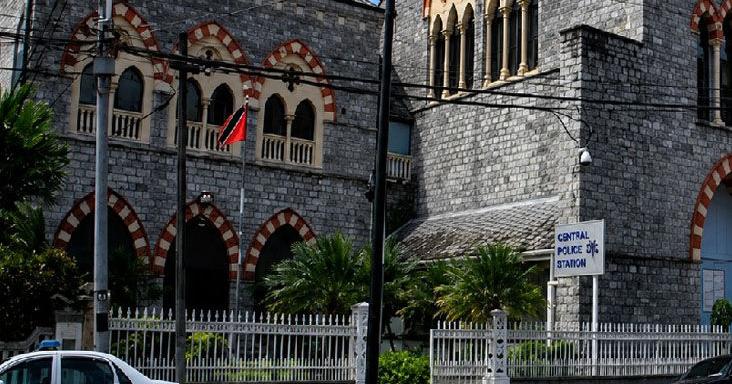
A major internal law enforcement investigation unfolding in Trinidad and Tobago’s capital has resulted in the detention of seven police officers, all linked to the mysterious disappearance of three Glock pistols, three firearm magazines and 45 rounds of 9mm ammunition from Port of Spain’s Central Police Station. Senior law enforcement officials confirmed Wednesday that two officers were taken into custody late Wednesday as the probe into the missing weapons intensified, with the remaining five arrested between Wednesday evening and Thursday afternoon.
Authorities have planned to search the residential properties of all seven detained officers, though as of late Thursday, senior leaders had not confirmed whether those searches had been completed. Police spokespersons have also declined to release any details on the ranks or ages of the seven officers in custody, noting only that all suspects are currently undergoing questioning as a standard part of the investigative process.
The missing firearms and ammunition were originally deposited at the Central Police Station for secure storage by Port of Spain Municipal Police officers at 2:47 p.m. on August 10. Just under 13 hours later, at 3:40 a.m. on August 11, a routine inventory check revealed the cache of weapons was gone, and an official investigation was launched immediately.
Beyond the ongoing criminal probe, the incident has sparked growing friction between Port of Spain Municipal Police and Central Police Station personnel over the current protocols for storing deposited firearms. Municipal police sources told local media outlet the Express that officers attempting to retrieve weapons from the Central Police Station on Thursday faced delays of up to two hours, even for routine processes such as getting pocket diaries signed to confirm weapon collection. These delays are cutting into active patrol time, sources said, leaving municipal officers spending more time navigating administrative holdups than serving communities on city streets, and turning the storage arrangement into a persistent source of frustration for frontline personnel.
This latest weapons disappearance comes less than four months after a far deadlier incident at another Trinidad and Tobago police station: the murder of acting corporal Anuska Eversley and the theft of a large cache of firearms from the San Fernando Municipal Police Station. Eversley, a 42-year-old mother of three, was found dead at the King’s Wharf station on Lady Hailes Avenue. A post-mortem examination confirmed she died after being beaten and strangled.
Three people – municipal police officer Jivan “Bigs” Cooper, construction worker Kwame Arnold, and scrap iron dealer Nicholas “Nico” Ramdass – have been charged with Eversley’s murder, as well as firearms trafficking connected to the weapons and ammunition stolen from the station’s armoury. Four municipal officers who were suspended during the early phase of that investigation have since returned to active duty, though one superintendent remains suspended pending the outcome of ongoing probe work.
Back in May, Police Commissioner Allister Guevarro announced that an Interpol Red Notice had been issued for a fourth suspect in Eversley’s murder, who investigators believe fled the country as the case unfolded. At that time, Guevarro also noted that a full firearms audit of the weapons stolen from the San Fernando station was still ongoing, describing the effort as a massive, large-scale project carried out by a dedicated team of officers. He confirmed that the audit was roughly 50 to 55% complete as of mid-May, after earlier police reports suggested approximately 123 firearms had been taken from the station armoury. As of May 21, Guevarro added, Trinidad and Tobago Police Service (TTPS) personnel had recovered 38 pistols, four shotguns, one MPX sub-machine gun, one revolver and more than 900 rounds of ammunition, most found in and around the Claxton Bay area. Many stolen weapons remain unaccounted for, however, leaving the investigation open.
-
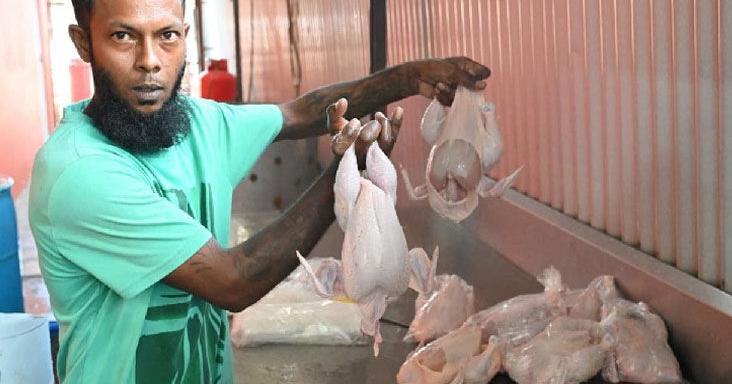
Chicken shortage drives up depot prices
Trinidad and Tobago is grappling with an extended, nationwide chicken shortage that has put massive economic pressure on local poultry depot operators, who have been forced to pass rising costs and limited stock onto consumers. Multiple depot owners interviewed by the Express have pushed back against the government’s official explanation that extreme weather is the root cause of the crisis, highlighting how ongoing supply chain disruptions have upended their day-to-day operations.
One operator from Reeyad’s Poultry Depot in San Juan, who requested partial anonymity, explained that while daily delivery volumes have held relatively steady, the chickens being supplied are far smaller than the industry standard, forcing the business to adjust its pricing and product offerings. “We get a good amount every day, (but) the chickens are smaller, we had to raise prices, and because of that, we had to cut back on the amount of chicken parts we sell. So, we basically are limited to selling only whole chickens,” he shared in a telephone interview. To offset the higher wholesale costs he faces, the depot has implemented gradual price increases of $1 to $2 per pound, and he stressed that the ongoing crisis is far outside the seasonal norms the sector typically experiences, calling the situation “not normal.”
Nagib Ali, owner of Nagib’s Poultry Depot based in Freeport, has gone even further in rejecting the Ministry of Agriculture’s weather-based explanation. Ali, a veteran industry operator, noted that while temporary supply dips do occur twice annually, the current shortage has stretched far longer than any disruption he has seen in his years in business. “It’s probably twice a year we experience this, but not for this lengthy period. It never happened like this before. I don’t believe it’s the sun that’s causing this,” Ali said. The shortage has forced Ali to cut back his operating schedule, with the business only opening a few days each week as he waits for consistent supply to resume.
Ali also pushed back on the heat narrative by pointing to modern infrastructure used by local poultry farms, which is designed to offset extreme temperatures. “Some people say it’s (foreign exchange); some people say it’s because of the heat. I don’t really believe that heat reason because of the modernised pens with big extractor fans. Some of these pens even have (air-conditioning units),” he explained. Like the San Juan operator, Ali confirmed that his allocated delivery quota remains consistent, but the birds are smaller and wholesale costs have skyrocketed. Over three weeks, prices have jumped from between $6 to $8 per pound to $10 per pound, crossing a 100% increase from the start of the crisis.
Not all industry operators share the same grim outlook, however. An unnamed depot owner based in Chaguanas noted that minor seasonal shifts are standard at this time of year, and predicted that supply and pricing will return to normal levels within approximately three weeks. For the immediate future, she confirmed that consumers should still expect smaller than average chicken sizes across the market.
In response to the ongoing consumer and industry disruption, Trinidad and Tobago’s Ministry of Agriculture and Fisheries has outlined a series of long-term policy and infrastructure measures designed to stabilize the national poultry sector, even as officials acknowledge that expanding egg production alone will not resolve current shortages. The centerpiece of the government’s plan is a new large-scale poultry breeding and hatchery facility, to be developed through a public-private partnership (PPP) that is currently accepting expressions of interest from private investors and operators.
If completed, the facility will produce fertile hatching eggs, breeder stock, and day-old chicks for both the broiler chicken and egg layer sectors right within Trinidad and Tobago, eliminating the country’s reliance on imported core inputs. Officials explain that building domestic production capacity will not only cut foreign exchange spending and create local jobs, but will also strengthen the nation’s food security and biosecurity by reducing vulnerability to global supply chain disruptions.
The government has also already taken short-term steps to diversify its international supply chain for poultry inputs, adding the Netherlands as an approved sourcing destination for hatching eggs and live chicks alongside the existing main supplier, the United States. In response to global concerns over Highly Pathogenic Avian Influenza (HPAI), the ministry clarified that its import policies follow science-based, risk-aligned standards set by the World Organisation for Animal Health (WOAH), rather than implementing blanket bans on all imports from countries that report HPAI cases. Under this framework, imports are permitted from designated disease-free zones that meet strict veterinary and biosecurity requirements, allowing the country to balance animal health protection with consistent input supply for local farmers.
Ministry officials emphasized that a stable, secure domestic poultry supply depends on the resilience of the entire value chain, from access to high-quality chicks and feed to reliable infrastructure, veterinary services, labor, and transportation. The new national breeding facility is designed to act as a foundational anchor for this entire system, bringing modern infrastructure, enhanced biosecurity and traceability, and new opportunities for developing local technical expertise to the sector. Moving forward, the ministry will continue to support sustainable, planned growth of the local egg and poultry industries, using national production and consumption data to guide policy and strengthen local production, cut supply chain vulnerabilities, and ensure consumers have consistent access to affordable poultry products.