标签: Trinidad and Tobago

特立尼达和多巴哥

  • Civil society group to protest US attack on Venezuela

    Civil society group to protest US attack on Venezuela

    Civil society organizations in Trinidad and Tobago are mobilizing for a demonstration outside the US Embassy in Port of Spain on January 4th, denouncing what they characterize as an illegal military intervention in Venezuela. The protest comes in response to US forces’ capture of Venezuelan President Nicolás Maduro and his wife Cilia Flores during a large-scale operation on January 3rd.

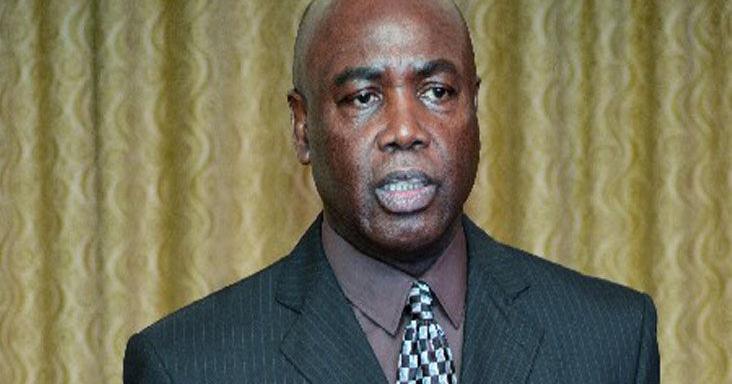
    Movement for Social Justice (MSJ) leader David Abdulah issued a forceful statement condemning the action as “a gross violation of national sovereignty” that contravenes international law and the UN Charter. The coalition labeled the operation “an act of imperialism” designed to assert US hegemony throughout Latin America and the Caribbean.

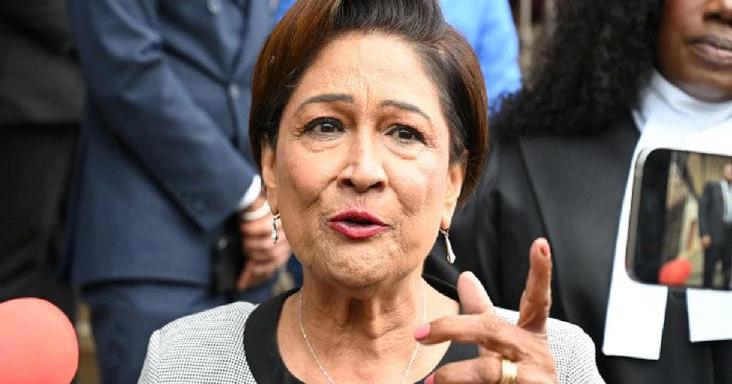
    The groups particularly criticized Prime Minister Kamla Persad-Bissessar’s administration for its alleged complicity in facilitating US military activities in the region. They pointed to several concerning developments: her government’s support for US military deployment in the Southern Caribbean initiated last August, establishment of a US radar system at Tobago’s ANR Robinson International Airport, and granting unlimited transit permissions to US military aircraft at Trinidad’s major airports.

    While Persad-Bissessar asserted that Trinidad and Tobago is “not a participant in any of these ongoing military operations,” she reiterated her longstanding refusal to recognize Maduro as Venezuela’s legitimate leader. This position contrasts sharply with most CARICOM nations, which have collectively advocated for maintaining the Caribbean as a zone of peace and opposed US military action against alleged narco-trafficking operations.

    The Prime Minister recently questioned CARICOM’s reliability as a security partner while affirming that the United States represents Trinidad and Tobago’s sole credible protector against external threats.

  • Trump: US will run Venezuela – Maduro, wife captured in overnight strike

    Trump: US will run Venezuela – Maduro, wife captured in overnight strike

    In a dramatic escalation of long-standing tensions, United States military forces executed a precision strike in Caracas, Venezuela, in the early hours of January 3rd, resulting in the capture of President Nicolas Maduro and First Lady Cilia Flores. The operation, which U.S. officials described as a surgical extraction mission, targeted a heavily fortified compound and concluded without American casualties, though one helicopter sustained damage from enemy fire.

    At a subsequent news conference held at his Mar-a-Lago estate in Florida, President Donald Trump declared the United States’ intention to assume provisional control of the South American nation. He outlined plans to oversee a ‘safe, proper and judicious transition’ of power while simultaneously leveraging Venezuela’s vast oil reserves for international sale. The captured leaders were transported to the amphibious assault ship USS Iwo Jima, part of a larger U.S. naval contingent deployed to the southern Caribbean since last August, and are slated to be extradited to New York to face federal narco-terrorism conspiracy charges.

    The legal foundation for the action was presented by Attorney General Pam Biondi, who unsealed a detailed indictment from the U.S. District Court for the Southern District of New York. The document characterized the Maduro administration as a ‘corrupt, illegitimate government’ sustained by a large-scale drug trafficking operation that deliberately flooded U.S. markets with cocaine.

    President Trump explicitly dismissed the potential leadership of exiled opposition figure Maria Corina Machado in any interim government, citing her alleged lack of domestic support. Instead, he indicated that an American-appointed administration, involving figures such as Senator Marco Rubio, would be designated to manage Venezuelan affairs temporarily. Trump further warned that had the extraction mission failed, a larger military offensive was prepared, and affirmed a willingness to deploy ground troops to maintain order.

    In response to the power vacuum, Venezuelan Vice President Delcy Rodriguez was swiftly sworn in. However, her subsequent televised address presented a starkly contradictory narrative. She vehemently denounced the U.S. incursion as an ‘atrocity’ and a violation of international law, proclaiming, ‘There is only one president in this country and his name is Nicolas Maduro.’ She stopped short of declaring herself acting president and gave no indication of cooperating with Washington, despite Trump’s claims to the contrary. The Venezuelan government declared a national emergency, with Defense Minister Vladimir Padrino López and Interior Minister Diosdado Cabello projecting defiance and urging citizens to take to the streets in defense of national sovereignty.

    The international community reacted with sharp division. United Nations Secretary-General Antonio Guterres expressed ‘deep concern’ that the rules of international law were not respected, calling the events a ‘dangerous precedent.’ Conversely, Argentine President Javier Milei hailed the development as ‘excellent news for the free world.’ Condemnation was swift from leaders in Brazil, Colombia, China, and Russia, while Mexico decried a ‘clear violation’ of the U.N. Charter. Colombia reinforced its shared border to stem a potential influx of refugees, even as expatriate Venezuelans in Chile celebrated the news. The U.N. Security Council scheduled an emergency meeting to address the crisis.

  • Keshorn Walcott, Leah Bertrand tipped for more honours at NAAA awards

    Keshorn Walcott, Leah Bertrand tipped for more honours at NAAA awards

    Trinidad and Tobago’s athletic excellence will be celebrated on January 3rd as the National Association of Athletics Administration (NAAA) prepares to host its prestigious annual awards ceremony at the National Racquet Centre in Tacarigua. The event promises to recognize outstanding achievements across multiple track and field disciplines following a remarkable competitive season.

    Heading the list of anticipated honorees are two-time Olympic medalist Keshorn Walcott and rising sprint sensation Leah Bertrand, both fresh from receiving top accolades from the Trinidad and Tobago Olympic Committee (TTOC). Walcott, coming off a spectacular 2025 season that saw him claim gold in the men’s javelin at the World Athletics Championships, was recently named TTOC’s Sportsman of the Year. His championship-winning throw of 88.16 meters marked a triumphant return to the pinnacle of his sport.

    Bertrand, who dramatically lowered her personal bests to 10.92 seconds in the 100-meter and 22.54 seconds in the 200-meter events, captured the TTOC Sportswoman of the Year title. The 23-year-old sprinter, who also won the same honor in 2024, appears poised to complete a remarkable double by securing the NAAA’s top prize for the second consecutive year after previously claiming both the Senior Female Athlete of the Year and Women’s Track Athlete of the Year awards.

    The ceremony will also spotlight emerging talent, including 22-year-old sprinter Shaniqua Bascombe who enjoyed a successful comeback season culminating in gold medal performance in the women’s 100-meter final at the Junior Pan American Games in Asunción, Paraguay. Bascombe clocked an impressive 11.19 seconds before contributing to Team TTO’s silver medal finish in the women’s 4×100-meter relay.

    On the junior circuit, 19-year-old jumper Janae De Gannes is expected to receive recognition following her bronze medal in the long jump at the Junior Pan Am Games and her role in the silver-winning relay team. De Gannes previously secured silver in the girls’ Under-20 long jump at the CARIFTA Games, where compatriot Gianna Paul completed a dominant one-two finish for Trinidad and Tobago with gold.

    The comprehensive awards program will distribute 62 prizes spanning categories from Under-9 to open divisions, acknowledging not only athletes but also coaches and other key contributors to the development of track and field in Trinidad and Tobago.

  • Defence Ministry: Flights out of US cancelled but Trinidad and Tobago’s airspace remain open

    Defence Ministry: Flights out of US cancelled but Trinidad and Tobago’s airspace remain open

    Trinidad and Tobago’s Ministry of Defense has confirmed the nation’s airspace remains fully operational despite significant disruptions to US-originating commercial flights following American military operations in Venezuela. The developments occurred on January 3 when the US Federal Aviation Administration (FAA) mandated that all departing flights return to US territory.

    Among the affected flights was a JetBlue service destined for Trinidad, which received return instructions minutes after departing from New York’s JFK International Airport. The Airports Authority of Trinidad and Tobago reported multiple cancellations including services operated by KLM, United Airlines, American Airlines, JetBlue, and Amerijet Cargo due to the FAA’s prohibition on US commercial aviation utilizing Venezuelan airspace.

    In contrast, Caribbean Airlines confirmed its operations continued without disruption, maintaining all scheduled services. The flight cancellations followed a dramatic US military operation that resulted in the capture of Venezuelan President Nicolas Maduro and his wife at a Caracas military base, with additional targets destroyed during the early hours of January 3.

    Prime Minister Kamla Persad-Bissessar explicitly stated that Trinidad and Tobago played no role in the military intervention, emphasizing the country’s non-involvement in the operation while ensuring continued aviation accessibility through its sovereign airspace.

  • Positive thinking for the New Year

    Positive thinking for the New Year

    As 2026 commences, a global political phenomenon demands examination: the ascendancy of unconventional leaders challenging established norms. The recent election of Zohran Mamdani—a 34-year-old Muslim progressive from Uganda—as mayor of New York City represents this trend in its most striking form. His victory under a conservative federal administration led by a New Yorker who considers the city his dominion appears particularly paradoxical.

    This political upset follows Kamala Harris’s decisive defeat in the 2024 presidential election, which restored a previous Republican president to the White House. The contrast between these outcomes suggests voters are increasingly drawn to candidates who promise disruptive change rather than incremental moderation.

    The term ‘maverick’ originates from Samuel Maverick, a Texan rancher who defied convention by refusing to brand his cattle. His unorthodox approach allowed him to claim unbranded calves as his own, accelerating his prosperity. Contemporary political mavericks similarly reject conventional branding and party orthodoxy, appealing to electorates weary of traditional politics.

    Globally, this pattern repeats. Trinidad and Tobago recently elected a new government seeking departure from established political norms. The newly appointed prime minister demonstrates maverick tendencies that voters endorsed despite potential discomfort. This reflects broader societal willingness to embrace political experimentation amid dissatisfaction with current systems.

    Some analysts attribute this shift to perceived failures of contemporary capitalism. While democracy remains robust in many nations, economic systems face mounting criticism for perpetuating inequality and instability. The adage that societies are “three meals away from chaos” underscores the urgency with which leaders must address these challenges.

    The management of maverick leadership presents particular difficulties. While organizations benefit from disruptive thinkers who challenge groupthink, balancing innovation with cohesion requires nuanced leadership. Senior figures often become risk-averse, potentially stifling the creativity necessary for progress in business, politics, and governance.

    As societies navigate increasing complexity, the certainty of past decades gives way to uncertainty. The unwritten rules of politics and governance are being rewritten, demanding greater adaptability from both leaders and citizens. Embracing this discomfort may be necessary to address pressing global challenges effectively.

  • US/Venezuela impasse tops the headlines

    US/Venezuela impasse tops the headlines

    The year 2025 marked a profound political transformation for Trinidad and Tobago, characterized by unprecedented female leadership and critical foreign policy decisions that defined the nation’s geopolitical stance. The year commenced with the anticipated departure of Prime Minister Dr. Keith Rowley and the subsequent installation of Stuart Young as his hand-picked successor. Young’s tenure proved historically brief as the nation overwhelmingly voted for change on April 28, resulting in the United National Congress (UNC) returning to power and making Kamla Persad-Bissessar the country’s first and only female prime minister—reclaiming her previous position.

    The political revolution extended beyond the executive branch as the opposition People’s National Movement (PNM) appointed its first female Opposition Leader after dismissing their previous leader following a mere 42-day tenure. This development created a remarkable historical moment with women simultaneously occupying the nation’s presidency, prime ministership, and opposition leadership.

    Despite domestic developments including the extension of a state of emergency, the arrest of a sitting police commissioner, and alleged assassination plots against government officials, the dominant headline of 2025 emerged from the international arena. The escalating diplomatic impasse between the United States and Venezuela positioned Trinidad and Tobago at a critical juncture, requiring careful navigation of complex geopolitical tensions.

    Prime Minister Persad-Bissessar’s unequivocal alignment with the United States in its ongoing conflict with Venezuela generated significant discourse. This strategic positioning prevented severe deterioration of bilateral relations with the United States, as evidenced by comparative analysis with other Caribbean nations like Dominica and Antigua that faced diplomatic consequences for different approaches.

    Historical analysis suggests alternative leadership under either Rowley or Young would have likely resulted in overt support for Nicolás Maduro’s Venezuelan regime under the guise of sovereignty and independence. Such alignment would have placed Trinidad and Tobago in an untenable position with the United States, potentially resulting in substantial national detriment driven by what the author characterizes as masculine pride and arrogance.

    As the nation progresses into 2026, Prime Minister Persad-Bissessar demonstrates leadership qualities deemed appropriate for this complex historical period. The outlook includes hopes for peaceful conflict resolution, enhanced dialogue with CARICOM leaders, and cautious optimism for navigating forthcoming challenges while achieving meaningful successes for the Trinidad and Tobago populace.

  • Trump: US will run Venezuela

    Trump: US will run Venezuela

    In a dramatic escalation of international tensions, United States military forces have executed a precision operation in Caracas, resulting in the capture of Venezuelan President Nicolas Maduro and First Lady Cilia Flores. The operation, conducted approximately at 2 AM local time, involved elite units including the Army’s Delta Force targeting a heavily fortified compound.

    President Donald Trump confirmed the development during a Florida press conference, announcing that both detainees are currently aboard the USS Iwo Jima amphibious assault vessel in the Caribbean Sea. They are scheduled for transport to New York to face narcotics trafficking charges in federal court.

    The US administration has declared its intention to administer Venezuela during a transitional period. Trump stated, “The US is going to run Venezuela until such time as we can do a safe, proper, and judicious transition,” though specific details regarding the transitional governance structure remain undefined.

    Following Maduro’s capture, Vice President Delcy Rodriguez was reportedly sworn in as president and has engaged in discussions with US Secretary of State Marco Rubio. However, Trump expressed skepticism about long-term roles for any members of the current administration, including Rodriguez.

    The administration also cast doubt on opposition leader Maria Corina Machado’s potential leadership, citing insufficient domestic support. Trump indicated that interim governance would be directed by officials including Rubio and other advisors.

    General Dan Caine, Chairman of the Joint Chiefs of Staff, confirmed that US forces remain on high alert throughout the Caribbean region. The operation reportedly involved months of coordination between military intelligence and agencies including the CIA.

    The geopolitical implications extend throughout the region, with recent military cooperation between US forces and Trinidad and Tobago including joint exercises, radar installations at ANR Robinson International Airport, and transit flight agreements—all previously characterized as counter-narcotics measures.

  • Gaston Browne aims to meet Kamla to discuss Clico

    Gaston Browne aims to meet Kamla to discuss Clico

    Antigua and Barbuda’s Prime Minister Gaston Browne has announced his intention to seek bilateral discussions with Trinidad and Tobago’s Prime Minister Kamla Persad-Bissessar regarding outstanding compensation commitments for victims of the CLICO and BAICO insurance collapses. The meeting is anticipated to occur during the upcoming CARICOM Heads of Government Meeting scheduled for February in St. Kitts and Nevis.

    The insurance crisis originated in 2009 when Colonial Life Insurance Company (CLICO), a Trinidad-based financial conglomerate with diversified interests across energy, beverages, and construction, experienced severe liquidity problems following the global financial crisis. The subsequent collapse affected thousands of policyholders throughout the Eastern Caribbean region, with many investors losing substantial portions of their life savings and investments.

    According to Prime Minister Browne, the Trinidad and Tobago government had previously pledged US$100 million toward a regional relief initiative but has only disbursed approximately 40% of this commitment to date. “With the commitment that was made, we still have a significant amount outstanding,” Browne stated, emphasizing the ongoing financial hardship faced by hundreds of affected residents in his nation and thousands more throughout the Eastern Caribbean.

    Browne expressed optimism about the prospects for resolution, noting that Persad-Bissessar’s previous administration had demonstrated serious intent to address the matter. “I am very thankful that her administration had shown seriousness about the issue in the past,” he remarked. “From this standpoint, I hope she remains consistent and we can bring further relief to the CLICO-BAICO situation.”

    While some regional governments have negotiated partial settlements and implemented restructuring measures over the past decade, many policyholders continue to await full recovery of their funds. Browne has vowed to continue advocating for affected citizens and expects Trinidad and Tobago, as the home jurisdiction of the failed insurance conglomerate, to honor its financial commitments in full.

  • Joshua Johnson rules at Promenade Chess Club’s Grand Tour

    Joshua Johnson rules at Promenade Chess Club’s Grand Tour

    Fide Master Joshua Johnson emerged triumphant at the Promenade Chess Club’s Blitz Grand Tour, held at Valpark Plaza in Valsayn on December 28, 2025. The accomplished chess prodigy, who previously secured a silver medal at the 2023 Central American and Caribbean Games, demonstrated exceptional strategic prowess to claim the open category championship against a competitive field of 25 participants.

    Johnson dominated the tournament with an impressive 8.5 points, securing the $1,200 top prize ahead of runners-up Reaz Ali (7 points, $700 prize) and Enen-Sa-Tefa Ab Khafra (6.5 points, $500 prize). The event showcased multiple competitive categories, with Sandhya Ramsaroop earning recognition as the best female player and receiving a $400 award.

    Youth categories produced equally compelling results. Ilyas Hosein, who recently placed third in the Under-8 Absolute category at the CAC Youth Chess Festival, claimed victory in the under-8 division. The under-12 category was won by Zidan Khan, who outperformed competitors Yuri Hosein and Ejaz Maharaj. The juniors (under-20) category concluded with an extraordinary four-way tie between Caleb Campo, Nahum Garcia, Zachary Murray, and Andre Rupert, all finishing with five points after nine rounds of intense competition.

    The tournament received support from several sponsors including Basic Transport, KFC, Galactica, Marios, Radica Trading, Valpark Plaza, and TYCO Farms. The Promenade Chess Club announced plans to maintain this competitive momentum throughout 2026 with additional events, including a major tournament scheduled at the Brian Lara Promenade in Port of Spain.

  • Trinidad and Tobago: Heritage, harmony and hope of 2026

    Trinidad and Tobago: Heritage, harmony and hope of 2026

    In a world increasingly fragmented by political polarization and contested elections, Trinidad and Tobago stands as a remarkable example of democratic resilience and cultural cohesion. Heritage consultant Vel A Lewis presents a compelling examination of how the nation’s diverse social fabric has become its greatest strength.

    The Caribbean nation’s stability is rooted in its deeply ingrained democratic traditions, where peaceful power transitions and respect for electoral outcomes have become normalized despite global trends toward election disputes. This political maturity, Lewis argues, is intrinsically linked to TT’s multicultural identity—a rich tapestry woven from Indigenous, African, Indian, European, Chinese, and Syrian influences.

    This diversity manifests through vibrant cultural expressions that serve as social coping mechanisms. Carnival transforms tension into masquerade, while artistic traditions like calypso, steelpan, tassa, and chutney provide spaces for resistance and collective meaning-making. The nation’s religious pluralism—encompassing Christian, Hindu, Muslim, Orisha, and Spiritual Baptist traditions—further reinforces shared values of compassion and tolerance.

    Despite facing contemporary challenges including crime concerns and geopolitical tensions with neighboring Venezuela, TT’s historical pattern demonstrates a society that “bends without breaking.” The author identifies the distinctive national temperament—both playful and prayerful—as key to this resilience, encapsulated in the popular local saying that “God is a Trini” reflecting collective confidence in overcoming adversity.

    Looking toward 2026, Lewis advocates for strategic investment in cultural preservation as essential to sustaining democratic foundations. Priority recommendations include completing the National Museum and Art Gallery restoration, enhancing protection for heritage sites, and strengthening support for visual and performing arts. These investments, the consultant contends, represent not merely cultural preservation but active reinforcement of the resilience that has carried the nation through previous challenges.

    The conclusion emphasizes that Trinidad and Tobago’s story of beauty, diversity, faith, and perseverance provides a template for maintaining national confidence amid global uncertainties through purposeful cultural stewardship.