标签: Suriname

苏里南

  • Column: AFCON 2025

    Column: AFCON 2025

    The African Cup of Nations (AFCON), Africa’s premier football tournament held biennially during this period, continues to face significant visibility challenges compared to its European counterpart, the UEFA European Championship. Despite featuring numerous star players from Europe’s top leagues, AFCON struggles to capture equivalent media attention and global interest.

    The tournament’s scheduling conflict with ongoing European competitions, particularly the demanding English Premier League season, creates substantial friction. While clubs are theoretically obligated to release players for international duty, practical realities often dictate otherwise. Premier League clubs frequently implement policies that indirectly pressure African players to prioritize club commitments over national team participation, primarily due to concerns about playing time and career implications.

    This structural imbalance highlights deeper issues within African football’s ecosystem. The Confederation of African Football (CAF) must address fundamental questions: Does the problem stem from scheduling misalignment with other confederations, or does it relate to the perceived quality of football presented? A significant step forward comes with the planned 2028 transition to a four-year cycle, synchronizing AFCON with the European Championship schedule, thereby eliminating one major scheduling obstacle.

    Beyond scheduling reforms, CAF could empower member associations to develop stronger domestic leagues. Enhancing local competitions would reduce the continent’s talent drain to Europe while potentially attracting international players. Strengthened league systems would enable national team players to develop cohesion through extended collaboration, potentially improving African nations’ performance in global tournaments and increasing AFCON’s appeal to worldwide audiences.

    This comprehensive approach addressing both scheduling conflicts and foundational league development could ultimately transform AFCON into a truly global sporting spectacle worthy of its exceptional talent pool.

  • Bisschop Choennie: Kerst is een oproep tot hoop, verzoening en verantwoordelijkheid

    Bisschop Choennie: Kerst is een oproep tot hoop, verzoening en verantwoordelijkheid

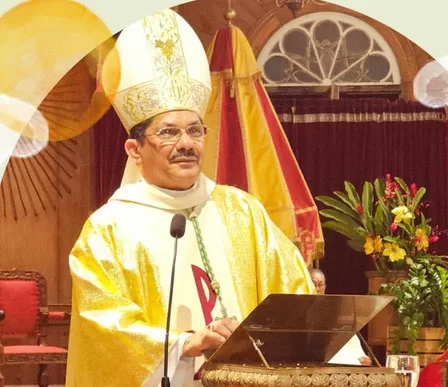
    In a profound Christmas sermon that transcended traditional holiday messaging, Bishop Karel Choennie of Paramaribo has issued a compelling call for national reflection and renewal in Suriname. The religious leader reframed Christmas as more than mere festive tradition, presenting it instead as a vital moment for healing, introspection, and collective responsibility toward the nation’s future.

    Addressing a congregation grappling with historical legacy and contemporary challenges, Bishop Choennie drew parallel between the biblical narrative of Bethlehem and Suriname’s current reality. He emphasized that the birth of Jesus represents an enduring invitation to maintain hope despite uncertainty and change—a message particularly resonant amid the country’s ongoing struggles with its complex past.

    The bishop confronted Suriname’s painful history with unflinching honesty, acknowledging slavery and contract labor as deep wounds within the national consciousness. While stressing the importance of recognizing historical suffering and ancestral resilience, he cautioned against allowing bitterness to paralyze progress. Christmas, he argued, invites genuine reconciliation—acknowledging past trauma without becoming trapped by it.

    Bishop Choennie referenced the colonial period as both suppressing Surinamese identity and fostering growing aspirations for justice and self-determination. He pointed to the December 8th trial proceedings as a painful but necessary reminder that truth must precede healing, suggesting that with grace, historical scars can transform into sources of strength rather than division.

    The sermon highlighted significant national milestones, including Suriname’s 1975 independence as a historical turning point that initiated domestic responsibility. The bishop openly addressed subsequent periods of moral and financial decline, democratic challenges, and instances when the nation had to rebuild from ‘ground zero’—yet emphasized the people’s persistent hope throughout these trials.

    Notable signs of progress included the election of Suriname’s first female president, which Bishop Choennie characterized as a historic development opening new perspectives and encouraging young women nationwide. He also interpreted the recent visit of the Dutch royal couple as meaningful beyond ceremonial protocol—seeing it as an opportunity for acknowledgment, dialogue, and confronting shared history while strengthening national unity through diversity.

    Looking forward, the bishop addressed Suriname’s anticipated oil and gas revenues expected around 2028. While acknowledging their potential to improve infrastructure, education, and healthcare, he warned that economic wealth without moral compass risks creating new divisions. He called for choices centered on justice, integrity, and care for the vulnerable—encouraging Surinamers to share their talents and resources not for personal enrichment but to build an inclusive society.

    At its core, Bishop Choennie’s Christmas message emphasized proximity and responsibility. God becoming human in simplicity and vulnerability rather than power and splendor challenges every individual to choose connection over polarization, forgiveness over resentment, and collective responsibility over self-interest. He concluded with a prayer for the coming year—that it may be marked by wisdom, courage, and solidarity, with all Surinamers regardless of origin, color, or faith feeling at home. “May the light of Christmas continue to guide us,” he urged, “today and into the future.”

  • SVB-toppers benoemd in FIFA-commissies

    SVB-toppers benoemd in FIFA-commissies

    Suriname has achieved significant recognition in international football governance with two distinguished appointments to FIFA’s standing committees. Dayasankar Mathoera, President of the Surinamese Football Association (SVB), has been appointed to the Member Associations Committee, while SVB executive board member Wendy Deerveld has joined the FIFA Legal Committee.

    These appointments position Suriname within the highest administrative echelons of global football governance. The selections form part of FIFA’s comprehensive framework comprising 29 Standing Committees designed to enhance policy development, oversight, and advisory functions across diverse operational domains. These committees fundamentally strengthen FIFA’s operational execution and deepen decision-making processes within the global football community.

    The official plenary and group meetings recently convened in Doha, Qatar, alongside prestigious events including The Best Coach and The Best Player awards, followed by the Intercontinental Cup and Arab Cup finals.

    Mathoera’s Member Associations Committee focuses on cultivating relationships between FIFA and its member associations, providing strategic guidance on development, governance, and support for national football organizations worldwide. Deerveld’s Legal Committee addresses critical judicial and regulatory matters, including dispute resolution, compliance frameworks, and statutory adherence by member associations and stakeholders.

    In an exclusive statement, Mathoera emphasized that committee participation transcends mere recognition: “These appointments carry profound responsibility. The committees play pivotal roles in enhancing transparency, promoting good governance, and supporting member associations globally.” This representation enables Suriname to contribute meaningfully to football’s institutional development while strengthening its international sporting footprint.

  • Dollar op weg naar grootste jaarverlies sinds 2017

    Dollar op weg naar grootste jaarverlies sinds 2017

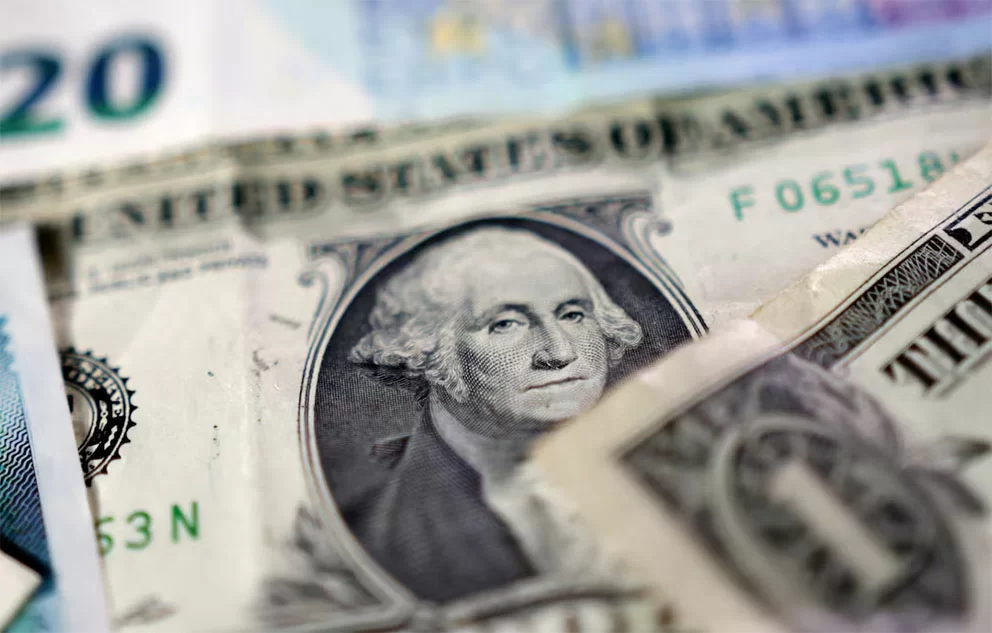
    The US dollar is experiencing sustained pressure and appears poised to record its most significant annual decline since 2017, with analysts anticipating potential further depreciation in the coming months. This downward trajectory persists despite recent robust US growth indicators, as investors increasingly expect the Federal Reserve to implement additional interest rate cuts throughout 2026 while other major central banks maintain their current policy stances.

    Financial markets have responded decisively to this anticipated policy divergence. The euro and British pound both reached three-month highs against the dollar, trading at approximately $1.180 and $1.352 respectively. The dollar index, which measures the currency’s performance against a basket of major counterparts, fell to a 2.5-month low of 97.767. Year-to-date, the greenback has depreciated nearly 9.8%, marking its most substantial annual decline in eight years. Should this weakness persist through the final trading week, 2025 could represent the dollar’s worst performance since 2003.

    This year’s currency volatility has been exacerbated by ongoing trade tensions and unpredictable policy influences from the Trump administration, which have simultaneously raised concerns about the Federal Reserve’s operational independence. In contrast, the euro has appreciated over 14% this year, positioning itself for its strongest annual performance in more than two decades.

    The European Central Bank maintained its current interest rate structure last week while upgrading growth projections, effectively ruling out near-term policy easing. Market pricing now indicates minimal expectations for ECB rate increases in 2026, mirroring similar projections for Australia and New Zealand. Both Antipodean currencies have strengthened considerably this year, with the Australian dollar reaching a three-month high of $0.6710 and the New Zealand dollar achieving a 2.5-month peak at $0.58475.

    The British pound has gained over 8% year-to-date as markets price in at least one Bank of England rate cut during the first half of 2026, with approximately 50% probability assigned to a second reduction later in the year.

    Smaller European currencies with traditionally strong fiscal positions have outperformed notably. The dollar has declined 12% against the Norwegian krone, 13% against the Swiss franc (which traded at 0.7865 francs Wednesday), and 17% against the Swedish krona, which reached its lowest level since early 2022 at 9.167 kroner.

    Market attention remains particularly focused on the Japanese yen, where traders are monitoring potential intervention by Japanese authorities to stem the currency’s decline. Finance Minister Satsuki Katayashi stated Tuesday that Japan retains readiness to intervene against excessive yen movements—the strongest verbal warning to date. The yen subsequently appreciated 0.3% to 155.83 per dollar on Wednesday following previous day’s 0.5% decline.

    Despite the Bank of Japan implementing its long-awaited rate increase last week, Governor Kazuo Ueda’s cautiously dovish messaging disappointed market participants hoping for more aggressive tightening measures. With year-end liquidity conditions thinning, some investors anticipate potential official buying operations to support the yen, potentially creating favorable conditions for intervention by Japanese authorities.

  • Ondernemer in Nickerie aangehouden op verdenking van smokkel

    Ondernemer in Nickerie aangehouden op verdenking van smokkel

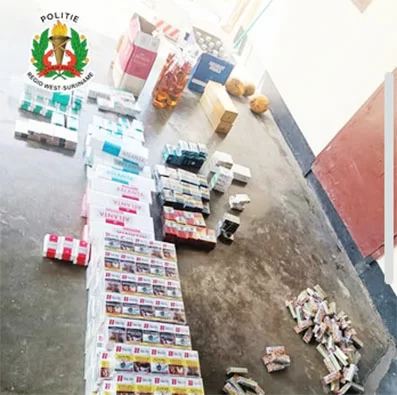
    In a significant law enforcement operation on December 23rd, West Region Police successfully apprehended a 36-year-old entrepreneur suspected of large-scale smuggling activities. The coordinated operation, conducted in collaboration with a specialized tactical unit, culminated in the suspect’s detention near his residence on Ramadhar Rajaramweg in the Corantijnpolder area of Nickerie district.

    Authorities executed a search operation that yielded substantial evidence of illicit trade. The seized contraband included a considerable quantity of illegal cigarettes, various alcoholic beverages, and multiple containers of rat poison in liquid form. Most notably, investigators discovered a significant cache of chemicals in both liquid and powder forms, raising concerns about the potential scope of the smuggling operation.

    The suspect, identified as R.L., has been taken into custody as the investigation continues. The case has been formally transferred to the West Region Detective Unit, which will lead the ongoing investigative efforts. Law enforcement officials have not disclosed the intended destination or purpose of the confiscated chemicals, but the presence of multiple hazardous substances suggests sophisticated smuggling operations beyond typical contraband.

    This operation highlights the continued efforts by Surinamese authorities to combat illegal trade networks that circumvent national regulations and potentially endanger public safety through unregulated distribution of hazardous materials.

  • Goud stijgt boven $4.500; zilver en platina bereiken nieuwe recordniveaus

    Goud stijgt boven $4.500; zilver en platina bereiken nieuwe recordniveaus

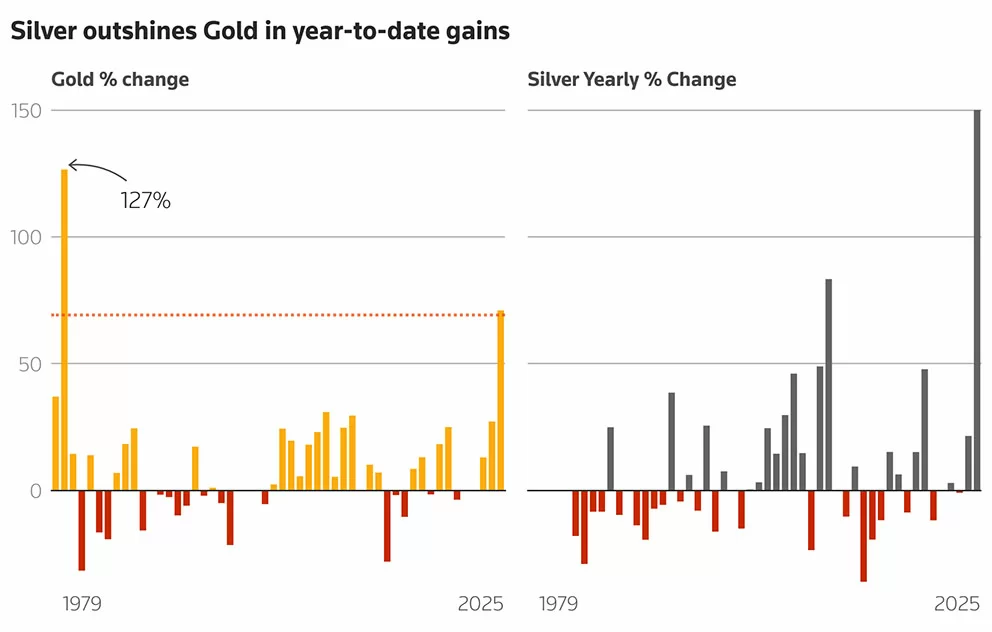
    Global precious metals markets witnessed unprecedented milestones as silver, gold, platinum, and palladium all reached historic price levels this trading session. Gold breached the symbolic $4,500 per ounce barrier for the first time on Wednesday, while silver achieved remarkable outperformance with a 150% annual gain that eclipsed gold’s substantial 70% advance.

    The spot price of gold climbed 0.2% to $4,494.49 per ounce after briefly touching an intraday record of $4,525.19. February-delivery gold futures in U.S. markets gained 0.4%, settling at $4,523.10. Silver reached an all-time peak of $72.70 before moderating to $72.32 with a 1.3% daily increase. Platinum surged to $2,377.50 then stabilized at $2,312.70, maintaining a 1.6% gain, while palladium retreated 1.5% to $1,830.37 after hitting a three-year high.

    Market analyst Fawad Razaqzada of City Index and FOREX.com identified multiple supportive factors: “The absence of negative catalysts combined with powerful positive momentum creates ideal conditions. Fundamental drivers include sustained central bank acquisitions, a weakening U.S. dollar, and persistent safe-haven demand.”

    This record-setting performance stems from converging economic forces: escalating geopolitical tensions driving flight-to-safety movements, and growing expectations that the Federal Reserve will implement monetary easing in 2025. President Donald Trump reinforced this outlook Tuesday, emphasizing his preference for interest rate reductions during favorable market conditions.

    Non-yielding assets like gold typically benefit from low interest rate environments. Current market pricing indicates traders anticipate two Fed rate cuts next year.

    Silver’s exceptional performance reflects robust investment demand, its recent designation as a U.S. critical mineral, and expanding industrial applications. Platinum and palladium, essential components in automotive catalytic converters, posted gains of approximately 160% and over 100% respectively, fueled by mining supply constraints, tariff uncertainties, and investment diversification from gold.

    Societe Generale analysts caution that any significant gold price correction would require reduced purchasing from emerging market central banks. Barring such developments, they project the rally will continue, potentially reaching $5,000 per ounce by late 2026.

  • Werkgroep moet koers uitzetten voor grondenrechten en decentralisatiebeleid

    Werkgroep moet koers uitzetten voor grondenrechten en decentralisatiebeleid

    President Jennifer Simons of Suriname has established a specialized six-member working group to tackle the nation’s complex and long-standing challenges regarding land rights and decentralization policies. The presidential initiative aims to develop sustainable solutions through comprehensive inventory assessments and policy proposals developed in close consultation with indigenous and tribal communities.

    The task force, serving as direct operational arm of the head of state, includes presidential advisor on land rights and decentralization Edgar Dikan, along with members Armand Jurel, Theresia Cirino, Mike Nerkust, Martin Misiedjan, and Sarwan Ramai. Their mandate encompasses systematic mapping of legal, administrative, and societal aspects relevant to land rights issues, while considering existing documentation including the FPIC document from the Association of Indigenous Village Chiefs in Suriname.

    Presidential spokesperson Roberto Lindveld emphasized the administration’s dual awareness of both the necessity for resolution and the complexity requiring careful, time-consuming processes. Monthly progress meetings will be held with the president to meticulously monitor the initiative’s advancement.

    The working group’s methodology will focus on three core pillars: comprehensive inventory, thorough evaluation, and extensive consultation with all relevant stakeholders. This approach aims to build consensus and ownership for future policy decisions. Dikan stressed that collaboration with affected communities remains fundamental to the mission’s success, noting that only through joint efforts can tangible progress be achieved and visible results demonstrated in the coming years.

  • Venezuela stapelt olievoorraden op in eigen wateren door Amerikaanse blokkade

    Venezuela stapelt olievoorraden op in eigen wateren door Amerikaanse blokkade

    Venezuela’s state-owned oil company PDVSA has initiated an emergency strategy of using tankers as floating storage units in its territorial waters following a series of crude oil seizures by United States authorities. According to internal company documents and shipping data, this unprecedented measure comes as direct response to US Coast Guard interceptions of Venezuelan oil shipments in the Caribbean Sea.

    This month witnessed the seizure of two fully-loaded crude carriers, the Skipper and Centuries, with a third empty vessel currently being monitored approaching Venezuelan waters. These developments are part of Washington’s intensified enforcement actions against what it terms a ‘shadow fleet’ transporting sanctioned oil. Former President Donald Trump’s administration had announced a comprehensive blockade against all vessels falling under US sanctions, creating significant deterrence among shipowners and leaving more than a dozen oil tankers stranded within Venezuelan maritime boundaries.

    With PDVSA maintaining daily production of approximately 1.1 million barrels, storage facilities on land are rapidly approaching capacity—particularly at the Jose terminal which handles heavy crude from the Orinoco belt, Venezuela’s primary oil-producing region. To avoid production cuts, the company began emergency transfer operations over the weekend, pumping surplus oil onto vessels now serving as temporary storage solutions.

    Interestingly, Chevron—PDVSA’s joint venture partner—has maintained uninterrupted export operations despite the escalating situation. The US oil major continues to produce roughly one quarter of Orinoco basin output, while PDVSA handles the remaining three quarters, primarily destined for Chinese markets. China has emerged as the destination for approximately 80% of Venezuela’s oil exports this year.

    Storage levels at the Jose terminal had previously declined from a peak of 14 million barrels earlier this year to between 9-11 million barrels since September. Current figures show inventories have rebounded to 12.6 million barrels, bringing Venezuela’s total oil stockpile to 22 million barrels—the highest level since August.

    PDVSA faces mounting challenges in convincing customers to continue accepting deliveries after this weekend’s additional US seizures. The floating storage solution has become necessary while the company negotiates price reductions and contract modifications with reluctant buyers, some of whom are considering returning shipments to Venezuelan terminals.

    Last week, PDVSA contemplated declaring force majeure for certain exports but ultimately decided against the measure to avoid disrupting ongoing client negotiations. The legal concept of force majeure would allow the seller to be released from delivery obligations under extraordinary circumstances.

    In a televised address, President Nicolás Maduro emphasized that oil exports to Chevron would continue ‘rain, thunder or lightning’ despite pressure from Washington. ‘We are serious and honest people who honor our contracts,’ Maduro declared. Chevron confirmed its Venezuelan operations continue unchanged and in compliance with applicable laws and regulations.

    In a significant legislative development, Venezuela’s Maduro-controlled parliament passed a law imposing prison sentences of up to 20 years for anyone promoting or financing piracy or blockades of oil exports, signaling Caracas’s determination to counter US sanctions through legal means.

  • Prijzen blijven stijgen: inflatie in november 2025 op 11,6 procent

    Prijzen blijven stijgen: inflatie in november 2025 op 11,6 procent

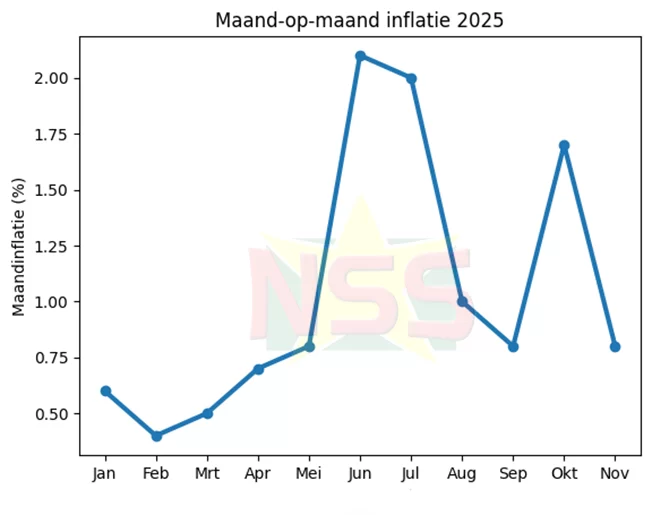
    Suriname’s economy continues to grapple with persistent inflationary pressures, as recent data from the General Bureau of Statistics (ABS) reveals a 0.8% month-over-month price increase in November 2025. The year-on-year comparison shows even more striking figures, with consumer prices surging by 11.6% compared to November 2024 levels.

    While the pace of inflation has moderated compared to previous years, the upward trajectory remains unmistakable. The sustained price pressure continues to burden households, particularly affecting essential expenditure categories. Behind the average inflation rate lies significant variation across product categories, with individual items experiencing price fluctuations ranging from a 54% decrease to an astonishing 600% increase in November alone.

    Over the extended period from December 2023 through November 2025, these disparities widened further, spanning from -67% to +600%. The most substantial price hikes continue to manifest in sectors directly impacting daily life, including healthcare, housing and utilities, food supplies, transportation, and dining expenses outside the home.

    The inflation metrics derive from the Consumer Price Index, compiled using a basket of 316 distinct goods and services. Price observations occur across approximately 630 measurement points throughout Paramaribo, Wanica, Nickerie, Coronie, Saramacca, Commewijne, and Para regions.

    Despite the less extreme price surges compared to earlier years, inflation remains structurally elevated, with many consumers continuing to experience its consequences in their daily economic activities. The data indicates that while the rate of increase has slowed, the cumulative effect of sustained inflation continues to challenge purchasing power and economic stability.

  • Jones waarschuwt voor ‘vergaande bevoegdheden’ in milieuwet

    Jones waarschuwt voor ‘vergaande bevoegdheden’ in milieuwet

    In a heated session at De Nationale Assemblee, opposition parliamentarian Ebu Jones of the National Democratic Party (NDP) launched scathing criticism against the proposed Sustainable Nature Management Act, warning of constitutional violations and potential foreign interference in Suriname’s natural resources.

    Jones articulated fundamental objections to the legislation during Monday’s debate, characterizing it as granting “abnormal, unprecedented, and far-reaching powers” to the National Environmental Authority (NMA). The lawmaker emphasized that Suriname’s constitution explicitly mandates that natural resources and their revenues must benefit the nation’s overall development—a principle he believes the proposed legislation undermines.

    The parliamentarian expressed particular concern over provisions that would allow revenues from natural resources, including carbon credits, to flow directly to concession holders rather than national development funds. “This effectively diverts money from society and central authority that should instead be deployed for national development,” Jones stated, making clear his intention to block such arrangements.

    Jones further raised alarms about potential foreign influence, suggesting international organizations and foreign powers might use non-governmental organizations (NGOs) to gain control over Suriname’s natural wealth. He warned that such influences could become institutionalized through legislation, requiring heightened vigilance.

    Addressing President Jennifer Simons directly, Jones urged extreme caution in selecting advisors on this matter, warning against opening doors to structures that would divert funds from society.

    The politician asserted that environmental policy should remain with the government—which bears political responsibility and answers to parliament—rather than being delegated to an authority. He criticized provisions making the NMA central to policy preparation, effectively rendering the government dependent on an authority, which he deemed constitutionally improper.

    Jones also identified contradictions between the proposed legislation and existing environmental framework laws, noting that concepts, responsibilities, and powers weren’t consistently aligned, potentially creating legal complications.

    Additional criticisms focused on granting investigative powers to the NMA, which Jones called unacceptable since economic crime investigation and prosecution traditionally fall under police and public prosecutor jurisdiction. He also expressed concerns about the environmental fund gaining expanded capabilities, including loan provision authority, through what he described as “surreptitious means.

    Following unanimous criticism during initial debate, further proceedings have been postponed indefinitely while initiators and legal experts continue refining the legislation.