标签: Suriname

苏里南

  • STS Nickerie naar Georgetown voor internationaal scholenvoetbal

    STS Nickerie naar Georgetown voor internationaal scholenvoetbal

    The Surinamese Technical School (STS) from Nickerie district has commenced its journey to Guyana as Suriname’s official representative at the prestigious KFC Goodwill School Football Tournament 2025. This international U18 competition, scheduled from December 14-21 in Georgetown, marks the third consecutive year of Surinamese participation in the regional sporting event.

    Strategic selection positioned STS Nickerie as the national delegate due to both their athletic merit and geographical significance. The team earned this distinguished opportunity by securing the district championship title in Nickerie, which shares a border with host nation Guyana. Organized by the Petra Organization, the tournament stands as one of the Caribbean’s most respected scholastic football competitions.

    The Surinamese squad, comprising 19 players under 18 years old, will compete against elite youth teams from multiple nations including Guyana, Jamaica, Brazil, and the Bahamas. Under the guidance of head coach Michel Dors and assistant coach Razack Lorenzo, the students aim to demonstrate their athletic prowess on an international platform.

    This initiative has been orchestrated by the Foundation School Sports Federation Suriname, an operational branch of the Ministry of Youth Development and Sports (JOS). The participation aligns with Suriname’s national policy to enhance youth sports development through international exposure, providing young athletes with competitive opportunities that foster both personal growth and national pride.

  • Coalitieleden willen verbod op kansspelen

    Coalitieleden willen verbod op kansspelen

    In a landmark decision, Suriname’s National Assembly is poised to implement comprehensive legislation prohibiting all forms of online monetary gambling activities. The coalition government has introduced the ‘Prohibition of Online Games of Chance and Digital Gambling Prevention Act,’ marking a significant shift in the nation’s approach to digital entertainment regulation.

    The legislation emerges from growing concerns about the proliferation of mobile gambling services, social media betting platforms, and international gambling websites operating without regulatory oversight. Parliamentarians describe the measure as an essential intervention to protect citizens, particularly youth and socially vulnerable groups, from gambling addiction, financial exploitation, and money laundering schemes.

    Suriname’s existing gambling regulations, including the 1939 Hazard Games Act and 1960 Lottery Act, were drafted during the pre-internet era, creating substantial legal gaps that foreign and anonymous operators have exploited to target Surinamese players without restriction.

    The prohibition is absolute and applies equally to providers and participants. Surinamese citizens accessing offshore gambling platforms through VPNs, proxies, or other circumvention tools will face criminal charges. Telecommunications providers including Telesur and Digicel must implement real-time gambling traffic detection and blocking systems based on standards established by Suriname’s Telecommunication Authority (TAS).

    The law extends beyond gambling participation to encompass all promotional activities. Advertising, sponsorship arrangements, influencer marketing, and digital promotion of gambling services are strictly prohibited. Financial institutions, payment platforms, and fintech companies must decline transactions associated with digital gambling activities, with the Central Bank of Suriname developing detailed detection guidelines.

    A novel digital enforcement mechanism requires nationwide blocking orders within 24 hours of TAS identifying gambling websites, applications, or data streams. The Minister of Justice retains authority to demand additional measures, including application removal from digital marketplaces and termination of transaction pathways.

    Four institutions will share oversight responsibilities: the Gaming Control Board Suriname (coordination), Central Bank of Suriname (financial flows), TAS (technical detection and blocking), and Public Prosecution Service (criminal enforcement).

    This legislative approach aligns Suriname with international trends, referencing restrictive measures implemented in India, Trinidad & Tobago, and the Netherlands. The government emphasizes the measure’s consistency with Caribbean Financial Action Task Force recommendations and international anti-money laundering guidelines.

    Violators face severe penalties including fines up to SRD 10 million and imprisonment. Corporate entities risk minimum fines of SRD 5 million, potential temporary or permanent closure, and 50% penalty enhancements for repeat offenses. Prosecution will utilize existing procedures under the Economic Offenses Act.

    The legislation specifically exempts educational and recreational games without monetary stakes. Loot boxes are prohibited only when virtual items possess economic tradability, preventing commercial games from establishing profit-driven gambling dynamics.

    Beyond protectionist measures, the law represents a modernization of Suriname’s digital legal framework, aiming to enhance consumer protection, combat cybercrime, and strengthen national financial integrity.

  • Officiële erkenning inheemse volken als wet ingediend bij DNA

    Officiële erkenning inheemse volken als wet ingediend bij DNA

    Lawmakers from Suriname’s governing coalition have introduced landmark legislation to formally recognize indigenous communities as the nation’s original inhabitants through constitutional amendment. The proposed bill, submitted to the National Assembly, establishes that the presence and profound connection of indigenous peoples with the land constitute an inseparable component of Suriname’s national identity and historical narrative.

    According to the explanatory memorandum accompanying the legislation, this recognition transcends symbolic significance, serving as a constitutional anchor for protecting and promoting indigenous rights. These encompass territorial claims, linguistic preservation, cultural heritage, and self-determination principles that have previously lacked explicit constitutional foundation.

    The initiative addresses a decades-long legal and societal void wherein Suriname’s Constitution contained no specific provisions regarding the status of indigenous populations, despite their historically undisputed presence and role in nation-building. The proposed constitutional modification aligns with international treaties and standards binding to Suriname, including the International Covenant on Civil and Political Rights, the Universal Declaration of Human Rights, the American Convention on Human Rights, and the UN Declaration on the Rights of Indigenous Peoples.

    This constitutional recognition will provide directional guidance for future legislation, policy development, and judicial interpretations across multiple domains: land rights protocols, consultation mechanisms for major development projects, native-language education systems, and cultural preservation frameworks. The government acknowledges that Suriname has been inhabited since time immemorial by Kalina, Lokono, Trio, Wayana, Akurio, and Warao peoples, whose cultural traditions, community structures, and spiritual relationships with natural environments form essential elements of national identity, despite their continued marginalization.

    By embedding this recognition within the Constitution’s preamble, the measure establishes a robust legal foundation for subsequent reforms, including potential legislation governing collective land rights—a longstanding unresolved issue. Legislators characterize the initiative as both a necessary and equitable step that delivers historical validation while harmonizing domestic legal frameworks with international obligations. The proposal further establishes groundwork for a more inclusive society and contributes to national reconciliation within a post-colonial context.

  • Staatsolie brengt petroleumkennis Suriname samen in nieuwe GeoAtlas

    Staatsolie brengt petroleumkennis Suriname samen in nieuwe GeoAtlas

    Suriname’s state-owned energy company Staatsolie has unveiled a comprehensive geological publication that consolidates decades of petroleum research into a single authoritative reference. The GeoAtlas of Suriname represents a monumental achievement in documenting the nation’s oil and gas potential, offering stakeholders an integrated overview of the country’s petroleum geology.

    During a ceremonial presentation on Friday, President Jennifer Simons received the first printed copy of the groundbreaking publication. In a symbolic gesture, the president then presented an edition to Sirahmpersad Eduard ‘Eddie’ Jharap, the founding director and visionary behind Staatsolie, to whom the atlas is dedicated.

    The GeoAtlas stands as a tribute to Jharap’s pioneering work as both geologist and industry architect. Under his leadership from Staatsolie’s establishment on December 13, 1980, until his retirement in 2005, the company evolved from an ambitious concept into an integrated national oil enterprise with international partnerships. His guiding philosophy of ‘Confidence in One’s Own Abilities’ continues to shape the company’s operational ethos.

    This comprehensive geological compilation resulted from the collaborative efforts of multiple generations of earth scientists inspired by Jharap’s vision. The research team synthesized over a century of exploration data to create detailed descriptions of Suriname’s subsurface structures and their development. The publication presents cutting-edge insights into the presence and potential of both onshore and offshore oil and gas reserves.

    According to Staatsolie officials, the GeoAtlas delivers both scientific significance and practical utility. Investors gain access to a clear, integrated perspective on Suriname’s petroleum geology within a single document, while the accessible language makes it suitable for broader audiences interested in the nation’s natural resources.

    The digital version of the GeoAtlas of Suriname is now available free of charge through Staatsolie’s official website, democratizing access to this valuable geological knowledge.

  • Rosebel Community Fund ondersteunt 15 sociale instellingen met kerstgiften

    Rosebel Community Fund ondersteunt 15 sociale instellingen met kerstgiften

    In a significant holiday philanthropic initiative, the Rosebel Community Fund (RCF), established by Zijin Rosebel Gold Mines, has extended financial support to fifteen social institutions across multiple districts in Suriname. Each organization received a Christmas grant of US$2,500 during a ceremonial event held Thursday at the Ballroom Prince venue.

    RCF Chairman Soetjipto Verkuijl emphasized the fund’s commitment to recognizing organizations operating under challenging circumstances. “These groups perform essential work that deserves both recognition and support,” Verkuijl stated. “Providing encouragement during the holiday season represents our commitment to standing with those who serve our communities.”

    The annual Christmas Event, maintained since 2022, serves multiple purposes: acknowledging social institutions, appreciating their dedication, and offering participants a moment of respite from their demanding responsibilities.

    Beneficiary organizations span various social services, including children’s homes (Johanna, Elim van de Heer, and Sukh-Dhaam), the Mr. Huber Foundation, the National Foundation for the Blind and Visually Impaired, and institutions serving physically and mentally disabled individuals. Additional recipients include the Kennedy Foundation, Mytylschool, Lotjeshuis, Huize Tyltyl, and several girls’ hostels including Balingsoela, Siswa Tama, Wisma Karijawatie, and Soender Singh, along with the Elizabethshof Student House.

    The RCF primarily focuses on community development around the Brokopondo district gold mining operations. Verkuijl revealed that the fund has invested over US$2 million in socio-community projects throughout the past year, spanning healthcare, education, and small business development support.

    Among notable ongoing initiatives is the development of an educational complex with accompanying dormitory facilities, representing the fund’s commitment to sustainable improvement of educational infrastructure in the region.

  • Minister Pokie: Georganiseerd patroon misstanden rond Moni Karta

    Minister Pokie: Georganiseerd patroon misstanden rond Moni Karta

    Suriname’s Minister of Social Affairs and Housing Diana Pokie has revealed extensive and organized corruption within the Moni Karta program, the government’s flagship anti-poverty initiative. During a high-level government briefing, Pokie disclosed that both ministry officials and employees of the Surinamese Postal Savings Bank (SPSB) are implicated in what she described as a deeply rooted pattern of systematic misconduct.

    The minister confirmed that disciplinary measures, including terminations, have already been implemented at the banking institution following the detection of irregularities. While exact numbers of implicated individuals remain undisclosed pending official documentation from SPSB, Pokie emphasized the complexity of the scheme that cannot be resolved within months.

    Multiple investigations are currently underway, with several formal complaints already filed with authorities. In a significant operational shift, employees directly involved with matters under investigation will be placed on mandatory leave starting January 2nd, effectively suspending an entire department and potentially disrupting service continuity.

    Pokie asserted that all necessary evidence exists to prosecute offenders once investigations conclude. The coordinated response involves multiple government agencies working to address the corruption while preventing further harm to vulnerable citizens who depend on the financial assistance program.

    The minister stressed that restoring public trust in the welfare system remains the highest priority, with protection of legitimate beneficiaries guiding all subsequent actions. The government faces the dual challenge of rooting out corruption while maintaining essential services for Suriname’s most economically disadvantaged populations.

  • Simons: schuldherschikking noodzakelijk om financiële stabiliteit te waarborgen

    Simons: schuldherschikking noodzakelijk om financiële stabiliteit te waarborgen

    Surinamese President Jennifer Simons has announced a critical debt restructuring agreement that prevents the nation from facing unsustainable foreign debt obligations within the coming years. The breakthrough came following intensive negotiations with major creditors including Staatsolie, TotalEnergies, and Bank of America.

    During a presidential palace press conference on Friday, Simons emphasized that restructuring foreign debt was not merely a policy choice but an absolute necessity. Without intervention, Suriname would have faced crippling interest payments starting in 2027 that would have severely pressured both the national budget and exchange rate stability. The country faced approximately $150 million in interest payments alone for debt servicing.

    The successfully negotiated arrangement postpones loan repayments until after 2028, providing immediate relief for foreign currency reserves and preventing excessive pressure on the exchange rate. This strategic move forms part of a broader government initiative to avoid prematurely committing future revenues to debt obligations.

    In a significant parallel development, the government has fully settled the Value Recovery Instrument (VRI) debt, ensuring that oil royalties will be entirely available for Suriname’s use from 2028 onward. President Simons stressed that these funds must be allocated toward structurally strengthening national finances rather than new consumptive expenditures.

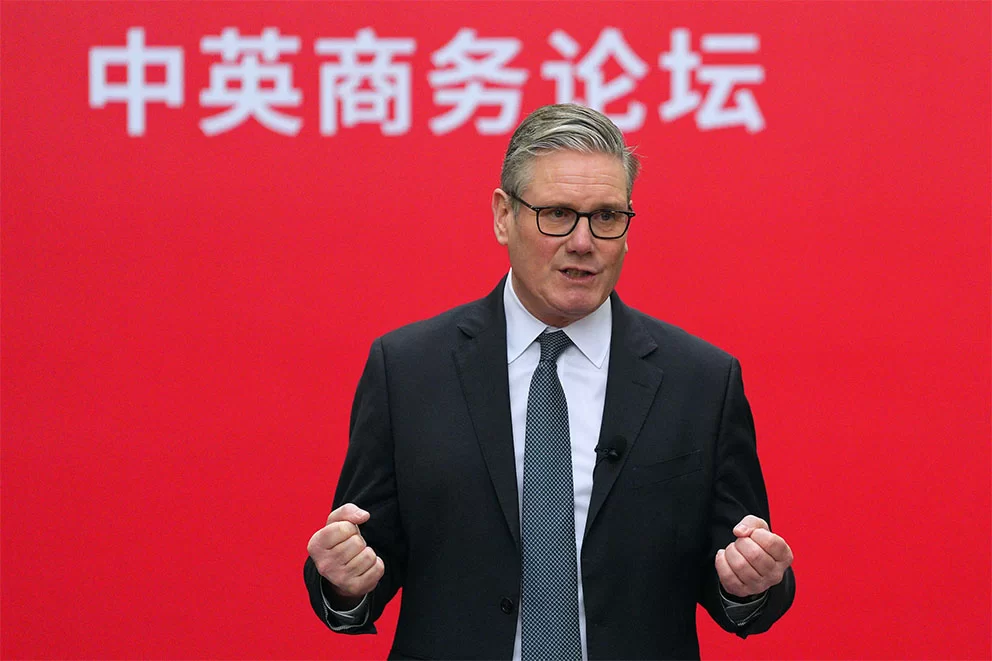
    Simultaneously, authorities are engaged in discussions with China to restructure existing debt arrangements, aiming to align payment obligations with the country’s actual financial capacity.

    Beyond debt management, the administration is implementing comprehensive tax system reforms. Noting that Suriname generates comparatively lower tax revenues than regional counterparts, the government has initiated the reform and autonomization of the tax authority. This overhaul aims to achieve more efficient revenue collection, broaden the tax base, and reduce structural deficits.

    President Simons articulated the inseparable connection between debt restructuring and tax reform, noting that together these measures should establish greater financial stability, restore confidence, and create foundations for sustainable economic development. She acknowledged that the full impact of these restructuring efforts will only become apparent in coming years as the effectiveness of new agreements in creating sustainable payment obligations and additional budgetary space becomes evident.

  • Nieuwe wet in de maak om crimineel vermogen af te pakken

    Nieuwe wet in de maak om crimineel vermogen af te pakken

    Suriname’s governing coalition has presented a transformative legislative proposal to the National Assembly designed to significantly strengthen the country’s anti-corruption framework. The Illegally Obtained Advantage Deprivation Act (Wet Ontneming Wederrechtelijk Verkregen Voordeel) represents a comprehensive legal overhaul enabling prosecutors to confiscate criminal proceeds even when concealed through sophisticated financial schemes or complex ownership structures.

    This landmark legislation supplements the existing Penal Code and Code of Criminal Procedure, addressing critical deficiencies in Surinamese law enforcement identified by international monitoring bodies. The explanatory memorandum accompanying the bill characterizes organized crime—including systemic corruption, narcotics trafficking, money laundering, and human trafficking—as an existential threat to national stability and institutional integrity.

    Prosecutors will operate under judicial supervision within an expanded investigative framework permitting exhaustive financial examinations. The scope encompasses bank accounts, cryptocurrency wallets, real estate holdings, vehicles, securities, and any assets where suspects maintain de facto control regardless of nominal ownership.

    A pivotal innovation introduces the principle of wealth discrepancy: when investigations reveal assets substantially exceeding legitimate income sources, courts may compel suspects to provide convincing explanations for these disparities. Failure to satisfactorily account for unexplained wealth creates legal presumption of criminal origins.

    The legislation also establishes value substitution seizure mechanisms, allowing authorities to confiscate equivalent-value assets when original criminal proceeds have been transferred abroad, laundered through third parties, or already expended.

    Notably, the law breaches banking confidentiality under strict judicial authorization requirements, extending disclosure obligations to accountants, insurers, and notaries public. Proponents emphasize these provisions include robust safeguards against abuse while remaining essential for investigating contemporary money laundering techniques.

    The legal framework aligns Suriname with international conventions including the UN Convention Against Corruption (UNCAC) and UN Convention Against Transnational Organized Crime (UNTOC), while implementing recommendations from the Financial Action Task Force (FATF) regarding confiscation procedures and financial investigations.

    According to official documentation, the act specifically addresses deficiencies highlighted by the Caribbean FATF, including inadequate cryptocurrency regulations, insufficient information sharing protocols, and limited capabilities for tracing and freezing illicit assets.

    Government officials position this legislation as signaling Suriname’s determination to eliminate its reputation as a safe haven for criminal proceeds, simultaneously enhancing law enforcement capabilities and restoring public confidence in judicial institutions.

  • OM  niet gekend bij initiatiefwetten: ‘Ongehoorde gang van zaken’

    OM niet gekend bij initiatiefwetten: ‘Ongehoorde gang van zaken’

    Suriname’s judicial system faces mounting tension as Prosecutor General Garcia Paragsingh has publicly denounced the government’s exclusion of the Public Prosecution Service from legislative processes directly affecting its operations. The controversy stems from two recently proposed laws that would fundamentally reshape the nation’s prosecution apparatus, including the establishment of a College of Prosecutors General.

    In an unprecedented rebuke, Paragsingh revealed that the Public Prosecution Service learned about these significant judicial reforms through media reports rather than official channels. She characterized this exclusion as “unheard of and incompatible with democratic constitutional principles,” describing the government’s approach as imposing and even dictatorial in nature.

    The proposed College of Prosecutors General has drawn particular criticism. Paragsingh questioned whether proper preliminary research was conducted regarding the prolonged duration of court cases, emphasizing that her office bears no responsibility for delays once cases reach trial proceedings. “The role of the Public Prosecution Service as dominus litis ends when the case is called to session by the bailiff,” she stated, noting that prosecutors lose all control over case duration once proceedings begin.

    Additional concerns were raised regarding plans to lower the retirement age for prosecutors to 65 while maintaining a 70-year retirement threshold for the President and members of the Court of Justice. Paragsingh challenged this discrepancy, questioning why the Prosecutor General—who is similarly affiliated with the Court of Justice—should not receive equal treatment.

    The Public Prosecution Service emphasized that careful governance requires consulting relevant institutions and stakeholders before implementing legislation that directly affects them. The organization expressed profound dismay at learning about these consequential reforms through a press conference, with Paragsingh asserting that such procedures violate fundamental democratic principles.

  • Ingrijpende wijzigingen wet over leeftijd en leiding OM

    Ingrijpende wijzigingen wet over leeftijd en leiding OM

    The governing coalition in Suriname’s National Assembly has introduced landmark legislative amendments to overhaul the Judicial Positions Act, addressing constitutional inconsistencies from previous reforms. The proposed legislation aims to realign the appointment process for the Attorney General with constitutional mandates while restructuring retirement provisions for prosecutorial officials.

    Central to the initiative is the restoration of constitutional safeguards in the Attorney General’s appointment process. The amendments explicitly require mandatory consultation with the Court of Justice before any appointment, rectifying an omission in the 2024 legislative revision that bypassed Article 141(2) of Suriname’s Constitution. This procedural reinforcement strengthens institutional checks and balances between government branches, ensuring the judiciary’s independence remains protected.

    A significant pension reform reverses the 2024 decision that raised the retirement age for all Public Prosecution Service members to 70 years. The new legislation returns the retirement age to 65 for both the Attorney General and prosecutorial staff, acknowledging the unintended consequences of equalizing retirement ages between judicial and prosecutorial branches. While prosecutors won’t revert to the previous 60-year threshold, the adjustment restores the deliberate distinction between sitting magistrates (judges) and standing magistrates (prosecutors) that lawmakers argue is essential for institutional balance.

    Notably, the proposal introduces a collegiate leadership model, replacing the single Attorney General position with a prosecutorial college. This structural change aims to distribute authority and enhance collaborative decision-making within the Public Prosecution Service.

    President Jennifer Simons expressed support for the coalition-sponsored initiative during a government press conference, indicating executive backing for the constitutional alignment. The reforms represent a deliberate effort to correct perceived imbalances in judicial-executive relations while reinforcing constitutional governance mechanisms.