标签: Suriname

苏里南

  • Panka benadrukt gezamenlijke aanpak voor duurzame groei toerisme

    Panka benadrukt gezamenlijke aanpak voor duurzame groei toerisme

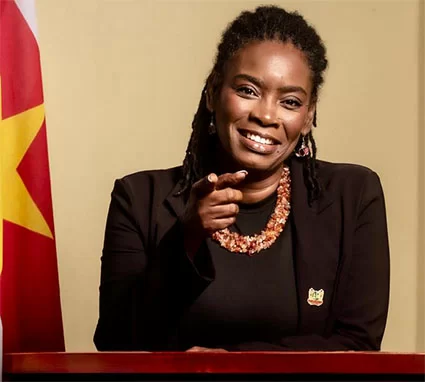
    Suriname has reinforced the strategic significance of the Dutch market for its tourism development following its successful participation in the recent Vakantiebeurs Utrecht travel exhibition. Ambassador Ricardo Panka, leading the Surinamese delegation, emphasized the critical importance of sustained public-private collaboration in driving the sector’s sustainable growth.

    During the event, Ambassador Panka articulated that the evolving global tourism landscape necessitates a redefined governmental role focused on facilitation and financial support, while private entities should spearhead innovation, implementation, and market alignment. “This synergistic approach consistently yields tangible outcomes within the tourism industry,” Panka stated, highlighting the successful joint presentation between government representatives and private entrepreneurs at the Surinamese pavilion.

    The ambassador underscored that the Netherlands remains Suriname’s primary source market for tourist arrivals, demanding consistent and targeted presence on international platforms. “With the majority of our visitors originating from the Netherlands, maintaining visibility, nurturing relationships, and continuously refining our tourism products according to market expectations becomes imperative,” he explained.

    Suriname’s exhibition strategy reflected this integrated vision, presenting the nation not merely as a travel destination but as a country committed to collaboration, sustainability, and quality. Tourism is increasingly approached as a comprehensive sector with strong linkages to cultural preservation, environmental conservation, local economic development, and job creation.

    The conclusion of the trade fair marks the beginning of deepened cooperation models, positioning the Vakantiebeurs Utrecht as both a promotional platform and a confirmation of Suriname’s strategic direction. Public-private partnerships now form a fundamental pillar supporting Suriname’s international positioning and the future trajectory of its tourism industry.

  • Guyana wijst bemiddeling VS over grensgeschil met Venezuela resoluut af

    Guyana wijst bemiddeling VS over grensgeschil met Venezuela resoluut af

    President Irfaan Ali of Guyana has emphatically declared that his nation will not enter into any diplomatic agreements with the United States or other countries to amicably resolve its longstanding border dispute with Venezuela. The statement, delivered on Saturday during a press briefing following the inauguration of the AC Marriott Hotel near Eugene F. Correia International Airport, underscores Guyana’s unwavering position on territorial sovereignty.

    “My paramount commitment remains ensuring the security of the Guyanese people and safeguarding our borders, territorial integrity, and sovereignty,” President Ali asserted. “These fundamental principles are non-negotiable and will never be compromised.”

    The declaration comes amid growing international speculation that the Trump administration might pressure both nations toward a diplomatic resolution, partially motivated by potential access to oil and gas reserves in the contested Essequibo region. While no formal request has been made by the U.S. government, analysts suggest behind-the-scenes diplomatic maneuvers could be underway.

    Guyana maintains confidence in its legal position before the International Court of Justice, where the validity of the 1899 Arbitral Award forms the cornerstone of its case. Venezuela continues to claim sovereignty over the approximately 160,000-square-kilometer Essequibo territory and adjacent maritime zones, believed to contain substantial petroleum resources.

    President Ali also addressed broader regional security concerns, warning that recent geopolitical developments—including U.S. actions against Venezuelan leadership—could significantly alter the security and democratic landscape throughout Latin America. He emphasized that Guyana must remain vigilant against international criminal networks that exploit geopolitical instability.

    The president highlighted Guyana’s significant achievement in reducing serious crime by 25.5% in 2025—reaching the lowest level in a decade—attributing this success to technological innovations in law enforcement and enhanced community cooperation programs.

  • Iran dreigt terug te slaan als de VS aanvalt

    Iran dreigt terug te slaan als de VS aanvalt

    Iran’s political leadership issued stark warnings on Sunday, threatening military retaliation against American bases and Israeli territories if provoked, as the nation grapples with its most significant anti-government demonstrations since 2022. Parliamentary Speaker Mohammad Baqer Qalibaf, a former Revolutionary Guard commander, declared that “occupied territories (Israel) and all US bases and ships will become our legitimate targets” in response to any external attack.

    The unrest originated on December 28th as economic protests against soaring prices but has rapidly evolved into direct opposition against the clerical establishment that has ruled since the 1979 Islamic Revolution. Iranian authorities have accused the United States and Israel of instigating the turmoil, with Police Chief Ahmad-Reza Radan confirming intensified security operations against what he termed “rioters.

    Human rights organization HRANA has documented 116 fatalities, primarily protesters but including 37 security personnel, though comprehensive verification remains challenging due to government-imposed internet restrictions. State television broadcast footage of dozens of body bags at a Tehran morgue, attributing the casualties to “armed terrorists” allegedly responsible for the violence.

    Israeli security officials confirmed elevated alert status amid potential US intervention scenarios, while maintaining that the protests represent an internal Iranian matter. The military establishment stated readiness to respond “with force if necessary” while monitoring developments defensively.

    The protests occur against a complex geopolitical backdrop, with Iran still recovering from last year’s twelve-day war with Israel that involved brief US intervention targeting nuclear facilities. Regional analysts note Tehran’s weakened position following setbacks to allies like Hezbollah since Hamas-led attacks on Israel in October 2023.

    President Masoud Pezeshkian utilized a televised interview to frame the unrest as foreign-engineered destabilization, pleading with families to prevent youth participation with what he characterized as “terrorists who behead people and kill others.” Simultaneously, he promised governmental willingness to address economic grievances.

    Social media circulated videos showing substantial nighttime gatherings in Tehran’s Punak district, where protesters drummed on bridge railings and metal objects in apparent defiance, while other footage captured massive crowds marching through streets with synchronized chanting. State television counter-programmed with funeral processions in western cities for security forces killed during the unrest.

  • ExxonMobil noemt Venezuela ‘niet investeerbaar’

    ExxonMobil noemt Venezuela ‘niet investeerbaar’

    In a high-stakes meeting at the White House, ExxonMobil CEO Darren Woods delivered a stark assessment of Venezuela’s investment climate during discussions with President Donald Trump, Vice President JD Vance, and Secretary of State Marco Rubio. Despite recent geopolitical shifts that saw the removal of Nicolás Maduro’s administration, Woods unequivocally stated that Venezuela remains ‘uninvestable’ without comprehensive legal and institutional reforms.

    Woods emphasized the necessity of robust investment protections, citing ExxonMobil’s two previous experiences with nationalization in the country. ‘We’ve lost our assets there twice through nationalization,’ Woods noted. ‘Returning for a third time requires significant changes from what we’ve observed historically and currently.’ The energy giant insists on fundamental modifications to Venezuela’s oil and gas legislation before considering reentry, contingent on deploying technical teams to evaluate industry infrastructure under adequate security conditions.

    The meeting revealed divergent perspectives among major energy corporations. Chevron, currently the only U.S. oil major operating in Venezuela, expressed optimism about rapidly scaling production. Vice Chairman Mark Nelson projected an immediate doubling of output through joint ventures with state-owned PDVSA, with further growth anticipated within 18-24 months, though acknowledging dependence on political and economic stability.

    Meanwhile, ConocoPhillips continues seeking billions in compensation from Venezuela for past nationalizations. CEO Ryan Lance emphasized the need for PDVSA reorganization and the crucial role of financial institutions in facilitating infrastructure investments.

    President Trump conveyed confidence in recovering investments and forging a new beginning, while industry leaders maintained that Venezuela’s substantial oil reserves remain inaccessible without fundamental reforms that guarantee investor protection and sustainable operational frameworks.

  • Bouva: Diplomatie moet tastbare resultaten opleveren voor Suriname

    Bouva: Diplomatie moet tastbare resultaten opleveren voor Suriname

    Suriname’s Foreign Minister Melvin Bouva has issued a compelling mandate for diplomatic reform, declaring that diplomacy must transcend ceremonial functions to deliver concrete policy results and measurable societal benefits. The declaration came during the closing ceremony of the Suriname Diplomatic Course 2025, where certificates were awarded to 60 participants—35 attending physically and 25 via online platforms.

    Minister Bouva, overseeing Foreign Affairs, International Trade, and Cooperation, articulated a vision where diplomatic missions must actively serve as instruments for economic growth, investment attraction, climate financing, and regional stability. The minister emphasized that in an evolving global landscape, diplomats must pivot from traditional protocol duties to becoming active agents of national development.

    The comprehensive training program, administered by the Suriname Diplomatic Institute (SDI), equipped participants with essential skills in diplomatic protocol, negotiation techniques, economic diplomacy, and cultural relations. Dean Silochana Achthoven-Bhaghoe confirmed the curriculum addressed Suriname’s strategic positioning within international organizations.

    Foreign Affairs Director Miriam Mac Intosh characterized the course as an intensive preparation for diplomatic service, urging graduates to continuously invest in professional development. Trainer Rose-Ann Franklin highlighted critical competencies including protocol adherence, analytical capabilities, professional presentation, and precise reporting—emphasizing that diplomats serve as Suriname’s eyes and ears abroad.

    Minister Bouva concluded with a performance-oriented challenge: certification represents not an endpoint but a commitment to project initiation and execution. The new diplomatic corps must bridge the gap between international engagement and tangible national progress.

  • Het Venezolaanse leger heeft de sleutel tot de toekomst van het land in handen

    Het Venezolaanse leger heeft de sleutel tot de toekomst van het land in handen

    Following the dramatic capture of Venezuelan President Nicolás Maduro by U.S. special forces, the Bolivarian National Armed Forces (FANB) confronts a pivotal moment that will determine Venezuela’s political future. The military operation, which extracted Maduro from Fort Tiuna—the nation’s largest military complex—has exposed significant vulnerabilities in Venezuela’s defense capabilities and created a power vacuum that demands strategic decision-making.

    For nearly three decades, the FANB served as the primary power broker for the Chavez and Maduro regimes, receiving extensive political appointments including ministerial positions, governorships, and control over state enterprises in exchange for enforcing authoritarian rule. This symbiotic relationship transformed Venezuela into a security state where military authority superseded civilian institutions.

    The current interim government under Delcy Rodríguez, despite enjoying support from the Trump administration, requires military backing to maintain stability. President Trump’s selection of Rodríguez over opposition leader María Corina Machado reflects calculated recognition that only a candidate acceptable to military leadership can navigate this transition.

    Military commanders now face compelling incentives to negotiate: the demonstrated superiority of U.S. military technology creates vulnerability to further interventions, while maintaining political influence requires accepting previously unthinkable concessions. These include distancing from narcotrafficking allegations, accepting U.S. energy companies’ control over Venezuelan oil resources, reducing repression of civilian populations, and fully supporting Rodríguez’s interim government.

    The military’s cooperation essentially means endorsing U.S.-Venezuela agreements that would establish a stabilization framework similar to American partnerships with military regimes in Egypt, Pakistan, and Thailand. Resistance risks triggering additional U.S. military actions that would further erode the military’s credibility and exacerbate Venezuela’s political and social instability.

    With limited options, the FANB’s leadership must choose between preserving some political influence through cooperation or facing complete marginalization through confrontation. Their decision will ultimately determine whether Venezuela’s transition occurs through negotiation or continued conflict.

  • Universiteitsinstituut Kinderrechten lanceert folder bescherming van kinderen

    Universiteitsinstituut Kinderrechten lanceert folder bescherming van kinderen

    The University Institute for Children’s Rights at Suriname’s Anton de Kom University has launched a groundbreaking informational brochure designed to empower communities in identifying and preventing child abuse and domestic violence. This comprehensive resource provides crucial guidance for recognizing warning signs and taking appropriate action when children are at risk.

    The newly published document offers detailed explanations of what constitutes domestic violence against children, outlining specific behavioral and physical indicators that may signal abuse. It provides step-by-step instructions for concerned citizens to follow when they suspect a child is in danger, including legal procedures for obtaining protective orders through the judicial system.

    Additionally, the brochure features an extensive directory of essential support services and emergency contacts. Key institutions highlighted include local police departments, the Victim Support Bureau, Family Law Affairs Bureau, and the national Mi-helpline (accessible by dialing 123). This centralized information aims to streamline access to critical resources during emergency situations.

    Professor representatives from the Institute emphasized the importance of community vigilance, stating: ‘We must collectively refuse to turn a blind eye to signs of child maltreatment. This initiative represents our commitment to creating protective networks around vulnerable children through education and accessible reporting mechanisms.’

    The resource has been specifically designed as an accessible tool for parents, caregivers, educators, and community members, providing clear, actionable information without technical jargon. The digital version remains available for public download, ensuring widespread accessibility across Surinamese society.

  • Dossier houtexport  3: Waarom het vonnis in houtdossier ernstige vragen oproept…

    Dossier houtexport 3: Waarom het vonnis in houtdossier ernstige vragen oproept…

    A controversial court ruling in Suriname has compelled the state to issue phytosanitary certificates for timber shipments that demonstrably contradict their declared contents, creating both legal and administrative turmoil. Presiding Judge Robert Praag’s decision explicitly permits international non-compliance despite available alternatives, prioritizing economic interests over regulatory integrity.

    The judgment reveals the court’s awareness of the core issue: the certificates do not match the actual shipments. This represents not merely an interpretive discrepancy or administrative oversight, but objectively incorrect documentation. Nevertheless, the state must now issue these certificates under penalty of a SRD 1 million per hour fine.

    Historical context demonstrates this is not a sudden development. As early as August 2022, previous leadership at the Ministry of Agriculture, Livestock and Fisheries (LVV) and the National Plant Protection Organization (NPPO) identified systematic export of different wood species under the trade name ‘Mora roundlogs’ to India, violating both international phytosanitary regulations and India’s explicit import requirements. Internal correspondence shows the technical authority (NPPO) opposed issuing certificates for incorrect shipments, with international partners explicitly rejecting a proposed six-month ‘grace period’ in 2022.

    The court had several legally defensible alternatives: upholding international obligations as paramount, redirecting economic damages to civil proceedings against the state for years of failed policy, or providing temporary relief without legitimizing incorrect documentation. Instead, the ruling accepts the factual inaccuracy of the certificates based on the argument of irreversible economic damage.

    This decision shifts the burden of years of failed governance onto the technical integrity of the NPPO, Suriname’s international reputation, and its relationship with India. Phytosanitary certificates represent legal-international instruments rather than commercial documents, making deliberate issuance of incorrect documentation institutional falsehood rather than pragmatism.

    India’s perspective differs significantly from Suriname’s internal discussions. Indian authorities have repeatedly clarified that trade names are insufficient, only correct botanical names are permitted, and deviations are unacceptable regardless of internal problems in exporting countries. A national court ruling does not alter these requirements.

    The judgment has postponed rather than resolved the underlying issue. While exports remain largely on hold and inventories accumulate, the core problem persists: structural non-compliance cannot be normalized through judicial order. The LVV ministry has complied with the ruling under protest while simultaneously filing an appeal, recognizing that in a constitutional state, law should never be exchanged for convenience—not even once.

  • Zonnige perioden afgewisseld met regen

    Zonnige perioden afgewisseld met regen

    The persistent rainy season continues to dominate weather patterns, creating warm and humid conditions across the region. Daytime temperatures are expected to range between 29-31°C (84-88°F), while evening and overnight hours will see temperatures dropping to approximately 23-24°C (73-75°F).

    Morning conditions will feature sunny intervals with light cloud cover across many areas. As the day progresses, cloud coverage is forecast to gradually increase. During afternoon and early evening hours, scattered rain showers and thunderstorms may develop throughout the country, with the highest precipitation probability occurring in inland regions. Coastal areas remain susceptible to isolated showers as well.

    Moderate northeastern winds will provide temporary relief from the heat, though high humidity levels may still create muggy and oppressive conditions. During storm activity, winds may become gusty and unpredictable, potentially reducing visibility temporarily. The combination of elevated humidity and intermittent rainfall characterizes typical weather patterns for this phase of the rainy season.

    Residents and visitors should prepare for rapidly changing conditions, particularly during afternoon hours when thunderstorm activity is most likely. Those with outdoor activities planned should monitor weather developments and consider alternative arrangements when precipitation occurs.

  • Senaat beperkt Trumps militaire acties in Venezuela

    Senaat beperkt Trumps militaire acties in Venezuela

    In a significant bipartisan move, the U.S. Senate has advanced measures to curtail President Trump’s military authority regarding Venezuela. The procedural vote of 52-47 saw several Republicans joining Democrats to consider a resolution prohibiting further military deployment without congressional approval.

    This development coincides with Venezuela’s announcement of releasing a substantial number of political prisoners—both Venezuelan and foreign nationals—on Thursday. Jorge Rodríguez, a leading Venezuelan politician, described this as a unilateral peace gesture, addressing a long-standing opposition demand. However, human rights organizations emphasize that hundreds remain detained, with local monitoring group Foro Penal documenting 863 political prisoners including leaders, activists, and journalists.

    President Trump, expressing surprise at the Senate vote, criticized supporting senators for ‘diminishing presidential power to protect the United States.’ Meanwhile, in a New York Times interview, Trump indicated U.S. control over Venezuela and regulation of oil revenues could extend ‘well beyond a year,’ discussing rebuilding Venezuela ‘in a very profitable manner.’ He noted his relationship with interim President Delcy Rodríguez, an ally of deposed leader Nicolás Maduro, was ‘very good.’

    On the regional front, Trump’s stance toward Colombia appears softening. Following previous tensions, he invited President Gustavo Petro to Washington after a telephone conversation described as ‘a great honor’ by Trump, who praised Petro’s diplomatic tone.

    Economically, Trump announced plans Tuesday to refine and sell up to 50 million barrels of Venezuelan oil currently under U.S. blockade. Venezuela possesses the world’s largest proven oil reserves yet suffers a profound economic and humanitarian crisis that has driven millions to flee. The White House has scheduled a Friday meeting between Trump and executives from ExxonMobil, ConocoPhillips, and Chevron—companies with Venezuelan experience—to discuss increasing the country’s oil production, though none have yet commented.

    The resolution faces legislative challenges requiring House approval and a two-thirds majority in both chambers to override any presidential veto. Nevertheless, it represents rare Republican resistance to White House policy as Venezuela’s complex situation continues evolving with rapid political, military, and economic developments.