标签: Saint Vincent and the Grenadines

圣文森特和格林纳丁斯

  • SVG-Taiwan ties secure despite shift to ‘performance‑based’ diplomacy

    SVG-Taiwan ties secure despite shift to ‘performance‑based’ diplomacy

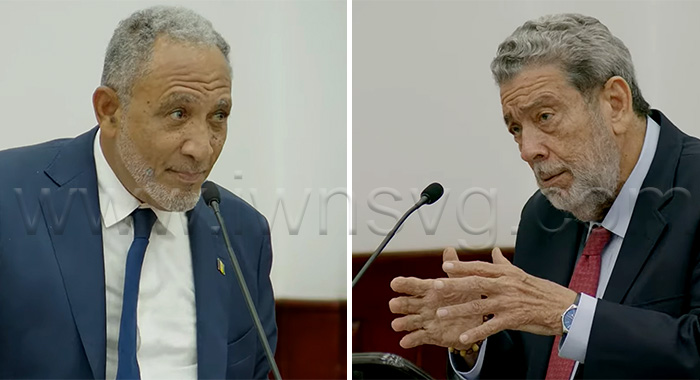
    When the New Democratic Party (NDP) won general elections in St. Vincent and the Grenadines (SVG) last November, it signaled a new direction for the Caribbean nation’s foreign engagement. That policy shift was laid out clearly to lawmakers this week by Foreign Minister Dwight Fitzgerald Bramble, who outlined the government’s pivot to a results-driven “performance-based diplomacy” model that prioritizes tangible domestic development gains over traditional ceremonial diplomacy — while explicitly confirming that the 45-year diplomatic relationship with Taiwan will remain unchanged.

    Speaking in Parliament on April 21 in response to a question from opposition senator and former foreign minister Keisal Peters, Bramble opened with a straightforward confirmation of SVG’s commitment to Taipei. “We appreciate and value the relationship that we have built over the last 45 years with the government and people of Taiwan,” he said, adding that the administration is preparing to take part in enthusiastic celebrations of the sapphire anniversary of diplomatic ties, scheduled for August 15.

    Bramble, a career former diplomat whose portfolio also covers foreign trade, foreign investment and diaspora affairs, explained that the NDP’s new diplomatic framework marks a deliberate break from the previous model, which centered primarily on diplomatic presence and protocol. Under the revised approach, overseas missions and consulates will no longer be assessed by the flags they fly or ceremonial events they attend, but by the tangible economic and social value they generate for SVG’s 110,000 residents.

    “Foreign policy is not ceremonial, and I’m sure we all know this,” Bramble told parliamentarians. “It is economic policy, social policy and national security policy projected beyond our borders.” For a small island developing state like SVG, which lacks global military or geopolitical influence, the priority of foreign engagement must be advancing the welfare of the national population, he added. “We have to make sure that our people cannot only eat and survive, but they can thrive and develop… with a decent standard of living. That is exactly what our overseas missions will be doing under the guidance of this new government.”

    Under the new model, SVG’s overseas diplomatic posts — particularly those in North America and the United Kingdom, which host large segments of the SVG diaspora — will be repositioned to act as active engines of economic development. Key priorities for diplomatic engagement include facilitating trade connections for local exporters, attracting high-quality foreign investment in targeted high-growth sectors including renewable energy, sustainable tourism, the blue economy and agro-processing, and expanding market access for Vincentian goods and services, with a particular focus on diaspora niche markets for creative industries, ICT services and skilled professional services.

    Multilateral diplomatic participation will also be tied to clear, actionable national priorities, Bramble said, with core advocacy focused on climate financing, global recognition of small island developing states’ economic vulnerability, and expanded access to concessional lending.

    The administration is also reframing its engagement with the global SVG diaspora, treating the community as a strategic economic partner rather than merely a source of remittances. Bramble noted that the government will work to mobilize diaspora members as investors, entrepreneurs, mentors and contributors of professional skills and expertise to support domestic development.

    Turning again to the question of SVG’s relationship with Taiwan, Bramble noted that a large community of Vincentian students and diaspora members already reside in Taiwan. The government will work to streamline support for Vincentian students to complete their education, he said, while leveraging the community’s connections to turn any potential brain drain into a “brain gain” that advances national development. As with all of SVG’s international partnerships, the NDP administration will work to deepen ties with Taiwan and translate the relationship into measurable, tangible benefits for SVG citizens, he added.

    The confirmation of continued relations with Taiwan closes a chapter of uncertainty that stretches back to 2016, when the NDP, then led by now-retired leader Arnhim Eustace, announced that it would cut diplomatic ties with Taipei if elected. Since winning November’s election in a landslide, the party has fully reversed that earlier position: Prime Minister Godwin Friday met with Taiwan’s ambassador to Kingstown as one of his first diplomatic engagements after taking office, and the administration appointed Taiwan-trained Mandarin-speaking journalist Kenton X. Chance, who holds a master’s degree in international affairs, as SVG’s resident ambassador to Taipei in March. Later that month, Deputy Prime Minister St. Clair Leacock led a four-member official delegation to Taipei, where he publicly reaffirmed the new government’s commitment to maintaining the long-standing bilateral relationship.
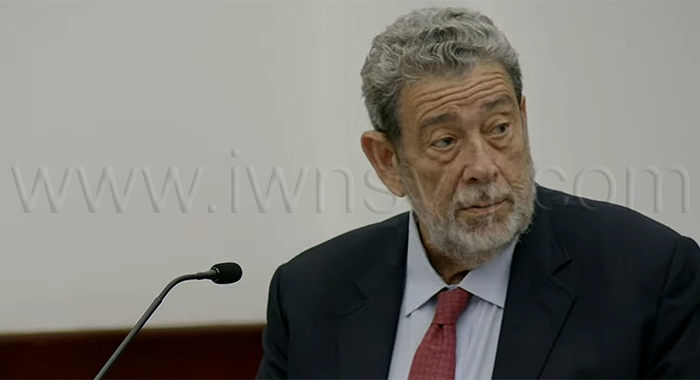
  • Full probe into wiped consulate computer, London trust fund row — Bramble

    Full probe into wiped consulate computer, London trust fund row — Bramble

    In the wake of the November general election that brought the New Democratic Party to power, St. Vincent and the Grenadines’ foreign affairs chief has launched a thorough public investigation into two unusual administrative irregularities at key overseas diplomatic missions.

    Foreign Minister Dwight Fitzgerald Bramble first outlined the troubling findings to lawmakers during a Tuesday parliamentary session, then expanded on the details during an appearance on Hot97 FM the following day, emphasizing his commitment to full transparency and public accountability for the new administration.

    Shortly after taking up his appointment as Consul General to New York in March, Roland “Patel” Matthews reported a shocking discovery to Bramble: every piece of data stored on the consulate’s primary computer system had been completely erased. According to Bramble, no records of previous consular operations, administrative work, or diplomatic activities were left on the device when Matthews arrived. Access to the consulate’s computer system is restricted to the sitting Consul General via personal password protection, similar to how the foreign minister controls access to his own ministerial devices, Bramble explained.

    Matthews succeeded Rondy “Luta” McIntosh, a nominee of the previous Unity Labour Party administration who took up the post in August 2022. Bramble confirmed that he has not yet spoken directly to McIntosh about the data wipe, but made clear that the former consul general will be questioned as part of the probe. The foreign minister declined to speculate on whether criminal charges will be filed against any individual, noting he is not a legal official and the investigation remains in its early stages. At present, the government is assembling a team of competent experts including specialized IT professionals to conduct a forensic review of the system and map out a full timeline of events.

    Beyond the New York consulate data issue, Bramble also revealed that the country’s new High Commissioner in London has been blocked from taking control of a charitable trust fund created to support children across the nation. The fund, which receives ongoing financial support from European benefactors, is formally managed through the London High Commission and requires two authorized signatories for all transactions: one being the sitting High Commissioner, and a second who was an advisor to the previous Unity Labour Party government.

    Bramble voiced public confusion over why the former government advisor was added as a co-signatory to the charitable account in the first place. Now, when current High Commissioner Brereton Horne and the new administration attempt to update the signatory list and bring the fund fully under official diplomatic control, they have faced stiff resistance from both the former High Commissioner and the ex-government advisor. Bramble said the deliberate obstruction creates the unsettling impression that the outgoing officials view the charitable fund as personal property, rather than a public resource for vulnerable children. “These things must stop,” he declared.

    Bramble framed the decision to publicly disclose both incidents as a core fulfillment of the new Godwin Friday government’s campaign promise of open governance and accountability to voters. “The people voted me to work for them,” he said. “As long as I am there, I am going to do what I have to do to make sure that I serve the people.” He added that he welcomes fair, objective criticism of the administration’s work, noting that no government is perfect and there is always room to improve. Uncovering administrative irregularities inherited from the previous government, he argued, is a necessary first step to building meaningful progress for the nation moving forward.

  • Gonsalves opposes motion on national dev’t bank

    Gonsalves opposes motion on national dev’t bank

    A heated parliamentary debate has emerged in St. Vincent and the Grenadines over the New Democratic Party-led government’s plan to establish a new national development bank, a proposal that is drawing sharp pushback from the country’s newly ousted former prime minister. Opposition leader Ralph Gonsalves, whose Unity Labour Party exited power last November after holding office for 25 years, has publicly rejected the motion introduced by government senator Chelsea Alexander, calling for a full rethink of the initiative on the floor of parliament.

    In introducing the proposal, Alexander framed the new national development bank as a core pillar of the NDP government’s agenda to restructure national economic institutions to remove long-standing barriers to inclusive growth. She emphasized that the bank would address a critical gap in the country’s financial ecosystem: young entrepreneurs and innovators operating in emerging industries are frequently locked out of traditional commercial lending, leaving promising small businesses unable to get off the ground. By offering specialized, flexible financing tailored to these groups, the new bank would bridge this capital gap, Alexander argued. Beyond funding, she positioned the institution as an open invitation for young Vincentians to challenge conventional economic thinking, embrace innovation and entrepreneurship, and reimagine the country’s traditional industries for the modern era.

    But Gonsalves, who served as finance minister for 16 years during his administration, drew on decades of institutional history in SVG to argue that the current proposal is unnecessary and poorly conceived. He outlined a long history of failed development banking attempts in the country, dating back to a 2000 initiative launched by the then-NDP administration. That effort saw all assets — including a large portfolio of non-performing loans — from the 1960s-era Development Corporation transferred to a new development bank capitalized at just EC$5 million. Gonsalves noted that the bad loans far outstripped the new bank’s capital base, leaving the institution insolvent from its launch, a stillborn project that never delivered on its promises.

    When Gonsalves’ Unity Labour Party took office in 2001, the government inherited two insolvent state financial institutions: the failed development bank and the National Commercial Bank (NCB). To resolve the crisis, the ULP restructured the sector: viable development bank loans were transferred to NCB, a special entity was created to manage non-performing assets, and a network of targeted, sector-specific financing institutions was built to replace the failed single development bank model. When the majority stake in NCB was later sold to the Bank of Saint Lucia, the new ownership phased out the micro-enterprise lending program, prompting the ULP to expand the targeted network instead of reestablishing a central development bank.

    Today, that existing ecosystem includes the Student Loan Company, the Farmer Support Company launched in 2014 with EC$5 million in seed capital, and PRYME — the Promoting Youth Micro-Enterprises initiative that offers grants up to EC$40,000 to young founders. It also includes the ULP’s widely accessed 100% mortgage program for public servants. Gonsalves argued that this distributed, fit-for-purpose network already serves all the functions the proposed national development bank claims to fill, across every key sector from agriculture and education to housing and creative industries.

    He further warned that creating a new, standalone national development bank would carry unnecessary administrative costs, and could even force the government to shutter the successful existing targeted institutions to fund the new bank. Gonsalves also raised critical questions about capitalization, pointing out that a development bank cannot operate without secure, low-cost source of capital to offer concessional lending while covering operating costs and expected non-performing loans. He noted that Alexander has not outlined a clear plan for securing this low-cost funding, calling a bank without sufficient capital a logical contradiction.

    Responding to the government’s reference to successful development banks in other regional Organization of Eastern Caribbean States (OECS) nations, Gonsalves argued that SVG’s existing institutional landscape already meets the country’s needs, and that existing commercial banks already actively seek bankable projects across all the sectors the proposal names. He also pushed back on the NDP’s framing of the bank as a key campaign promise, noting that campaign pledges are often framed broadly, but governing requires practical, grounded policy that works within the country’s actual economic context. Gonsalves clarified that he supports the government’s broad goals of inclusive economic development and supporting small and medium enterprises, but cannot endorse the proposal in its current form.

    The parliamentary debate on the motion was not completed before the statutory 5 p.m. deadline for private members’ business, and will resume at a future sitting of parliament.

  • PM rejects claim his MPs embarrassing him in Parliament (+video)

    PM rejects claim his MPs embarrassing him in Parliament (+video)

    A sharp political exchange has unfolded in St. Vincent and the Grenadines’ House of Assembly, where Prime Minister Godwin Friday has forcefully pushed back against allegations from Opposition Leader Ralph Gonsalves that unruly conduct by ruling party lawmakers is undermining his authority. The clash erupted during Tuesday’s debate on a private member motion — tabled by Government Senator Chelsea Alexander — that calls for the establishment of a new national development bank.

    During his opening remarks on the motion, Gonsalves centered a portion of his argument on the disruptive behavior of government backbenchers. He claimed that frequent unscheduled interjections and constant cross-talk from the ruling party benches not only prevented Friday from speaking on his own behalf but also weakened the prime minister’s public standing, embarrassing him before the legislative body and the public.

    The debate was ultimately suspended before a vote could take place, as the allocated time for private member motions expired before deliberations concluded. It was during this adjournment that Friday issued his sharp rebuttal to Gonsalves’ claims, turning the criticism back on the opposition leader.

    “The Honourable Leader of the Opposition talks about members embarrassing me. On November 27, the members on this side of the House embarrassed him. And let them continue,” Friday stated publicly, dismissing Gonsalves’ characterization outright. The prime minister went on to accuse Gonsalves of underestimating the competence and impact of ruling party lawmakers, noting that volume of speech does not equate to quality of argument. “It’s not who talk loud is who talk best,” he added, teasing that more unexpected political developments are on the horizon that Gonsalves has not anticipated. “And… what we have seen is that he got a surprise that he didn’t know was coming, and there’s more to come.”

    Observers widely interpret Friday’s reference to an unexpected surprise as tied to the ruling administration’s last-minute decision to postpone debate on a proposed constitutional amendment. The amendment had been listed on the House’s official Order Paper, prompting Gonsalves to launch a public campaign against the change just one week prior, immediately after the Order Paper was published.

    Gonsalves has alleged that the government’s push to amend the Constitution and national election law is a self-serving “insurance policy” designed to protect the prime minister and Foreign Minister Dwight Fitzgerald Bramble. The opposition leader’s Unity Labour Party has filed legal petitions challenging the eligibility of both Friday and Bramble to contest the November 2024 general election, a legal dispute that remains unresolved.

    Tuesday’s debate was marked by repeated disruptions from both sides of the aisle, with House Speaker Ronnia Durham Balcombe repeatedly issuing appeals for lawmakers to curb cross-talk and allow speakers to deliver their remarks without interruption. Gonsalves doubled down on his claim during his contribution, arguing that when government lawmakers interjected over his speech to respond on Friday’s behalf, it only reinforced his view that the conduct was embarrassing the prime minister.

    Beyond rejecting the embarrassment claim, Friday expanded his critique to Gonsalves’ broader approach to policy and governance, particularly in the context of the national development bank proposal. The prime minister framed the exchange as a reflection of deep ideological and policy divides between the ruling and opposition blocs, accusing Gonsalves of being stuck in outdated thinking.

    “Everything that I heard from the Honourable Leader of the Opposition displays a stunning lack of imagination,” Friday said. “You can’t govern based on simply everything that you saw in the past; you have to plan for the future. And that is what we bring to the table… a fresh approach, a new way of looking at things, more creativity, more diligence, hard work and putting the people of this country first.”

    Debate on the national development bank motion will resume at a later date, which will be finalized after Speaker Balcombe consults with Prime Minister Friday, the Clerk of the House, and motion sponsor Senator Alexander.

  • SVG passes CARICOM law on more secure air travel

    SVG passes CARICOM law on more secure air travel

    On Tuesday, April 21, 2026, St. Vincent and the Grenadines (SVG) passed a landmark piece of national security legislation: the Advanced Passenger Information and Passenger Name Record Bill 2026. While Deputy Prime Minister and National Security Minister St. Clair Leacock, who also holds oversight for immigration, acknowledged the legislation is far from the most attention-grabbing policy passed by Parliament, he emphasized it is one of the most critical steps the country has taken to modernize border protection and improve cross-border travel for legitimate visitors.

    The new law replaces SVG’s outdated Advanced Passenger Information Act, building a far more comprehensive regulatory framework that governs the collection, cross-border transmission, secure sharing, encrypted storage, and official oversight of Advance Passenger Information (API) and Passenger Name Record (PNR) data for all travelers entering, departing, or transiting through SVG’s ports and airports. It is not an isolated policy change; instead, it forms part of a harmonized model law adopted across the 15-nation CARICOM bloc, designed to align regional border control and security protocols into a single, coordinated system.

    Leacock told lawmakers that SVG, a small island developing state, faces outsized border management challenges amid growing travel volumes. Official travel data shows roughly 32,000 travelers arrived and departed from SVG in both February and March 2026, with more than 11,500 people entering via air travel alone and nearly 12,000 air departures recorded in the month. For a nation of SVG’s size, these volumes create immense responsibility for security officials, requiring modernized data-driven systems that mitigate transnational crime risks while keeping travel processes efficient and convenient for law-abiding passengers.

    Leacock noted that modern airline travelers consistently prioritize two core outcomes: fast, frictionless immigration processing, and robust safety protocols that do not compromise public security. The new API/PNR framework, he argued, directly addresses both priorities by enabling pre-arrival risk assessments that speed up processing for low-risk travelers while flagging potential threats before a plane or vessel ever departs for SVG.

    Multiple regional and international security and aviation bodies will play key roles in upholding the new framework. The Trinidad-based CARICOM Implementation Agency for Crime and Security (CARICOM IMPACS) hosts the regional API/PNR database and manages core supporting security systems, while Barbados’ Joint Regional Communication Centre leads on-ground operational data management. International bodies including Interpol and the International Air Transport Association (IATA) will also participate as part of the global security and aviation network that underpins the system.

    Leacock stressed that air travel and border security are only as strong as the weakest link in the regional and global chain, requiring every participating state to take full ownership of its own segment of the system. He highlighted recent high-stakes security incidents across the Caribbean that underscore the urgent need for coordinated modern border controls: a fatal shooting of a police officer in Trinidad and Tobago that was followed by the disappearance of more than 60 firearms, which prompted Port of Spain to tighten port controls and alert neighboring countries including SVG to increase screening for inter-island travelers. In another incident, a police officer in Grenada was attacked and his weapon stolen, with the suspect later apprehended in SVG. Closer to home, SVG authorities recently intercepted 396 packages of cocaine worth an estimated $12 million from a vessel off the country’s Leeward Coast – a seizure that creates ongoing security risks as criminal groups seek to recover the lost contraband.

    “These are not artificial constructions,” Leacock told Parliament. “They are real-life situations. Border security is a very important matter for the peace, security, well being of Vincentians.”

    Under the new law, border security is formally defined as protecting national borders from the illegal movement of weapons, drugs, contraband, and people, while actively facilitating lawful trade and travel. The core function of the new framework is to ensure that by the time a passenger boards an aircraft or vessel bound for SVG, local authorities already know the traveler’s identity, purpose of travel, and any potential security risk they may pose.

    The legislation places clear mandatory obligations on captains of aircraft and vessels, or their designated agents, to submit complete API and PNR data in standardized formats via the CARICOM electronic manifest single window platform. Strict deadlines are set for pre-departure and pre-arrival data submissions, which allows security officials to complete risk assessments ahead of arrival, and to verify or correct inaccurate data before the traveler reaches SVG.

    To address privacy concerns, the law includes strict provisions requiring confidential handling of all traveler data, with access restricted exclusively to designated authorized security agencies, and only granted following a formal written request and approval from SVG’s competent national authority. It also enshrines individual rights: travelers can request access to their own API data to verify its accuracy, challenge incorrect information, request corrections, and seek legal redress in cases of errors such as mistaken identity.

    Leacock framed the passage of the bill as part of a broader global technological shift reshaping modern travel and border security. He referenced recent briefings from Caribbean Bank Note, the manufacturer of SVG’s passport booklets, on emerging biometric and electronic passport technologies, including chip-enabled documents designed for fast machine reading and extended durability. Looking ahead, the SVG government also plans to expand processing capacity at Argyle International Airport, adding self-service kiosks that allow travelers to scan digital documents and mobile credentials to complete immigration formalities far faster than traditional manual processing.

  • Senator presents motion urging support for dev’t bank

    Senator presents motion urging support for dev’t bank

    Following the New Democratic Party (NDP)’s landslide victory in St. Vincent and the Grenadines’ (SVG) November 27 general election, the new administration has moved forward on one of its core campaign pledges: establishing a dedicated national development bank to unlock broad-based economic growth.

    Government Senator Chelsea Alexander tabled the long-awaited motion before SVG’s Parliament this week, framing the institution as a critical policy tool to strengthen the backbone of the country’s economy — small and medium-sized enterprises (SMEs). Unlike larger economies dominated by multinational conglomerates, SVG’s economic activity is driven by local micro and small businesses, from neighborhood beauty salons and family-owned restaurants to independent food vendors and creative ventures, Alexander noted, highlighting these local enterprises as living testaments to Vincentian resilience and entrepreneurial spirit.

    The push for a dedicated development bank is not a new concept for SVG, and the proposal draws on the country’s decades-long experience with development financing. Prior to 2000, these functions were handled by the St. Vincent and the Grenadines Development Corporation (DEVCO), but its overly broad mandate diluted the focus on targeted development lending. In 2000, the then-NDP government established a standalone development bank by law, with a clear mission to support enterprises across agriculture, fishing, tourism, housing and industry. That changed in 2009, when the institution was merged with the former National Commercial Bank to form the current Bank of St. Vincent and the Grenadines, creating a hybrid commercial-development entity. While the merger strengthened the country’s commercial banking sector, Alexander explained, it sidelined the core development mandate: development financing became increasingly narrow over time, leaving early-stage entrepreneurs, high-risk projects and emerging sectors locked out of affordable capital.

    Alexander emphasized that this gap is not a failure of commercial banks, which by design are risk-averse and prioritize profit generation. Instead, it creates a clear need for a specialized public institution focused on bridging market gaps to advance national development. The motion tabled this week does not call for immediate creation of the bank. Instead, it asks Parliament to greenlight a full comprehensive review of SVG’s existing development finance system, after which the government will present a detailed policy paper or draft legislation outlining a modern, targeted development finance framework aligned with the NDP administration’s four core economic pillars: agriculture, the blue economy, tourism, and the new creative and digital economy.

    The proposed bank would fill critical unmet needs across every key sector of SVG’s economy, Alexander argued. For rural communities dependent on farming and fishing, where livelihoods are concentrated in the newly designated special development zones of North Leeward, North Windward and the Southern Grenadines, the bank would provide fair, flexible credit to help farmers purchase modern equipment, scale operations, and compete in regional markets, while enabling fishers to invest in new boats, refrigerated storage, vessel tracking systems and critical communications tools. For the tourism sector, the bank would offer more than just capital: it would also provide targeted technical assistance and training to help small tourism projects succeed. Most notably, the bank would address a growing barrier for young Vincentians entering emerging sectors such as podcasting, social media influencing, graphic design and co-working, where entrepreneurs often do not meet the strict collateral requirements of traditional commercial lenders. By offering flexible funding tailored to these new ventures, Alexander said the institution would invite young people to innovate, reimagine traditional industries, and drive long-term economic diversification.

    Beyond direct lending, the national development bank would serve a range of additional key functions: it would act as a conduit for international and regional development funding, run national outreach initiatives including entrepreneurship internships, and strengthen public-private partnerships to advance sustainable, inclusive growth. Alexander framed the bank as a deliberate departure from a laissez-faire approach to economic growth, noting that the institution would ensure progress is intentionally designed, strategically funded, and equitably shared across all communities, guaranteeing that no sector, region or citizen is left behind.

    When Parliament adjourned for the day Tuesday, debate on the motion had not concluded. By parliamentary rules, debate on private member’s motions must end by 5 p.m. local time. Following the adjournment, Prime Minister Godwin Friday, leader of the NDP, requested that debate be paused until a future date to be announced at a later time. Alexander called for bipartisan support for the measure, noting that a national development bank was a core campaign promise across both major political parties: the NDP made the proposal a central pledge to voters during the 2024 general election, which saw the incumbent Unity Labour Party (ULP) voted out of office in a historic 14-1 split of the 15-seat Parliament.

  • Gov’t announces more scholarship opportunities in Taiwan

    Gov’t announces more scholarship opportunities in Taiwan

    A new set of fully funded master’s degree scholarship opportunities exclusively for Vincentian applicants has been announced by the Ministry of Foreign Affairs, offered by National Chi Nan University (NCNU) based in Taiwan. This program stands apart from existing scholarship arrangements managed through the St. Vincent and the Grenadines (SVG) central government, opening an additional pathway for higher education access for students from the Caribbean nation.

    Three distinct academic tracks are available through the initiative: a Master of Business Administration, a master’s program in Information Technology, Innovation and Application, and a graduate degree in Intelligent Semiconductor and Green Technology. All coursework is conducted entirely in English, with each program spanning a standard two-year duration. The full scholarship package covers 100% of tuition costs, includes free on-campus housing for the full program period, and provides recipients with a steady monthly stipend of $200 USD to cover day-to-day living expenses.

    To qualify for consideration, candidates must hold a validated bachelor’s degree from an accredited higher education institution, and submit official documentation proving they have access to at least $3,000 USD in financial resources, whether via personal bank statements or a confirmed sponsorship agreement. It should be noted that awarded students are responsible for covering the cost of their round-trip air travel between SVG and Taiwan.

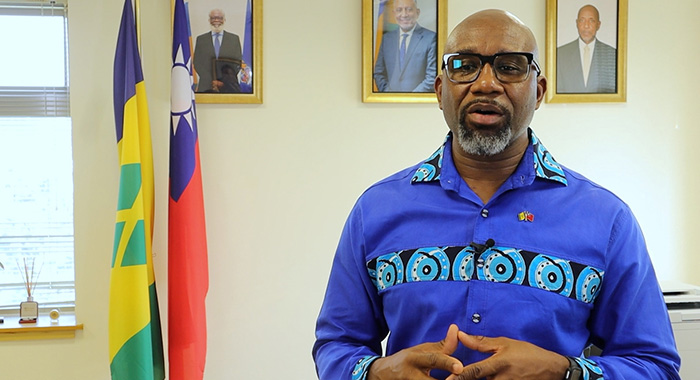
    Kenton X. Chance, SVG’s Ambassador-designate to Taiwan, outlined an additional key benefit for successful applicants: scholarship holders are permitted to work legally in Taiwan for up to 80 hours per month, which is estimated to generate roughly an extra $480 USD in monthly income on top of the $200 stipend provided directly by NCNU.

    Chance added that the SVG government and its Taipei-based embassy are currently exploring options to extend additional support to eligible applicants moving through the admissions process. In a public video posted to the embassy’s official Facebook page, he encouraged all interested Vincentians to submit their applications before the closing deadline. “If you have even the slightest interest in this opportunity, make sure you apply,” Chance stated. “Once you are accepted, we can collaborate to figure out what extra assistance we can offer.”

    The ambassador emphasized that the opportunity is open to all Vincentians regardless of their current location, urging eligible candidates to take advantage of the chance to pursue an internationally recognized graduate education. The application window is set to close on May 17, and interested parties can complete their submissions directly through the university’s official application portal at https://apply.ncnu.edu.tw/.

  • Retired teacher jailed for sex crimes on 11-y-o boy

    Retired teacher jailed for sex crimes on 11-y-o boy

    A 65-year-old retired educator from St. Vincent and the Grenadines has received a total prison sentence of two years, seven months and 17 days after being convicted on four separate counts of indecent assault involving a 13-year-old minor boy. The sentencing ruling was issued by a sitting magistrate during a closed court hearing for defendant John Clyde Fitzpatrick, who resides in the Sion Hill area of the country.

    Under local rules for cases involving child victims, legal proceedings for this type of sensitive matter are held in camera, meaning the public and press are barred from observing hearings to protect the safety and privacy of the underage victim. As a result, iWitness News, the local media outlet first reporting on the case, has only been able to confirm the official sentence handed down in the matter, with no additional details from the court proceedings available for public release.

    Court and law enforcement records confirm the criminal offences Fitzpatrick was convicted of took place between September 2024 and January 2025, per an official February 2025 statement published by local police. In that statement, law enforcement noted that the sensitive nature of the case and mandatory legal protections for the minor victim’s identity mean no further specific details about the offences or the investigation can be shared with the public at this stage of the legal process.

    Even with limited public disclosures, police confirmed that all required legal protocols have been strictly followed throughout the investigation and prosecution to guarantee that justice is delivered for the young victim. Fitzpatrick was charged and convicted under Section 127(1)(a) of the Criminal Code, CAP 171 of the 2009 Revised Edition of the Laws of St. Vincent and the Grenadines. This statute explicitly outlines that any act of indecent assault against a child under the age of 15 carries a maximum penalty of 10 years of imprisonment. A supplementary clause in the legislation, Subsection 2, also reinforces a key legal protection for minors: under local law, a child under the age of 15 cannot legally provide consent that would excuse an indecent act or reclassify it as not amounting to assault.

  • ULP gov’t paid contractors full amounts but houses not built

    ULP gov’t paid contractors full amounts but houses not built

    When the newly elected New Democratic Party (NDP) government took power in St. Vincent and the Grenadines this past November, it inherited a tangled mess of uncompleted disaster recovery projects, and housing minister Andrew John has laid bare the full extent of the financial mismanagement that is derailing current reconstruction efforts. Speaking before the national Parliament on Tuesday, John detailed that he has brought forward evidence of widespread irregularities to National Security Minister St. Clair Leaock, centered on contracts awarded by the former Unity Labour Party (ULP) administration that were paid in full but never delivered.

    All the misallocated funds were earmarked for a critical mission: rebuilding homes wrecked or leveled by two major natural disasters — the 2021 eruption of the La Soufriere volcano and Hurricane Beryl, which swept across the island chain in July 2024 and destroyed more than 90% of infrastructure on Union Island, part of the Grenadines island group.

    The mismanagement of disaster recovery funds has left the new NDP administration scrambling to get stalled housing projects back on track. John explained that the previous government left millions of dollars in unpaid debts to building material suppliers, forcing the new leadership to renegotiate payment terms to secure the materials needed for new construction. One of the largest outstanding debts totals EC$1.6 million owed to East Caribbean Metal Industries Ltd. (EMIL), a local supplier. John added that the government also owes substantial sums to two Jamaican material firms, Tankweld and ARC Manufacturing Limited.

    The disclosure came in response to a parliamentary question from Carlos James, a government senator who previously served as tourism minister and North Leeward MP during the ULP’s 25-year tenure that ended with the November 27 election. James had asked for a breakdown of planned housing projects and budget allocations by constituency for the current fiscal year. While John confirmed that his ministry has finalized budget projections, he outlined the crippling financial constraints blocking progress, noting that large portions of the 2026 allocated budget are already tied up in unfulfilled contracts from the prior administration.

    “To our amazement, in some constituencies … it was discovered that contracts were paid in full … but there are no houses for these contracts,” John told lawmakers. He added that settling all outstanding inherited debts would drain the entire current housing budget, leaving no funds to start new builds: “Otherwise, it would have taken all the money, and you will not have any need to ask any question, because the answer (number of houses to be built this year) would have been zero.”

    Despite the major setbacks, John said negotiations have been productive so far, with local hardware vendors agreeing to new terms and already beginning to deliver materials. His ministry has also opened ongoing talks with EMIL to resolve the EC$1.6 million debt, and John declined to release full sensitive financial details publicly to keep negotiations on track.

    The situation is most urgent on Union Island, where John revealed that nearly all pre-delivered reconstruction materials were distributed without any formal accountability. “Not even a nail was left in Union Island. So we basically are starting from scratch in Union Island,” he said. The minister added that the new government has already restarted a local warehouse on the island to support recovery efforts, and the first shipments of new, properly accounted for materials are scheduled to arrive starting next week. Land availability for planned steel-frame housing remains an additional challenge on Union Island and other smaller Grenadine islands, while unpaid debts to independent truckers have also slowed progress, with some payment claims lacking any formal documentation to verify work completed.

    John concluded his address by reassuring residents of Union Island that the new administration prioritizes their recovery and is working to resolve the legacy issues inherited from the previous government.

  • UK Vincies urged to invest even in small projects in SVG

    UK Vincies urged to invest even in small projects in SVG

    On a recent Sunday in London, the government of St. Vincent and the Grenadines (SVG) advanced its ongoing outreach to the global Vincentian diaspora, reframing conventional expectations of diaspora investment for the island nation’s development. At the Invest SVG Diaspora Outreach and Investment Programme, Senator Lavern King, Minister of State for Education, Vocational Training, Innovation, Digital Transformation and Information, delivered a clear, inclusive message: investments in SVG do not require the large-scale projects that have long been the focus of diaspora investment conversations.