标签: Saint Vincent and the Grenadines

圣文森特和格林纳丁斯

  • API apologises for ‘genuine error with malicious intent’

    API apologises for ‘genuine error with malicious intent’

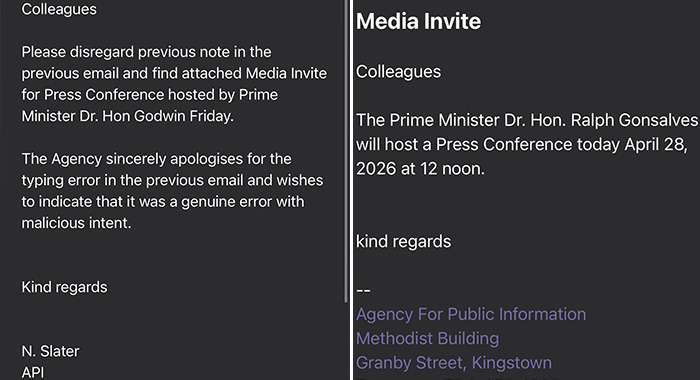
    A state-run public information agency in the Caribbean has found itself embroiled in minor political controversy after a costly administrative error triggered multiple conflicting apologies this week. On Tuesday, the Agency for Public Information (API) mistakenly distributed a media advisory announcing that former Prime Minister Dr. Hon. Ralph Gonsalves would host a press conference on April 28, 2026, a date more than two years in the future at the time of the error.

    The blunder comes five months to the exact day after opposition leader Godwin Friday was sworn in as the new prime minister, ending Gonsalves’ historic 25-year consecutive tenure in the nation’s top office.

    Within minutes of the first incorrect advisory going out, API dispatched a follow-up email to correct the mistake. That initial correction, signed by acting API director Nadia Slater, included a contradictory phrasing that only amplified confusion: it claimed the agency “sincerely apologises for the typing error in the previous email and wishes to indicate that it was a genuine error with malicious intent.” The contradictory wording immediately sparked speculation about whether the gaffe was a deliberate political slight rather than an innocent mistake.

    To address the growing confusion, API issued a third formal, press release-style apology hours later, walking back the contradictory language from the first correction. In this statement, the agency emphasized that the misidentification of the prime minister was purely accidental, stemming from a routine administrative oversight during draft preparation.

    “There was NO disrespect, political motive, or malicious intent whatsoever,” the statement read, reaffirming the agency’s commitment to upholding strict standards of professionalism, accuracy, and accountability across all official communications.

    The agency acknowledged that it failed to meet its own quality benchmarks with the erroneous correspondence, attributing the mistake to unintended human error. “We regret any misunderstanding or concern caused by this error and thank the public and members of the media for your understanding,” the statement continued. API officials noted that internal procedural changes are already underway to strengthen pre-release review processes, with the goal of preventing similar embarrassing missteps in the future. Unlike the first correction, this final formal apology was only signed “Director (Ag.)” with no specific named signature.

  • Bagga man, 70, nabbed at AIA trying to take ganja to Holland

    Bagga man, 70, nabbed at AIA trying to take ganja to Holland

    A 70-year-old Vincentian musician who has resided in the Netherlands for a number of years has been handed total fines of EC$770 after being caught with nearly 2 kilograms of cannabis at St. Vincent’s Argyle International Airport, as he waited to board an international flight bound for the United Kingdom.

    The man, Kelroy Edwards, a native of the coastal town of Barrouallie in St. Vincent, pleaded guilty this week at the territory’s Serious Offences Court to three related charges. The charges stem from an April 26 incident where airport law enforcement found the 1,986 grams (4.4 pounds) of cannabis in his checked luggage ahead of his Virgin Atlantic flight to the UK. Edwards admitted that a friend gave him the cannabis, and claimed he mistakenly believed transporting the drug was legal, as he was set to deliver it to contacts waiting for him in Amsterdam.

    Prosecutor Renrick Cato, an Inspector with the local police, laid out the full facts of the case for the court: the cannabis was discovered in six individually plastic-wrapped and taped packages hidden inside a black duffel bag that Edwards had checked in for his outbound flight. When questioned by on-duty police officer PC1021 Thomas after the seizure, Edwards repeated his claim that he did not know crossing international borders with the drug was against St. Vincent’s law. Edwards told investigators he believed carrying cannabis was permitted because the substance is allowed for personal and medicinal use in Amsterdam, where he currently lives.

    In mitigation arguments to the court, Edwards’ defense attorney Grant Connell noted that his client had expressed clear remorse for his mistake, fully cooperated with police investigators throughout the process, and had no prior criminal convictions on his record.

    Chief Magistrate Colin John handed down the sentence on Monday: Edwards received an EC$270 fine for the attempted exportation charge, and an additional EC$500 fine for possession of cannabis with intent to traffic. The magistrate ordered that both fines be paid immediately, with a default three-month prison sentence for non-payment. The charge of possession with intent to supply the drug was dismissed, with Edwards reprimanded and discharged on that count. The court also ordered the entire seized cannabis shipment to be destroyed.

  • IMF says CBI can help SVG but warns against development bank

    IMF says CBI can help SVG but warns against development bank

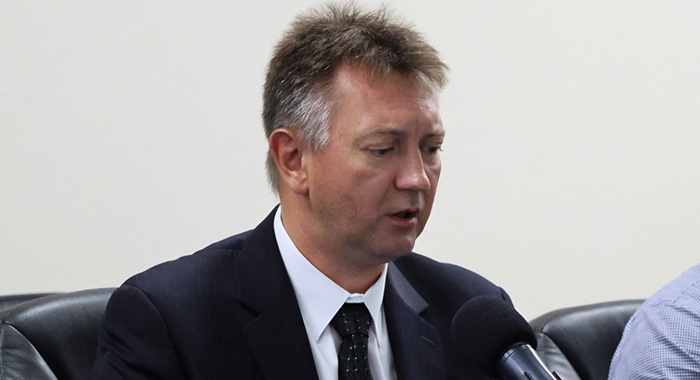
    Less than one month after the New Democratic Party (NDP) took power following a landslide election victory that ended a quarter-century of Unity Labour Party (ULP) rule in St. Vincent and the Grenadines (SVG), the International Monetary Fund (IMF) has weighed in on two of the new administration’s flagship policy proposals, delivering a mix of conditional approval and sharp pushback. In a joint press conference held Tuesday in the capital Kingstown with SVG Prime Minister and Finance Minister Godwin Friday, IMF mission chief Sergei Antoshin shared the global financial body’s assessment of the NDP’s planned citizenship by investment (CBI) programme, a key campaign promise from the party’s successful November 2025 election run. Antoshin noted that, if structured correctly, the new CBI programme could deliver a modest but meaningful boost to SVG’s public fiscal revenue, the explicit core goal of the initiative. But he stressed that poor design carries significant unaddressed risks, and outlined clear parameters for what the IMF considers an effective, low-risk framework. According to Antoshin, the optimal structure for the programme centers on a single direct donation or contribution to public funds, while pathways that grant citizenship in exchange for private sector investments or real estate purchases are strongly discouraged. He also added a critical requirement: all revenue generated through the CBI programme must be allocated exclusively to reducing the country’s outstanding public debt. The NDP administration has remained firm in its commitment to launching the programme, despite ongoing public opposition from the defeated ULP, which has pushed back against the policy since it was first introduced on the campaign trail. Beyond the CBI proposal, Antoshin made clear that the IMF does not back the NDP’s plan to establish a new national development bank, a proposal already being debated in the country’s parliament. The IMF’s rejection draws on past high-risk experiences with similar institutions across the Caribbean region, and aligns with the ULP opposition’s stance against the initiative. Antoshin explained that launching the new bank would require significant upfront public capitalization, paired with ongoing recurring fiscal costs that would undermine SVG’s critical ongoing fiscal consolidation efforts. He also warned that the institution would create substantial additional contingent liabilities that would strain the country’s public finances long-term. Instead of creating a new standalone institution, Antoshin argued that policymakers should prioritize strengthening the country’s existing credit intermediation systems to support economic development. The IMF’s public comments come one week after SVG’s parliament opened debate on a private member’s motion put forward by government senator Chelsea Alexander, which formally calls for the establishment of the new development bank. ULP Opposition Leader Ralph Gonsalves, who served as prime minister for the party’s 25 years in office, has already spoken against the motion, drawing on historical experience with similar development-focused institutions in SVG to back his opposition. Prime Minister Friday has rejected Gonsalves’ criticism as lacking forward-thinking imagination, arguing that consolidating development financing functions into a single entity is far more efficient than the fragmented model of eight separate institutions that operated under the previous ULP administration. The parliamentary debate on the motion is currently adjourned, with a resumption date yet to be announced by legislative leaders.

  • PM says economic reform to be homegrown, people-focused

    PM says economic reform to be homegrown, people-focused

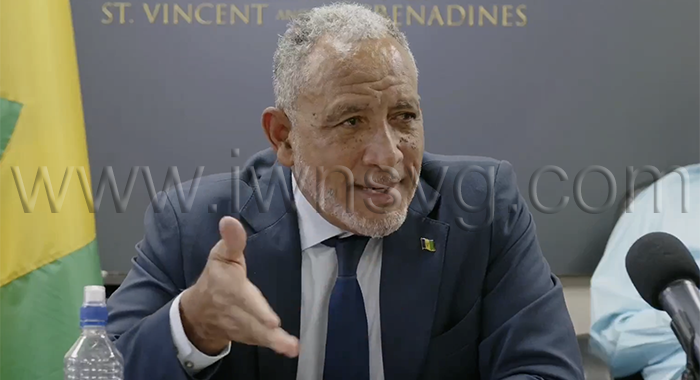
    Five months after taking office as St. Vincent and the Grenadines’ (SVG) fifth prime minister, Godwin Friday — who also serves as minister of finance — has announced a deliberate, rules-based strategy to address the Caribbean nation’s worsening debt crisis and fragile fiscal position. The plan was unveiled Tuesday during a joint press conference in Kingstown held at the conclusion of an Article IV consultation with the International Monetary Fund (IMF), the Washington-based global financial institution.

    Friday emphasized that SVG cannot rely on passive waiting for economic challenges to resolve on their own, a sharp break from the fiscal trajectory of the previous Unity Labour Party administration, which held power from 2001 until November 2024. Current projections paint a stark picture of the nation’s finances: SVG’s debt-to-GDP ratio already sits at 113% for 2025, and if no policy changes are made, that figure is expected to climb to 145% by 2031. The country has been classified at high risk of debt distress since 2016, and ongoing external shocks including soaring global oil prices and persistent inflation, paired with lingering recovery costs from recent natural disasters, have pushed the already precarious fiscal situation to a breaking point.

    While Friday confirmed the IMF is providing critical technical support to the reform effort, he stressed that the stabilisation programme will be fully homegrown, with national ownership at its core. “We will implement, we will develop, devise, of course with your technical assistance, our homegrown economic stabilisation programme that will ensure that we have national ownership of the recovery journey on which we are embarking,” the prime minister said. “We are on that journey.”

    A core principle guiding the government’s approach is social fairness, Friday added, noting that any fiscal adjustment must prioritize protecting SVG’s most vulnerable communities, who bear the brunt of rising prices and economic instability first. “It is not just a balance sheet matter… it involves people’s lives,” Friday said of the government’s framework. “The costs of these higher oil prices and higher costs of inflation and so forth… will not be borne disproportionately by those persons who are most vulnerable, because they’re the ones who feel it first. Protection of the most vulnerable are central to any reform efforts.”

    To deliver accountability and transparency, the government will establish a legally backed rules-based fiscal framework with clear, measurable targets. Key milestones include reaching a 3% primary surplus as a share of GDP by 2029, and aligning the nation’s fiscal practices with the Eastern Caribbean Currency Union (ECCU)’s 60% debt-to-GDP benchmark. Friday acknowledged the 3% surplus target is ambitious, requiring an 11 percentage point turnaround in the coming years, but noted similar shifts have been achieved in other nations, and the ambitious timeline is necessary to put SVG on a sustainable path.

    The prime minister welcomed the IMF’s balanced, collaborative approach to the partnership, saying it aligned with the government’s focus on balancing fiscal responsibility with inclusive economic growth. “We’re prepared to do what is necessary here in a way that is going to set our country on a path towards fiscal responsibility, but also one that generates growth… and that we do so in a way that is both responsible and sustainable,” Friday said.

  • IMF urges SVG not to cut VAT rate

    IMF urges SVG not to cut VAT rate

    Five months after the New Democratic Party (NDP) took power in St. Vincent and the Grenadines (SVG) on a platform of tackling a nationwide cost-of-living crisis, the International Monetary Fund (IMF) has thrown a major wrench into one of the administration’s signature campaign pledges: a planned cut to the country’s standard value-added tax (VAT) rate.

    Appearing at a joint press conference with SVG Prime Minister and Finance Minister Godwin Friday in Kingstown Tuesday, at the close of the IMF’s 2026 Article IV consultation, mission chief Sergei Antoshin made clear that the nation’s dire fiscal position leaves no room for the proposed reduction, which the NDP promised would cut VAT from 16% to 13% within 60 days of taking office. Instead, Antoshin argued, the country should align its discounted preferential VAT rate for the tourism sector with the full standard rate to boost much-needed revenue.

    Antoshin emphasized that safeguarding existing tax revenues and strengthening tax administration are non-negotiable priorities for SVG, which has faced a steady cascade of economic shocks over the past six years that have sent public debt soaring and left persistent large fiscal deficits. He commended the NDP administration’s ongoing efforts to expand VAT coverage to digital and remote services, as well as its planned reform of real property taxation, noting that these reforms would lay the groundwork for a fairer, more growth-oriented tax system.

    The IMF’s assessment lays bare the severity of SVG’s long-building fiscal crisis. Since 2019, the country’s debt-to-GDP ratio has jumped 45 percentage points, with half of that increase coming in just the last two years, pushing debt to 113% of GDP in 2025. SVG has been classified at high risk of debt distress since 2016, and its persistent exposure to catastrophic natural disasters has compounded its fragility. After the COVID-19 pandemic, two major hurricanes, and now the global oil price shock stemming from the Middle East conflict, the fiscal position has deteriorated steadily, hitting low-income and vulnerable households the hardest, Antoshin explained.

    “SVG has shown remarkable economic resilience in the face of repeated blows, but significant fiscal vulnerabilities remain deeply entrenched,” Antoshin said. “Large ongoing deficits and a continuously rising debt load leave no question that decisive policy action is urgently required to reverse this trajectory.”

    For 2026, the SVG government’s February budget projects a deficit equal to 19% of GDP. IMF analysts project a smaller but still unsustainable 12% deficit this year, based on historical trends of under-execution of capital spending. If current policies remain unchanged, Antoshin warned, the debt-to-GDP ratio will surge to 145% by 2031, with annual gross financing needs reaching 26% of GDP – a trajectory that would ultimately lead to a disorderly fiscal collapse without intervention.

    To avoid that outcome, the IMF has put forward an “active policy scenario” designed to reverse the growth of debt within three years and bring it down to a sustainable 60% of GDP over the long term. The plan calls for ambitious urgent fiscal consolidation, requiring an 11 percentage point improvement in the primary balance (the fiscal balance excluding interest payments) between 2027 and 2029. That adjustment would put the country on track to reach a 3% primary surplus by 2029 – a level that is high by SVG’s historical standards, but one that has been achieved by peer nations in the Caribbean region, Antoshin noted.

    Antoshin confirmed that the NDP administration and the IMF agree on the urgent need for consolidation, and that the government has already drafted a comprehensive strategic framework to put debt on a downward path. The next critical step, he said, is to identify and detail specific, concrete policy measures to hit the targets. To that end, the government has requested IMF technical support to conduct a full review of public spending, designed to identify opportunities to streamline outlays while protecting support for vulnerable households.

    Key areas for spending adjustment include the public wage bill, which Antoshin said is high relative to both SVG’s own history and international benchmarks. He proposed gradual adjustments through natural attrition and wage moderation to bring the wage bill into line without sudden disruptions to public services. Antoshin added that while social protection for vulnerable populations must be preserved, the government can improve outcomes by digitizing assistance programs to better target beneficiaries and reduce wasteful leakage of funds.

    The IMF also backed the government’s plans to review national investment policy and strengthen public investment management, urging SVG to prioritize spending on critical infrastructure and natural disaster resilience, while avoiding inefficient investments in marketable assets that can create harmful economic distortions.

    For its part, the NDP government has already signaled it is stepping back from its original VAT campaign promise. When presenting the 2026 budget in February, Prime Minister Friday announced the administration would delay any decision on a VAT cut until later this year, leaving the campaign pledge in limbo amid the IMF’s stark warnings about fiscal sustainability.

  • API says referring Gonsalves as PM a ‘genuine error with malicious intent’

    API says referring Gonsalves as PM a ‘genuine error with malicious intent’

    Five months after a historic general election shifted power in St. Vincent and the Grenadines, the country’s official government communications agency is facing growing public and political scrutiny over an embarrassing mislabeling mistake in a public press invitation.

    The error dates back to April 28, 2026, when the Agency for Public Information (API), the body mandated with disseminating accurate official information on behalf of the St. Vincent and the Grenadines government, distributed an unsigned media alert at 9 a.m. local time. The invitation incorrectly stated that the upcoming press conference would be hosted by Dr. Ralph Gonsalves, identifying him as the incumbent prime minister. Gonsalves, who led the Unity Labour Party (ULP) and held the prime minister’s office for 24 years starting in 2001, was removed from office following the November 27, 2025 general election, where Godwin Friday’s New Democratic Party (NDP) secured a landslide 14-1 majority over the incumbent ULP. Gonsalves was the sole ULP candidate to win his parliamentary seat, and now serves as leader of the parliamentary opposition.

    Just 29 minutes after the first incorrect email was sent, acting API director Nadia Slater issued a second communication, signed with her initials, requesting that media outlets ignore the original invite. Slater corrected the host of the press conference to incumbent Prime Minister Dr. Hon. Godwin Friday, and issued an initial apology for the mistake. However, this correction contained a second, even more controversial error: the apology stated the mix-up was “a genuine error with malicious intent.”

    Only three minutes after the second email was distributed, Slater issued a third correction, which attached the correct official press invitation and retracted the typo-ridden wording from the previous apology. In the final correction, Slater clarified that the original mislabeling was “a genuine error WITHOUT malicious intent.”

    The blunder has drawn unwanted attention to the API, which is tasked with upholding the accuracy of government communications, just months after the new administration took office. The timing of the mistake, coming five full months after the transfer of power, has sparked questions about how the agency could mistakenly misidentify the sitting prime minister, even as Slater has repeatedly stated that the incident was nothing more than an accidental typing error.

  • SVG ready to welcome global streaming sensation IShowSpeed

    SVG ready to welcome global streaming sensation IShowSpeed

    One of the world’s most high-profile digital content creators, Darren Watkins Jr., known professionally as IShowSpeed, is set to arrive in the Caribbean island nation of St. Vincent and the Grenadines this Tuesday for a landmark promotional visit, government officials have confirmed.

    In an official press statement issued by the country’s Ministry of Tourism, Civil Aviation and Sustainable Development, the visit is framed as a transformative strategic opening that will allow St. Vincent and the Grenadines to carve out a leading position in the fast-growing global digital tourism and livestream economy. Unlike traditional print or broadcast advertising campaigns, this collaboration leverages IShowSpeed’s massive existing audience, which counts tens of millions of engaged followers across global social and streaming platforms. Through his signature unscripted, real-time broadcasts, the creator will bring the Caribbean nation’s vivid local culture, stunning unspoiled natural landscapes, and energetic community to an audience that would have been unreachable through conventional marketing efforts.

    This initiative forms a core part of the Vincentian government’s broader push to modernize its tourism promotion framework. Moving away from outdated, one-directional advertising models, the country is embracing immersive, live digital storytelling that shares authentic, unfiltered experiences of life on the islands with international audiences. Officials note that this approach allows global viewers to connect directly with the one-of-a-kind energy, creativity and cultural identity that sets St. Vincent and the Grenadines apart from other Caribbean travel destinations.

    Following public input to shape the national showcase, the livestream content will center on key pillars of Vincentian identity: dynamic local cultural expression, emerging youth talent, growing local entrepreneurship, and the dramatic, untouched landscapes that make the country one of the Caribbean’s most underrated and compelling travel destinations. For local residents, particularly young creatives and industry professionals, the visit offers a rare chance to participate in a global-scale media production, building skills and connections that extend beyond the event itself.

    Kishore Shallow, Minister of Tourism, Civil Aviation and Sustainable Development, shared that extensive cross-ministerial preparations have already been completed in close partnership with the Ministry of Youth, Sports, Culture and Creative Industries to support the visit. “We are eager to showcase Saint Vincent and the Grenadines to his millions of viewers worldwide,” Shallow said, adding that the collaboration is designed to demonstrate the country’s ability to deliver innovative, high-profile international projects and foster meaningful global partnerships.

    Kaschaka Cupid, Minister of Youth, Sports, Culture and Creative Industries, added that the Carnival Development Corporation has worked hand-in-hand with a coalition of public and private sector stakeholders to ensure the visit runs smoothly, and that all content shared reflects authentic local culture and experiences. Cupid has also called on all Vincentian citizens to extend their signature warm hospitality to IShowSpeed and the visiting production team, and to lend their support to the initiative as it progresses.

    In closing, the Ministry of Tourism expressed confidence that this groundbreaking collaboration will generate durable, long-term advantages for St. Vincent and the Grenadines’ tourism sector and broader national economy, while cementing the country’s reputation as a forward-thinking travel destination on the global map.

  • Japan embassy announces 2027 MEXT Scholarships

    Japan embassy announces 2027 MEXT Scholarships

    The Embassy of Japan has formally launched the application window for its highly anticipated 2027 Ministry of Education, Culture, Sports, Science and Technology (MEXT) Scholarship Program, a fully-funded initiative backed by the Japanese government that opens doors to world-class higher education for outstanding international students. More than just a financial aid package, this scholarship serves as a cornerstone of Japan’s global academic exchange strategy, designed to cultivate cross-border understanding and nurture the next generation of globally minded leaders. Eligibility for the 2027 intake is restricted to candidates aiming to complete a master’s degree or doctoral-level research in Japan, targeting ambitious scholars seeking advanced academic training in one of Asia’s leading higher education systems. The comprehensive funding package eliminates major financial barriers for awardees: it covers all academic-related costs including entrance examination fees, university admission charges, and full tuition, alongside a steady monthly stipend to cover living expenses during the program. To support travel, the scholarship also includes a complimentary round-trip air ticket between recipients’ home countries and Japan, removing additional financial burdens for international participants. A critical note for prospective applicants is the firm application deadline set for June 1, 2026, with embassy officials confirming that no extensions will be granted under any circumstances, so early preparation is strongly encouraged. To help candidates navigate the process, the embassy has published full details on eligibility criteria and step-by-step application guidelines on its official website. Interested individuals can also access this information by scanning the QR code included on the program’s official promotional flyer. Widely regarded as one of the most generous academic scholarship opportunities for international students in Japan, the MEXT Scholarship stands out as a life-changing pathway for motivated scholars ready to advance their academic careers while contributing to stronger people-to-people connections between Japan and countries across the globe. For anyone ready to begin their academic journey in Japan, the application window is open now, and officials urge eligible candidates to submit their materials ahead of the deadline to secure consideration.

  • Sandals showcases Vincy culture during ‘Welcome Home Week 2026’

    Sandals showcases Vincy culture during ‘Welcome Home Week 2026’

    Sandals Resorts’ property in Saint Vincent and the Grenadines has successfully closed out its highly anticipated 2026 Welcome Home Week, an annual signature event held this year under the vibrant theme “Caribbean Roots and Rhythm”. The week-long gathering delivered a deeply immersive celebration that centered local Vincentian heritage and fostered genuine connection between returning guests and the island community.

    Welcome Home Week is a resort group-wide tradition hosted every April across all Sandals and Beaches Resorts properties across the Caribbean. The event draws thousands of loyal repeat guests, many of whom have built such deep bonds with the resorts that they have logged 300 or more nights of stays at the properties over the years.

    Every curated experience on the 2026 Saint Vincent and the Grenadines event schedule was crafted to do more than entertain attendees. The core goal was to help returning visitors form meaningful, lasting connections to the unique traditions, bold flavors, and infectious rhythms that define Saint Vincent and the Grenadines, strengthening the resort’s long-standing commitment to authentic, community-centered cultural immersion.

    The standout highlight of this year’s celebration was the Black Sand Beach Day Lyme, hosted at the picturesque Mt Wynne Beach. Stretching along the island’s world-famous volcanic black sand coastline, the event drew more than 150 guests for a day of authentic cultural engagement unlike any standard resort activity.

    Attendees dove fully into local daily traditions, trying their hand at beloved community pastimes including cricket, dominoes, and draughts. Between matches, they sampled a sprawling spread of authentic Vincentian street and home cooking, featuring iconic dishes such as roasted breadfruit paired with fried jackfish, rich callaloo soup loaded with fresh crayfish and coconut dumplings, fragrant curry mutton, and fluffy fried bakes.

    Unlike generic tourist-focused cultural events, this gathering created an open, welcoming space where visitors could interact with local culture firsthand and appreciate the everyday cultural expressions that make the island unique, helping them build a far deeper understanding of the destination beyond its beautiful beaches.

    Beyond the flagship Black Sand Beach Day, the full week of Welcome Home Week programming offered a diverse lineup of additional experiences for guests to enjoy. These included a formal Vincentian island-style dinner, a scenic day cruise to the neighboring island of Bequia, and hands-on creative workshops ranging from a colorful tie-dye extravaganza to an interactive traditional jewellery-making class.

    By weaving authentic local culture into every step of the guest journey, from food and recreation to music and craft, the resort has positioned itself as an active advocate for preserving and sharing Vincentian cultural identity with a global audience of returning travelers. The celebration wrapped up on a high note with a lively Carnival Farewell Beach Party & Fire Show, closing out the week in style and leaving attendees with lasting, warm memories of the island’s unbeatable vibrant spirit.

  • UWI celebrates Gonsalves with historic honour

    UWI celebrates Gonsalves with historic honour

    The University of the West Indies (UWI), the Caribbean’s leading regional higher education institution, has announced a one-of-a-kind historic honor to celebrate Ralph Gonsalves, the current Leader of the Opposition of St. Vincent and the Grenadines (SVG), hailing him as a respected Caribbean leader, accomplished scholar, and distinguished UWI alumnus.

    Turning 80 this coming August, Gonsalves has built a decades-long political career spanning more than three decades. He has held a seat in SVG’s Parliament since 1994, and served as the country’s Prime Minister from March 2001 to November 2025. His tenure, which included five consecutive terms, marks the longest continuous premiership in recorded Caribbean history. Following his United Labour Party’s electoral defeat in the 2025 general election, Gonsalves retained his parliamentary seat as the only candidate from his party to win, and now serves as Leader of the Opposition.

    UWI confirmed that the decision to honor Gonsalves was formally approved during a special session of the University Council held on April 17. The institution highlighted that the tribute recognizes Gonsalves’ 60 years of outstanding service, groundbreaking scholarship, and transformative leadership across the entire Caribbean region.

    To contextualize the significance of this honor, UWI traced Gonsalves’ long-standing connection to the university, which began when he enrolled as an undergraduate and quickly emerged as a prominent student leader. During his time on campus, he was elected President of the Guild of Students, where he played a pivotal role in landmark regional campaigns, most notably the movement to reverse Caribbean governments’ controversial stance on renowned Guyanese scholar Walter Rodney.

    Gonsalves graduated from UWI with distinction in economics in 1969, before going on to pursue advanced postgraduate studies at institutions in East Africa and the University of Manchester, where he completed his doctorate. He later returned to UWI as a lecturer in political science, teaching at both the Mona and Cave Hill campuses, where he mentored and shaped generations of leading Caribbean scholars, thinkers, and public figures.

    UWI emphasized that while Gonsalves left an indelible mark on academia, his most far-reaching impact has come through his decades of public service and political leadership. The university’s statement also noted that this new recognition continues UWI’s longstanding tradition of honoring alumni who have played transformative roles in advancing Caribbean development. Past honorees include major Caribbean political figures such as PJ Patterson, Owen Arthur, Edward Seaga, Michael Manley, Bruce Golding, Portia Simpson-Miller, and Sir Erskine Sandiford, a legacy that reflects the institution’s core belief that higher education forms the foundational bedrock for strong leadership and sustainable nation-building across the region.

    What sets Gonsalves’ honor apart from all previous recognitions is its unprecedented nature, both in symbolic meaning and practical structure. When UWI first approached Gonsalves to inform him of their plan to honor him, he humbly declined the traditional gesture of naming a university building or center after him. In response, the institution created a unique alternative: a dedicated research program focused on the core themes that have defined Gonsalves’ lifelong academic and political work: global development, Caribbean sovereignty, and accessible education.

    To expand on this tribute, UWI’s Cave Hill Campus will house a new specialized research initiative hosted at the Centre for Public Policy and Governance, which will conduct targeted research into areas that have long been central to Gonsalves’ intellectual and political work, including regional integration, decolonization, and national sovereignty.

    UWI Vice-Chancellor Professor Sir Hilary Beckles celebrated Gonsalves’ fearless leadership, unwavering commitment to Caribbean self-determination, and lifelong advocacy for expanded access to higher education across the region. “It is only appropriate that we honour him in this way, befitting him, and having this defined intellectual discourse in development and sovereignty aligned with Dr Gonsalves at The UWI,” Beckles said.

    The recognition is also backed by widespread acclaim from regional academic and governance leaders. In a reflection published in November 2025, Trevor Munroe, UWI Emeritus Professor and Principal Director of the Jamaica Chapter of Transparency International, described Gonsalves as a truly transformational statesman, noting that “geniuses like Gonsalves come only once in a lifetime.”

    Munroe highlighted Gonsalves’ visionary investment in higher education and its direct impact on SVG’s rapid national development. Under Gonsalves’ leadership, he noted, SVG lifted itself from being the third-poorest country in the Caribbean Community (CARICOM) to rank 76th globally on the United Nations Human Development Index. Today, SVG sits just 0.11 index points away from qualifying as a top-tier developing nation, placing it just behind Iran, and is on track to achieve first-world status by 2040. The country has also set an ambitious target of having at least one university graduate per household by 2030, a goal anchored in Gonsalves’ policy priorities. Munroe credited Gonsalves for this remarkable developmental progress and for advancing Caribbean national sovereignty through intentional, measured national growth.