标签: Saint Vincent and the Grenadines

圣文森特和格林纳丁斯

  • South Rivers Methodist retain primary school cricket title

    South Rivers Methodist retain primary school cricket title

    The Saint Vincent and the Grenadines Inter Primary Schools Developmental Cricket Competition wrapped up in dramatic fashion on Thursday at the Park Hill Playing Field, where defending champions South Rivers Methodist held off a fierce late challenge from Owia Government School to retain their coveted first-place title.

    Owia Government won the toss and opted to set a target for the reigning champions, taking to the crease first in the 20-over contest. After a shaky opening to their innings that saw early wickets fall, the side settled into a steady rhythm through the middle overs, closing their allotted 20 overs at 219 runs for the loss of 6 wickets. Sommer Chance contributed 14 runs to Owia Government’s total, while the bowling attack of South Rivers Methodist was led by Allison Dalzell, who delivered a match-winning performance with four wickets for just 31 runs, key to restricting Owia Government’s final score.

    Chasing 220 runs for victory, South Rivers Methodist got off to a similarly slow start, with Owia Government’s bowlers putting early pressure on the top order. Ravion Derrick turned in the standout bowling performance for Owia Government, claiming one wicket for only 16 runs across his full four-over allocation. As the innings progressed, South Rivers Methodist found their momentum, but a tight final overs push from Owia Government kept the result in doubt until the very last ball. When the final over was completed, South Rivers Methodist finished on 210 runs for the loss of 7 wickets, falling just nine runs short of Owia Government’s target to hand the defending champions a narrow but hard-fought win. Amallie Lavia top-scored for South Rivers Methodist with an unbeaten 29 runs, while J’Shawn Henry chipped in with a valuable 19 runs.

    Before the trophy presentation, the third-place playoff took place between Georgetown Government School and Biabou Methodist. Georgetown Government dominated the match from start to finish, securing a convincing 105-run victory. Batting first, Georgetown Government posted an imposing total of 249 runs for 5 wickets from their 20 overs, with Zorano Lewis leading the scoring with 31 runs. In reply, Biabou Methodist was bowled out for just 144 runs inside their full 20 overs, with Jaysean John delivering a devastating bowling spell for Georgetown Government, taking six wickets for only seven runs in three overs.

    Following the conclusion of the finals, tournament organizers presented individual awards to recognize standout performances across the entire competition. Amallie Lavia of Owia Government claimed two individual honors: he finished as the tournament’s top run-scorer with 239 total runs, and was also named Most Valuable Player of the whole tournament. Uzziah Holder of Dorsetshire Hill Government School took home the award for leading wicket-taker, finishing with 19 wickets. Sommer Chance of South Rivers Methodist was named Best Wicket Keeper, while Shania Shallow, also of South Rivers Methodist, took home the honor of Best Female Player. Steven Glasgow of champion side South Rivers Methodist was named Most Valuable Player of the final.

  • F15 Softball Cricket Tournament 4.0 – Week 10 Results

    F15 Softball Cricket Tournament 4.0 – Week 10 Results

    Three short-format cricket matches delivered a mix of blowout wins and a default victory over the weekend, with two teams putting on clinical all-around displays to secure dominant victories in competitive local play.

    In the 12-over-per-side Match 34, BOSVG All Stars extended their strong run of form with a convincing 57-run triumph over Spring Super Sixers. Captaining his side to a solid total after winning the pre-match toss, BOSVG All Stars chose to bat first and compiled a formidable 98 runs for the loss of 4 wickets in their full allotment of overs.

    Veteran batter Asquith Mapp anchored the innings with a controlled, well-paced 31 runs off 32 deliveries, setting the platform for a late surge from Osnet Cato, who blazed 23 runs off only 7 balls to catapult the total to a match-winning score. For Spring Super Sixers, Danroy Currency turned in the most effective bowling performance, claiming 2 wickets for 20 runs across his 3 overs, while Jamal Williams and Bayson each chipped in with one wicket apiece to limit the damage.

    Chasing a revised target of 99 runs to win, Spring Super Sixers never found their rhythm against a tight BOSVG All Stars bowling attack. Struggling to build partnerships or find the boundary consistently, the side finished their 12 overs at just 41 runs for 4 wickets, with their highest individual scorer managing only 12 runs off 29 balls. Rasheed Frederick led the bowling charge for BOSVG All Stars, delivering a clinical spell of 2 wickets for only 9 runs in 3 overs. He received consistent support from Kelly Murray and Newborn Joseph, who each took one wicket for 4 runs across 2 overs apiece. For his match-winning anchor innings, Mapp was named Man of the Match.

    In Match 35, RS Production Kombat Warriors secured a walkover victory after East Kingstown United failed to field a side, winning the fixture by default.

    The most thrilling encounter of the round came in 15-over-per-side Match 36, where Dr. Thomas Injectors faced off against Country Meet Town Outah Trouble, turning in a competitive batting performance that was ultimately no match for a historic run chase. After winning the toss and choosing to bat first, Dr. Thomas Injectors posted a solid 99 runs for 4 wickets, with Kevin Jack leading the scoring with 18 runs off 14 balls and Wendel Corridon adding a quick 17 runs off 13 deliveries. Country Meet Town Outah Trouble’s bowlers kept the innings in check, with Jerando Jardine delivering a standout spell of 2 wickets for 11 runs in 3 overs, and Kenron Williams chipping in with 2 wickets for 27 runs in his 3 overs.

    Chasing 100 runs for victory, Country Meet Town Outah Trouble’s opening batters produced an unbeaten masterclass in aggressive batting. The side reached the target in just 8.1 overs without losing a single wicket, securing a dominant 10-wicket win. Jabari Cunningham led the charge with an explosive unbeaten 46 runs off 27 balls, backed up by Richie Richards, who hit 25 runs off 10 balls before retiring hurt. Imran Samuel kept the momentum going with 17 runs off 10 balls to seal the victory. Cunningham was named Man of the Match for his game-changing knock.

  • Consultant defends Roseau sand ESIA, says main risk is to fisheries

    Consultant defends Roseau sand ESIA, says main risk is to fisheries

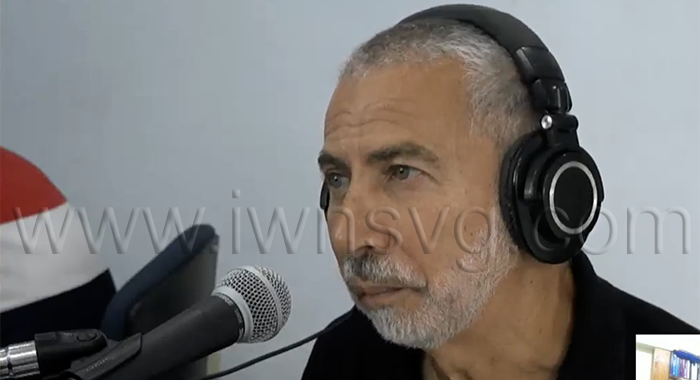
    At a community gathering hosted by North Leeward Member of Parliament Kishore Shallow as part of his “North Leeward Matters” public engagement series, environmental consultant Reynold Murray has addressed long-simmering community tensions over a state-run sand and aggregate extraction project in Roseau, North Leeward, pushing back against claims of procedural recklessness while openly acknowledging gaps in the mandated environmental and social impact assessment (ESIA) he completed for project proponent BRAGSA, a state-owned national development enterprise.

    Murray, who was contracted by BRAGSA to carry out the ESIA for the proposed harvesting operation, opened his remarks by reframing public debate around the project’s environmental risks, arguing that the most critical threat to local interests is not the widely cited harms of deforestation or soil erosion, but potential irreversible disruption to nearshore fisheries that support local livelihoods. He pushed back against growing comparisons between the Roseau project and the divisive, controversial Rayneau quarry operation at nearby Richmond, where residents have long accused developers and regulators of cutting corners on environmental protections. Instead, he centered local fishing communities as the key stakeholder group that must be centered in all future project planning.

    During the question-and-answer portion of the meeting, North Leeward Preservation Front representative Jill Edwards pressed Murray on whether his team completed foundational baseline ecological surveys, including a full inventory of native plant species in the project area. Murray openly conceded that this work was outside the formal scope of his mandate, which prioritized analyzing the composition of the material to be extracted and potential downstream environmental impacts. Edwards countered that baseline biodiversity surveys are the foundational first step of any rigorous ESIA, describing a complete species inventory as basic industry protocol that cannot be omitted.

    Murray also addressed widespread public pushback over a contentious claim in the draft ESIA that no active agricultural cultivation was taking place in the Roseau Valley following the April 2021 eruption of the La Soufriere volcano. Local activists have refuted this claim with on-the-ground videos and first-hand testimony showing farmers continue to grow peppers and tomatoes in the area. Murray explained that the conclusion was drawn from testimony delivered by a local farmer at an earlier 70-person public consultation, where the farmer stated all producers had relocated from the area after the eruption, and no other attendees objected to that claim. Acknowledging that the finding may now be inaccurate, Murray emphasized that the ESIA is not a static, unchangeable document, and that the error would be corrected to reflect ongoing cultivation if new evidence confirms it.

    Critics have also charged that pre-construction site clearing began at Roseau before the ESIA was finalized, arguing this follows a pattern of breaking environmental protocols first seen at the Richmond quarry. Murray disputed this characterization, explaining that the local Physical Planning department routinely grants “approval in principle” for preliminary site work that enables surveyors to design project infrastructure, including access ramps and on-site facilities. He clarified that the limited clearing that took place was not unauthorized random tree felling, but the creation of access paths required to complete detailed site surveys, and that full formal approval from planners, followed by official gazettement, will not be granted until the final ESIA is submitted and reviewed.

    The meeting also saw tensions flare over public access to the full ESIA document and associated environmental management plans. Local activist Lennox Lampinan argued that all project-related assessments, permits, meeting minutes and approvals should be made public to ensure accountability. Murray stated he supports greater transparency in principle, but noted that under prevailing regulatory practice across the Caribbean, the completed ESIA is the intellectual property of the client that paid for the work – in this case, BRAGSA – rather than the consulting expert. He explained that it falls to the local planning authority, not the consultant, to determine when and how the public can access the document, typically after it has been referenced in the official Government Gazette, pointing to a recent hotel development project he worked on in Grenada where public access required a $800 administrative fee paid to the planning department.

    Throughout the meeting, Murray walked a careful line between acknowledging widespread community frustration with past environmental mismanagement, particularly around the Richmond quarry, which many residents label an environmental disaster, and defending the rigor of his team’s work on the Roseau project. He praised activists for their passion and focus on collaborative monitoring of the project, but warned against allowing political or personal interests to distort factual debate around environmental risks, noting that weaponized environmental rhetoric has long divided communities in developing nations and enabled unchecked exploitation of natural resources by bad actors.

    Calling for a collaborative path forward, Murray drew on his decades of regional marine management experience, including a 2001 planning project with the Soufriere Marine Management Authority in Saint Lucia, where a multi-stakeholder co-management model brought fishers, tourism operators and other users together to develop a shared plan for the Pitons management area that allowed all groups to benefit from local marine resources. He advocated for applying this same model to Roseau Bay, arguing that the island’s small size means it cannot close the bay entirely to either extraction or fishing, and that a structured partnership between developers, fishers and other local users is the only way to fairly balance competing interests, accurately measure actual losses to fishing livelihoods, and design targeted mitigation measures rather than relying on one-size-fits-all compensation schemes.

    In closing, Murray reaffirmed that the draft ESIA will be updated to address confirmed gaps and errors, and that long-term accountability will require building a formal co-management framework with local stakeholders, alongside ongoing work to reform existing laws to improve public access to environmental documentation and strengthen project oversight.

  • NIS under pressure, but ‘financially stable for a while’

    NIS under pressure, but ‘financially stable for a while’

    The chair of the National Insurance Services (NIS) board of directors in St. Vincent, Stephen Joachim, has publicly addressed the state of the country’s state-run social security system amid mounting demographic and economic headwinds, confirming that while the agency faces significant pressure, it remains financially secure for the foreseeable future.

    Joachim made the comments during an interview with local outlet Boom FM, coinciding with the upcoming leadership transition: incoming executive director Ronette Lewis will officially take over the role on July 1, stepping into the role at a moment when both the NIS and the wider government are grappling with fiscal strain, with the country carrying a heavy national debt.

    The most recent independent actuarial assessment of NIS’s long-term solvency, completed three years ago, projected that the system would remain fully funded through 2060 based on demographic and economic assumptions in place at the time. A new updated actuarial review is currently in its final stages of completion, Joachim confirmed. That 2021 projection was built around detailed calculations of future contribution inflows, scheduled benefit outflows and other core operational factors to reach the 2060 solvency estimate.

    However, Joachim issued a stark warning that unforeseen shifts in national fertility rates, combined with potential inaccuracies in earlier demographic data, could drastically alter that long-term outlook. When the previous assessment was conducted, modelers estimated St. Vincent’s fertility rate stood at roughly two children per woman. A few months back, officials revised that estimate down to 1.8, but the latest official government data puts the actual fertility rate much closer to 1.5. That downward shift carries massive implications for the long-term funding of the social security system, Joachim explained, as a smaller working-age population will be called on to support pension benefits for a growing cohort of retirees going forward.

    At its core, Joachim’s message emphasized that the NIS does not have an infinite pool of funds to draw from, and every policy decision regarding benefit levels and retirement age represents a delicate intergenerational balancing act between meeting the needs of current beneficiaries and preserving solvency for future generations. “Everybody wants lots of benefits,” he noted. “We could double your pension next week… but what happens to your grandchild? There’ll be no money there for your grandchild. You really want us to do that?”

    Joachim explained that policy trade-offs for the NIS are not simple questions of factual right or wrong, but require deliberate judgment to strike an acceptable balance between how much the system can pay out to current contributors and retirees, and how much reserves must be set aside to meet future obligations.

    Joachim also pushed back against public criticism of Lewis’s appointment, with many observers arguing that the role should be filled by a trained actuary, following the departure of former executive director Stewart Haynes, an actuary who led the NIS for nine years before resigning earlier this year to accept a new position in St. Kitts. Joachim rejected the idea that an actuarial background is a prerequisite for the top role, noting that what the NIS needs most is an experienced manager, not a technical specialist. “Why do you need an actuary? People just say it because Stuart was an actuary,” he said. “If anybody doubts me, speak to Stuart Haynes. He will tell you: ‘Steve, I do not use my actuarial skills to manage the NIS. This is about managing.’”

    In a pointed rebuke to critics of both the appointment and the board’s overall approach to the NIS, Joachim urged opponents to set aside empty sloganeering and engage with the actual mechanics of how the social security system operates. “At least be logical and sensible,” he said. “Tell me why you need to have an actuary. Tell me, do you understand the NIS and how it works? Do you understand what really happens in the NIS? I don’t think most people have a clue, so they automatically assume, because Stuart is an actuary, we have to have an actuary too.”

    While Joachim acknowledged that members of the public are fully entitled to hold differing opinions on NIS governance, he made clear that under his leadership, the board will stand by all decisions it has made after a thorough selection and review process, on the grounds that these choices serve the long-term best interests of all NIS contributors. “We had people who disagreed with us. I don’t have a problem with people disagreeing,” he said. “But you can’t say we didn’t do a thorough process.”

  • Gonsalves willing to join legal team to challenge dismissals

    Gonsalves willing to join legal team to challenge dismissals

    A brewing political and legal conflict has emerged in the country after opposition leader Ralph Gonsalves publicly accused the ruling New Democratic Party (NDP) government of illegally terminating 28 workers employed through the national Youth Employment Service (YES Programme). Gonsalves, a trained lawyer who has led the opposition, made the allegations during his regular weekly segment on Star Radio this Wednesday, outlining multiple violations of national law and constitutional protections in the mass dismissal.

    At the core of Gonsalves’ argument is a direct breach of Section 13 of the national Constitution, which explicitly prohibits discrimination in employment on the basis of race, gender, place of origin, religious creed, and political opinion. According to Gonsalves, every single one of the 28 terminated workers was replaced by a known public supporter of the ruling NDP, a pattern that leaves no question of politically motivated discrimination. “You cannot discriminate against somebody on political grounds with respect to their job. You can’t do that,” Gonsalves emphasized during the broadcast.

    The opposition leader detailed that the 28 dismissed employees, most of whom served as community mobilizers and program coordinators, held formal letters of appointment confirming their roles. Despite this valid employment status, no performance assessments were conducted before their positions were eliminated. Worse still, Gonsalves reported that workers received no formal written termination notice as required by national labor regulation: some were informed of their firing via casual phone calls, while others were told in person by mid-level public administration staff.

    Gonsalves clarified that he does not hold the low-level staff who delivered the termination notices personally responsible for the decision, but says these messengers will be required to testify in court about who issued their instructions. He says the evidence already points directly to senior political leadership, most likely a sitting government minister or other high-ranking member of the ruling political directorate – the source of the discriminatory decision that underpins the unlawful firing.

    As of the broadcast, the dismissals took place back in April, and many of the affected workers have yet to receive the pay and severance they are legally owed. Under national labor regulations, Gonsalves explained, terminated workers are owed all outstanding pay for their final month of employment, a minimum of one month’s salary in lieu of formal notice, any earned compassionate gratuity, and compensation for unused accrued holiday time. Gonsalves also noted that the national Protection of Employment Act allows for wrongfully terminated workers to petition for reinstatement to their former roles, though he acknowledged the current government is unlikely to agree to such a resolution voluntarily.

    To date, neither the Public Service Union – the primary trade union representing the country’s public sector workers – nor the national Christian Council have released any public statement addressing the mass termination. In response to this lack of institutional action, Gonsalves announced that a full legal team has already been assembled to provide pro bono representation for all 28 affected workers. He confirmed he will personally lead the legal team if the group moves forward with a formal constitutional challenge to the dismissals.

    “The evidence is clear and a case will be made,” Gonsalves said, adding of the judicial process: “I know the wheels of justice grind slowly, but it grinds finely.” He called on the government to immediately remedy the unlawful action by providing all owed compensation to the fired workers, and has publicly pressed for accountability for the politically motivated discrimination he says violates the nation’s founding constitutional principles.

  • Parents freed, son jailed for gun, ammo

    Parents freed, son jailed for gun, ammo

    In a recent proceeding at St. Vincent and the Grenadines’ Serious Offences Court, a 23-year-old resident of Union Island entered a guilty plea to illegal gun and ammunition charges, marking his first criminal conviction and resulting in a three-year prison sentence. His two co-accused—his parents, 62-year-old Dexter Frogget and 58-year-old Josephine Jones—walked free after prosecutors withdrew all charges against them, following their not guilty pleas. The defendant, Rasheed Frogget, who works as a marine engineer, stood accused alongside his family of possessing an unlicensed Glock 17 pistol and 35 rounds of 9mm ammunition at their Ashton, Union Island residence on June 6 this year. The case traces back to that same day, when local police executed a judicially authorized search of Dexter Frogget’s home, acting on an anonymous tip they received. The search party, led by Sergeant 45 Forde, encountered Jones at the property when they arrived. After identifying himself and their legal search documents, Forde questioned Jones about her husband’s location, shortly before Dexter Frogget emerged from the rear of the residence. Both parents gave formal consent for officers to search the home, and the search began in Rasheed Frogget’s bedroom with all three property residents were present. During the search, investigators uncovered the loaded Glock pistol, marked with serial number BUND419, and the 35 9mm rounds hidden in the bottom drawer of a chest of drawers in the younger Frogget’s sleeping quarters. After seizing the items as evidence and photographing them for court records, Forde placed both Dexter Frogget and Jones under arrest, transporting them to the Union Island Police Station for questioning. The pair were interviewed separately, with a justice of the peace present for each interrogation, and both consistently maintained that they had no knowledge of the unlicensed weapons being stored on the property. One week later, officers brought Rasheed Frogget in for questioning and formal caution. He told investigators that he had found the firearm and ammunition, but had completely forgotten to hand the items over to law enforcement before he traveled from Union Island to mainland St. Vincent for work. All three family members were ultimately arrested and charged with firearms offenses. During Monday’s sentencing hearing, defense attorney Grant Connell argued for a non-custodial sentence, urging Chief Magistrate Colin John to impose only a financial penalty. Connell emphasized that Rasheed Frogget is the primary breadwinner for his family, and asked the court for leniency to give the young first-time offender an opportunity to continue contributing to his community as a law-abiding citizen. The defense further claimed that by holding onto the ammunition instead of allowing it to circulate on the black market, Rasheed Frogget had potentially prevented dozens of deaths that could have occurred if the weapons fell into dangerous hands. Rejecting the defense’s request for leniency, Chief Magistrate John sentenced Rasheed Frogget to 36 months of imprisonment for the illegal possession of the firearm, and an additional 24 months behind bars for the ammunition charge. The two sentences will run concurrently, meaning the young defendant will serve a total of three years in prison. The court also ordered the permanent confiscation of the Glock pistol and all 35 rounds of ammunition. Following the court’s ruling, prosecutors formally withdrew all outstanding charges against Dexter Frogget and Josephine Jones, ending the case against the older couple.

  • Gov’t signs pact for 30-year deal to invest $250m in cruise port

    Gov’t signs pact for 30-year deal to invest $250m in cruise port

    In a landmark move set to reshape the Caribbean nation’s tourism and maritime economies, the government of St. Vincent and the Grenadines (SVG) has formalized a strategic memorandum of understanding (MoU) with Global Ports Holding (GPH) — the world’s largest cruise port operator — to launch a decades-long concession and large-scale modernization of SVG’s Kingstown Cruise Terminal. The agreement, signed Wednesday in the capital city of Kingstown, unlocks up to EC$250 million in phased private investment and reserves 30% ownership of the new operating entity for local Vincentian citizens, marking a community-focused approach to infrastructure development.

    For the half-decade preceding the deal, the previous SVG administration operated the Kingstown Cruise Terminal at a net loss, pouring EC$15 million in public funds into the facility over five years. The terminal only turned a profit once during that period, posting a modest EC$266,000 gain in 2023. This consistent underperformance created a pressing need for a new operational and development model that would shift public financial risk to private expertise while ensuring local communities capture long-term value from the project.

    SVG Prime Minister Godwin Friday framed the MoU signing as a defining milestone in the ongoing transformation of the country’s maritime and tourism sectors, while emphasizing that the agreement represents a foundational framework rather than a finalized binding contract. “This memorandum establishes the basis upon which both parties will work to finalize a comprehensive partnership that serves the best interest of the people of St. Vincent and the Grenadines and the continuing business operations of GPH,” Friday explained.

    Under the terms of the proposed 30-year concession, GPH has committed to a phased development program with an estimated total investment between EC$225 million and EC$250 million, with potential for further investment as project plans are refined. The first phase, carrying a price tag of up to EC$75 million, will focus on modernizing the existing Kingstown terminal facilities, upgrading supporting port-wide infrastructure, building expanded public and commercial spaces, and enhancing shore excursion offerings to improve overall visitor experience. The second phase will deliver additional upgrades including improved marine and berthing infrastructure, better accessibility for all visitors, a reconfigured parking and transportation network, and further capacity expansions to accommodate long-term growth in cruise tourism across SVG.

    A core, community-centric provision of the MoU requires the creation of a special purpose vehicle (SPV) to open up to 30% of the concession company’s shareholding exclusively to SVG nationals. This structure ensures that local residents gain both direct and indirect economic benefits from the projected growth in cruise tourism, with larger profits translating to higher returns for local shareholders. The SVG government will also secure a seat on the new operating company’s board of directors to guarantee transparent governance and public oversight on behalf of the nation’s people.

    GPH Chairman Mehmet Kutman noted that the local ownership model is a proven success, adapted from the company’s existing project in The Bahamas, where more than 3,600 Bahamian citizens already hold stakes in the local cruise port operation. “In the Bahamas, they put their money, they invested, they got their principal back already through the dividends. Now they’re sitting on quite a lot of money, so the same thing is going to be here,” Kutman said. “Thirty percent of the concession company, the SPV… will be offered to the public here. I strongly recommend everybody take shares. It’s a good investment.”

    SVG officials project the partnership will deliver widespread economic benefits across multiple sectors of the local economy, reversing the terminal’s historical underperformance. The construction and operational phases of the project are expected to generate hundreds of new jobs, while expanded terminal capacity will drive growth in cruise passenger arrivals and visitor spending. The ripple effects will benefit a broad cross-section of local workers and small business owners, including taxi operators, tour guides, street vendors, retailers, restaurants, and cultural practitioners, putting additional income directly into the pockets of ordinary Vincentians.

    Tourism Minister Kishore Shallow, who also oversees civil aviation and sustainable development for SVG, emphasized that the GPH partnership directly addresses the terminal’s long-running financial struggles. “For the last five years, barring 2023, the cruise port operated at a loss… four out of five years we have operated at a loss, and this occurred during a period which the cumulative expenditure totalled just over 15 million dollars,” Shallow said, contrasting that record with GPH’s planned nine-figure investment. “That is significant… Tremendous.”

    A key policy guarantee from the SVG government is that the entire modernization project will proceed without adding new public debt to the national balance sheet, aligning with the administration’s infrastructure modernization strategy that prioritizes private investment over public borrowing. Additionally, officials have committed to upholding strict environmental sustainability standards, with development proceeding only after a full environmental impact assessment (EIA) and the issuance of all required regulatory permits. Shallow noted that the government rejects economic growth that comes at the cost of SVG’s natural environment, making sustainability a core guiding principle for the project.

    Both parties aim to move quickly to finalize a definitive concession agreement, with the goal of breaking ground on construction before the start of the next cruise season. Kutman confirmed that GPH is prepared to begin on-the-ground work immediately once all permits and final approvals are secured, though he noted that the full economic benefits of the project will likely become most visible to local residents by the 2027-2028 cruise season. Looking ahead, GPH plans to showcase St. Vincent and the Grenadines as a top emerging cruise destination at the 2027 SeaTrade Global cruise industry conference, drawing international attention and additional tourist traffic to the country.

  • PM urges overhaul of global finance rules

    PM urges overhaul of global finance rules

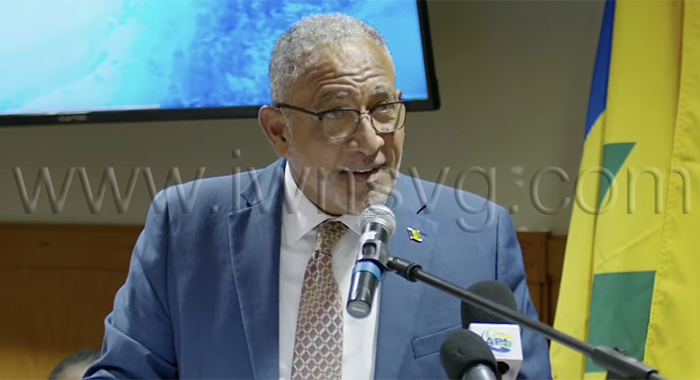
    At the “From Recovery to Transformation and Resilience” Development Partners Roundtable hosted in Kingstown, St. Vincent and the Grenadines Prime Minister Godwin Friday has delivered a urgent call for a fundamental restructuring of the global development finance system, arguing that the long-standing “one size fits all” model tied exclusively to national income levels is unconscionable and actively failing small island developing states (SIDS) across the globe.

    Friday pushed for the United Nations and leading international financial institutions to adopt the Multidimensional Vulnerability Index (MVI) as the new operational standard for determining access to concessional, low-interest financing, aligning his country’s stance with the unified position of CARICOM and the global Alliance of Small Island States.

    “It is unconscionable that Caribbean small states, which contribute less than 1% of global greenhouse gas emissions, are forced to borrow at double-digit commercial interest rates to rebuild after climate-fueled disasters, while developed nations access capital at far lower costs,” Friday told attending diplomats and representatives of multilateral and bilateral development agencies. He emphasized that arbitrary income-based metrics fail to account for small islands’ extreme exposure to climate catastrophes and inherent geographic isolation, two structural challenges that severely strain fiscal capacity. With climate projections forecasting more frequent and intense extreme weather events across the Caribbean, Friday stressed that reform cannot wait: “So action is not an option. The timing is what’s required, and that timing is now.”

    The prime minister grounded his appeal for systemic change in the string of consecutive catastrophic shocks that have pummeled St. Vincent and the Grenadines (SVG) in recent years: the global COVID-19 pandemic, the 2021 eruption of the La Soufriere volcano, 2024’s Hurricane Beryl, and the inflationary spillover from ongoing global geopolitical conflicts. The cumulative impact of these events, he explained, has forced the SVG government to ramp up public spending to protect lives and rebuild critical infrastructure, driving public debt to more than 113% of gross domestic product. Without a shift in the global financing model, Friday warned, debt levels will only continue to rise. Despite their widely acknowledged vulnerability, he added, SIDS do not seek to be defined or limited by this reality: survival from one crisis to the next is not enough; the goal must be structural transformation of national economic foundations.

    Tying his push for fairer global financing to a domestic agenda of structural economic reform, Friday outlined three core transformative priorities for his government. First, the country is moving full speed ahead with a green energy transition, aiming to cut its costly dependence on imported diesel, which drags down household budgets and national competitiveness. SVG remains firmly committed to its target of sourcing 60% of its energy from renewables by 2030, through a shift to solar power and utility-scale battery storage to replace aging diesel generators. “I know it’s ambitious, but you gotta think big,” Friday noted.

    Second, the government is addressing a persistent skills mismatch that disproportionately excludes young people and women from quality formal employment. Large-scale infrastructure projects including port modernization and the construction of the new Arnos Vale Hospital have revealed a large gap between the technical skills held by local workers and the demands of growing sectors of the economy, with the majority of certified tradespeople currently imported. To close this gap, SVG is overhauling its vocational and technical education systems to directly align workforce development with the current and future needs of the private sector and the broader national economy.

    Third, the government is strengthening fiscal discipline through a formalized legal framework. Working with international technical partners, SVG is updating and activating a modern fiscal responsibility framework to guide medium-term debt reduction. Measures including comprehensive public expenditure reviews, enhanced tax compliance, and automated social protection delivery are already underway to ensure all public spending is transparent and effective, with plans to codify the fiscal framework into national law.

    In wider discussion at the roundtable, Friday connected his calls for financing reform to a growing regional debate across the Caribbean about the difference between incremental coping and meaningful long-term progress. He referenced a widely shared analogy from Bahamian Prime Minister Philip Davis, drawn from researcher Michael Mann, that describes regional development as “walking up the down escalator”: many projects are completed, but meaningful transformation of on-the-ground conditions often remains out of reach. Friday argued that both national governments and international development partners must refocus their efforts on coordination and measurable impact, rather than just counting completed activities.

    Friday also announced a policy shift away from historical state dominance of key economic sectors, noting that the current fiscal context leaves no viable alternative to expanding private sector leadership in national development. The government has already signaled its clear commitment to this shift to domestic private stakeholders. Under the new governance model, the role of government is not to single-handedly build the economy and deliver it to citizens, but to mobilize all available domestic and international talent and resources to accelerate progress. “There is a lot of goodwill around the place. How do we coordinate this, bring this all together … so we could move forward more quickly?” he asked.

    Repeatedly stressing that neither SVG nor other Caribbean small islands can achieve this transformation alone, Friday warned that a single extreme weather event can erase a decade of hard-won development progress. “While we hope for better days, and we think of better fortunes that may come, we can’t rely on those vicissitudes,” he said. “We must plan, we must have partners in place, and be capable and willing to adapt and to adjust to these crises.”

    The two-day roundtable, convened in partnership with the UN Resident Coordinator’s Office, also featured a detailed presentation of SVG’s Growth and Stabilisation Plan from Ambassador Kevin Hope. The plan sets ambitious targets: reduce public debt to 60% of GDP by 2035, double long-term economic growth, and cut both poverty and unemployment to single-digit rates. Representatives from attending international partners including the UN, Caribbean Development Bank, World Bank, CAF, EU, Canada, Germany, China, UK, CARICOM Development Fund, UNICEF, UNFPA, WFP, PAHO, and GIZ broadly endorsed the government’s strategic direction, while calling for stronger cross-sector coordination, integration of regional priorities, and explicit targeted support for the poorest and most vulnerable populations.


  • SVG, not private entity, benefits from sand harvesting in N. Leeward — BRAGSA

    SVG, not private entity, benefits from sand harvesting in N. Leeward — BRAGSA

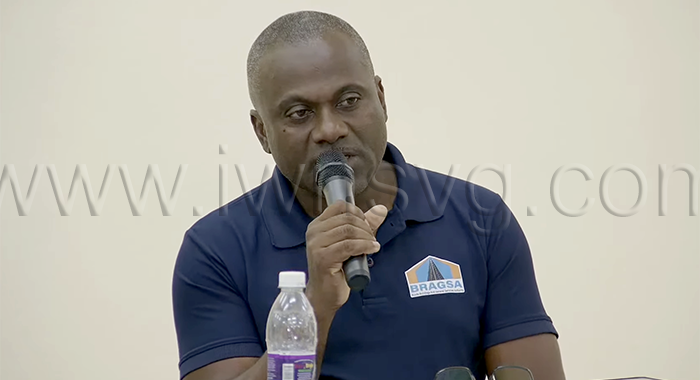
    At a recent town hall gathering hosted as part of North Leeward MP Kishore Shallow’s community-focused “North Leeward Matters” series at the Golden Grove Playing Field, Kem Bartholomew, Chief Executive Officer of St. Vincent’s state-owned Buildings, Roads and General Services Authority (BRAGSA), laid out the strategic and legal rationale for a new sand and aggregate harvesting initiative along the Roseau River in North Leeward. For Bartholomew, the project is far more than a commercial venture: it is both a statutory obligation for the agency and a transformative economic opportunity that would waste valuable natural resources if left untapped.

    Shallow opened the discussion by explaining why the forum was convened, even after initial public consultations were held in April. He emphasized that the June 2026 meeting was organized to create space for open dialogue, answer outstanding community questions, clarify shared benefits, and clear pathways to speed up the project’s progress.
    Bartholomew framed the new Roseau River operation as a natural extension of decades of successful state-run aggregate extraction at St. Vincent’s Rabacca site, located on the island’s windward coast. He noted that volcanic deposits, continuously replenished by natural geologic activity and major events like the 2021 La Soufriere volcanic eruption, have created an enormous surplus of construction-grade material across the island. “There is so much material that we cannot extract it fast enough,” he told assembled residents, adding that post-eruption sediment flows have left massive stockpiles along Rabacca’s riverbanks that the authority has yet to fully utilize.

    Despite high demand from both domestic and international buyers, Bartholomew explained that steep transport costs from Rabacca to southern St. Vincent have put local aggregate at a price disadvantage compared to imported material from Guyana. That logistics challenge drove BRAGSA’s 2025 strategic review, which identified the development of new, lower-cost extraction sites closer to high-demand markets and export routes as a key priority for growing public sector revenue. The review confirmed that high-quality volcanic aggregate matching Rabacca’s deposits exists in large quantities on the Leeward coast, where extraction and transport via barge would cut costs dramatically.

    The move to develop Roseau River also gained early momentum from private sector interest: Glossy Bay, a private development on the Grenadines island of Canouan that had long sourced aggregate from Guyana, reached out to BRAGSA to secure a local supply of construction material. The authority moved quickly to advance the project, with a clear priority of benefiting Grenadines communities first. For years, truckers and construction operators in the Grenadines — including Union Island, Canouan, and Bequia — have faced exorbitant costs to access aggregate from Rabacca, which sits 19 miles northeast of Kingstown. “The same way the people on mainland have access to this material, we should get it to the Grenadines before anywhere else,” Bartholomew said, outlining the project’s core equitable access mandate.

    Walking attendees through the project’s transparent, step-by-step approval process, the BRAGSA CEO stressed that the state authority retains full leadership of the initiative, rather than ceding control to a private operator. Back in January, BRAGSA’s Physical Planning and Surveying Department, alongside the Office of the Chief Engineer, held initial stakeholder meetings with mainland industry partners to confirm material specifications before conducting a formal reconnaissance survey of potential Leeward extraction sites by boat.

    Bartholomew personally pushed to select the Roseau River site over the originally preferred Richmond/Wallibou River location, to protect the long-standing, low-cost public access to aggregate that North Leeward residents have relied on for decades at Richmond. “I do not want to be a part of disturbing the historic operations at Richmond,” he explained, noting that local residents currently harvest material from Richmond for no cost, a practice the new Roseau project will not disrupt.

    Following the site selection, BRAGSA technical staff traveled to Canouan to inspect the planned offloading and usage site, before submitting a formal development application to St. Vincent’s Physical Planning authorities in February. The agency granted approval in principle, contingent on three key requirements: completion of survey drawings and design for a temporary beach access ramp, design for limited on-site equipment storage and worker amenities, and a full independent environmental and social impact assessment (ESIA).

    To meet these conditions while minimizing disruption to the local area, BRAGSA authorized only limited site clearing at Roseau, with explicit instructions to local contractors that no fruit trees were to be cut to keep the project’s environmental footprint as small as possible. Once preliminary survey work was completed, the authority contracted independent environmental specialist Dr. Reynold Murray to conduct the ESIA, and after submitting all required documentation to planning authorities, received full final approval to launch operations.

    Bartholomew publicly disclosed the project’s first commercial contract: a deal with Glossy Bay for 110,000 tonnes of sifted aggregate, valued at approximately 3.8 million Eastern Caribbean dollars. The developer has already paid an upfront deposit of roughly EC$500,000, combining cash and equipment to kickstart operations, and will arrange and pay for barge transport of the material itself, with no transport liability falling to BRAGSA. Bartholomew noted that the barge set to be used is a vessel BRAGSA has previously hired to import crushed aggregate and plastering sand to Kingstown, underscoring that St. Vincent has long relied on imported construction material due to a historic shortage of affordable domestic supply.

    Again, he emphasized that allowing the Roseau River’s volcanic aggregate to wash unused out to sea would be both economically wasteful and a violation of BRAGSA’s legal mandate. Under the 2008 Act that established the agency, BRAGSA is statutorily required to maintain rivers, including removing excess sediment accumulation that can alter river flow and increase flood risk. Citing his core governing principle that “do nothing is never an option,” Bartholomew pointed to Rabacca as an example of what happens when excess sediment is left unmanaged: porous sediment deposits build up above the river channel, obscuring the waterway and altering its natural function. For North Leeward, for the Grenadines, and for St. Vincent’s broader economy, the Roseau River project turns an abundant, unused natural resource into shared public benefit, he concluded.

  • NIS chair rejects ‘actuary or nothing’ critics

    NIS chair rejects ‘actuary or nothing’ critics

    Amid swirling online criticism over the leadership transition at Saint Vincent and the Grenadines’ state-run National Insurance Services (NIS), chairman Stephen Joachim has publicly defended the board’s recommendation of Ronette Lewis, the current General Manager of the Centre for Enterprise Development, as the agency’s incoming executive director, pushing back against claims the top role must be held by a trained actuary.

    In an interview with Boom FM on Monday, Joachim confirmed that Lewis’ appointment will go into effect on July 1, 2026, following the departure of nine-year incumbent Stuart Haynes, an actuary who accepted a new role in St. Kitts. Appointed NIS chairman by the current New Democratic Party (NDP) administration, Joachim expressed full confidence in Lewis’ ability to lead, saying, “I think she will do a terrific job.”

    Much of the public pushback has circulated on social media, where commentators have questioned both the board’s selection of Lewis and its broader succession planning process. Joachim pushed back sharply against what he framed as uninformed, unqualified online attacks, echoing a previous description of loud social media critics as “internet crazies” from a political colleague. “You can’t run a country by social media, despite what these [people] think,” he said, challenging online critics to produce their own professional track records before judging the board’s decision. “What have you accomplished in your life? What makes you think that you’re in a better place to judge the actions and decisions taken by certain people when you have never been in those positions or have any idea what you’re talking about?”

    At the core of the criticism is the argument that NIS must be led by an actuary, given the agency’s social security mandate. Joachim rejected this assumption outright, arguing that the role requires a skilled business and people manager, not a specialist actuary. He explained that core actuarial work for the agency is already outsourced to external experts on a regular basis, and that the NIS already retains in-house specialists with actuarial, investment, accounting, and legal expertise on staff and its board. “Every three years, the NIS conducts an actuarial report and we hire external actuaries. They do the evaluations and the assumptions… The manager, the director, has to implement those decisions. There is no actuarial skills being used in running the NIS. None. Zero. Nada,” Joachim said.

    He added that even the previous incumbent Haynes would confirm that day-to-day leadership of the agency does not rely on actuarial training. “If anybody doubts me, speak to Stuart Haynes. He will tell you: ‘Steve, I do not use my actuarial skills to manage the NIS. This is about managing.’” “Why do you need an actuary? People just say it because Stuart was an actuary,” he argued, noting that the agency needs a leader who can navigate its people-focused operations, a need Lewis as an experienced business leader is well-equipped to meet.

    To counter claims that the board hand-picked Lewis outside of a formal process, Joachim laid out a full, transparent breakdown of the recruitment procedure, which launched after Haynes announced his departure even before Joachim’s formal appointment as chairman. The board asked Haynes to draft a formal job description, then contracted independent human resources consultant Janelle Allen, described by Joachim as the top HR specialist in the region, to manage the full search process. In total, the search attracted 54 qualified applicants, all of which were scored independently by Allen. A three-person board selection committee reviewed the top 10 candidates, plus scanned the remaining 44 to ensure no qualified applicants were overlooked, before shortlisting four final candidates: two Vincentians, one Trinidadian, and one Jamaican. After the Trinidadian candidate withdrew for family reasons, the remaining three candidates completed two rounds of assessment: a standard formal interview, and a second round requiring a public presentation on NIS policy and operational topics. “You can’t say we didn’t do a thorough process,” Joachim insisted.

    Joachim also dismissed circulating rumors that the NIS board had unilaterally imposed Lewis as its pick and even threatened to resign over the appointment, labeling those claims as outright false. He clarified that under NIS governing law, the board only issues a recommendation for the role, with the final appointment made by the national Cabinet. “The board does not hire anybody. The board makes a recommendation to Cabinet as to who we think is the best person to be in that position. Cabinet appoints a director and deputy director,” he explained. Prior to Cabinet’s vote, the NIS leadership held a full briefing with Prime Minister Godwin Friday, who holds ministerial responsibility for the agency, walking through the full recruitment process, selection outcome, and rationale for the pick. “We met with the Prime Minister. We told him the process we had gone through… and the ultimate selection and the rationale and the reason why,” Joachim said. “Cabinet then appoints. They agreed with the decision.”

    Joachim further noted that overriding the board’s recommendation without compelling reason would undermine fundamental corporate governance principles for the state agency. “For the Cabinet to overrule the board means that they would have to have very good reasons. Furthermore, why would you appoint a director when you didn’t consider the views of the board? What the heck’s the point of a board then?” he said. He added that such an override would represent a return to the governance practices of the Unity Labour Party, which was voted out of office in the November 2025 general election after nearly 25 years in power.