标签: Saint Vincent and the Grenadines

圣文森特和格林纳丁斯

  • Jomo explains why gov’t can’t ‘settle’ case against Adriana King

    Jomo explains why gov’t can’t ‘settle’ case against Adriana King

    Prominent defense attorney Jomo Thomas has recently cleared up widespread public confusion over why the newly inaugurated Godwin Friday-led New Democratic Party administration cannot unilaterally resolve the pending criminal case against well-known educator and activist Adriana King — a question that emerged after the government greenlit a civil settlement for the family of 18-year-old motorcyclist Cjea Weekes, who died in a 2022 police pursuit crash.

    Thomas, whose legal chambers have a long track record of winning high-profile suits against the previous Ralph Gonsalves administration, first announced the settlement of the Weekes case last month during his regular weekday “Plain Talk” segment on local radio station Boom FM. The agreement came just one day before the civil trial was set to begin, a move the lawyer praised for sparing the teen’s family additional emotional strain from a public court proceeding. He also highlighted that the settlement, authorized by Attorney General Louise Mitchell on Prime Minister Friday’s instruction, marked a break from the previous Gonsalves government’s years-long refusal to settle the suit, even noting that Weekes’ mother worked at Gonsalves’ official residence at the time of her son’s death.

    Following the public announcement, the news of the settlement, first reported by iWitness News, sparked intense debate across local social media platforms, with many listeners and readers asking why the Friday administration would not extend the same resolution to King’s case. King faces criminal charges stemming from allegations she intended to block then-Prime Minister Gonsalves from accessing Parliament on August 5, 2021.

    In his recent public address on the topic, Thomas emphasized that the core difference between the two matters lies in their legal classification: the Weekes dispute was a civil wrongful death claim against the government, while King’s case is a criminal prosecution. This legal distinction changes which government body has the authority to end the proceeding, he explained.

    To contextualize the comparison, Thomas noted that civil cases, such as the Weekes suit, center on claims for financial compensation for damages, and the sitting government, through the Attorney General, has the authority to reach a settlement to resolve the claim. Criminal cases, by contrast, are brought by the state to punish unlawful conduct, and can result in prison time, suspended sentences, or permanent criminal records for convicted defendants. Only the constitutionally independent Office of the Director of Public Prosecutions (DPP) has the authority to dismiss criminal charges, Thomas explained, adding that the Prime Minister and Attorney General have no power to direct the DPP to drop a case, even if they wished to do so.

    Thomas went on to share his personal assessment of King’s case, arguing that when applying the two core tests the DPP uses to evaluate criminal charges — the sufficiency of evidence test and the public interest test — the case against King fails on both counts. “I don’t think there’s a public interest in that case, I don’t think there’s sufficient evidence to support the charge against Miss King,” he stated.

    A timeline of King’s case shows that the charges were initially dismissed in May 2024, when Magistrate John Ballah ruled that pursuing the charge amounted to an abuse of process. However, then-DPP Sejilla McDowall filed an appeal against the dismissal, and the appeal has not yet been scheduled for a hearing.

    Thomas stressed that the DPP’s office is a constitutionally independent branch of government, so Prime Minister Friday cannot legally order the DPP to abandon the appeal. While he acknowledged that a sitting prime minister or attorney general may choose to privately communicate their position on a case to the DPP, they have no authority to force a specific outcome. “I think that we have to understand these things when we are having these conversations. Otherwise, we confuse and conflate issues, and we confuse a criminal case for a civil case,” he said.

    Thomas also pushed back against public questions over why the Weekes case was settled civilly but no criminal charges were ever filed against the police officers involved in the pursuit that led to Weekes’ death. Weekes was killed in February 2022, when he crashed his motorcycle on Twenty Hill during a high-speed police chase that began in Questelles, just over a mile from the crash site. A coroner’s inquest ruled Weekes’ death a misadventure, and McDowall previously concluded there was no basis for criminal liability. Thomas confirmed that he has formally asked current acting DPP Duane Daniel to re-examine the evidence in the case to reconsider pursuing criminal charges against the involved officers, a position he has maintained despite the previous findings.

    To correct another common misconception that only the current Friday administration settles civil claims against the government, Thomas added that the previous Gonsalves administration also greenlit settlements in other high-profile police brutality cases, including the 2008 beating of 15-year-old Jemark Jackson, who was left in a coma by officers at the Kingstown Criminal Investigation Department.

  • Jealous man questions woman about her underwear, beats her

    Jealous man questions woman about her underwear, beats her

    A domestic violence case that unfolded in the Caribbean nation of St. Vincent and the Grenadines has concluded with a legal ruling holding an abusive partner accountable for his violent actions. 32-year-old Fidel Francois, a carpenter and mason from the Chauncey community, was handed down a sentence by Senior Magistrate Tamika McKenzie at the Kingstown Magistrate’s Court that requires him to pay EC$500 in immediate compensation to his 23-year-old former girlfriend Kittanna Codougan, also a resident of Chauncey. If Francois fails to meet the compensation requirement, he will face a five-month prison sentence.

    Francois entered a guilty plea to a charge of assault causing actual bodily harm, which was committed in Chauncey on the evening of March 20. The court heard full details of the incident and the history of the couple’s relationship, which had spanned more than nine months marked by repeated verbal and physical conflicts that were never reported to police before the March confrontation.

    The chain of events that led to the violent outburst began when the pair returned from the capital city of Kingstown and stopped at Rasto’s Bar in the South Leeward village. Codougan gave Francois money to purchase drinks as she had promised, then returned home early to begin cleaning. When Francois arrived at the residence minutes later, he was already consumed by suspicion that Codougan had been unfaithful. He confronted her, questioned what she had been doing, blocked her path when she tried to move past him, and ultimately stepped close to smell her clothing before demanding to know where she had been and whether she was wearing underwear.

    Codougan did not respond to the invasive questions and moved to the home’s porch to escape the confrontation, but Francois followed her and attempted to force her back inside. When she refused and instead walked toward the public road, Francois grabbed her, continued demanding she return inside, and escalated to brutal violence: he shoved her into a wall, punched and slapped her across multiple areas of her body, wrapped both hands around her throat, lifted her off the ground, and pressed her against the wall. After releasing her initially, Francois fled toward the road only to return and resume the assault. He then went into the home, retrieved a nail gun and attempted to power it to threaten Codougan, and when the tool failed to turn on, he returned inside and emerged carrying an axe and other tools, threatening to kill her.

    Local law enforcement from the Questelles Police Station was contacted immediately, and officers arrived within minutes to take Francois into custody. During court proceedings, Codougan told the magistrate she requested EC$5,000 in compensation, explaining that since the choking assault, she has experienced persistent depression, frequent crying spells, and ongoing pain in her neck and back. Medical evidence presented to the court confirmed Codougan suffered visible injuries including swelling, bruising, and superficial open wounds. She also told the court she no longer feels safe around Francois, and that he returned to her home after the attack and threatened to burn the property down.

    During mitigation, Francois pushed back on some details of the prosecution’s account. He admitted to smelling Codougan’s clothing, claiming he only acted after seeing another man leave the property when he returned from the bar, and said he only slapped her after she bit his shoulder. He denied choking her, lifting her, or pushing her against a wall, as well as denied threatening to burn down the home, claiming he only returned to retrieve a forgotten mobile phone. He told the court he felt regret shortly after the incident.

    Magistrate McKenzie rejected Francois’ claims of remorse, noting she found no genuine evidence of contrition in his statements and actions. She considered imposing a six-and-a-half-month prison term, but ultimately sentenced Francois to a nine-month good behavior bond set at EC$1,000, in addition to the immediate compensation order. If Francois violates the terms of his bond, he will be required to pay the full EC$1,000 immediately or serve six months behind bars.

  • $10b Afreximbank shield for C’bean, African economies amidst Gulf crisis

    $10b Afreximbank shield for C’bean, African economies amidst Gulf crisis

    Against the backdrop of an escalating Gulf crisis that has roiled global commodity markets and supply chains since late February, the African Export-Import Bank (Afreximbank) has launched a landmark $10 billion Gulf Crisis Response Programme (GCRP) to buffer vulnerable African and Caribbean economies, financial institutions and businesses from the fallout of the ongoing regional turmoil. The Gulf region stands as one of the world’s most critical hubs for core global commodities: it is a leading supplier of crude oil, liquefied natural gas (LNG) and agricultural fertilizers, while the Strait of Hormuz—one of the busiest and most strategically vital shipping chokepoints on the planet—carries nearly a fifth of the world’s daily oil consumption. When the crisis escalated, it sent immediate shockwaves across global trade and pricing systems, with developing economies in Africa and the CARICOM bloc disproportionately bearing the brunt of the disruption. The most severe impacts have fallen on nations that depend heavily on imports of fuel, food and fertilizers, as well as those whose trade routes rely on Gulf shipping corridors. Beyond commodity markets, the crisis has also upended foreign direct investment flows, crippled regional tourism sectors and cut off critical remittance inflows that millions of households rely on. Designed to address these overlapping vulnerabilities, the GCRP targets four core priorities to deliver immediate relief and build long-term stability. First, the program will provide urgently needed short-term foreign exchange and liquidity support to vulnerable member states, ensuring they can maintain uninterrupted imports of essential goods including fuel, LNG, food, fertilizers and pharmaceuticals. Second, it will empower African energy and mineral exporters to leverage shifting trade patterns and elevated commodity prices by expanding productive capacity for strategic raw materials, offering pre-export financing, working capital support and inventory financing to help market participants adapt to new trade routes. Third, the program delivers targeted short-term relief to member states whose tourism and aviation sectors have suffered steep losses from the crisis, helping these industries avoid permanent damage and maintain operations through the period of volatility. Finally, the GCRP includes a medium- to long-term resilience-building component, focused on expanding productive capacity for energy and mineral producers and exporters, while accelerating work on key energy, port and logistics infrastructure projects that were delayed by the crisis. Speaking on the program’s official launch on March 31, George Elombi, President and Chairman of Afreximbank’s Board of Directors, emphasized that targeted crisis response is core to the bank’s institutional mission. “We understand how our economies work and the pain points associated with these transitory crises,” Elombi noted. He added that the program will not only help African and Caribbean nations adjust smoothly to the current upheaval, but also strengthen their ability to withstand future shocks by supporting structural transformation of local economies. The GCRP is the latest in a series of timely emergency interventions rolled out by Afreximbank over the past decade. Previous initiatives have successfully helped cushion regional economies from the impact of major global shocks including the 2015/16 commodity price crash, the 2020/2021 COVID-19 pandemic, and the 2023/24 Ukraine crisis, building on the bank’s established track record of rapid, targeted support for developing economies in times of global instability.

  • Authorities using ‘soft power’ on youth violence — for now

    Authorities using ‘soft power’ on youth violence — for now

    A growing wave of youth and gang-related violence across schools and public spaces in St. Vincent and the Grenadines has pushed national security and law enforcement officials to outline a graduated response, with community and family-focused soft power interventions as the first step, while explicitly leaving the door open for stricter hard power measures if the crisis escalates.

    Recent high-profile incidents have underscored the urgency of the problem. On March 1, 2026, 17-year-old student athlete Alia McDowall died 16 months after she was stabbed in the throat outside her Peters Hope school. Just weeks later, a brutal chopping death of a man known as Munt-I in Barrouallie on March 23 was filmed and widely shared across social media platforms, drawing public outrage over the glorification of violence. Multiple violent altercations have also been recorded at secondary schools across the country, including a widely circulated video of a brawl between two students at Barrouallie Secondary School that came after McDowall’s death. Police have even documented one case of a parent being arrested for fighting with students at that same institution.

    West St. George Secondary School (WSGSS), a 21-year-old secondary campus, has emerged as a key focal point of the crisis. During a March 10 consultation on school violence hosted by the Ministry of National Security and the national police force, WSGSS principal Afi Marti detailed a litany of persistent issues plaguing the school: open gang affiliation among students, ongoing violence, bullying, illegal marijuana trade and consumption on campus, widespread disregard for institutional authority, and the circulation of explicit sex tapes involving students. Police confirmed that students at WSGSS have openly aligned themselves with two competing criminal factions, the Sixx and 7even gangs.

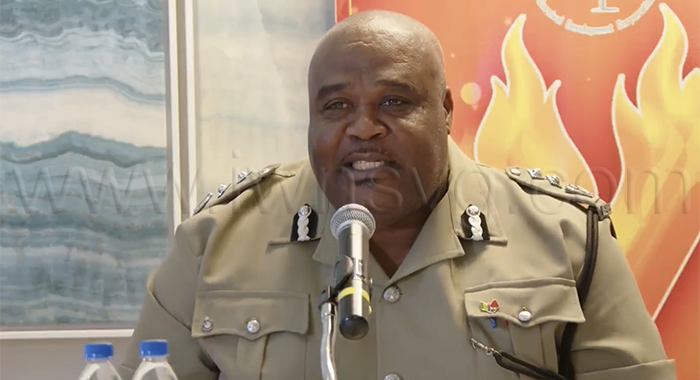
    Speaking at an official press conference in Kingstown on April 1, 2026, Commissioner of Police Enville Williams shared updates on law enforcement’s actions at WSGSS following the principal’s disclosure. Authorities conducted targeted searches of the campus, and seized a large cache of scissors and other prohibited items, similar to contraband confiscated from students at a recent inter-secondary school sports competition. Williams emphasized that the problem of students bringing weapons and edged tools to school is not isolated to WSGSS, noting that most of the seized scissors are intended for cutting marijuana, a reality officials can no longer afford to ignore.

    Williams outlined law enforcement’s preferred approach, stressing that he and national security leaders prioritize soft power interventions over aggressive, intrusive measures. He said officials want to avoid the step of stationing permanent police officers in schools, a model already implemented in neighboring Trinidad and Tobago that Williams argued would be counterproductive for St. Vincent and the Grenadines’ small, close-knit society. Instead, he made a public appeal to parents to take a proactive role by checking their children’s bags, ensuring no weapons or prohibited items are brought to campus. He also called on parents to act as peacemakers, urging them to pursue official legal and school channels to resolve conflicts rather than encouraging retaliation and providing children with weapons to carry to school, which only perpetuates the cycle of violence.

    The police commissioner also called out the role of social media and bystanders in fueling violence, noting that onlookers often film fights and other violent altercations for likes and shares instead of intervening to stop the conflict. He warned that sharing graphic violent content violates the country’s Cybercrime Act, and explained that widespread circulation of these videos encourages copycat violence, as perpetrators seek the same social media attention. Williams urged a return to St. Vincent and the Grenadines’ traditional community values, where adults teach children to reject criminal behavior and uphold shared standards of right and wrong.

    National Security Minister and Chairman of the Regional Security System (RSS) Leacock echoed the commitment to soft power first during the press briefing, confirming that the regional security bloc stands ready to provide additional assistance if the situation spirals beyond local control. Leacock noted that a top priority for RSS member states is harmonizing cross-border legislation to crack down on gangs, illegal firearms, and criminal activity in schools, echoing the ongoing national debate in Trinidad and Tobago over whether permanent police presence in schools is the right solution.

    Leacock pointed to existing soft power initiatives already underway, including a public outreach campaign run by the National Broadcasting Corporation designed to steer young people away from violence. He also noted that family breakdown is a root cause of much of the rising youth violence, emphasizing that the family remains the foundational unit of society. Leacock stressed that while RSS backup is available if needed, national leaders hope and pray that escalating to more extreme hard power measures will not be necessary.

  • Whale births and killings

    Whale births and killings

    The concept of “culture” is far from an immutable moral foundation. It can be twisted, reinterpreted, and shaped to fit the selfish needs of those in power, depending on how deeply rooted a society’s moral emptiness and hypocrisy run. Nowhere is this double standard more obvious than when comparing two Caribbean approaches to whales: one rooted in scientific care and collective protection, and another that defends cruel killing as cultural tradition.

    Last year, a team of marine biologists published groundbreaking findings from a rare, fully documented sperm whale birth they witnessed off the coast of Dominica in 2023. The expedition had originally set out to tag sperm whales to track their migratory patterns and complex acoustic communication systems, when researchers encountered a cluster of 11 sperm whales gathered unusually tightly at the ocean surface. Deploying camera drones to investigate the odd behavior, the team captured the entire birth of a 12th whale: the first complete documentation of a sperm whale birth in human history.

    Over two years of frame-by-frame analysis of the drone footage, researchers made remarkable discoveries about the complex social bonds of sperm whale communities. The mother, a well-documented individual named Rounder, belongs to Unit A, a social group made up of two unrelated whale families that regularly return to the waters off Dominica. When Rounder’s calf was born, it was completely helpless, unable to swim on its own and at risk of sinking if left unsupported. For the first three hours of the newborn’s life, every member of Unit A took turns holding the calf afloat, pressing their bodies close together to form a living raft beneath it. While Rounder and her half-sister Aurora led the rescue effort, the group also included a whale from the unrelated second family, Ariel, as well as Rounder’s 15-year-old half-brother Allan, who traveled to the site specifically to attend the birth. The extraordinary cooperative care displayed by the entire social group left even seasoned researchers deeply moved.

    This story of intergenerational whale solidarity stands in brutal contrast to the cultural practice of unregulated whaling in nearby St. Vincent and the Grenadines, local commentator Patrick Ferrari argues. If the same pod of sperm whales had gathered near St. Vincent and the Grenadines instead of Dominica, Ferrari says, Rounder and her newborn calf would not have been celebrated — they would have been hunted down for meat. While local whalers primarily target humpback whales, he notes, they do not turn away easy prey like sperm whales or vulnerable calves.

    Ferrari pulls no punches describing the brutal process of traditional whaling in St. Vincent and the Grenadines: Hunters in small boats drive a heavy iron harpoon into the whale’s body, attached to buoys that tire the animal out over hours of agonizing struggle. Once the whale is too exhausted to fight back, hunters use lances to stab deep into its heart and lungs. The animal dies a slow, torturous death from blood loss, organ damage, and extreme pain, before its body is towed back to shore where the kill is celebrated as a community event. Local defenders of the practice hide behind the language of “tradition” and “culture” to shield it from criticism, but Ferrari argues this is nothing more than moral cowardice.

    Culture, he points out, is not a static concept that justifies cruelty forever. Humanity has already abandoned other long-standing harmful traditions, such as slavery, by listening to conscience and drawing a clear line between outdated practice and moral right. The same shift is long overdue for whaling, he argues. Just because a practice has existed for generations does not give people an inherent right to continue torturing sentient animals for entertainment and meat. Dominica’s choice to protect whales for research and conservation proves that the Caribbean can choose a better path, and it is past time for St. Vincent and the Grenadines to end what Ferrari calls a shameful, uncivilized practice that has no place in the modern world.

    *(This is an opinion piece by Patrick Ferrari, and does not necessarily reflect the editorial stance of iWitness News.)*

  • Farmer jailed for firearm, ammo, cocaine

    Farmer jailed for firearm, ammo, cocaine

    A 41-year-old Penniston-based farmer has been handed a 39-month concurrent prison sentence by the Serious Offences Court following his guilty plea on illegal firearm, ammunition and cocaine possession charges stemming from a large-scale Royal St. Vincent and the Grenadines Police Force operation.

    Orde McTair was one of three men taken into custody on March 26 during a coordinated anti-crime sweep targeting a known cannabis cultivation site in Bower Mountain, Georgetown. The operation brought together officers from multiple police units, including the Rapid Response Unit, led by Station Sergeant John to search for illicit weapons, ammunition and controlled substances at the remote farm.

    Court documents detail that at approximately 6 a.m. that day, the law enforcement team arrived at a small on-site hut and found three men sleeping inside. After Station Sergeant John woke the group, identified his team as police officers, and notified them of the planned search, one man attempted to flee past responding Police Constable 73 Jack. Jack successfully detained the individual, but an initial search of his person turned up no contraband. When officers searched the bunk bed the man had been sleeping on, they uncovered a Glock 23 pistol wrapped in a multicolored sheet, loaded with 11 rounds of .40 caliber ammunition. A subsequent search of the hut also recovered approximately five grams of cocaine.

    All three men—McTair, 35-year-old plumber Milton Charles of Penniston, and 36-year-old farmer Deiroy Glasgow of Rabacca and Penniston—were arrested and charged jointly with three counts of illegal possession. All three defendants denied any knowledge of the hidden weapons and drugs when cautioned by officers, and declined to provide formal written statements after being transferred to the Central Police Station.

    In a surprising turn of proceedings, McTair entered a guilty plea to all three charges, while Charles and Glasgow maintained not guilty pleas. Prosecuting Inspector Renrick Cato moved to withdraw all charges against the two remaining defendants after accepting McTair’s guilty plea.

    McTair’s defense counsel Grant Connell argued in mitigation for a non-custodial sentence, noting the defendant’s personal circumstances as a working farmer. However, Chief Magistrate Colin John rejected this request, pointing to McTair’s prior criminal conviction for illegal firearm possession as a key factor in justifying a strict custodial sentence. The Chief Magistrate imposed 39-month prison terms for both the unlicensed firearm and unlicensed ammunition charges, alongside a three-month sentence for cocaine possession, ruling that all sentences would run concurrently. The outcome marks a significant conclusion to one of the local police force’s targeted anti-crime operations in the region this year.

  • Youth violence in SVG giving COP ‘headache’

    Youth violence in SVG giving COP ‘headache’

    During a joint press briefing with Minister of National Security St. Clair Leacock, St. Vincent and the Grenadines Commissioner of Police Enville Williams has identified youth violence as the most pressing public safety challenge currently facing the Caribbean nation, pushing law enforcement to pivot beyond traditional arrest-focused strategies toward community-centered prevention.

    The remarks from Williams came shortly after he and Leacock returned from a four-day regional security gathering in Castries, St. Lucia, where Leacock formally assumed the one-year rotating chairmanship of the Regional Security System (RSS), a bloc of eight Caribbean nations focused on cross-border security coordination. At the meeting, member states prioritized developing tailored, jurisdiction-appropriate responses to the growing crisis of youth involvement in violent and antisocial behavior, a concern shared across the entire region.

    Williams explained that in line with National Security Ministry policy that favors preventive “soft force” engagement over reactive enforcement, local law enforcement has already held internal consultations to design alternative strategies that intervene before young people commit crimes. He argued that early community outreach delivers far greater long-term benefits for the entire nation than mass incarceration of youth offenders. “If we engage young people from a community standpoint before they commit a crime, that the outcome is far greater for us as a country as a whole, as opposed to sending a young person to prison,” Williams said, outlining the core philosophy behind the new approach.

    Regional security leaders have collectively restarted their strategic planning process to develop community-focused engagement tactics that go beyond routine arrest and prosecution. Williams outlined that these strategies range from having officers participate in local youth sports activities to deploying police and military bands for casual community performances, all aimed at building positive connections between law enforcement and young residents. The overarching goal, he emphasized, is to shift police-youth interactions away from purely punitive encounters, to help marginalized young people develop a sense of belonging in broader society — a factor Williams says is often missing for young people who turn to antisocial behavior.

    As a successful existing model, Williams highlighted the mentorship program run by the Stubbs Police Youth Club, and called for expanding the initiative to reach young people who are not currently part of the club’s membership, noting that many at-risk youth simply need consistent guidance and a trusted person to talk to. Since taking office as police commissioner in 2023, Williams has also actively reached out to local media outlets, particularly morning radio talk show hosts, to partner on prevention efforts.

    A key point of collaboration Williams is pushing for is changes to radio programming, arguing that the constant stream of violent lyrical content and gang-glorifying music played on popular stations has a measurable subconscious impact on impressionable young people. He noted that regional security leaders have specifically observed that youth involved with two prominent gangs, Sixx and 7even, repeatedly consume music and music videos that glorify gang violence, normalizing harmful behavior before they ever engage in criminal activity. If media outlets agree to reduce the circulation of this harmful content, Williams argued, law enforcement will be far more successful at reaching at-risk youth with positive messaging.

    Williams stressed that while the crisis is urgent, it is not irreversible — but collective, immediate action from all sectors of society is non-negotiable. “I don’t think we have gone too far, but I think we need to step in now. Now is the appropriate time for us to rub shoulders together as a nation and do something for our young people,” he said. As a small island nation, St. Vincent and the Grenadines cannot afford to lose an entire generation to violence, Williams warned, emphasizing that continued inaction would lead to devastating long-term consequences for the country.

  • Region faces structural challenge to dev’t — ECCB governor

    Region faces structural challenge to dev’t — ECCB governor

    At a high-profile launch event this Thursday, Eastern Caribbean Central Bank (ECCB) Governor Timothy Antoine has laid out a bold, decade-long strategic plan aimed at doubling the Eastern Caribbean Currency Union (ECCU)’s total GDP and lifting collective citizen prosperity, centered on an initiative branded “The Big Push: Collective Action for Shared Prosperity in the ECCU”.

    Three years in the making, the plan began as a provocative question Antoine posed to regional stakeholders: what would it take to double the size of the ECCU’s economies over 10 years? Today, that hypothetical vision has transitioned into a concrete, actionable roadmap for transformative change. To deliver meaningful, inclusive growth that residents can actually feel — not just measure on spreadsheets — Antoine argues the region must completely reimagine its long-standing development model, and confront a series of unvarnished, unavoidable structural challenges holding back progress.

    Contrary to framing the region’s stagnation as a temporary, cyclical downturn, Antoine emphasizes that the ECCU’s growth obstacles are deeply structural. He outlined several critical constraints that demand urgent attention: over 80 percent of the food consumed across the bloc is imported, driving exorbitant food import costs and contributing to elevated rates of diet-related disease and mortality. Nearly 90 percent of the region’s energy comes from polluting fossil fuels, pushing up electricity prices for households and businesses and eroding the international competitiveness of local industries. Intra-regional connectivity is another persistent pain point: transport links are so costly and inefficient that it is often cheaper for ECCU residents to travel to major North American hubs like New York or Miami than to neighboring Caribbean nations such as Barbados or Trinidad.

    Additional systemic challenges include stagnant or falling labor productivity across the bloc, paired with ongoing population decline that creates a major headwind for economic expansion. Antoine also highlighted that access to credit for private sector businesses remains far too limited, a gap that stifles entrepreneurship and job creation. “How do you grow and double the size of an economy with a falling population? We have to arrest this issue, folks. We have to wrestle with these issues and we have to solve them,” he stressed.

    Antoine was clear that “The Big Push” is no empty political slogan. Instead, it is a coordinated transformation strategy that relies on cross-regional collaboration and consistent execution, with core priorities of economic diversification, enhanced climate and economic resilience, improved competitiveness, and above all, shared prosperity that puts people first. The plan’s ultimate goals are deeply tied to everyday livelihoods: it aims to create meaningful professional opportunities for young graduates at home, so they do not have to leave their communities to build careers; support local farmers to produce competitively and cut reliance on food imports; and create the conditions for small businesses to expand and generate new local jobs.

    “Taken together, these hard truths are not mere inconveniences. They are structural constraints on our growth, our resilience, and our sovereignty,” Antoine said. He warned that continued inaction on these long-standing issues carries steep costs, noting that “inaction is not neutral; it compounds and accelerates decline” — making delay no viable option for regional leaders and stakeholders.

    The ECCB governor emphasized that the 10-year plan is designed to address these gaps head-on, but stressed that the central bank cannot deliver the initiative alone. “The big push is not a panacea and it is not the responsibility of the ECCB alone,” he explained. “We can choose to either curse darkness or light a candle. This strategic plan lights candles on many of these issues, but we cannot do it alone.”

    Antoine added that while the plan is undeniably ambitious, it is a necessary step forward for the region. The ECCB’s core role is not to generate growth directly, but to create the stable, enabling conditions that make growth possible: maintaining a strong Eastern Caribbean Dollar, safeguarding the regional financial system, and building sustained confidence among investors and residents alike. Collective action across public, private, and civil society stakeholders, he said, will be the key to turning the vision of doubled, shared prosperity into a reality for all people of the ECCU.

  • US drone strikes pose ‘zero threat’ to Vincy fishers — COP

    US drone strikes pose ‘zero threat’ to Vincy fishers — COP

    A cloud of uncertainty has hung over Caribbean fishing communities in recent weeks after a series of lethal US military drone strikes on vessels operating in regional waters, including one strike carried out in the exclusive economic zone of St. Vincent and the Grenadines (SVG) back in February. The United States has justified the operations by stating the targeted boats were involved in illicit narcotics trafficking, but the incident has sparked significant backlash after claims emerged that three deceased individuals from St. Lucia were actually legitimate small-scale fishermen, not drug traffickers, according to their family members.

    In the wake of growing public anxiety among SVG’s fishing community, top security officials have moved to address widespread fears, delivering public reassurance that local fishermen can return to their work on the open ocean without fear of accidental targeting. The joint announcement came during a press conference held in Kingstown on Wednesday, April 1, shortly after National Security Minister St. Clair Leacock and Police Commissioner Enville Williams returned from the Regional Security System (RSS) Council of Ministers’ Meeting held in St. Lucia between March 23 and 27.

    During the summit, Leacock formally took over the rotating one-year chairmanship of the eight-member regional security bloc from St. Lucia Prime Minister Phillip Pierre. Addressing reporters’ questions about the February strikes directly, Commissioner Williams delivered a clear, unqualified assurance to local fishing workers. “I want to take the opportunity to say to our fisherfolk that there is no threat to you going to sea to ply your trade; like zero threat to you. None,” Williams stated, emphasizing that US counter-narcotics operations are exclusively focused on criminal actors violating local and international drug trafficking laws. “So, ordinary fishermen and women who are going to sea to ply their trade have nothing to fear, absolutely nothing to fear. And that’s the solemn and honest truth,” he added.

    Williams went on to outline the core mandate and operational structure of the RSS, explaining that the alliance brings together member states to pool shared security resources, align common operating protocols for issues ranging from immigration management to national emergency response, and coordinate action across all areas that impact citizen safety across the Caribbean. “So everything within the member states as it relates to defence and security and response to hazards in case of NEMO (National Emergency Management Organisation) and all of that that touches and concerns citizen security is treated by this alliance as one,” he explained, noting that the bloc operates under a unified security framework to address shared threats.

    Despite the reassurance for fishermen, reporters pressed Williams on critical unanswered questions surrounding the US strikes: why the United States launched operations that destroyed at least three vessels in regional waters, including one in SVG’s EEZ, whether regional authorities granted formal authorization for the US military to operate in these waters, what progress has been made in ongoing investigations into the incident, and what information has been shared with the families of the deceased Caribbean fishermen.

    In response, Williams clarified that inquiries about authorization for the US operations fall outside the scope of law enforcement, framing the issue as a political matter that must be addressed by the country’s political leadership rather than police command. He did confirm, however, that the RSS has opened formal discussions with US counterparts about the incident, and that these talks remain ongoing. Williams added that the head of US Joint Interagency Task Force South (JIATF South), the US military command responsible for counter-narcotics operations in the Caribbean, attended the first two days of the RSS summit in St. Lucia and responded to the same questions raised by local reporters, but that these discussions were held behind closed doors and he could not disclose details of the closed-session exchanges.

    Reporters continued to press officials, presenting a photograph of one of the destroyed boats to challenge the US narrative that the vessels were carrying large drug shipments. Pointing to the small size of the boat, the reporter noted that the minister had previously referenced a 500-million-dollar cocaine seizure connected to the strike, and observed that many legitimate fishing boats across the Caribbean operate with multiple outboard motors, a characteristic the US has cited as evidence of drug trafficking activity.

    At this juncture, Minister Leacock intervened, noting that political questions about the incident should not be directed to the police commissioner, and provided updated context on the discussions held at the RSS summit. Leacock confirmed that during the meeting, RSS delegates were informed that the US has adjusted its previous position of refusing to provide explanations for prior strikes, and has now softened its stance, agreeing to show greater respect for the national sovereignty of Caribbean nations – a shift that emerged as a central topic of negotiation at the summit.

    “ I believe, through the skilful negotiations of the RSS and heads of government and others who will be involved in this exercise, we can anticipate that over time, there will be an increased level of responsiveness and sensitivity to Caribbean jurisdictions and to that key expression that was used: the Caribbean being a zone of peace,” Leacock said, adding that ongoing negotiations are progressing and that the region expects to achieve the transparent, accountable outcomes that Caribbean governments and communities are entitled to.

  • Missing Owia fisherman presumed dead

    Missing Owia fisherman presumed dead

    A widespread search and rescue operation is underway off the coast of northeastern St. Vincent after a 51-year-old local fisherman and farmer failed to return from a solo fishing trip, leaving his long-term partner convinced he has been lost to the dangerous waters the region is known for. Robert Lavia, widely known to local residents as Robbie, set out from his home in Owia at approximately 5 a.m. Wednesday, heading to a stretch of coastline between Rock Gutter and Cramacou, a fishing spot he had frequented in the past.

    According to Annis “Janice” Hoyte, Lavia’s common-law wife for more than two decades, the experienced outdoorsman prepared for his trip a day in advance. On Tuesday, he traveled to a local river to catch crayfish, which he planned to use as bait for his scheduled fishing excursion. Like almost all of his fishing outings, Lavia embarked on this trip alone, carrying only a bucket, a bag, a cutlass, and his fishing lines.

    As the hours stretched into midday Wednesday with no sign of Lavia’s return, Hoyte began to grow concerned. Unused to him staying out this long without checking in, she alerted Lavia’s brother of her worry before filing an official missing person report with the Owia Police Station. The entire village mobilized quickly to launch an initial ground and shore search for the missing man, but as of Thursday, no trace of Lavia has been found beyond a single recovered fishing reel – details of where and by whom the reel was found remain unconfirmed.

    With no signs of life and the well-documented hazards of the area’s waters, Hoyte says she has abandoned hope of finding Lavia alive. Speaking through tears to reporters from iWitness News on Thursday, she shared her theory of what likely befell her partner: “Lavia was on a rock and a swell knocked him off the rock and he knocked his head and he fell in the water.”

    The coastal waters of northeastern St. Vincent have a long-standing reputation for strong, unpredictable currents and unexpectedly large waves, conditions that have proven dangerous for even experienced local fishermen in the past. Hoyte described Lavia as a quiet, reserved man, and said she is overwhelmed by grief at the prospect of having lost him.

    Local authorities have confirmed they received the missing person report on Wednesday, and official search efforts have expanded in the days since. On Thursday, a vessel from the St. Vincent and the Grenadines Coast Guard was spotted conducting patrols and search operations in the coastal stretch between Owia and Fancy, as authorities continue to comb the area for any sign of the missing man.