标签: Saint Vincent and the Grenadines

圣文森特和格林纳丁斯

  • Some public servants to get more than double their salary as bonus — PM

    Some public servants to get more than double their salary as bonus — PM

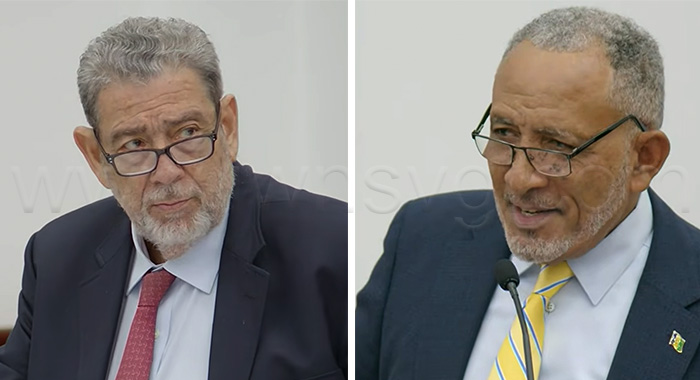
    In a significant move to address economic disparities, the newly elected government of St. Vincent and the Grenadines has unveiled details of its promised salary bonus for public servants, revealing an equitable distribution model that disproportionately benefits lower-income workers. Prime Minister Godwin Friday, who also serves as Finance Minister, confirmed the initiative during a recent radio interview on Hot 97 FM.

    The compensation scheme, designed as a flat-rate across-the-board payment rather than a percentage-based increase, will result in approximately half of all public servants receiving a full double salary. Notably, those at the lower end of the pay scale will obtain more than double their regular monthly earnings. This approach marks a deliberate departure from traditional bonus structures that typically advantage higher-paid employees.

    Prime Minister Friday emphasized the government’s commitment to equity, stating, ‘The intention is that persons at the bottom of the scale would have the biggest benefit.’ He illustrated this principle with a comparative example: while an employee earning EC$9,000 would receive EC$18,000, someone making EC$1,500 would get the same flat bonus amount, effectively receiving more than double their regular salary.

    The payout, characterized as a ‘salary bonus’ rather than a conventional raise, is scheduled for disbursement in late January, separate from regular salary payments. This fulfills one of four key campaign pledges made by the New Democratic Party (NDP), which achieved a landslide victory in the November 27 general election, securing 14 of 15 parliamentary seats and ending the 22-year administration of the Unity Labour Party.

    The Prime Minister expressed confidence that public servants would appreciate the equitable approach, noting, ‘They know what the intent is: to put some money back into your pocket.’ He framed the bonus as a direct response to the ongoing cost-of-living crisis affecting the nation.

    Regarding other campaign commitments, the government has already implemented a VAT-free shopping day on December 19. The promised increase of Public Assistance to EC$500 will be incorporated into January’s budget legislation with implementation expected in February. Prime Minister Friday stressed the importance of responsible fiscal management, contrasting his administration’s approach with what he characterized as the previous government’s disregard for constitutional and financial safeguards.

    Despite acknowledging fiscal challenges, the Prime Minister remained resolute: ‘I’m not gonna go out and wring my hand and say things are worse than expected. I promised these things, I will deliver them.’

  • Gov’t exploring ways to ease pressure caused by $3.1 billion national debt

    Gov’t exploring ways to ease pressure caused by $3.1 billion national debt

    Prime Minister Godwin Friday has revealed his newly elected administration is confronting a substantial national debt of EC$3.1 billion while simultaneously working to fulfill its campaign promises. In multiple radio interviews this week, the Prime Minister, who also serves as Finance Minister, detailed the challenging fiscal landscape his New Democratic Party (NDP) government inherited just three weeks after taking office.

    Despite the significant debt burden, PM Friday emphatically committed to honoring all electoral pledges. He confirmed a salary bonus will be distributed in January and announced that social welfare payments will increase to EC$500 beginning in February. When questioned about funding sources for these initiatives, the Prime Minister responded, “You let me worry about that.”

    The scale of the debt means over one-third of government revenue is currently allocated to debt servicing, creating substantial pressure on public finances. Friday described the economic situation as “eleven” on a scale of one to ten in terms of severity.

    The Prime Minister explained the debt comprises obligations to foreign nations, the Caribbean Development Bank, and various financial instruments floated to cover expenditures. Additionally, he acknowledged significant unpaid obligations to local businesses that the previous administration had accumulated.

    Rather than commissioning immediate audits, the NDP government is conducting its own assessment of wastage and inefficiencies. Friday cited the recent Emancipation cricket tournament as an example of misplaced priorities, noting its cost equaled a full year of the proposed baby bonus program.

    The administration plans to implement stricter financial controls, improve efficiency in development projects, and stabilize public finances while maintaining investments in economic growth. Friday emphasized this approach represents a return to proper fiscal governance rather than austerity, stating his government aims to “bring hope to people” through responsible financial management.

  • Reforming the RSVGPF: A new era of excellence

    Reforming the RSVGPF: A new era of excellence

    In a remarkable political comeback, Brenton Smith returned on December 22, 2025, to the position from which he had been dismissed after 27 years of service, achieving his stated objective of ousting what he termed “the wicked ULP administration” that had suppressed Vincentian citizens. Smith now announces his departure from active politics, expressing both pride and humility in having facilitated this governmental transition.

    The recent change in administration has created a pivotal opportunity for comprehensive reform within the Royal St. Vincent and the Grenadines Police Force (RSVGPF). The new government faces the critical task of addressing systemic issues through strategic improvements in morale, human resource management, promotional processes, officer welfare, and forensic capabilities.

    Central to the reform agenda is the enhancement of officer morale through regular satisfaction surveys, implementation of recognition programs, mental health support services, and fostering cultures of transparency and accountability. The restructured promotion process must prioritize merit-based advancement supported by continuous professional development, including specialized training in forensic science, cybercrime, and community policing strategies.

    Frontline patrol officers require significant investment as they represent the public face of the RSVGPF. The reform proposal emphasizes assigning experienced personnel to beat duties, equipping them with properly maintained mobile units featuring modern technology, and establishing recognition systems for exceptional community engagement.

    Forensic capabilities demand substantial upgrading through equipment modernization, specialized training, and international collaboration to adopt global best practices. Resource allocation must prioritize a modern vehicle fleet with reliable maintenance and fueling systems to ensure operational readiness.

    An innovative revenue generation model proposes partial commercialization of the police garage, offering services to external agencies and private entities while maintaining transparency to prevent conflicts of interest. Operational efficiency could be improved through a centralized garage system with decentralized inspection protocols, reducing vehicle downtime and minimizing external repair dependencies.

    Judicial system reforms must address witness intimidation through protection programs, strengthened legal frameworks, community engagement initiatives, and anonymous reporting mechanisms. Smith references a comprehensive policy manual developed over five years with assistance from WPC Gordon and RSS projects, which provides a framework for international standard procedures, capacity building, accountability systems, and community policing principles.

    These collective reforms present the new administration with an unprecedented opportunity to transform the RSVGPF into an effective, efficient, and respected institution serving the people of St. Vincent and the Grenadines with excellence.

  • When campaign promises meet governance reality

    When campaign promises meet governance reality

    In the heated arena of Caribbean politics, election campaigns have devolved into theatrical spectacles where grandiose pledges overshadow substantive governance discussions. The current political landscape, particularly in St. Vincent and the Grenadines where both the New Democratic Party (NDP) and Unity Labour Party (ULP) operate, reveals a disturbing pattern of unrealistic commitments that undermine democratic integrity.

    Campaign platforms increasingly feature mathematically improbable promises—simultaneous wage increases, tax reductions, infrastructure development, social program expansions, and debt reduction—without transparent explanations of fiscal trade-offs or implementation timelines. This phenomenon represents not merely political optimism but fundamental disregard for economic realities facing Caribbean nations with constrained resources.

    The core issue transcends partisan politics. Both major parties employ identical strategies: one positioning itself as salvation, the other as continuity, yet both failing to provide credible governance roadmaps. This approach treats voters as consumers in a marketplace of fantasies rather than citizens in a democratic process.

    Responsible governance necessitates fiscal restraint and truthful communication about limitations. True leadership involves explaining what cannot be achieved as much as what can, acknowledging that every policy choice carries opportunity costs. The current system instead rewards extravagance while punishing honesty, creating a vicious cycle where governments assume power already constrained by unkeepable promises.

    The electorate shares responsibility for this dynamic. By enthusiastically responding to sensational pledges while dismissing measured proposals, citizens inadvertently encourage political theater over substantive discourse. This collective behavior fosters governance based on aspiration rather than capability, ultimately eroding public trust when inevitable disappointment follows.

    Democracy requires maturation beyond slogan-based politics. It demands that parties campaign with the same seriousness required to govern and that voters reward transparency over spectacle. Until this paradigm shift occurs, the cycle of inflated expectations and subsequent disillusionment will continue to undermine political institutions and public confidence alike.

  • Police Commissioner’s 2025 Christmas message

    Police Commissioner’s 2025 Christmas message

    In an extraordinary Christmas address that transcended traditional law enforcement messaging, Police Commissioner Enville Williams delivered a powerful reflection on national resilience and social cohesion to the people of St. Vincent and the Grenadines. Speaking as both police commissioner and native son, Williams articulated a vision of security that extends beyond conventional policing measures to encompass the fundamental bonds of community.

    The Commissioner reflected on the distinctive tranquility that envelops the Caribbean nation during Christmas morning—what he characterized as ‘the silence of a nation catching its breath.’ His message highlighted the country’s remarkable demonstration of political maturity during recent transitional periods, noting that despite regional scrutiny, the nation avoided descending into chaos that often accompanies political changes elsewhere.

    Williams emphasized that true national security constitutes a social covenant rather than merely a law enforcement responsibility. He described this security as a collective promise where neighbors safeguard each other’s homes while police protect the streets. The Commissioner specifically acknowledged various segments of Vincentian society, including mothers in Fancy, fishermen in the Grenadines rebuilding after Hurricane Beryl’s devastation, and youth in Kingstown navigating an evolving future.

    The address proposed that the most effective protection against criminality emerges not from weaponry but from unity cultivated around Christmas tables. Williams identified shared meals, communal caroling, and reconciliation of past grievances as fundamental components of national security. He urged citizens to approach 2026 unburdened by 2025’s conflicts, advocating for the replacement of anger with brotherhood and collective construction of a brighter future.

    Concluding his message, Commissioner Williams extended Christmas wishes on behalf of all police officers maintaining watch during holiday celebrations, invoking peace across the nation’s diverse geography from mountain peaks to distant cays.

  • SVG Christian Council 2025 Christmas message

    SVG Christian Council 2025 Christmas message

    The early sounds of Christmas carols emerging in September establish a profound atmosphere of generosity and compassion that defines the holiday season. These musical traditions transcend mere entertainment, serving as spiritual preparation for the sacred observance of Christmas across both Western and Eastern Christian traditions. While Western churches celebrate from December 25 through January 6 (Epiphany), Eastern churches observe from January 6 through February 2 (Presentation of Christ).

    The period of Advent preceding Christmas represents a time of spiritual reflection and anticipation of Christ’s arrival. This preparation finds its theological foundation in John 3:16, which encapsulates the divine sacrifice: “God so loved the world that he gave his only Son, that whoever believes in him should not perish but have eternal life.” This scriptural truth invites deep contemplation and calls for response through worship, prayer, and committed service to humanity and creation.

    As communities throughout St. Vincent and the Grenadines gather for festive celebrations—exchanging gifts, sharing meals, and strengthening bonds—the Christian Council emphasizes the opportunity to extend this season’s spirit beyond personal circles. The Council encourages citizens to embody values of goodwill, generosity, and care within their homes, villages, workplaces, and institutions.

    Following recent electoral proceedings, the Christmas message offers a timely inspiration for national unity and collaborative progress. Drawing from Matthew 1:21’s proclamation (“She will bear a son, and you are to name him Jesus, for he will save his people from their sins”), the Council advocates for collective self-reflection and positive transformation. Rather than engaging in destructive criticism, the focus should shift toward constructive renewal and mutual support in building a better future.

    The inclusion of the complete “Joy to the World” lyrics serves as both celebration and proclamation, emphasizing themes of divine kingship, redemption, and universal blessing. This carol’s message of Christ ruling “with truth and grace” resonates particularly in the contemporary context of national development.

    The St. Vincent and the Grenadines Christian Council extends heartfelt wishes for a Blessed Christmas and Happy New Year to all citizens, encouraging the embodiment of Christmas values throughout the coming year.

  • Asberth News Network founder Asbert Williams dies

    Asberth News Network founder Asbert Williams dies

    The Caribbean media landscape is mourning the loss of Asberth Williams, founder of the Asberth News Network (ANN), who passed away following a courageous battle with cancer. Family representatives confirmed his passing to iWitness News, marking the end of an era in independent journalism. Williams celebrated his 50th birthday just two months prior to his death, leaving behind a legacy of innovative news reporting. Williams launched ANN in November 2017, building upon his established reputation as a compelling media personality known for his distinctive social media commentary and grassroots street reporting. His collaborative work included production agreements with iWitness News, through which he developed his signature man-on-the-street segments that resonated with audiences across St. Vincent and the Grenadines. His contributions to digital media were formally recognized on multiple occasions when he received the Best Social Media Personality award in Searchlight newspaper’s Best of SVG people’s choice awards, cementing his status as a influential voice in the region’s media ecosystem.

  • Living conditions at police stations must match officers’ homes — Leacock

    Living conditions at police stations must match officers’ homes — Leacock

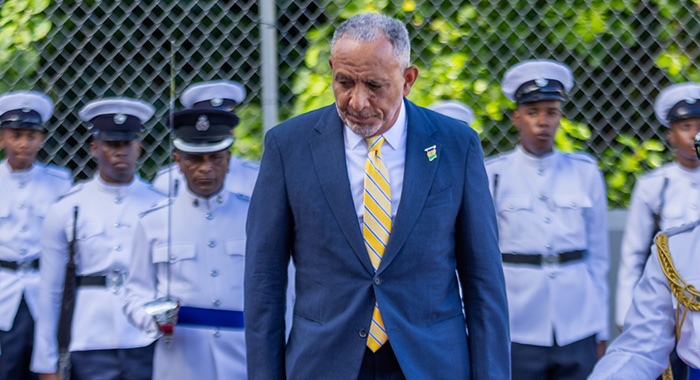
    St. Clair Leacock, St. Vincent’s Minister of National Security and Deputy Prime Minister, has launched a comprehensive review of police station conditions nationwide, declaring that officer accommodations must meet or exceed living standards officers experience in their personal homes. The minister’s campaign began with inspections of leeward stations, accompanied by Police Commissioner Enville Williams and local officials.

    In Barrouallie, Minister Leacock addressed the abandoned historic police station, clarifying that its 2021 closure resulted from sewage complications exacerbated by tidal conditions rather than general disrepair. Contrary to previous assessments deeming the problem insurmountable, Leacock noted that neighboring residences function without similar issues, indicating the need for deeper technical investigation. The ministry is evaluating whether to continue temporary measures or implement a permanent solution that preserves the building’s historic value while modernizing facilities.

    Leacock established a new mantra for his tenure: “Policemen must not be in living quarters that are worse than their home situation.” He emphasized that demanding police work requires high-quality workplace environments that support officer wellbeing and effectiveness. While acknowledging separate compensation discussions, Leacock focused immediate attention on basic comfort and customer service improvements for both officers and public visitors.

    The national review revealed all 24 stations require attention. At Kingstown’s Central Police Station, Leacock documented missing louvres, pest infestations, and mold problems. Commissioner Williams acknowledged the embarrassing conditions and expressed support for the minister’s prioritization of housing improvements, noting that proper facilities are essential for effective public service.

    Leacock proposed establishing a dedicated police maintenance unit that could also serve other public agencies during low-demand periods. For Barrouallie specifically, plans include potentially incorporating fire services and returning marine police presence to support the fishing community. All proposed solutions will undergo technical review and budget evaluation before presentation to the Prime Minister and Cabinet.

  • Former tourism, mobilisation ministers appointed opposition senators

    Former tourism, mobilisation ministers appointed opposition senators

    In a significant post-election political maneuver, opposition leader Ralph Gonsalves has appointed two former cabinet ministers who suffered electoral defeats to senatorial positions in St. Vincent and the Grenadines’ incoming Parliament. The appointments come as Gonsalves’ Unity Labour Party (ULP) faces a dramatic reversal of fortunes following their landslide defeat in the November 27 general elections.

    The newly appointed senators—Carlos James and Keisal Peters—both experienced notable electoral setbacks. James, who previously served as Minister of Tourism, Civil Aviation, Sustainable Development and Culture, lost his North Leeward constituency by 560 votes to NDP newcomer Kishore Shallow. This defeat marked a historic rejection, making James the first North Leeward MP since independence in 1979 to be ousted after a single term.

    Peters, who made history as the nation’s first female foreign affairs minister, failed to unseat NDP Chairman Daniel Cummings in West Kingstown. Despite her ministerial experience, Cummings expanded his victory margin to 1,241 votes, securing his fourth consecutive term.

    Gonsalves introduced an element of uncertainty regarding parliamentary proceedings, suggesting neither senator might attend Tuesday’s ceremonial opening of Parliament. He cited unspecified “security matters” requiring resolution and indicated his own attendance remained uncertain. The former prime minister, who held office from 2001 until last month’s electoral defeat, made these announcements through a social media video where he emphasized seasonal greetings while promising future commentary on national issues.

    The appointments occur against the backdrop of a dramatic political shift that ended the ULP’s 23-year governance. The New Democratic Party achieved an overwhelming 14-1 parliamentary majority, with only one ULP candidate retaining their seat. James’s electoral campaign was further marred by social media videos showing confrontations with constituents and law enforcement officials at polling stations, including an incident where he engaged in a physical altercation with a police officer.

    Despite these controversies, James conceded defeat graciously on November 28, acknowledging the electorate’s decision while expressing continued commitment to national service. The political landscape in St. Vincent and the Grenadines now enters a new chapter with these senatorial appointments signaling the opposition’s strategy for the upcoming parliamentary term.

  • Credentials or experience? Which one matters?

    Credentials or experience? Which one matters?

    In contemporary society, credentials have become the default currency of competence—degrees, diplomas, titles, and certifications are routinely displayed as shields against scrutiny. While these paper qualifications undoubtedly hold value, a critical question emerges regarding governance: what carries greater weight in leadership, formal education or practical experience?

    Academic achievements certainly matter. They represent discipline, theoretical knowledge, and the capacity to undergo rigorous assessment. A society that disregards formal learning does so at its own peril. However, these qualifications alone do not constitute comprehensive preparedness for governance.

    The crucible of lived experience provides equally vital lessons that cannot be acquired through academic study alone. Real-world exposure teaches practical problem-solving, resilience through failure, and nuanced understanding of how policies affect ordinary citizens. Someone might hold advanced degrees in public administration yet remain disconnected from the practical implementation of policies affecting marginalized communities.

    The most effective governance emerges from synthesizing both dimensions—the theoretical framework provided by education and the practical wisdom gained through experience. Neither extreme serves the public effectively: pure academic perspective without practical understanding breeds arrogance, while experience without theoretical foundation can lead to chaotic decision-making.

    Furthermore, credentials can sometimes function as exclusionary tools, preventing capable individuals who gained knowledge through community engagement and practical experience from contributing to governance. The insights of farmers regarding land use, teachers understanding classroom realities, or nurses comprehending healthcare delivery often surpass theoretical knowledge alone.

    Governance constitutes applied knowledge with real-world consequences—where theory meets practice, and reality typically prevails. The essential qualities for effective leadership include understanding constituents, demonstrating sound judgment under pressure, learning from errors, and practicing attentive listening.

    The optimal approach to governance recruitment shouldn’t prioritize qualifications over experience or vice versa, but rather demand both while emphasizing that neither academic credentials nor practical experience alone guarantee competent, accountable leadership. Academic achievements may open doors, but experiential wisdom guides effective action once inside.

    This perspective doesn’t devalue education but rather challenges the idolization of credentials, emphasizing that true leadership manifests through service and accountability rather than paper qualifications alone—a standard the public rightfully deserves.