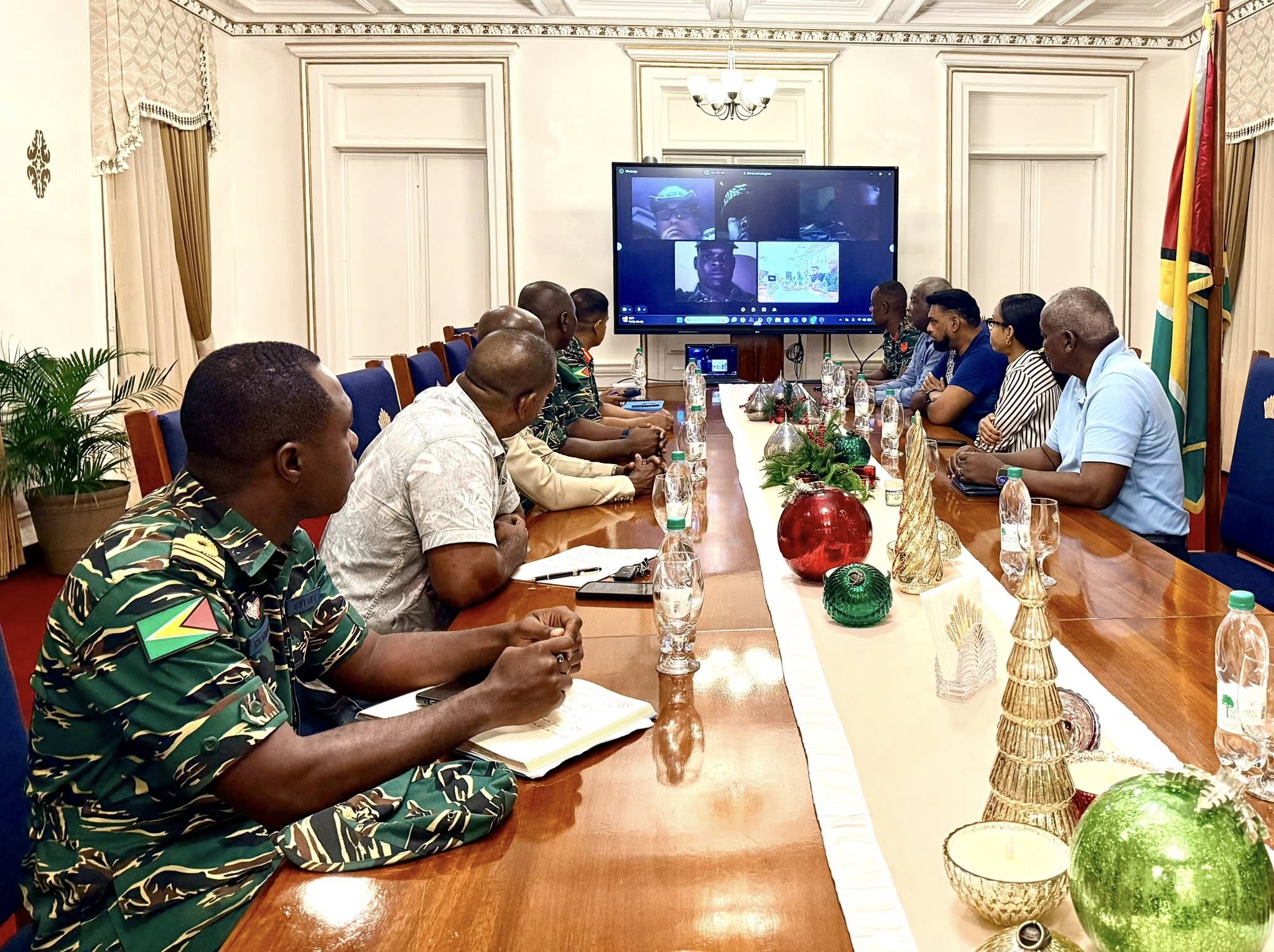
International condemnation has swept across multiple continents following United States military operations in Venezuelan territory and the capture of President Nicolás Maduro and First Lady Cilia Flores. The unprecedented intervention, which occurred on January 3, 2026, has triggered urgent diplomatic responses from nations worldwide warning of severe regional destabilization and violations of international law.\n\nCaribbean nations demonstrated immediate concern given their geographic proximity to Venezuela. Guyanese Prime Minister Dr. Irfaan Ali convened an emergency session with the Defence Board and national security apparatus, highlighting heightened alert status amid existing regional tensions. Trinidad and Tobago’s Prime Minister Kamla Persad-Bissessar explicitly distanced her nation from the military operations, emphasizing continued peaceful relations with Venezuela despite the unfolding crisis.\n\nOpposition Leader Pennelope Beckles of Trinidad and Tobago characterized developments as \”deeply troubling,\” reaffirming commitments to maintain the Caribbean as a \”Zone of Peace\” while expressing particular concern for civilian safety and Trinidadian nationals in Caracas.\n\nLatin American powers delivered forceful responses. Brazilian President Luiz Inácio Lula da Silva condemned the bombings as crossing \”an unacceptable line,\” warning they established \”an extremely dangerous precedent for the entire international community.\” Mexican authorities issued firm condemnation of unilateral military action, urging immediate United Nations intervention to de-escalate tensions.\n\nEuropean leaders emphasized legal and humanitarian dimensions. European Commission Vice-President Kaja Kallas stressed that \”principles of international law and the UN Charter must be respected under all circumstances.\” European Council President António Costa called for de-escalation and resolution through proper legal channels, while Spanish officials confirmed their diplomatic personnel’s safety and offered support for peaceful solutions.\n\nRussia’s Foreign Ministry described the operation as \”an act of armed aggression against Venezuela\” lacking factual justification, though confirming no injuries among Russian citizens in Caracas.\n\nThe United States justified its actions through legal frameworks. Attorney General Pamela Bondi announced indictments against Maduro and Flores in the Southern District of New York, charging the Venezuelan leader with Narco-Terrorism Conspiracy, Cocaine Importation Conspiracy, and weapons-related offenses. Bondi characterized the operation as a \”highly successful mission\” ensuring the defendants would \”face the full wrath of American justice.\”\n\nVenezuelan Executive Vice President Delcy Rodríguez denounced the intervention as \”extremely serious military aggression\” and a \”flagrant violation of the UN Charter,\\” accusing Washington of attempting to seize Venezuela’s strategic resources while vowing resistance.
标签: Saint Lucia
圣卢西亚
-
Saint Lucia, Caribbean flights disrupted as US strikes close regional airspace
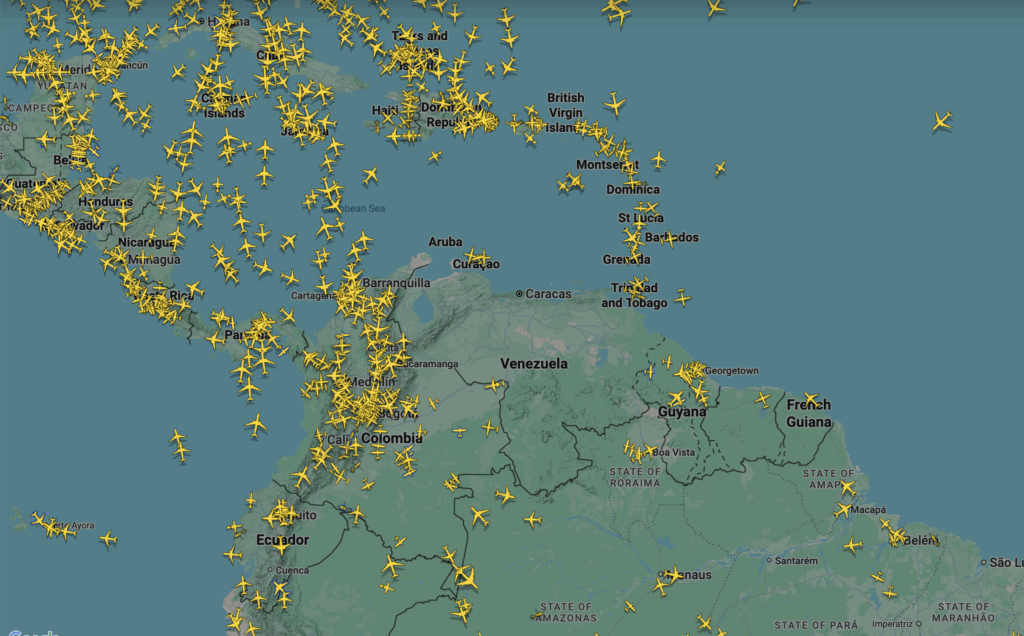
A major aviation disruption swept across the Eastern Caribbean on January 3 as the US Federal Aviation Administration (FAA) implemented emergency airspace restrictions following military operations near Venezuela. The directive prompted immediate flight cancellations and significant schedule adjustments throughout the region.
The FAA’s emergency Notices to Airmen (NOTAMs) effectively closed substantial portions of Eastern Caribbean airspace, creating a ripple effect across multiple island nations. Airports in Puerto Rico, Aruba, St Maarten, Barbados, Saint Lucia, Grenada, and the US Virgin Islands were among those experiencing substantial operational impacts.
JetBlue Airways, maintaining extensive regional operations, cancelled approximately 215 flights systemwide. American Airlines confirmed schedule modifications, emphasizing passenger and crew safety as their primary concern. Delta Air Lines specifically listed affected destinations including San Juan, Aruba, Barbados, Saint Lucia, and Grenada. Both United Airlines and Southwest Airlines reported similar cancellation patterns due to the restrictions.
The Saint Lucia Air and Sea Ports Authority (SLASPA) confirmed significant disruptions to flight operations between the United States and Caribbean destinations, noting numerous services experienced either delays or outright cancellations.
Travel chaos ensued as passengers found themselves stranded at airports with uncertain resumption timelines. Regional tourism officials expressed particular concern about the timing during peak winter travel season, traditionally the region’s busiest tourism period.
The FAA indicated restrictions were initially scheduled to expire late January 3 but maintained possibility of extension based on ongoing security assessments. Airlines advised affected passengers to consult official channels for rebooking options and refund procedures. While US carriers haven’t operated direct flights to Venezuela since 2019 due to political instability, the current restrictions notably extend beyond Venezuelan airspace, affecting broader Caribbean transit routes.
-
Maduro and wife charged after US announces capture following Venezuela strike
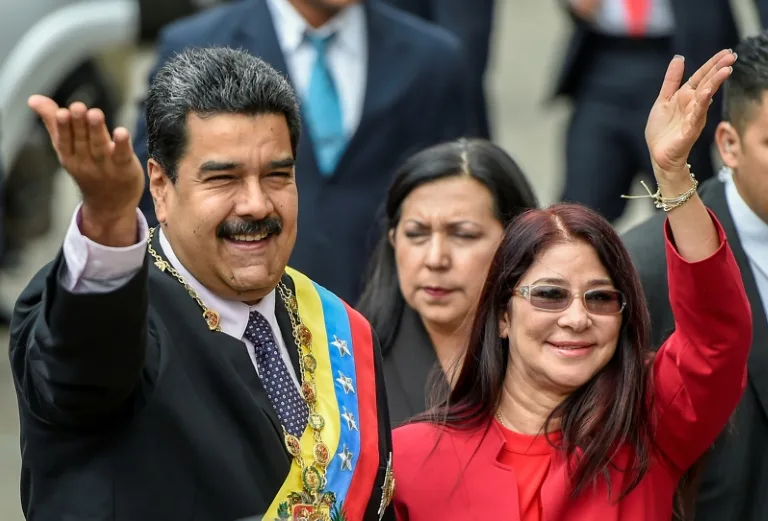
The United States has initiated unprecedented legal and military actions against Venezuelan leadership, with Attorney General Pamela Bondi formally announcing criminal indictments against President Nicolás Maduro and First Lady Cilia Flores. The charges, filed in the Southern District of New York, include serious allegations of Narco-Terrorism Conspiracy, Cocaine Importation Conspiracy, and weapons-related violations involving machine guns and destructive devices.
The judicial developments coincided with military operations against Venezuelan territory. President Donald Trump confirmed the execution of ‘large-scale strikes’ targeting strategic locations in Venezuela, resulting in significant explosions across the capital city of Caracas. Initial assessments indicate several critical installations sustained damage, including La Carlota military airfield and the primary Fuerte Tiuna military base, with widespread power outages affecting surrounding communities.
In her official statement delivered via social media platform X, Bondi commended President Trump for ‘demonstrating courage in demanding accountability on behalf of the American people’ and extended gratitude to U.S. military forces for what she characterized as a ‘highly successful mission.’
The Venezuelan government has responded to these developments by declaring a nationwide state of emergency as the situation continues to evolve rapidly. These actions represent a significant escalation in the ongoing political confrontation between the United States and Venezuela, which has endured years of diplomatic tension and economic sanctions.
-
National emergency in Venezuela called as US strikes, captures Maduro
In a dramatic escalation of tensions, former U.S. President Donald Trump announced via Truth Social on January 3 that American forces had executed a “large-scale strike” against Venezuela, resulting in the capture and extraction of President Nicolás Maduro and his wife from the country. Trump characterized the mission as a “brilliant operation” conducted with U.S. law enforcement coordination, promising further details at a Mar-a-Lago news conference.
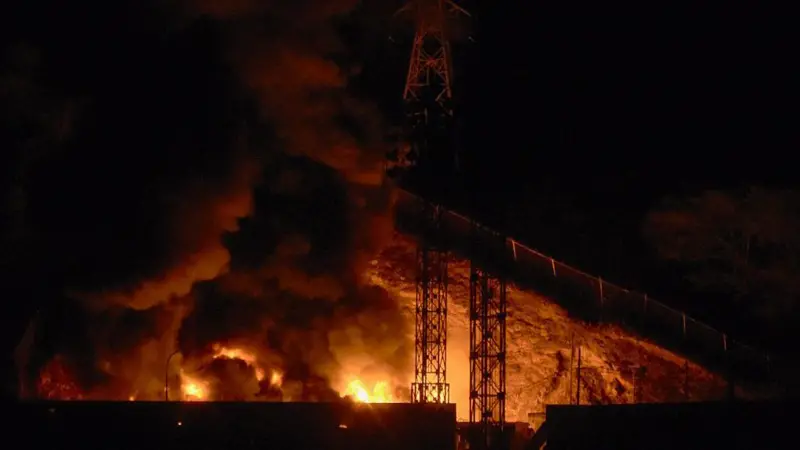
Eyewitness accounts from Caracas described powerful explosions rocking the capital at dawn, with visible smoke plumes and unverified social media footage showing aerial military activity. The Venezuelan government confirmed strikes targeted key military installations including La Carlota airfield and Fuerte Tiuna base, with collateral damage causing power outages in surrounding communities.
The Venezuelan administration issued a formal statement vehemently denouncing what it termed “military aggression” aimed at seizing national oil and mineral resources. Regional allies Cuba and Colombia joined in condemning the operations, while Trinidad and Tobago’s Prime Minister explicitly denied participation in the military actions.
The Caribbean Community (CARICOM) convened an emergency meeting, expressing “grave concern” about regional implications. This development follows years of strained relations, with Washington consistently challenging Maduro’s legitimacy and accusing his administration of narcotics trafficking, while Caracas maintains these actions represent imperialist designs on Venezuela’s natural resources.
-
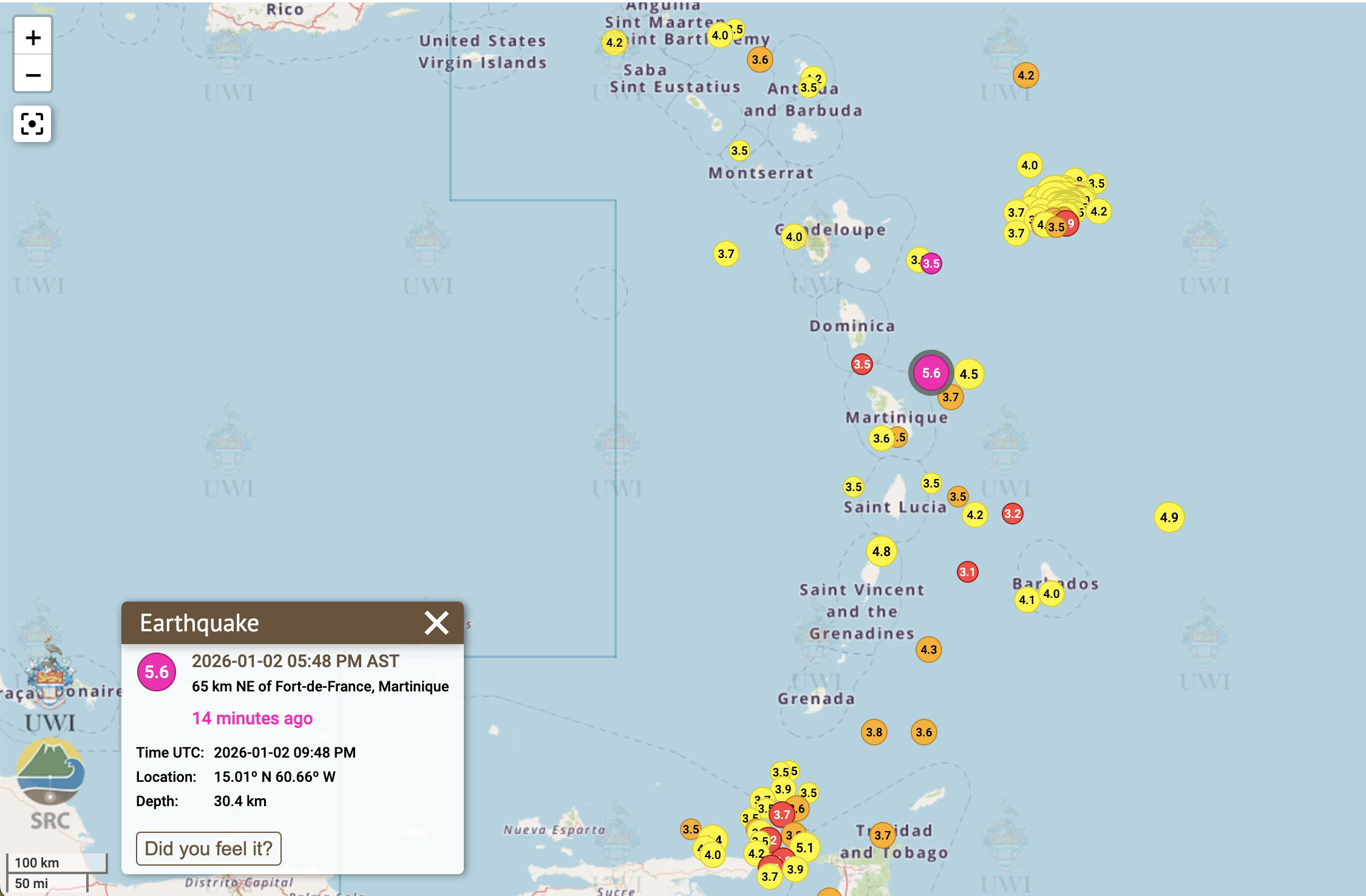
5.6-magnitude earthquake rocks Saint Lucia
The Eastern Caribbean region experienced significant seismic activity as a substantial earthquake measuring 5.6 in magnitude struck near Saint Lucia on Friday, January 2nd. The tremor occurred at precisely 5:38 p.m. local time, registering at a considerable depth of 30.4 kilometers beneath the Earth’s surface, according to preliminary data released by the University of the West Indies’ Seismic Research Centre.
The seismic event’s epicenter was pinpointed approximately 65 kilometers northeast of Fort-de-France, Martinique, indicating a substantial tectonic disturbance in the region. The quake’s effects were widely reported across multiple population centers including Ciceron, Castries, and Gros Islet, where residents experienced noticeable shaking and vibration.
This significant seismic event follows closely on the heels of a smaller 3.5-magnitude earthquake that occurred off the coast of Guadeloupe in the early hours of New Year’s Day, just after midnight. The consecutive seismic activities have raised attention to the heightened tectonic movements currently affecting the Caribbean region, known for its complex geological structure along multiple fault lines.
Seismologists are continuing to monitor the situation for potential aftershocks and are analyzing data to better understand the implications of these back-to-back seismic events. The Caribbean region, situated along the boundary of the Caribbean and North American tectonic plates, frequently experiences such seismic activity, though earthquakes of this magnitude warrant particular attention from both scientists and emergency preparedness officials.
-
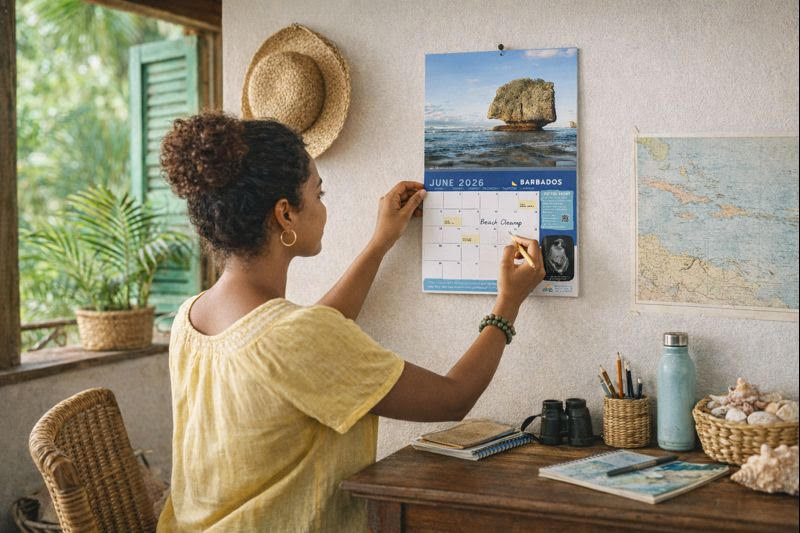
EPIC offers 25th anniversary Caribbean calendar
Environmental Protection in the Caribbean (EPIC), a Florida-registered non-profit organization, commemorates its 25th anniversary with the introduction of a special 2026 fundraising calendar. Founded in 2000 with the explicit mission of safeguarding the Caribbean’s ecological heritage through scientific research, habitat restoration, educational programs, and policy advocacy, the organization is reinforcing its commitment to preserving the region’s most vulnerable ecosystems.
With operational presence spanning more than 20 Caribbean territories and established offices in St. Maarten and St. Vincent and the Grenadines, EPIC continues its dedicated work across the Antilles. The newly launched ‘Seas & Scenes’ calendar, announced in a January 2 press release, serves dual purposes as both a fundraising tool and an artistic celebration of the archipelago’s natural splendor.
The calendar features winning entries from the 2025 Love the Caribbean Photo Contest, presenting twelve months of visually stunning imagery that captures the essence of Caribbean life. Each month highlights a different island’s distinctive coastlines, native wildlife, and cultural moments, accompanied by educational trivia and motivational quotations that illuminate the environmental and cultural uniqueness of each location.
Executive Director Tabitha Stadler emphasized the collaborative nature of EPIC’s achievements: ‘Our quarter-century of conservation success stems from partnerships with local communities, regional volunteers, and dedicated supporters across the islands. This anniversary not only honors those who have contributed to our mission but also represents a beacon of hope for everyone invested in the sustainable future of the Caribbean and its inhabitants.’
The organization has invited public participation through donations via epicislands.org/donate until January 31st, with proceeds supporting ongoing environmental protection initiatives throughout the Caribbean region.
-
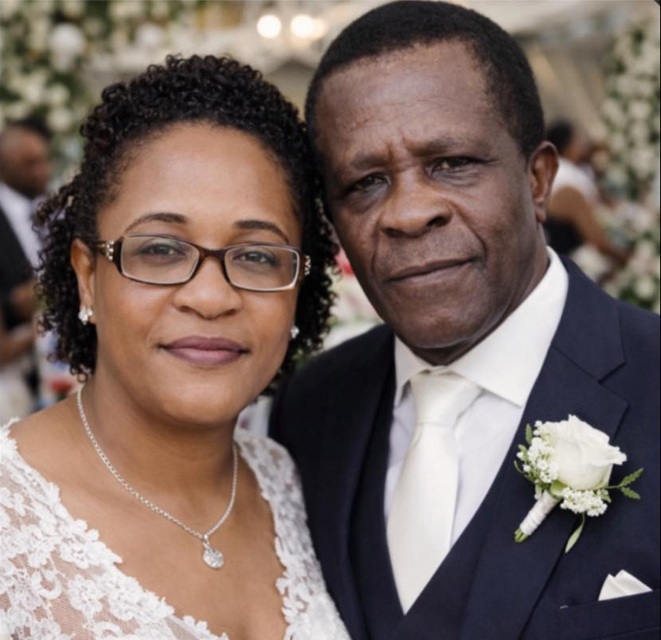
Former Grenada PM married in Saint Lucia
In a notable Caribbean union, former Grenadian Prime Minister Keith Mitchell, 79, has exchanged vows with Trinidad and Tobago native Dr. Ophelia Wells, a distinguished policy consultant and economist. The ceremony took place in Saint Lucia, recently honored for the eighth consecutive year as the World’s Leading Honeymoon Destination by the World Travel Awards.
The intimate nuptials occurred near Pigeon Island in Gros Islet, attended by a select group of Grenadian guests on December 27th. This marriage represents a second chapter for both individuals – Mitchell was previously married to Marietta Mitchell for nearly forty years, while Dr. Wells, 41, was formerly wed to Dennis Cornwall, who currently serves as Finance Minister in the administration of Prime Minister Dickon Mitchell (no relation to Keith Mitchell).
Mitchell’s political legacy includes his historic tenure as Grenada’s longest-serving prime minister, leading the New National Party from 1989 until 2024. Under his leadership, the NNP achieved remarkable electoral successes, including sweeping all 15 parliamentary seats in both the 2013 and 2018 elections. His political career concluded in June 2022 when he was defeated by current Prime Minister Dickon Mitchell.
The newlyweds share professional connections to Grenada’s financial sector. Dr. Wells previously served as Permanent Secretary in Grenada’s Ministry of Finance, Planning, Economic Development, and Physical Development as recently as 2019, while Mitchell concurrently held the position of Finance Minister.
-
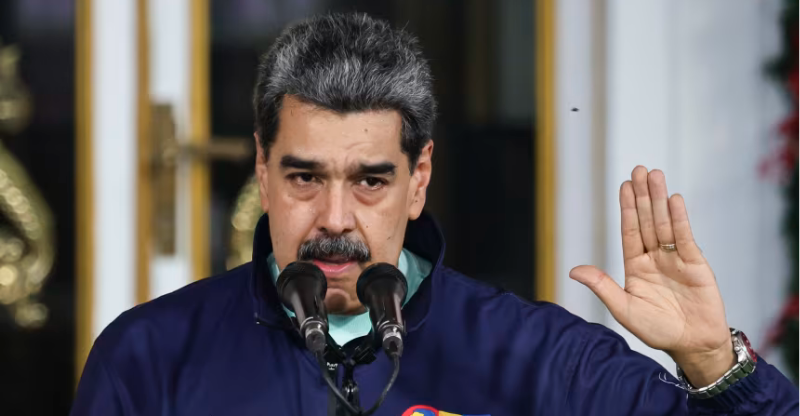
Americans detained as US-Venezuela tensions reach boiling point
Venezuelan authorities under President Nicolás Maduro have intensified a concerning pattern of detaining U.S. nationals, with at least five American citizens taken into custody over recent months. U.S. officials interpret these arrests as a strategic maneuver by Caracas to create bargaining chips against Washington’s escalating pressure campaign.
This detention strategy appears modeled after Russian-style ‘hostage diplomacy,’ where foreign citizens become pawns in geopolitical negotiations during periods of strained bilateral relations. While Venezuelan authorities have suggested some detainees might have connections to drug smuggling operations, the Trump administration perceives the timing and frequency of these arrests as politically motivated rather than legitimate law enforcement actions.
The developments occur alongside a significant hardening of U.S. policy toward Venezuela. Washington has transitioned from imposing financial sanctions to implementing more direct and kinetic measures against Maduro’s government. This escalation represents a substantial shift in America’s approach to confronting the Venezuelan regime.
Despite these mounting pressures, Maduro continues projecting an image of unwavering control. During a recent appearance on state-operated VTV, the Venezuelan leader avoided addressing specific operational details but emphatically declared his nation’s defense systems remain fully operational. “Our people are safe and at peace,” Maduro asserted, maintaining that military and police forces continue to successfully guarantee Venezuela’s territorial integrity.
These detentions unfold within a broader context of systematic internal repression. Human rights organizations document that Venezuela currently holds hundreds of political prisoners, with many arrests tracing back to the controversial 2024 presidential election that consolidated Maduro’s power amid widespread allegations of electoral misconduct.
-
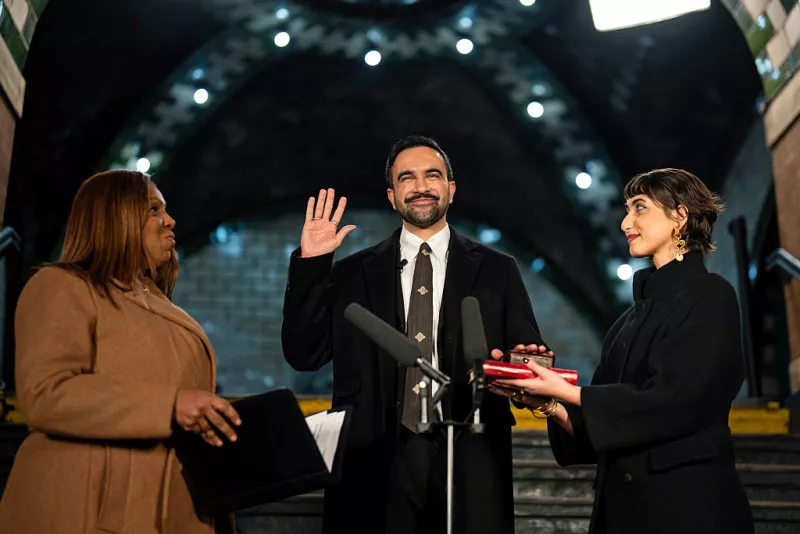
Zohran Mamdani sworn in as NYC’s first Muslim mayor
In a historic transition of power marking a new chapter for American urban politics, Zohran Kwame Mamdani officially assumed office as the 111th Mayor of New York City shortly after midnight. The ceremony, though modest in scale, carried profound symbolic weight as Mamdani became the first Muslim to lead the nation’s largest municipal government.
The swiftness of Mamdani’s political ascent is remarkable. Just one year prior, he occupied a relatively obscure position as a state legislator; today he commands the helm of one of the world’s most complex urban administrations. “Thank you so much to everyone for being here, Happy New Year to New Yorkers,” Mamdani declared, displaying his characteristic smile. “This is truly the honor and privilege of a lifetime.”
Attorney General Letitia James, a key political ally, administered the oath of office. Mamdani’s background makes his victory particularly significant within the current national context. Born in Uganda to parents of Indian descent, his campaign gained momentum precisely as the previous federal administration implemented restrictive immigration policies targeting Muslim-majority and African nations.
The early transition period has revealed both conciliatory gestures and immediate challenges. In a surprising November development, Mamdani conducted an Oval Office meeting with former President Trump, who despite their profound ideological differences, offered support by stating “I want New York City to be great.”
Domestically, Mayor Mamdani has demonstrated pragmatic governance by retaining NYPD Commissioner Jessica Tisch, a decision applauded by municipal management experts. However, the administration encountered its first significant setback when a high-level appointee withdrew following controversy over historical social media posts identified as anti-Semitic by the Anti-Defamation League.
While Governor Kathy Hochul has expressed preliminary support for the mayor’s childcare initiatives, the broader political battle for his progressive agenda commences with his formal inauguration.
-
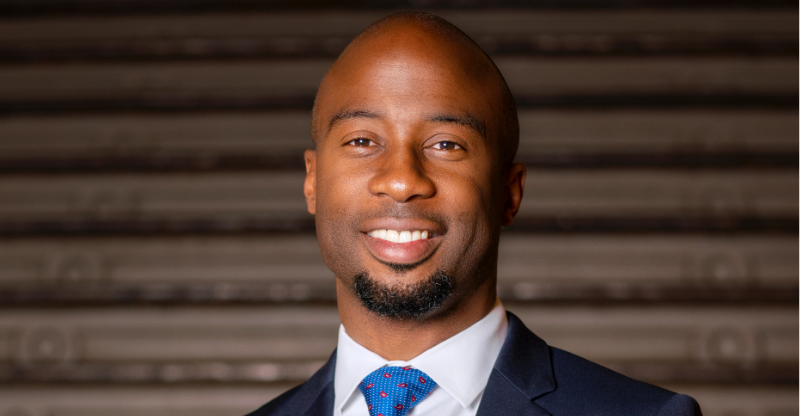
Jamaican-born educator to lead America’s largest school system
New York City’s public education system, serving approximately one million students, will now be guided by Jamaican-born educator Kamar Samuels following his landmark appointment as Chancellor by Mayor Zohran Mamdani. This historic selection marks a significant achievement for both Samuels and the Caribbean diaspora community in New York.
Samuels assumes leadership of one of the world’s most complex educational networks, overseeing an institution with over 113,000 staff members and an annual budget approaching $40 billion. His educational journey began in Kingston, Jamaica, where he attended Hope Valley Experimental School before graduating from Jamaica College in 1993. Shortly thereafter, he immigrated to the United States, where he pursued accounting studies at Baruch College before obtaining a master’s degree in childhood education from Lehman College.
Prior to his elevation to chancellor, Samuels ascended through the ranks of New York’s educational leadership, serving in senior administrative positions including superintendent roles in both Brooklyn and Manhattan. His professional development was significantly influenced by the New Leaders for New Schools initiative implemented during former Mayor Michael Bloomberg’s administration.
In his initial statements following the appointment, Samuels emphasized his immigrant background and educational philosophy. “As a Jamaica-born immigrant, I am excited to create an educational system that is affordable for all students,” he declared, highlighting his commitment to equitable access to quality education.
The selection has garnered widespread acclaim from both American and Jamaican community leaders. Colleagues have characterized Samuels as a visionary educator dedicated to student achievement, while the Jamaican Consulate in New York celebrated his accomplishment as reflective of the substantial contributions made by Jamaicans living abroad.