标签: Saint Lucia

圣卢西亚

  • From pathways to investment: Tackling the US$6 billion food challenge for the Caribbean

    From pathways to investment: Tackling the US$6 billion food challenge for the Caribbean

    For decades, Caribbean nations have grappled with a deep-seated structural crisis that extends far beyond agricultural policy: a food system that leaves the region among the most food import-dependent on Earth, draining more than $6 billion annually from regional economies while failing to deliver basic food security and public health for local populations. As Small Island Developing States (SIDS), Caribbean countries face overlapping cascading risks that have turned food system fragility into a core barrier to long-term sustainable development. Persistent food insecurity, sky-high rates of diet-related non-communicable diseases, extreme climate vulnerability, and constant exposure to global supply chain shocks that can send food prices soaring overnight are not isolated issues – they are interconnected symptoms of a system in need of wholesale transformation.

    Today, regional leaders have redefined food security as a cross-cutting priority that touches every pillar of national progress: it is no longer simply an agricultural concern, but a foundation of economic resilience, public health, climate adaptation, and inclusive sustainable growth. Recognizing this urgent reality, Caribbean governments through the Caribbean Community (CARICOM) have elevated food systems transformation to a top regional agenda via the 25 x 25 Plus Five Initiative, which targets reduced reliance on food imports while bolstering domestic production, cross-regional food trade, and overall system resilience. Individual nations across Barbados and the Eastern Caribbean have followed this with tailored National Food Systems Pathways, mapping out the specific investments, cross-sector partnerships, and policy overhauls required to realign local food systems with global Sustainable Development Goals.

    But for all this policy progress, one critical bottleneck has continued to block large-scale change: accessible, sufficient financing. Faced with historically high public debt levels and severely constrained fiscal space, Caribbean governments cannot bear the full cost of transformation alone – even as public investment remains an indispensable anchor for the work. Scaling up systemic food system change requires a massive influx of new capital that combines public resources, development finance, and dramatically expanded private sector investment. This gap was the core impetus for a landmark investment forum recently convened in Barbados, which brought together a diverse coalition of stakeholders: national governments, institutional investors, multilateral financial bodies, private sector leaders, regional governance groups, and United Nations agencies, all united around a single groundbreaking premise: food systems should be framed not just as a global development priority, but as a viable, high-impact investable asset class.

    What set this gathering apart from traditional development conferences was its unwavering focus on unlocking private capital – specifically private equity, impact investment, and blended finance structures designed to support small and medium enterprises and build critical infrastructure across every segment of regional food value chains. By connecting growth-starved local food businesses with patient capital and matching investors to scalable, bankable opportunities, the initiative aims to unlock new financing that complements rather than replaces public investment, avoiding further strain on overstretched government balance sheets.

    A landmark deliverable from the forum was the launch of a regional investment Deal Book, which aggregates roughly $320 million in ready-to-explore investment opportunities across seven Caribbean countries. Opportunities span the full food system: from traditional agriculture and artisanal fisheries to value-added agro-processing, cold storage and distribution logistics, and strategic climate-resilient food system infrastructure. The Deal Book serves as a tangible, practical bridge between investors searching for high-impact emerging market opportunities and Caribbean food sector projects searching for the capital to scale, while creating structured pathways for direct engagement between governments, local enterprises, and global and regional investors.

    Initial outcomes from the forum have already exceeded expectations, with tangible progress recorded across four sector-specific deal rooms. Participants dove deep into investment-ready and near-investment-ready projects, collaboratively designing blended finance structures, risk-sharing agreements, and cross-stakeholder partnerships to move projects from planning to implementation.

    Beyond immediate transaction progress, the forum marked a critical shift in regional and global perspective: food systems are now increasingly recognized as strategic drivers of economic diversification, national resilience, global competitiveness, and inclusive growth. Targeted investments across production, processing, logistics, and last-mile distribution will not only strengthen regional supply chains and reduce exposure to external price shocks – they will also spawn new small businesses, generate much-needed formal employment, and improve public health outcomes across the region.

    For the United Nations, the forum reinforced a key lesson about driving systemic change: transforming food systems cannot be achieved through siloed technical work from individual UN agencies. It requires integrated, cross-sector solutions that connect agriculture, nutrition, public health, climate resilience, trade policy, private sector development, and financing into a unified effort. The UN Resident Coordinator System plays a uniquely valuable role in this kind of collective work, uniting disparate capabilities across the UN development system around a shared regional priority.

    In Barbados and the Eastern Caribbean, the UN Resident Coordinator Office (RCO) has already aligned the full range of UN system expertise behind the regional food systems transformation agenda. Working closely with the Food and Agriculture Organization (FAO), the World Food Programme (WFP), the UN Food Systems Coordination Hub, and a range of local and international partners, the RCO has helped align policy support, technical assistance, cross-sector partnerships, and financing pipelines with the priorities that national governments have identified themselves.

    The Barbados forum showcased the power of this integrated, convening-led approach, bringing all relevant stakeholders around the table toward a shared goal. It also highlighted the UN’s unique comparative advantage as a trusted, neutral broker that can bridge gaps between national development priorities and global investment capital.

    As stakeholders emphasize, the true success of the forum will not be measured by the number of dialogues held, but by the volume of investment ultimately mobilized, the number of local food businesses expanded, and the progress delivered toward building resilient, competitive, and food-secure systems across the entire Caribbean. Its most important legacy may therefore be the work that unfolds in the months and years ahead. The hard work of turning commitments into impact starts now.

    This commentary is written by Kenroy Roach, Head of the UN Resident Coordinator Office for Barbados and the Eastern Caribbean.
  • FIFA investigating claims of racist abuse involving IShowSpeed

    FIFA investigating claims of racist abuse involving IShowSpeed

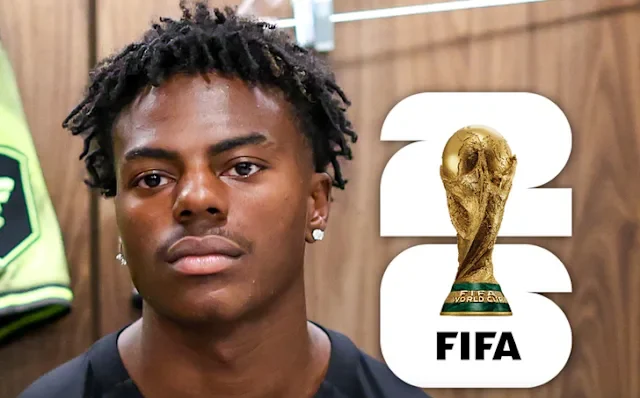
    Global football’s governing body FIFA has opened a formal probe into allegations of racist abuse connected to prominent American streaming personality and social media creator IShowSpeed, following a widely circulated clip of an on-site confrontation at a recent international match.

    The incident unfolded on July 3 at Miami, Florida’s Hard Rock Stadium, during a friendly pre-tournament fixture between Argentina and Cape Verde. The viral footage, captured during IShowSpeed’s live YouTube broadcast, shows the influencer — who was wearing a Cape Verde national team kit — engaged in a heated verbal altercation with an attendee donning Argentina’s team jersey.

    IShowSpeed, who boasts a massive online following of more than 56 million subscribers on YouTube and an additional 53 million followers on TikTok, has become a well-known figure among young football fans in recent months. As part of his high-profile Caribbean tour just weeks before the match, he visited Saint Lucia, and has since streamed live content from multiple matches connected to this year’s FIFA World Cup, solidifying his presence in the global football conversation.

    After the confrontation clip spread rapidly across social media platforms, FIFA confirmed it had officially taken notice of the incident and launched its review process. In an official public statement released Tuesday, the governing body delivered a firm rebuke of any discriminatory behavior tied to the sport.

    “FIFA strongly condemns racism, hate and discrimination in all forms,” the statement read. “These actions have no place in football, at the FIFA World Cup, or anywhere in society. The FIFA World Cup is a celebration of unity, diversity and respect. It brings together people, cultures and communities from around the world, and anyone who acts in a manner that undermines these values is not welcome in our game.”

    As of the latest update, FIFA has not released additional details regarding the specific nature of the abuse allegations, nor has it shared a timeline for when the investigation will conclude or any potential disciplinary actions that could follow.

  • Windies secure overdue series victory against Sri Lanka

    Windies secure overdue series victory against Sri Lanka

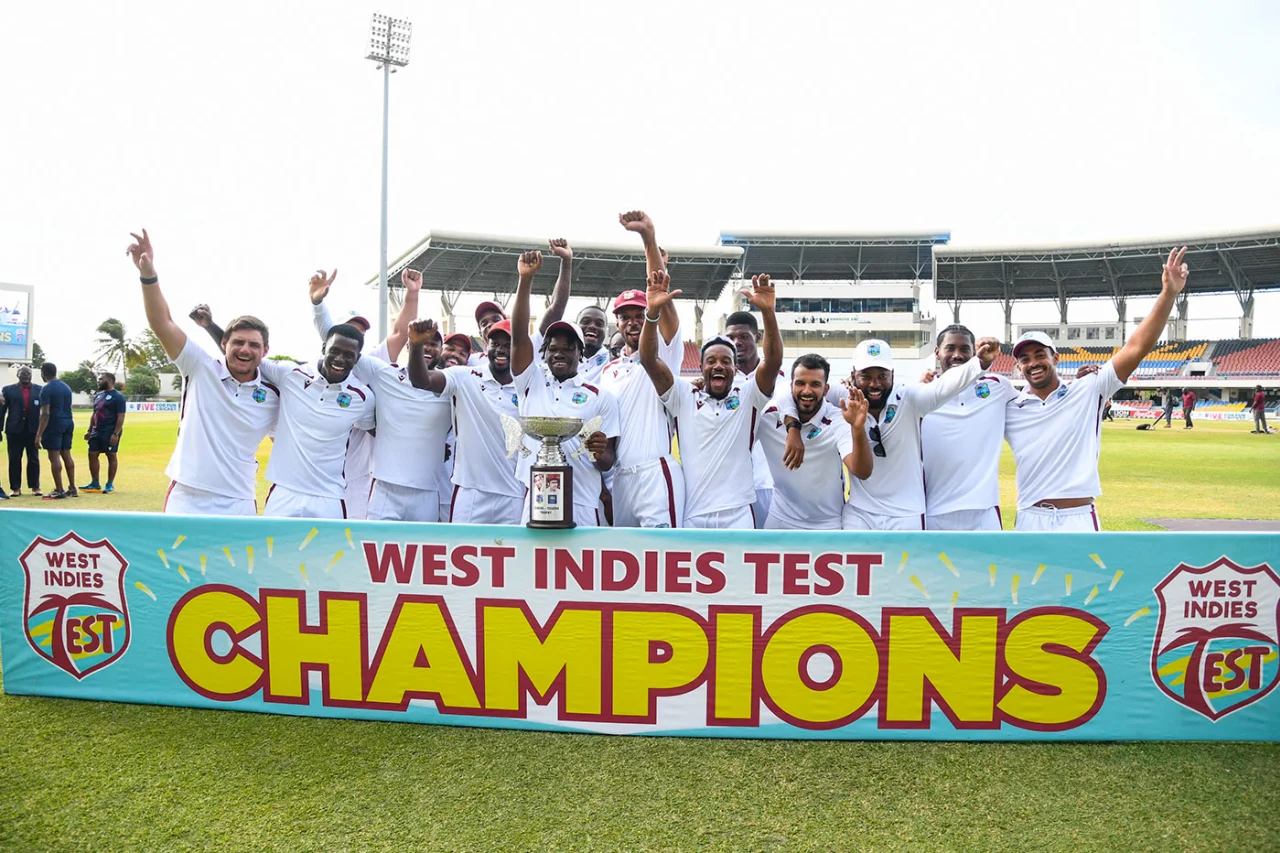
    After nearly a quarter of a century of disappointment against Sri Lanka in Test cricket, the West Indies have finally shattered their long-standing curse, securing a 1-0 series victory following a hard-fought draw in the second and final Test, earning the inaugural Sobers-Tissera Trophy.

    The 23-year drought dates all the way back to 2003, when the Caribbean side last tasted Test series success against the South Asian nation. For generations of West Indian cricketers, Sri Lanka had stood as an unbeatable bogey, making this breakthrough all the more meaningful for the program.

    Beyond ending the historical dry spell, the result delivers critical, much-needed points for the West Indies in the ongoing ICC World Test Championship cycle. This marks their first series win in the current tournament, lifting a massive weight of expectation from the entire squad ahead of future matches.

    While the second Test ultimately ended in a stalemate, the series will be remembered for the West Indies’ dramatic improvement with the bat across both matches. The first Test saw opening batsman Amir Jangoo hammer an incredible career-best 233, while captain Roston Chase contributed an outstanding 194 to anchor the innings. In the second Test, all-rounder Justin Greaves turned in a match-saving defensive masterclass with an unbeaten 180, a performance that earned him Player of the Series honours. Veteran top-order batsman Shai Hope also added a solid century, finishing with 112 to round out a dominant showing with the willow from the Caribbean side.

    The victory is particularly sweet for the team’s leadership duo: head coach Daren Sammy and captain Roston Chase. The pair had faced growing public and institutional criticism in the months leading up to the series, with many questioning their ability to deliver results at the international Test level. This win marks their first Test series victory as a leadership combination, silencing many of their recent critics.

    Speaking after the trophy was lifted, Chase expressed his pride in leading the team from the front to end the drought. “I’ve been trying for the last series and stuff but to go and actually lead from the front, it feels great,” the captain said.

    Reflecting on the team’s batting growth across the series, Chase noted that four individual centuries across two matches marked a tangible step forward for the side. “We’ve been scoring hundreds in the past games but these are big hundreds and not only that, we turn them into big totals as well. Not just one guy getting a hundred and we probably just getting over 250, but for two guys to get hundreds in two innings, that says a lot… I think this is a stepping stone for us going forward.”

    Photo credit: Getty Images

  • Healthy eating mural unveiled at Soufriere Primary School

    Healthy eating mural unveiled at Soufriere Primary School

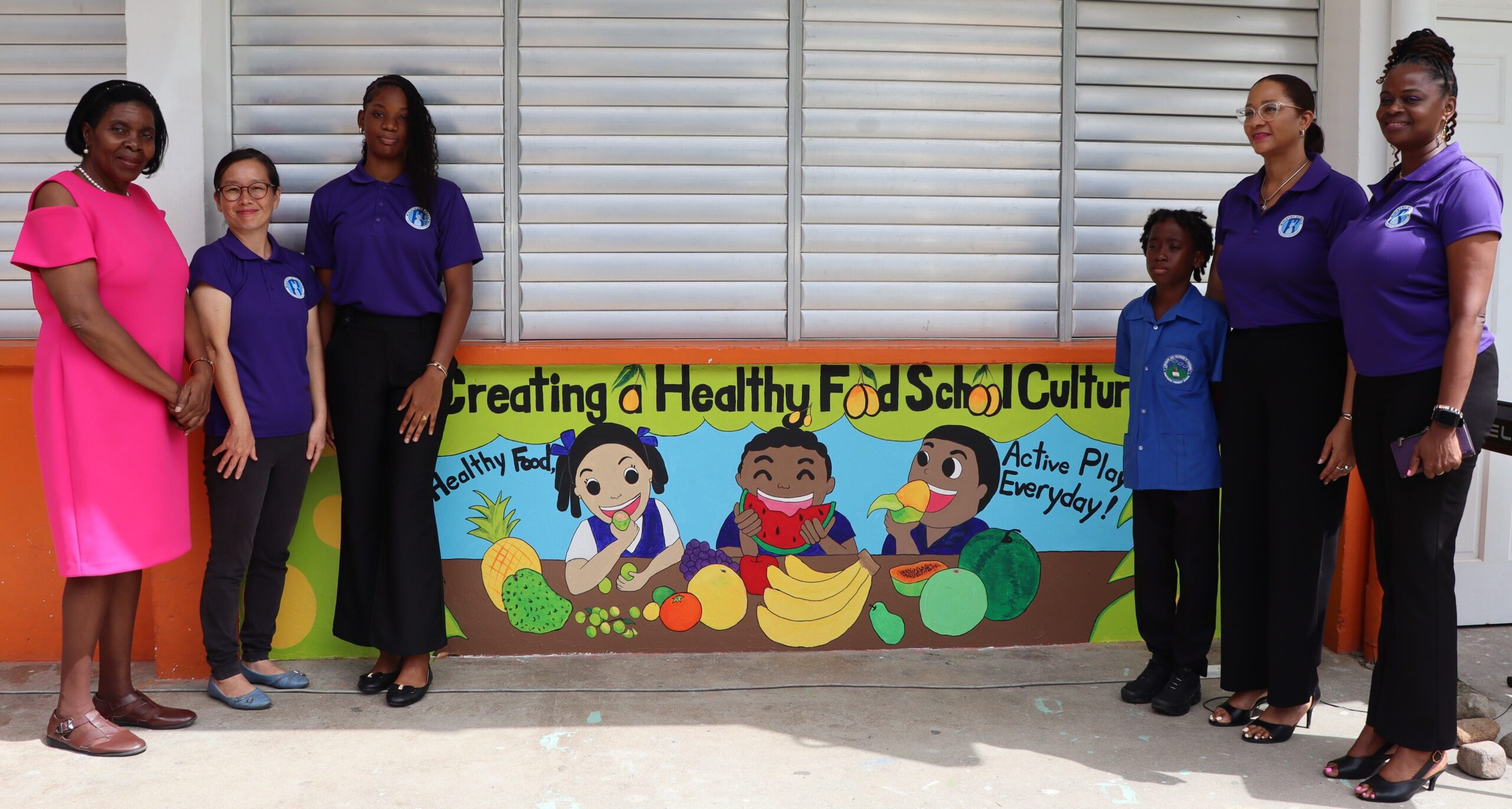
    In a collaborative effort to embed lifelong healthy habits among young learners, a custom-designed healthy eating mural has been formally unveiled at Soufriere Primary School in Saint Lucia, capping off the island nation’s annual Nutrition Awareness Month. Spearheaded by the Ministry of Health, Wellness and Nutrition, the project represents a public commitment to equipping children with the resources, knowledge, and environmental support to make informed, nutritious food choices from an early age.

    Lisa Hunt, the country’s Chief Nutritionist, explained that the permanent wall artwork is intended to act as a constant, accessible teacher for everyone who enters the school grounds. “Every time a child walks past this mural, we want it to spark a small reminder to prioritize fresh produce, hydration, regular movement, and the high-quality local foods grown right here in Saint Lucia,” Hunt shared during the unveiling. “It’s not just for students, either. We hope it encourages teachers, visiting parents, and the entire surrounding community to re-examine their own daily habits and commit to healthier lifestyles together.”

    Cecilia Clovis-Haynes, principal of Soufriere Primary, called the initiative perfectly timed and deeply aligned with the school’s existing work to nurture student well-being. She emphasized that the mural is far more than decorative artwork: it is a functional pedagogical tool that reinforces classroom lessons about nutrition and growth. “What children eat directly impacts how they grow, how well they focus in class, and their ability to chase their future goals,” Clovis-Haynes noted. “This piece ties directly into everything we’ve been teaching our students about health, so it’s an incredible reinforcement of our work here.”

    Joel Charles-Charlemagne, Education Officer for District 8, echoed this perspective, noting that consistent visual exposure is one of the most effective ways to embed long-term healthy habits. “Whether students are walking to first period, gathering for morning assembly, or eating lunch in the schoolyard, they’ll see these bright, engaging images of colorful local produce and active kids playing,” Charles-Charlemagne explained. “This mural turns our entire school environment into a living learning space that actively pushes back against unhealthy routines and choices.”

    Emma Hippolyte, Parliamentary Representative for the Soufriere/Fond St Jacques constituency, praised the project while stressing that meaningful change to children’s eating patterns requires cross-sector collaboration beyond a single art installation. Hippolyte noted that the partnership between the Ministry of Health and Ministry of Education behind the mural is a strong foundational step, but long-term progress requires engagement across all parts of a child’s life. “We can teach kids about healthy eating in school, but we also need to work with parents to rethink what goes into school lunch kits, and with school staff to ensure nutritious options are the default in school canteens,” she explained. “Change has to come from multiple angles to stick.”

    The mural was created by Yukari Charles, a visual arts teacher at Soufriere Comprehensive Secondary School, with support from former student Jackie Lawrence, bringing together creative talent from across the local education community to advance the public health goal.

  • It’s not just about the money: Inside CARICOM’s ten-point plan for reparatory justice

    It’s not just about the money: Inside CARICOM’s ten-point plan for reparatory justice

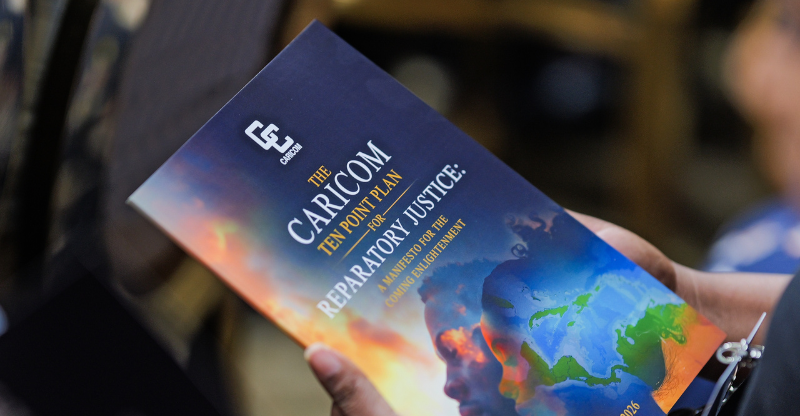
    Against the backdrop of the 51st Regular Meeting of the CARICOM Heads of Government hosted in Saint Lucia, regional leaders and reparations advocates gathered this week to advance a long-running fight for redress for the harms of transatlantic chattel slavery and centuries of colonial rule. At a dedicated pre-conference workshop focused on advancing socio-economic reparatory justice, sustainable development, and historical truth-telling, attendees centered discussion on the newly unveiled *Manifesto for the Coming Enlightenment* and CARICOM’s updated 10-point action plan for reparatory justice.

    During an opening panel discussion, former Saint Lucian Ambassador to CARICOM and the OECS Dr. June Soomer addressed one of the most persistent questions asked of reparations advocates: when, and if, the region will ever secure financial compensation for historical harms. In a response that shaped the entire conversation that followed, Dr. Soomer reframed the core purpose of the movement beyond direct financial payments. “It’s not about the money. Yes, the money is important, but it is about the return of our dignity, of our personhood, of who we are as a people,” she told the assembled delegates.

    Professor Sir Hilary Beckles, chair of the CARICOM Reparations Commission, officially presented the landmark manifesto to attendees, framing the moment as a critical turning point for the global reparations movement. After decades of building momentum and laying ideological groundwork, Beckles argued that the movement has now entered a phase where the priority must shift from raising awareness to delivering tangible reparatory outcomes. “This is our time, our duty, our responsibility to honour the legacy of all our ancestors who demanded justice,” he said, urging Caribbean nations to maintain unified pressure on former European colonial powers.

    The manifesto and accompanying 10-point plan lay out a holistic, multi-dimensional approach to reparatory justice that goes far beyond the financial compensation that dominates most public discussion of the issue. Each pillar of the plan is designed to address distinct, intergenerational harms rooted in slavery and colonial exploitation:

    1. **A Formal Apology**: The plan rejects vague statements of regret from former colonial powers, demanding explicit, formal public apologies that acknowledge full legal and moral responsibility for the crimes of enslavement and colonial subjugation.
    2. **Repatriation**: It codifies support for voluntary repatriation programs for descendants of enslaved Africans who wish to resettle in their ancestral homelands, including assistance with citizenship processing, housing, and cultural reintegration.
    3. **Indigenous Peoples Development Programme**: Recognizing that Indigenous Caribbean communities continue to suffer the lingering impacts of genocide, forced displacement, and mass land dispossession, the plan calls for targeted, community-led investment to improve Indigenous social and economic outcomes.
    4. **Cultural Institutions**: The commission advocates for increased investment in regional museums, research centers, and historical preservation projects that center Caribbean narratives of slavery and colonialism, arguing that truthful public storytelling is a foundational step in collective healing.
    5. **Public Health**: The plan draws a direct line between the structural inequities of slavery and the disproportionately high rates of chronic illnesses such as diabetes and hypertension among modern Caribbean populations, calling on former colonial powers to fund regional public health infrastructure, research, and care initiatives.
    6. **Illiteracy Eradication**: Citing the intentional underinvestment in education by colonial regimes that left many Caribbean societies with enduring high illiteracy rates, the plan calls for targeted support from former colonial powers to expand literacy programs and close longstanding educational gaps.
    7. **African Knowledge Programme**: To reverse centuries of forced erasure of African cultural identity, the plan proposes cross-continental educational exchanges, cultural partnerships, and people-to-people programs to help Caribbean descendants of enslaved Africans reconnect with their ancestral heritage.
    8. **Psychological Rehabilitation**: Acknowledging the intergenerational trauma inflicted by chattel slavery and colonial dehumanization, the plan calls for expanded community programming focused on emotional healing, collective identity-building, and public education about historical trauma.
    9. **Technology Transfer**: The plan argues that intentional colonial policies blocked the development of independent Caribbean scientific and industrial capacity, creating long-term economic dependency. To redress this, it calls for expanded access to modern technology, innovation support, and technical expertise from former colonial powers to drive inclusive regional growth.
    10. **Debt Cancellation and Financial Compensation**: The final pillar addresses the economic legacy of colonialism, calling for full cancellation of Caribbean sovereign debt held by former colonial powers, alongside targeted financial reparations to redress centuries of extracted wealth.

    As the 51st CARICOM Heads of Government meeting progresses, the new framework makes clear that the regional reparations movement is pursuing far more than a one-time financial settlement. From closing educational gaps to preserving cultural heritage, supporting Indigenous self-determination to building modern economic capacity, the plan frames reparatory justice as a holistic project that restores the dignity, self-determination, and opportunity stripped from generations of Caribbean people — a goal that money alone cannot achieve.

  • French Guiana becomes CARICOM’s eighth Associate Member

    French Guiana becomes CARICOM’s eighth Associate Member

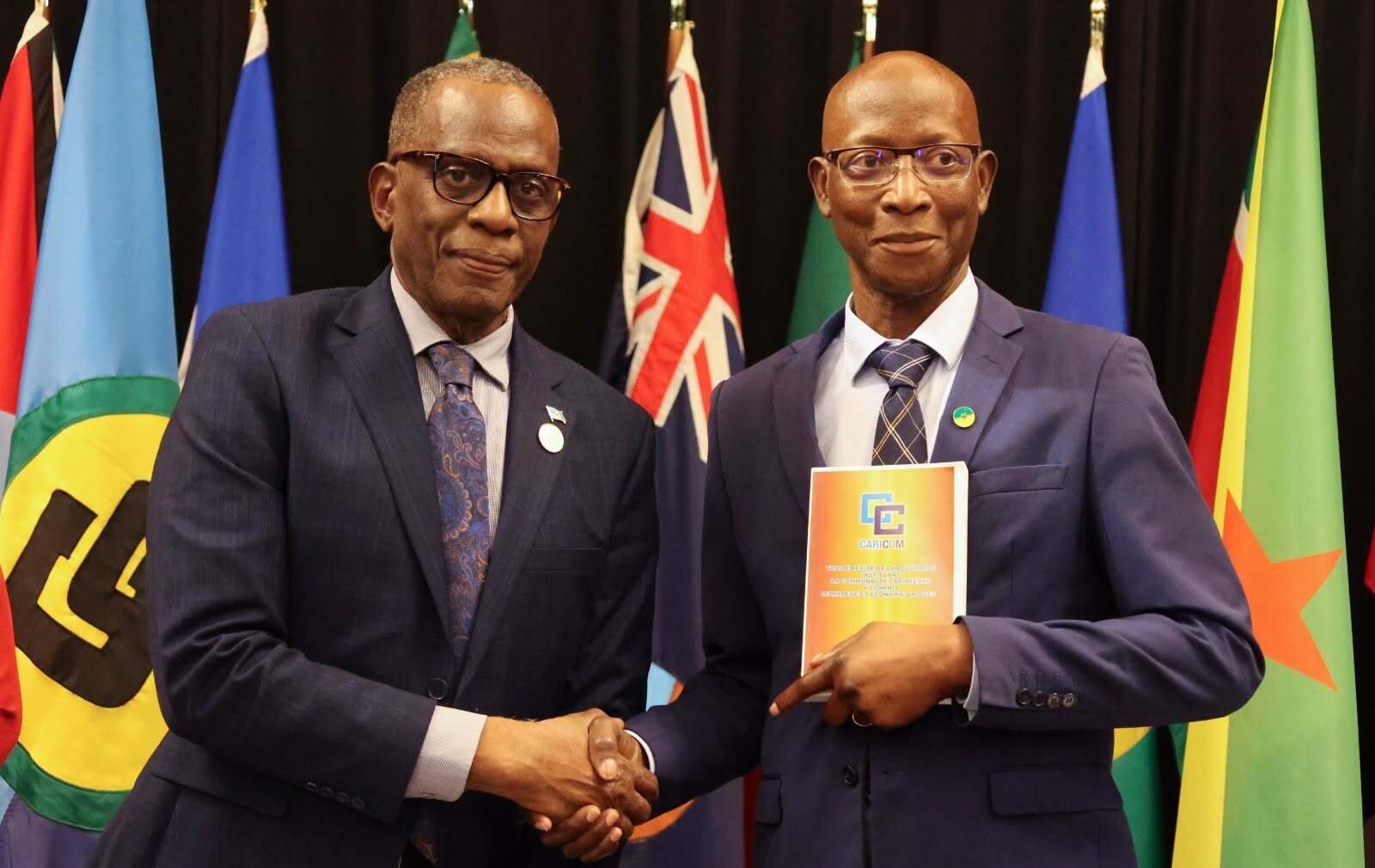
    In a historic double expansion for the Caribbean Community (CARICOM), French Guiana has officially become the regional bloc’s eighth Associate Member, marking the second new admission to the organization in just 48 hours. The milestone accession was formalized on Tuesday during the 51st Regular Meeting of CARICOM’s Conference of Heads of Government, which is currently being hosted in Saint Lucia.

    The accession agreement was signed by two key officials: Philip J. Pierre, CARICOM Chairman and Prime Minister of host nation Saint Lucia, and Gabriel Serville, President of the Territorial Collectivity of French Guiana. Photographic documentation of the signing ceremony was provided by CARICOM, capturing the formal moment of the bloc’s expansion.

    With the completion of the signing process, French Guiana immediately gains the right to participate in the ongoing Heads of Government Conference, unlocking opportunities for deeper engagement on regional Caribbean issues. The addition of French Guiana comes on the heels of a similar admission for another French overseas territory in the region: Martinique, which officially took up its position as CARICOM’s seventh Associate Member just two days before French Guiana’s accession.

    Martinique’s path to Associate Membership concluded when its membership status entered into force on June 16, 2026. The process began with the signing of its own accession agreement in February 2025, followed by the completion of ratification of the Agreement on the Privileges and Immunities of CARICOM, clearing the final procedural hurdle for its admission.

  • Martinique takes seat at CARICOM for first time

    Martinique takes seat at CARICOM for first time

    In a landmark moment for Caribbean regional integration, Martinique formally assumed its seat as an associate member of the Caribbean Community (CARICOM) for the first time on Sunday. The historic induction took place during the opening ceremony of the 51st Regular Meeting of the CARICOM Conference of Heads of Government, hosted this year in Saint Lucia.

    This milestone caps a years-long accession process that concluded when Martinique’s membership as CARICOM’s seventh associate member entered into full legal effect on June 16, 2026. The pathway to membership was set in motion back in February 2025, when the accession agreement was signed in Bridgetown, Barbados, and was finalized after Martinique completed ratification of the Agreement on the Privileges and Immunities of CARICOM.

    Addressing delegates at the opening ceremony, CARICOM Secretary-General Carla Barnett extended an official welcome to the new member. Geographically, Martinique holds a close proximity to the host nation of this year’s summit: it sits just 20 miles north of Saint Lucia, and on clear days, the island is visible from the Sandals Grande resort where the 51st heads of government conference is being held.

    Speaking on behalf of Martinique, Serge Letchimy, President of the Executive Council of Martinique, framed the induction as the opening of an entirely new chapter for the French overseas territory. “It took many years for us to be accepted into CARICOM. This shows how difficult it can be to belong to two institutional frameworks at once. But today, we are here,” Letchimy told assembled leaders.

    Letchimy emphasized that membership itself is not the final goal, but rather a starting point for deeper collaboration. “This should not be seen as an end in itself. It is only the beginning. We must now move into action. Businesses, financing and investment must now come on board,” he said.

    Outgoing CARICOM Chairman Dr. Terrance Drew, who also serves as Prime Minister of Saint Kitts and Nevis, noted that Martinique’s accession aligns perfectly with the core mission of the regional bloc. “We believe that together we are stronger. We have a number of institutions that benefit us, and that would be difficult for each country to establish on its own, but together we are able to make them a reality for the benefit of our people,” Drew explained.

    Per CARICOM’s official statement, Martinique’s associate membership grants the territory a formal, structured framework for deepening engagement with its Caribbean neighbors. Letchimy outlined his administration’s plan to translate this new standing into tangible outcomes: targeted cross-border projects, expanded economic exchanges, broader regional cooperation, freer movement of people, and increased foreign investment. His long-term vision positions Martinique as a central connectivity hub bridging the Caribbean, the wider Americas, Europe, and Africa.

    Closing his remarks, Letchimy emphasized the cultural and geographic reconnection the membership represents. “We are reconnecting with our common home: the Caribbean. A door has been opened. It truly exists. We must now use it,” he said.

  • Team Saint Lucia in SKN for ECVA volleyball

    Team Saint Lucia in SKN for ECVA volleyball

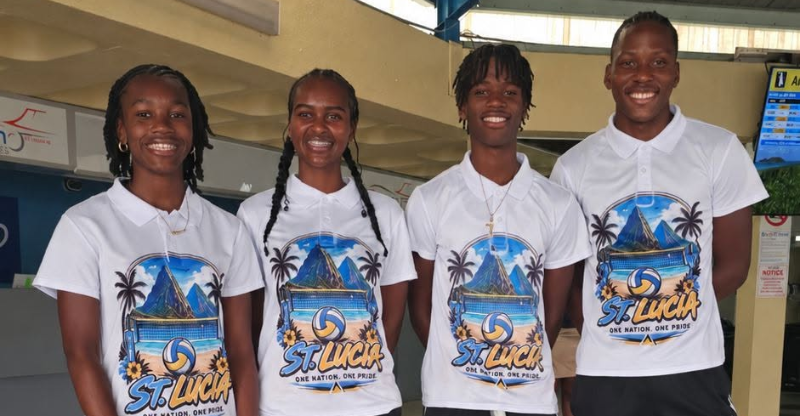
    The Eastern Caribbean Volleyball Association (ECVA) has launched its revamped flagship age-group beach volleyball championship this week, bringing top young talent from across the region to the picturesque shores of Frigate Bay, St Kitts & Nevis. In a key adjustment to the tournament structure, the 2026 iteration has shifted from the Under-21 age category — its classification for the previous three years — to an Under-20 format, opening new competition opportunities for emerging junior players.

    Eleven Caribbean territories are competing in this zonal title clash, running from July 10 to 12 in Basseterre, with all play adhering to the latest official competition rules set by the International Volleyball Federation (FIVB). Among the contenders is Saint Lucia, which is fielding both men’s and women’s teams hungry to claim top honors at the regional event.

    On the men’s side, Saint Lucia’s pairing features Peter Emmanuel, a returning experienced player who earned a silver medal at the 2021 U21 Championship, and new partner Lindan Clarke. Emmanuel previously took second place at the same host venue last June alongside former teammate Rio Victor, and he will carry that regional competition experience into this year’s tournament. For the women’s draw, Saint Lucia is represented by Abigail Evans and Aryanna Desir, who are aiming to follow in the footsteps of the nation’s 2025 championship-winning duo Ericka Gaspard and Clio Phillip and bring home another ECVA title.

    Leading Saint Lucia’s delegation is head coach Terry Verdant, who is not only guiding his team but also participating in a specialized coaching education program organized jointly by ECVA and the North, Central America and Caribbean Volleyball Confederation (NORCECA). The tournament itself is co-hosted by the St Kitts Amateur Volleyball Association (SKAVA), ECVA, and NORCECA, with backing from the Association of National Olympic Committees of the Eastern Caribbean States (ANOCES), FIVB, and the St Kitts and Nevis Olympic Committee (SKNOC).

    With matches scheduled across the full day each day of the event, spectators and tourists have abundant access to watch high-caliber junior beach volleyball in one of the Eastern Caribbean’s most scenic coastal locations. ECVA officials framed the 2026 championship as a dual-purpose milestone: a critical development platform for the next generation of Caribbean volleyball talent, and a catalyst to grow local sport tourism in St Kitts & Nevis.

    ECVA President Glenn Quinlan emphasized the long-term value of the annual regional competition in a statement, noting that events like this U-20 championship act as essential stepping stones to move promising athletes from grassroots play to elite international competition. “Each edition strengthens our programmes, exposes our players and coaches to higher standards of competition, and helps to build a sustainable future for volleyball throughout the Eastern Caribbean,” Quinlan explained.

  • Bienvenue à Chalon volleyball, Tevin St Jean

    Bienvenue à Chalon volleyball, Tevin St Jean

    After turning in a standout performance in Croatia’s top volleyball circuit, Saint Lucian talent Tevin St Jean is embarking on the next chapter of his peripatetic professional career, signing with Volley Ball Club Chalon-sur-Saône (VBCC) to become the latest addition to their 2026-2027 roster. The 30-year-old, who hails from the coastal Saint Lucian town of Soufrière, will make his debut in France’s competitive League B this coming season, marking the 11th different club he has joined over the course of his 10-year professional journey.

    St Jean is the fourth new recruit signed by VBCC ahead of the new season, arriving from Croatian side MOK Marsonia (Muški Odbojkaški Klub Marsonia), where his standout form earned him the honor of being named the league’s best middle blocker. Standing at two meters tall, the middle hitter brings a wealth of international experience to his new side, having previously plied his trade across top clubs in Greece, Romania, and Portugal. Beyond his European club commitments, St Jean has also shone on the regional stage, claiming the Best Middle Blocker award at the Caribbean Games during his career.

    For VBCC, which is heading into its second consecutive season competing in the second tier of French professional volleyball, the signing of St Jean is viewed as a pivotal boost to the squad’s prospects. The club finished 11th in the league standings last season, and management has made clear it will rely heavily on the Saint Lucian’s skill and experience to climb the table in the upcoming campaign. In an official statement shared across the club’s social media channels, VBCC highlighted the athlete’s key strengths: “Explosive, powerful in the attack and very effective on the block, he will be a strong plus value in our team to achieve our goals next season.”

    St Jean’s career also carries regional significance, as he is just one of three active professional volleyball players hailing from the small Caribbean island nation of Saint Lucia. He follows in the footsteps of the country’s first pro volleyball export, Julian Bissette, who is currently competing in his 13th professional season and has built a career spanning 12 clubs across four different countries.

  • Stern John steps down as Saint Lucia’s football head coach

    Stern John steps down as Saint Lucia’s football head coach

    After four years at the helm of Saint Lucia’s national men’s football program, former star forward Stern John has formally resigned from his position as head coach, the Saint Lucia Football Association (SLFA) confirmed in an emailed statement released Tuesday.

    The 49-year-old, who hails from Trinidad and Tobago, leaves behind a decorated playing career that cements his legacy as one of CONCACAF’s greatest finishers. As the all-time leading goalscorer across the Confederation of North, Central American and Caribbean Association Football, John earned 100+ caps for Trinidad and Tobago’s national side, the Soca Warriors, and played a pivotal role in securing the country’s historic 2006 FIFA World Cup qualification — the only time the nation has reached the tournament to date.

    John took over the reins of the Saint Lucia men’s national team, nicknamed the Piton Boyz, in 2021, and his four-year tenure delivered a mixed record of on-pitch results. Across 25 matches in charge, John’s side secured 12 wins and three draws against opponents including 2026 World Cup qualification contenders Curaçao, Grenada, and Barbados, as well as international sides San Marino, St Maarten. The campaign was also marked by high-profile losses, including two defeats to Haiti, and dropped results against Azerbaijan, Cuba, Puerto Rico and Guadeloupe.

    A major focus of John’s tenure was restructuring the national team’s player pool to boost competitiveness. He made the controversial but proactive decision to call up multiple foreign-born and overseas-based players, including experienced defender Terell Thomas and dynamic striker Caniggia Elva, to add depth and quality to the squad. At the same time, he prioritized nurturing young domestic talent, handing valuable senior international opportunities to emerging local players like Eymani Butcher and Yanic Noel.

    Despite these structural changes, a sustained five-match losing streak dating back to October 2024 ultimately led to John’s departure. The SLFA’s president Lyndon Cooper released an official statement thanking the outgoing coach for his service, emphasizing the association’s gratitude for his commitment to growing the Saint Lucian game.

    “On behalf of the Executive Committee and the entire Saint Lucia Football Association, I wish to express our sincere appreciation to Stern John for his dedication, professionalism, and commitment to the Men’s National Team,” Cooper said. “Representing one’s country in any capacity is an honour, and we are grateful for the time, energy, and expertise he invested in advancing our football programme.”

    Cooper added: “Stern John is a true icon of Saint Lucian football. His achievements as an international player brought immense pride to our nation. Throughout his tenure, he conducted himself with professionalism, integrity, and an unrelenting desire to see Saint Lucia succeed regionally and internationally. On behalf of the Executive Committee and the entire football fraternity, I extend our heartfelt gratitude for his invaluable service and wish him every success in the next chapter of his career.”

    While Cooper noted the association is disappointed by John’s choice to step down, it has fully accepted his resignation and respects his decision. Looking ahead, the SLFA’s Executive Committee has already launched the process to find an interim technical leader, and will begin a formal search to appoint a permanent new head coach in the coming weeks. The association has reaffirmed its long-term goal of building a sustainable, competitive national football program that supports emerging talent and grows the sport across Saint Lucia for generations to come.