标签: Saint Lucia

圣卢西亚

  • Saint Lucia’s election season explained

    Saint Lucia’s election season explained

    The dissolution of Saint Lucia’s Parliament marks the beginning of a critical electoral countdown, with significant implications for governance and the democratic process. Under the Constitution, the governor-general holds the authority to dissolve Parliament, typically acting on the advice of the prime minister. However, the governor-general also possesses reserve powers to ensure stability, such as refusing a dissolution request if the government can continue without fresh elections or independently dissolving Parliament following a no-confidence vote. Once dissolved, a general election must be held within three months, as mandated by the governor-general’s writ.

    Claudius Francis, Speaker of the House of Assembly, clarified that while Parliament’s dissolution halts law-making, it does not suspend the government’s operations. The national budget, passed earlier this year, ensures that spending authority remains intact. Ministers, including the prime minister, retain their powers during this period, and the prime minister can advise the governor-general to recall Parliament in emergencies. MPs, though no longer members of Parliament, continue to serve as district representatives until reelection or removal.

    The appointment of the prime minister and ministers is a constitutional process. The governor-general appoints the prime minister based on their likelihood of commanding majority support in the House of Assembly, typically the leader of the winning party. Ministers are appointed on the prime minister’s advice, with the PM holding absolute authority over the Cabinet. MPs and ministers have distinct roles: MPs focus on legislation and constituency representation, while ministers manage national affairs and ministries.

    Nomination day, a pivotal event in the electoral process, is governed by strict rules. Candidates must submit required documents, including nomination papers, statutory declarations, and a cash deposit, between 9 a.m. and 12 noon. Returning Officers, appointed by the governor-general, oversee the process in each constituency. If only one valid candidate is nominated, they are automatically elected. These procedures ensure fairness, transparency, and continuity in governance during elections.

  • Bigger grants, bigger impact? UWP proposes $25 000 youth business grants

    Bigger grants, bigger impact? UWP proposes $25 000 youth business grants

    In Saint Lucia, a young entrepreneur’s journey from braiding hair at 15 to owning her own salon exemplifies the transformative power of small-scale grants. With a $5,000 grant from the Youth Economy Agency (YEA), she invested in essential equipment like a hydraulic chair and salon sink, expanding her services and renting out stations for additional income. Her story highlights the YEA’s mission to empower young entrepreneurs through financial support, training, and mentorship. Since its inception, the YEA has disbursed over 1,505 grants, trained 880 individuals, and injected an estimated $9.6 million into the economy. However, with a general election approaching, the United Workers Party (UWP) has pledged to increase start-up grants to $25,000, sparking a debate on the viability and impact of larger funding. UWP leader Allen Chastanet argues that smaller grants, like the YEA’s $3,000 to $5,000 offerings, are insufficient for meaningful business growth. He cites the party’s proposed “Youth SOS Plan” as a more impactful solution for youth-led ventures in agriculture, digital economy, hospitality, and creative sectors. Youth advocates, however, emphasize that the effectiveness of grants depends on alignment with the needs of the target demographic. Franz George, a youth development advocate and business consultant, notes that smaller grants can suffice for micro-enterprises with limited scaling ambitions, while larger grants may be necessary for ventures requiring significant capital. He stresses the importance of monitoring and evaluation to assess the long-term sustainability of grant programmes. As the YEA continues to support young entrepreneurs with its holistic approach, the upcoming election raises questions about the future of youth economic empowerment in Saint Lucia. Will larger grants drive greater impact, or is the key to success a tailored, needs-based approach? The answer may shape the island’s entrepreneurial landscape for years to come.

  • OPINION: The unfinished fight for women’s political inclusion in Saint Lucia (Part 2)

    OPINION: The unfinished fight for women’s political inclusion in Saint Lucia (Part 2)

    In the Caribbean, particularly in Saint Lucia, the political landscape is shaped by deeply ingrained societal norms and gender stereotypes. Data reveals that the archetype of a successful politician aligns with a conservative image: a middle-aged, married, Afro-Caribbean man with a family. Women, however, face significant scrutiny and delegitimization if they do not conform to this somatic norm. Single, childless, or divorced women are often subjected to harsh criticism, with their likability and leadership capabilities questioned based on their marital status or appearance. Society’s objectification of women extends to their political roles, where their attire and physical appearance are often prioritized over their policy expertise and experience. Interestingly, women who embody traditional maternal traits—such as being caring and nurturing—sometimes leverage these qualities as political talking points. Yet, those who deviate from these norms are judged more critically, highlighting the double standards in political evaluation. Despite these challenges, women in Saint Lucia are surpassing men in educational achievements and professional experience. According to the Washington Post, Saint Lucia is one of three countries where women are more likely to hold leadership positions than men, with 52.3% of bosses being female. However, institutional barriers persist, hindering women’s political participation. UN Women highlights the disproportionate burden of family care responsibilities on women, making it difficult for them to balance domestic duties with political careers. Additionally, systemic issues such as limited access to campaign funding, political networks, and unwinnable seat placements further disadvantage women. While there are no explicit laws barring women from political office, entrenched practices within political parties perpetuate inequality. To address these issues, comprehensive measures are needed, including public education on gender equality, increased support for women candidates, and the implementation of quotas to ensure fair representation. Rahym R. Augustin-Joseph, a Rhodes Scholar and advocate for political reform, emphasizes the importance of dismantling patriarchal structures and fostering a more inclusive political environment in Saint Lucia and the broader Caribbean.

  • Saint Lucians make their mark at West Indies women’s camp

    Saint Lucians make their mark at West Indies women’s camp

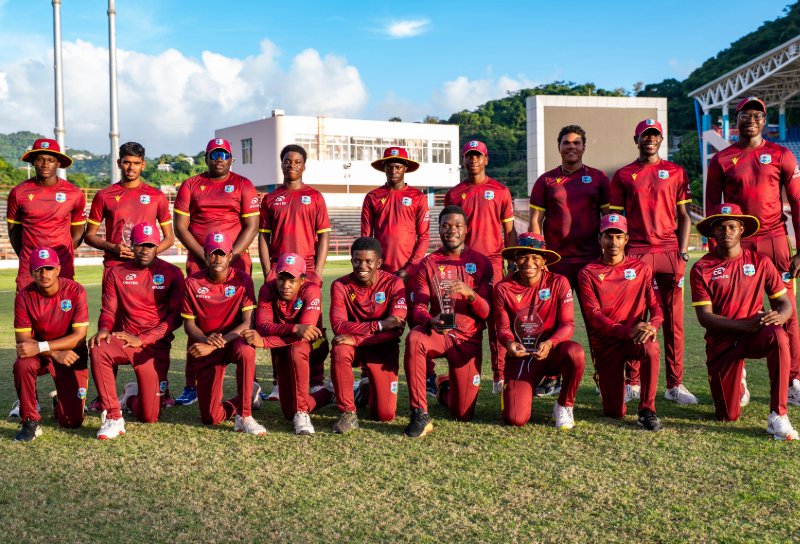
    As the ICC Women’s T20 World Cup in England looms on the horizon, the West Indies women’s cricket team is leaving no stone unturned in their preparations. Twenty senior players are currently engaged in an intensive eight-week training camp in Antigua and Barbuda, with three Saint Lucians playing pivotal roles—players Qiana Joseph and Zaida James, and coach Dalton Polius. The camp, which commenced on October 20, has been marked by rigorous practice sessions and a renewed focus on technical improvements. Polius, who has been working closely with the team’s batters under head coach Shane Deitz, expressed his satisfaction with the progress made so far. He highlighted the players’ dedication to refining their skills, particularly in batting, bowling, and fielding. Polius also praised the rapid development of Zaida James, noting her increased confidence and technical prowess. Similarly, Qiana Joseph, who has emerged as a dynamic opening batter, has set ambitious goals for the upcoming year, driven by personal motivation and a desire to honor the memory of a close friend. The West Indies women’s team faces a packed schedule in 2026, including six international tours and their first Test match in decades, making this camp a crucial step in their journey toward global success.

  • Table tennis supergirl Shatal Charles off to Chinese camp

    Table tennis supergirl Shatal Charles off to Chinese camp

    At just 15 years old, Shatal Charles, a table tennis prodigy from Saint Lucia, is making waves in the international sports arena. Originally from Vieux Fort and now residing in Anse La Raye, Charles is set to take a monumental step toward her dream of becoming an Olympian. From December 3 to 11, she will participate in the prestigious ITTF Global Youth Training Camp in Chengdu, China, as one of only nine athletes selected from the Americas and the sole representative from the Caribbean among 42 participants. This opportunity follows her recent accolade as Saint Lucia’s Female Student Athlete of the Year for 2024. Charles’ journey to this point has been nothing short of remarkable. She recently dominated the Organisation of Eastern Caribbean States (OECS) championships in Grenada, where she remained unbeaten in the team competition and secured a silver medal in women’s singles. Her stellar performance also earned her the MVP title. Earlier this year, Charles clinched multiple victories, including three categories at the Independence Day Classic Table Tennis Championships and titles in both the Under-15 and Under-19 divisions at the LQ Classic Junior Table Tennis Tournament in Grenada. Her partnership with Leshon Francis has also been fruitful, as the duo claimed a mixed doubles bronze at the Caribbean Youth Championships in Barbados. Charles’ rapid ascent in the sport is a testament to her dedication and resilience. Introduced to table tennis just four years ago by her physical education teacher, Cuthbert Popo, she has since honed her skills under the guidance of coach Chris Wells. Despite her young age, Charles has already achieved significant milestones, including Caribbean and OECS titles. Beyond her athletic prowess, Charles is a determined individual with aspirations of becoming a lawyer. She balances her rigorous training schedule with her academic pursuits and personal interests, such as watching superhero movies. Reflecting on her journey, Charles shared, ‘Table tennis is what keeps me calm. It makes me happy. I really love it. Trying to reach my goal, you know, setting a goal that I want to reach.’ Her unwavering mentality and commitment to constant improvement have set her apart, even when competing against world-ranked players. As she prepares for the ITTF camp, Charles remains focused on her ultimate goal: representing Saint Lucia on the Olympic stage before her 20th birthday. Her story is still unfolding, but it is clear that Shatal Charles is destined for greatness.

  • OPINION: They create a desert and call it peace

    OPINION: They create a desert and call it peace

    As global attention shifts between the fragile Israel-Hamas peace agreement and geopolitical tensions in Venezuela and the Pacific, a reflection on an ancient quote by Tacitus becomes strikingly relevant: ‘Rome creates a desert and calls it peace.’ This sentiment, first articulated by the Scottish chieftain Calgacus in 83 AD, continues to resonate through centuries of military interventions. Calgacus’ critique of Roman imperialism—where conquest was masked as civilization and subjugation as peace—reveals a pattern that persists in modern geopolitics. The powerful have long justified military action as liberation, violence as order, and domination as peace, often leaving behind devastation rebranded as stability. This cycle is perpetuated by the allure of decisive military action, the political safety of appearing strong, and the deferred costs borne by distant populations. The aftermath of such interventions often sees power vacuums, radicalized generations, and destabilized regions—deserts created in the name of peace. Yet, the rhetoric of victory and mission accomplished continues to overshadow the long-term consequences. Breaking this pattern requires acknowledging that military force is not a panacea, investing in diplomacy, and redefining success not by enemies killed but by conflicts resolved and societies rebuilt. The question remains: will we continue to prove Calgacus right, or will we choose a different path?

  • EDITORIAL: St. Jude Demands an Inquiry, Not Excuses

    EDITORIAL: St. Jude Demands an Inquiry, Not Excuses

    After a prolonged 16-year wait, the residents of Saint Lucia are finally nearing the reopening of St. Jude Hospital in the southern region. The original hospital was devastated by a fire in 2009, and since then, the project has been marred by delays, political disputes, and multiple administrations. Last Sunday, a significant milestone was reached as the St. Jude complex was officially handed over from the contractor to the Ministry of Health and the hospital’s board. However, the ceremony has sparked debates about whether the facility is fully operational or merely a structural completion. The reconstruction process has been fraught with inefficiency and political maneuvering, with successive governments failing to prioritize the project. The prolonged absence of adequate healthcare in the south has forced residents to rely on a makeshift hospital at the George Odlum Stadium, which also deprived athletes of a proper sports facility. The project has cost approximately $400 million, yet questions remain about the delays and expenditures. Critics argue that the handing-over ceremony should not be seen as a resolution but as a reminder of the systemic failures in governance. Calls for an independent inquiry have grown louder, demanding transparency and accountability. The situation underscores the need for political leaders to set aside partisan interests and prioritize public welfare. The St. Jude saga serves as a cautionary tale against the start-stop mentality of successive administrations, which has hindered progress on critical infrastructure projects. Moving forward, political parties must commit to completing ongoing projects regardless of changes in leadership. The hospital, named after St. Jude, the biblical figure symbolizing hope and faith, should inspire leaders to embody qualities of compassion and courage. It is time to end the nonsensical practice of stalling projects that benefit the people and focus on forward-thinking governance.

  • A look back at key points in 2021 manifestos

    A look back at key points in 2021 manifestos

    As the December 1 general election in Saint Lucia approaches, both major political parties, the Saint Lucia Labour Party (SLP) and the United Workers Party (UWP), have yet to unveil their manifestos. These documents, which serve as public declarations of a party’s policies, aims, and ideology, are crucial for voters to understand the parties’ plans for governance.

    The SLP, which campaigned in 2021 on the promise to ‘put people first,’ emphasized three core values: equity, respect for the rule of law, and inclusiveness. The party highlighted the severe economic contraction Saint Lucia faced in 2020, with a 23.8% decline, and a public debt nearing $4 billion. The SLP’s manifesto outlined measures to address economic decline, including focusing on housing, expanding the digital economy, and exploring health tourism. Additionally, the party pledged to revamp the Citizenship by Investment Programme (CIP), broaden financial services, and establish a youth economy. Other commitments included support for manufacturers and agro-processors, reestablishing banana marketing, and developing a medicinal and recreational cannabis industry. The SLP also promised to strengthen COVID-19 response, advance Universal Health Care, and enhance education by paying facility fees for all students and introducing TVET skills at the primary level.

    On the other hand, the UWP, which won the 2016 election with its ‘five to stay alive’ campaign, titled its 2021 manifesto ‘5 for Five.’ The UWP countered the SLP’s narrative of economic decline, stating that Saint Lucia’s economy was poised for robust growth before the pandemic. The party’s five-point plan included introducing unemployment benefits, expanding monthly assistance for the needy, reducing VAT to 10%, and providing medical care for all. In its first 100 days, the UWP promised a $3 million Back to School Programme, unemployment insurance consultation, and national health insurance legislation. The party also pledged to support infrastructure projects like the Millennium Highway and West Coast project, as well as agricultural initiatives such as the seven-crop project and Banana Productivity Improvement Programme. The UWP’s plans for tourism included expanding hotel room stock to 8,000 and promoting village tourism. In health and education, the party proposed transforming St. Jude Hospital into a university hospital and aligning education more closely with global offerings.

    Both parties have outlined comprehensive plans to address the economic, social, and political challenges facing Saint Lucia, but with the election just two weeks away, the delay in releasing their manifestos has left voters eagerly awaiting the details of their proposed policies.

  • Constituencies to watch; The election deciders Part 1

    Constituencies to watch; The election deciders Part 1

    As St. Lucia’s general election on December 1 approaches, the national spotlight has shifted to several pivotal constituencies that could determine the election’s outcome. From Castries East and Micoud South, where incumbent leaders defend their seats, to Choiseul, Vieux Fort South, Dennery South, and Soufriere, these races provide critical insights into the island’s evolving political landscape. In Castries East, Philip J. Pierre faces political newcomer Peter Chiquot, who emphasizes community service over personal ambition. Meanwhile, in Micoud South, Allen Chastanet contends with Shanda Lee Harracksingh, who challenges his representation record and advocates for youth development and agricultural support. Choiseul features a dynamic contest between Keithson ‘Kiffo’ Charles and Bradley Felix, both beloved by constituents and focused on infrastructure and economic development. Vieux Fort South, transitioning after the exit of former Prime Minister Dr. Kenny Anthony, sees a clash between seasoned campaign manager Danny Butcher and media personality Leanna ‘Lady Lee’ Johannes-Paul. Dennery South has gained attention due to a high-profile political defection, with Alfred Prospere and Benson Emile vying for votes on platforms of agricultural support and youth empowerment. In Soufriere, Emma Hippolyte and Herod Stanislas face off in a rematch centered on tourism, economic stability, and community development. Across these constituencies, voters prioritize infrastructure, economic opportunities, and leadership capable of delivering tangible improvements. These local issues, combined with national concerns, will shape the election’s outcome on December 1.

  • Why musicians matter

    Why musicians matter

    Sherwinn Dupes Brice, a renowned musician from Vieux Fort, Saint Lucia, emphasizes the profound role of music in communication and storytelling. ‘Music is a way to recall memories and the most significant moments of life,’ Brice shared with St. Lucia Times. ‘Musicians preserve these stories, offering both escape and therapy. They keep the art form alive, passing on skills, traditions, and the collective narratives of our people.’

    As Saint Lucia prepares to celebrate Saint Cecilia’s Day on November 22, the focus shifts to honoring musicians and their contributions. The day features events like school showcases and the Cultural Development Foundation’s MIZIK: A Celebration of our Musicians, highlighting music’s societal impact.

    Martin Alson James, CEO of the Eastern Caribbean Collective Organisation for Music Rights (ECCO), echoed Brice’s sentiments. ‘Musicians shape our cultural and emotional landscapes,’ James stated. ‘They are storytellers and historians, capturing the spirit of their times through lyrics and melodies. Music fosters community, creating shared identity and belonging.’

    Both Brice and James advocate for the protection and fair compensation of musicians. ‘Music is more than a finished product; it’s the result of time, passion, and lifelong commitment,’ James explained. ‘Protecting musicians’ rights ensures fairness and dignity, safeguarding our cultural future. Without support, the flow of new music may cease, diminishing our artistic heritage.’

    Brice, who collaborated on British singer Mahalia’s EP Luvergirl, urged broader support for musicians. ‘Pay us, advocate for us, and educate yourself on how the music business works,’ he said. ‘Music is a legitimate industry, generating billions globally. It’s time to remove the stigma that it’s not a real business.’

    Saint Cecilia’s Day, rooted in the legend of a 3rd-century martyr who sang to God, has evolved in Saint Lucia. The predominantly Catholic society now blends religious and secular celebrations, reflecting the growing local music industry. As the industry expands, so must the appreciation and support for its practitioners to ensure sustainability and continued cultural enrichment.