标签: Saint Lucia

圣卢西亚

  • Let’s Bet relaunches for FIFA World Cup

    Let’s Bet relaunches for FIFA World Cup

    Ahead of the highly anticipated FIFA World Cup, the Saint Lucia National Lottery (SNL) has launched an upgraded version of its popular Let’s Bet online sports betting platform, giving local football fans and sports enthusiasts a revamped digital experience to engage with the tournament. The redesigned application made its official public debut on June 9 at a launch event hosted at Sandals Grande, Saint Lucia.

    Already a well-established name in international sports betting circles, the updated Let’s Bet platform comes with a suite of user-centric improvements. These include a modern new brand logo, refreshed visual design elements, streamlined navigation for faster access to betting markets, a wider range of wagering options, an intuitive simplified user interface, and enhanced cybersecurity protocols to protect user data and transactions.

    Camisha Richards, regional general manager for the initiative, emphasized that the overhaul represents a new chapter for the Let’s Bet brand. “From our updated logo to our fully reimagined platform, every adjustment has been crafted with the player experience as the top priority,” Richards explained during the launch. “We have now built a far more dynamic, all-inclusive experience that gives every bettor a simpler, more intuitive pathway to place sports wagers or enjoy other online gaming options.”

    Coinciding with the opening match of the FIFA World Cup between Mexico and South Africa, the upgraded platform was ready to accept a diverse range of wagers from day one of the tournament. Bettors can place bets on everything from the final score of a match to the first goal scorer, and even the exact minute a goal will be scored, expanding the ways fans can interact with the tournament.

    Beyond traditional football and sports wagering, the revamped platform has added new content to serve a broader audience. It now includes dedicated markets for eSports, alongside a larger selection of casual and casino-style games. To welcome both new and returning users, SNL has rolled out a variety of exclusive bonuses and promotional offers for sports fans and casino gaming enthusiasts alike.

    The platform’s launch is being supported by a new national marketing campaign titled “This Is The Place”, which promotes the upgraded experience across Saint Lucia. In addition to the digital rollout, SNL has planned a series of in-person interactive events at retail outlets and gaming centers across the island, including a major activation at the popular Blast Gaming Centre in the capital city of Castries. Visitors to these on-location events will have the opportunity to enter a giveaway for a brand-new 55-inch smart television as part of the launch celebrations.

    The updated Let’s Bet platform is currently live and accessible to users at www.letsbetlc.com. Eligible users can create an account immediately and start exploring the new features in time to follow all the action of the FIFA World Cup, adding an extra layer of excitement to the global tournament for Saint Lucian fans.

  • Auguste left out of Windwards tournament trial squad

    Auguste left out of Windwards tournament trial squad

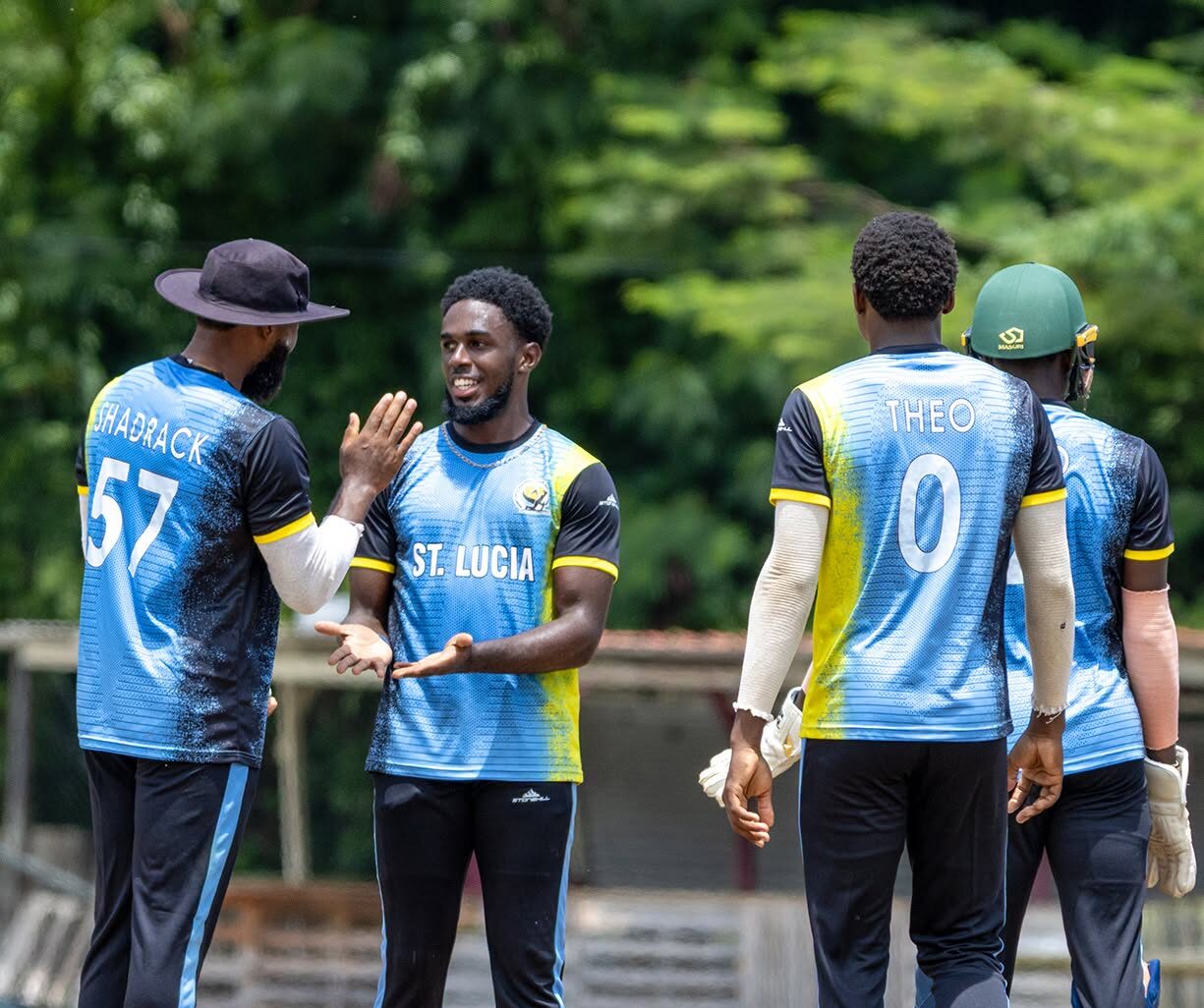
    Cricket fans across the Windward Islands are facing an unexpected storyline ahead of the 2025 Windward Islands Super 50 Men’s Tournament: the reigning Most Valuable Player will not feature in the preliminary training squad for defending champions Saint Lucia, and is set to miss the tournament entirely due to prior regional commitments. The Saint Lucia National Cricket Association (SLNCA) announced its 30-strong trial squad earlier this week, with last year’s standout performer Ackeem Auguste notably absent from the roster.

    Last year’s tournament was a breakout for Auguste, a full West Indies international who dominated the competition on home soil. The star batter compiled 346 runs at an extraordinary average of 115, and also claimed five catches – more than any other fielder in the tournament – to cement his MVP status. While Auguste will sit out this year’s event, two other standout performers from 2024’s title-winning campaign, fast bowler Keon Gaston and wicketkeeper Noelle Leo – both products of the Saint Lucia Cricket High Performance Centre, same as Auguste – have earned spots in this year’s trial squad. Reigning captain Kimani Melius is also set to return to lead the side’s title defense. Top-order batter Johnel Eugene will join Auguste on the sidelines, also sidelined by prior regional commitments.

    The bulk of the 2025 trial squad is made up of returning familiar names, including Dornan Edward, Jayden Elibox, Lee John, Mckenny Clarke, Shadrack Descarte, Shawnil Edward, Tarrique Edward, Theo Edward and Tyrel Chicot. A host of emerging young talents have also received their first call-ups to the senior trial squad, including Bjorn Fanis, Bolton Sayers, Cody Fontenelle, Dane Edward, Isiah Jones, Jard Goodman, Jonathan Daniel, Kensley Paul, Khan Elcock, Liam Joseph, Nathaniel Joseph, Neil Poyotte, Qwaine Henry, Royce Paul, Joshua Cepal and Stephen Naitram.

    SLNCA president Wayne Auguste expressed confidence in the depth of talent assembled for the trial process, outlining the association’s dual priorities for the 2025 tournament. “Our objective is not simply to defend the Windward Islands Super 50 title, but also to continue strengthening the pathway from national cricket to franchise and international cricket,” he explained. He emphasized the urgency of strong performances from Saint Lucian players, noting that the regional Windward Islands Volcanoes side has finished at the bottom of regional rankings over the past two seasons. “It is critical that all our players from the Windward Islands seize the opportunity and demonstrate that they are ready to make the step up to franchise level. Saint Lucia has consistently produced talented cricketers, and we want to see more of our players putting up their hands for higher honours,” he added.

    The current 30-player group will go through a multi-stage selection process to narrow down to the final squad that will represent Saint Lucia at the tournament, which is scheduled to run from July 25 to August 5 in Grenada. Over the coming weeks, selected players will complete a series of structured training sessions, fitness assessments, and trial matches as selectors and coaching staff evaluate candidates for the final roster.

    In an official statement, the SLNCA reaffirmed its confidence in the trial squad’s ability to carry on Saint Lucia’s proud cricketing legacy and mount a competitive title defense: “The SLNCA is confident that the players selected for the trial squad possess the talent, commitment, and determination necessary to uphold the island’s proud cricketing tradition and mount a strong defence of the championship.”

    Selectors built the preliminary squad after reviewing performances across three recent domestic competitions: the Prime Minister’s Independence T20 Tournament, the Saint Lucia Premier League (SPL) T20 Competition, and the Premier League Two-Day tournament. Player fitness, disciplinary record, and long-term developmental potential were also key criteria in the selection process.

    The trial period will officially get underway on June 14 with a mandatory baseline fitness test at the Saint Lucia Sports Academy, which will serve as a key benchmark for selectors moving forward. The first red-ball practice match is scheduled to kick off the following weekend at Saint Lucia’s iconic Mindoo Phillip Park. The final 15-man squad and team management will be announced to the public once the full selection process concludes.

  • PDJSS, Sir Ira Simmons host career fair in Castries

    PDJSS, Sir Ira Simmons host career fair in Castries

    On Thursday, June 11, Castries’ Vide Bouteille neighborhood played host to a community-focused career development event, organized jointly by Patricia D. James Secondary School (PDJSS) and Sir Ira Simmons Secondary School. Held on the PDJSS campus, the fair marked the latest activity under a joint Career Preparation and Awareness campaign spearheaded by the two District 2 educational institutions.

    This year’s gathering centered on the core theme “Empowering Skill Development and Adaptability for Lifelong Careers”, a framework designed to align with the evolving demands of modern workplaces. While the event was primarily curated for Forms Two to Four secondary students gearing up to select subject tracks for their Caribbean Secondary Education Certificate (CSEC) examinations, organizers intentionally opened participation to local primary school students, turning the one-day fair into a cross-age learning opportunity for attendees of all grade levels.

    More than 20 local organizations and industry partners set up interactive exhibition booths across the campus grounds, one of which was operated by regional media outlet St. Lucia Times. Each booth was tailored to introduce students to a wide range of professional pathways, with presenters sharing detailed information on the personal attributes, technical competencies, and academic qualifications required for different careers. To keep young attendees engaged, displays incorporated a mix of visual aids, hands-on samples, explanatory diagrams, interactive digital media, branded signage, and free informational giveaways.

    PDJSS school counselor Lianda Aimable, who served as lead organizer for the event, emphasized the long-term value of the annual initiative for Saint Lucia’s youth. “This is a tradition we uphold every year to help our students make informed choices when it comes to selecting their CSEC subjects,” Aimable explained. “By connecting students directly with a diverse range of local institutions and organizations, we give them the context they need to align their academic decisions with their long-term career goals.”

    The annual career fair is just one component of a broader ongoing commitment by the two collaborating secondary schools to systematically prepare young people for a smooth transition from the classroom to the global workforce. By bridging the gap between academic learning and real-world professional expectations, the institutions aim to equip the next generation with the clarity and adaptability they need to build sustainable, fulfilling careers.

  • West Indies beat Sri Lanka in last-over finish in first T20

    West Indies beat Sri Lanka in last-over finish in first T20

    The West Indies have claimed an early advantage in their three-match T20 International series against Sri Lanka, securing a tense seven-wicket win in the opening fixture at Kingston’s Sabina Park on Thursday night. Despite a small turn out, the crowd in attendance created an electric, boisterous atmosphere that lingered through the final dramatic moments of the match for the West Indies, known popularly as the Men in Maroon.

    Sri Lanka got off to a blistering start through their opening batting pair. Pathum Nissanka, who survived a dropped catch when he had only scored seven runs, went on to compile 43 runs, building a solid first-wicket stand with Kusal Mendis before veteran seamer Jason Holder claimed his wicket. That breakthrough triggered a steady collapse of Sri Lanka’s batting line-up, with the West Indies bowling attack tightening control over the run rate for most of the innings. A defiant half-century from Kamindu Mendis, who scored 51, stopped the lower order from folding entirely, but Sri Lanka still could only post a total of 147 runs for the loss of nine wickets from their full 20 overs.

    The West Indies pace attack delivered a standout performance to restrict the visitors. Shamar Joseph and Jason Holder shared six wickets between them, with Holder finishing with economical figures of 3 wickets for 18 runs and Joseph picking up 3 wickets for 29 runs. The fixture also marked a personal milestone for Holder, who brought up his 50th career wicket in T20 International cricket during the match.

    In response, the West Indies openers got their run chase off to a flying start. Captain Shai Hope, who remained unbeaten at the end of the innings, and opening partner Brandon King put on a 63-run opening stand that laid a strong platform for the home side. Shimron Hetmyer chipped in with a quickfire 17 runs from just 9 deliveries to keep the scoreboard ticking, but the run rate stalled in the middle and late overs. Roston Chase’s slow 16 runs from 26 balls epitomized the home side’s ongoing struggles in white-ball cricket: an inability to find consistent boundaries and rotate the strike effectively, an issue head coach Daren Sammy has long worked to fix with the side.

    The match went all the way down to the final over, with the West Indies still requiring six runs to win off the last six deliveries. With Hope holding his ground at the non-striker’s end having carried his bat through the whole innings, Jamaican hometown hero Rovman Powell hit a decisive six when the side still needed five runs, sealing the dramatic victory and putting the West Indies 1-0 up in the series.

    The two sides will return to Sabina Park for the second fixture of the series this Saturday, where the West Indies will have the chance to clinch the series with a win.

  • Local businesses equipped with digital tools to compete globally

    Local businesses equipped with digital tools to compete globally

    A four-day targeted digital capacity-building initiative, organized jointly by Export Saint Lucia and the Caribbean Export Development Agency, has brought together local micro, small and medium-sized enterprises (MSMEs) and export-focused businesses across Saint Lucia to upskill their teams and prepare for the demands of the modern digital economy.

    Designed to address long-standing gaps in digital adoption among Caribbean private sector groups, the bootcamp set out to deliver actionable, practical digital tools that participating Saint Lucian companies can leverage to boost their competitiveness, expand into untapped domestic markets, and break into new international export channels. More than 40 business operators signed up for the program, bringing a diverse mix of industry backgrounds ranging from manufacturing and health and wellness to hospitality accommodation and professional services.

    Speaking at the official opening ceremony, Kelvin Jn Baptiste, a Technical Officer at Export Saint Lucia, emphasized that digital transformation can no longer be treated as a secondary, non-urgent priority for regional economies. “For too many years, meaningful digital inclusion has not received the focused attention it requires across our business community,” Jn Baptiste explained. “While our public sectors have made notable progress rolling out e-government services, our private sector — and especially our MSMEs — have faced significant, steep barriers to adopting digital tools. This bootcamp aims to equip these 40 local MSMEs with the exact, tailored tools needed to close this persistent gap.”

    Over the course of the four-day event, participating business leaders and their teams worked through a curated curriculum covering high-impact digital topics critical to modern business operations, including core digital transformation frameworks, cloud-based productivity tools, practical artificial intelligence applications for small businesses, data analytics for customer and operational insights, e-commerce strategy for cross-border sales, and cybersecurity best practices to protect business assets. Each module was selected specifically to help participating businesses streamline internal operations, cut unnecessary costs, and maintain an edge over competitors in an increasingly digital global marketplace.

    One of the flagship offerings of the program is a post-bootcamp support initiative: the top 20 performing participating businesses will receive a fully customized digital transformation roadmap, tailored to their specific industry, size, and growth goals. This roadmap will lay out clear, step-by-step actionable guidance to help these companies integrate new digital tools and strategies into their daily operations, rather than leaving them to navigate the process independently.

    Jonathan Seecharan, Innovation and Digital Business Officer at Caribbean Export, urged attendees to fully engage with the resources and networking opportunities made available through the bootcamp. “We are putting powerful tools directly in your hands, but it is up to each business to put those tools to work to close the digital gap,” Seecharan noted. “There is no question that right here in this room, we have all the talent, creativity, and resilience needed to compete successfully with any business on the global stage.”

    Program organizers emphasized that initiatives like this digital bootcamp fill a critical need: as rapid technological advancement continues to reshape the global marketplace, targeted upskilling support for local MSMEs ensures these businesses can adapt, grow, and capture new export opportunities rather than being left behind by digital change.

  • US hits Cuba with more sanctions, hints at military action again

    US hits Cuba with more sanctions, hints at military action again

    On Thursday, the United States government unveiled a fresh round of economic restrictions targeting Cuba, with the island nation’s state-owned oil and gas conglomerate, Cuba Petróleo (Cupet), bearing the brunt of the new measures. U.S. Secretary of State Marco Rubio made the announcement, claiming the company controls assets that were illegally seized from U.S. property owners decades ago.

    Beyond the sanctions designation, Rubio placed full responsibility for Cuba’s ongoing national energy crisis squarely on the country’s ruling leadership. He argued that while ordinary Cuban citizens have endured crippling fuel shortages and widespread power outages driven by years of underinvestment in critical energy infrastructure, the island’s communist leadership has siphoned off energy resources for personal gain.

    “Cuban officials resell thousands of barrels of this already scarce fuel on unregulated secondary markets, hoard the majority of available energy supplies for the country’s military, intelligence services and repressive state apparatus, and deliberately ration access to power as a tool to enforce social control over the population,” Rubio alleged during the announcement.

    This latest action comes as Cuba continues to grapple with the cumulative economic pressure of a more than 60-year U.S. trade embargo that has gutted the country’s ability to import essential goods, including fuel. Washington has long maintained pressure on Havana to overhaul its existing economic and political systems, and the new sanctions mark a further escalation of that long-running campaign.

    The penalties also arrive alongside a sharp uptick in aggressive military rhetoric from U.S. officials. Just one day before the sanctions announcement, U.S. Secretary of Defence Pete Hegseth conducted an official visit to the U.S. Naval Base at Guantanamo Bay, a facility that has remained a point of contention between the two nations for decades. During his tour of the base, Hegseth did not rule out the possibility of direct U.S. military action against Cuba, issuing a stark warning to Havana against making what he called a “wrong decision” that would create a threat the U.S. would be forced to respond to militarily.

  • Ministry pushes for donations on World Blood Donor Day

    Ministry pushes for donations on World Blood Donor Day

    In a coordinated global observance of World Blood Donor Day, the Caribbean island nation of Saint Lucia will join communities across the planet on Sunday, June 14, to celebrate the life-saving power of voluntary blood donation, under this year’s unifying slogan “One Drop of Humanity: Give Blood, Save Lives.”

    Local health authorities have launched a month-long public outreach initiative to boost blood supply and encourage widespread participation. Lead organizing partners include the country’s Ministry of Health, Wellness and Nutrition, alongside two of the nation’s leading care providers: the Millennium Heights Medical Complex and St. Jude Hospital. The collaborative campaign is calling on all Saint Lucians who meet donor eligibility criteria to contribute to this critical public health effort throughout the month of June.

    Beyond direct blood donation drives, the campaign has rolled out a simple but impactful public engagement action: every Friday during June, health officials are urging government staff, partner organizations, and all members of the public to wear red clothing as a visible tribute to World Blood Donor Day. This small, accessible gesture serves dual purposes: it publicly demonstrates support for the cause, and keeps the issue top of mind for communities, highlighting the countless donors, patients, and lives that depend on consistent, voluntary blood donations.

    To amplify the campaign’s reach beyond in-person gatherings, the Ministry of Health is encouraging participants to capture photos of their teams or groups wearing red, then share those images across personal and public social media platforms. This social sharing strategy is designed to spread the campaign’s core message organically, reaching wider audiences and inspiring more people to get involved.

    For those ready to make a direct contribution, the Ministry has outlined clear next steps: eligible residents can donate blood at two fixed donation sites, the Owen King EU Hospital and St. Jude Hospital. Organizers also urge participants to extend the invitation to their family members, friends, and workplace colleagues, encouraging them to register as blood donors and help build a sustainable, reliable blood supply for the island nation.

  • OPINION: Is the Caribbean paying for a climate crisis it didn’t create?

    OPINION: Is the Caribbean paying for a climate crisis it didn’t create?

    The moment a special emergency bulletin cuts into regular radio programming, a quiet, practiced urgency unfolds across a Caribbean household. Before the meteorologist finishes reporting the incoming threat, a mother is already counting canned goods in the pantry—stacking tuna, milk, and crackers against the coming storm. A sibling drags every pot, bucket, and empty container in the home to fill with fresh water. A grandmother tests the wick of the kerosene lamp and checks the charge on every solar light, while the father stands on the verandah studying the sky, the skill passed down to him from generations before. No one needs to say the words out loud: the whole family knows a hurricane is on its way.

    A generation ago, a catastrophic hurricane was a singular, generational event—one whose stories would be told for decades. Hurricane Gilbert, which tore through the Caribbean in 1988, fit that mold: a terrifying force that left widespread destruction, irreversible loss, and deep emotional scars, yet remained an extraordinary, one-of-a-kind disaster.

    Since 2016, however, devastating hurricanes have become a grim, routine reality for the region. The string of disasters paints a clear picture of the growing crisis:
    – In 2016, Hurricane Matthew reached Category 5 intensity at its peak before hitting Haiti as a Category 4 storm with 150 mph sustained winds. It was the strongest storm to hit the country in more than 50 years, killing more than 500 people, destroying 90 percent of Haiti’s crops, and leaving more than 120,000 families homeless.
    – In 2017, Category 5 Hurricane Maria wiped out infrastructure and assets worth 226 percent of Dominica’s total annual GDP, rolling back decades of hard-won development in just a few hours.
    – In 2019, another Category 5 storm, Hurricane Dorian, stalled over the Bahamas for two days, leaving the community of Marsh Harbour completely destroyed and families searching for missing loved ones for weeks after the storm passed.
    – In July 2024, Hurricane Beryl made history as the earliest-forming Category 5 storm ever recorded in the Atlantic, forming before the official hurricane season even fully began. The storm hit Carriacou as a Category 5, stripping the island of nearly all vegetation and infrastructure, leveling agricultural fields across Jamaica, and leaving the entire region reeling and questioning what would come next.
    – In 2025, only 15 months after Beryl, yet another Category 5 storm, Hurricane Melissa, became the strongest Atlantic hurricane ever recorded, with maximum sustained winds of 185 mph. The storm claimed 95 lives, and its name was later retired by the World Meteorological Organization—an acknowledgment that some disasters are too devastating to reuse the name for future storms.

    So what has driven this sharp increase in catastrophic storms? The change was not caused by the Caribbean itself: the entire region contributes less than 0.1 percent of global greenhouse gas emissions. For two centuries, the global economy has benefited from fossil fuel-powered development, but the world’s ongoing, unchecked overreliance on carbon-emitting energy and widespread reluctance to transition to renewables is what has created the current climate crisis. The Caribbean had no part in making this choice, yet it is Caribbean communities that are forced to fill water buckets, rebuild shattered roofs, and bury victims after every disaster driven by a warming climate.

    The science behind the trend is clear and unambiguous: hurricanes draw their energy from warm ocean water. Decades of carbon pollution have trapped excess heat in the atmosphere, and 90 percent of that extra heat has been absorbed by the world’s oceans. The Caribbean Sea is now far warmer than historical averages, and every new storm that crosses it gains more destructive energy than storms that hit the region just a generation ago. A rapid attribution analysis from Climate Central confirms that human-caused climate change directly strengthened Hurricane Melissa’s winds, and the record warm ocean temperatures that powered the storm were made hundreds of times more likely by human carbon emissions.

    The human toll of this crisis stretches across every corner of the region. When Hurricane Maria hit Dominica in 2017, then-Prime Minister Roosevelt Skerrit shared live updates from inside the storm, his own roof torn away and floodwaters rising around him, as the island known as the “Nature Island of the Caribbean” fell apart around him. When Dorian stalled over the Bahamas for 48 hours, entire communities on Abaco and Grand Bahama islands were completely erased from the map. When Beryl tore through Carriacou, 90 percent of the island’s structures were damaged or destroyed—including family homes, schools, and the fishing boats that provide food and livelihoods for most local households. When Melissa made landfall, outer rainbands triggered deadly landslides in Haiti, Cuban authorities evacuated more than 735,000 people in a single night, and western Jamaica was left flattened, with crops submerged for the second time in less than two years. Across the region, critical infrastructure—hospitals, food supply chains, roads built and rebuilt repeatedly over decades—took yet another catastrophic blow.

    Caribbean communities, on the front lines of the climate crisis despite contributing almost nothing to it, have shown extraordinary resilience and composure in the face of repeated devastation that most of the world will never experience. But resilience is not a substitute for climate justice. Resilience alone cannot rebuild a destroyed hospital, and it is unfair to ask a region to “bounce back” over and over again while the root conditions that cause the destruction remain completely unaddressed. At a certain point, constant praise for the region’s strength becomes a convenient distraction from the urgent conversation about which nations and actors are responsible for the burden Caribbean people are forced to bear.

    That urgent conversation is rooted in the principle of climate justice: it demands that the world’s wealthiest, highest-emitting nations honor their long-standing climate finance commitments as an owed debt, not a charitable handout. In recent years, momentum for this cause has shifted dramatically in the region’s favor. In May 2026, the United Nations General Assembly voted to endorse an advisory opinion from the International Court of Justice (ICJ) on climate change—a opinion co-sponsored by Caribbean nations including Barbados and Jamaica. The ruling clarifies that all countries have binding legal obligations under international law to protect the global climate system, and that nations that fail to meet these obligations can be held legally liable for the harm they cause, and required to pay reparations to affected states.

    Translating this victory into tangible change for the Caribbean requires concrete action. It means loss and damage funding reaching small island developing states as outright grants, not new loans that trap nations in cycles of debt. It means the Caribbean gets a permanent, meaningful seat at every global negotiating table where climate policy decisions are made. It means all major emitting nations actually follow through on the national climate action plans they committed to under the Paris Agreement, cutting emissions rapidly and meaningfully. For Caribbean citizens, it also means remaining steadfast in advocacy, using our voices to demand justice for our region. Beyond educating ourselves on how climate change amplifies hurricane risk, we must hold our own leaders accountable to push the international community to act, and support the local and global organizations fighting for climate justice every day.

    It is true: the Caribbean is paying the price for a climate crisis we did nothing to create. But our experience is not just a warning to the rest of the world—it is evidence of the injustice at the heart of the global climate crisis. And the most powerful thing we can do right now is refuse to stay silent about the harm we have endured.

    This commentary is by Kayla Wright, a Jamaican youth advocate working at the intersection of public health, youth rights, and policy development across Jamaica and the wider Caribbean.

  • Saint Lucia showcases labour reforms at ILO meeting

    Saint Lucia showcases labour reforms at ILO meeting

    Against the backdrop of this month’s International Labour Conference (ILC) hosted in Geneva, the Caribbean island nation of Saint Lucia has taken the global stage to outline its sweeping advancements across three core labour-focused priorities: workers’ rights protections, expanded social safety nets, and meaningful gender parity in the workforce, according to an official statement released by the country’s government.

    Leading the presentation for Saint Lucia, Minister for Labour and Social Justice Emma Hippolyte addressed a cross-sectional gathering of delegates from 187 member states of the International Labour Organization (ILO), bringing together representatives from national governments, employer associations, and labour unions. In her address, she detailed the sustained policy push Saint Lucia has pursued in recent years to cultivate a more equitable and inclusive national labour market that leaves no demographic group behind.

    A central pillar of Hippolyte’s address centered on the urgent need to embed gender equality into every layer of working life, with a particular focus on elevating the undervalued care economy. She emphasized that unpaid and underpaid care work forms an invisible backbone of national economic and social development, yet this critical sector has been systematically sidelined for decades, with women bearing the overwhelming majority of this unrecognized burden.

    “Addressing this longstanding oversight is a fundamental act of social justice,” Hippolyte told delegates, as she issued a call for more robust, coordinated international policy frameworks that can back national efforts to advance gender equality and inclusive participation across all sectors of the global workforce.

    Beyond its commitments to gender parity, the minister also outlined a series of tangible policy wins that Saint Lucia has delivered to improve working conditions and social welfare for all residents. Key achievements include the implementation of a binding national minimum wage, the conversion of nearly 1,900 precarious public sector contract positions into permanent, fully benefited roles, the expansion of public assistance programs to reach more low-income households, and ongoing progress toward rolling out universal healthcare coverage. She added that Saint Lucia has now completed ratification of all core ILO conventions, cementing its alignment with global labour standards.

    Most recently, Hippolyte noted, the country ratified ILO Convention 144, which governs tripartite consultation among governments, employers, and workers, and established its first-ever National Tripartite Advisory Committee to formalize this collaborative governance structure. She framed inclusive social dialogue as a foundational tool for building economic stability, boosting national resilience to external shocks, and driving long-term sustainable development that benefits all segments of society.

    Hippolyte also highlighted targeted policy reforms designed to break down systemic barriers that have historically excluded women and other vulnerable groups from full participation in public life and the economy. Among these measures is the elimination of Value Added Tax on sanitary napkins, paired with government support for schools to distribute free menstrual hygiene products to female students, a policy that ensures no young woman has to miss class due to lack of access to essential supplies, protecting their right to uninterrupted education.

  • Alfred delivers birthday victory in Oslo

    Alfred delivers birthday victory in Oslo

    Paris Olympic sprint champion Julien Alfred delivered a memorable birthday gift to herself on June 10, crossing the finish line first to claim top honors at the Oslo Bislett Games Diamond League meet in Norway. The 25-year-old sprinter’s dominant performance extended her undefeated streak this outdoor season, marking her fourth consecutive win overall and her second Diamond League title in just a fortnight, while also notching the sixth-fastest 100m time of her career across all racing conditions.

    Running with a 3.2 meters-per-second tailwind, Alfred clocked a wind-assisted 10.76 seconds to secure the top spot on the podium. Amy Hunt, the silver medalist of the 2020 Tokyo Olympic Games 200m event, finished a clear second with a time of 10.99 seconds, becoming the only other competitor in the field to clock a time under 11 seconds. New Zealand’s Zoe Hobbs rounded out the top three with a personal competitive run of 11.03 seconds.

    Alfred’s winning streak stretches back to early April, where she claimed two back-to-back victories at the Texas Invitational. Just one week before her Oslo triumph, the Olympic champion defeated reigning world champion Melissa Jefferson-Wooden to take the 200m title at the Rome Diamond League stop, proving her versatility and dominance across both short sprint distances.

    In post-race interviews, Alfred expressed gratitude for her current form and the opportunity to compete at the highest level of the sport. “I am healthy, and I am happy to get the win here,” she said. “I would say I am trusting myself a lot more. And I am having so much more fun. Before I came here, my mental coach said to me: ‘When you be yourself, it is the most powerful thing that you can do.’ And I think I learn more and more from my experiences.”

    The sprinter emphasized that her priority remains staying healthy as she builds toward future major competitions, highlighting the years of hard work that have brought her to this stage of her career. “As long as I come in the finish healthy, I am happy about it. I worked very hard to get to this point in my life. Just being here, racing amongst the best athletes in the world, like I said, I am appreciating every chance I get to run.”

    Alfred also spoke positively about the rising depth of competition in the women’s 100m, saying the tight competitive field pushes her to continually raise her own standards. “I love the competitiveness in the 100m right now. It keeps me on my toes to go out there and compete and be at my best every single time I line up. So I have no complaints right now.”