标签: Saint Lucia

圣卢西亚

  • Our Picks: Must-read books in 2026

    Our Picks: Must-read books in 2026

    The St. Lucia Times editorial team has released a meticulously curated selection of literary works poised to dominate reading lists in the coming year. This comprehensive guide spans multiple genres—from transformative non-fiction to immersive fiction—offering readers purposeful recommendations for intellectual growth and entertainment.

    The collection opens with ‘Anansi: New & Ancient African Tales,’ a vibrant anthology featuring the legendary trickster character, with contributions from writers across the African diaspora including Saint Lucian author Dawn French. Sports Editor Terry Finisterre highlights this work as a significant cultural contribution.

    In the psychological wellness category, Paul David’s ‘At Last A Life’ presents a revolutionary approach to anxiety management through acceptance rather than resistance, as noted by Multimedia Journalist Josiah St. Luce. This theme continues with Albert Ellis’s ‘How to Stubbornly Refuse to Make Yourself Miserable About Anything,’ which challenges conventional self-help methodologies.

    The autobiographical selections include Rich Paul’s ‘Lucky Me,’ which explores how ordinary experiences shape extraordinary destinies, and Walter Isaacson’s seminal biography ‘Steve Jobs,’ recommended for innovators seeking to transform personal passions into global impacts.

    Ancient wisdom finds its place through Marcus Aurelius’s ‘Meditations,’ described by Multimedia Journalist Kherim Nelson as a raw, practical journal of philosophical reflections from a leader bearing immense responsibility. This historical perspective contrasts with contemporary fiction like Cleyvis Natera’s ‘Neruda on the Park,’ which Digital News Editor Sydney Joseph praises for its poignant portrayal of a Dominican family confronting neighborhood gentrification.

    Technology and nostalgia converge in Ernest Cline’s ‘Ready Player One,’ a science fiction novel that increasingly mirrors our technological reality. Meanwhile, ‘Running in Heels’ by Yasmin Solitahe Odlum and Barbara Jacobs Small provides comprehensive documentation of women’s political participation in Saint Lucia, particularly relevant during an election year.

    Sports enthusiasts will appreciate Richard Moore’s ‘The Bolt Supremacy,’ which investigates Jamaica’s track and field dominance through historical context and training methodologies. Business leadership receives focused attention through Steven Bartlett’s ‘The Diary of a CEO’ and Patrick Lencioni’s ‘The Four Obsessions of an Extraordinary Executive,’ the latter personally endorsed by CEO & Publisher Hermina Elcock for its practical framework for organizational leadership.

    Additional notable inclusions feature Albert Ellis’s psychological critique ‘The Myth of Self-Esteem,’ Austin Clarke’s political fiction ‘The Prime Minister’ exploring repatriation experiences, Tahereh Mafi’s fantasy trilogy ‘This Woven Kingdom’ with its innovative magic systems, and Jordan Peterson’s controversial but impactful ’12 Rules for Life’ addressing personal responsibility in challenging circumstances.

    This curated collection represents more than reading recommendations—it constitutes a roadmap for personal development, cultural understanding, and intellectual engagement for the year ahead.


  • The Oscars are moving to YouTube

    The Oscars are moving to YouTube

    In a groundbreaking move that ends a nearly 50-year broadcasting tradition, the Academy of Motion Picture Arts and Sciences has announced the Oscars will transition from ABC to YouTube beginning in 2029. This landmark multi-year agreement, spanning from the 101st Academy Awards through at least 2033, represents one of the most significant distribution shifts in entertainment industry history.

    The strategic partnership moves the prestigious awards ceremony from traditional broadcast television to YouTube’s digital platform, eliminating the cable subscription requirement in favor of a free, globally accessible live streaming experience. This fundamental restructuring of the Oscars’ distribution model specifically targets younger audiences who have increasingly abandoned traditional television viewing in favor of digital content consumption on mobile devices and computers.

    The transition reflects the Academy’s response to declining ratings for traditional awards shows amid intense competition from streaming services and social media platforms. YouTube’s extensive global reach, viral content capabilities, and real-time engagement features provide the Oscars with unprecedented access to international viewers and demographic groups that had become increasingly disconnected from the traditional broadcast model.

    This platform migration signifies more than merely changing broadcast partners—it represents a complete reimagining of how one of entertainment’s most iconic events connects with modern audiences in the digital age.

  • Gros Islet retain two-day cricket title

    Gros Islet retain two-day cricket title

    Gros Islet Cricket Club has capped off a remarkable sporting year by securing consecutive victories in the Saint Lucia National Cricket Association Two-Day Tournament. The northerners claimed a decisive seven-wicket win against Central Castries in the championship finale held at Mindoo Phillip Park on December 28, 2025.

    The victory was orchestrated through exceptional individual performances that highlighted both batting prowess and bowling excellence. Young pace sensation Bjorn Fanis, a 17-year-old right-arm prodigy from Leon Hess Comprehensive Secondary School, delivered a career-best bowling performance of 5-22 during the first innings. His devastating spell dismantled Central Castries’ batting lineup, restricting them to a modest 136 runs.

    Gros Islet’s response was equally impressive, with wicketkeeper-batsman Noelle Leo showcasing his class with a magnificent century. The left-handed Windward Islands player smashed a fluent 130 from just 63 deliveries, featuring nine boundaries and eleven sixes. His dominant performance propelled Gros Islet to 289, establishing a substantial first-innings lead of 153 runs.

    Despite a stronger second-innings showing from Central Castries, who posted 304 runs, off-spinner Lee John emerged as the bowling hero with lifetime best figures of 8-85 from 19.1 overs. His precision bowling tore through the opposition’s batting order, limiting their competitive advantage.

    The chase for 152 runs became a formality as former West Indies Under-19 captain Kimani Melius unleashed a blistering 98 from just 41 balls, including eleven sixes and four boundaries. Though falling just short of his century, Melius’ explosive partnership with Leo ensured Gros Islet reached their target in only 15 overs, finishing at 152-3.

    This championship victory completes an extraordinary treble for Gros Islet, who earlier in the year claimed the 2024-2025 two-day competition, shared the Sandals Under-19 trophy with Central Castries, and triumphed in the National Lotteries Authority Saint Lucia Premier League.

  • EU warns CBI Programmes could threaten Visa-Free Access

    EU warns CBI Programmes could threaten Visa-Free Access

    The European Union has significantly hardened its stance against citizenship-by-investment (CBI) programs, placing five Eastern Caribbean nations under intensified scrutiny and potentially jeopardizing their visa-free access to the Schengen area. This policy shift is formally outlined in the EU’s Eighth Report under the Visa Suspension Mechanism, published December 19, which reviews 2024 developments and anticipates major changes in 2025.

    The report, prepared under Article 8 of the EU’s Visa Regulation, identifies investor citizenship schemes as inherently risky, asserting they enable third-country nationals to bypass standard security checks and gain Schengen access through financial means rather than genuine ties. The Commission specifically highlights concerns about “illegal migration, security threats, and tax evasion” when vetting processes are weak or identity changes are permitted.

    For the first time, the mere operation of a CBI program is now grounds for potential suspension of visa-free privileges under the EU’s revised Visa Suspension Mechanism. While referencing similar concerns in Serbia and Georgia, the report focuses particularly on Eastern Caribbean nations where these programs have operated for decades at scale.

    EU estimates reveal approximately 107,000 passports have been issued through CBI programs in Antigua and Barbuda, Dominica, Grenada, Saint Kitts and Nevis, and Saint Lucia. Despite recent reforms, demand remains strong with over 23,000 applications across 2023-2024. The Commission cites alarmingly low rejection rates—ranging from 1.7% to 6.5% in 2024—as evidence of insufficient due diligence.

    Although these nations have implemented harmonized minimum investments ($200,000), enhanced screening, and transparency standards in response to previous EU warnings, the Commission concludes these measures remain inadequate. The report states these programs “pose a non-negligible security risk” and will face further examination under the revised legal framework.

    This EU position coincides with growing international pressure on investor citizenship schemes, including recent US moves to expand travel restrictions on countries presenting security or migration risks.

  • Public to decide winners in first Iyanola Performing Arts Awards

    Public to decide winners in first Iyanola Performing Arts Awards

    Saint Lucia’s entertainment industry pioneers are launching the inaugural Iyanola Awards, a groundbreaking digital ceremony designed to honor exceptional contributions to popular culture throughout the past year. This innovative awards program distinguishes itself through its unique democratic voting system that empowers the public to directly determine winners across 20 distinct categories.

    Conceptualized by music and entertainment professionals seeking to recognize their peers’ achievements, the awards have evolved from a simple industry acknowledgment into a sophisticated production. Internationally acclaimed Saint Lucian artist Sedale Simei, the visionary behind the initiative, revealed to St. Lucia Times how the project has significantly expanded in scope and production quality.

    “We’ve progressively enhanced the production value, culminating in this year’s comprehensive rollout featuring nominee announcement videos and public voting mechanisms,” Simei explained. The voting process, accessible through a dedicated online platform, includes categories spanning Best Artiste, Best Fete, Best Newcoming Artiste, and recognition for content creators.

    The awards’ revolutionary approach transfers decision-making power from traditional industry committees to the general public. Simei emphasizes this democratic foundation as the program’s core strength: “The fascinating aspect of the Iyanola Awards is that the public exclusively determines the winners. This structure genuinely represents the people’s voice rather than being constrained by selective committee criteria.”

    Simei characterizes this inaugural event as a pilot project within a broader vision to celebrate Saint Lucia’s creative community. While acknowledging potential initial imperfections, the organizers have committed to expanding categories in future iterations to include underrepresented entertainment professions such as interior designers, nail technicians, and makeup artists.

    The voting period concludes on January 2, followed by an online announcement of winners. In a commitment to transparency, the organization will disclose the actual voting tallies alongside the results. This transparency initiative reinforces the awards’ dedication to authentic public representation in recognizing artistic excellence.

  • Gmail to offer way to change your email address

    Gmail to offer way to change your email address

    In a landmark shift from its longstanding policy, Google has initiated the rollout of a feature long demanded by its global user base: the official ability to alter one’s primary @gmail.com address. This transformative update, discovered through a recent modification to Google’s account support documentation, promises to liberate users from what was previously a permanent digital identifier.

    The forthcoming functionality will empower individuals to supplant their existing email address with a completely new one, all while preserving their entire digital ecosystem intact. Contrary to the ‘scorched earth’ method of account deletion, this process ensures a seamless transition. Crucially, all accumulated account data—including the complete history of emails, Drive files, and Photos—will remain accessible. Furthermore, integration with the broader Google ecosystem will be unaffected; user subscriptions, YouTube watch history, and past Google Play purchases will be seamlessly transferred to the new identity.

    The initial evidence of this feature emerged not on the company’s primary English support pages, but on its Hindi-language documentation. This discovery indicates that Google may be employing a targeted, phased rollout strategy, potentially using India and other Hindi-speaking regions as initial test markets. The support page explicitly clarified that the feature is being gradually released, strongly suggesting an impending global availability for all users. This development fundamentally redefines the Gmail experience, moving away from the notion of a static, unchangeable primary ID, which users could previously only supplement with aliases.

  • French cinema icon and activist, Brigitte Bardot, dies at 91

    French cinema icon and activist, Brigitte Bardot, dies at 91

    Brigitte Bardot, the iconic French actress who captivated global audiences in the 1950s and 1960s before dramatically abandoning her film career to become a controversial animal rights activist, has passed away at age 91. The Brigitte Bardot Foundation confirmed her death occurred on December 28 at her residence in southern France, though no specific cause of death was disclosed. The organization noted she had been hospitalized recently before her passing.

    Bardot’s meteoric rise to international stardom commenced with the groundbreaking 1956 film ‘And God Created Woman,’ directed by her first husband Roger Vadim. The film, featuring Bardot’s provocative table-dancing scene, fundamentally challenged contemporary norms of bourgeois respectability and established her as a symbol of sexual liberation. With her distinctive blonde hair and characteristically pouty irreverence, she emerged as the definitive face of a newly liberated France. Her cultural significance reached its zenith in 1969 when her features were selected as the model for Marianne, the national emblem of the French Republic, appearing on official currency and postage stamps.

    At the peak of her cinematic fame following 28 successful films, Bardot astonished the world by retiring from acting entirely to dedicate herself to animal welfare advocacy. She exchanged the glamour of red carpet events for hands-on activism, most notably campaigning against the commercial slaughter of baby seals in the Arctic. Her philosophical perspective was summarized in a 2007 statement: ‘Man is an insatiable predator. I don’t care about my past glory. That means nothing in the face of an animal that suffers.’

    Her relentless advocacy earned her France’s highest distinction, the Legion of Honour, in 1985. However, her later years became increasingly controversial as her animal rights activism became intertwined with far-right political views that criticized France’s evolving multicultural society. Bardot’s legacy remains complex—simultaneously celebrating her as a symbol of French liberation and modernism while acknowledging her polarizing political stance in later decades.

  • 15 dead, 19 injured in Guatemala as bus plunges into ravine

    15 dead, 19 injured in Guatemala as bus plunges into ravine

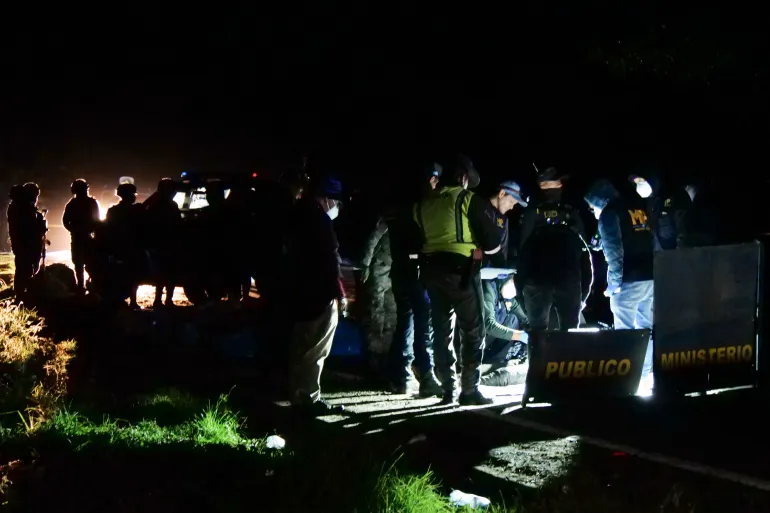
    A catastrophic bus accident on Guatemala’s treacherous Inter-American Highway has resulted in a significant loss of life, with local authorities confirming 15 fatalities and 19 individuals injured. The tragedy unfolded in the western region of the country when the passenger vehicle veered off the road and plummeted into a deep ravine.

    Emergency response spokesperson Leandro Amado provided a detailed breakdown of the casualties, indicating that the victims included eleven adult males, three women, and one minor. The incident occurred in the Solola Department along a notoriously dangerous stretch of highway between kilometres 172 and 174, an area locally known as ‘Alaska Peak’ due to its challenging and rugged topography.

    According to Amado’s statement on Saturday, rescue operations were immediately launched following the accident. Approximately 19 injured passengers were successfully extracted from the wreckage and transported to nearby medical facilities for urgent treatment. The bus had been en route from Guatemala City to the San Marcos department, which borders Mexico, when it descended into a ravine approximately 75 meters (250 feet) deep under circumstances that remain undetermined.

    Visual documentation released by the fire department depicted the extensive damage to the vehicle as emergency personnel conducted complex rescue efforts in the ravine. The challenging recovery operation was further complicated by the area’s characteristic dense fog, which frequently creates hazardous driving conditions through reduced visibility.

    Local media outlets reported that family members of passengers rushed to both the accident site and area hospitals in desperate attempts to locate their relatives. This latest incident echoes a previous bus tragedy that occurred in early 2025, when more than 50 people lost their lives in a similar accident near Guatemala City, highlighting ongoing transportation safety concerns in the region.

  • Thailand, Cambodia agree on ceasefire to end weeks of deadly fighting

    Thailand, Cambodia agree on ceasefire to end weeks of deadly fighting

    After weeks of deadly border clashes that resulted in significant casualties and mass displacement, Thailand and Cambodia have formally agreed to an immediate cessation of hostilities. The neighboring Southeast Asian nations signed a joint ceasefire agreement on Saturday, effectively halting twenty days of intense fighting that marked the most severe bilateral conflict in recent years.

    The accord, endorsed by Thai Defense Minister Natthaphon Narkphanit and Cambodian Defense Minister Tea Seiha, stipulates that both military forces will maintain their current positions without further deployment movements. The comprehensive ceasefire took effect at noon local time (05:00 GMT) on Saturday, explicitly prohibiting all weapons use and attacks against civilian populations, infrastructure, and military installations across all contested areas.

    Despite the official truce, Al Jazeera correspondent Assed Baig reported from the Cambodian border city of Poipet that intense exchanges persisted until the final moments before the ceasefire implementation. This last-minute violence underscores the agreement’s perceived fragility and has left displaced civilians apprehensive about returning to their homes without concrete security assurances.

    The diplomatic agreement includes confidence-building measures such as refraining from provocative actions and preventing the dissemination of misinformation. An ASEAN observer team will monitor compliance with the ceasefire terms, while both nations have committed to maintaining open communication channels to address potential ground-level issues.

    The diplomatic process continues with Cambodian Foreign Minister Prak Sokhonn scheduled to meet with Thai and Chinese counterparts in Yunnan, China on Sunday. This trilateral meeting, characterized as a “mutual confidence” initiative, aims to restore lasting peace and stability along the contentious border region.

    The current conflict originates from historical territorial disputes along the 800-kilometer shared border, where both nations claim ancient temple sites and have contested colonial-era demarcations for over a century. This recent outbreak follows a previous July ceasefire brokered by the United States, China, and Malaysia that ultimately collapsed earlier this month, with both sides exchanging accusations of instigating renewed violence and targeting civilian populations.

  • Trump says US will keep or sell oil seized from Venezuela

    Trump says US will keep or sell oil seized from Venezuela

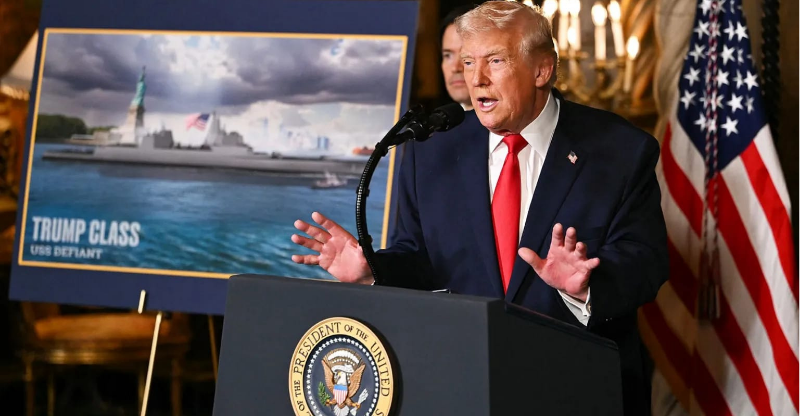
    In a significant escalation of pressure against the Venezuelan government, former President Donald Trump announced that the United States would retain or sell crude oil confiscated from tankers intercepted near Venezuela’s coast. The declaration came during a press briefing in Florida on Monday, where Trump outlined multiple potential dispositions for the seized commodities, including potential allocation to the Strategic Petroleum Reserve.

    The U.S. military has intensified its maritime operations this month, apprehending two oil tankers with a third vessel currently under pursuit. American authorities characterize these ships as components of a Venezuelan ‘dark fleet’ specifically designed to circumvent international sanctions. This enforcement campaign forms part of a broader strategy to economically isolate the administration of Nicolás Maduro, whom the U.S. accuses of utilizing oil revenues to fund narcotics trafficking operations.

    In a parallel development, the U.S. military confirmed conducting a strike on a suspected trafficking vessel in international waters of the eastern Pacific, resulting in one fatality. Trump further indicated plans to expand anti-trafficking operations to land-based targets, warning that attempted incursions would meet with decisive military response.

    The Venezuelan government has vehemently condemned these actions as acts of ‘piracy’ and has sought international intervention through the United Nations Security Council, which is scheduled to convene an emergency session to address what Caracas terms ‘ongoing U.S. aggression.’ Maduro responded directly to Trump’s statements, suggesting the former president should focus on domestic challenges rather than intervening in Venezuelan affairs.

    This confrontation occurs within the context of heightened U.S. military presence in the Caribbean and Pacific regions, alongside the Trump administration’s designation of Maduro’s government as a Foreign Terrorist Organization. The recent blockade order against sanctioned oil tankers represents another economic pressure tactic against Venezuela’s oil-dependent economy.