
标签: Saint Lucia

圣卢西亚

  • Uber dodges legal questions but open to talks with stakeholders

    Uber dodges legal questions but open to talks with stakeholders

    The global ride-hailing behemoth Uber has declared its intention to remain part of Saint Lucia’s future despite facing mounting regulatory challenges and government opposition. This Caribbean confrontation escalated when Deputy Prime Minister Ernest Hilaire publicly declared Uber’s operations illegal earlier this month, citing significant regulatory violations.

    Despite direct questioning from St Lucia Times regarding its legal status and compliance intentions, Uber provided evasive responses, avoiding specific answers about its regulatory standing. Instead, the company reiterated its willingness to engage in “respectful dialogue with all stakeholders” while maintaining operations despite the government’s cease-and-desist order.

    The core regulatory conflicts identified by Minister Hilaire encompass three critical areas: Uber’s failure to obtain a necessary trade license, non-registration with the Inland Revenue Department for tax purposes, and lack of certification under the Tourism Development Act. Compounding these official challenges, the National Taxi Union has warned its members that association with the Uber platform could jeopardize their union registration status.

    Since its January 27 launch on the island, Uber has promoted its platform as a technological solution benefiting local drivers through enhanced connectivity with tourists, credit card payment options, and schedule flexibility. However, its arrival has ignited complex debates about transportation modernization versus regulatory compliance.

    The controversy reflects deeper systemic issues within Saint Lucia’s transportation infrastructure. Residents report persistent challenges with limited routes, inconsistent service, and coverage gaps that complicate daily commutes for workers and students alike.

    One Beausejour resident, familiar with international ride-hailing services, expressed cautious optimism tempered by practical concerns: “The idea of a dependable service is appealing but I’ve faced disappointing experiences with local platforms—unavailable drivers or unexpected fees eventually made me stop trying.”

    This standoff transcends corporate-regulatory tensions, revealing fundamental questions about how Saint Lucia might develop more reliable, affordable, and accessible transportation systems. As the government and union maintain firm opposition, many citizens are weighing the potential benefits of technological innovation against the necessity of regulatory oversight and fair competition.

  • Fisherfolk want end to US military action in region

    Fisherfolk want end to US military action in region

    A recent United States military drone strike in Caribbean waters has triggered widespread alarm and economic disruption throughout Saint Lucia’s fishing industry, raising serious questions about sovereignty and military intervention in the region.

    Fishermen across the island nation report plummeting morale and operational paralysis following the Trump administration’s confirmation of a ‘lethal kinetic strike’ conducted last Friday against suspected drug traffickers near the Grenadine island of Bequia. While official confirmation remains pending regarding potential Saint Lucian casualties, the proximity of the military action has created palpable anxiety among maritime workers.

    For generations, fishing has served as both economic backbone and cultural cornerstone in Saint Lucia, sustaining coastal communities from the era of Arawak and Carib inhabitants to modern times. Now, this vital heritage faces unprecedented threat as fishermen hesitate to venture into traditional fishing grounds.

    Mathaius ‘MJ’, a southern-based fisherman, expressed raw anger in interviews: ‘What Trump is doing is wickedness. We have loans to pay, children to feed. Now men are afraid to go out.’ He described the eerie transformation at Vieux Fort Fisheries Complex, where typically bustling docks now sit nearly empty—only two boats departed recently compared to normal activity levels.

    The psychological impact extends beyond economic concerns. Fishermen traditionally launch around 3 a.m. to reach fish aggregating devices before marine life moves, but many now fear their predawn movements might be misinterpreted by military surveillance. Veteran fisherman Joseph Dalsan emphasized the cultural dimension: ‘My grandfather did this, his grandfather before him. Why kill people on the spot? If you suspect a boat, board it, search it, arrest people if they’re criminals.’

    The Goodwill Fishermen’s Cooperative Society urges compliance with fishing regulations—including vessel specifications governed by the Department of Fisheries—as protective measures. Operations Manager Kaygianna Toussaint advised: ‘Fishers must ensure their operations are legal and above board so there is evidence to support them if anything happens.’ She specifically recommended remaining within verifiable territorial waters.

    However, many fishermen doubt compliance alone can protect against aerial strikes that allow no opportunity for verification or response. The situation escalated further as the Royal Saint Lucia Police Force confirmed investigating the disappearance of local man Ricky Joseph, whose family fears he may have been caught in the strike. Assistant Commissioner Luke Defreitas acknowledged examining potential connections between Joseph’s disappearance and charred vessel remains recovered off Micoud.

    The community’s outrage stems from perceived double standards, with Dalsan noting: ‘America does not kill their own like that. They have bigger problems to deal with.’ As anxiety mounts, Saint Lucian fisherfolk increasingly demand their government advocate for removal of US military operations from Caribbean waters.

  • Police set to relocate to new $35.8M Gros Islet headquarters

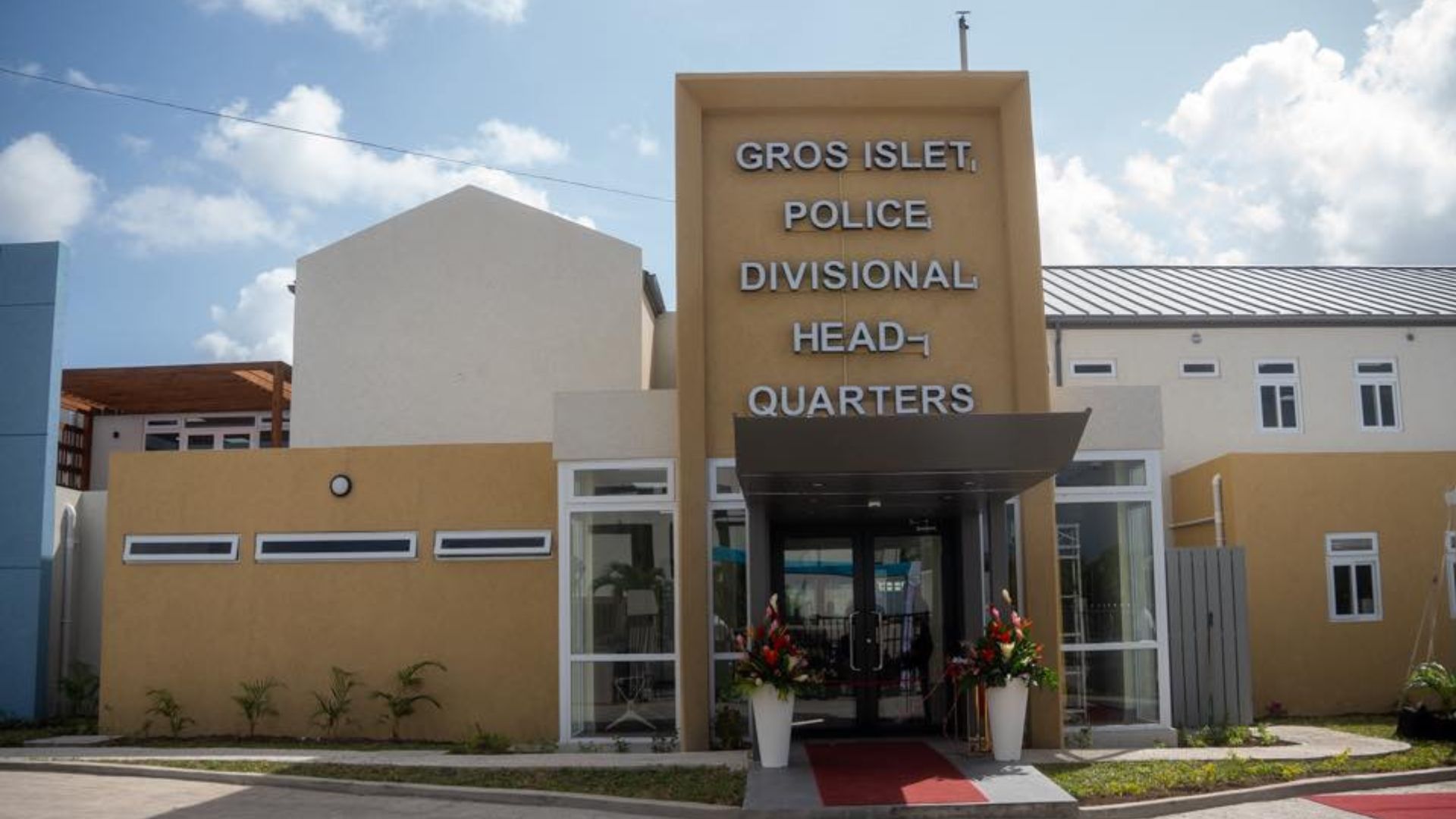
    Police set to relocate to new $35.8M Gros Islet headquarters

    The Royal Saint Lucia Police Force has initiated a significant operational transition, relocating its Gros Islet division from the Human Resource Development Centre to a newly constructed, purpose-built facility in Massade. This strategic move concludes the force’s prolonged dependence on leased accommodations, establishing a permanent base of operations designed for modern law enforcement needs.

    This advanced divisional headquarters will accommodate a substantial contingent of personnel, having absorbed 25% of the force’s most recently graduated officers. Senior police leadership emphasizes that this reinforced staffing level will substantially augment the division’s capacity to maintain security and engage with the local community effectively.

    During the formal inauguration on February 19, Deputy Commissioner of Police Ronald Philip addressed attending officers, framing the relocation as a profound opportunity rather than a mere change of venue. He challenged the division to embrace the facility as a catalyst for elevated professional standards, describing it as one of the most contemporary police stations in the English-speaking Caribbean. Philip articulated a vision for the headquarters to become a benchmark for professionalism, a paradigm of community-oriented policing, and a institution recognized for its inclusivity, accessibility, and responsiveness to public needs.

    Echoing this sentiment, Gros Islet Parliamentary Representative Kenson Casimir highlighted the station’s design philosophy, which prioritizes operational efficiency, enhanced service delivery, and the provision of a secure, professional working environment for officers dedicated to daily community service.

    Financed through a Build, Own, Lease, Transfer (BOLT) agreement valued at approximately $35.86 million, the project was a collaborative venture between the Saint Lucian government and NIPRO, a subsidiary of the National Insurance Corporation. NIPRO Chairperson Everistus Jn Marie noted the project’s completion was achieved despite significant challenges, including global supply chain disruptions, extensive hurricane season rainfall, and competitive shortages in labor and materials amid a broader construction surge. Remarkably, the development was finalized without exceeding its initial contractual budget.

    With interior furnishings and fittings now complete, the station is poised for imminent occupancy by police personnel. The successful BOLT model employed for this project is already slated for replication in the planned Vieux Fort Administrative Complex, signaling continued partnership between NIPRO and the government.

  • Saint Lucia clears latest EU review, remains off blacklist

    Saint Lucia clears latest EU review, remains off blacklist

    Saint Lucia has successfully preserved its position outside the European Union’s tax blacklist, as confirmed by the EU’s latest assessment published on February 17, 2026. This marks another validation of the Caribbean nation’s commitment to international tax transparency standards, a significant achievement for a country that faced EU listing less than a decade prior.

    The island nation’s journey toward tax compliance began after its initial placement on the EU’s non-cooperative jurisdictions list in December 2017. Following high-level commitments made in March 2018, Saint Lucia implemented comprehensive legislative overhauls that resulted in its complete removal from all EU tax-related lists by February 2021.

    Substantive reforms included the abolition of preferential tax regimes considered potentially harmful, particularly elements of the International Business Company framework and related offshore incentives. The government modernized its corporate tax system through the introduction of a territorial regime coupled with rigorous economic substance requirements designed to prevent artificial profit shifting.

    Transparency measures were significantly enhanced through full participation in the OECD’s Common Reporting Standard for automatic financial information exchange and compliance with Global Forum standards on information exchange upon request. The nation further aligned domestic regulations with OECD Base Erosion and Profit Shifting (BEPS) minimum standards, incorporating transfer pricing rules and anti-abuse measures.

    Prime Minister Philip J. Pierre emphasized that Saint Lucia’s achievement demonstrates how small states can meet rigorous international standards while preserving economic sovereignty. The government views tax compliance as integral to protecting correspondent banking relationships, maintaining access to international financial markets, and promoting sustainable economic growth.

    With the next EU review scheduled for October 2026, Saint Lucia maintains its commitment to upholding the highest standards of tax governance and international cooperation.

  • Book launch celebrates ancestors who built foundations of modern Saint Lucia

    Book launch celebrates ancestors who built foundations of modern Saint Lucia

    In a profound celebration of national heritage, author Louise Mathurin-Serieux unveiled her seminal work ‘On the Shoulders of Peasants’ as both scholarly examination and emotional homage to Saint Lucia’s foundational generations. The launch event transformed into a ceremonial recognition of post-emancipation ancestors who transcended mere survival to architect the nation’s economic and social infrastructure.

    Mathurin-Serieux revealed the project originated as an economic historical analysis but evolved into a deeply personal mission upon discovering the compelling human narratives within the data. ‘Their story kept screaming out to me,’ she confessed, noting how statistical research unexpectedly revealed the vibrant accounts of landholders, farmers, and rural citizens who shaped modern Saint Lucia.

    The work meticulously traces the island’s economic transformation from emancipation through various industry cycles, beginning with Chapter One’s exploration of the immediate post-liberation period. Despite legislative barriers and taxation policies designed to limit economic autonomy, Mathurin-Serieux documents how formerly enslaved individuals pursued dignity through land acquisition, market commerce, and emerging agricultural industries.

    Chapters Two through Six analyze specific economic contributions, while Chapter Seven expands to examine broader social impacts, including advocacy efforts and community development initiatives. The title embodies dual significance: recognizing both the economic foundation built by rural citizens and the disproportionate burdens they shouldered during industry collapses.

    The author emphasized oral history’s critical role, lamenting that most interviewees have since passed away. She issued an urgent call for systematic preservation of community memory, stressing that without concerted effort to maintain these records, future generations risk losing essential connections to their national narrative.

    Mathurin-Serieux concluded by reframing the event as more than a book launch—characterizing it as a tribute to resilience that serves as an anchor for national identity and collective strength.

  • Water situation is bleak, WASCO says

    Water situation is bleak, WASCO says

    Saint Lucia is confronting a severe water crisis, with officials describing the situation as ‘very bleak’ due to critically low supplies and depleted water sources. January 2026 marked the sixth driest January on record, with rainfall significantly below normal levels. While the Caribbean Climate Outlook Forum (CariCOF) predicts some precipitation increase over the next three months, it may prove insufficient to mitigate long-term drought impacts across the Windward Islands.

    WASCO CEO Zilta George-Leslie presented a stark assessment of the crisis, noting that ‘supplies have been depleted, climate change is very active, it is taking its toll on us at this time, and a lot of our water sources are dry – our rivers are dry both in the north and in the south.’ The utility company is implementing emergency measures including valving operations to distribute limited water supplies among communities and costly water trucking operations that transport water from areas with relative abundance to those facing scarcity.

    The financial burden of these emergency measures is substantial, with WASCO spending between EC$1 million and $2 million annually on water trucking alone. This cost increases significantly during emergency maintenance situations, such as the recent pipeline damage that required complete shutdown of northern water supplies, severely affecting both domestic and commercial users in the hotel-dense region.

    Infrastructure challenges compound the drought crisis. Water levels at the critical John Compton Dam are lower than the same period last year, with multiple intakes registering deficits. The dry season’s impact is most acutely felt in the south, where smaller rural systems magnify the effects. Aging infrastructure requires major investment, with recent damage to raw water lines highlighting system vulnerabilities.

    WASCO is pursuing both immediate and long-term solutions. Short to medium-term interventions include funded projects to replace pipelines from Millet to Vanard, upgrades to the Theobalds treatment plant, and replacement of the northern pipeline from Bonne Terre to Gros Islet scheduled for March. For sustainable long-term water security, WASCO advocates for desalination plants as an inevitable solution.

    The utility has applied for a water rate increase currently under consideration by the National Utilities Regulatory Commission, with consultations ongoing for public feedback. Company officials emphasize that rate adjustments are necessary to address the mounting operational costs and infrastructure investments required to maintain water services amid escalating climate challenges.

  • Tapon make it four in a row at SMC Sports

    Tapon make it four in a row at SMC Sports

    Tapon House has cemented its athletic dominance by capturing an unprecedented fourth straight Inter-House Sports championship title at St. Mary’s College, leading the competition from start to finish in a spectacular display of track and field prowess. The triumphant team amassed an impressive 858 points, decisively outpacing Presentation (713 points), Abercrombie (677 points), and Rodney (603 points) during the 121st annual sports meet held February 13th at Daren Sammy Cricket Ground.

    While Tapon claimed overall team glory, individual brilliance shone across all divisions, with each category producing a triple champion. The most remarkable performance came from Rodney’s Evan Sankar, a second-form athlete who delivered a record-shattering display in Division 5. Sankar obliterated a nine-year-old record in the 600m, clocking 1:45.7 to erase Sherqwayne Prudent’s previous mark of 1:48.5. He further demonstrated his versatility by capturing the 300m title in 43.3 seconds and conquering the junior 1200m in 4:31.4 despite never having previously competed in the event.

    Other standout performances included Tapon’s Manasseh Sobers securing the Division 5 150m in 20.0 seconds, while Abercrombie’s Zandre Plante claimed the 80m crown with a 10.8-second sprint. Presentation’s Keanu Jeffery dominated Division 4 with victories in the 100m (11.9s), 200m (25.2s), and 400m (59.2s), alongside Abercrombie’s Jaelen McDonald who took the 800m in 2:33.3.

    Zayne Henry carried Tapon’s success into Division 3, achieving triple gold in the 100m (11.8s), 200m (24.5s), and 400m (59.7s). Division 2 honors went to Abercrombie’s Joshua Matthew, who earned victor ludorum status with wins in the 100m (11.5s), 200m (23.0s), and 400m (54.6s). In the senior Division 1 category, Presentation’s Carter Clauzel emerged supreme with victories in the 100m (11.3s), 200m (23.6s), and 400m (54.2s).

    The championship concluded with an intense tug-of-war competition that solidified Tapon’s victory, witnessed by hundreds of alumni spanning generations. With this decisive win, St. Mary’s College now turns its attention to defending its title at the upcoming Island Championships during the Easter break.

  • Vessel recovered; family believes missing man was caught in US Strike

    Vessel recovered; family believes missing man was caught in US Strike

    Authorities in Saint Lucia have launched a comprehensive investigation following the recovery of vessel wreckage off the Micoud coastline, potentially connected to the disappearance of local fisherman Ricky Joseph. The Royal Saint Lucia Police Force took custody of the maritime debris on February 18, coinciding with family concerns that Joseph might have been caught in recent US military operations in Caribbean waters.

    Assistant Commissioner of Police Luke Defreitas confirmed the evidence remains under examination while emphasizing the investigation currently centers on a missing persons case. “This exhibit is now in the custody of the police,” Defreitas stated. “Our interest in this vessel stems from family assertions that Ricky Joseph may have been aboard, whether as crew member or worker.”

    The development occurs against the backdrop of heightened regional security operations, though police officials maintain cautious neutrality regarding potential connections to US military actions. When questioned about possible links to vessels reportedly destroyed in recent strikes, Defreitas clarified: “We cannot at this time confirm. We are yet to identify the vessel’s registration and ownership. We do not know what obtains with the vessel allegedly destroyed, so we can make no connection between this recovered vessel and any involved in the alleged attack.”

    Investigators are pursuing forensic analysis of the wreckage while coordinating with international partners to establish definitive identification. The case has drawn attention to the complex intersection of local maritime activities and multinational security operations in Caribbean waters.

  • National Workers Union to host annual congress of delegates

    National Workers Union to host annual congress of delegates

    The National Workers Union (NWU) will convene its pivotal Annual Congress of Delegates on February 20, 2026, adopting the resolute theme: “Preserving and Advancing Decades of Economic, Social, Political, and Industrial Achievements.” This gathering represents a critical juncture for the organization to reaffirm its commitment to protecting workers’ rights and consolidating past gains.

    In accordance with its constitutional mandate, the Congress will assemble at the NWU Headquarters located within the John Burke King Industrial Academy at Unity House, #7 Maurice Mason Avenue, Sans Souci, Castries. The proceedings will commence with an Open Session at 9:30 a.m., featuring a distinguished roster of speakers and participants.

    The ceremonial opening will be presided over by Chairperson Comrade Kimani Pompelis, with Comrade Nnamdi Obodoechina, Central Committee Member and Shop Steward at St. Jude Hospital, delivering the invocation. Secretary General Comrade Johann M. Harewood will set the strategic tone for the assembly through his Welcome Address.

    The Feature Address will be presented by Cletus Springer, a prominent figure in regional development who serves simultaneously as Chairman of the Caribbean Natural Resources Institute (CANARI) and Chairman of the Board of Governors of the Sir Arthur Lewis Community College. His extensive expertise in industrial relations is expected to provide valuable insights into contemporary labor challenges.

    The agenda also includes brief remarks from Emma Hippolyte, Minister for Labour, alongside solidarity messages from regional and international partner organizations. Following the Open Session, delegates will transition into a Closed Session to critically examine organizational reports and develop comprehensive work plans for the upcoming operational term.

  • Julien Alfred honoured with commemorative stamp

    Julien Alfred honoured with commemorative stamp

    The Government of Saint Lucia has permanently enshrined track star Julien Alfred’s Olympic achievements by featuring her on a national postage stamp. The official launch ceremony on February 18, held during the nation’s Independence 47 celebrations, honored Alfred’s groundbreaking gold and silver medal performances at the Paris 2024 Olympic Games.

    The commemorative stamp series captures pivotal moments from Alfred’s historic athletic accomplishments and will be incorporated into the island’s official philatelic collection. Following her Olympic success, the two-time medalist was additionally appointed as a tourism ambassador for Saint Lucia.

    In a significant development, the government revealed plans to transition the stamp from commemorative to definitive status. While commemorative stamps are typically special-issue collectibles celebrating specific events or personalities, definitive stamps serve as standard postage for everyday mail. This elevation means Alfred’s likeness will transition from a limited-edition tribute to a permanent feature of the nation’s postal system.

    Alfred participated in the ceremony via virtual call, expressing profound gratitude for the honor. “To be honoured by my island in this way is deeply humbling,” she stated. “This place shaped me into who I am: my values, my strength, and my dreams. I accept this not just for myself, but as a symbol honouring the strength of a united community.”

    Education, Youth Development and Sports Minister Kenson Casimir emphasized the symbolic importance of the stamp, noting that it transforms Alfred’s achievements into “a permanent national symbol.” He elaborated that each envelope bearing Alfred’s image would tell a story of “a small island nation that produces world-class talent” and serve as inspiration to youth that “excellence will be recognised, discipline matters, dreams are valid, and with hard work, guidance, and opportunity, Saint Lucians can stand amongst the best in the world.”