标签: Saint Kitts and Nevis

圣基茨和尼维斯

  • PM Drew addresses criticism following assumption of CARICOM chairmanship

    PM Drew addresses criticism following assumption of CARICOM chairmanship

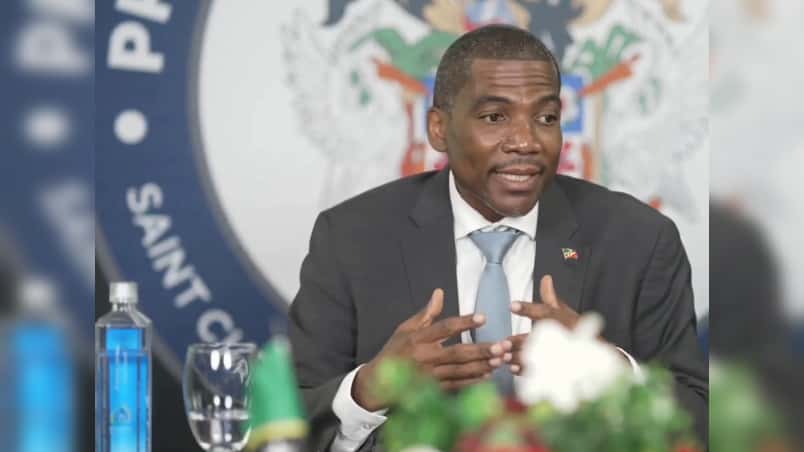
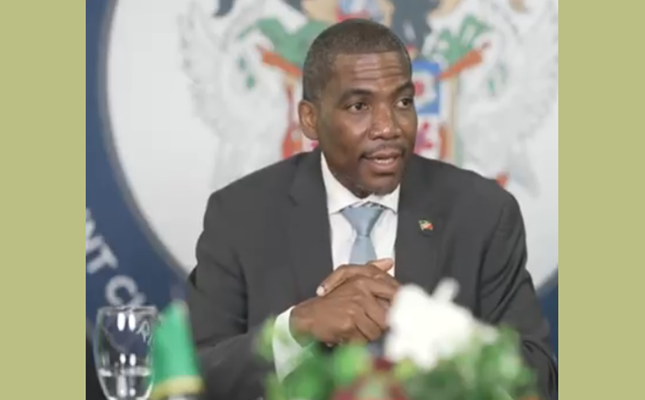
    BASSETERRE, St. Kitts — Prime Minister Dr. Terrance Drew has vigorously defended his leadership approach as current chair of the Caribbean Community (CARICOM) against growing domestic criticism. During a parliamentary address, the St. Kitts and Nevis leader emphasized the regional bloc’s indispensable role in the Federation’s development despite opposition challenges to his diplomatic methods.

    Dr. Drew outlined his hands-on strategy of direct engagement with fellow CARICOM leaders, describing it as essential for navigating complex geopolitical shifts including developments surrounding Venezuelan President Nicolás Maduro. He clarified that all CARICOM decisions represent collective positions rather than individual initiatives.

    Addressing travel-related criticisms from the People’s Labour Party, the Prime Minister dismissed claims of CARICOM’s imminent collapse while acknowledging the organization faces a critical juncture. Recent public disagreements between member states have tested the bloc’s unity, prompting Dr. Drew’s proactive diplomatic missions to facilitate private consultations.

    The Prime Minister specifically addressed transportation criticisms, revealing he utilizes Regional Security System aircraft lacking modern amenities including onboard bathrooms. He characterized these flights as functional rather than luxurious, necessary for efficient regional coordination.

    Dr. Drew highlighted CARICOM’s practical benefits for small island states, citing the Caribbean Disaster Emergency Management Agency’s hurricane preparedness support and the University of the West Indies’ role in developing regional intellectual capacity. He argued St. Kitts and Nevis could not independently bear disaster management costs or develop equivalent educational resources.

    The Prime Minister is scheduled to chair the upcoming Regional Heads of Government Conference at the St. Kitts Marriott Resort, where these regional coordination efforts will continue.

  • Renaming of Newtown Health and Community Centres reflects the nation’s commitment to service and community spirit, says Prime Mister Dr. Drew

    Renaming of Newtown Health and Community Centres reflects the nation’s commitment to service and community spirit, says Prime Mister Dr. Drew

    In a significant ceremony held in Newtown on February 17, 2026, Prime Minister Hon. Dr. Terrance Drew presided over the formal renaming of two vital community institutions, framing the event as a profound affirmation of national values rather than merely procedural. The Newtown Health Centre has been redesignated to honor Nurse Millicent West and Mr. Kennedy Earle Clarke, while the Newtown Community Centre’s halls now bear the names of Mr. Lloyd Lazar and Teacher Myrtle Neal, commemorating their exceptional contributions to community development.

    Addressing attendees including government officials, community leaders, and relatives of the honorees, Dr. Drew characterized the occasion as a powerful declaration of Saint Kitts and Nevis’ collective identity. He emphasized that the ceremony transcended symbolic gesture, serving instead as a tangible reinforcement of the nation’s commitment to service excellence, compassion, and social upliftment.

    The Prime Minister elaborated on the institutional significance of these centers, describing the health facility as a critical safeguard for both physical and mental wellness, while labeling the community center as an essential incubator for social cohesion, educational advancement, and creative expression. Together, he noted, these establishments form the foundational pillars of human development—health and meaningful connection.

    Dr. Drew articulated the deeper implications of naming public institutions after exemplary citizens, noting that such acts create enduring narratives that inspire future generations. The designations intentionally prompt curiosity about the honorees’ legacies, encouraging citizens to inquire about their contributions and values, thus ensuring continuity of community spirit.

    The Prime Minister specifically praised the Newtown and East Basseterre communities for their demonstrated resilience and perseverance, highlighting that genuine progress emerges from dedicated service and shared responsibility. He held up the four honorees as embodiments of these principles, demonstrating how committed individuals can profoundly shape national destiny through their contributions.

    The ceremony concluded with a collective recognition that these namings serve dual purposes: honoring past achievements while simultaneously challenging current and future generations to perpetuate this legacy through their own acts of community service and civic engagement.

  • West Indies Men Secure Super Eight Spot with Three Consecutive Victories

    West Indies Men Secure Super Eight Spot with Three Consecutive Victories

    The West Indies Senior Men’s cricket team has emphatically secured their place in the Super Eight stage of the ICC T20 World Cup following a dominant performance against Nepal at Mumbai’s Wankhede Stadium on Sunday. This decisive nine-wicket triumph marks their third consecutive victory in the tournament, maintaining an unblemished record in the group phase.

    The Caribbean squad’s clinical display against Nepal showcased their comprehensive strength across all departments. After electing to field first, the West Indies bowling attack dismantled Nepal’s batting lineup, reducing them to 23-4 just beyond the powerplay overs. Pace bowler Jason Holder delivered a standout performance, claiming 4 wickets for 27 runs to elevate his tournament tally to 7 wickets and secure his position among the tournament’s top five wicket-takers.

    Supported by Matthew Forde, Akeal Hosein, Roston Chase, and Shamar Joseph—each contributing a wicket—the West Indies restricted Nepal to a modest 133-8 from their allotted 20 overs. The batting response proved equally impressive, with captain Shai Hope leading the charge with an unbeaten 61 runs that included five boundaries and three sixes, simultaneously surpassing the personal milestone of 1,500 T20I runs.

    Hope found able partnership with Shimron Hetmyer, who continued his exceptional tournament form with 46 runs from 32 deliveries. Their unbroken 91-run stand for the second wicket demonstrated the team’s batting depth and composure under pressure. Hetmyer’s tournament statistics now stand at 133 runs across three innings with a remarkable average of 66.50.

    The West Indies’ journey to the Super Eight has been characterized by multiple match-winning performances. Earlier victories saw Hetmyer’s blistering 64 against Scotland and Sherfane Rutherford’s career-best 74 against England, complemented by Romario Shepherd’s hat-trick and Gudakesh Motie’s spin mastery.

    With one group match remaining against Italy on February 19th in Kolkata, the West Indies have already guaranteed their advancement regardless of the outcome. As pre-seeded second in their group, they will maintain this seeding through the Super Eight stage, where they face formidable opponents including India, South Africa, and Zimbabwe beginning February 23rd.

    Captain Shai Hope emphasized the team’s strategic approach, stating: ‘Our focus remains on maintaining momentum while recognizing that lifting the trophy requires executing our process effectively—playing our best cricket, peaking at the right moment, and growing as a cohesive unit.’

    The tournament structure advances the top two teams from each Super Eight group to the knockout stage, with the West Indies positioned as strong contenders based on their current form and comprehensive team performance.

  • Kingsmen confirm launch of Caribbean Premier League Franchise in Jamaica

    Kingsmen confirm launch of Caribbean Premier League Franchise in Jamaica

    Jamaica’s sporting landscape is set for a transformative development as Kingsmen Sports Enterprise officially announced its acquisition of a Caribbean Premier League (CPL) franchise on February 17th, 2026. This strategic move represents more than just athletic expansion—it constitutes a comprehensive commitment to Jamaica’s economic infrastructure, cultural heritage, and cricket development.

    The newly established franchise, backed by a U.S.-based investment consortium with demonstrated expertise in sports technology and community development, approaches this venture as a long-term partnership rather than a temporary sporting initiative. The ownership group, which recently expanded its portfolio with a Pakistan Super League team, aims to cultivate substantial sports tourism opportunities and stimulate year-round economic activity centered around cricket and entertainment.

    Fawad Sarwar, Group President of Kingsmen Sports Enterprise, articulated the broader vision: “Our ambition extends well beyond the cricket pitch. This franchise will function as an economic catalyst—generating employment, bolstering local enterprises, and establishing Jamaica as an international destination for cricket, cultural experiences, and sportainment.”

    Economic projections indicate substantial direct and indirect benefits, including enhanced hotel occupancy, localized employment, vendor collaborations, and expanded tourism extending throughout the year. The franchise will implement a preferential procurement strategy, prioritizing Jamaican suppliers, service providers, and creative professionals to ensure economic benefits remain within local communities.

    Cultural integration forms a cornerstone of the Kingsmen philosophy. The franchise plans to embrace CPL’s celebrated reputation as the “Biggest Party in Sport” by incorporating authentic Jamaican music, culinary traditions, fashion, and community festivities into the matchday experience.

    From a sporting perspective, the initiative includes significant investment in player development pathways. The franchise will establish academies, enhance coaching standards, implement data-driven scouting systems, and engage youth programs to ensure Jamaican talent remains fundamental to the team’s competitive future.

    “This initiative revolves around creating multidimensional opportunities,” Sarwar emphasized. “Opportunities for aspiring cricketers, business owners, artists, hospitality workers, and communities that view cricket as both cultural legacy and economic future.”

    The Jamaica franchise launch aligns with Kingsmen’s global cricket strategy, blending world-class infrastructure, elite athletic development, and community-oriented investment models. Additional details regarding team branding, community programs, and inaugural events will be unveiled in the coming months ahead of the 2026 CPL season.

  • St. Kitts’ Citizenship-by-Investment Programme under gobal scrutiny as China looms in the background

    St. Kitts’ Citizenship-by-Investment Programme under gobal scrutiny as China looms in the background

    The Citizenship-by-Investment (CBI) programme that transformed St. Kitts and Nevis into one of the Caribbean’s most prosperous microstates now faces intense international scrutiny, not merely for its economic implications but for the geopolitical questions it raises in an increasingly polarized global landscape.

    As the pioneer of modern investment migration, the twin-island federation has long promoted its passport as a gateway to global mobility, opportunity, and financial security. Investors are attracted by visa-free access to over 150 countries, flexible residency rules, and a reputation built over four decades. However, the program’s explosive growth over the past decade has alarmed international partners concerned about who obtains Kittitian and Nevisian citizenship—and whether investment migration could become a conduit for foreign influence.

    These concerns emerge against the backdrop of China’s aggressive expansion across Latin America and the Caribbean, coupled with its persistent campaign to diplomatically isolate Taiwan. Although St. Kitts and Nevis maintains no formal relations with Beijing, the substantial participation of Chinese nationals in the federation’s CBI programme adds complex layers to an already delicate geopolitical balancing act.

    A Programme Overshadowing Its Nation

    Over the past ten years, St. Kitts and Nevis has witnessed a dramatic surge in economic citizens alongside increased migration from within CARICOM and the OECS. This influx has strained infrastructure and public services in a nation with a resident population of just over 53,000.

    According to the European Commission’s Eighth Report, the federation received 17,668 CBI applications between 2015 and 2023, resulting in 48,844 passports issued. Subsequent data shows over 3,000 additional applications and 6,437 passports issued in 2024, with 734 more by April last year—bringing the total beyond 55,000. Effectively, passports issued through the programme now exceed the number of citizens living and working in the federation.

    The Commission noted that many successful applicants come from countries whose citizens typically require visas to enter the European Union, including China, Iran, Syria, Iraq, Nigeria, and Lebanon. While the Citizenship by Investment Unit releases limited demographic data, international reports indicate Chinese nationals constitute one of the largest applicant groups across Caribbean CBI programmes.

    Critics argue that the absence of routinely published nationality and residency data undermines public oversight and fuels speculation about the strategic implications of mass citizenship grants, particularly when applicants originate from geopolitically sensitive states.

    Unlike St. Kitts and Nevis, Grenada provides quarterly reports detailing programme operations, including applicant nationalities, application numbers, approvals, passports issued, and total revenue—fulfilling its international obligations.

    China, Mobility, and Strategic Ambiguity

    Although China does not officially recognize dual nationality, wealthy Chinese nationals remain among the most active users of investment migration programmes worldwide. For many, a Caribbean passport offers mobility, asset diversification, and insulation against domestic political or economic uncertainty.

    However, analysts caution that scale matters. While individual applicants may be motivated by personal considerations, a sustained concentration of citizenship acquisition from any single country—particularly a major geopolitical power—raises long-term governance and security concerns for small states.

    The concern is not that Chinese CBI citizens act as state agents, but that the programme could inadvertently create strategic leverage. Visa-free access to Europe, minimal residency requirements, and inadequate post-citizenship monitoring have been identified by European and North American authorities as vulnerabilities when due diligence systems are inconsistently applied.

    Several high-profile legal cases involving Chinese holders of Caribbean passports have intensified scrutiny, reinforcing fears that investment citizenship could be exploited for illicit financial flows or geopolitical positioning—even if such cases remain exceptions rather than the rule.

    Public Good Projects and the Belt and Road Dynamic

    Complicating matters further is the Public Benefit and Public Good investment option, which channels large-scale capital into national development projects. While these investments can finance crucial infrastructure, critics warn that the model may blur the line between economic development and influence-building when transparency is lacking.

    This concern resonates across the region as China’s Belt and Road Initiative (BRI) continues to reshape Caribbean infrastructure landscapes. In several jurisdictions, Chinese-financed ports, roads, and public facilities have preceded deeper political and diplomatic engagement with Beijing.

    Though St. Kitts and Nevis is not a BRI partner state, the growing presence of Chinese capital—including through citizenship acquisition—has prompted questions about whether economic pathways could eventually translate into political pressure, especially as Beijing intensifies its global campaign to reduce Taiwan’s remaining diplomatic allies.

    The BRI, launched under Chinese President Xi Jinping, focuses on financing major infrastructure projects including roads and ports. Since its inception, over 150 countries have signed various memoranda of understanding with the Chinese government, representing an estimated US$1 trillion in commitments.

    Reports indicate that more than 20 Latin American and Caribbean territories have joined the programme, with Guyana recently completing its 2,900-meter Demerara Harbour Bridge at US$260 million under the initiative. Other beneficiaries include Antigua and Barbuda, Barbados, Dominica, Grenada, Trinidad and Tobago, and Jamaica.

    While welcomed by many, BRI projects have left several participating territories with significant debt burdens. Jamaica, for instance, reportedly owes China over US$700 million following supported projects, including the North-South Highway completed in 2016 and the ongoing Southern Coast Highway development.

    Despite criticism, many acknowledge that BRI projects serve as essential lifelines for territories that could otherwise not afford such infrastructure, as traditional development partners often provide funding at higher interest rates or lack sufficient capital for completion.

    Reform Efforts and External Pressure

    In response to mounting international criticism, St. Kitts and Nevis and other OECS CBI jurisdictions signed a Memorandum of Agreement aimed at harmonizing standards and strengthening oversight. The agreement commits governments to information-sharing, enhanced transparency, independent audits, stricter regulation of authorized agents, and establishing a regional regulatory authority.

    Despite these efforts, the United States recently tightened scrutiny on passport holders from Antigua and Barbuda and Dominica, suspending certain visa categories partly due to concerns about insufficient residency requirements. This move has sent ripples through the entire Caribbean investment citizenship industry.

    Last year, the Governments of St. Kitts and Nevis and other OECS territories implemented key reform measures to strengthen programme safeguards, including introducing mandatory residency requirements and biometric data collection.

    “We are serious when we say that we will do what is necessary to put this CBI programme in good standing,” St. Kitts and Nevis Prime Minister Dr. Terrance Drew stated during one of his Roundtable sessions.

    Economic Lifeline or Strategic Liability?

    There is little dispute that the CBI programme remains central to the federation’s economy, contributing an estimated 30-90% of GDP. Revenues reached approximately EC$218-670 million over the last decade, funding social programmes and public infrastructure that would otherwise be unattainable.

    In 2019, the country recorded EC$443 million, followed by EC$270 million in 2020. A significant increase to EC$543 million occurred in 2021, and 2022 proved exceptionally successful with EC$669 million. However, after reforms were imposed, the government saw a slight decline to EC$621 million in 2023, followed by a sharp drop to EC$218 million in 2024.

    Attorney-at-law and former National Security Minister Dwyer Astaphan warned that weak oversight risks eroding national credibility, while acknowledging the programme’s economic necessity for a resource-poor state.

    He expressed particular concern about the lack of information sharing and the number of passports issued under the Public Good Option, specifically referencing three projects: the airport development, the Basseterre High School project, and the National Performing Arts Centre project.

    “I do not like the way these options are structured,” he added.

    Nevis Premier and Opposition Leader Mark Brantley cautioned against conflating isolated criminal cases with systemic failures, while acknowledging that the sheer number of economic citizens inevitably raises long-term governance questions.

    “I am not concerned about that. I think that those—the practical matter—those things happen…it doesn’t suggest any weakness in the programme,” Brantley said, comparing the situation to citizens without criminal records who later engage in criminal activity.

    In an invited comment on geopolitical shifts and the CBI programme, Prime Minister Dr. Terrance Drew confirmed that the government is establishing a regulatory body to safeguard the federation’s programme, ensuring it is “more resilient, built on transparency, and integrity.”

    “Of course, there are geopolitical aspects to it that we deal with all the time, but we continue to engage our international partners, from the EU to the United States,” Drew noted.

    Taiwan Ties in a Changing Region

    St. Kitts and Nevis has maintained formal diplomatic relations with Taiwan since independence in 1983, making it one of only a handful of Caribbean states still aligned with Taipei. Over four decades, Taiwan has funded projects across healthcare, agriculture, education, sports, water security, and community development.

    Notable contributions include approximately US$7 million toward the redevelopment of the Warner Park Cricket Stadium for the 2007 ICC Cricket World Cup, over 100 scholarships for local students pursuing tertiary education, desalination initiatives, and the 2023 refurbishment of the New Road Playpark at a cost exceeding US$350,000.

    Taiwan’s Resident Ambassador Edward Ling-wen Tao recently reaffirmed the partnership, describing it as “positive and fruitful” and pledging continued support for nation-building. He acknowledged China’s growing influence in the Caribbean but emphasized that Taiwan’s assistance remains focused on long-term development rather than strategic leverage.

    “I met with the Prime Minister and the Honourable Ministers and also grassroots friends, and they are all very positive about their relationship with Taiwan. And I can assure you that Taiwan will remain a loyal friend of St. Kitts and Nevis for many years to come.”

    Yet regional history offers cautionary examples. In several Caribbean and Central American states, expanding economic ties with China have eventually preceded diplomatic shifts away from Taiwan—often justified on development grounds.

    China continues to view the LAC region as a priority amid the changing global landscape. The European Parliament recently underscored this by noting the frequency of high-level visits by Chinese Communist Party officials—including President Xi Jinping, who visited the region six times between 2013 and 2024, reportedly more often than the last three US Presidents combined.

    A Delicate Balancing Act

    Currently, most analysts agree that St. Kitts and Nevis’s CBI programme does not directly serve as a geopolitical backdoor for China. Yet they also caution that in an era of great-power competition, economic instruments rarely remain purely economic.

    As one of Taiwan’s remaining Caribbean allies, the federation occupies a position of outsized strategic significance. The challenge ahead lies in preserving economic opportunity without allowing scale, opacity, or external pressure—real or perceived—to undermine sovereignty, credibility, or long-standing diplomatic relationships.

    In this context, the debate surrounding CBI has evolved beyond passports and revenue. It has increasingly become about how small states navigate global power shifts without losing control of their own strategic destiny.

  • Republic Bank Caribbean Premier League returns to Jamaica in 2026

    Republic Bank Caribbean Premier League returns to Jamaica in 2026

    In a landmark development for Caribbean cricket, the Republic Bank Caribbean Premier League (CPL) has officially confirmed its return to Jamaica for the 2026 season after seven years of absence. The announcement follows successful negotiations between tournament organizers and the Jamaican government, specifically through the Ministry of Culture, Gender, Entertainment and Sport and the Ministry of Tourism.

    The 2026 season will mark the revival of a Jamaica-based franchise team, with four matches scheduled to take place at the legendary Sabina Park stadium—one of cricket’s most historic and celebrated venues globally. This homecoming represents a significant moment for Jamaican cricket enthusiasts who have eagerly awaited the tournament’s return since its last appearance on the island in 2019.

    CPL Chief Executive Officer Pete Russell expressed enthusiasm about the agreement, stating: “We are absolutely thrilled to be bringing the CPL back to Jamaica in 2026. Jamaica has a rich cricketing heritage and an unmistakable energy that makes it one of the most special destinations in the region.”

    The tournament’s return is projected to generate substantial economic benefits for Jamaica, particularly within tourism, hospitality, transportation, and small business sectors. The event is expected to attract thousands of international visitors, including fans, players, officials, and media representatives, resulting in increased hotel occupancy, local spending, and employment opportunities.

    Beyond economic impacts, the CPL’s presence offers Jamaica unprecedented global exposure. The tournament’s combined digital and broadcast viewership exceeded one billion for the second consecutive season in 2025, providing a powerful platform to showcase Jamaican culture, vibrancy, and sporting heritage to international audiences.

    The reintroduction of a Jamaican franchise strengthens the island’s cricketing legacy while creating new opportunities for local talent development. It also reinforces regional sporting connections and enhances Jamaica’s reputation as a premier destination for world-class sporting events.

    Jamaican officials welcomed the development enthusiastically. Minister of Culture, Gender, Entertainment and Sport Olivia Grange emphasized that “This event goes beyond cricket – it supports economic growth, promotes our culture on a global stage, and inspires our young people through sport.”

    Tourism Minister Edmund Bartlett noted the alignment with urban tourism strategies, stating the return “signals a renewed wave of energy for our urban tourism strategy” and provides “compelling reasons for visitors to choose Jamaica as their destination.”

    Cricket West Indies President Dr. Kishore Shallow applauded the decision, recognizing Jamaica’s special place in Caribbean cricket history and the importance of returning to Sabina Park as a significant moment for the entire region.

    The Jamaican government anticipates welcoming the CPL community in 2026 for what promises to be a celebration of cricket, culture, and community engagement.

  • Unscheduled cruise call MS Ambience brings over 1,300 passengers to St Kitts   – WIC News

    Unscheduled cruise call MS Ambience brings over 1,300 passengers to St Kitts   – WIC News

    In an unexpected tourism windfall, the luxury cruise vessel MS Ambience made an unscheduled docking at Port Zante, St Kitts on Sunday, February 15, 2026, delivering 1,340 passengers to the Caribbean island nation. The surprise visit, orchestrated by UK-based Ambassador Cruise Line, provided substantial economic stimulation to local businesses during the peak cruise season.

    The unforeseen arrival resulted from revised travel advisories concerning Cuba. Originally scheduled to visit Havana during its 40-night ‘Jewels of the Caribbean Sea’ itinerary, the MS Ambience redirected to alternative ports following updated guidance from the UK Foreign, Commonwealth & Development Office recommending against non-essential travel to Cuba. This diversion brought both Guadeloupe and St Kitts onto the ship’s revised route.

    Simultaneously, the Renaissance—Ambassador Cruise Line’s sister vessel—maintained its scheduled visit to St Kitts with 1,108 passengers aboard. The concurrent presence of both ships created an unprecedented scenario with over 2,400 visitors descending upon Port Zante within a single day. This dual arrival generated exceptional commercial activity across the tourism ecosystem, benefiting tour operators, transportation services, retail establishments, and culinary venues.

    Local tourism authorities extended a warm welcome to the disembarking passengers, who enthusiastically explored the island’s diverse attractions and cultural offerings. The spontaneous influx of visitors underscores St Kitts and Nevis’ growing prominence within the competitive Caribbean cruise market and demonstrates the destination’s capacity to accommodate unexpected tourism opportunities.

    Industry analyst Melissa Mayntz of Cruisehive noted that itinerary adjustments of this nature reflect the cruise industry’s adaptability to evolving travel advisories while maintaining passenger experience quality. The successful integration of these unscheduled visits highlights the robust infrastructure and operational readiness of St Kitts’ tourism sector.

  • ‘An honour and privilege’

    ‘An honour and privilege’

    In a groundbreaking demonstration of regional cooperation, automotive specialists from seven Caribbean nations have successfully assembled the region’s first collaboratively built electric vehicle. The historic achievement emerged from a specialized EV Assembly workshop hosted by The University of the West Indies (UWI) Mona’s Faculty of Science and Technology, which simultaneously marked the official inauguration of the university’s state-of-the-art E-Mobility Laboratory.

    Participants from Jamaica, Antigua, Belize, Grenada, St Kitts and Nevis, and St Lucia contributed diverse mechanical and electrical expertise during the intensive week-long program. The workshop represented a multinational partnership funded by the JPS Foundation, Inter-American Development Bank (IDB) Lab, German Embassy, and UWI’s science and technology department.

    Belizean automotive instructor Eric Vernon, a 15-year veteran educator from the Institute for Technical and Vocational Education and Training, described the experience as profoundly significant. “Knowing our hand prints are forever etched in this E-Mobility Lab for generations to come as a result of our collaborative efforts is beyond words,” Vernon reflected during post-workshop celebrations. The 60-year-old instructor particularly valued the opportunity to balance a 32-cell battery pack—a technical skill he had previously only encountered through research.

    From St Kitts, Nicholson Webster, chief foreman mechanic at the Public Works Department, emphasized the workshop’s practical relevance to his government’s impending transition to electric mobility. “We are set to receive two EV buses from Taiwan, so that is the whole purpose of me being here,” Webster revealed, noting that the comprehensive hands-on training provided crucial exposure to EV motor systems previously unavailable in the Caribbean.

    Dr. Louis-Ray Harris, senior lecturer in UWI’s Department of Physics, guided participants through the complex assembly process. Teams worked systematically from chassis installation to electrical wiring, motor mounting, and battery management system programming. The resulting three-wheeled, two-seater electric vehicle with exoskeleton frame demonstrated the successful integration of diverse technical skills.

    JPS Foundation Chairman Damian Obiglio endorsed the initiative as a critical milestone in the region’s e-mobility transition. The workshop formed part of the concluding phase of the five-year e-Drive program partnership between JPS Foundation and IDB, focusing on innovative technology, capacity building, and market sensitization.

    The newly operational E-Mobility Lab will serve as an ongoing educational resource, with plans for repeated disassembly and reassembly of the prototype vehicle to train future student cohorts. Dr. Harris envisions the facility becoming the Caribbean’s premier destination for scientific innovation, potentially inspiring secondary students to pursue STEM careers through hands-on electric vehicle technology experience.

  • Six major cruise ships simultaneously dock at Port Zante – WIC News

    Six major cruise ships simultaneously dock at Port Zante – WIC News

    Port Zante in Basseterre witnessed an unprecedented maritime spectacle on Thursday as six cruise vessels simultaneously converged on St. Kitts and Nevis, creating one of the most bustling tourism days of the season. According to official reports from the Tourism Authority, this massive influx delivered 5,659 passengers to the Federation’s capital in a single day.

    The docking configuration saw larger vessels including Grand Princess, Norwegian Sky, and Silver Ray secured at Port Zante’s primary berthing facilities, while the elegant Le Bougainville, five-deck Sea Cloud II, and sailing yacht Wind Star maintained offshore positions near the coastline.

    Visitors embarked on extensive explorations of Basseterre’s historical landmarks, with significant foot traffic recorded at UNESCO World Heritage Site Brimstone Hill Fortress. Adventurous travelers ventured to Mount Liamuiga, the highest peak across both the island and the British Leeward Islands chain. Key attractions including Berkley Memorial at the Circus, St. George’s Anglican Church, the Immaculate Conception Co-Cathedral, Independence Square, the War Memorial, and Palms Court emerged as predominant visitor destinations.

    The substantial passenger volume generated exceptional economic activity for local enterprises, with taxi operators, tour guides, and restaurants experiencing heightened demand. Retail sectors benefited from robust sales of locally crafted items, souvenirs, fragrances, and jewelry. Many visitors opted for organized excursions utilizing taxis or the historic St. Kitts Scenic Railway, while others chose aquatic activities including snorkeling, zip-lining, and golf experiences on neighboring Nevis.

    This remarkable event brought the week’s cumulative cruise arrivals to 17 vessels with 24,076 passengers, complemented by continued private yacht arrivals including three vessels anchored in Basseterre Roadstead on the same day.

  • New wage-sharing framework to improve long-term viability of STEP

    New wage-sharing framework to improve long-term viability of STEP

    The Government of Saint Kitts and Nevis has announced significant structural reforms to its Skills Training and Empowerment Programme (STEP) aimed at enhancing long-term viability while improving employment prospects for participants in the private sector. Deputy Prime Minister Honourable Dr. Geoffrey Hanley unveiled the new framework during a National Assembly sitting on February 12, 2026.

    The revised program introduces a wage-sharing model requiring businesses that continue to benefit from STEP participants’ services to assume 50 percent of salary obligations. This marks a substantial shift from the previous arrangement where the government fully funded all trainee compensation.

    Dr. Hanley explained that the program, originally launched in 2012 as the People Empowerment Programme (PEP), was designed as a short-term skills development initiative. The intended trajectory involved participants gaining valuable experience before transitioning to full-time employment either with their host organizations, other employers, or through entrepreneurial ventures.

    However, the Deputy Prime Minister revealed that some individuals have remained in the program for over a decade with the same businesses, creating unsustainable financial pressures. The government currently allocates approximately $1.5 million weekly to cover participant wages.

    Following extensive consultations with a specially formed review committee and stakeholder engagements with businesses, the administration developed the cost-sharing approach. Dr. Hanley reported positive reception from many private sector entities, with some immediately agreeing to the 50-50 arrangement while others proposed gradual implementation through 60-40 partnerships.

    The reforms specifically target businesses that have maintained STEP workers for extended periods, with the dual objectives of program sustainability and expanded beneficiary reach. Government officials emphasized that no current participants would be terminated from the program, though some may be reassigned within the public sector where appropriate.

    Dr. Hanley characterized the changes as fostering ‘stronger partnerships’ between government and industry while continuing to invest in national human resource development.