The United Nations has issued a grave warning that escalating military confrontations in Sudan’s South Kordofan state are triggering massive population displacements and creating conditions for a full-scale humanitarian disaster. According to assessments from the UN Office for the Coordination of Humanitarian Affairs (OCHA), civilian populations are enduring intensified violence, critical supply shortages, and the near-total breakdown of essential services as combat persists between the Sudanese Armed Forces (SAF) and the paramilitary Rapid Support Forces (RSF).
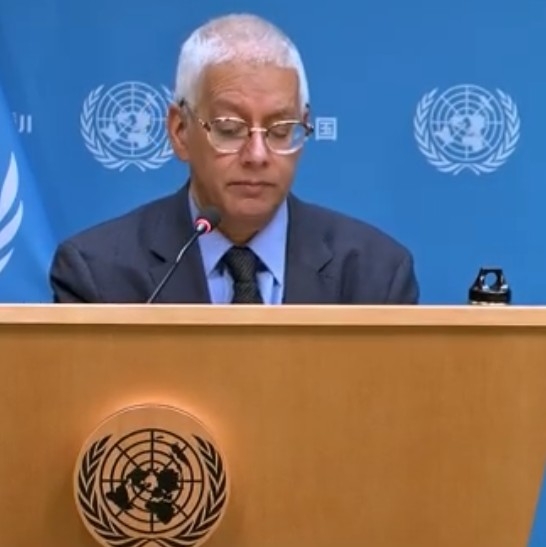
UN Deputy Spokesperson Farhan Haq reported that security conditions in the strategic city of Dilling have deteriorated dramatically in recent weeks, with widespread artillery bombardments and drone strikes targeting residential areas. Communication blackouts throughout the region have prevented independent verification of casualty numbers, though local sources indicate potentially significant civilian fatalities.
The conflict has forced approximately 117,000 residents—nearly half of Dilling’s population—to flee their homes. Those remaining face severe food shortages, collapsed economic systems, and depleted medical facilities. Similarly, the state capital Kadugli has witnessed the exodus of over 80% of its population, with an estimated 147,000 people displaced to other regions.
Humanitarian assessment teams visiting Abu Jubaiha documented a continuous stream of displaced families arriving from conflict zones, with 250-300 individuals reaching the area daily. Many survivors reported journeying for weeks under perilous conditions, with some fatalities occurring during escape attempts.
Across the broader Kordofan region, recent fighting has displaced more than 88,000 people since late October. Relief operations face severe constraints due to security risks, supply chain disruptions, and movement restrictions. A critical aid convoy destined for Dilling and Kadugli remains immobilized in El Obeid, North Kordofan, awaiting security guarantees.
The crisis extends beyond South Kordofan, with the International Organization for Migration reporting over 127,000 people displaced from North Darfur’s capital El Fasher between October and January. Most remain within North Darfur while others have fled to neighboring states, overwhelming already strained resources.
UN officials are demanding immediate cessation of attacks on civilian infrastructure and urging all conflict parties to permit safe, unimpeded humanitarian access. With needs escalating across Sudan, OCHA has launched an urgent funding appeal for $2.9 billion to support approximately 20 million vulnerable people throughout 2026.