标签: Saint Kitts and Nevis

圣基茨和尼维斯

  • Debaters to Enjoy Full Slate of Cultural and Social Activities as LIDC 54 Gets Underway in Nevis

    Debaters to Enjoy Full Slate of Cultural and Social Activities as LIDC 54 Gets Underway in Nevis

    The Caribbean island of Nevis has officially commenced the 54th Leeward Islands Debating Competition (LIDC 54), welcoming intellectual delegations from across the region for a four-day convergence of rhetoric and cultural exchange. From March 12-15, 2026, the Nevis Island Administration, in partnership with the Ministry of Education and Nevis Literary and Debating Society, has orchestrated an immersive program blending competitive discourse with rich cultural experiences.

    Six participating territories include defending champions Antigua, alongside Anguilla, Montserrat, Sint Maarten, St. Kitts, and host nation Nevis. The event commenced with an official welcome reception hosted by Honourable Eric Evelyn at Malcolm Guishard Recreational Park, setting the tone for diplomatic engagement.

    Mrs. Kerilyn David, Deputy Principal of Nevis Sixth Form College, unveiled an extensive itinerary designed to complement the intellectual rigors of debate with cultural enrichment. Beyond the competitive sessions, delegates will experience Charlestown shopping excursions, karaoke socials, historical island tours, glow parties, beach picnics (‘beach-nic’), and dedicated cultural showcases where each team presents their island’s heritage.

    The competitive schedule features Montserrat versus St. Kitts in Thursday’s inaugural debate, followed by Anguilla challenging Sint Maarten on Friday. Saturday’s semifinals will pit Debate One’s winner against Antigua, while Debate Two’s victor faces Nevis. The championship final culminates on Sunday at 5:00 PM, followed by an elegant Masquerade Ball at Four Seasons Resort Nevis.

    Nevis, boasting eleven historical LIDC victories including 2024’s triumph, fields a six-member team from Nevis Sixth Form College: Kiara Barry, Rajaun Fyfield, Keyana Warner, Shirmia Thompson, Kijari Huggins, and Tahleya Phillip. All events at Nevis Performing Arts Centre (NEPAC) remain free to the public, encouraging community engagement with this celebration of youth oratory and regional camaraderie.

  • Taiwan ICDF and the Government of Saint Kitts and Nevis signed the Green Energy Transition Demonstration Project

    Taiwan ICDF and the Government of Saint Kitts and Nevis signed the Green Energy Transition Demonstration Project

    In a significant move to advance sustainable energy infrastructure, the International Cooperation and Development Fund (TaiwanICDF) has formalized a partnership with the Government of Saint Kitts and Nevis through the signing of the Green Energy Transition Demonstration Project. The agreement, executed on March 9th, 2026, marks a strategic collaboration between the two island nations to address shared energy challenges.

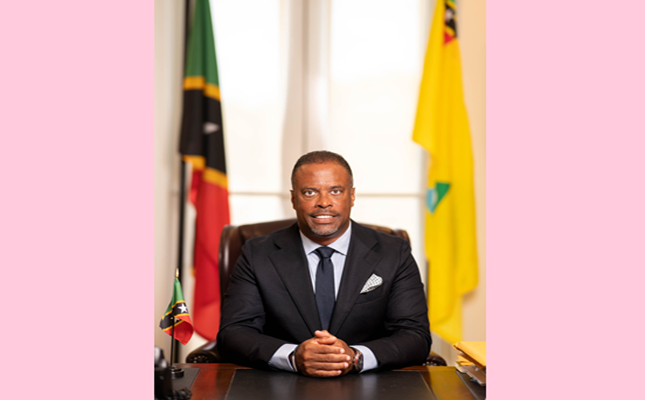
    The signing ceremony featured high-level representation from both parties, with Hon. Minister Konris Maynard signing on behalf of Saint Kitts and Nevis and Deputy Secretary General Alex L. J. Shyy representing TaiwanICDF. This initiative builds upon existing developmental work conducted by TaiwanICDF in the Caribbean nation.

    The comprehensive project encompasses multiple critical components designed to strengthen national energy resilience. Technical assistance will include detailed power grid capacity analysis, specialized advisory services for energy policy development, and the establishment of a sophisticated smart microgrid demonstration system. These measures aim to significantly enhance renewable energy integration capabilities while fortifying the overall stability of the energy infrastructure.

    Both Taiwan and Saint Kitts and Nevis, as island nations, confront similar vulnerabilities regarding energy security and climate change impacts. This partnership facilitates the transfer of Taiwan’s advanced expertise in information and communication technologies (ICT) and renewable energy systems to support sustainable development objectives. The collaboration represents a practical model for South-South cooperation in green technology transfer and climate adaptation strategies, potentially serving as a blueprint for other small island developing states seeking energy transformation.

  • St. Lucia rejects claims visa requirement linked to Citizenship by Investment Programme

    St. Lucia rejects claims visa requirement linked to Citizenship by Investment Programme

    CASTRIES, St. Lucia – The St. Lucian government has formally rejected any connection between the United Kingdom’s newly imposed visa requirements and its Citizenship by Investment Programme (CIP). Deputy Prime Minister Ernest Hilaire addressed the National Assembly on March 10, 2026, expressing disappointment while acknowledging the UK’s sovereign right to determine its immigration policies.

    The UK’s termination of visa-free travel for St. Lucian nationals marks a significant shift in bilateral relations between the historical partners. Hilaire characterized the development as particularly unfortunate given the longstanding constitutional and institutional ties between the two nations.

    Regarding UK concerns over asylum claims, official data reveals 342 applications from St. Lucian citizens since 2022, representing approximately 0.3% of total UK asylum seekers during this period. Minister Hilaire emphasized the critical distinction that UK authorities failed to make between natural-born citizens and those potentially obtaining citizenship through investment channels.

    The government has repeatedly requested detailed evidence from UK officials regarding alleged passport misuse but has received insufficient data to conduct proper investigations. ‘We have consistently asked for relevant information on any CIP concerns,’ Hilaire stated. ‘If there are investment citizens using St. Lucian passports for asylum claims or illegal employment, share this data with us.’

    Despite these challenges, St. Lucia remains committed to maintaining rigorous security protocols within its CIP framework. The program continues to serve as a vital development mechanism, funding infrastructure projects, healthcare services, educational initiatives, climate resilience programs, and job creation efforts.

    Hilaire cautioned that undermining the CIP could substantially hinder national development objectives and economic opportunities. The minister additionally criticized opposition party members for allegedly politicizing the visa situation and disseminating misinformation that could tarnish St. Lucia’s international standing.

    The government plans to continue diplomatic engagement with international partners on security and immigration matters while further strengthening the Citizenship by Investment Programme’s integrity measures.

  • St. Kitts’ New Basseterre High School project moves ahead with 1st shipment of materials  – WIC News

    St. Kitts’ New Basseterre High School project moves ahead with 1st shipment of materials  – WIC News

    The Government of St. Kitts and Nevis has announced a significant advancement in the long-stalled reconstruction of Basseterre High School, with the first shipment of foundational materials now en route from Barbados. Prime Minister Dr. Terrance Drew confirmed the development during a national address, characterizing it as a pivotal moment in restoring the historical educational institution to its former prominence.

    This project marks the culmination of years of uncertainty following the demolition of the original structure and subsequent delays between 2015 and 2022. Despite approximately EC$14 million in previously allocated funds for management fees and contract payments during that period, no physical construction had materialized until now.

    The current administration, upon assuming office in 2022, initiated a comprehensive reset of the project. The rebuilding effort commenced with the demolition of remaining structures in December 2023, followed by extensive site mapping and conceptual design work throughout 2024. Large-scale excavation activities officially began in June 2025, signaling the transition to active construction phases.

    The school is being constructed using an innovative precast concrete system, with structural components manufactured off-site at facilities operated by the Maloney Group and Preconco in Barbados. This methodology allows for controlled production environments and efficient on-site assembly. The initial shipment contains four containers of foundation kits featuring pre-cut steel reinforcement and structural elements necessary for commencing foundation work.

    Project officials anticipate a construction timeline of approximately two years, with regular shipments of additional building components expected throughout the process. The completed facility will represent a modern educational complex featuring dozens of classrooms, specialized laboratories, performance spaces, athletic facilities, and climate-resilient design elements.

    Education Minister Dr. Geoffrey Hanley has designated the project as the “Legacy School,” emphasizing its dual role in preserving institutional heritage while creating contemporary learning environments. The construction phase is projected to generate substantial local employment, with approximately 95% of the workforce consisting of domestic workers across various trades and support services.

    Prime Minister Drew emphasized the project’s broader significance, stating: “This initiative transcends mere physical construction—it represents the restoration of public confidence in educational infrastructure and demonstrates governmental commitment to delivering on promises made to citizens.”

    As foundational work progresses in the coming months, the physical structure of the new Basseterre High School will begin to take shape at its historic Victoria Road location, marking a transformative development in the nation’s educational landscape.

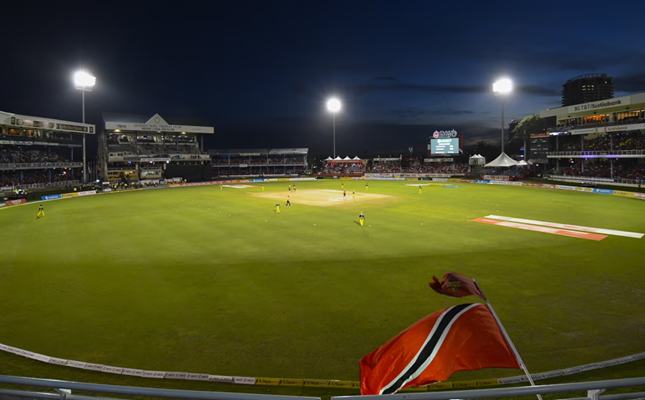
  • Third statement from Cricket West Indies on West Indies Men’s Team Departure from T20 World Cup

    Third statement from Cricket West Indies on West Indies Men’s Team Departure from T20 World Cup

    KOLKATA, India – March 11, 2026 – Cricket West Indies has announced the successful arrangement of commercial travel for its men’s squad members remaining in India, following nine days of extensive delays with International Cricket Council-coordinated charter flights. The unprecedented situation arose after the ICC’s intended joint transport for both West Indies and South Africa teams faced repeated postponements due to escalating global tensions and restrictive aviation regulations.

    According to standard tournament protocols, the ICC maintains full responsibility for all travel and accommodation logistics for participating teams during World Cup events across both men’s and women’s competitions. However, the extended uncertainty surrounding the charter arrangements created increasing distress among players and support staff stranded overseas.

    Citing concerns for player welfare and safety, Cricket West Indies formally notified the ICC that continuing to await the uncertain charter transportation was no longer viable. The cricket board subsequently initiated coordinated efforts through multiple channels, including player representatives and partner organizations, to secure alternative commercial travel options with ICC collaboration.

    Partial departures have already occurred, with the remaining squad members scheduled to return home via commercial flights on March 10th and 11th. Cricket West Indies expressed appreciation for the concern demonstrated by fans and stakeholders throughout the resolution process, acknowledging the support and patience extended during the challenging circumstances surrounding the team’s departure from the T20 World Cup host nation.

  • FinCEN Advisory Lifted, Marking Major Milestone in Restoring Saint Kitts and Nevis’ Global Financial Reputation

    FinCEN Advisory Lifted, Marking Major Milestone in Restoring Saint Kitts and Nevis’ Global Financial Reputation

    BASSETERRE, SAINT KITTS AND NEVIS – March 11, 2026 – In a landmark development for Caribbean financial governance, the United States Financial Crimes Enforcement Network (FinCEN) has formally rescinded its 2014 advisory against Saint Kitts and Nevis’ financial system. The February 24th decision marks a triumphant conclusion to the Federation’s twelve-year effort to restore international confidence in its economic frameworks.

    The controversial advisory, initially implemented during the Obama administration, had cautioned global financial institutions about potential vulnerabilities within the nation’s Citizenship by Investment (CBI) Program. This warning stemmed from concerns that illicit actors might exploit the program for money laundering and other financial crimes.

    Prime Minister Dr. Terrance Drew, addressing journalists during a recent media roundtable, characterized the advisory removal as transformative for the nation’s economic sovereignty. “This achievement validates our comprehensive reform agenda,” stated Drew, who personally oversees citizenship and immigration policies. “We have systematically rebuilt our program to eliminate the questionable practices that previously jeopardized our international standing.”

    The government’s reform initiative, launched upon assuming office in 2022, introduced rigorous safeguards including biometric verification protocols, mandatory applicant interviews, enhanced due diligence procedures, and strengthened international compliance cooperation. Notably, the administration restructured the Citizenship by Investment Unit into an independent statutory body governed by an autonomous Board of Governors.

    Prime Minister Drew emphasized the practical implications of the FinCEN decision, noting that the advisory had created significant banking challenges and discouraged foreign investment. “The presence of such an advisory creates tangible barriers to international financial transactions and economic development,” Drew explained. “Its removal signals to global markets that Saint Kitts and Nevis has achieved compliance with international financial standards.”

    The resolution represents a diplomatic achievement in US-Caribbean relations and demonstrates how smaller nations can successfully address international regulatory concerns through substantive policy reforms and strengthened governance mechanisms.

  • Prime Minister Drew reaffirms urgency of renewable energy transition amid global uncertainty

    Prime Minister Drew reaffirms urgency of renewable energy transition amid global uncertainty

    In a compelling address on March 10, 2026, Saint Kitts and Nevis Prime Minister Hon. Dr. Terrance Drew issued a stark warning about the Federation’s vulnerability to global energy market volatility. Speaking during his weekly Roundtable discussion, the Prime Minister emphasized how escalating geopolitical tensions in the Middle East directly threaten the economic stability of import-dependent island nations through potential oil price shocks.

    Dr. Drew outlined his administration’s strategic response, highlighting the substantial allocation of federal resources toward developing sustainable energy infrastructure. The government’s renewable energy agenda centers particularly on geothermal exploration initiatives in Nevis, which promise to deliver affordable power across both islands upon completion.

    “Our commitment to geothermal development represents a transformative investment in national energy security,” Dr. Drew stated. “Successful implementation will provide cheap, sustainable energy throughout the Federation, fundamentally altering our economic resilience.”

    Acknowledging the interim challenges before renewable projects become operational, the Prime Minister detailed protective measures for citizens and businesses. Existing social protection programs will be maintained and potentially strengthened to cushion against economic pressures arising from global energy cost fluctuations.

    The government currently absorbs significant portions of electricity costs to shield households from market instability, a policy Dr. Drew emphasized while calling for public cooperation. He urged citizens to practice energy conservation and financial responsibility as part of a collective national resilience strategy.

    The Prime Minister reaffirmed renewable energy development as a cornerstone of his administration’s sustainable development agenda, essential for long-term energy security, economic stability, and protection from external economic shocks.

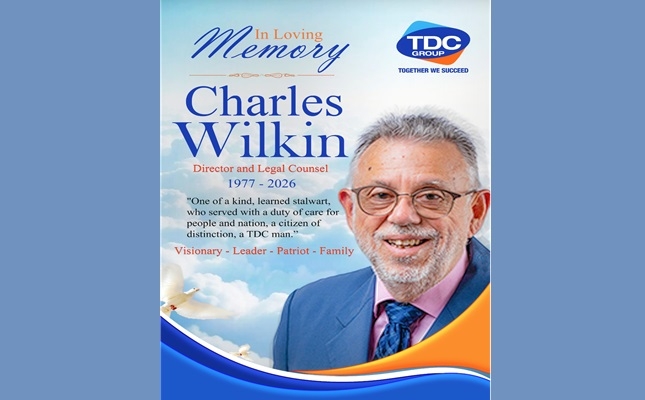
  • TDC Home and Building Depot (Nevis) Stocktaking Closure Notice

    TDC Home and Building Depot (Nevis) Stocktaking Closure Notice

    TDC Home and Building Depot, a prominent retail outlet located at Pinney’s Industrial Estate in Nevis, has issued an official notice regarding a temporary operational pause for its annual inventory assessment. The facility will be completely closed to the public on Saturday, March 14th, 2026, to facilitate comprehensive stocktaking procedures.

    During this physical closure, the company emphasizes that its digital commerce platforms will remain fully operational. Customers can continue to place orders for home improvement and construction materials through the official online portal at shoptdcgroup.com. Additionally, bill payment services will remain accessible via the secure payment gateway at pay.tdcgrouplimited.com, ensuring uninterrupted financial transactions for existing accounts.

    The retail establishment is scheduled to resume normal operations on Monday, March 16th, 2026, maintaining its standard business hours. TDC management has formally expressed regret for any potential inconvenience this necessary inventory process might cause to their customer base, acknowledging the importance of maintaining regular service availability while emphasizing the necessity of periodic inventory management for maintaining stock accuracy and service quality.

  • UN Warns Strait of Hormuz Disruptions Could Hit Global Trade and Food Prices

    UN Warns Strait of Hormuz Disruptions Could Hit Global Trade and Food Prices

    The United Nations has issued a stark warning that ongoing disruptions to maritime traffic through the Strait of Hormuz could trigger severe consequences for global economic stability and food security. According to a recent UN Trade and Development (UNCTAD) report, the strategic waterway—which facilitates approximately one-quarter of global seaborne oil shipments and one-third of fertilizer trade—faces significant operational challenges due to escalating Middle East tensions.

    The conflict intensified following military strikes by the United States and Israel against Iran, prompting retaliatory measures that have targeted critical infrastructure in Gulf states. Iran’s subsequent restrictions on Strait access have already caused a sharp decline in shipping activity, pushing Brent crude prices above $90 per barrel.

    UN spokesperson Stéphane Dujarric emphasized that sustained disruptions could elevate energy, fertilizer, and transportation costs worldwide, potentially exacerbating food inflation and living expenses for vulnerable populations. The economic impact would largely depend on the conflict’s duration and severity, underscoring the necessity of protecting vital maritime corridors.

    The crisis has resonated globally, with St. Kitts and Nevis Prime Minister Dr. Terrance Drew highlighting how rising fuel prices demonstrate the urgent need for energy independence. His administration is advancing renewable energy initiatives, including a 50-megawatt solar project and geothermal development, to build economic resilience against global market volatility.

    Meanwhile, humanitarian conditions deteriorate across conflict zones. Lebanese authorities report over 660,000 people displaced recently, while healthcare systems struggle with trauma cases and chronic disease management. The World Health Organization documented 23 attacks on medical facilities since March 2, resulting in numerous casualties.

    UN peacekeepers have facilitated civilian evacuations and supported humanitarian operations, reiterating calls for adherence to international humanitarian law and protection of critical infrastructure. The United Nations Interim Force in Lebanon continues monitoring cross-border hostilities while urging all parties to ensure the safety of humanitarian personnel.

  • St. Vincent and the Grenadines announces US$50 million initiative to strengthen water security

    St. Vincent and the Grenadines announces US$50 million initiative to strengthen water security

    The Caribbean nation of St. Vincent and the Grenadines is poised for a transformative upgrade to its water infrastructure, following a major financial commitment announced by Prime Minister Dr. Godwin Friday. A proposed US$50 million initiative, developed in the wake of high-level discussions at the CARICOM Heads of Government Conference in Saint Kitts and Nevis, is designed to fortify the nation’s climate resilience and ensure long-term water security.

    Spearheaded by the Caribbean Community Climate Change Centre, the comprehensive program targets critical weaknesses in the multi-island state’s water supply chain. Central to the strategy is a significant modernization drive for existing desalination facilities, a crucial upgrade for a nation surrounded by saltwater yet facing freshwater scarcity. The project scope further includes a substantial expansion of water storage capacity and a complete overhaul of aging distribution networks to enhance service reliability and reduce wastage.

    A key infrastructural component involves the construction of six new large-scale water storage tanks in strategic locations, including Georgetown and Kingstown Park. These reservoirs are engineered to bolster the national capacity to harness and manage water resources, specifically targeting regions historically plagued by inconsistent supply and scarcity.

    Financing for this ambitious endeavor is anchored by a substantial grant, with approximately US$40 million expected to be allocated from the Green Climate Fund, a primary global financial mechanism for supporting climate adaptation and mitigation projects in developing nations. This investment is strategically aimed at building robust defenses against climate variability, which increasingly manifests as prolonged droughts and irregular rainfall patterns in the region.

    Prime Minister Friday emphasized the project’s profound socioeconomic implications, stating it will ‘fundamentally transform water security,’ particularly in the Grenadines archipelago. He identified a reliable water supply as not just a basic utility for residents but also an indispensable prerequisite for sustainable tourism development and economic diversification. The Premier highlighted the exorbitant current economic burden of water transportation, which he cited as a major impediment to growth within the nation’s critical hospitality sector.