标签: Jamaica

牙买加

  • Ferry Basic School gets major upgrade through UDC labour day initiative

    Ferry Basic School gets major upgrade through UDC labour day initiative

    KINGSTON, Jamaica — When students of Ferry Basic School in St Andrew step back onto campus for the new school term, they will be greeted by a fully renovated, safer, and more functional learning space, the result of large-scale improvement works completed by the Urban Development Corporation (UDC) and its partner stakeholders during this year’s national Labour Day.

    The comprehensive upgrade project addressed a wide range of longstanding infrastructure needs at the institution. Works carried out included critical roof repairs and structural reinforcement to shore up aging building sections, full demolition and reconstruction of the school’s non-functional kitchen, drainage system clearing and maintenance, and plumbing repairs across the campus. Additional upgrades covered landscaping and expansion of the school’s outdoor play area, installation of new playground equipment, construction of two new bathroom vanities, and fresh repainting of multiple school buildings. As a key safety addition, the UDC team also installed corrugated steel mesh covers over open drainage zones, eliminating a major hazard for young students and staff.

    In an interview with JIS News, UDC Customer Service Manager Diane Hanson explained that the renovation initiative forms a core part of the state agency’s annual corporate Labour Day community engagement program. The UDC invested approximately JMD $1.7 million into the remedial and upgrade works at Ferry Basic School.

    Hanson highlighted that one of the most impactful changes addressed a critical daily need for students. “When our team first conducted an assessment of the school, we found the existing small kitchen was completely non-functional. We know how important it is for children to access a hot, nutritious lunch every day, rather than relying only on cold snacks,” she noted.

    “What we delivered is a fully rebuilt kitchen with new cabinetry and all the necessary infrastructure to support daily meal preparation. Now, long after our team has left, the school will have a fully operational kitchen, and students will be able to enjoy warm meals every school day,” she added.

    Hanson also shared the reasoning behind selecting Ferry Basic School for this year’s Labour Day project: the institution’s close proximity to the Raintree Development Complex, one of the UDC’s flagship urban development projects, making the upgrade a natural part of the agency’s commitment to supporting surrounding local communities.

    Photos from the Labour Day work day show Hanson working alongside UDC technical staff — including Junior Civil Engineer Kuffy-Hi Smith and Landscape Supervisor Christopher Cole — to complete repainting work at the school on May 25. Ferry Basic School is just one of several educational institutions and community public spaces that benefited from UDC-led rehabilitation projects across Jamaica this Labour Day.

  • Bellevue pushes to reframe ‘madness’ in Jamaica

    Bellevue pushes to reframe ‘madness’ in Jamaica

    To mark World Schizophrenia Awareness Day, Jamaica’s only psychiatric facility, Bellevue Hospital, has launched a urgent call to reverse deep-seated harmful stereotypes and pervasive stigma surrounding schizophrenia that still distort public understanding across the island nation. For decades, common colloquial labels like “mad” and “madness” have framed public discourse around the condition, reducing a complex, manageable brain disorder to dehumanizing tags that drive discrimination, social exclusion, and prevent affected people from seeking life-changing care.

    According to an official statement from the hospital, widespread misinformation in Jamaican communities continues to tie schizophrenia to inherent violence, unpredictability, and permanent hopelessness, rather than framing it as a treatable condition where full recovery and social integration are achievable. This widespread stigma does not only skew how the general public perceives people living with schizophrenia—it directly erodes affected people’s willingness to access available care and participate fully in community and family life.

    Dr. Roger Roberts, Senior Medical Officer at Bellevue Hospital, explained that the most damaging and widespread misconception is the persistent belief that people diagnosed with schizophrenia are naturally dangerous or prone to violence. He noted that harmful public narratives often form around isolated cases of violence involving people with untreated mental illness, which becomes the primary lens through which the public views the entire condition. This skewed perception ignores overwhelming research evidence: people living with schizophrenia are far more likely to be victims of violent crime than they are to perpetrate it.

    Crucially, Dr. Roberts emphasized that schizophrenia is a highly treatable condition, even with the widespread stigma that continues to hold back care access. Clinical data shows that with timely, appropriate intervention and ongoing social support, up to 80% of people living with schizophrenia can build stable, meaningful, and productive lives that align with their personal goals. Even with this positive clinical outlook, stigma remains one of the single largest barriers to care across Jamaica. Even when free or low-cost mental health services are available through the country’s network of public clinics, many people avoid treatment for fear of being labeled “mad gyal” or “mad bwoy” by neighbors and community members.

    Shifting public discourse away from fear and stereotypes to empathy and evidence is the first critical step to reducing this harmful stigma, Dr. Roberts argued. Lower stigma not only encourages more people to seek early care, it also reduces the crippling social isolation that worsens outcomes for many affected people. It also opens up access to employment and housing opportunities, which are core pillars of long-term recovery and well-being.

    Dr. Roberts also placed heavy emphasis on the urgent need for earlier diagnosis and intervention, explaining that delayed care has measurable long-term impacts on brain health and prognosis. “The longer a person goes without the appropriate diagnosis and intervention, the greater the likelihood of significant brain damage as well as residual symptoms,” he explained. “Simply put, early diagnosis and intervention save brain structure and function.”

    While prescription medication remains a foundational component of schizophrenia treatment, Dr. Roberts noted that sustained recovery extends far beyond clinical medication management. Affected people see far better outcomes when they have access to holistic support including psychotherapy, social skills training, stable affordable housing, meaningful employment, family connection, and community inclusion. Family members and caregivers play an irreplaceable role in this support system: by encouraging consistent treatment adherence, helping loved ones attend medical appointments, and keeping them connected to family and community life, they dramatically improve long-term recovery prospects.

    Exclusion from community and family life, by contrast, deepens social isolation and worsens health outcomes, Dr. Roberts added. He also highlighted the urgent need for expanded community-based mental health support infrastructure across Jamaica, including assertive ongoing community treatment programs, improved crisis response resources, and targeted housing and employment support for people living with schizophrenia. Many people with the condition require intensive, consistent follow-up care to maintain stability while living in the community, which requires coordinated care across psychiatrists, psychologists, social workers, mental health nurses, and dedicated case managers.

    As Jamaica continues to work through long-standing cultural stigma around all forms of mental illness, Dr. Roberts is calling on all Jamaicans to approach conversations about schizophrenia with radical empathy, informed understanding, and humanity. “Everyone can develop a mental disorder, so let us be kind to those who are suffering from mental disorders,” he said.

    For individuals and families currently navigating the challenges of schizophrenia, Dr. Roberts offered a message of unwavering hope. Even if progress feels slow, and people have not yet reached the milestone of independent living, steady employment, or the life they hope for, he urged them not to give up. “With the right treatment and support the vast majority of persons living with schizophrenia can improve significantly and lead productive lives,” he said.

  • St James residents unite to restore Rose Heights Community Centre

    St James residents unite to restore Rose Heights Community Centre

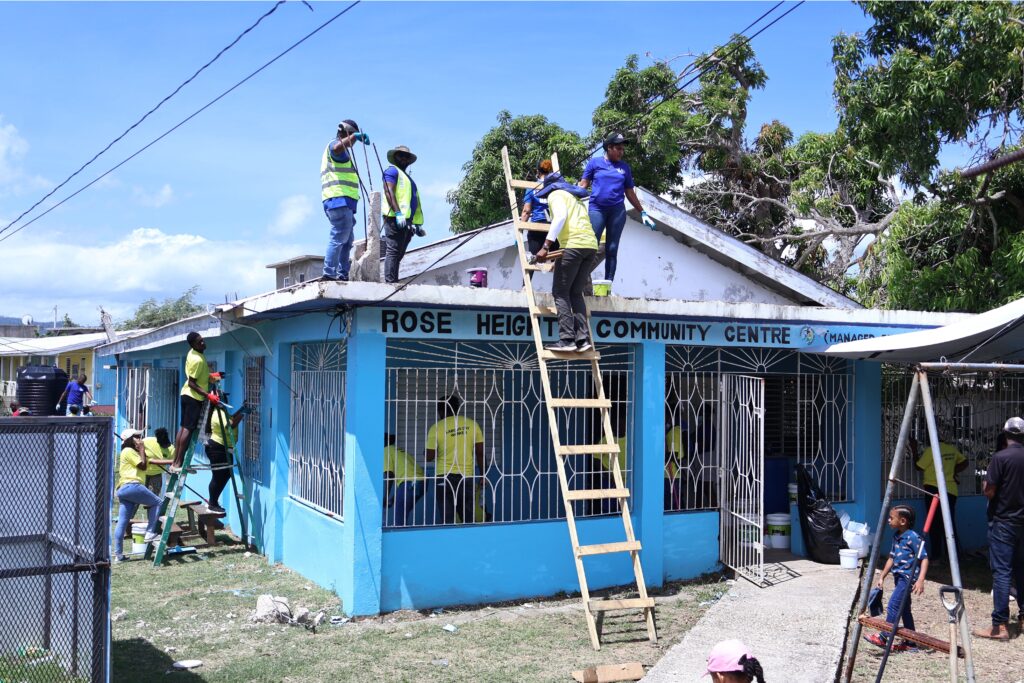
    In St James, Jamaica, a widespread collaborative effort between local residents, volunteer groups, and public and private sector stakeholders has breathed new life into the storm-ravaged Rose Heights Community Centre, marking a major milestone for this year’s Labour Day Parish Project.

    The community hub, which suffered extensive structural damage when Hurricane Melissa swept through the region, has received a full $3.8 million renovation. Works launched on May 22, progressing steadily to completion by the Labour Day holiday on May 25, and included comprehensive debris cleanup, full roof repairs, fresh interior and exterior painting, with plans already in place to establish a community garden on the facility’s grounds. For the more than 17,000 Rose Heights residents who rely on the centre for regular programming and gatherings, the restoration addresses a critical gap in local community infrastructure.

    Beyond reestablishing a central gathering space for neighborhood events, the upgraded facility will also serve a vital public safety function as a certified emergency shelter for future hurricane events. This upgrade comes as local authorities ramp up preparedness efforts ahead of the 2026 Atlantic Hurricane Season.

    Speaking exclusively to JIS News, Richard Vernon, Mayor of Montego Bay and St James Councillor, emphasized that the project delivers dual benefits for the parish: strengthening disaster readiness and building long-term community resilience. “As we approach the new hurricane season, it is critical that we repair existing damaged shelters and bring infrastructure back online to expand our capacity after the losses we sustained from Hurricane Melissa,” Vernon explained. “This project puts us in a far stronger position to protect residents when the next storm hits.”

    Vernon also highlighted the overwhelming community buy-in for the initiative, noting that the restoration has sparked widespread enthusiasm among local residents. “When I spoke with neighbors earlier this project, they told me this is a dream come true,” he said. “Out of the crisis of Hurricane Melissa, we’ve gotten renewal and rehabilitation, and the community is incredibly grateful for this investment.”

    Andrea Kerr Finakin, president of the Rose Heights Community Centre, echoed that gratitude, extending recognition to every stakeholder that contributed time, funding, and labor to the project. Finakin noted that the centre has long been the beating heart of the Rose Heights community, and she is thrilled to see it restored to its role as the neighborhood’s primary emergency shelter and event space.

    Volunteers made up a large portion of the renovation workforce, including a team from the University of Technology (UTech) Jamaica Circle K Club. Abisah Graham, one of the UTech volunteers, emphasized that the project exemplified the power of cross-community collaboration to drive meaningful change. “No matter what your background is, we can all come together to give back,” Graham said. “Our club brings together members from all walks of life, and we’re here to contribute however we can—whether that’s swinging a hammer for renovations, dropping off donations, or picking up a paint roller. This work is all about uniting as one to improve our community and make a real difference.”

    As the final touches are put on the renovation, the restored Rose Heights Community Centre stands as a testament to collective action and proactive disaster preparedness, ready to serve the St James community for years to come.

  • Prime Minister Holness’ National Labour Day Message 2026

    Prime Minister Holness’ National Labour Day Message 2026

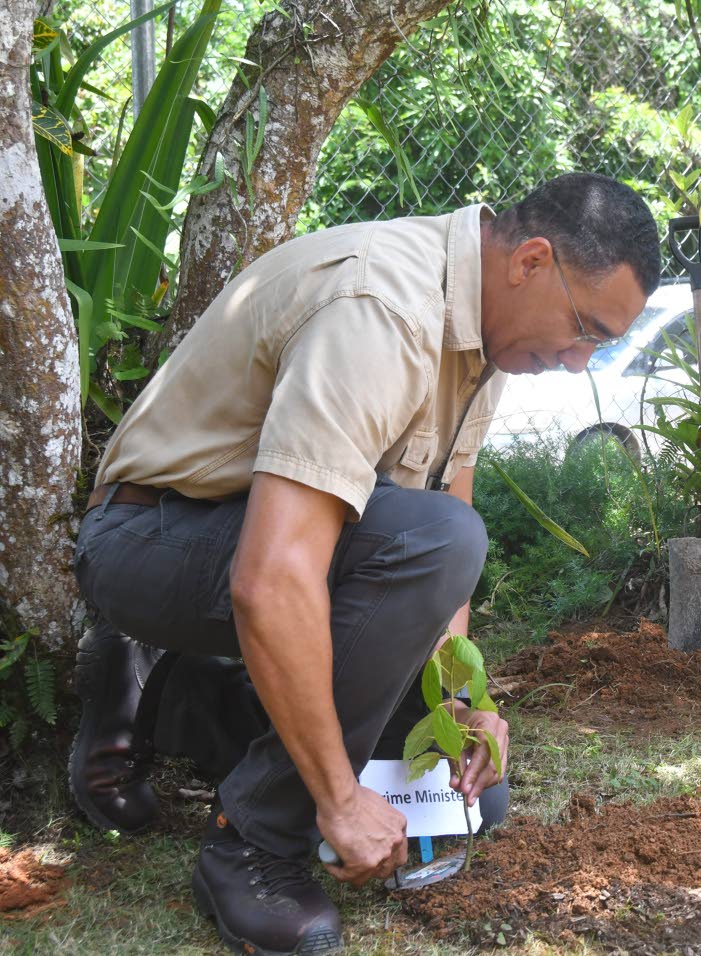
    As Jamaica prepares to mark its annual Labour Day, the nation’s leader has delivered a stirring address tying the holiday’s core ethos of service to the ongoing work of recovering from Hurricane Melissa, while laying out a bold vision for long-term national renewal. Unlike common framing that frames nation-building as the exclusive responsibility of official leadership, the address opens with a core reminder: every Jamaican carries a stake in shaping the future of their country, through collective effort, intentional discipline, and generous community spirit. This year, the call to service carries uncommon urgency, coming months after Hurricane Melissa carved a path of destruction across the island, leaving thousands of families and communities grappling with lasting damage. While many areas have made incremental progress in recovery, hundreds of households still lack adequate shelter, access to critical public services, and stable pathways to rebuild their livelihoods. For those still facing hardship, the leader offered a clear reassurance: no Jamaican left affected by the storm will be forgotten. Outlining the government’s ongoing recovery commitments, the address confirms that more than JMD 67 billion has already been earmarked for relief and reconstruction work. A substantial portion of that funding, JMD 10 billion, has been allocated to the ROOFS Programme, which provides direct grants to eligible households to fix storm-damaged roofs and complete essential home repairs. Critical public infrastructure is also being restored: damaged schools and residential properties are undergoing repairs, a strategic loan to the Jamaica Public Service (JPS) is accelerating the full restoration of power across the island, and one of the largest debris clearance operations in the nation’s history has been completed across all affected parishes. In partnership with the National Housing Trust, the Ministry of Housing, and the Government of China, the Jamaican government has secured more than 2,700 semi-permanent modular housing units for families whose homes were completely destroyed and who lack the resources to rebuild immediately. The units are awaiting the completion of reinforced concrete foundations before they can be installed, the address confirmed. Reaffirming a commitment made last December, the leader emphasized that all public and donated funds for hurricane recovery would be directed toward tangible, long-lasting, and verifiable projects. Of the JMD 1.4 billion donated to recovery efforts, JMD 600 million will fund the construction of foundations for the first 900 prefabricated units, which have already arrived on the island. The remaining donated funds will be used to restock roofing material supplies to support the ongoing government-led roof repair programme. “Our commitment is simple: to use donated funds in ways that are tangible, resilient, accountable, and traceable,” the address stated. “We will not spend recklessly. We will not be profligate. We will spend responsibly and strategically.” Repaired roofs, poured foundations, and restored homes serve as visible, undeniable proof that recovery resources are being managed honestly and effectively, the leader noted, adding that the government stands ready to allocate additional funding for affected communities as more accurate damage assessments are completed. Beyond public investment, the address highlighted the immeasurable value of volunteer effort, collective sacrifice, and international goodwill that has emerged in the wake of the storm. Images of neighbours sharing resources, communities lifting up vulnerable households, and strangers offering help to those they had never met embody the very spirit of service, sacrifice, and solidarity that Labour Day was created to honour. With that in mind, every Jamaican is encouraged to see themselves as an active participant in national reconstruction this Labour Day. The effort underway is not merely about replacing what was lost, the leader stressed: it is about rebuilding Jamaica to be better, safer, stronger, and more resilient than before. This is a chance to address longstanding vulnerabilities, reduce future climate risk, and create communities that can withstand the storms and other shocks that lie ahead. While full national recovery cannot be achieved in a single day, every small action adds up to transformative change. Jamaicans are invited to contribute in tangible ways: repairing a leaking classroom at the local basic school, replacing a broken window at the community clinic, clearing overgrown grounds at the community centre, or simply cleaning residential yards, gateways, drains and sidewalks. Just weeks ahead of the 2026 Atlantic Hurricane Season, the address also used Labour Day as an opportunity to jumpstart national preparedness efforts. By now, Jamaicans have seen firsthand how critical advance preparation is to reducing storm damage, the leader noted, and called on every household to use the holiday to inspect their property and surroundings, identify potential hazards to homes, community infrastructure and personal safety, check emergency supplies, service generators, complete affordable roof repairs, trim hazardous trees, and clear blocked drains and culverts. “Let this Labour Day be the beginning of your hurricane preparedness,” the address urged. Beyond physical reconstruction, the address turned to a deeper national duty: transforming Jamaica into a more productive, disciplined, and efficient nation. Productivity determines how quickly the nation can grow its output, while efficiency determines how wisely it uses its existing resources, and the leader argued that this critical conversation demands honest, serious engagement from all Jamaicans. For too long, the address noted, outdated mindsets have held the nation back: some have embraced the false idea that prosperity can be achieved without collective work, or that effort equals exploitation, while others have hidden behind bureaucracy and obstruction, quick to criticize but slow to create, and unwilling to take responsibility for building national value. That outdated mindset cannot build a modern, competitive Jamaica. Instead, the nation needs a new generation of doers: Jamaicans who understand risk, are willing to innovate, are prepared to work both harder and smarter, and who step forward to build, produce, solve problems, and lead. The leader emphasized a core economic truth that the next generation must embrace: rising wages without corresponding growth in productivity only fuels inflation, and sustained improvements in wages, prosperity, and living standards can only come from increased output, stronger efficiency, and better national performance. Jamaicans must embrace a new national ethos, where performance matters and performance is rewarded. This principle is particularly critical for the public sector, where accountability, efficiency, and performance-based management must become standard practice. Jamaica is globally renowned for the speed, agility, and resilience of its people, the leader noted; now, the nation must also earn a reputation for getting things done efficiently and effectively. To advance that goal, the government has established the National Reconstruction and Resilience Authority (NaRRA), with a clear mission: to drive the nation’s reconstruction forward with urgency, coordinated action, transparency, and speed. “We will prove that Jamaica can build quickly. We will prove that Jamaica can build well. And we will prove that Jamaica can recover stronger than before,” the address stated. Closing, the leader reminded Jamaicans that Labour Day is ultimately about more than work: it is about purpose, service, discipline, and national pride. If every Jamaican does their part, no storm, no setback, and no challenge can defeat the nation. “Together, let us build. Together, let us prepare. Together, let us recover. Together, let us strengthen Jamaica.”
  • Sabrina Dockery sets 100m PB while taking sprint double in Florida

    Sabrina Dockery sets 100m PB while taking sprint double in Florida

    A rising star in Jamaican track and field has put her talent on full display across competitive meets on three continents, highlighted by a stunning personal best and two national victories at Florida’s top-tier sprint competition. Sabrina Dockery, a former gold medalist from the World Under-20 Championships relay event, dominated the women’s 100-meter sprint at Sunday’s Pure Athletics Sprint Elite, hosted at the Claremont Complex, crossing the finish line with a new personal record of 11.05 seconds in legal wind conditions of 1.6 m/s.

    Dockery had already signaled her strong form earlier in the day, clocking a wind-assisted 11.00 seconds with a 4.9 m/s tailwind to advance from the preliminary rounds. Her winning time in the final beat her own previous personal best of 11.08 seconds, which she set back in March 2023. Fellow Jamaican sprinter Niesha Burgher took second place in the 100-meter final with a time of 11.18 seconds.

    Not content with a single win, Dockery added a second gold medal to her haul in the women’s 200-meter event, where she notched another wind-aided personal best of 22.61 seconds with a 3.0 m/s tailwind. Great Britain’s Olympic sprinter Dina Asher-Smith finished just behind Dockery to claim second place in 22.78 seconds (1.4 m/s), with Burgher rounding out the podium in third at 22.79 seconds in the same wind conditions.

    Other Jamaican competitors also turned out strong performances at meets across the United States and Europe over the same competition window. At Florida’s meet, sprinter Leah Anderson secured second place in the women’s 400-meter race with a time of 52.58 seconds.

    At the Tucson Elite Classic, held at Arizona’s Roy P. Drachman Stadium, Jamaican throwers notched several top-five finishes. Samantha Hall took third place in the women’s discus event with a throw of 60.03 meters, while teammate Adrienne Adams posted a mark of 53.28 meters. On the men’s side, Chad Wright claimed fourth place in the discus with a 61.05-meter throw. Lloydricia Cameron placed fourth in the women’s shot put with an 18.59-meter throw. Elvis Graham finished fifth in the men’s javelin with a 74.37-meter throw, and Nayoka Clunis notched a 69.78-meter mark in the women’s hammer throw.

    Across the Atlantic at the 61st Pentecost Sports Festival in Germany, Jamaican long jumper Akelia Smith turned out a season-best performance to claim a close second place on the podium. Smith jumped 6.81 meters in legal 1.1 m/s wind conditions, falling just one centimeter short of gold, which went to German Olympic medalist Malaika Mihambo, who posted a winning jump of 6.82 meters in 0.2 m/s wind. Shot putter Danniel Thomas-Dodd also competed in Germany, finishing fourth with an 18.73-meter throw.

  • WATCH: Woman in custody for suspected arson in St Mary

    WATCH: Woman in custody for suspected arson in St Mary

    A shocking act of alleged arson has rocked a rural community in St Mary, Jamaica, leaving a local industrial compound damaged and a 59-year-old woman in police detention. The incident unfolded at the Surrey and Aggregate premises in the Georgia district of the parish around 2:00 p.m. on Sunday, according to official law enforcement accounts.

    The compound’s on-site caretaker, who first encountered the woman before the fire broke out, told investigators she was behaving aggressively and disruptively on the property. After multiple attempts to convince her to leave the premises peacefully failed, the caretaker made the decision to travel to the nearest police station in Annotto Bay to file a report and request assistance.

    When the caretaker returned to the Surrey and Aggregate compound alongside law enforcement, they discovered both targeted office buildings were already engulfed in raging flames. In addition to the structural damage, two privately owned vehicles — a pickup truck and a standard passenger car — were also caught in the blaze, suffering significant damage.

    Emergency response teams from the Annotto Bay Police Department and the local fire service quickly deployed to the scene to contain the fire and begin documenting evidence. By the time first responders secured the area, the suspect 59-year-old woman was taken into custody without further incident. Authorities have confirmed that formal investigations into the motive behind the alleged attack are currently ongoing, with no additional details on potential charges released to the public as of the latest update.

  • Women inmates transferred from Venezuelan prison after uprising

    Women inmates transferred from Venezuelan prison after uprising

    A prison uprising at a detention facility in Venezuela’s western city of Barinas has prompted authorities to transfer more than 100 incarcerated women out of the complex, an independent prison monitoring group confirmed this week.

    The Venezuelan Prison Observatory (OVP), a non-governmental organization that tracks conditions across the country’s correctional system, announced Monday that a senior prison official had notified family members of the full evacuation of 112 female inmates. The official did not disclose the new location where the women would be held, the NGO added in a post on the social platform X.

    Per the OVP’s update, the official also outlined next steps for the facility: male prisoners at the Barinas complex will be eligible for voluntary transfer, and a joint working group made up of judges and prosecutors will be deployed to the site to conduct a full review of all inmates’ cases.

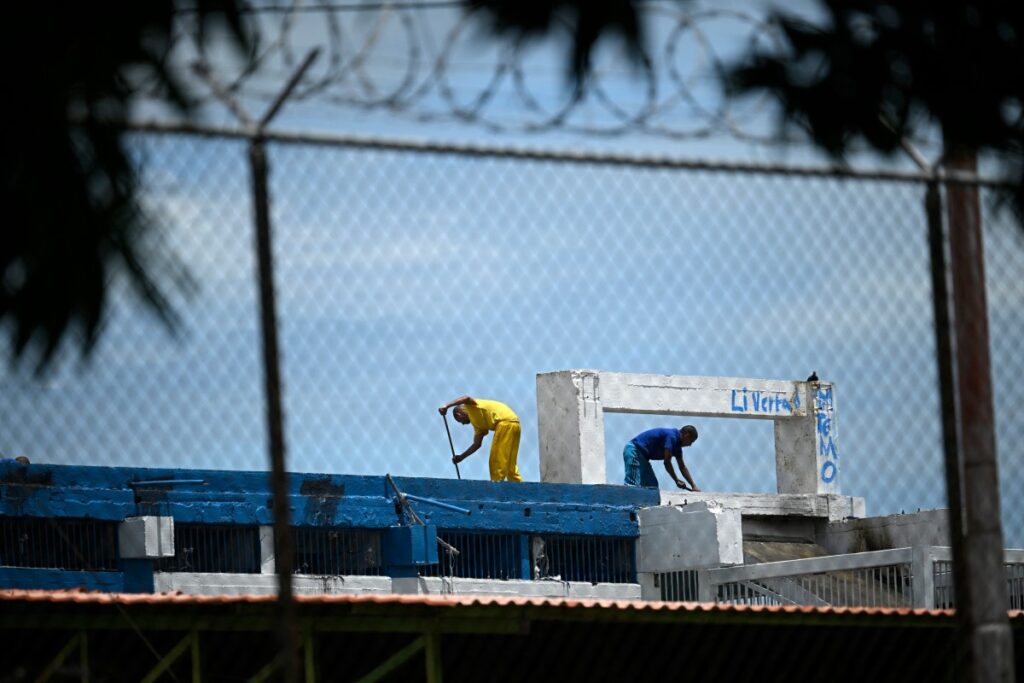
    The unrest unfolded Sunday, when 1,200 male and more than 100 female inmates at the prison—located roughly 500 kilometers from the capital Caracas—launched a coordinated protest over poor treatment. By Monday morning, hundreds of detainees had set fire to mattresses and bed linens, gathered on the prison roof, and unfurled large banners reading “No more torture.” The OVP confirmed that a small group of protesters remained stationed on the prison’s watchtowers at dawn. Dozens of anxious relatives gathered outside the facility’s gates throughout the day, waiting for updates on their loved ones.

    Inmates allege they have been systematically subjected to beatings and torture at the complex, OVP spokesperson confirmed. As of Tuesday, Venezuelan national authorities have not issued any public statement in response to the riot or the allegations of abuse.

    This uprising is the latest in a years-long string of crises to rock Venezuela’s correctional system, where activists and human rights groups have long decied chronic overcrowding, endemic violence, insufficient food rations, and near-total lack of access to basic medical care. Just months prior, in April, the government confirmed that five people were killed during a separate riot at the high-security Yare III prison outside Caracas.

    The unrest comes amid a period of major political transition in Venezuela. After U.S. special forces carried out a surprise raid that captured former autocratic leader Nicolas Maduro in Caracas on January 3, the country’s new government under President Delcy Rodriguez passed a landmark amnesty law in February under pressure from Washington. The legislation has paved the way for the release of hundreds of political detainees held under the Maduro regime. Even so, many Venezuelans have voiced public frustration over the slow pace of releases and broader prison reform, highlighting the gap between promised policy changes and on-the-ground conditions inside the country’s facilities.

  • Restaurant rejects racism allegations

    Restaurant rejects racism allegations

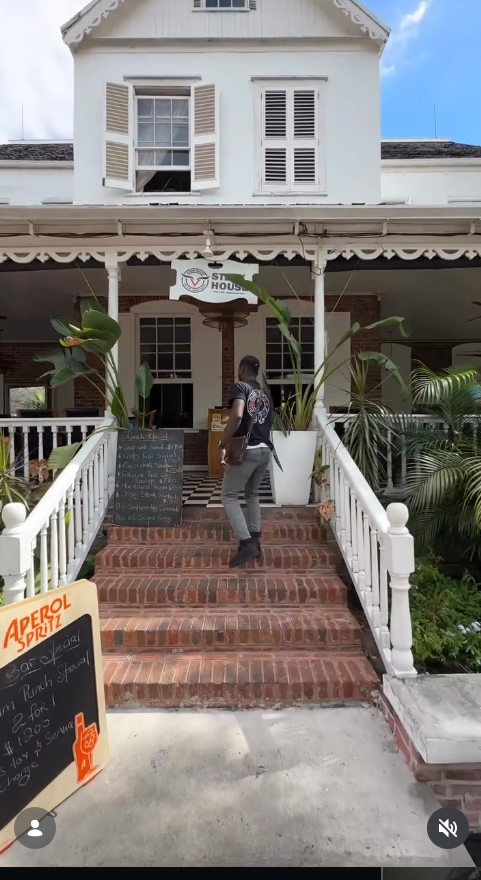
    A viral social media dispute over unequal dress code enforcement has erupted around a popular Kingston, Jamaica steakhouse, after a local content creator accused the establishment of racial discrimination. Content creator CindiMarvelous took to TikTok and Instagram to share her account of being turned away from Steakhouse on the Veranda, located at the historic Devon House site, on 15 October 2025. Her account, presented in a widely shared video, sparked fierce debate online about racial and class double standards in local hospitality.

    In the viral clip, which is set to Bob Marley’s iconic anti-racism anthem *War*, CindiMarvelous claims she was denied entry for wearing shorts. The video then shows multiple other patrons, including one woman CindiMarvelous identifies as Asian heritage, exiting the restaurant wearing similarly cut shorts. It also includes clear footage of the venue’s posted entrance sign, which notes that the dress code is strictly enforced, along with screenshots of a heated direct message exchange between the creator and the restaurant’s staff.

    Screenshots included in the post show the restaurant’s initial response to CindiMarvelous, where staff pushed back against racism claims, offered an apology, and attributed the incident to a miscommunication: the establishment’s ban applies specifically to short shorts that expose the buttocks, not all shorts generally. CindiMarvelous countered that her shorts were the same length as those worn by the Asian patron shown in the video, who was allowed to enter without issue.

    Public reaction to the viral post has been deeply split. Some Jamaican social media users shared frustration over what they see as a long-standing pattern of uneven rule enforcement along racial and class lines at local venues. Others argued that the length of CindiMarvelous’ shorts did violate the venue’s posted policy. A third, widespread perspective held that regardless of the dress code policy itself, rules must be applied consistently to all patrons to avoid unfair treatment.

    In an official response posted to its own social media channels, the Kingston-based steakhouse pushed back firmly against claims of racism, while acknowledging missteps in how the incident was handled by staff. The establishment, which is a Black family-owned Jamaican business, said it is “deeply disappointed” that the incident has been misrepresented as an act of racial discrimination online.

    “We regret that the guest left with a negative experience and acknowledge that some of our language could have been handled more carefully,” the restaurant statement read. It went on to emphasize: “As a black family-owned Jamaican business, we apply our longstanding dress code equally to all guests, regardless of race or background. After reviewing security footage and staff accounts, we stand by our team’s actions and reject claims of discrimination.”

  • Gov’t has presided over failed labour and sport policy, says Hinds

    Gov’t has presided over failed labour and sport policy, says Hinds

    KINGSTON, Jamaica — In a fiery address during the ongoing Sectoral Debate in Jamaica’s House of Representatives, Wavell Hinds, the nation’s opposition spokesperson for labour and sports, has launched a scathing attack on the ruling government’s handling of labour market and sports development strategies, blaming the administration’s failed policies for driving what he calls an unprecedented “brain drain” of the country’s most talented young people.

    Hinds centered his criticism on newly released data from a United Nations Development Programme (UNDP) migration survey, which paints a deeply concerning picture of Jamaica’s demographic future. The poll finds that a staggering 71 percent of Jamaican young people intend to leave the country and resettle abroad within the next three years. “Nearly three-quarters of our young population are already actively building exit plans from their home country,” Hinds told lawmakers, underscoring the severity of the ongoing exodus.

    To illustrate how this systemic failure ripples through Jamaica’s iconic sports sector, Hinds pointed to a high-profile decision from World Athletics issued on April 16, 2026, that approved nationality transfers for four of Jamaica’s most decorated elite track and field athletes. The group includes Roje Stona, the reigning 2024 Olympic men’s discus gold medalist; Rajindra Campbell, Olympic shot put bronze medalist; Wayne Pinnock, World Championships long jump silver medalist; and Jaydon Hibbert, the junior men’s triple jump world record holder. Calling the quartet “among Jamaica’s absolute finest, elite field-event superstars”, Hinds pushed back against any claims that the athletes’ decision to switch allegiance to Turkey stems from a lack of national pride.

    Instead, he argued, their choice is a direct reflection of the same lack of opportunity pushing hundreds of thousands of young Jamaicans toward borders abroad. “They are not leaving because they do not love Jamaica. They are leaving because they can no longer access upward mobility, consistent growth, or long-term financial stability under the current government’s system,” Hinds explained.

    He posed a rhetorical question to the chamber that cut to the core of the crisis: “Why should an Olympic gold medalist have to leave their home country to build a secure financial future?” The answer, he said, is clear: Jamaica’s current systems systematically underinvest in the potential of its homegrown talent.

    Hinds contrasted Jamaica’s approach with the deliberate investment strategies of other nations that successfully retain top athletic talent. Other countries are pouring resources into athlete welfare programs, world-class training infrastructure, cutting-edge sports rehabilitation science, structured sponsorship opportunities, and clear professional development pathways for elite competitors. By comparison, Hinds said, Jamaica continues to rely on empty appeals to national pride and outdated, underfunded institutional structures that leave top athletes struggling to make ends meet.

    To back up his claims, Hinds cited internal financial documents from Jamaica’s own Sports Development Foundation, a public body tasked with advancing the nation’s sports sector. The documents reveal a troubling trend: while administrative overhead and executive pay for the foundation have risen over the past year, direct funding allocated to athlete support programs has actually decreased.

    Hinds concluded with a sharp rebuke of the government’s approach, arguing that the current strategy is unsustainable. “We cannot keep asking our best athletes and our brightest young people to survive on good vibes, empty patriotic speeches, and flag-waving alone. If we continue underfunding our homegrown talent, we have no right to act shocked when they choose to pursue opportunities on foreign soil.”

  • Foundation seeks urgent help to get hurricane relief supplies to Jamaica

    Foundation seeks urgent help to get hurricane relief supplies to Jamaica

    Nearly seven months have passed since Hurricane Melissa carved a path of destruction through western Jamaica, and a community-focused charity led by Jamaican expats in South Florida is facing a devastating last-mile barrier: it has amassed a 40-foot shipping container full of life-saving aid, but cannot afford to send the shipment to the island that needs it.

    Founded by Jamaican expat Derry-Ann Allen, the KaGra Foundation has spent months rallying grassroots donors to build a massive stockpile of relief supplies tailored to the ongoing needs of hurricane-battered communities. The full container holds everything from critical medical equipment and mobility aids like wheelchairs and crutches to baby formula, mattresses, solar-powered radios, water purification tablets, tarpaulins, sanitary products, and even a brand-new mini refrigerator. Now, the organisation is sounding the alarm for urgent public and corporate financial support, as accumulated shipping and Jamaican customs costs have climbed to sums far beyond the small charity’s current budget.

    “We already asked the community for donated goods, and they delivered beyond our wildest expectations,” Allen explained in an interview with the Jamaica Observer. “Now we just need help covering the costs to get these supplies where they belong.”

    The foundation’s relief effort gained its first major traction after the Jamaica Observer published its initial appeal for donations, sparking a flood of inquiries from community members eager to contribute. “That first story gave us the push we needed to get started,” Allen said. “From there it spread by word of mouth. People reached out nonstop asking where they could drop off supplies, because they wanted to know their donations would actually go to people who needed them most, not get lost in a large bureaucracy.”

    Donations poured in from communities across South Florida, spanning from Miami up to Orlando. Additional interest and contributions even came from as far as England after Allen gave a radio interview about the effort to a UK audience.

    Among the donated goods, Allen highlighted water purification tablets as one of the most immediately useful contributions for Jamaican residents still relying on untreated collected rainwater months after the storm. “If people have catchment water, one tablet makes it safe to drink. That’s a game-changer for communities that still don’t have consistent access to clean drinking water,” she explained.

    But the months-long delay in securing shipping funds has already led to heartbreaking losses: a large portion of donated baby formula had to be thrown out over expiration date safety concerns, a loss that weighs heavily on Allen.

    “It pains my heart to throw anything away when I know there are babies on the island that desperately need this formula,” she said. “That’s why this shipping gap is so urgent – we can’t afford to lose more supplies that people are counting on.”

    Complicating the charity’s challenge is the expiration of Jamaica’s post-hurricane customs waiver, which eliminated duty-free processing for disaster relief shipments entering the country. While local shipping firm Sydcam Shipping has stepped up to offer critical pro bono support – including free warehouse storage and a donated 40-foot container valued at roughly $3,000 USD – the KaGra Foundation still needs between $6,000 and $9,000 USD to cover the cost of transporting the container across the Caribbean to Jamaica. Once the shipment arrives on the island, additional local costs for customs clearance and last-mile distribution to affected communities are expected to total between 500,000 and 2.5 million Jamaican dollars.

    As a small, privately run grassroots organisation, KaGra Foundation has no major corporate financial backing to cover these unexpected costs. Every contribution so far has come from individual community members giving whatever they can spare. “This all comes from regular people chipping in $5, $10, $20 – whatever they could afford to give,” Allen said. Before the supplies were consolidated into the donated shipping container, volunteers stored the growing stockpile across four separate volunteer family homes across South Florida. “We had no idea how much we had collected until we brought everything into one space,” Allen recalled. “It added up to roughly five full garages of supplies. The community really showed up for western Jamaica.”

    Once the funding goal is met, Allen and other KaGra Foundation members plan to travel to Jamaica themselves to personally deliver the aid and directly identify the communities that are still struggling the most, seven months after the storm made landfall. “I don’t worry that it’s been this long,” Allen said. “Most formal disaster aid was distributed in the weeks right after the hurricane. The people still hurting six or seven months later are the ones that got missed, and they’re the ones who need this help the most.”

    Getting the aid to Jamaica is a deeply personal goal for Allen, who calls the successful shipment the best possible birthday gift she could imagine. “Just knowing that we’re getting these vital supplies to people who genuinely need them would bring me more joy than anything else,” she said. Photos from the foundation’s South Florida warehouse capture volunteers sorting and packing the thousands of donated items, preparing for the day they can finally ship the full container to the communities waiting for help.