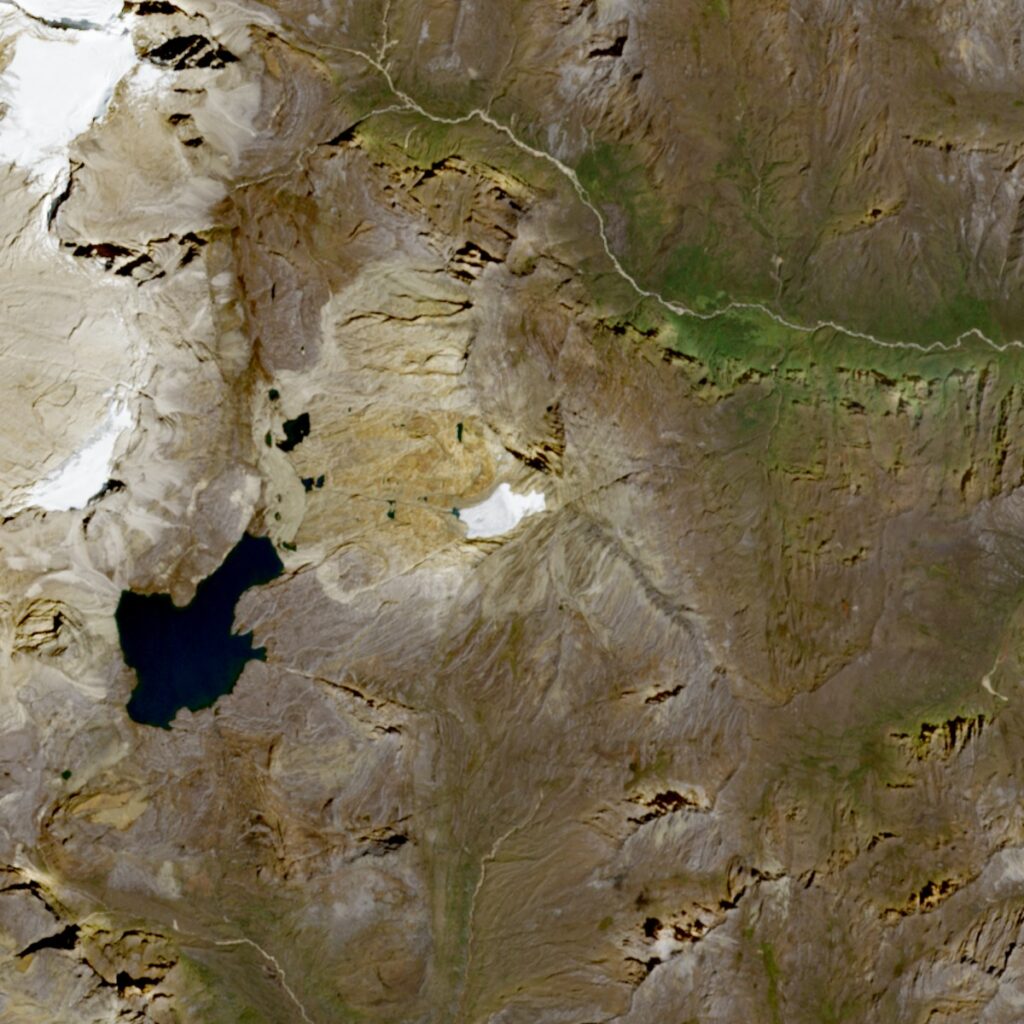
In a stark new reminder of climate change’s accelerating impact on global cryosphere, a once-massive Andean glacier in northeastern Colombia has melted away entirely, leaving nothing but bare rock where thick ice stood for centuries. The Cerros de la Plaza glacier, part of the Sierra Nevada del Cocuy glacial chain high in the Colombian Andes, has been officially confirmed as vanished by Colombia’s Institute of Hydrology, Meteorology and Environmental Studies (IDEAM), with the announcement made public last week.
Analysis of satellite tracking data confirms the glacier’s steady decline: starting from a 5-square-kilometer (1.93-square-mile) expanse in the 19th century, the ice sheet shrank gradually through the 2010s, disappearing for good by March 2026. For decades, climate scientists have warned that rising global temperatures driven by greenhouse gas emissions are eroding mountain glaciers at an unprecedented rate, and the loss of Cerros de la Plaza marks another milestone in this accelerating trend.
In an official statement following the declaration, IDEAM emphasized that climate change is no longer a distant future threat—it is already reshaping terrestrial landscapes and disrupting natural systems across the globe. “Climate change is a reality that is already transforming our territories. And what is at stake is not only the landscape, but the very balance of these ecosystems,” the agency noted.
The Colombian Andes are recognized as one of the world’s most biodiverse regions, hosting a wide array of unique species including Andean condors and the vulnerable spectacled bear, an endemic mammal found only in South American mountain ranges. The Sierra Nevada del Cocuy, whose highest peaks rise more than 5,000 meters above sea level, was previously one of only six intact glacial systems remaining in Colombia. Colombia’s Ministry of Environment reports that the country’s total glacial ice coverage has plummeted by 90% since the 19th century, a decline that mirrors glacial loss across the tropical Andes.
Beyond their visual and ecological value, Andean glaciers serve a critical practical role for human and natural communities alike. They act as natural freshwater reservoirs, feeding rivers and groundwater systems that supply drinking water, support irrigation for agricultural crops, sustain native fish populations, and underpin countless local livelihoods across the mountainous region. The loss of Cerros de la Plaza is expected to put additional pressure on these already strained water systems in the coming years.
This latest glacier loss aligns with broader global climate trends: both the European Union’s Copernicus Climate Change Service and Berkeley Earth, a U.S.-based non-profit climate research organization, confirm that the past 11 years have been the hottest 11 years recorded in modern human history. A 2023 study published in the peer-reviewed journal *Science* delivered a sobering projection: even if the world meets the Paris Agreement’s most ambitious target of limiting global warming to 1.5 degrees Celsius above pre-industrial levels, roughly half of all glaciers on Earth will have melted completely by the end of the 21st century.