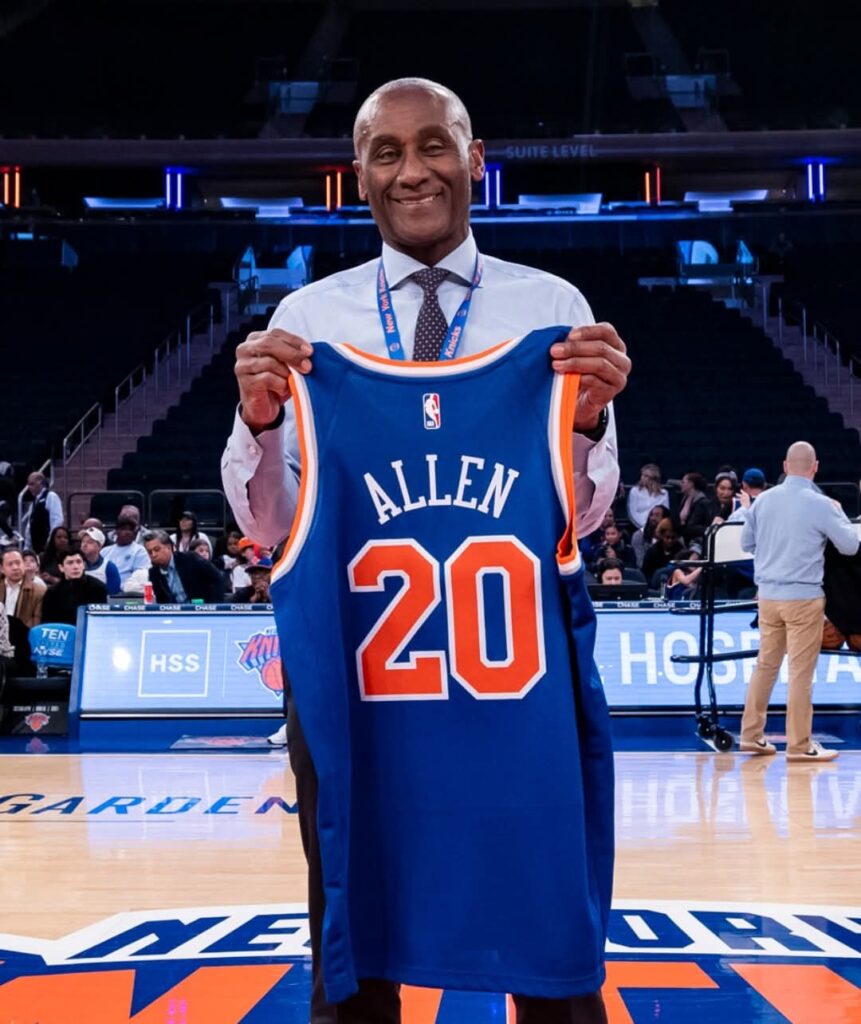
After 53 years of bitter waiting, the New York Knicks finally hoisted the NBA Championship trophy at iconic Madison Square Garden on June 13, securing a 94-90 victory over the San Antonio Spurs in a tense Game 5 of the Finals. Beyond the shining stars of the court who claimed headlines around the globe, one quiet, critical architect of the franchise’s historic triumph flew largely under the radar: Jamaican-born elite orthopaedic surgeon Dr. Answorth Allen, who has tended to the team’s physical well-being for 20 consecutive years.\n\nFor two decades, Allen has been the backbone of the Knicks’ ability to compete night after night across the gruelling NBA season. He has mended career-threatening torn ligaments, guided players through complex fracture recoveries, and proactively managed the daily wear and tear that comes with professional basketball, keeping athletes in peak condition when it matters most. In recognition of his 20 years of unwavering, dedicated service to the organisation, the Knicks recently honoured Allen at a special ceremony in New York.\n\nBeyond his role with the Knicks, Allen holds a senior leadership position as Associate Surgeon in Chief at the Hospital for Special Surgery (HSS) in New York, an institution universally recognised as the world’s leading centre for orthopaedic care. His remarkable journey from a young boy growing up in Port Antonio, Portland, Jamaica, to the upper echelons of global sports medicine is a story forged on radical discipline, intentional mentorship, and lifelong commitment to service.\n\nRaised partially by his grandmother Lena Irving, Allen credits the core values of humility, relentless hard work, and unquenchable curiosity for shaping his cross-cutting career that spans elite academic medicine and professional sports. His formative years at Jamaica’s Titchfield High School, where he studied under late former principal Lloyd O Chin, instilled in him a foundational belief that systemic and societal barriers could be overcome through intentional effort and bold vision. After migrating to the United States, Allen built an extraordinary academic trajectory: he completed undergraduate study at Queens College, attended competitive summer academic programmes at Harvard University, and earned his medical degree from Cornell University’s top-ranked medical school.\n\nA serendipitous meeting with legendary orthopaedic researcher Dr. Steven Arnoczky during Allen’s first year at Cornell shifted his professional focus toward sports medicine and orthopaedics, setting him on the path that would lead to his landmark career. He would go on to join HSS as one of the first Black orthopaedic surgeons at the prestigious institution, breaking new ground for diverse clinicians in the specialty.\n\nAt the core of Allen’s clinical practice is a patient-centred care philosophy that positions patients as collaborative partners in their treatment, rather than passive recipients of medical intervention. Speaking to reporters following the recent honour ceremony, Allen explained that personalised, individualised care is the cornerstone of strong medical outcomes. “The person who comes in, they have their own issues, they have their own concerns and it’s my responsibility to listen first… to understand, and then do the right thing for that person, whether or not you are an amateur athlete, high-school athlete, college athlete, or professional athlete,” he shared. Allen added that patient education is a non-negotiable part of his practice: ensuring patients fully understand their injury or condition, align on treatment expectations, and collaborate to build a care plan that fits their unique life goals. Every patient, he emphasised, receives the same rigorous, high standard of care regardless of their profile or background. For Allen, medicine is far more than a job—it is a calling. “I’m very passionate about people, I’m very passionate about what I do. I get to be a part of something that’s bigger than myself. It’s great to be a part of a team that is dedicated to providing the best outcome possible for a patient,” he said.\n\nAllen maintains an active clinical practice in New York and serves as an orthopaedic consultant at St. John’s University, but he has never lost connection to his Jamaican roots. He regularly collaborates with Jamaica’s medical community, mentoring local physicians looking to master advanced microsurgical techniques, leading educational outreach initiatives, and supporting programmes designed to lift the overall standard of care across Jamaican hospitals.\n\nJamaican leaders have publicly celebrated Allen’s extraordinary contributions. Minister of Health and Wellness Dr. Christopher Tufton praised Allen as “not only an ambassador for Jamaica but someone whose journey chronicled a life of dedication and service.” Tourism Minister Edmund Bartlett noted that Allen’s achievements align with Jamaica’s national strategy to position sports tourism as a key driver of inclusive economic growth. Longtime high school friend Keith Garvey added that Allen’s success follows a longstanding tradition of Jamaican medical scholars and clinicians who achieve global excellence while lifting communities back home. “Dr Allen’s leadership in orthopaedics and his dedication show how a small nation’s talent can contribute to global excellence while enriching its homeland,” Garvey told JIS News.\n\nOutside of his medical and sports work, Allen is a devoted family man: he is married to a fellow physician, and the couple shares two children. As the New York Knicks celebrate their championship that writes a new, long-awaited chapter in franchise history, Jamaica is also cheering for one of its own, whose impact stretches from the bright lights of Madison Square Garden to hospital halls on two continents.
标签: Jamaica
牙买加
-
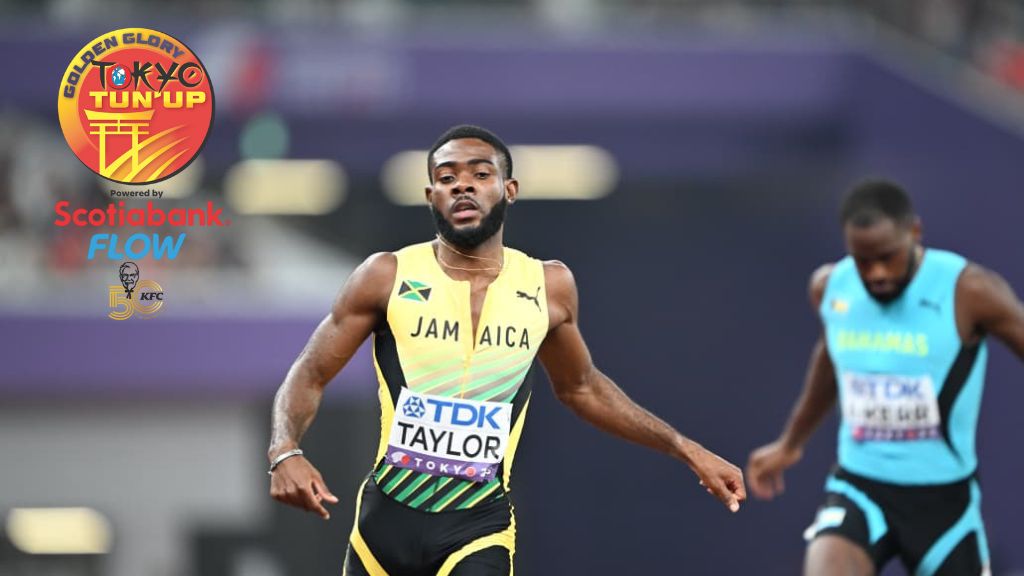
Christopher Taylor and Adrian Kerr among 200m semifinal qualifiers
KINGSTON, Jamaica — The opening day of the 2024 JAAA National Championships men’s 200m competition delivered predictable yet impressive performances on Saturday morning, as several of the event’s highest-ranked competitors secured their spots in the upcoming semifinal round without breaking a sweat. Leading the charge were two standouts from last year’s tournament: Christopher Taylor, last year’s silver medalist, and Adrian Kerr, the 2023 bronze medalist. Both athletes navigated their first-round heats smoothly to advance to the later-day semis, living up to pre-meet expectations. Taylor turned in a polished season-best time of 20.52 seconds, clocked with a slight headwind of -0.1m/s, while Kerr crossed the finish line in 20.85 seconds with a gentle 0.1m/s tailwind to back his run. The list of advancing athletes also includes a number of other notable Jamaican sprinters, including Roshawn Clarke, a former national 400m hurdles champion and 2023 World Athletics Championships finalist, and Tyquendo Tracey, a veteran sprinter with global championship experience. Topping the overall first-round qualifying rankings was Jevaughn Powell, who turned in the fastest time of the morning session with a 20.39-second run, posted into a -0.1m/s headwind. Following Powell in the overall rankings were Kadrian Goldson, who clocked 20.56 seconds with a 0.7m/s tailwind, and Roshawn Clarke, who rounded out the top three with a time of 20.58 seconds in neutral wind conditions (0.0m/s). In his respective heat, Mark Anthony Daley claimed first place with a 20.68-second performance aided by a 1.5m/s tailwind. He finished ahead of Shakur Williams, who crossed the line second in 20.76 seconds under the same wind conditions, and Shaemar Uter, who secured the third qualifying spot from the heat with a time of 21.00 seconds in a 0.8m/s tailwind. With the first round complete, all eyes now turn to the men’s 200m semifinals scheduled for later on Saturday, where athletes will compete for a spot in the final and a chance to claim the national title. By Paul A Reid
-

Man found dead under pear tree in Mandeville
MANCHESTER, Jamaica — Local law enforcement is investigating an unexpected late-night fatal accident that unfolded on Jackson Drive in the town of Mandeville, where an unidentified man is presumed to have fallen to his death while harvesting avocados, locally known as avocado pears, on private property.
The man’s body was discovered early Saturday morning by the homeowner of the plot, where the incident took place. First responders found the victim, described as a dreadlocked man, lying on his back directly beneath the avocado tree where he had been picking fruit. Several full crocus bags, stuffed to capacity with freshly harvested avocados, were recovered just a short distance from the body. Investigators also noted a broken tree branch at the scene, leading authorities to suspect the branch gave way under the man’s weight while he was climbing to reach higher-hanging fruit.
At the time of the initial report, police had not yet released any information confirming the man’s identity, nor had they reached out to next of kin. The victim was documented as wearing grey sweatpants, a brown outer sweater and a red undershirt at the time of the incident.
Following an initial examination of the scene and available evidence, detectives have formally categorized the death as a death by misadventure, a classification used for fatalities that occur during a voluntary, risky activity where the outcome results in accidental harm.
-
Defining deportees
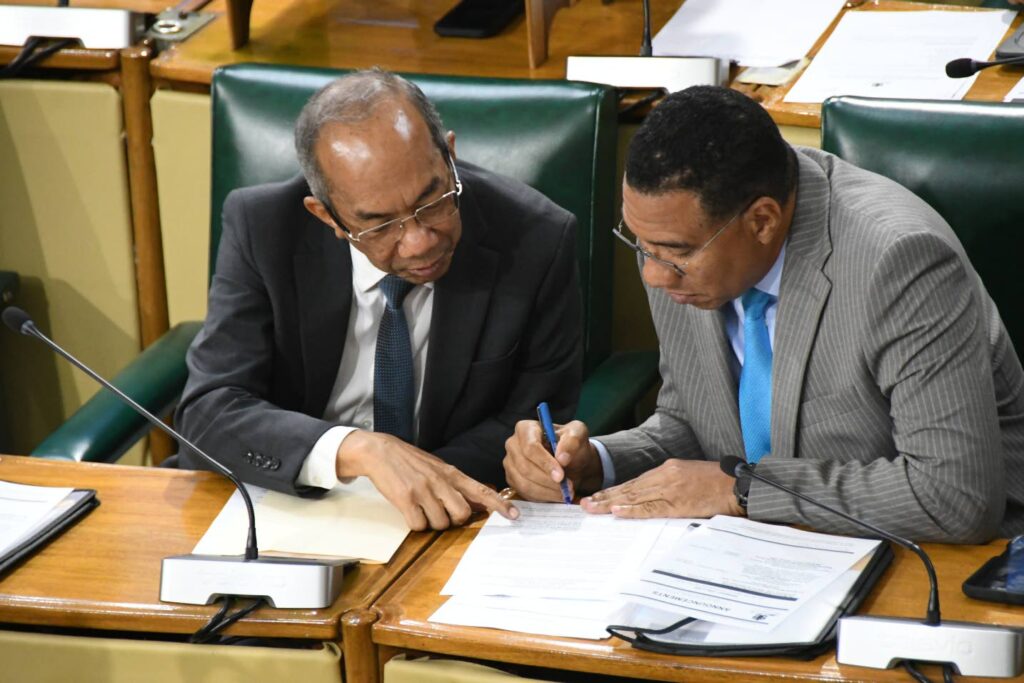
A heated public debate has erupted around a new bilateral memorandum of understanding (MOU) between Jamaica and the United States focused on the transfer of third-country nationals (TCNs), with top Jamaican officials doubling down on efforts to clarify that the incoming individuals are not deportees. Prime Minister Dr. Andrew Holness used a public social media statement to reinforce the administration’s core position, emphasizing that Jamaica has not agreed to accept foreign deportees removed from the United States under this new framework.
The controversy ignited just days after Jamaica’s Minister of National Security Dr. Horace Chang publicly confirmed that the agreement had been finalized, triggering widespread scrutiny over the terms and scope of the transfer arrangement. Chang has repeatedly pushed back against labeling the transferred individuals as deportees, a distinction that Holness has now publicly reaffirmed.
In his statement, Holness made clear that the only deportees Jamaica currently accepts are Jamaican citizens returning to their home country under longstanding existing bilateral agreements between the two nations. This clarification followed detailed comments Chang provided during a post-Cabinet media briefing, where he outlined the strict operational limits built into the new MOU. Under the terms of the deal, Jamaica will accept no more than 25 TCNs every two weeks, and all transfers will be paused immediately if more than 10 transferred individuals remain on the island at any given time.
Chang explained that the arrangement applies exclusively to TCNs who have already exhausted all legal pathways to remain in the United States, but whose home countries are either unwilling or unable to take them back. He stressed that the term “deportee” does not apply here because a deportation formally involves sending an individual back to their country of citizenship, so framing these transit migrants as deportees creates a misleading public perception. To address public concerns, Chang confirmed that every potential transferee will undergo rigorous vetting before Jamaica approves their entry, with full access to identity, medical, and criminal history records provided in advance.
Speaking during a sitting of Jamaica’s House of Representatives, Chang further clarified that the MOU is not a permanent resettlement program. He noted that transferred individuals will only stay in Jamaica temporarily as the government coordinates their onward travel, whether that means eventual repatriation to their country of origin or transfer to another appropriate third country. Jamaica also retains full unilateral discretion to approve or reject any individual transferee on a case-by-case basis, he added.
However, the Jamaican government’s strict distinction between TCNs and deportees has been called into question by global human rights group Amnesty International. The London-based organization, which works globally to protect migrant and refugee rights, defines third-country removals as a policy that sends people the U.S. wants to expel from its territory to countries that are not their own, regardless of their ultimate destination. Amnesty has also flagged broader longstanding concerns about third-country removal policies, including risks to due process for migrants and potential gaps in humane treatment after they arrive in the transit country.
-

Ronaldinho coming out of retirement to join Italian 3rd division side
MILAN, Italy – Nearly 18 years after hanging up his professional boots, one of the most iconic footballers of the 21st century, Ronaldinho, is on the brink of a sensational return to competitive football at the age of 46, with Italian third-division club Ravenna secured his signature, according to breaking reports from leading Italian sports daily *Gazzetta dello Sport*.
The Brazilian global star, who holds both a Ballon d’Or title and a FIFA World Cup winner’s medal from his decorated career, was expected to formalize the agreement during a signing ceremony in Miami on Tuesday. The outlet confirmed that Ronaldinho was already present in the United States to attend the 2024 FIFA World Cup, putting the final touches on the deal ahead of schedule. When contacted by Agence France-Presse (AFP), an anonymous source with direct knowledge of the negotiation confirmed the accuracy of the report, ending weeks of swirling speculation around the unexpected comeback.
In a statement carried by *Gazzetta dello Sport*, the former FC Barcelona and Paris Saint-Germain playmaker expressed his unwavering passion for the sport that defined his legacy. “I can’t wait to get back dancing with the ball again and to write a new story with Ignazio Cipriani, the Italian-American owner of Ravenna, and his entire family,” Ronaldinho said. “Football has always been a source of joy for me. I want to bring the same spirit to Ravenna,” he added, leaning into the trademark infectious joy that made him a fan favorite across every league he played in over his career.
But the hype around the high-profile signing has been tempered by a blunt admission from Ravenna’s own leadership. Club vice-president Ariedo Braida, speaking to local Italian media, clarified that the addition of Ronaldinho is less a strategic move to strengthen the first-team squad and more a bold marketing gambit to raise the club’s profile. He even cast public doubt on whether the 46-year-old will ever take the pitch in an official match for the side.
“He’s a magical player, who will have his registration, that’s a huge coup for us,” Braida acknowledged, highlighting the global attention the signing has already drawn to the small Italian club. “Will he play at 46? That depends, but he’ll be registered.”
Ronaldinho, who turned 46 earlier this year, has not appeared in a professional competitive fixture since a brief two-month stint with Brazilian top-flight side Fluminense back in 2015. Since retiring from the game, he has made occasional appearances in exhibition and charity matches, but this will mark his first return to a registered professional club in nearly a decade.
-

Wide Smiles for 25 infant school students
In Port Maria, a coastal town in Jamaica’s St Mary parish, a collaborative public health effort is laying early groundwork for better oral hygiene among young learners, bringing together local education leaders and a private dental practice to fill a longstanding gap in children’s health education.
Twenty-five students at Port Maria Infant School are now building foundational knowledge of daily oral care through the new program, developed by the school’s guidance department in partnership with local clinic Wide Smiles Dental. During an interactive on-site session held Thursday, a team of dental professionals walked the young students through core principles of keeping teeth and gums healthy. The hands-on workshop covered proper brushing methods, explained the critical role of flossing in preventing decay, and broke down how frequent consumption of sugary snacks contributes to common dental problems. Using oversized dental models to make the lesson easy for young children to follow, participants got the chance to practice their new skills in an age-appropriate, engaging environment.
Dorian Murphy, the school’s guidance counsellor, shared that the program grew out of her direct observation of unmet need in the school community. Speaking to the Jamaica Observer, Murphy explained that many local families lack awareness of basic oral health guidance, and often do not prioritize daily dental care in early childhood. She emphasized that healthy teeth support far more than just dental health: they impact children’s self-confidence, speech development, and overall long-term physical well-being. By introducing these lessons to infants, Murphy noted, educators can help establish positive habits from the very start of a child’s educational journey. Looking ahead, Murphy plans to expand the program to reach more students when the new school term begins, and add sessions that bring parents into the learning process to reinforce healthy habits at home.
Dr. Ajani Blake, a representative from Wide Smiles Dental, echoed Murphy’s observation that oral health education remains widely under-delivered across Jamaica. He expressed enthusiasm for the partnership, noting that widespread public misconception means most people only seek dental care when they already experience pain or damage, rather than pursuing preventive care. Introducing these lessons in early childhood, he argued, is one of the most effective ways to shift that culture long-term.
Dr. Blake also shared key guidance for parents: adults should take full responsibility for brushing and caring for their children’s teeth until the child turns eight years old. After that age, children can begin brushing independently, but should still receive regular supervision and guidance from parents to ensure they are practicing good technique.
This program is not the first community outreach effort from Wide Smiles Dental. The clinic has already organized multiple similar initiatives across St Mary and other Jamaican parishes, and Dr. Blake noted that the clinic is eager to continue expanding this work. It regularly partners with outside organizations, including Jamaica’s Ministry of Health, to run community oral education programs, and Blake emphasized that consistent outreach is critical: demand for accessible oral health education remains high across every region of the country.
-

NHF announces more subsidies for cardiovascular medications
Jamaica’s National Health Fund (NHF) has rolled out a sweeping set of enhancements to its cardiovascular care support network, marking one of the most significant updates to its heart health coverage in recent years. The core of this new policy sees the agency boost subsidies for 18 separate cardiovascular drug products, with per-unit increases landing between $40 and upwards of $200 for individual tablets and capsules.
In an official press statement, the NHF clarified that these immediate adjustments deliver direct financial relief to thousands of patients who rely on daily prescriptions for critical heart medications. This includes life-saving cholesterol-lowering and lipid-regulating treatments, as well as long-term therapies for ischaemic heart disease and chronic hypertension.
This latest round of subsidy increases builds on a series of targeted updates the NHF has rolled out since the start of the calendar year. Earlier in 2026, the agency added 11 new branded drug formulations to its covered list, and enacted an average subsidy hike of 10 to 20 percent for 207 distinct hypertension medication products. After these adjustments, the NHF notes that average subsidies now cover approximately half of the total retail cost of hypertension drugs, a change designed directly to offset the impact of widespread drug price inflation for program beneficiaries. The targeted focus on hypertension is no accident: the condition remains the most prevalent chronic illness enrolled in the NHFCard program, and is widely recognized as the top modifiable risk factor for life-threatening cardiovascular disease across Jamaica.
In a separate expansion that took effect in March 2026, the NHF added heart failure to the official list of covered conditions under the NHFCard program, bringing more than 253 additional heart failure medication products onto the subsidized roster. Alongside expanded drug coverage, the agency introduced two new key diagnostic benefits to improve early detection and ongoing monitoring of heart conditions. Eligible beneficiaries now qualify for an annual subsidy of $7,500 to cover the cost of an echocardiogram, and an additional $1,750 annual subsidy for electrocardiogram (ECG) testing. These additions reinforce the NHF’s long-stated commitment to expanding access to early intervention for cardiovascular disease, while cutting out-of-pocket costs that often force patients to delay necessary care.
“Cardiovascular disease remains one of the most pressing primary health challenges facing Jamaican families today, and addressing it effectively requires an intentional, focused approach,” said NHF Chief Executive Officer Everton Anderson. “Our core mandate has always centered on tearing down the financial barriers that block access to critical care. By continuously reviewing our program frameworks and reallocating resources to prioritize heart health and chronic disease support, we ensure the NHF evolves to meet the real, everyday needs of our population, delivering sustainable, long-term relief where it is needed most.”
This expanded investment in cardiac care is part of a broader, multi-year initiative by the NHF to scale up support for all chronic illnesses across Jamaica. Earlier this year, the agency expanded its list of covered chronic conditions from an earlier 22 to 28, adding new subsidized treatments for respiratory illnesses, gastrointestinal conditions, and multiple types of cancer. All of these updated subsidies are available immediately to active NHFCard beneficiaries at any participating private pharmacy location across the country.
Members of the public seeking additional details about the NHFCard program, or a full, updated list of covered chronic conditions and subsidized medications, can visit the official NHF website at www.nhf.org.jm, or reach the agency’s customer care team directly by phone at (876) 906-1106.
-
Jamaicans in US raise concerns over TCN deal
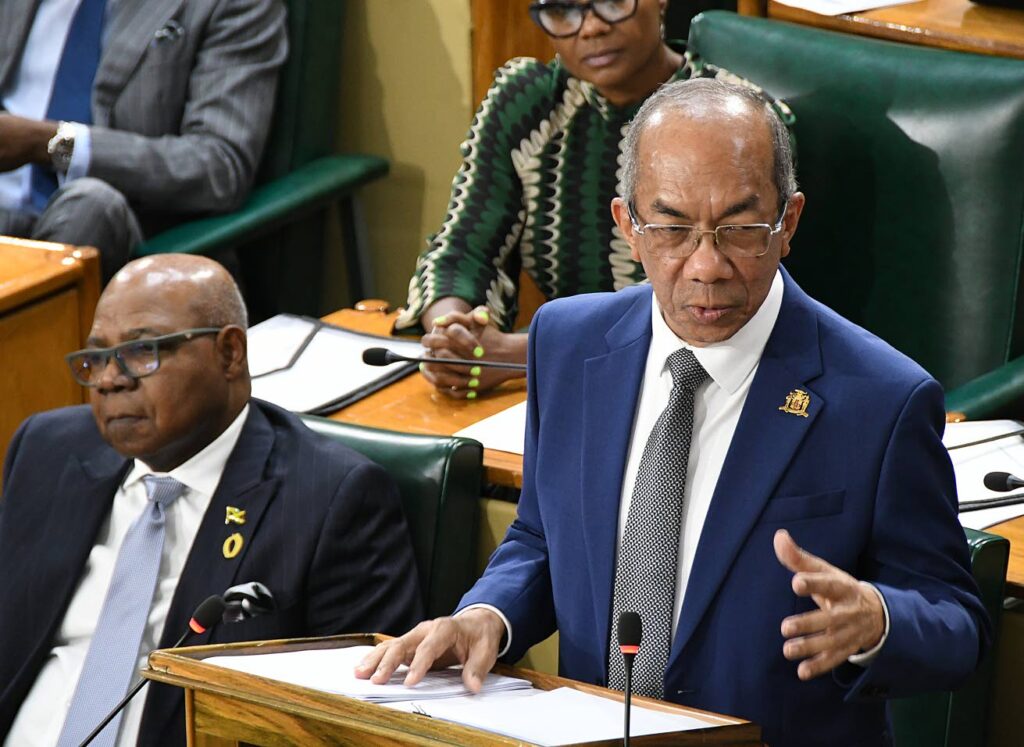
Amid growing scrutiny from the Jamaican diaspora community in New York City, a coalition of influential community leaders, legal experts, and former public officials have publicly come out against the Jamaican government’s proposed third-country nationals (TCNs) migration agreement with the United States, demanding full transparency and public consultation before the deal moves forward. The proposed arrangement would require Jamaica to accept groups of up to 25 non-Jamaican migrants that the U.S. seeks to deport from its territory over two-week periods, with an automatic pause on new arrivals once the total number of TCNs on the island exceeds 10. Third-country deportation frameworks, an increasingly controversial U.S. immigration policy, allow American authorities to transfer migrants the U.S. wants to remove to nations that are not the individual’s country of origin, even in cases where the person has never visited the host country, has no personal or familial ties there, and cannot speak the local language. Unlike prior public TCN agreements struck by the U.S. with other African and Caribbean nations, the Jamaican government has not yet confirmed whether the deal will include financial compensation to Kingston for accepting the deportees. Similar deals in recent years have included explicit multi-million-dollar payments: the Eswatini government agreed to accept up to 160 TCNs in exchange for $5.1 million earmarked for border and migration management infrastructure, while Rwanda secured a $7.5 million payment to accept up to 250 TCNs, and Equatorial Guinea also reportedly received a $7.5 million compensation package for its own agreement. In an effort to address gaps in transparency, Jamaican National Security Minister Dr. Horace Chang has attempted to ease public concern by noting that Jamaica will enforce two key conditions for all incoming TCNs: all deportees must be English-proficient, and none will be accepted if they have a prior criminal conviction. Despite these reassurances, opposition in the large Jamaican diaspora community in the U.S. remains fierce, with critics warning of unaddressed legal, security, and social risks that the government has failed to publicly acknowledge. Leading the charge is Winston Tucker, a prominent New York-based immigration attorney, who told reporters that preliminary indications suggest the deal will operate under the controversial U.S. “Shadow Docket” system, an expedited legal framework created to bypass lower court injunctions and send deportation cases directly to the U.S. Supreme Court for final review. As of the latest update on June 16, 2026, Tucker noted that the Supreme Court has not yet issued a ruling on the legality of third-country transfers, a policy that was not permitted under prior U.S. immigration precedent. He warned that Jamaica could face a severe legal and logistical bind if the Supreme Court ultimately strikes down the entire third-country deportation framework. “Hopefully the court will address the matter before its current session ends, but if the court rules the system unlawful, where does that leave Jamaica?” Tucker asked. He argued that Jamaican leadership should uphold longstanding migration principles, noting that U.S. communities have already rejected similar arrangements, and questioned why the migrants are not being directly deported to their countries of origin instead of being rerouted through a third nation. Wayne Golding, another well-known U.S.-based immigration law expert, echoed Tucker’s opposition, warning that the untransparent deal could quickly become an untenable burden on Jamaica’s already strained national security system. “It is unclear if the full implications of this agreement have been properly considered, but Jamaica could be stepping straight into a tangled, intractable social and legal mess if this plan moves forward,” Golding said. He joined the call for full public release of the bilateral memorandum of understanding (MOU) between Washington and Kingston, arguing that broad public consultation is required before any final decision is made. Dwight P Bailey, a New York-based former member of the Jamaica Constabulary Force, added that the MOU should never have been considered in the first place, raising urgent questions about basic logistics: where TCNs will be housed in Jamaica, what security protocols will be put in place to manage the new arrivals, and what will happen if the migrants’ home countries ultimately refuse to accept them for permanent resettlement. Additional opposition has come from faith and community leaders: Dr. Reverend Marilyn Grant, founder of Connecticut-based Women for Christ Outreach Ministries, called the Jamaican government’s decision to pursue the deal “absurd.” Dr. Rupert Francis, who leads the Diaspora Task Force on Crime Intervention and Prevention, also criticized the arrangement, saying it is clear that insufficient planning has gone into the proposal. Francis raised three critical unaddressed questions: whether Jamaica has the capacity to fully vet all incoming TCNs for security risks, where the arrivals will be housed during their stay on the island, and how Jamaican authorities will handle cases where TCNs file for asylum during their time in the country.
-

Netherlands thump Sweden in Houston to get World Cup liftoff
In a dominant World Cup group stage display that sent a clear warning to the rest of the competition, the Netherlands delivered a resounding 5-1 victory over Sweden on Saturday at Houston’s NRG Stadium, with Cody Gakpo and Brian Brobbey each netting two goals in a performance that lifted Ronald Koeman’s side to the brink of the knockout round.
Played in front of a sellout crowd of nearly 69,000 spectators, the result marked a much-needed momentum boost for the Dutch, who were forced to settle for a 2-2 draw with Japan in their opening tournament match. Following Saturday’s win, Koeman’s squad sits atop Group F with four points from two matches, edging out Sweden (three points), Japan (one point) and Tunisia (zero points), who faced off later the same day in Monterrey, Mexico. Despite the lopsided scoreline, Sweden remains well in contention for a spot in the last 32, squandering multiple clear chances that could have changed the trajectory of the match.
The day belonged to Brobbey, who earned his first start of the tournament after coming off the bench against Japan, and repaid Koeman’s faith with two clinical finishes inside the opening 18 minutes. The 24-year-old Sunderland striker, who had only scored once for the Netherlands in his three-year international career prior to the clash, opened the scoring in the fifth minute, combining neatly with Liverpool playmaker Gakpo before tapping home a low cross from close range. Twelve minutes later, a deflected cross from Denzel Dumfries fell straight to Brobbey’s path, and he poked the ball past Swedish goalkeeper Kristoffer Nordfeldt to double the Dutch lead.
Gakpo took over the game in the early stages of the second half, adding two goals of his own to extend the Netherlands’ advantage. Just two minutes after halftime, the Liverpool winger prodded home another low cross from Dumfries to make it 3-0, before scoring a superb individual effort in the 54th minute, cutting inside his marker and curling a low strike into the bottom corner of the net.
Nottingham Forest winger Anthony Elanga got Sweden on the scoresheet five minutes later, breaking clear of the Dutch backline and firing a clinical finish past goalkeeper Bart Verbruggen to cut the deficit to 4-1. However, West Ham United winger Crysencio Summerville, who came on as a substitute at halftime, put the icing on the cake for the Netherlands with a late fifth goal, his second in North America during the tournament.
Swedish head coach Graham Potter, whose side opened the tournament with a 5-1 thrashing of Tunisia, saw his attacking stars waste a host of good chances to get back into the game. The much-anticipated strike partnership of Liverpool’s Alexander Isak and Arsenal’s Viktor Gyokeres struggled for service for most of the first half, and when chances did come, they failed to capitalize: an unmarked Yasin Ayari miscontrolled a perfect cross from Gyokeres, Gyokeres fluffed a clear one-on-one opportunity, and multiple late first-half efforts were denied by a sharp performance from Verbruggen.
The match had a unique off-pitch connection to Houston’s legacy as the home of U.S. space flight, with two crew members from NASA’s historic Artemis II lunar mission in attendance as VIP guests. The Dutch, who were backed by a sea of orange-clad fans and even King Willem-Alexander in the stands, carried their bright start into the final result, bouncing back from their opening draw to take control of their group. With one group match remaining, the Netherlands will face winless Tunisia, while Sweden will take on Japan in what remains a tightly contested race for two knockout round spots.
-

Brunch with the BMW iX3
On Sunday, June 14, BMW Jamaica officially launched the all-new iX3 – the model the brand positions as its future-facing flagship – at a public event held on the East Lawn of Kingston’s iconic Devon House in St Andrew. For the local BMW team, the reveal marks a major milestone in the brand’s transition to electric mobility in the Jamaican market.
“To finally show Jamaica what many have called the best electric vehicle ever built by BMW – that’s an incredible feeling,” shared Uche McLean, head of business for BMW Jamaica, in an interview with Jamaica Observer’s weekly Auto magazine.
As the first production model to usher in BMW’s transformative Neue Klasse era, the 2025 iX3 introduces sweeping changes to the brand’s design language, electrification architecture, and digital technology that will shape all future BMW models.
On the exterior, the iX3 showcases BMW’s reimagined design philosophy. Unnecessary body lines have been stripped away to leave sharp, clean body surfacing that creates a more muscular, authoritative stance. The brand’s signature kidney grille has been fully reworked: it now features a vertical orientation, integrates a new horizontal light signature, and abandons the traditional chrome surround for a more modern, seamless look. The rear end also gets a full styling update, with animated lighting that activates during driving and locking/unlocking sequences. As a dedicated electric vehicle, the iX3 also offers a front trunk for extra cargo storage.
Under its updated exterior, the iX3 is built around BMW’s sixth-generation eDrive electric powertrain, mounted on a new 800V vehicle architecture. In this new platform, the higher energy density battery acts as a structural component of the vehicle, improving rigidity and efficiency. The platform supports ultra-fast DC charging up to 400kW, which can add up to 231 miles of driving range in just 10 minutes of charging – a gain enabled in part by advanced new battery management software. The iX3 delivers a total maximum range of up to 500 miles on a full charge, depending on the selected trim, and includes vehicle-to-load capability that allows owners to power external electronics and devices. Output ranges up to 469 horsepower across the trim lineup.
BMW describes the iX3 as a “software-defined vehicle”, thanks to its entirely new technology backbone that enables continuous over-the-air updates and expanded digital functionality. Inside the cabin, this digital transformation is immediately visible, with a completely reimagined human-machine interface focused on intuitive driver interaction. Headlining the new tech suite is BMW Panoramic Vision powered by Panoramic iDrive, paired with a new floating center touchscreen and an optional 3D head-up display. The Panoramic Vision system projects key driving and navigation information across the full width of the lower windscreen, keeping critical data in the driver’s line of sight. Through the BMW mobile app, owners can remotely access a wide range of vehicle functions, from checking the surround-view camera system to locating the parked vehicle.
McLean emphasized that the X3 line has long been a core pillar of BMW’s business in Jamaica, and the new electric variant extends the model’s appeal to a new generation of drivers. “The X3 is a critical model. It’s the model that carries the weight of the brand here in Jamaica. Thankfully, it’s a very versatile lineup, from two-wheel drive petrol engines, to all-wheel drive petrol engines, to M Performance versions that give you BMW’s racing heritage, to plug-in hybrid, to this new EV,” he explained. The launch of the all-electric iX3 positions BMW Jamaica to capture growing demand for premium electric vehicles in the Caribbean market, as the brand accelerates its global transition to zero-emission mobility.