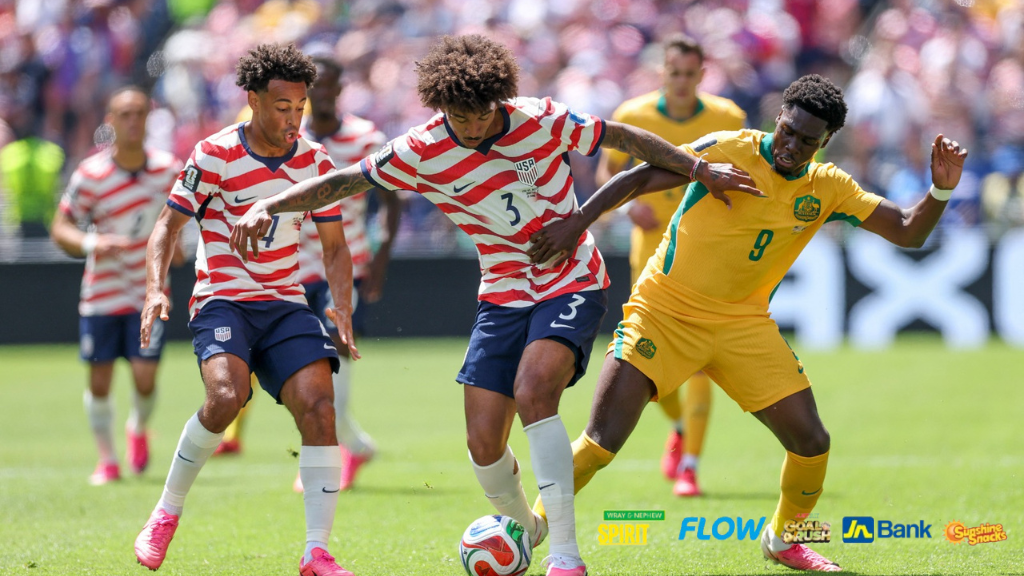
SEATTLE, United States – The United States men’s national football team has booked its place in the World Cup round of 32, wrapping up a clinical 2-0 Group D victory over Australia on Friday, as five-time champions Brazil entered their second group stage match amid pressure to rebound from a sluggish opening fixture.
The result came 24 hours after neighboring co-host Mexico locked in their own knockout stage berth, with the US matching their fellow hosts’ achievement with one group game still left to play. The Americans opened the scoring in the 11th minute on an own goal from Australia defender Cameron Burgess, and doubled their lead just before halftime with a headed finish from Alex Friedman that put the game out of reach.
The win marks a dream start to the tournament for head coach Mauricio Pochettino’s side, coming on the heels of a dominant 4-1 opening match win over Paraguay last week, a strong turnaround after a shaky pre-tournament build-up that left many fans uncertain of the team’s form. The US can even claim the top spot in Group D outright before they kick off their final group game, if Turkey fails to beat Paraguay in Friday’s late group fixture.
“It was a fantastic game again. We dominated against a very tough team,” Pochettino told reporters after the match.
Across the other group fixtures on Friday, Brazil entered their match against Haiti hungry for their first three points of the tournament, looking to put a underwhelming 1-1 opening draw with Morocco firmly in the rearview mirror. Haiti entered the match still searching for their first point of the group stage, having dropped their opening fixture 1-0 to Scotland.
Defender Gabriel Magalhaes acknowledged the team’s underperformance in the opening match, but stressed the squad is ready to correct course. “We know what we have to do. We know that we didn’t have a good first match, but what we can expect from us is that we’ll be really committed tomorrow and we’re going to do our best to win,” he said. “It wasn’t the match we wanted (against Morocco), but this is in the past and we’ve learned from it.”
Head coach Carlo Ancelotti announced he would rotate his starting line-up for the fixture, and framed the slow start as a test of the squad’s mental strength rather than a major crisis. “Getting off to a good start is important in a World Cup, but the most important thing is that the team, rather than being perfect, has to be resilient,” the Italian manager said.
In Group C, Scotland looked to take a major step toward history in their Friday match against Morocco in Foxborough, Massachusetts, looking to build on an opening 1-0 win over Haiti and qualify for the knockout stage of a men’s World Cup for the first time in the nation’s history. Captain Andy Robertson said the entire squad has embraced the historic opportunity. “I don’t think any of the lads or the coaching staff and backroom staff have shied away from it,” Robertson said. “We want to be the first team to be able to do that for our country. And it’s obviously a nice feeling to try and do that.”
Morocco’s preparations for the crucial match were upended Friday, after a French appeals court confirmed that team captain Achraf Hakimi will stand trial on allegations of rape dating back to 2023. The Paris Saint-Germain full-back, who has repeatedly denied the allegations, was named in the starting line-up for the match against Scotland, and welcomed the upcoming trial in a post on social media platform X. “I have been waiting for this trial since day one,” Hakimi wrote. “At last, I’ll be able to speak.”
Off the pitch, controversy emerged Thursday as the Iranian Football Federation announced it would file an official complaint with FIFA over alleged travel restrictions imposed by tournament organizers. The federation claims that despite submitting its official pre-tournament preparation schedule months in advance, organizers have repeatedly blocked the team’s planned travel, throwing the technical staff’s game preparations into disarray ahead of Sunday’s crucial group match against Belgium.
Iran had requested to fly from its shared base camp in Tijuana, Mexico to Los Angeles two days ahead of the Belgium fixture, but organizers rejected the request, according to the federation. The U.S. administration has rejected Iran’s claims of unfair restrictions.