标签: Jamaica

牙买加

  • Canada mulling expanding ‘assisted dying’ law to mental illness

    Canada mulling expanding ‘assisted dying’ law to mental illness

    MONTREAL, Canada — For 93-year-old Jacques Poissant, relief from prolonged suffering arrived when he posed a courageous question to his daughter: would it be cowardly to seek assistance in dying? After an extensive battle with prostate cancer that left him physically diminished and devoid of life’s vitality, his inquiry initiated a dignified farewell process.

    His daughter, Josee Poissant, recounts how her mother made a similar choice at age 96 upon recognizing her permanent hospitalization. Surrounded by family and accompanied by cherished music, she experienced a peaceful transition. “She was at peace. She sang until she went to sleep,” Poissant remembers, describing the moment as both beautiful and moving—a privileged opportunity for proper goodbyes.

    Canadian legislation has progressively expanded since initially legalizing medical assistance in dying (MAID) in 2016 for end-of-life cases. By 2021, the right extended to those with serious and incurable conditions, even when death wasn’t immediately foreseeable. Current statistics reveal that one in twenty Canadian deaths in 2023 involved this procedure.

    The nation now contemplates further expansion as a parliamentary committee prepares to examine whether MAID should include individuals suffering exclusively from mental illnesses. This potential development represents the next frontier in end-of-life legislation, positioning Canada as a global leader in assisted dying policies while other nations like Britain and France consider more limited measures.

    Claire Brosseau, a 49-year-old former stand-up comedian, embodies this pending decision. After decades battling bipolar disorder through extensive treatments across multiple cities—including various medications, therapies, and alternative approaches—she finds daily existence overwhelmingly challenging. “I have about 10 to 30 minutes a day where I’m OK. But the rest of it is just terrible,” she explains from her Toronto apartment where she lives in isolation with her dog Olive.

    Brosseau envisions a peaceful departure surrounded by love rather than a violent, solitary end. However, critics like University of Toronto health law professor Trudo Lemmens caution against trivializing assisted dying as “a form of therapy.” He notes Canada’s sharper rise in cases compared to pioneering nations like Belgium and the Netherlands, emphasizing that suicidal desires often integrate with psychiatric disorders whose trajectories remain unpredictable.

    Conversely, psychiatrist Mona Gupta, who chaired a government advisory expert panel, argues against distinguishing between mental and physical suffering. “We have to acknowledge that there are people who have been ill for decades and have undergone all kinds of treatments,” she states, emphasizing that certain mental illnesses produce equally unrelievable suffering as physical conditions.

    For those with terminal physical illnesses like Rachel Fournier, a 71-year-old Quebecker with brain cancer, MAID approval brings profound relief. “Knowing that there will be an end, and that I can choose the moment, is an immense relief,” she reflects from her palliative care center. This control over her departure contrasts with her mother’s experience with dementia, when legal options for dignified death were unavailable.

    Canada’s rigorous protocol requires adult applicants with decision-making capacity to demonstrate serious, incurable illness causing constant, unbearable suffering that cannot be tolerably relieved. Only after two physicians verify these criteria can lethal medication be administered at the patient’s chosen time.

    Increasingly, Canadian families transform these final moments into celebrations of life. Ceremonies feature music, speeches, buffets, and personalized elements—from horror movie viewings to final beers and cigarettes. Funeral complexes now dedicate spaces for these gatherings, recognizing their significance.

    As Dr. Georges L’Esperance, a veteran MAID provider, observes: “Thanks to medicine, we have added years to people’s lives, but not always life to those years.” For advocates like Brosseau, the fundamental question remains about personal autonomy: “To deny me this right is to deny my humanity.”

  • Jamaican sign language training programme for public libraries launched

    Jamaican sign language training programme for public libraries launched

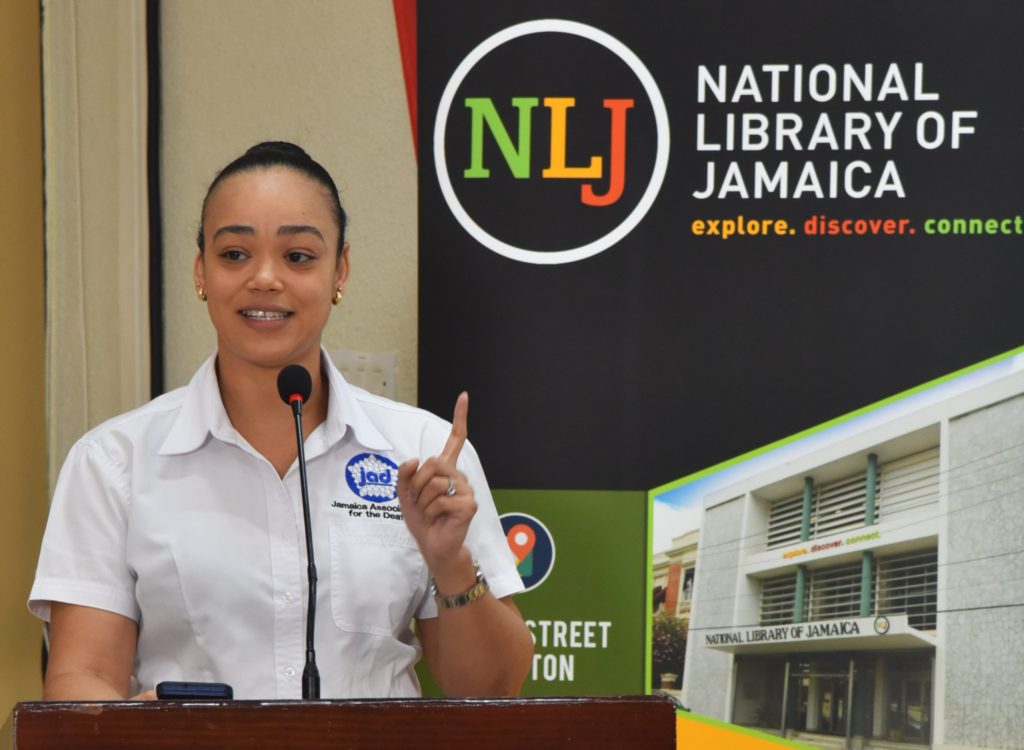
    KINGSTON, Jamaica — In a landmark move toward social inclusion, Jamaica’s library system has initiated a comprehensive Jamaican Sign Language (JSL) training program designed to dismantle communication barriers for deaf patrons. The pioneering initiative, dubbed ‘Bridging the Gap: One Sign at a Time,’ was formally inaugurated Monday at the University of the West Indies Mona campus, signaling a new era of accessibility in the nation’s knowledge institutions.

    The program will deliver structured JSL education to frontline staff across Jamaica’s entire library network, encompassing the National Library of Jamaica and regional parish libraries. This capacity-building effort aims to equip information professionals with the necessary linguistic skills to serve deaf and hard-of-hearing community members effectively and with dignity.

    Culture Minister Olivia Grange, represented by National Library Board Chair Joy Douglas, characterized the initiative as reflecting her ministry’s deepened commitment to enhancing service accessibility for persons with disabilities. Minister Grange emphasized that true inclusion must embrace Jamaicans across the spectrum of physical and intellectual capabilities, noting parallel efforts to broaden participation in cultural and athletic programs.

    The minister framed the initiative as transcending mere symbolic recognition, stating: “This is more than us saying to the deaf community—’we see you’ or ‘we value you.’ This is about empowerment and building independence.” She expressed aspirations for JSL to eventually be integrated into formal education curricula, similar to foreign language offerings, to eradicate communication barriers society-wide.

    Kimberly Sherlock Marriot-Blake, Executive Director of the Jamaica Association for the Deaf, hailed the program as a transformative milestone in national development. With over 16 years of experience providing JSL instruction to diverse stakeholders, Marriot-Blake emphasized that language accessibility fundamentally reshapes institutional systems, making them more equitable and responsive.

    She particularly commended library authorities for recognizing that true accessibility extends beyond physical infrastructure to encompass communication channels. The initiative, she noted, creates opportunities for preserving deaf cultural heritage as an integral component of Jamaica’s national identity.

    Adding political weight to the effort, Senator Professor Floyd Morris, Director of the Centre for Disability Studies at UWI, reaffirmed his commitment to pursuing official government recognition of Jamaican Sign Language, underscoring its critical role in achieving genuine social inclusion.

  • Jamaican arrested after 60 pounds of marijuana seized at Antiguan airport

    Jamaican arrested after 60 pounds of marijuana seized at Antiguan airport

    In a significant counter-narcotics operation at VC Bird International Airport in Antigua, authorities have intercepted a substantial drug shipment and taken a Jamaican national into custody. The coordinated effort, executed last Sunday, resulted in the confiscation of 60 pounds of marijuana with an estimated street value of EC$360,000.

    The multi-agency operation involved specialized units including the Narcotics Department, the K-9 Unit, and the Customs Enforcement Division. During their surveillance activities, officials identified and seized two suspicious suitcases—one black and one green—containing 19 vacuum-sealed packages of cannabis.

    The suspect, identified as a 38-year-old Jamaican male, was subsequently arrested and remains in police custody awaiting formal charges. Law enforcement officials have indicated that judicial proceedings will commence shortly.

    In an official communiqué, the Royal Police Force of Antigua and Barbuda reaffirmed its unwavering dedication to combating transnational drug trafficking operations. ‘This seizure demonstrates our continued vigilance and commitment to protecting our national borders from illicit activities,’ the statement read, emphasizing the strategic importance of interdepartmental cooperation in border security operations.

  • 90-y-o ‘Mass Joe’ benefits from house refurbished after Hurricane Melissa through community effort

    90-y-o ‘Mass Joe’ benefits from house refurbished after Hurricane Melissa through community effort

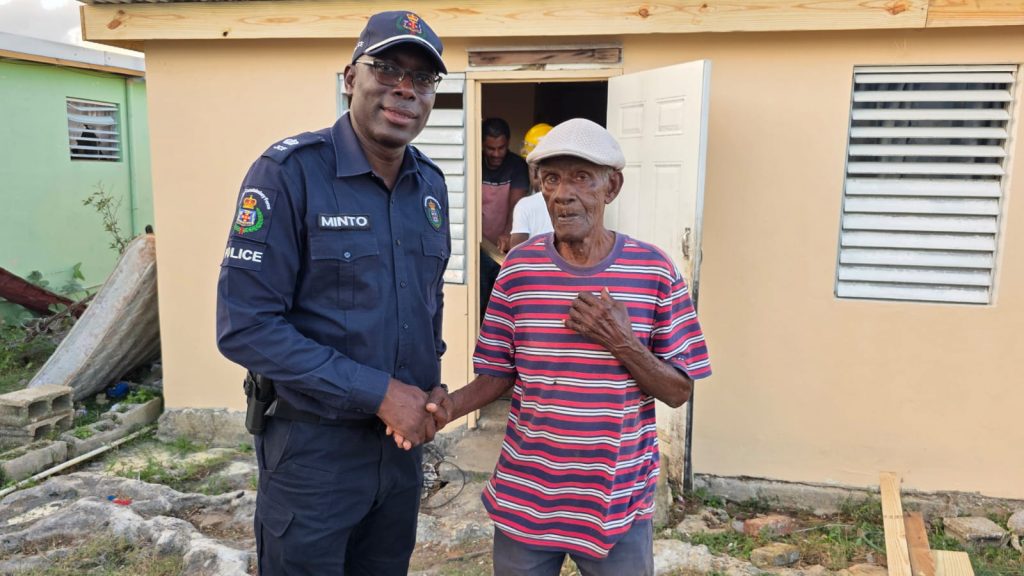
    In the aftermath of Hurricane Melissa’s destructive path through St. Elizabeth, Jamaica, a remarkable story of community solidarity has emerged centered around a nonagenarian known affectionately as ‘Mass Joe.’ The catastrophic storm had completely torn the roof from the lifelong New Town resident’s home, leaving the vulnerable elderly man exposed to harsh weather conditions and creating an urgent humanitarian situation.

    Initial assistance came from immediate neighbors who quickly deployed tarpaulins as temporary protection. However, these stopgap measures proved insufficient against continued heavy rainfall, leaving Mass Joe in increasingly precarious circumstances. The situation prompted an extraordinary multi-sector response that transcended traditional aid frameworks.

    Local leadership emerged through Superintendent Coleridge Minto, head of the St. Elizabeth Police Division, who coordinated a comprehensive rebuilding initiative. Member of Parliament Floyd Green contributed essential zinc sheeting materials for the new roof, while Brady’s Construction Company Limited provided not only lumber and building materials but also deployed their skilled carpenters and painters. Community members further enhanced the effort through voluntary labor, food provisions, and additional supplies.

    The collaborative project achieved far more than basic repairs. Workers completely replaced the entire roof structure, repainted both interior and exterior walls, installed a new mattress to replace aged bedding, and renovated the kitchen cupboard. These comprehensive improvements restored both the structural integrity and comfort of the residence, transforming it from a storm-damaged structure into a secure, habitable home.

    Superintendent Minto emphasized the significance of the collective achievement: ‘This exemplary work demonstrates what becomes possible when public servants, private sector partners, and neighbors unite around supporting vulnerable community members.’ He particularly acknowledged the crucial role of immediate neighbors whose rapid response sustained Mass Joe during the critical period before organized repairs could be completed.

    Participants in the rebuilding effort described the elderly beneficiary as profoundly grateful throughout the process. The intervention has reportedly restored Mass Joe’s sense of security and wellbeing after the traumatic post-hurricane experience. This successful community-driven initiative in New Town now stands as a powerful model of cross-sector partnership and community resilience, demonstrating how coordinated local action can effectively address urgent needs when formal institutional assistance is unavailable or delayed.

  • Chuck extends condolences following passing of Hanover parish judge

    Chuck extends condolences following passing of Hanover parish judge

    KINGSTON, Jamaica — The Jamaican legal community is in mourning following the sudden passing of Senior Parish Judge for Hanover, Sasha-Marie Ashley, on Monday. Minister of Justice and Constitutional Affairs Delroy Chuck issued an official statement Tuesday expressing profound grief and extending condolences to Judge Ashley’s family, friends, and professional colleagues.

    Minister Chuck, speaking on behalf of both his ministry and the Jamaican Government, characterized Judge Ashley as a remarkable jurist whose career was defined by unwavering integrity, exceptional diligence, and a profound dedication to the principles of justice. He emphasized that her loss represents a significant moment of sorrow for the entire nation’s judiciary and legal fraternity.

    Ashley’s distinguished legal career included substantial service within the Office of the Director of Public Prosecutions (DPP). The Minister highlighted that her tenure there was marked by a formidable intellect, meticulous case preparation, and an unyielding pursuit of fairness. As a prosecutor, she was widely respected for her consummate professionalism and an unshakeable sense of duty, qualities that earned her the deep confidence of the courts and the esteem of her peers.

    Transitioning to the bench, Judge Ashley continued to exemplify judicial excellence. Minister Chuck noted her demonstrated sound judgment, compassionate understanding, and deep legal expertise. He stated that she executed her judicial responsibilities with notable dignity and balance, ensuring that justice was administered with both firmness and humanity.

    Concluding his statement, Minister Chuck expressed heartfelt sympathies to all those affected by her passing and expressed hope that they might find solace in her enduring legacy of exemplary service and the positive, lasting impact she made on Jamaica’s justice system.

  • Jamaica hold off Puerto Rico 1-0 to advance to Concacaf Boyz U20

    Jamaica hold off Puerto Rico 1-0 to advance to Concacaf Boyz U20

    WILLEMSTAD, Curaçao — Jamaica’s Under-20 national team has officially clinched their place in the 2026 CONCACAF Boys’ Championship following a hard-fought 1-0 victory over Puerto Rico in their final Group B qualifier. The decisive match, held at Stadion Rignaal ‘Jean’ Francisca on Tuesday, concluded Jamaica’s dominant qualifying performance with an impeccable record.

    The winning moment arrived in the 32nd minute when Mount Pleasant Football Association’s Jabarie Howell delivered a spectacular right-footed free kick from just outside the 18-yard box. His perfectly placed curler found the far corner of the net, ultimately proving to be the match’s sole goal despite intense pressure from Puerto Rico in the final quarter-hour.

    Jamaica’s defensive excellence throughout the qualifying tournament remained unblemished, having completed all five matches without conceding a single goal while scoring an impressive 28 times. The team finished with a perfect 15 points, three clear of second-place Puerto Rico in Group B standings.

    The victory marks a significant milestone for Jamaican youth football as the team now looks ahead to the CONCACAF Championships scheduled for July 25-August 9, 2026, at a venue yet to be determined. A top-four finish in next year’s championship would secure Jamaica’s qualification for the prestigious 2027 FIFA U-20 World Cup.

    While Howell provided the offensive heroics, goalkeeper Joshua Grant preserved the clean sheet with a crucial left-handed save in the second half—the first time he was seriously tested throughout the entire qualifying tournament. The defensive resilience proved vital as Puerto Rico applied sustained pressure in the closing stages seeking an equalizer.

  • No pressure on NEPA

    No pressure on NEPA

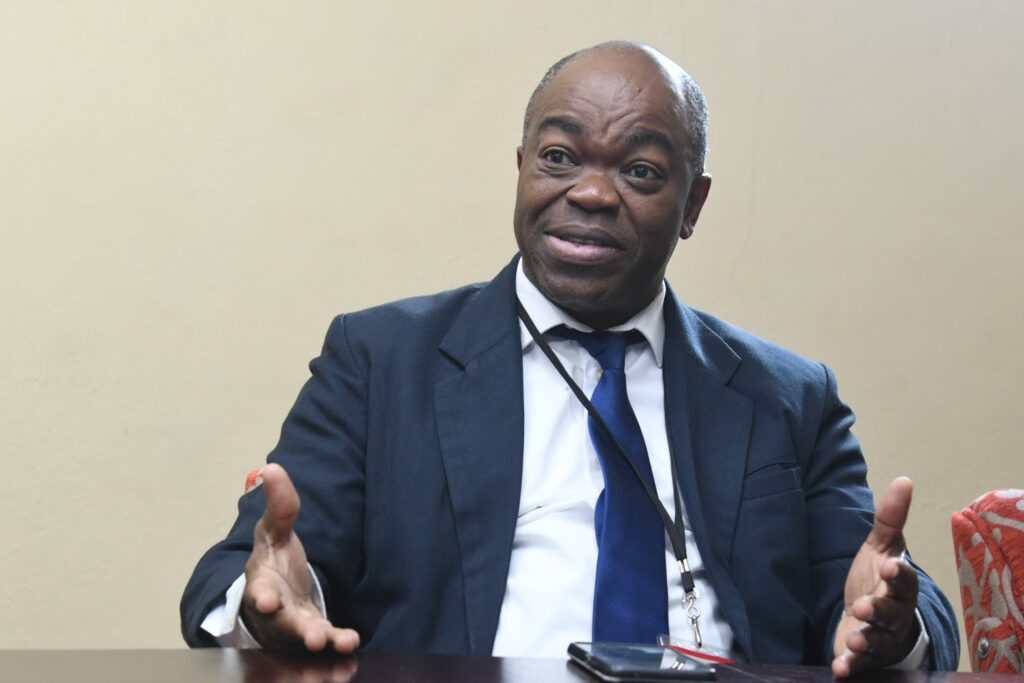
    The Chief Executive Officer of Jamaica’s National Environment and Planning Agency (NEPA), Leonard Francis, has issued a firm rebuttal against suggestions that his agency faces political interference from its parent ministry. During a recent Jamaica Observer Monday Exchange forum, Francis categorically denied ever receiving instructions from government officials regarding agency decisions.

    Francis emphasized his commitment to regulatory integrity, stating, “I have never been instructed or directed by a prime minister or a minister of government. I am guided by the various policies and the process. I believe in abiding by the law and abiding by best practices.” This declaration came in response to questions prompted by Opposition environment spokesman Orville Newell’s recent call to transfer NEPA from the Ministry of Economic Growth and Job Creation to the Ministry of Environment.

    Newell had raised concerns about potential structural conflicts, noting that the same ministry responsible for promoting major infrastructure projects also oversees Jamaica’s primary environmental regulator. “Environmental regulation must not only be independent, it must be seen to be independent,” Newell argued in a statement last month, characterizing the issue as structural rather than partisan.

    Francis described NEPA’s internal environment as “sometimes noisy” due to the diverse professional backgrounds of its staff, including environmentalists, planners, engineers, and architects. He highlighted that decision-making follows established frameworks including Jamaica’s Vision 2030 development plan and United Nations Sustainable Development Goals.

    Water, Environment, and Climate Change Minister Matthew Samuda supported Francis’s position, noting that all agencies must operate within legislative boundaries regardless of their ministerial placement. Samuda welcomed debate about regulatory structures but maintained that organizational location doesn’t determine operational integrity, as no agency head or minister can legally operate outside established regulatory frameworks.

  • CDB predicts ‘modest’ growth for Caribbean countries in 2026

    CDB predicts ‘modest’ growth for Caribbean countries in 2026

    BRIDGETOWN, Barbados – The Caribbean Development Bank (CDB) has projected a period of restrained economic expansion across its borrowing member nations for the current year, citing a complex interplay of global and regional challenges. During its annual news conference held Tuesday, bank officials presented a cautiously optimistic yet tempered outlook for the region.

    Jason Cotton, Acting Deputy Director of the CDB’s Economics Department, revealed that regional Gross Domestic Product (GDP), excluding the rapidly expanding economy of Guyana, is anticipated to grow by a modest 1.1 percent. This figure underscores the broader challenges facing most Caribbean economies. However, when incorporating Guyana’s extraordinary projected growth rate of over 20 percent—driven primarily by its burgeoning oil and gas sector—the overall regional growth projection surges to 6.2 percent.

    The economic prospects for other commodity-exporting nations within the Caribbean remain decidedly mixed, with their performance heavily contingent on volatile international commodity prices and domestic production capabilities. Conversely, service-oriented economies, particularly those reliant on tourism and construction, are expected to achieve steady but modest growth. Inflation trajectories through 2026 will be significantly influenced by developments in global commodity markets.

    On fiscal policy, Cotton indicated that several member countries will persist with efforts to consolidate public finances and enhance revenue administration systems. Nevertheless, significant pressures endure, including expenditures related to post-disaster recovery, escalating public sector wage bills, and declining revenues from Citizenship by Investment programs. These fiscal strains have already prompted deviations from medium-term debt reduction strategies in several cases, necessitating adjustments to realign with sustainability targets.

    The bank emphasized that risks to the economic outlook remain tilted to the downside. A precarious global environment, characterized by heightened geopolitical tensions—both internationally and within the Caribbean basin—and the ever-present threat of climate-related disasters, continues to cloud economic prospects. Fiscal vulnerabilities are particularly acute in highly indebted nations with limited financial buffers.

    Despite these challenges, potential catalysts for improved medium-term performance exist. These include a stronger-than-anticipated recovery in tourism arrivals, an acceleration of public and private investment, meaningful progress in transitioning to renewable energy sources, and the implementation of business climate reforms.

    Cotton concluded by reflecting on the region’s recent history of sequential external shocks, which has highlighted the inherent vulnerabilities of small, open economies. He stressed that in an increasingly fragmented and uncertain global landscape, regional cooperation has evolved from a strategic choice to an absolute necessity. While acknowledging the significance of external conditions, he emphatically stated that Caribbean nations are not without agency, asserting that internal policy decisions remain crucial in shaping economic outcomes.

  • Beyond the rain

    Beyond the rain

    Facing severe drought conditions that have compromised 133 water supply systems nationwide, Jamaica is implementing an ambitious national strategy to fortify its water infrastructure against increasingly erratic weather patterns. Minister Matthew Samuda, overseeing water resources, has declared that traditional reliance on seasonal rainfall is no longer viable, necessitating urgent structural interventions.

    The government’s comprehensive approach centers on two primary objectives: dramatically expanding water storage capacity and implementing a nationwide engineering program to reduce non-revenue water (NRW) losses exceeding 70% in multiple parishes. These systemic losses, comprising leaks and unauthorized usage, represent a critical vulnerability in Jamaica’s water security framework.

    Evidence from Kingston and St. Andrew demonstrates the potential impact of infrastructure improvements. Through targeted NRW reduction efforts, daily water consumption in the capital region has decreased by 12 million gallons compared to a decade ago, with leakage rates plummeting from 72% to approximately 40%. This enhanced efficiency substantially mitigated water shortages during recent drought periods, with the 2022 deficit measuring 15 million gallons daily compared to 30 million gallons during the 2015 drought.

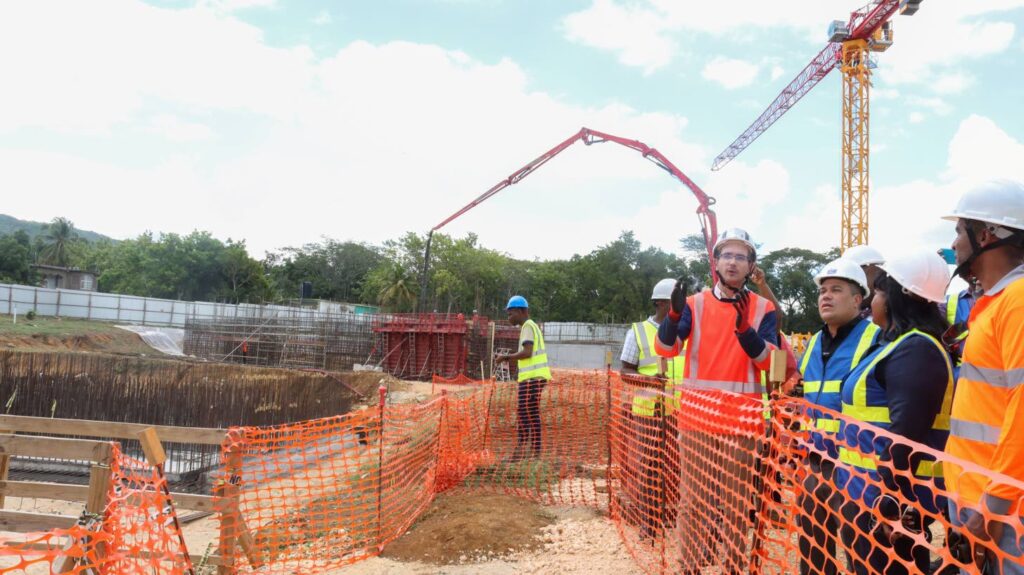
    Major infrastructure projects form the cornerstone of Jamaica’s long-term strategy. The planned Hermitage Dam development promises to secure water resilience for Kingston over the next half-century, while the Rio Cobre Water Treatment Plant will augment supply capacity across Kingston, St. Andrew, and sections of St. Catherine upon completion.

    Despite current challenges, Minister Samuda emphasized that Jamaica’s groundwater resources remain substantially adequate—approximately 500% above combined irrigation and potable water requirements, though reduced from historical levels of 700%. The critical challenge lies in storage and distribution rather than absolute water availability.

    With meteorological projections indicating below-normal rainfall through June, the government has activated immediate response measures including distribution of nearly 13,000 household water tanks and expansion of water truck fleets. Concurrently, strategic initiatives like the Western Water Resilience Project and Rio Cobre Water Supply Project aim to fundamentally transform Jamaica’s capacity to withstand prolonged dry periods in an era of climate uncertainty.

  • WATCH: Allman Town Primary students march for peace

    WATCH: Allman Town Primary students march for peace

    KINGSTON, Jamaica — Young voices echoed through the streets of Allman Town as primary school students became ambassadors of peace during Jamaica’s annual Peace Day observance this Tuesday. Carrying messages of harmony and unity, the children from Allman Town Primary School organized a vibrant peace march through their community.

    The procession featured students marching alongside musical bands and community adults, creating a powerful visual representation of cross-generational solidarity. Their chants of “We want peace” resonated through the neighborhood, turning the event into both a celebration and a call for social cohesion.

    This annual observance occurs every first Tuesday of March, established through formal proclamation by then Governor General Howard Cooke in February 1996. The declaration officially recognized the peace-building initiatives of PALS Jamaica (Peace and Love in Society), an organization dedicated to conflict resolution and social harmony.

    The Peace Day tradition represents Jamaica’s ongoing commitment to addressing community violence through positive engagement and youth empowerment. By involving school children as primary participants, the event emphasizes the crucial role of education in fostering long-term social change and community resilience.