标签: Jamaica

牙买加

  • Orlando Bennett set to miss JAAA trials

    Orlando Bennett set to miss JAAA trials

    KINGSTON, Jamaica — One of Jamaica’s brightest track and field talents, 2025 national 110m hurdles champion Orlando Bennett, has confirmed he will almost certainly miss the upcoming 2025 Commonwealth Games scheduled to kick off later this month. The athlete’s withdrawal stems from his deliberate decision to skip the Jamaica Athletics Administrative Association’s national qualifying championships, set to run from June 18 to 21, a mandatory step for selection to the national Commonwealth Games team.

    Bennett, who recently competed in a surprise second-place finish in the men’s triple jump event on Thursday, opened up about his competition schedule in the coming weeks. Fresh off a warm-up stop, he is gearing up to test his speed and technique against a deep, high-quality field at next Thursday’s Golden Gala Pietro Mennea in Rome — the fourth leg of the prestigious 2025 Wanda Diamond League tour. Immediately after the Rome meet, Bennett revealed his next competitive stop will not be the Jamaican national championships, but instead the Diamond League event hosted in Doha on June 19, the same date as one of the key qualifying rounds for the Commonwealth Games.

    A veteran finalist at the 2022 Birmingham Commonwealth Games, Bennett laid out his strategic priorities for the 2025 athletic season in an interview with local media. “Next meeting will be Doha and then I go home to Jamaica and rest a bit. This is an off-season for me so my goals are staying in the circuit and getting good times and good rewards,” he explained, framing his choice to skip the Commonwealth Games as a long-term strategic play to maintain his position on the global Diamond League circuit rather than peak for a single multi-sport event this year.

    The Jamaican hurdler, who already claimed a career-defining silver medal at the 2025 World Athletics Championships held in Tokyo, Japan, also shared his candid assessment of his recent triple jump outing, which he called far from his best performance. “I do not know if this was a good race, it was not really the best. I just tried to get through the race and through the hurdles. Maybe it was because of the low temperatures. It was also a back-to-back race. I came here to execute and I really did,” he said, noting that unseasonably cool conditions and a packed competition schedule contributed to his underwhelming showing in the surprise multi-event outing.

    Bennett first burst onto the senior Jamaican track scene last year, when he claimed his first national senior title in the 110m hurdles, outperforming top competitors Demario Prince and Tyler Mason to secure his spot as one of the country’s most promising rising hurdles talents.

  • Pregnant woman, fiancé drown at Guyana beach; bodies recovered

    Pregnant woman, fiancé drown at Guyana beach; bodies recovered

    GEORGETOWN, Guyana — A coastal tragedy has left a small Guyanese community in mourning after authorities recovered the remains of two missing people: a young pregnant woman and her police officer fiancé, who were swept out to sea during a weekend beach trip.

    The victims, 20-year-old Lyodisa “Loyda” Waldron and 33-year-old Andri Francis, a serving special constable, were both residents of Victoria Village on East Coast Demerara. Their bodies were pulled from the waters off Unity Beach on Tuesday, three days after they went missing, local law enforcement confirmed.

    The incident unfolded on Sunday afternoon, when the couple joined a group of friends and family for a recreational outing at the popular Atlantic coastline spot. While swimming, Waldron was caught in unexpected strong pulls that dragged her further from shore, prompting her to call out for emergency assistance.

    Francis, a father of two children, did not hesitate to act on her cries for help and immediately entered deeper water to rescue his fiancée. But the powerful Atlantic currents proved too much for both of them, overwhelming the pair and pulling them under the surface before other beachgoers could reach them.

    Within hours of their disappearance, a coordinated search and recovery mission was assembled, bringing together uniformed officers from the Mahaica Police Station and specialist water teams from the Guyana Defence Force (GDF) Coast Guard. Search teams combed the shoreline and surrounding offshore waters through Monday, but poor conditions and strong currents hampered their efforts, and they were unable to locate the couple on that day.

    Local police have confirmed that investigations into the exact circumstances of the drowning are still ongoing, as the community begins to process the loss of two young residents.

  • $60m allocated for shelter improvements

    $60m allocated for shelter improvements

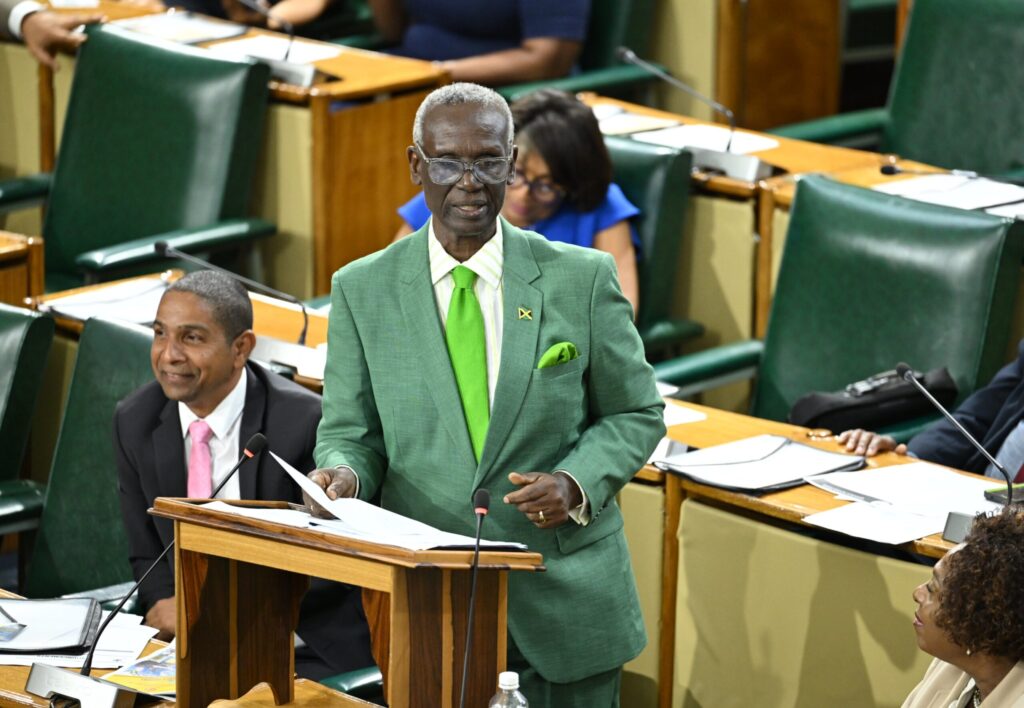
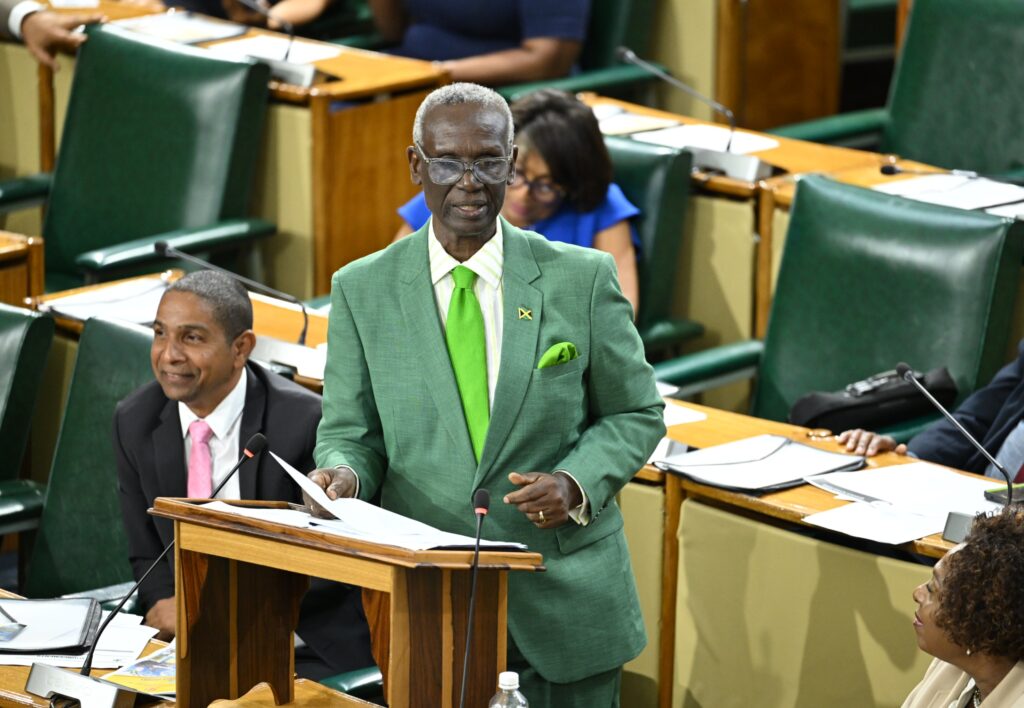
    KINGSTON, Jamaica – As Jamaica enters the annual Atlantic hurricane season, the country’s Minister of Local Government and Community Development Desmond McKenzie has unveiled a multi-pronged investment package to strengthen the island’s emergency disaster preparedness infrastructure, headlined by a fresh $60 million allocation to upgrade existing emergency shelters across the nation’s 14 parishes. McKenzie made the announcement Wednesday during his address to the 2026/27 Sectoral Debate in Jamaica’s House of Representatives, outlining that the new funding will immediately go toward upgrading conditions in municipal-run emergency shelters islandwide. The allocation will be used by local municipal corporations to procure essential comfort items including new blankets, cots, and bedding to improve living conditions for residents forced to evacuate their homes during storm events. Describing the funding as the first major preparedness investment released as the hurricane season gets underway, McKenzie emphasized the government’s commitment to keeping vulnerable communities safe through proactive infrastructure investment. Beyond the immediate upgrade funding, McKenzie outlined a transformative new long-term strategy for emergency shelter management that shifts away from Jamaica’s historical practice of activating scattered small venues during storm events. Going forward, the government will construct purpose-built large-scale regional emergency shelters in three high-risk parishes, designed to accommodate hundreds of evacuees in safe, comfortable conditions. The first three purpose-built shelters will be located in the parishes of Clarendon, St Elizabeth, and Westmoreland, with a total estimated project cost of $1 billion. Each facility will span roughly 10,000 square feet and have capacity to house up to 700 evacuees at full occupancy. Unlike ad-hoc emergency shelters that are repurposed from schools or community centers, these new facilities will be engineered to withstand severe hurricanes and earthquakes, fitted with modern energy-efficient systems, and include year-round usable community amenities that benefit local residents even when no emergency is declared. McKenzie also provided a progress update on a separate permanent housing project for displaced shelter residents in Shrewsbury, Westmoreland, a community that has faced repeated displacement from extreme weather. He confirmed that 10 of the 16 reinforced concrete foundations required for the new permanent housing units have already been completed. The prefabricated housing units themselves are currently held by the Jamaica Defence Force and are scheduled to be transported to the site in the near future. Once construction is fully completed, all pre-registered displaced residents will move into the new government-provided housing units, resolving long-term displacement issues for the affected community. To further strengthen front-line disaster response capacity ahead of the full peak of hurricane season, McKenzie announced that 200 young Jamaican workers will be deployed to the Social Development Commission and local municipal corporations starting July 1. The young workers will serve across the entire duration of the 2026 hurricane season, working alongside local disaster coordinators to streamline shelter preparedness, run public outreach campaigns to inform residents of evacuation protocols, and boost overall municipal disaster response capacity across the island. The package of investments and reforms marks one of the most comprehensive overhauls of Jamaica’s emergency shelter system in recent years, as the country faces growing risks from more intense extreme weather linked to climate change.

  • NaRRA CEO outlines priorities

    NaRRA CEO outlines priorities

    KINGSTON, Jamaica — Just one month into his role as the inaugural Chief Executive Officer of Jamaica’s newly launched National Reconstruction and Resilience Authority (NaRRA), former U.S. Ambassador Antony Anderson has outlined an aggressive timeline that will see critical infrastructure and recovery projects break ground by the end of 2024. In his first exclusive interview with the Jamaica Information Service (JIS) held at Jamaica House on Tuesday, Anderson laid out his immediate priorities: standing up a fully functional organization and integrating automated, streamlined operational systems to manage the authority’s expanding portfolio of government-assigned projects at scale.”We have to move quickly to build out the institutional structure and put in place processes that allow us to manage our entire program of work both efficiently and transparently,” Anderson emphasized, noting that NaRRA is mandated to deliver all Cabinet-assigned projects with four core principles guiding every decision: large-scale impact, rapid execution, full public transparency, and operational efficiency.Among the early priority projects the agency could advance once its structure is finalized is mass housing delivery for Jamaicans still displaced by extreme weather. Anderson pointed out that emergency housing is one of the most straightforward initial assignments, noting that prefabricated construction methods allow the agency to deliver new units to vulnerable households in a far shorter timeline than traditional building approaches.Anderson, who officially took up the CEO post on June 1, confirmed that by the close of the calendar year, NaRRA will launch a unified public register mapping all of the agency’s projects alongside existing recovery and resilience initiatives led by other government bodies and external partners. This centralized inventory, he explained, will be a critical tool to identify collaborative opportunities and eliminate redundant work across the public sector. “The more complete our picture of all ongoing recovery efforts across the island, the better positioned we are to capture synergies that speed up progress and stretch public funding further,” he said.To foster that cross-sector coordination, Anderson confirmed NaRRA will proactively engage with all government ministries, departments, agencies and parish councils across Jamaica to align work, share resources, and cut through bureaucratic delays. “At the end of the day, our shared goal is building a stronger, safer Jamaica for every citizen. Every stakeholder involved in this work has a responsibility to accelerate progress, deliver results faster and more efficiently, because that is what the Jamaican people deserve and expect from us,” he stated.While Anderson acknowledged that the destruction left by Hurricane Melissa created an unprecedented challenge for the island’s government and communities, he stressed that the crisis also presents a once-in-a-generation opportunity Jamaica cannot afford to squander: to rebuild infrastructure better than it existed before, and embed long-term climate resilience into every new project.Beyond physical infrastructure, Anderson highlighted secondary benefits the large-scale reconstruction effort will bring to Jamaica. It will create new opportunities to upskill the domestic construction industry to manage large-scale complex projects, give early-career young Jamaican engineers hands-on experience leading major construction work, and strengthen crisis leadership capacity across all government ministry structures. “This effort isn’t just about rebuilding what was lost,” Anderson noted. “It’s about building the leadership, capacity and resilience we need to face future challenges, and there are tremendous opportunities across every level to do that right.”

  • JFB to launch new emergency communication centre

    JFB to launch new emergency communication centre

    KINGSTON, Jamaica — Jamaica’s public fire services are poised to deliver a dramatic upgrade to national emergency response infrastructure, with the Jamaica Fire Brigade (JFB) preparing to launch a purpose-built central emergency communication centre. The new facility is anchored by an automated station alerting system, engineered to slash response wait times for fire and rescue calls across every parish on the island.

    The official announcement was made Wednesday by Desmond McKenzie, Jamaica’s Minister of Local Government and Community Development, during his 2026/27 Sectoral Debate address to the country’s House of Representatives. As part of the advance preparations for the new hub, 24 active firefighters completed specialized training in emergency telecommunications operations back in February. These trained personnel will staff the centre, which will initially operate out of the Waterford Fire Station located in the parish of St Catherine.

    McKenzie outlined the core functionality that sets the new system apart from legacy infrastructure: “The defining advantage of this update is that the system sends instant alerts and emergency notifications directly to responding units. If an emergency call is processed within 64 seconds, the critical details are immediately transmitted to the appropriate fire station, and firefighters can be fully dispatched within 60 seconds.”

    When added together, the total end-to-end response time from call receipt to dispatching comes out to just two minutes and four seconds – a benchmark that brings JFB’s operations fully into alignment with global emergency response best practices.

    The transformative infrastructure project will roll out in two sequential phases, prioritizing the highest-need regions first. Phase one will focus on rolling out the system to fire stations across Kingston and St Catherine, two parishes that are home to Jamaica’s most densely populated residential and commercial communities and consequently receive the highest volume of annual emergency calls.

    Phase two of the rollout is scheduled to launch at the start of the next national financial year, when the new communication system will be expanded to all remaining fire stations across the entire island. For the second phase, the main emergency communication hub will be relocated to the York Park Fire Station in central Kingston, the ministry confirmed.

  • PSOJ President Patrick Hylton appointed Massy Holdings chairman designate

    PSOJ President Patrick Hylton appointed Massy Holdings chairman designate

    PORT OF SPAIN, TRINIDAD – Regional conglomerate Massy Holdings has announced a key leadership transition, naming prominent Jamaican business leader Patrick Hylton as its chairman-designate. Hylton, who currently serves as president of the Private Sector Organisation of Jamaica and previously held the position of chief executive officer at Jamaica’s National Commercial Bank (NCB), will officially assume the chairman role on June 1, 2026.

    In an official statement released to the public this Thursday, the firm confirmed that outgoing chairman Robert Riley will retain his current position until the effective transition date. During this interim period, Riley will continue to oversee board activities, fulfill all core responsibilities of the role, and exercise the full authority associated with the chairman’s office.

    A long-standing member of Massy Holdings’ board of directors, Hylton brings over three decades of specialized expertise spanning banking, finance, and corporate governance to his new designation. The Massy Holdings board highlighted his transformative tenure leading NCB Financial Group, under whose direction the institution expanded to become Jamaica’s largest and most profitable financial player, as well as one of the top financial services groups across the English-speaking Caribbean.

    Beyond his work at NCB, Hylton has previously held the chairman post at Guardian Holdings Limited. He has earned widespread industry recognition for his forward-thinking strategic leadership, rigorous operational standards, unwavering dedication to innovation, and consistent commitment to prioritizing customer needs.

    Massy Holdings emphasized that Hylton’s appointment is not an unexpected change, but rather a core component of a carefully structured long-term succession planning initiative. This process is designed to protect the company’s strong standards of corporate governance, maintain consistent leadership continuity, and facilitate a smooth, orderly handover of board leadership when the transition takes place.

    The company also drew attention to Hylton’s outsized contributions to the restructuring of Jamaica’s financial sector during the 1990s. That period of systemic reform, in which Hylton played a key role, ultimately helped build a more stable and resilient financial industry for the nation.

    In closing, the Massy Holdings board extended its formal congratulations to Hylton on his designation. The board noted that his broad cross-sector experience – covering financial services, insurance, private equity, retail, and distribution – paired with his deep, nuanced understanding of Caribbean regional business dynamics, has already delivered immense value and unique perspective to the company’s boardroom discussions.

  • US imposes sanctions on Cuban president, Castro family members

    US imposes sanctions on Cuban president, Castro family members

    HAVANA, CUBA – In a sharp escalation of long-standing tensions between Washington and Havana, the United States announced a new round of sanctions Thursday targeting Cuban President Miguel Diaz-Canel, his immediate family, senior members of the influential Castro political dynasty, and key state entities, marking the latest aggressive move against the island’s communist government.

    The expanded sanctions list includes the son and grandson of former Cuban President Raul Castro, who stepped down from official office years ago but still retains significant behind-the-scenes political influence across the country. Alongside Diaz-Canel, his wife and stepson were also sanctioned, as was Cuba’s Ministry of the Revolutionary Armed Forces and multiple other state-linked organizations.

    Cuba has operated under a sweeping US trade embargo for more than six decades, dating back to 1962. But in the final months of his first presidential term, then-President Donald Trump drastically intensified American pressure, slashing the island’s access to critical fuel supplies and openly floating the possibility of seizing control of the territory.

    The Trump administration justified the escalating measures by claiming Cuba’s communist government poses a direct national security threat to the United States. Following the US-backed ousting of Venezuelan socialist leader Nicolas Maduro in January and the rollout of a harsh new pressure campaign against Iran, Trump repeatedly signaled Cuba would be the next target for regime change.

    Speaking to reporters Thursday, Trump alluded to this timeline, saying: “We’ll take care of the Islamic Republic of Iran, and as soon as that’s done, on our way back, we’ll just make a little brief stop over.” Despite this open threat, he denied the new sanctions – which came shortly after the US issued a murder indictment against Raul Castro and blacklisted a military-controlled conglomerate that dominates much of Cuba’s economy – were designed to force a rapid collapse of the Cuban government.

    Washington had already placed travel bans on Diaz-Canel and his family barring entry to the US the previous year.

    In a post on the social platform X, Diaz-Canel pushed back against the new measures, accusing Trump of seeking to “strengthen the blockade and scenario of conflict between Cuba and the United States.” He vowed that the Cuban people would “resist the imperialist onslaught.” Cuban Foreign Minister Bruno Rodriguez echoed this defiance, describing the sanctions as “vile” and affirming they would only be met with “greater unity and determination from our people.”

    Trump framed the US actions as a push for improved conditions for ordinary Cubans, telling reporters at the White House that he simply wants Cuba to become “a nicely run country that can feed its people.” He added, “But the country is starving, and it’s got no energy, it’s got no oil, it’s got no money, it’s got nothing.” Even as he criticized the government, Trump mused about the island’s potential, noting that Cuba is “a beautiful piece of land” and adding, “You could have beautiful resorts.”

    The punitive fuel embargo imposed by the US in January has already sparked a severe humanitarian crisis across Cuba. Without access to diesel for backup generators that prop up the island’s crumbling national power grid, communities face daily blackouts that can stretch up to 22 hours, and widespread tap water shortages have followed. Most public and private transport has ground to a near halt, and critical shortages of food and prescription medication have left the country dependent on emergency aid shipments from allies including Mexico and China.

    On the same day the new sanctions were announced, the United Nations’ top representative on the island warned that the already unfolding humanitarian emergency, combined with the start of the annual Caribbean hurricane season, creates an “explosive cocktail” of risk for vulnerable communities. Much of eastern Cuba is still undergoing reconstruction after Hurricane Melissa caused catastrophic damage across the region in October of the previous year.

  • Uganda’s Ghetto Kids group ‘can’t wait’ to join Shakira at World Cup

    Uganda’s Ghetto Kids group ‘can’t wait’ to join Shakira at World Cup

    In a life-changing opportunity that has sent ripples of excitement across the global dance community, the Ghetto Kids — a Ugandan performance collective composed of vulnerable street-connected children — are preparing to step onto one of the world’s biggest stages, after global music icon Shakira tapped them to join her half-time performance at the upcoming FIFA World Cup final this summer in the United States.

    The Colombian superstar made the announcement last week via her official Instagram account, revealing that the young Ugandan troupe was her first pick for the high-profile finale show. For the kids and the organization behind the collective, the invitation has sparked overwhelming joy, marking a full-circle journey from street performances in Kampala’s informal neighborhoods to a global audience projected to top one billion viewers.

    The Ghetto Kids is more than just a dance group: it is a Kampala-based non-governmental organization founded by Kavuma Dauda, a former street child himself, that uses dance and performing arts as a tool to support abandoned and orphaned children across Uganda. The troupe earned their spot after responding to an open call Shakira shared, asking fans to submit homemade dance clips for her new World Cup anthem. Their submission, brimming with unbridled energy and infectious joy, quickly went viral across social media platforms, catching the eye of the Grammy-winning artist.

    This is not the first time the collective has captured international attention. Their journey to global fame began with simple clips of their impromptu street performances filmed across Kampala, which amassed a large international fanbase and even earned them a coveted spot on the hit U.S. talent competition series *America’s Got Talent*. Even with that previous high-profile exposure, the World Cup gig represents an unprecedented milestone for the young performers.

    Eight-year-old Busingye Josephine Daniella, one of the troupe’s rising young stars, shared her unfiltered excitement in an interview with AFP in Kampala. “We can’t wait to show the world what we are!” she said, echoing the collective’s eagerness to share their talent and story on a global platform.

    Sixteen-year-old Ssegirinyi Madwanah echoed that enthusiasm, noting the transformative potential of the opportunity. “Getting outside the country… and performing on one of the biggest stages… it feels good, and it brings a lot of opportunities,” he explained.

    For Dauda, the invitation is more than just a moment in the spotlight: it is a chance to advance the organization’s long-term mission. He told reporters he hopes the global attention from the World Cup performance will help the collective raise critical funds to build a permanent rehabilitation and education center for the children they support. “We have that big dream… It’s a very huge opportunity for the Ghetto Kids, for me, for the children,” Dauda said.

  • GraceKennedy brings Fraser-Pryce, GK One and Taste of Jamaica to Diaspora Conference

    GraceKennedy brings Fraser-Pryce, GK One and Taste of Jamaica to Diaspora Conference

    One of Jamaica’s most prominent homegrown corporate groups, GraceKennedy (GK), is set to reprise its central role in deepening ties between Jamaica and its global diaspora community as an official Legacy Partner for the upcoming 11th Biennial Jamaica Diaspora Conference. Scheduled to run from June 14 to 18, 2026, the high-profile gathering will take place at the Montego Bay Convention Centre in the parish of St James, drawing hundreds of Jamaican community leaders, investors, and professionals from across the globe.

  • Report warns offshore oil exploration could threaten Jamaica’s marine ecosystems — JET

    Report warns offshore oil exploration could threaten Jamaica’s marine ecosystems — JET

    KINGSTON, Jamaica — Ahead of two major global ocean conservation events this June, a coalition of environmental groups has released an alarming new report detailing how planned offshore oil and gas exploration along Jamaica’s southern coast puts nearly all of the island nation’s most ecologically and economically vital marine ecosystems at severe risk.

    Produced by environmental research organization Earth Insight in partnership with the Jamaica Environment Trust (JET) and 10 other global civil society groups, the report *Fossil Fuel Threats to the Ocean: Marine Life and Coastal Communities at Risk* leverages geospatial mapping to document the full scope of overlapping risk between the proposed Walton-Morant exploration block and Jamaica’s protected marine resources. The analysis was released as part of a larger global study examining ocean threats from fossil fuel development across 11 countries including Kenya, Indonesia, Mexico, and Australia.

    The Walton-Morant block, located off Jamaica’s south coast, is classified as the country’s most promising untapped hydrocarbon reserve. While exploration activities are still in the early preliminary phase, the report’s geospatial analysis confirms that the entire project’s risk footprint overlaps with 11,070 square kilometers of Ecologically or Biologically Significant Marine Areas (EBSAs) — an expanse nearly matching the entire land area of Jamaica. This accounts for roughly 18 percent of all EBSAs located within Jamaica’s exclusive economic zone.

    Breakdowns of the risk assessment reveal just how comprehensive the threat is: 99 percent of Jamaica’s southern coral reefs and 97 percent of southern seagrass beds fall within the exploration block’s risk zone. Both habitats form the foundational backbone of the island nation’s key coastal industries: commercial and artisanal fishing, and nature-based tourism. Additionally, 62 percent of Jamaica’s total marine and coastal protected areas, covering 1,680 square kilometers, and 62 percent of the country’s key biodiversity zones (1,900 square kilometers) sit within the mapped high-risk area.

    Major sensitive sites at risk include the Pedro Bank, Jamaica’s primary commercial fishing ground, which alongside the Pedro and Morant Cays falls entirely within the risk zone. The Portland Bight Protected Area, a Ramsar-listed wetland of international importance and one of Jamaica’s largest marine conservation zones, is also located inside the block’s footprint. This protected area is home to multiple globally threatened species, including the endemic Jamaican iguana, hawksbill sea turtles, and American crocodiles.

    The threat extends beyond biodiversity to the livelihoods of tens of thousands of Jamaican people. Multiple south coast fishing communities centered in towns including Port Royal, Old Harbour Bay, Rocky Point, Alligator Pond, and Treasure Beach rely entirely on the nearshore and offshore fishing grounds now covered by the exploration risk zone. Even preliminary exploration activities such as seismic surveys can disrupt fish populations, while potential drilling discharges or a major oil spill would permanently contaminate seafood supply chains that support thousands of households. Popular tourism destinations along the southern coast, including Hellshire Beach, Treasure Beach, and the Whitehouse coast, also face major risk: oil pollution or coastal industrial development linked to the oil project would damage both luxury resort operations and small-scale community-led tourism ventures that are critical to local economies.

    Jamaica’s marine ecosystems are already coping with multiple cumulative stressors, including rising ocean temperatures and acidification linked to climate change, plastic and nutrient pollution, and overfishing, JET CEO Dr. Theresa Rodriguez-Moodie emphasized in a statement accompanying the report’s release. While offshore activity is currently limited to the exploration stage, she warned that preliminary approvals for this project would clear a path for full-scale fossil fuel extraction in the heart of Jamaica’s most valuable marine landscapes.

    “Instead of pushing for oil and gas expansion, we must focus on protecting our oceans and investing in healthy ecosystems, resilient communities and sustainable livelihoods,” Dr. Rodriguez-Moodie said.

    The global component of the report paints a similarly worrying picture for ocean ecosystems worldwide. Across all 11 case study regions analyzed, researchers found that 38 percent of global coral reefs, 18 percent of seagrass meadows, 29 percent of mangrove forests, and 27 percent of marine and coastal protected areas are located within existing oil and gas exploration or extraction risk zones. Half of all globally identified important marine mammal habitats are directly overlapped by active or planned fossil fuel development blocks.

    To address this growing global threat, the report puts forward a clear set of policy recommendations: it calls on national governments, global financial institutions, and international regulatory bodies to immediately halt the approval of new licenses, permits, and funding for all offshore and coastal oil, gas, and liquefied natural gas (LNG) projects located within or adjacent to protected areas, key biodiversity zones, EBSAs, and critical coastal habitats including coral reefs, mangroves, and seagrass meadows.

    The report’s publication comes just days ahead of World Oceans Day on June 8, and the upcoming Our Ocean Conference, a high-profile global summit on ocean conservation taking place June 16-18 in Mombasa, Kenya.