标签: Jamaica

牙买加

  • Trinidad and Tobago placed under state of emergency

    Trinidad and Tobago placed under state of emergency

    The government of Trinidad and Tobago has implemented a nationwide state of emergency effective Tuesday, March 3rd, following intelligence reports indicating heightened criminal activity linked to organized gangs and recently released detainees. Prime Minister Kamla Persad-Bissessar announced the decisive measure after emergency consultations with the National Security Council, subsequently requesting President Christine Kangaloo to formally declare the security emergency.

    The declaration comes as a direct response to escalating violence across the nation, with security officials reporting multiple fatalities from coordinated shootings and growing threats against law enforcement personnel. Intelligence assessments presented to the NSC revealed credible plans to target police officers, prison staff, and members of the legal services, prompting the government’s severe response.

    Prime Minister Persad-Bissessar emphasized the administration’s zero-tolerance stance toward criminal enterprises, referencing previous successful security operations conducted over the past ten months. The government had previously extended a state of emergency initiated in December 2024 by the former Rowley administration, which remained active until January 31st of this year.

    The administration’s efforts to establish permanent security legislation suffered a setback in January when the proposed Zones of Special Operations (ZOSO) bill failed to secure Senate approval. The failed legislation would have granted security forces enhanced powers including warrantless search and seizure capabilities within designated high-crime areas.

    Persad-Bissessar issued a stern warning to criminal elements, stating that violent gang members would be immediately returned to prison, potentially accompanied by family members found complicit in criminal activities. The government maintains that all available resources will be deployed to prevent reversal of recent security gains and protect citizens from organized criminal networks.

  • Bail extended for Lisa Hyper

    Bail extended for Lisa Hyper

    Jamaican dancehall performer Lisa Hyper, legally known as Felicia Gooden, made a court appearance at the Kingston and St Andrew Parish Court this Tuesday, where her bail conditions were formally extended. The artist, recognized for tracks such as ‘Soul Cry’ and ‘Bill’, is confronting a series of legal accusations stemming from a February 2025 incident at Norman Manley International Airport.

    The charges levied against her include the use of indecent language, engaging in disorderly conduct, and employing abusive and threatening language. According to official reports, the altercation began when the entertainer allegedly physically assaulted an airport employee during a dispute. The situation escalated further when she reportedly directed a stream of profanity and threats towards both police officers and additional staff members, all while broadcasting the incident live to her followers on the social media platform TikTok.

    A significant aspect of the defense presented centers on the artist’s mental state at the time of the event. It has been reported that Gooden was experiencing substantial mental health challenges during the episode, a factor that the court is taking into consideration.

    The scheduled hearing on Tuesday resulted in an adjournment. The primary reason for the delay is the absence of a finalized medical report, which the presiding judge, Parish Judge Ruth-Ann Robinson, deems crucial for proceeding with the case. Expressing her intent to move the year-old case forward, Judge Robinson emphasized the need for progress, stating, ‘I need to ensure that the next date something actually happens and there is no repeat of what happened today. It’s been a year and the case has to move.’

    The judicial process is now set to resume on May 8, 2026, marking the next chapter in this ongoing legal matter that intersects celebrity culture, social media influence, and mental health awareness within the Jamaican justice system.

  • UNDP head to visit Jamaica this week

    UNDP head to visit Jamaica this week

    KINGSTON, Jamaica — The United Nations Development Programme (UNDP) Administrator Alexander De Croo is scheduled to undertake his inaugural official visit to Jamaica this week, marking his first diplomatic engagement since assuming his current role in December 2025. The high-level mission, scheduled for March 5-6, will focus on post-hurricane recovery assessments and strengthening disaster resilience frameworks.

    The UNDP administrator, who previously served as Belgium’s Prime Minister and Finance Minister, will conduct field visits to communities affected by Hurricane Melissa. His itinerary includes high-level consultations with Jamaican government officials, including Prime Minister Dr. Andrew Holness and multiple cabinet ministers overseeing foreign affairs, justice, environmental policy, and economic development.

    De Croo’s agenda features two significant events: a Thought Leaders Dialogue convening private sector executives and financial leaders to discuss sustainable financing mechanisms for resilient recovery, and a panel discussion with academic institutions, civil society representatives, and youth advocates addressing development challenges specific to small island nations.

    The UNDP characterized this visit as a demonstration of institutional solidarity with Jamaica’s recovery agenda through its Resilient Recovery Initiative. The mission aims to gather firsthand impact assessments through community engagement while strengthening partnerships between international organizations, government entities, and private sector stakeholders committed to sustainable redevelopment.

  • Winston Jones High student breaks barriers with excellence: Jaydon Morgan shines in housekeeping

    Winston Jones High student breaks barriers with excellence: Jaydon Morgan shines in housekeeping

    MANCHESTER, Jamaica — Winston Jones High School is celebrating the extraordinary achievements of fifth-form student Jaydon Morgan, who is redefining career pathways through his exceptional performance in the traditionally female-dominated housekeeping program. School administrators report that Morgan has demonstrated unprecedented professionalism and purpose in his vocational training, emerging as a paradigm-shifting figure in hospitality education.

    Educational staff at the institution emphasize that Morgan’s journey represents more than academic success—it embodies a transformative shift in occupational gender perceptions. Through meticulous attention to detail, superior time management capabilities, and outstanding organizational skills, the student has established new benchmarks for excellence within the program.

    The school’s official communiqué highlights Morgan’s comprehensive approach to hospitality training, noting his precise execution of industry-standard room preparation, strict adherence to sanitation protocols, and collaborative support of classmates during practical sessions. His disciplined methodology and self-motivated initiative have drawn particular praise from instructors, who describe him as a natural leader within the learning environment.

    What distinguishes Morgan’s achievement extends beyond technical competence. School authorities specifically note his respectful demeanor, positive attitude, and continuous pursuit of knowledge, characterizing him as a quiet but influential role model. His success challenges long-standing gender expectations in the hospitality sector, demonstrating that capability and dedication—rather than stereotypes—should determine career advancement.

    The institution credits both Morgan’s personal determination and the school’s robust training curriculum for this notable success story. As Morgan continues to develop his professional skills and pursue ambitions in the hospitality industry, educators present his accomplishments as evidence of what becomes possible when individual talent converges with quality educational opportunities.

  • US embassy warns of imminent attack in eastern Saudi Arabia

    US embassy warns of imminent attack in eastern Saudi Arabia

    The United States Embassy in Riyadh has issued an urgent security alert, warning of an imminent missile and unmanned aerial vehicle (UAV) attack threat targeting the eastern Saudi city of Dhahran. The diplomatic mission utilized its official X account to disseminate the warning, explicitly advising individuals to avoid the U.S. Consulate in the area.

    This heightened alert follows a direct attack on the U.S. mission in Riyadh itself, where two drones struck the embassy grounds, resulting in a small fire. This incident is part of a broader escalation of retaliatory strikes emanating from Iran across the Gulf region.

    The strategic significance of Dhahran cannot be overstated, as it serves as the operational hub for much of Saudi Arabia’s critical energy infrastructure. The warning comes on the heels of a disruptive attack on Monday that targeted the massive Ras Tanura refinery, a key facility on Saudi Arabia’s Gulf coast. The assault forced the complex into a partial shutdown.

    Operated by the state-owned oil titan Aramco, the Ras Tanura facility is not only one of the largest refineries in the Middle East but also a fundamental pillar of the kingdom’s energy sector and, by extension, the global oil market. Saudi Arabia’s position as the world’s premier oil exporter means that its eastern coast, where most oil fields and petroleum infrastructure are located directly across the Gulf from Iran, is of paramount geopolitical and economic importance. The ongoing attacks represent a significant threat to regional stability and global energy security.

  • Jamaica name unchanged team for U20 clash against Puerto Rico

    Jamaica name unchanged team for U20 clash against Puerto Rico

    WILLEMSTAD, Curaçao — In a strategic move signaling confidence in their current lineup, Jamaica’s youth football coaching staff has opted for an unchanged squad for their pivotal Concacaf Boys Under-20 Qualifier clash against Puerto Rico. The decisive Group B encounter is scheduled for Tuesday at the Stadion Rignaal ‘Jean’ Francisca.

    This decision comes on the heels of a spectacular 8-0 victory over St. Kitts and Nevis this past Sunday. By retaining the exact starting eleven, the coaching unit demonstrates faith in the players’ cohesion and current form ahead of the high-stakes match that will determine which nation advances to the next qualification round.

    The group stage concludes with both Jamaica and Puerto Rico tied at 12 points each, setting the stage for a dramatic finale. However, the Jamaican squad holds a significant advantage in goal differential, a factor that could prove decisive. A draw would be sufficient for Jamaica to claim the group’s sole berth in the subsequent round, courtesy of their superior net goal count.

    Statistical analysis underscores Jamaica’s dominant campaign thus far. The team has netted an impressive 27 goals across their four preceding matches while maintaining a flawless defensive record, having conceded zero goals. In contrast, Puerto Rico enters the match with 12 goals scored and one conceded, resulting in a goal differential of +11.

    The confirmed starting lineup for Jamaica features: Joshua Grant (goalkeeper), Marlon Van De Wetering, Earl Dennis, Cai McLean, Owen Jumpp, Jahmarie Nolan, Jabarie Howell, Sean Leighton, Raequan Campbell-Dennis, Brandon Bent, and Claver Nugent.

  • New Israel, Iran attacks across region: Latest developments in Middle East war

    New Israel, Iran attacks across region: Latest developments in Middle East war

    TEHRAN, Iran — The Middle East plunged deeper into conflict on Tuesday as explosions reverberated through Tehran following Israel’s targeted strike against a high-ranking Iranian commander. This development marks the fourth consecutive day of escalating hostilities that began with US-Israeli operations over the weekend resulting in the death of Iran’s supreme leader.

    Military engagements spread across multiple fronts with Israeli air strikes hitting Beirut’s southern suburbs, causing significant structural damage in Hezbollah-controlled areas. The Lebanese militant group retaliated by targeting Israeli military installations at Maayan Baruch. Meanwhile, Israel announced the creation of a buffer zone in southern Lebanon, prompting the Lebanese army to reposition its forces.

    Economic repercussions intensified as Brent crude oil surged past $85 per barrel—reaching July 2024 levels—due to disrupted shipments through the effectively closed Strait of Hormuz. Precious metals witnessed sharp declines, with gold dropping over 4% to $5,075/ounce and silver plunging 12% to $78/ounce as investors shifted to energy markets.

    Iran’s Revolutionary Guards issued grave threats through state television, warning that “the gates of hell will open more and more, moment by moment, upon the United States and Israel.” The Islamic Republic simultaneously appealed to the UN Security Council for intervention while reporting 787 fatalities nationwide according to its Red Crescent organization.

    Technological infrastructure became collateral damage as Amazon confirmed drone strikes on two UAE data centers, disrupting cloud services regionally. Additional explosions were reported in Manama, Doha, and Riyadh, where drones struck the US embassy compound.

    International responses multiplied as France deployed Rafale jets to protect UAE bases, China called for Strait of Hormuz security, and Israel urged global nations to sever diplomatic ties with Iran. The conflict has already displaced approximately 30,000 people in Lebanon according to UN estimates.

    The International Atomic Energy Agency confirmed damage to entrance buildings at Iran’s underground Natanz nuclear facility, though noting no radiological consequences. Transatlantic tensions simultaneously emerged as former President Trump criticized UK Prime Minister Starmer for restricting US access to British military bases.

  • Jamaica must consider social media restrictions, experts say

    Jamaica must consider social media restrictions, experts say

    Jamaica faces mounting pressure to implement social media restrictions for minors as educational and psychiatric experts highlight an escalating mental health crisis linked to digital platform usage. This development coincides with landmark litigation against tech giants in the United States alleging deliberate platform engineering for child addiction.

    Jamaica Teachers Association (JTA) President Mark Malabver revealed disturbing classroom realities, stating, “I have witnessed students threatening suicide after phone confiscations. Their emotional dependency on these devices has reached critical levels.” While acknowledging some educators’ innovative use of social media for instruction, Malabver asserted the overall harms significantly outweigh benefits, describing platforms as fundamentally disruptive to learning processes.

    The association president further noted concerning shifts in childhood socialization patterns, with interpersonal development increasingly occurring through digital interfaces rather than physical interaction. “We’re navigating uncharted waters,” Malabver warned, “where technology dictates our direction rather than us steering its course.”

    Medical experts reinforce these concerns. Former Jamaica Psychiatric Association President Dr. Sapphire Longmore cited regional predispositions to depression and anxiety, particularly among youth from unstable family environments. “When children lack foundational identity structures, they become exceptionally vulnerable to social media’s addictive properties and associated harms,” she explained.

    Technology executive Christopher Reckord, who chairs national AI policy committees, confirmed platform design intentionally promotes extended engagement. “These systems are architecturally designed to encourage perpetual usage,” stated Reckord, while expressing full support for age-based restrictions despite his professional involvement in digital transformation.

    Australia’s recent prohibition on social media profiles for under-16s and similar French legislative actions provide international precedents. Jamaican experts propose graduated interventions, including school-based device bans and mandatory content controls. “We previously attended schools without phones successfully,” Reckord noted, advocating for play-based childhood development over screen-based socialization.

    Dr. Longmore emphasized beyond-restriction solutions, proposing automated intervention triggers for suicidal ideation content and enhanced identity-building programs. “Alongside artificial intelligence, we must promote ancestral intelligence—grounding youth in cultural heritage and personal purpose to counter digital harms.”

    The consensus among Jamaican professionals indicates urgent need for policy development balancing digital access protections with psychological safeguarding, positioning Jamaica within global conversations about regulating children’s social media exposure.

  • Canada mulling expanding ‘assisted dying’ law to mental illness

    Canada mulling expanding ‘assisted dying’ law to mental illness

    MONTREAL, Canada — For 93-year-old Jacques Poissant, relief from prolonged suffering arrived when he posed a courageous question to his daughter: would it be cowardly to seek assistance in dying? After an extensive battle with prostate cancer that left him physically diminished and devoid of life’s vitality, his inquiry initiated a dignified farewell process.

    His daughter, Josee Poissant, recounts how her mother made a similar choice at age 96 upon recognizing her permanent hospitalization. Surrounded by family and accompanied by cherished music, she experienced a peaceful transition. “She was at peace. She sang until she went to sleep,” Poissant remembers, describing the moment as both beautiful and moving—a privileged opportunity for proper goodbyes.

    Canadian legislation has progressively expanded since initially legalizing medical assistance in dying (MAID) in 2016 for end-of-life cases. By 2021, the right extended to those with serious and incurable conditions, even when death wasn’t immediately foreseeable. Current statistics reveal that one in twenty Canadian deaths in 2023 involved this procedure.

    The nation now contemplates further expansion as a parliamentary committee prepares to examine whether MAID should include individuals suffering exclusively from mental illnesses. This potential development represents the next frontier in end-of-life legislation, positioning Canada as a global leader in assisted dying policies while other nations like Britain and France consider more limited measures.

    Claire Brosseau, a 49-year-old former stand-up comedian, embodies this pending decision. After decades battling bipolar disorder through extensive treatments across multiple cities—including various medications, therapies, and alternative approaches—she finds daily existence overwhelmingly challenging. “I have about 10 to 30 minutes a day where I’m OK. But the rest of it is just terrible,” she explains from her Toronto apartment where she lives in isolation with her dog Olive.

    Brosseau envisions a peaceful departure surrounded by love rather than a violent, solitary end. However, critics like University of Toronto health law professor Trudo Lemmens caution against trivializing assisted dying as “a form of therapy.” He notes Canada’s sharper rise in cases compared to pioneering nations like Belgium and the Netherlands, emphasizing that suicidal desires often integrate with psychiatric disorders whose trajectories remain unpredictable.

    Conversely, psychiatrist Mona Gupta, who chaired a government advisory expert panel, argues against distinguishing between mental and physical suffering. “We have to acknowledge that there are people who have been ill for decades and have undergone all kinds of treatments,” she states, emphasizing that certain mental illnesses produce equally unrelievable suffering as physical conditions.

    For those with terminal physical illnesses like Rachel Fournier, a 71-year-old Quebecker with brain cancer, MAID approval brings profound relief. “Knowing that there will be an end, and that I can choose the moment, is an immense relief,” she reflects from her palliative care center. This control over her departure contrasts with her mother’s experience with dementia, when legal options for dignified death were unavailable.

    Canada’s rigorous protocol requires adult applicants with decision-making capacity to demonstrate serious, incurable illness causing constant, unbearable suffering that cannot be tolerably relieved. Only after two physicians verify these criteria can lethal medication be administered at the patient’s chosen time.

    Increasingly, Canadian families transform these final moments into celebrations of life. Ceremonies feature music, speeches, buffets, and personalized elements—from horror movie viewings to final beers and cigarettes. Funeral complexes now dedicate spaces for these gatherings, recognizing their significance.

    As Dr. Georges L’Esperance, a veteran MAID provider, observes: “Thanks to medicine, we have added years to people’s lives, but not always life to those years.” For advocates like Brosseau, the fundamental question remains about personal autonomy: “To deny me this right is to deny my humanity.”


  • Jamaican sign language training programme for public libraries launched

    Jamaican sign language training programme for public libraries launched

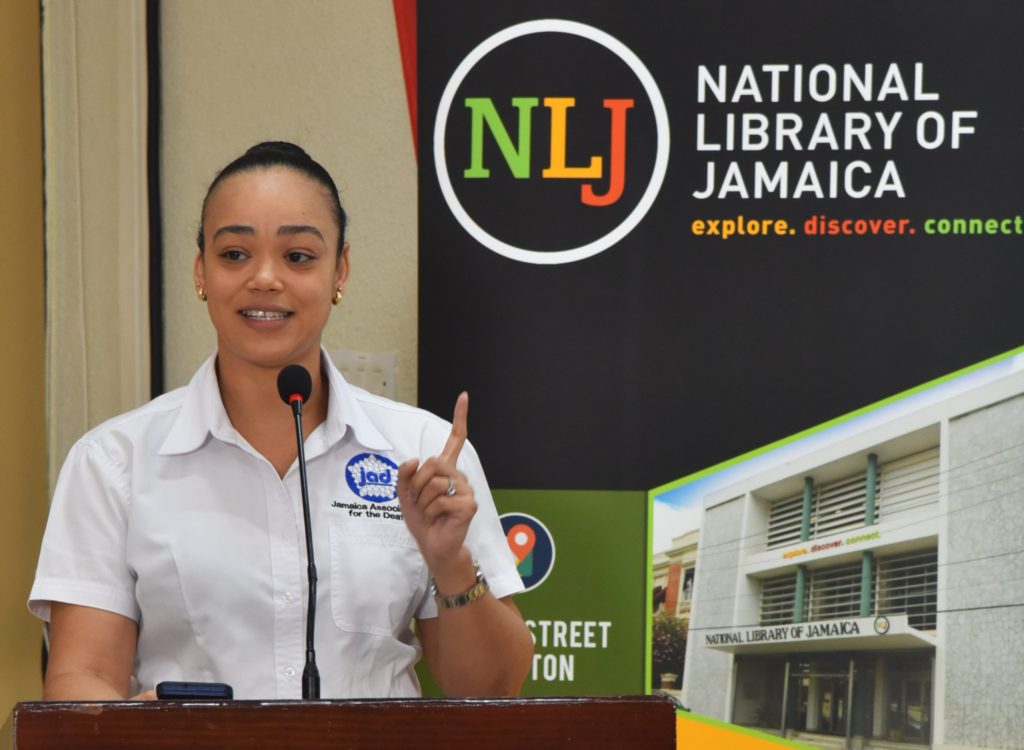
    KINGSTON, Jamaica — In a landmark move toward social inclusion, Jamaica’s library system has initiated a comprehensive Jamaican Sign Language (JSL) training program designed to dismantle communication barriers for deaf patrons. The pioneering initiative, dubbed ‘Bridging the Gap: One Sign at a Time,’ was formally inaugurated Monday at the University of the West Indies Mona campus, signaling a new era of accessibility in the nation’s knowledge institutions.

    The program will deliver structured JSL education to frontline staff across Jamaica’s entire library network, encompassing the National Library of Jamaica and regional parish libraries. This capacity-building effort aims to equip information professionals with the necessary linguistic skills to serve deaf and hard-of-hearing community members effectively and with dignity.

    Culture Minister Olivia Grange, represented by National Library Board Chair Joy Douglas, characterized the initiative as reflecting her ministry’s deepened commitment to enhancing service accessibility for persons with disabilities. Minister Grange emphasized that true inclusion must embrace Jamaicans across the spectrum of physical and intellectual capabilities, noting parallel efforts to broaden participation in cultural and athletic programs.

    The minister framed the initiative as transcending mere symbolic recognition, stating: “This is more than us saying to the deaf community—’we see you’ or ‘we value you.’ This is about empowerment and building independence.” She expressed aspirations for JSL to eventually be integrated into formal education curricula, similar to foreign language offerings, to eradicate communication barriers society-wide.

    Kimberly Sherlock Marriot-Blake, Executive Director of the Jamaica Association for the Deaf, hailed the program as a transformative milestone in national development. With over 16 years of experience providing JSL instruction to diverse stakeholders, Marriot-Blake emphasized that language accessibility fundamentally reshapes institutional systems, making them more equitable and responsive.

    She particularly commended library authorities for recognizing that true accessibility extends beyond physical infrastructure to encompass communication channels. The initiative, she noted, creates opportunities for preserving deaf cultural heritage as an integral component of Jamaica’s national identity.

    Adding political weight to the effort, Senator Professor Floyd Morris, Director of the Centre for Disability Studies at UWI, reaffirmed his commitment to pursuing official government recognition of Jamaican Sign Language, underscoring its critical role in achieving genuine social inclusion.